

P1516 on 2006-2013 Chevrolet Silverado 3500: Causes and Fixes for Reduced Engine Power
This code almost always triggers the 'Reduced Engine Power' message and is caused by a problem with the electronic throttle body. The most common fix is to replace the entire throttle body assembly, but checking for bad grounds (especially G103/G104) and inspecting the wiring connector for corrosion or loose pins are critical first steps that can save money. Cleaning the throttle body is a common, but often temporary, fix.
- P1516 on a Silverado 3500 will almost certainly put the truck in 'Reduced Engine Power' mode.
- The problem is located at the throttle body. Start diagnosis by cleaning the throttle plate and bore.
- Carefully inspect the wiring and connector going to the throttle body for damage before buying parts.
- If cleaning and wiring checks don't work, replacing the entire throttle body assembly is the most reliable fix.
- Do not confuse this issue with a bad accelerator pedal; the fault code points specifically to the throttle body end of the system.
What's Unique About the 2006-2013 Chevrolet SILVERADO 3500

On GMT900 and late GMT800 trucks like the Silverado 3500, the electronic throttle control system is sensitive to issues that can develop with age and mileage. The 'Reduced Engine Power' mode is a well-known, abrupt symptom for this code. As noted in manufacturer service bulletins, these trucks are prone to throttle body-related issues, often stemming from poor ground connections, fretting corrosion in the throttle body connector, or internal wear. The intermittent nature of the fault, often triggered by bumps or temperature changes, frequently points towards these electrical connection issues rather than a hard part failure.
Diagnostic Flowchart
Tap your situation to follow the diagnostic path that matches what you're seeing on this vehicle.
Generation note: The 2006-2013 year range covers two generations: the GMT800 (2006 and 2007 'Classic' models) and the GMT900 (2007.5-2013 models). The causes and repair procedures for P1516 are very similar for both generations as they both use a comparable electronic throttle control system. TSBs often cover both generations. The primary difference for this issue is that the GMT800 trucks had a separate Throttle Actuator Control (TAC) module, whereas on GMT900 trucks, its function is integrated into the Engine Control Module (ECM).
Symptoms You May Notice
- "Reduced Engine Power" message displayed on the instrument cluster
- Check Engine Light is on
- Severely limited throttle response and acceleration
- Unstable or surging idle
- Vehicle may be difficult to start or stall unexpectedly
- Intermittent stalling, sometimes without the 'Reduced Engine Power' message appearing first.
- Replacing the Accelerator Pedal Position (APP) sensor. While part of the throttle control system, the P1516 code specifically points to a performance issue at the throttle body, not the pedal. Other codes, like P2138, point to the APP sensor.
Most Likely Causes

- Dirty or Sticking Throttle Body 🔴 High Probability Carbon and oil vapor from the PCV system can build up over time, causing the throttle plate to bind and not respond accurately to the motor's commands. This is a common issue on high-mileage vehicles.
How to confirm: Remove the air intake tube from the throttle body and visually inspect for a thick black ring of carbon where the throttle plate closes. Manually check if the plate moves smoothly.
Typical fix: Thoroughly clean the throttle body bore and plate with a dedicated throttle body cleaner and a soft cloth or brush. 🎬 Watch: A simple walkthrough on cleaning your throttle body. A throttle relearn procedure should be performed afterward.
Est. part cost: $5-$15 - Poor Ground Connection 🔴 High Probability Corrosion and loosening of critical engine and chassis grounds is a very common cause of intermittent P1516 faults on these trucks. The grounds on the back of the cylinder heads are notoriously difficult to reach and prone to issues.
How to confirm: Check main ground straps for tightness and corrosion. Specifically, inspect grounds G103 and G104, which are often cited in TSBs. Many owners find success simply by loosening and re-tightening the main grounds on the engine block, firewall, and frame.
Typical fix: Clean the ground contact points to bare metal and ensure the connection is secure. Many owners add redundant ground wires from the engine block/alternator bracket to the firewall and/or PCM mounting bolts as a permanent solution. 🎬 See how to solve the mystery of intermittent ground issues.
Est. part cost: $0-$20 - Wiring or Connector Issue at Throttle Body 🟡 Medium Probability The wiring harness to the throttle body is subject to engine vibration and heat, which can cause wires to break internally or the connector pins to lose tension (fretting corrosion). GM bulletins specifically mention loose wiring crimps as a possible cause.
How to confirm: Visually inspect the connector for corrosion, spread pins, or backed-out pins. With the engine running, carefully wiggle the wires near the connector to see if it triggers the fault (a 'wiggle test').
Typical fix: Repair the damaged section of wiring or replace the pigtail connector. Applying dielectric grease to the new connector can help prevent future corrosion.
Est. part cost: $15-$50 - Faulty Throttle Body Assembly 🟡 Medium Probability The internal electronic components of the throttle position sensor (TPS) or the actuator motor wear out over time, leading to an internal failure that is not serviceable.
How to confirm: If cleaning the throttle body, checking wiring, and verifying grounds doesn't resolve the code, and a scan tool shows erratic or non-responsive throttle position data, the unit is likely faulty.
Typical fix: Replace the entire throttle body assembly. This is often the most definitive, though most expensive, repair.
Est. part cost: $150-$400
Rare But Worth Checking
- Faulty Throttle Actuator Control (TAC) Module: On GMT800 models (2006 and 2007 'Classic'), the TAC module was a separate component. While less common for it to fail than the throttle body itself, it can be a cause, especially if wiring to it is compromised. On GMT900 models (2007.5-2013), this function is integrated into the ECM.
- Faulty Powertrain Control Module (PCM): This is very rare. The PCM should only be considered as the cause after all other possibilities, including the throttle body, wiring, and grounds, have been exhaustively tested and ruled out.
Diagnosis Steps
- Retrieve all stored DTCs with a capable OBD-II scanner. Note all codes present.
- Inspect the air intake tube for any cracks or loose connections between the air filter and the throttle body.
- Remove the intake tube and visually inspect the throttle body for heavy carbon buildup.
- If dirty, clean the throttle body thoroughly with appropriate cleaner. Do not spray cleaner directly on the electrical connector.
- Inspect the throttle body electrical connector and wiring harness for any signs of damage, corrosion, or loose pins. Perform a 'wiggle test' on the harness with the engine running to check for intermittent connections.
- Inspect and verify all major ground connections. Key locations include the braided straps from the back of the cylinder heads to the firewall, the main negative battery cable connection to the engine block, and frame grounds. A common fix is to simply loosen and re-tighten these connections.
- Using a scan tool with live data, monitor the commanded throttle position vs. the actual throttle position. The values should track each other closely as the accelerator is pressed. A lagging or erratic actual position indicates a problem.
- If cleaning, wiring checks, and ground improvements fail to resolve the issue, replacement of the throttle body assembly is the most likely solution.
- After any repair (cleaning or replacement), perform a throttle relearn procedure to ensure proper idle and performance.
Parts You'll Likely Need

- Throttle Body Assembly
(OEM #ACDelco 217-3153 (For 6.0L V8, verify fitment))— This is the most common hard-part failure. The internal sensors or motor fail, and the entire unit must be replaced as they are not serviced separately.
Trusted brands: ACDelco, Delphi, Bosch
OEM price range: $250-$400
Aftermarket price range: $150-$250 - Throttle Body Connector Pigtail
(OEM #Dorman 645-203 (Verify fitment))— If the diagnostic process reveals broken wires, fretting corrosion, or a damaged connector lock, replacing the pigtail is necessary.
Trusted brands: ACDelco, Dorman
OEM price range: $30-$50
Aftermarket price range: $15-$30
Related Codes That Often Appear With This One
- P2101 — This code, 'Control Throttle Actuator Control Motor Circuit Range/Performance', is often logged with P1516 as they both relate to the throttle body's electronic motor and its performance.
- P2135 — This code indicates a correlation issue between the two throttle position sensors within the throttle body, which can be a root cause for the P1516 performance issue. TSB PIP3089B directly addresses this 🎬 Watch: What fixed these specific codes on a 2011 Silverado. combination of codes.
- P0068, P0121, P2119, P2176 — As cited in TSB PIP4578B, these codes are all related to the throttle body, air intake, and sensor correlation, and may appear alongside P1516 on high-mileage vehicles, often due to carbon buildup.
Technical Service Bulletins (TSBs) & Recalls
- PIP4578B: Mentions P1516 in the context of idle surge and reduced engine power on high-mileage vehicles, grouping it with other throttle-related codes and emphasizing the need for an idle relearn procedure after cleaning.
- PIP3089B: Focuses on P1516 accompanied by other throttle position sensor codes (P0120, P0220, P2135) and recommends inspecting for poor terminal crimps and broken wires at the throttle body connector.
Platform-Specific Known Issues
- Per TSB #PIP4578B, high-mileage vehicles may experience this code along with an idle surge, pointing towards a worn or carbon-fouled throttle body. The bulletin stresses the importance of performing an idle learn reset after cleaning.
- TSB #PIP3089B specifically addresses intermittent P1516 codes appearing with P0120, P0220, and P2135. It points directly to inspecting for loose wiring crimps at the throttle body connector and checking for broken wires inside the insulation, even if the exterior looks fine.
Mechanic-Grade Diagnostic Values
- 5V Reference Voltage at Throttle Body Connector — expected: Approximately 5.0 volts. Failure: Voltage significantly below 5.0V or 0V indicates a short to ground or an open in the reference circuit from the PCM/TAC module. In some cases, a low voltage between 4.5V and 5.0V can set the code without driveability issues.
- Throttle Position Sensor (TPS) 1 and 2 Voltages — expected: One sensor should read low (e.g., ~0.5V) and the other high (e.g., ~4.5V) at closed throttle. As the throttle opens, one voltage should rise and the other should fall, with their sum remaining near 5.0V.. Failure: Jerky or erratic voltage changes, or a signal that drops out completely, indicates a worn or failing TPS inside the throttle body assembly.
- Ground Circuit Resistance — expected: Less than 2 Ohms. Failure: Resistance greater than 2 Ohms between the throttle body connector ground pin and a known good chassis ground indicates a poor ground connection, which is a very common cause of this code.
Scan Tool Commands That Help
- Tech2 / GDS2: Throttle Position Sensor Live Data — Use this to monitor 'Commanded Throttle Position' vs. 'Actual Throttle Position' in real-time. A significant lag or discrepancy between the two values while pressing the accelerator pedal points directly to a fault in the throttle control system.
- Tech2 / GDS2: Bi-Directional Throttle Control — With the key on and engine off, this function allows a technician to command the throttle plate to open to specific percentages (e.g., 25%, 50%). Observing if the throttle plate moves smoothly and if the 'Actual' position matches the 'Commanded' position helps isolate a sticking mechanical plate from an electrical sensor failure.
- Tech2 / GDS2 or High-End Scan Tool: Idle Learn / Throttle Learn Reset — This function must be used after cleaning or replacing the throttle body. It resets the learned idle and off-idle airflow values in the PCM, preventing an unstable or high idle after the repair.
Wiring & Ground Locations

- G103 — On the front of the right (passenger side) cylinder head for GMT900 models. On GMT800 'Classic' models, it is located on the right rear of the engine block.. This is a primary engine ground point. Corrosion or a loose connection here can cause a voltage drop and intermittent electrical faults for many sensors, including the throttle body, triggering P1516.
- G104 — On the front of the left (driver side) cylinder head for GMT900 models. On GMT800 'Classic' models, it is located on the left rear of the engine block.. Similar to G103, this is a critical engine ground. A poor connection here is a well-documented cause of intermittent 'Reduced Engine Power' modes and TAC-related codes.
- Throttle Body Connector — The 6-pin electrical connector plugged directly into the throttle body assembly.. This is the single point of connection for the throttle motor and dual position sensors. Wires here are prone to breaking inside the insulation from vibration, and pins can suffer from fretting corrosion, leading to intermittent signal loss.
Real Owner Repair Stories
- Tahoe Yukon Forum user 'mdmcinti' (2003-2007 Classic era GM SUV) — Intermittent 'Reduced Engine Power' message and P1516 code, especially on cold starts or when hitting bumps.
❌ Tried (didn't work) Adding multiple redundant ground wires temporarily seemed to fix the issue, but the problem returned.
✅ What actually fixed it The final root cause was a poor crimp on the aftermarket throttle body pigtail connector that had been previously installed. Shaking the pigtail harness would cause the idle to fluctuate. Properly repairing the crimped wire connection resolved the issue permanently. - PerformanceTrucks.net Forum user 'oldred95' (GM Truck with P1516) — P1516 code, an 'illusive little bastard'.
❌ Tried (didn't work) Notes that the TAC module itself rarely fails.
✅ What actually fixed it The user, a technician, states the most common fixes are re-doing the grounds on the back of the cylinder heads (G103/G104) and tugging on the wires at the throttle body connector. Broken wires (especially the yellow one) are common. In two severe cases, he had to bypass the factory wiring completely between the TAC module and throttle body due to high voltage drop.
OEM Part Supersession History
12605109→19420707, ACDelco 217-3153— Part number update and consolidation by GM.
Heads up: This is a 90mm throttle body. While often listed as compatible, ensure the intake manifold opening matches. Using a larger throttle body on a stock manifold may require tuning and may not provide a benefit.
Model Year Variations Within This Range
- 2006-2007 'Classic' (GMT800): These models use a separate, dedicated Throttle Actuator Control (TAC) module, which is a potential point of failure. The ground locations (G103/G104) are on the rear of the engine block.
- 2007.5-2013 (GMT900): On these models, the TAC module's functions are integrated directly into the Engine Control Module (ECM). The grounds G103 and G104 were moved to the front of the cylinder heads, making them easier to access.
Helpful Videos

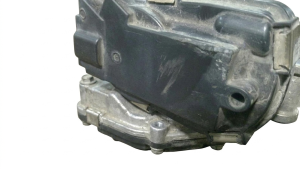
Used OEM Parts in Stock


New Aftermarket Parts Available

The information in this article is provided for general reference and educational purposes only. Vehicle specifications, procedures, and part compatibility can vary by production date, trim level, and region. Always consult your vehicle's factory service manual and verify part numbers before purchasing or performing repairs. Safety-critical components such as airbags, seat belts, and braking systems should be installed by a qualified professional.
- Chevrolet SILVERADO 3500:
- 🎬 Helpful Videos
- 🛍️ Shop This Part
- What's Unique About the 2006-2013 Chevrolet SILVERADO 3500
- Diagnostic Flowchart
- Symptoms You May Notice
- Most Likely Causes
- Rare But Worth Checking
- Diagnosis Steps
- Parts You'll Likely Need
- Related Codes That Often Appear With This One
- Technical Service Bulletins (TSBs) & Recalls
- Platform-Specific Known Issues
- Mechanic-Grade Diagnostic Values
- Scan Tool Commands That Help
- Wiring & Ground Locations
- Real Owner Repair Stories
- OEM Part Supersession History
- Model Year Variations Within This Range
- 🎟️ Get 5% Off