

P1516 on 2006-2013 Chevrolet Silverado 1500: Reduced Power Causes and Fixes
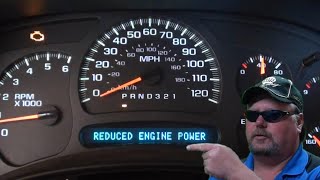
Code P1516 on a 2006-2013 Silverado almost always triggers the 'Reduced Engine Power' message and is caused by a problem in the electronic throttle control system. The most common fixes are cleaning or replacing the throttle body, repairing the wiring harness connected to it, or improving engine ground connections.
- P1516 will put your Silverado in 'Reduced Engine Power' mode, making it unsafe for normal driving.
- Start with the cheapest and easiest fixes: inspect the throttle body wiring, clean the throttle body thoroughly, and check engine ground connections.
- A 'wiggle test' of the wiring harness at the throttle body is a very effective way to diagnose a common wiring fault.
- If cleaning and wiring repairs don't solve the problem, the entire throttle body assembly usually needs to be replaced.
What's Unique About the 2006-2013 Chevrolet SILVERADO 1500

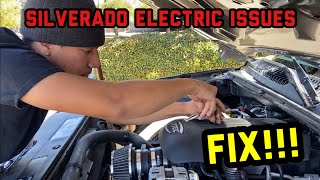
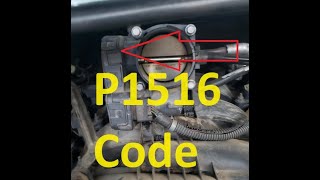
The 2006-2013 Silverado generation (spanning the GMT800 'Classic' and GMT900 platforms) relies on a drive-by-wire throttle system that is sensitive to wear and electrical issues. Over time, problems like poor ground connections, internal throttle body wear, and wiring fatigue become common. GM has issued multiple Technical Service Bulletins (TSBs) related to these throttle control systems, indicating a known pattern of issues with wiring, connectors, and the throttle body itself across many models using these V8 engines. The problem is so prevalent that it has been the subject of extensive forum discussions 🎬 Watch: 5 common causes and fixes for the P1516 code. and even class-action lawsuit talks among owners.
Diagnostic Flowchart
Tap your situation to follow the diagnostic path that matches what you're seeing on this vehicle.
Generation note: This range covers the end of the GMT800 generation (sold as the 'Classic' in 2006 and early 2007) and the entire GMT900 generation (late 2007-2013). While the electronic throttle control concept is the same, part numbers for the throttle body and wiring may differ. However, the common causes like a dirty throttle body, bad wiring, and poor grounds are prevalent across both generations. The issue is often reported to be worse on cold days, which can point to hardened internal grease in the throttle body gearbox on older models.
Symptoms You May Notice
- "Reduced Engine Power" message on the dashboard.
- Check Engine Light is on.
- Severely limited throttle response and acceleration.
- Vehicle may not go over a low speed (e.g., 25-35 mph).
- Engine may stall or hesitate, especially at idle or when coming to a stop.
- Rough or unstable idle.
- Difficulty starting the engine.
- A clicking sound from the throttle body as the plate attempts to move right before the error appears.
- Replacing the accelerator pedal sensor first, when the issue is more often at the throttle body end of the system.
- Replacing the throttle body assembly when the actual fault is a simple broken wire in the harness or a corroded ground strap.
- Cleaning the throttle body but failing to perform the mandatory throttle relearn procedure, leading to continued or new idle problems.
Most Likely Causes


- Faulty Throttle Body Wiring or Connector 🔴 High Probability Engine vibration and heat cause the wires near the throttle body connector to fray, break internally, or develop loose crimps. TSB #PIP3089B specifically calls this out, noting that breaks often occur within 1 to 4 inches of the connector. The outer insulation can look fine while the copper strands inside are broken.
How to confirm: With the engine running, carefully wiggle the wiring harness and connector at the throttle body. If this causes the engine to stumble, stall, or immediately trigger the 'Reduced Power' mode, the wiring is faulty. Visually inspect for chafed, brittle, or damaged wires. A YouTube video shows a case where the wiring was 'hard as a rock' and needed replacement.
Typical fix: Repair the broken wire(s) or replace the throttle body connector pigtail. TSB #PIP3089B warns that if a pigtail is used, proper splicing techniques with the correct crimping tool are critical to prevent future intermittent issues.
Est. part cost: $20-$50 for a pigtail connector - Dirty or Sticking Throttle Body 🔴 High Probability Carbon and grime build up in the intake, causing the throttle plate to stick or move slowly. TSB #PIP4578B explains that on high-mileage vehicles, the ECM learns to compensate for this buildup. If the throttle body is cleaned but the ECM's learned values aren't reset, performance issues and codes can persist or worsen.
How to confirm: Remove the intake duct and visually inspect the throttle bore and plate for heavy carbon deposits. The plate should move smoothly by hand (with the engine off).
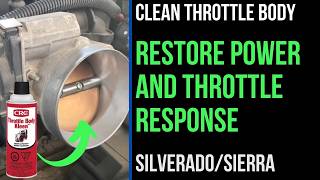
Typical fix: Thoroughly clean the throttle body bore and plate with a dedicated throttle body cleaner and a soft cloth or brush. After cleaning, a throttle relearn procedure is mandatory to reset the ECM's learned idle values.
Est. part cost: $5-$15 for cleaner - Poor Ground Connections 🟡 Medium Probability Corroded or loose engine and chassis ground straps are a notorious source of intermittent electronic issues on these trucks. TSB #PIP3089B specifically advises checking grounds G103 and G104 on C/K trucks. Many owners have found that simply cleaning and tightening the main ground straps (e.g., from the engine block to the firewall, battery to frame) resolves the problem.
How to confirm: Locate the main ground straps on the firewall, engine block (rear of cylinder heads), and frame. Inspect them for corrosion, looseness, or fraying. A voltage drop test on the ground circuit can confirm a bad connection.
Typical fix: Remove, clean all contact points of the ground straps with a wire brush, and tighten securely. Some owners have permanently solved recurring issues by adding redundant ground wires from the engine block to the firewall and from the TAC module casing to the chassis.
Est. part cost: $0-$20 for cleaning supplies or new wire - Failed Throttle Body Assembly 🟡 Medium Probability The internal components of the throttle body, including the throttle position sensor (TPS) and the actuator motor, can fail with age and mileage. This is often the case when cleaning and wiring checks don't resolve the issue. On older models, the grease inside the actuator's gearbox can harden, preventing the motor from moving the plate correctly on cold starts.
How to confirm: If cleaning, wiring, and ground checks don't resolve the issue, and a scan tool shows erratic TPS voltage or a persistent position mismatch, the throttle body itself is the likely culprit.
Typical fix: Replace the entire throttle body assembly. Most modern throttle bodies have integrated sensors and motors that are not serviced separately. A throttle relearn procedure is required after replacement.
Est. part cost: $150-$300
Rare But Worth Checking
- Failing Engine Control Module (ECM): This is a last-resort diagnosis. The ECM is a robust component and should only be suspected after all other possibilities (throttle body, wiring, grounds) have been exhaustively ruled out.
- Faulty Accelerator Pedal Position (APP) Sensor: While possible, a failing APP sensor usually triggers its own specific set of codes (like P2138). It's less common for it to cause an isolated P1516, but it can be a contributing factor.
Diagnosis Steps
- Scan for all fault codes. Note any other codes that appear alongside P1516, as they provide critical clues (e.g., P2135, U0107).
- Visually inspect the throttle body wiring harness for any signs of damage, chafing, or corrosion, paying close attention to the first 4 inches of wire from the connector.
- Perform a 'wiggle test' on the throttle body connector and nearby harness with the engine idling to see if it triggers the fault.
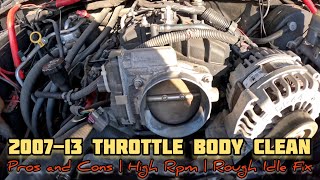
- Remove the air intake tube and inspect the throttle body. If significant carbon buildup is present, clean it thoroughly with throttle body cleaner.
- Locate, inspect, and clean the main engine ground connections. Key locations are the straps from the back of the cylinder heads to the firewall (GM grounds G103/G104) and the main battery ground to the frame/engine block.
- Using a scan tool with live data, monitor the commanded throttle position vs. the actual throttle position (TPS 1 and TPS 2). The values should track each other closely as the pedal is pressed. Any lagging or erratic readings point to a throttle body or wiring issue.
- If cleaning and wiring/ground checks do not solve the problem, the throttle body assembly is the most likely failed component and should be replaced.
- After any cleaning or replacement, perform the throttle relearn procedure.
Parts You'll Likely Need
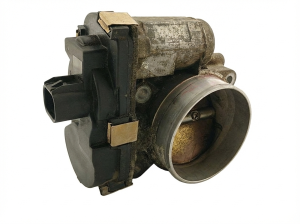
- Throttle Body Assembly
(OEM #12729500)— This is the most common repair when cleaning and wiring checks fail. The assembly includes the non-serviceable internal motor and position sensors that wear out. Note: Part number may vary by specific year and engine.
Related Codes That Often Appear With This One
- P2135 — Throttle/Pedal Position Sensor/Switch 'A'/'B' Voltage Correlation. This code is very common with P1516 and points directly to a problem with the throttle position sensors or their circuits, often caused by the same wiring or ground issues.
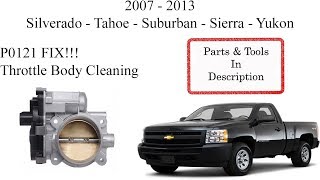
- P0121 — Throttle/Pedal Position Sensor/Switch 'A' Circuit Performance. This indicates a performance problem with one of the throttle position sensors, often triggered by a dirty/sticking throttle plate.
- P2101 — Control Throttle Actuator Control Motor Circuit Range/Performance. This code points specifically to a problem with the motor that opens and closes the throttle plate, or the circuits that control it.
- U0107 — Lost Communication With Throttle Actuator Control Module. This often indicates a severe wiring, connector, or ground issue preventing the ECM from communicating with the throttle body.
- P0220 — Throttle/Pedal Position Sensor/Switch 'B' Circuit. Similar to P0121 and P2135, this points to an issue with the secondary throttle position sensor circuit.
- P0332, P0327 — Knock Sensor Circuit Low Input. In some cases, owners have reported fixing P1516 required replacing the knock sensors in addition to the throttle body, suggesting a complex electrical fault.
Technical Service Bulletins (TSBs) & Recalls
- Notes that on high-mileage vehicles, carbon buildup causes the ECM to learn a new, higher throttle angle to maintain idle. If the throttle body is cleaned or the ECM is reprogrammed without performing an 'idle learn reset', the old compensation values will cause idle/performance issues and set codes like P1516, P0121, P0506, or P0507.
- Specifically addresses P1516 and related codes. It points to loose wiring crimps or broken copper strands inside the insulation within 1-4 inches of the throttle body connector. It recommends a 'wiggle test' and inspection of grounds G103 and G104 on C/K trucks.
Platform-Specific Known Issues
- TSB #PIP4578B notes that this code, along with others, can occur on high-mileage vehicles, pointing towards wear-related failure of the throttle body and the importance of the idle-relearn procedure after service.
- TSB #PIP3089B specifically calls out loose wiring crimps and broken wires within the first few inches of the throttle body harness as a primary cause, along with poor grounds at locations G103/G104.
- Owner forums are filled with reports of this issue being intermittent and often triggered by temperature changes (especially cold weather) or rough roads, which strongly points to electrical connection problems (grounds or wiring) rather than a hard part failure.
Mechanic-Grade Diagnostic Values
- Throttle Position Sensor (TPS) 1 and 2 Signal Voltage — expected: Between 0.2V and 0.9V at closed throttle, smoothly increasing to 3.5V to 4.5V at wide-open throttle. Both sensors should track each other.. Failure: Voltage that is stuck, erratic, has gaps/skips as the throttle is opened, or does not return to the baseline closed-throttle voltage.
- TPS Sensor 5-Volt Reference — expected: 4.5V to 5.0V at the Grey wire (Pin H) and Light Blue/Black wire (Pin E) on the throttle body connector with the key on, engine off.. Failure: Voltage significantly lower or higher than 5V indicates a problem with the ECM or wiring.
- Scan Tool Live Data: TAC Motor Parameter — expected: The parameter should display 'Enabled' while the accelerator pedal is slowly depressed.. Failure: If 'Enabled' is not displayed, it points to a fault in the TAC system or its circuits.
Scan Tool Commands That Help

- Manual Procedure (No Scan Tool): Idle Learn / Throttle Relearn Procedure — Required after cleaning or replacing the throttle body, or disconnecting the battery, to allow the ECM to learn the new closed-throttle position. A common procedure is: 1. Start engine and idle in Park for 3 minutes. 2. Turn engine off for 60 seconds. 3. Restart engine and idle in Park for another 3 minutes. The idle should then normalize. A drive cycle may be needed if idle is still incorrect.
Wiring & Ground Locations

- G103 & G104 (Grounds) — For GMT900 (late 2007-2013): G103 is on the front of the right (passenger) cylinder head. G104 is on the left rear corner of the left (driver) cylinder head. For GMT800 'Classic' (2006-early 2007): G103 is on the right rear of the engine block and G104 is on the left rear of the engine block.. These are primary engine grounds. Corrosion or looseness here is a well-documented cause of intermittent P1516 and other electronic faults. TSBs specifically call for inspecting these grounds.
- Throttle Body Connector (8-Pin) — Directly on the electronic throttle body assembly.. This connector carries all power, ground, and signal wires for the throttle actuator motor and both throttle position sensors. Wires are known to break internally near this connector. Key pins for testing are: Pin E (LT BLU/BLK) - 5V Ref, Pin F (PPL) - TPS 2 Signal, Pin G (DK GRN) - TPS 1 Signal, Pin H (GRY) - 5V Ref.
- TAC Module — Typically mounted on the driver's side of the firewall under the hood.. This is the 'brain' of the drive-by-wire system. While the module itself is robust, adding a redundant ground wire from its case to the firewall has been a successful fix for many owners chasing intermittent P1516 codes.
Real Owner Repair Stories
- Tahoe Yukon Forum user (GM SUV (Tahoe/Yukon) of similar vintage) — Recurring 'Reduced Engine Power' message and P1516 code, especially on cold starts or when hitting bumps.
❌ Tried (didn't work) Previous owner had replaced the throttle body pigtail and TPS. Cleaning grounds under the running board provided only a temporary fix.
✅ What actually fixed it Adding multiple new, redundant 10-gauge ground wires. Key additions were from the firewall to the engine block (driver side valve cover) and from the TAC module case to the firewall. The user concluded it was purely a grounding issue. - YouTube Commenter on '5 Causes and Fixes Chevy P1516' video (Chevy Truck) — Codes for both throttle body and throttle pedal sensor.
❌ Tried (didn't work) Not specified, but implies focus was on replacing expensive electronic parts.
✅ What actually fixed it The user discovered the real problem was a deteriorated PCV hose located under the air intake housing. They advise checking this before replacing expensive sensors. - Reddit user on r/Cartalk (2008 Chevrolet Impala (different model, same GM codes)) — 'Reduced Engine Power' with codes P1516 and P2101.
❌ Tried (didn't work) Initial diagnosis pointed towards throttle body replacement.
✅ What actually fixed it The owner cleaned the Mass Air Flow (MAF) sensor, cleaned the throttle body, and replaced a very dirty engine air filter. The combination of these basic maintenance tasks resolved the codes.
"I Checked Everything" — The Actual Cause
- In at least one documented case, after getting codes for the throttle body and pedal sensor, the actual root cause was found to be a deteriorated PCV hose under the air intake housing. This can create a vacuum leak that the system misinterprets as a throttle performance issue.
When the Usual Fixes Don't Work
- While the most common fixes involve wiring, grounds, or cleaning, a significant number of owners report that the only permanent solution was to add multiple, redundant ground straps between the engine, firewall, and TAC module case. In these cases, simply cleaning the factory grounds was not sufficient to resolve the intermittent 'Reduced Engine Power' issue, suggesting the original grounding scheme is a design weakness that worsens with age.
OEM Part Supersession History
12570790→19420034— Part discontinuation and replacement.
Heads up: The original part 12570790 is a 90mm 'silver blade' throttle body. Be cautious with other GM throttle bodies like the 'gold blade' versions, as some are known to operate in reverse and are not compatible with all systems, which can cause similar codes at high throttle percentages.
Model Year Variations Within This Range
- 2006-early 2007 ('Classic') vs. late 2007-2013: The physical locations of the critical grounds G103 and G104 are different. On GMT800 'Classic' models, they are on the rear of the engine block. On GMT900 models, they are located on the front/rear of the cylinder heads. This is critical for accurate diagnosis.
- Across the range: The electronic components (Pedal Assembly, TAC Module, PCM) must be from the same model year range to be compatible. For example, parts from a 2003-2005 truck are not compatible with 2006-2007 parts, indicating that different electronic revisions exist and cannot be mixed.
Helpful Videos

We Have This Part in Stock




The information in this article is provided for general reference and educational purposes only. Vehicle specifications, procedures, and part compatibility can vary by production date, trim level, and region. Always consult your vehicle's factory service manual and verify part numbers before purchasing or performing repairs. Safety-critical components such as airbags, seat belts, and braking systems should be installed by a qualified professional.
- Chevrolet SILVERADO 1500:
- 🎬 Helpful Videos
- 🛍️ Shop This Part
- What's Unique About the 2006-2013 Chevrolet SILVERADO 1500
- Diagnostic Flowchart
- Symptoms You May Notice
- Most Likely Causes
- Rare But Worth Checking
- Diagnosis Steps
- Parts You'll Likely Need
- Related Codes That Often Appear With This One
- Technical Service Bulletins (TSBs) & Recalls
- Platform-Specific Known Issues
- Mechanic-Grade Diagnostic Values
- Scan Tool Commands That Help
- Wiring & Ground Locations
- Real Owner Repair Stories
- "I Checked Everything" — The Actual Cause
- When the Usual Fixes Don't Work
- OEM Part Supersession History
- Model Year Variations Within This Range
- 🎟️ Get 5% Off