

P1516 on 2011-2015 Chevrolet Express: Causes and Fixes for Reduced Engine Power
On a 2011-2015 Chevrolet Express, code P1516 almost always points to a problem with the electronic throttle body system, triggering 'Reduced Engine Power' mode. The most common causes are a faulty throttle body assembly, poor wiring connections at the throttle body, or a bad ground. A complete throttle body replacement is the most frequent fix.
- P1516 on a Chevy Express will almost certainly put the van into 'Reduced Engine Power' mode.
- The most likely cause is a faulty throttle body assembly, followed by bad wiring at the throttle body connector.
- Before replacing parts, always inspect the wiring connector for corrosion and check for bad engine ground straps, as these are known weak points.
- Cleaning a dirty throttle body can sometimes help, but if the code persists, the internal electronics have likely failed, requiring replacement of the entire unit.
- After cleaning or replacing the throttle body, an 'idle relearn' procedure is mandatory to prevent idling issues.
What's Unique About the 2011-2015 Chevrolet EXPRESS

The Chevrolet Express, especially at higher mileage, is prone to issues that set code P1516. As work vans, they accumulate high engine hours and are subject to constant vibration, which accelerates wear on electronic components and wiring. GM even issued a Technical Service Bulletin (PIP4578B) acknowledging that on high-mileage vehicles, issues like carbon buildup or wiring problems can lead to P1516 and the dreaded "Reduced Engine Power" mode. Owners often find that the problem isn't just a dirty throttle plate, but rather failing electronics within the sealed throttle body assembly or corroded wiring and grounds (specifically G102, G103, and G104), which become more common as these work vans age.
Diagnostic Flowchart
Tap your situation to follow the diagnostic path that matches what you're seeing on this vehicle.
Symptoms You May Notice
- "Reduced Engine Power" message on the dashboard.
- Check Engine Light is on.
- Little to no throttle response or delayed acceleration.
- Rough, unstable, or surging idle, especially before the code sets.
- Engine may stall, especially at low speeds or when stopping.
- Vehicle may crank but fail to start.
- Replacing the Accelerator Pedal Position (APP) Sensor. While a bad pedal sensor can cause similar symptoms, it typically generates different trouble codes (like P2138). P1516 specifically points to an issue at the throttle body end of the system.
Most Likely Causes

- Failing Throttle Body Assembly 🔴 High Probability The internal electronic sensors and motor are a common failure point. The internal potentiometer contacts can wear out, and the plastic gears can fail. TSB PIP4578B points to issues on high-mileage vehicles, which often involves wear and tear on these components.
How to confirm: With a scan tool, observe the commanded vs. actual throttle position data (TP Sensor 1 and 2). If they don't match, are erratic, or one sensor drops out, the throttle body is faulty. A visual inspection may not reveal the internal electronic fault.
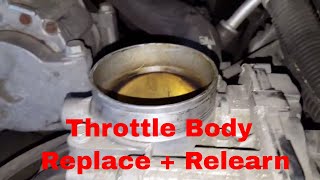
Typical fix: Replace the entire throttle body assembly. 🎬 See this step-by-step walkthrough for replacing the throttle body. On these models, the sensors are integrated and not sold separately. An idle relearn procedure is required after replacement.
Est. part cost: $150-$350 - Wiring or Connector Issues at Throttle Body 🟡 Medium Probability The wiring harness connector sits on the engine and is subject to heat, vibration, and moisture, leading to corrosion, broken wires inside the insulation, or fretted pins over time.
How to confirm: Visually inspect the throttle body connector for green corrosion, backed-out pins, or frayed wires. Perform a 'wiggle test': with the engine running, gently move the harness and connector to see if it causes the engine to stumble or the code to appear.
Typical fix: Clean the connector terminals with electrical contact cleaner. If corrosion is severe or wires are broken, the pigtail connector will need to be replaced. A common replacement is Duralast 462 or Standard Motor Products S-1745.
Est. part cost: $20-$50 for a new pigtail - Poor Ground Connections 🟡 Medium Probability As these vans age, factory ground points on the engine block and firewall can corrode, creating high resistance that affects sensitive electronics like the TAC module. This is a very common issue on GM trucks of this era.
How to confirm: Locate the main engine grounds, often labeled G102 (left rear of engine), G103 (right rear of engine), and G104 (lower right front of engine). Check for looseness and corrosion. A voltage drop test from the negative battery terminal to the engine block can confirm high resistance.
Typical fix: Remove, clean all mating surfaces to bare metal, and securely re-fasten the ground connections. Many owners add redundant ground wires from the engine block to the firewall or from the TAC module to the chassis as a permanent solution.
Est. part cost: $5-$15 for cables/connectors - Excessive Carbon Buildup in Throttle Body ⚪ Low Probability While less likely to be the sole cause of P1516, heavy carbon can cause the throttle plate to stick, creating a mismatch between the commanded and actual position, especially on high-mileage engines as noted in TSB PIP4578B.
How to confirm: Remove the intake duct and visually inspect the throttle bore and plate for a thick layer of black carbon, especially around the edges of the plate.
Typical fix: Clean the throttle body thoroughly with a dedicated throttle body cleaner and a soft cloth. An idle relearn procedure must be performed after cleaning, otherwise new codes like P0506 or P0507 can be set.
Est. part cost: $5-$10 for cleaner
Rare But Worth Checking
- Failing Engine Control Module (ECM): This is rare and should only be considered after all other possibilities, especially wiring, grounds, and the throttle body itself, have been exhaustively ruled out.
Diagnosis Steps
- Scan for all present trouble codes. Note any codes that appear alongside P1516, especially P2135 or P2101.
- Check for Technical Service Bulletins (TSBs). TSB PIP4578B is directly relevant, suggesting carbon buildup or other issues on high-mileage vehicles.
- Inspect the throttle body electrical connector. Unplug it and check for any signs of corrosion (green crust), moisture, or damaged/backed-out pins.
- Perform a 'wiggle test' on the wiring harness leading to the throttle body with the engine idling. If wiggling the wires causes a stumble or triggers the fault, a wiring issue is present.
- Inspect and test engine grounds. Locate grounds G102, G103, and G104. Check for tightness and corrosion. Perform a voltage drop test on the ground circuit; it should be less than 0.1 volts.
- Remove the intake duct and inspect the throttle body bore for heavy carbon buildup. Clean if necessary, as per TSB PIP4578B.
- Using a scan tool with live data, monitor the Commanded Throttle Position vs. the Actual Throttle Position (TP Sensor 1 and 2). The values should track each other closely as the accelerator is pressed. If they do not, or one value is frozen or erratic, the throttle body is faulty.
- If a new throttle body is installed or the original is cleaned, perform the Idle Relearn Procedure. This typically involves letting the engine idle for 3 minutes, turning it off for 60 seconds, and repeating.
- If all wiring, grounds, and the throttle body check out, the issue may be with the Engine Control Module (ECM), but this is very uncommon.
Parts You'll Likely Need

- Fuel Injection Throttle Body Assembly
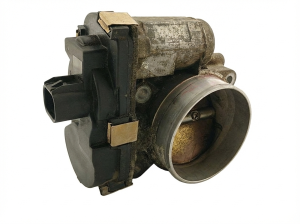
(OEM #ACDelco 217-3428 (supercedes 12670839))— This is the most common fix, as the internal electronics fail and are not serviced separately. Replacing the complete assembly resolves the issue.
Trusted brands: ACDelco (OEM), Dorman (OE Fix 977-858), Hitachi
OEM price range: $250-$400
Aftermarket price range: $150-$250 - Throttle Body Connector Pigtail
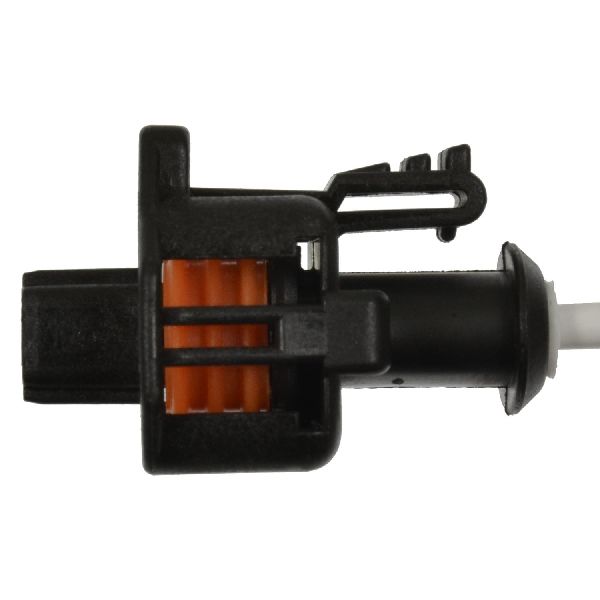
(OEM #Duralast 462 / Standard Motor Products S-1745)— If the connector is corroded or wires are broken at the throttle body, replacing the pigtail is necessary.
Trusted brands: Duralast, Standard Motor Products (SMP), ACDelco Gold
OEM price range: $35-$50
Aftermarket price range: $20-$40
Related Codes That Often Appear With This One
- P2101 — This code also means 'Throttle Actuator Control Motor Circuit Range/Performance' and is often set along with P1516 as they both monitor the same fault.
- P2135 — This code indicates a correlation error between the two throttle position sensors (TP1 and TP2) inside the throttle body, a common internal failure that leads to replacing the unit.
- P0068 — Indicates a disagreement between the MAP sensor, MAF sensor, and throttle position. A faulty or sticking throttle body can cause this.
- P2119 — Relates to the throttle closed position performance, which can be affected by carbon buildup or a failing actuator motor.
- P2176 — This code means 'Minimum Throttle Position Not Learned,' which can be triggered by a throttle body replacement or cleaning if the idle relearn procedure is not performed correctly.
Technical Service Bulletins (TSBs) & Recalls
- PIP4578B: Addresses idle surge, reduced engine power, and DTCs including P1516, P2101, and P2135 on high-mileage vehicles. Recommends inspecting and cleaning the throttle body for carbon, followed by a mandatory idle learn reset procedure using a Tech 2/GDS scan tool.
Platform-Specific Known Issues
- GM Technical Service Bulletin #PIP4578B specifically mentions that high-mileage vehicles may experience idle surge, reduced engine power, and set DTCs including P1516. The bulletin advises that if the throttle body is cleaned, an 'idle learn reset' MUST be performed with a scan tool, or new codes like P0506/P0507 may appear because the ECM is still compensating for the old carbon levels.
Mechanic-Grade Diagnostic Values
- Throttle Position Sensor (TPS) 1 and 2 Voltage at Closed Throttle — expected: Approximately 0.35V to 0.7V. The two sensors should have similar readings.. Failure: A reading below 0.35V, a reading of 0V, or a significant difference between Sensor 1 and Sensor 2 indicates a fault.
- Throttle Position Sensor (TPS) 1 and 2 Voltage at Wide Open Throttle (WOT) — expected: Approximately 4.5V. Both sensors should sweep up smoothly from closed to WOT without dropouts.. Failure: Voltage that is erratic, does not reach ~4.5V, or has dead spots when the throttle is slowly opened indicates a worn or failed sensor.
- 5-Volt Reference at Throttle Body Connector — expected: Approximately 5.0 volts on the gray wire with the key on, engine off.. Failure: Voltage significantly lower or higher than 5.0V, or no voltage, points to a wiring issue or a problem with the ECM's 5V reference circuit.
- Ground Circuit Voltage Drop — expected: Less than 100mV (0.1V). Failure: A reading higher than 100mV when testing from the negative battery terminal to the engine block (G102, G103, G104) indicates high resistance in the ground circuit, a common cause of intermittent electronic issues.
Scan Tool Commands That Help

- GDS2 / Tech 2: Idle Learn Reset / Throttle/Idle Learn — This function must be used after cleaning or replacing the throttle body. It resets the learned idle airflow values. Failure to perform this reset can cause new codes like P2176, high/low idle, or stalling, as the ECM is still using values adapted for a dirty/faulty throttle body.
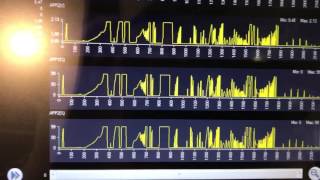
- GDS2 / Tech 2: Throttle Position Sweep Test — This is a bidirectional control that commands the throttle motor to sweep from closed to open while graphing the response of TP sensors 1 and 2. It is used to confirm smooth operation and identify any glitches or dead spots in the sensor readings that may not be apparent during manual testing.
Wiring & Ground Locations

- G102 — On the left rear of the engine block (driver's side).. This is a primary engine ground. Poor connection here can cause a floating ground reference for various sensors, including the throttle body, leading to erratic signals and fault codes.
- G103 — On the right rear of the engine block (passenger's side).. Similar to G102, this is a critical engine-to-chassis ground. Corrosion or looseness is common and directly impacts ECM and sensor performance.
- G104 — On the lower right front of the engine, near the alternator or front engine cover.. This ground is often implicated in P1516 issues. Its location makes it susceptible to corrosion. Cleaning this ground is a common and effective fix.
- Throttle Body Connector (C1) — The 6-pin or 8-pin electrical connector directly on the throttle body assembly.. This is the direct interface for all throttle commands and sensor feedback. Wires can break inside the insulation within 1-4 inches of the connector due to engine vibration and heat, causing intermittent faults that are hard to see visually.
Real Owner Repair Stories
- Tahoe Yukon Forum user (2003-2006 GM Truck/SUV (similar platform)) — Intermittent 'Reduced Engine Power' message and P1516 code, especially when hitting bumps.
❌ Tried (didn't work) Replaced throttle body, Replaced throttle position sensor (TPS), Replaced throttle body connector pigtail
✅ What actually fixed it The problem was ultimately a grounding issue. The user added several redundant ground wires: one from the firewall to the engine block, one from the TAC module to the firewall, and others to the alternator bracket. This created a robust ground path that bypassed the corroded or failing factory grounds at the back of the engine, permanently resolving the intermittent code. - Chevrolet Forum user (2005 Silverado 5.3L (similar platform)) — P1516 code sets within seconds of starting, vehicle immediately enters Reduced Engine Power mode.
❌ Tried (didn't work) New aftermarket throttle body, New TPS, New harness plug, New TAC module, New gas pedal assembly, Replaced and cleaned all ground wires
✅ What actually fixed it The user noted that a common mistake is using an aftermarket throttle body, as these GM vehicles are very sensitive to sensor response time. While not the confirmed final fix in this specific thread, the strong suggestion from other users was that the aftermarket part was the likely culprit and that only an OEM ACDelco part would resolve the issue.
"I Checked Everything" — The Actual Cause
- A user on a YouTube comment thread reported chasing P1516 and pedal sensor codes. After checking the common causes, the actual problem was found to be a deteriorated PCV hose under the air intake housing, which created a large vacuum leak that the ECM could not reconcile with the throttle position, leading to the fault codes.
When the Usual Fixes Don't Work
- While replacing the throttle body assembly is the most common fix, numerous forum reports exist where this did not solve the problem. In these cases, the root cause was almost always found in the electrical system, not the throttle body itself. The most frequent 'second fix' is addressing corroded or loose engine grounds (G102, G103, G104). The second most frequent is replacing the throttle body connector pigtail due to broken internal wires that are not visually apparent. Several owners have solved persistent P1516 issues only after replacing the pigtail and adding redundant ground straps, despite having already replaced the throttle body.
OEM Part Supersession History
12670839→ACDelco 217-3428— GM regularly updates service parts to integrate new materials, technologies, or manufacturing processes. This is a standard lifecycle update.
Heads up: While 217-3428 is the correct service replacement, using non-OEM/aftermarket throttle bodies is a very common cause for P1516 to persist or return. The ECM is highly sensitive to the response time and voltage curves of the integrated sensors, and many aftermarket units fail to meet these precise specifications.
Helpful Videos
Used OEM Parts in Stock

New Aftermarket Parts Available



The information in this article is provided for general reference and educational purposes only. Vehicle specifications, procedures, and part compatibility can vary by production date, trim level, and region. Always consult your vehicle's factory service manual and verify part numbers before purchasing or performing repairs. Safety-critical components such as airbags, seat belts, and braking systems should be installed by a qualified professional.
- Chevrolet EXPRESS:
- 🎬 Helpful Videos
- 🛍️ Shop This Part
- What's Unique About the 2011-2015 Chevrolet EXPRESS
- Diagnostic Flowchart
- Symptoms You May Notice
- Most Likely Causes
- Rare But Worth Checking
- Diagnosis Steps
- Parts You'll Likely Need
- Related Codes That Often Appear With This One
- Technical Service Bulletins (TSBs) & Recalls
- Platform-Specific Known Issues
- Mechanic-Grade Diagnostic Values
- Scan Tool Commands That Help
- Wiring & Ground Locations
- Real Owner Repair Stories
- "I Checked Everything" — The Actual Cause
- When the Usual Fixes Don't Work
- OEM Part Supersession History
- 🎟️ Get 5% Off