

P1516 on 2011-2018 Chevrolet Camaro: Causes and Fixes for Reduced Engine Power
P1516 on a Camaro usually means the throttle body is the problem. This triggers the 'Reduced Engine Power' mode. The fix is often cleaning the throttle body, but may require replacing the entire assembly for about $100-$250 in parts. Poor wiring grounds are also a known, but less common, culprit.
- P1516 on your Camaro will almost always trigger 'Reduced Engine Power' mode.
- The most likely cause is a dirty or failing throttle body.
- Start with the cheapest fix: a thorough cleaning of the throttle body.
- If cleaning doesn't work, replacing the throttle body assembly is the next logical step.
- Check the wiring and connector at the throttle body for damage before buying expensive parts.
What's Unique About the 2011-2018 Chevrolet CAMARO

The 2011-2018 Camaro, spanning the 5th and 6th generations, uses a sensitive electronic throttle control system. This issue is common enough on high-mileage GM vehicles that a Technical Service Bulletin (TSB #PIP4578B) was issued. The bulletin specifically addresses this code, along with others, in relation to idle surges and reduced power mode, pointing towards a known pattern of behavior where carbon buildup prevents the throttle plate from moving as commanded by the ECM. A fault in this system will often trigger the 'Service StabiliTrak' warning as well, since engine power management is a critical input for the traction control system.
Diagnostic Flowchart

Tap your situation to follow the diagnostic path that matches what you're seeing on this vehicle.
Generation note: The 2011-2018 model years cover the end of the 5th Generation (2011-2015) and the beginning of the 6th Generation (2016-2018). The TSB #PIP4578B was updated to include later model years, indicating this is a persistent issue across both generations that share similar electronic throttle control system designs using either the LFX V6 or various LS/LT V8 engines.
Symptoms You May Notice
- "Reduced Engine Power" message on the dashboard
- Check Engine Light is on
- "Service StabiliTrak" message may appear simultaneously
- Severely limited throttle response and acceleration
- Unstable or rough idle
- Engine may stall or hesitate, especially when returning to idle
- Difficulty starting the engine
- Car shakes or vibrates heavily when the code is active
- Replacing the accelerator pedal position (APP) sensor. While related to throttle control, P1516 specifically points to a problem at the throttle body itself (command vs. actual position), not the pedal's request. Replacing the pedal sensor for this code is usually a waste of money.
Most Likely Causes

- Dirty or Carbon-Clogged Throttle Body 🔴 High Probability As mentioned in TSB PIP4578B, this is a common issue on high-mileage vehicles. Carbon and oil vapor from the PCV system build up around the throttle plate, creating a sticky residue that restricts its movement and causes the actual position to deviate from the commanded position.
How to confirm: Remove the intake ducting and visually inspect the throttle bore and plate for a thick black coating. The plate may feel sticky or slow to move by hand (with the engine off).
Typical fix: Clean the throttle body thoroughly with a dedicated throttle body cleaner and a soft cloth or brush. A relearn procedure is required after cleaning.
Est. part cost: $5-$15 - Failing Throttle Body Assembly 🔴 High Probability The internal motor (Throttle Actuator Control) or the position sensors within the sealed throttle body unit can fail over time due to heat and vibration, leading to this code. This is the most common fix if cleaning does not resolve the issue.
How to confirm: If cleaning the throttle body doesn't resolve the issue, and the wiring is confirmed to be good, the throttle body assembly is the most likely culprit. A scan tool can graph the commanded vs. actual throttle position to look for dropouts or erratic readings.
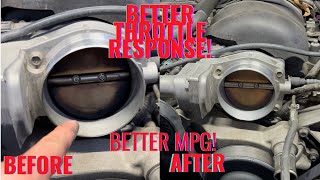
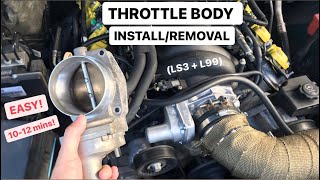
Typical fix: Replace the entire throttle body assembly. This is often the most reliable long-term fix. 🎬 See this walkthrough on how to replace the throttle body assembly. One user on a Camaro forum reported that after cleaning and replacing the throttle body twice, the issue persisted, highlighting that sometimes the problem lies elsewhere.
Est. part cost: $100-$250 - Wiring or Connector Issue at Throttle Body 🟡 Medium Probability The wiring harness connector sits on the engine and is subject to heat and vibration, which can cause wires to break internally or pins to lose connection over time. A GM service bulletin notes that the heavier gauge yellow and brown wires are particularly prone to breaking from vibration near the connector.
How to confirm: With the key on, wiggle the connector and wiring harness at the throttle body. If this causes the engine to stumble or the code to appear/disappear, a wiring issue is present. Visually inspect for corrosion, backed-out pins, or damaged wires. Gently pull on the yellow and brown wires at the connector; if they stretch, they are broken internally.
Typical fix: Repair the damaged section of the harness or replace the pigtail connector.
Est. part cost: $15-$40
Rare But Worth Checking
- Aftermarket Throttle Controller, Ported Throttle Body, or Tune: Forum discussions on both Camaro5 and Camaro6 are filled with owners who experienced P1516 and P2101 immediately after installing an aftermarket ported throttle body or a throttle response controller (like Vitesse or Pedal Commander). The modified airflow characteristics or intercepted electronic signals can 'freak out' the ECM, as the reported values are outside its expected range. The fix often requires removing the part or adjusting diagnostic tables in the vehicle's tune via software like HP Tuners.
- Poor or Corroded Ground Wires: A well-documented issue on many GM platforms, including trucks and SUVs with similar engine control systems, is a poor ground connection causing intermittent P1516 codes. The grounds from the engine block to the firewall can become weak, causing a voltage drop that affects the TAC module. Some owners have permanently fixed the issue by adding a redundant ground wire from the engine block to the firewall and another from the TAC module mounting bolt to the firewall.
- Improper Throttle Plate Reassembly: In a specific owner experience on Camaro5, a user who removed the throttle blade for a thorough cleaning triggered a persistent P1516 code upon reassembly. The fix was to loosen the plate screws, ensure the blade was perfectly centered and fully closed, and then retighten the screws. This highlights the system's sensitivity to the blade's resting position. Another owner on an LS1Tech forum fixed the code by discovering he had reinstalled the throttle blade upside down after drilling a hole in it, which caused it to stick.
- Failing Powertrain Control Module (PCM): This is rare, but the PCM is responsible for commanding the throttle and interpreting the sensor data. If all other components and wiring have been ruled out, the PCM itself could be the issue.
Diagnosis Steps
- Scan for all fault codes. Note any other codes that appear alongside P1516, especially P2101, P2119, P2176, or P0068, as they reinforce a throttle body issue.
- Visually inspect the wiring harness and connector at the throttle body. Look for any signs of damage, corrosion, or loose pins. Perform a 'wiggle test' on the harness with the engine running to see if it induces the fault.
- Remove the intake air duct from the throttle body. Inspect the throttle bore and plate for heavy carbon buildup.
- If dirty, clean the throttle body thoroughly using a dedicated cleaner and a soft cloth. Do not spray cleaner directly into the electronics. Manually moving the plate (with the engine off) can help clean the edges.
- After cleaning or replacement, perform a throttle body relearn procedure. A common method without a scan tool is: Turn the ignition ON (engine off) for 3 minutes. Turn the ignition OFF for 60 seconds. Start the engine and let it idle in Park for 3 minutes. The idle should stabilize. If not, a drive cycle with varied speeds and decelerations may be needed. 🎬 Watch: How to perform a professional idle reset using a scanner.
- If the code returns after cleaning, the next step is to suspect a faulty throttle body assembly.
- If a scan tool is available, monitor the live data for the commanded vs. actual throttle position to confirm a discrepancy.
- If the issue is intermittent and cleaning/replacement doesn't help, inspect and improve the main engine-to-chassis ground straps. Consider adding a redundant ground wire as a robust fix.
- If the throttle body is replaced and the code persists, carefully re-examine the wiring harness for intermittent breaks before considering a faulty PCM as the final, least likely cause.
Parts You'll Likely Need

- Throttle Body Assembly
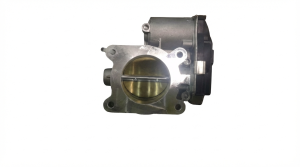
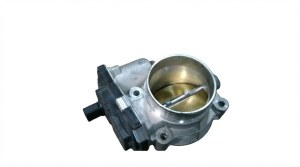
(OEM #V6 (LFX): 12670981; V8 (LS3/L99): 12631186; V8 (LT1): 12670764)— This is the most common fix when cleaning fails. The internal motor and sensors wear out, and the entire unit must be replaced.
Trusted brands: ACDelco, Bosch
OEM price range: $180-$250
Aftermarket price range: $100-$180 - Throttle Body Cleaner — This is the first and cheapest step. Often, a simple cleaning is all that is required to fix the code.
Trusted brands: CRC, Permatex
OEM price range: $5-$15
Aftermarket price range: $5-$15
Related Codes That Often Appear With This One
- P2101 — Control Throttle Actuator Control Motor Range/Performance. This code is very specific to the TAC motor and almost always appears with P1516, especially when an aftermarket throttle body is installed.
- P2119 — Throttle Closed Position Performance. This relates to the throttle plate's ability to return to its resting state, which can be hindered by carbon buildup.
- P2176 — Throttle Actuator Control System - Idle Position Not Learned. This code often appears after a battery disconnect or throttle body cleaning/replacement if the relearn procedure isn't performed or is unsuccessful.
- P0068 — MAP/MAF - Throttle Position Correlation. This code indicates a mismatch between the airflow measured by the MAF sensor and the air expected based on the throttle position, which can be caused by the same throttle body issues.
Technical Service Bulletins (TSBs) & Recalls
- PIP4578B: Addresses idle surge, reduced engine power, and DTCs including P1516 on high mileage vehicles, superseded a previous version to update model years. The core issue identified is carbon buildup affecting throttle plate movement.
Platform-Specific Known Issues
- GM Technical Service Bulletin (TSB) #PIP4578B directly addresses DTC P1516 (among others) on high-mileage vehicles experiencing idle surge and
Mechanic-Grade Diagnostic Values
- Throttle Position Sensor (TPS) Voltage Range — expected: 0.5V (closed) to 4.5V (fully open). Failure: Voltage readings below 0.35V, or values that are erratic or have dead spots as the throttle plate is moved manually.
- Throttle Actuator Control (TAC) Motor Circuit Resistance — expected: 0.1 to 10 ohms between the two motor control pins.. Failure: An open circuit (infinite resistance) or a short (near zero resistance) indicates a failed motor.
- Throttle Body Connector Wires (Internal Break Check) — expected: Wires should have no elasticity.. Failure: If the Yellow or Brown wires near the throttle body connector stretch when pulled, they are broken internally. This is a common failure point.
Scan Tool Commands That Help
- GDS2 / Tech2 (or capable professional scanner): Throttle Position Control / Commanded Throttle — With the key on and engine off, this bidirectional command allows a technician to manually command the throttle plate to open and close. This is used to verify if the actuator motor is working and to watch the live data from the TPS sensors for smooth, corresponding movement without glitches or sticking points.
Wiring & Ground Locations

- Throttle Body Connector (X116 on some diagrams) — Directly on the throttle body assembly.. This 6-pin connector is the single point of failure for all power, ground, and signal to the throttle body. The Yellow and Brown wires (motor control) are known to break internally from vibration. The Gray wire is the 5V reference, and the two TPS signal wires send position data back to the ECM.
- G103 — On the cowl (firewall) at the left rear of the engine compartment, often above the brake booster.. This is a major ground point for the Body Control Module (BCM) and the Data Link Connector (DLC). While not a direct engine ground, poor connection here can cause a variety of difficult-to-diagnose electrical issues that can manifest as communication errors like P1516.
- Engine Block to Firewall Ground Strap — Typically runs from the back of a cylinder head or the engine block to a stud on the vehicle's firewall.. This is a critical ground path. Corrosion or a loose connection here can cause a voltage differential between the engine (where the throttle body is) and the chassis/modules, leading to intermittent P1516 codes. Many owners have fixed persistent issues by cleaning these points or adding a redundant ground wire.
Real Owner Repair Stories
- Tahoe Yukon Forum user 'mdmcinti' (GM SUV (similar TAC system)) — Recurring 'Reduced Engine Power' message and P1516 code, especially after hitting bumps.
❌ Tried (didn't work) Replacing the throttle body, Replacing the pigtail connector
✅ What actually fixed it The owner definitively solved the problem by adding multiple redundant ground wires. Key additions were a 10-gauge wire from the firewall to the engine block and another from the TAC module mounting bolt to the firewall, addressing a persistent grounding issue that part replacement could not fix. - Camaro5 Forum user 'krisprz2010camaross' (2010 Camaro 2SS/RS with aftermarket BBK 102mm throttle body) — P1516 and P2101 codes with 'Reduced Engine Power' mode.
❌ Tried (didn't work) Cleaning the throttle body, Disconnecting the battery, Removing a Vitesse Throttle Controller (this only eliminated the P2101 code, P1516 remained)
✅ What actually fixed it The issue was traced back to the Vitesse Throttle Controller (VTC). Even after receiving a replacement VTC from the manufacturer, the problem persisted. The final resolution implied removing the aftermarket controller, as it was intercepting and altering the throttle signals in a way the ECM could not tolerate, especially on a modified vehicle. - LS1Tech Forum user 'Camaro350Z28' (2005 CTS-V with FAST 102 intake and GM 90mm throttle body) — P1516 code and 'Reduced Engine Power' immediately after a clutch swap.
❌ Tried (didn't work) Clearing codes, Inspecting wiring harness
✅ What actually fixed it The owner discovered that the throttle blade itself had been installed upside down. He had previously drilled a small hole in the blade to help with idling and, upon reassembly, installed it incorrectly, causing the blade to physically stick and not move as commanded. Flipping the blade to its correct orientation resolved the code.
When the Usual Fixes Don't Work
- While replacing the throttle body assembly is a very common and often successful fix, numerous forum threads document cases where this did not solve the problem. The most frequently cited 'real fix' after a new throttle body fails to work is addressing poor or corroded ground connections. Technicians and owners have found that adding redundant ground straps from the engine block to the firewall often provides a permanent solution to intermittent P1516 codes that parts replacement could not resolve.
Helpful Videos


We Have This Part in Stock





The information in this article is provided for general reference and educational purposes only. Vehicle specifications, procedures, and part compatibility can vary by production date, trim level, and region. Always consult your vehicle's factory service manual and verify part numbers before purchasing or performing repairs. Safety-critical components such as airbags, seat belts, and braking systems should be installed by a qualified professional.
- Chevrolet CAMARO:
- 🎬 Helpful Videos
- 🛍️ Shop This Part
- What's Unique About the 2011-2018 Chevrolet CAMARO
- Diagnostic Flowchart
- Symptoms You May Notice
- Most Likely Causes
- Rare But Worth Checking
- Diagnosis Steps
- Parts You'll Likely Need
- Related Codes That Often Appear With This One
- Technical Service Bulletins (TSBs) & Recalls
- Platform-Specific Known Issues
- Mechanic-Grade Diagnostic Values
- Scan Tool Commands That Help
- Wiring & Ground Locations
- Real Owner Repair Stories
- When the Usual Fixes Don't Work
- 🎟️ Get 5% Off