

P1516 on 2007-2014 Cadillac CTS: Reduced Power Causes and Fixes
This code almost always points to a problem with the electronic throttle body. The most common fix is cleaning the throttle body of carbon buildup. If that doesn't work, the entire throttle body assembly often needs to be replaced. Expect to pay $150-$400 for the part. Checking the wiring connector and engine grounds is also a critical diagnostic step.
- P1516 on your Cadillac CTS means the throttle control system has a problem, which will likely put your car in 'Reduced Engine Power' mode.
- Before buying any parts, your first step should be to thoroughly clean the throttle body.
- If cleaning doesn't fix it, inspect the throttle body's electrical connector for damage or a loose fit.
- If the code persists after cleaning and checking the wiring, the most likely solution is to replace the entire throttle body assembly.
- This is a common DIY repair that can save significant money over shop labor costs.
What's Unique About the 2007-2014 Cadillac CTS
On this generation of Cadillac CTS, especially models with the direct-injection 3.6L LLT V6 (2008-2011), the electronic throttle control system is highly sensitive to carbon buildup and electrical connection issues. GM issued Special Coverage Adjustment 14582A for 2008-2011 CTS models, extending the throttle body warranty to 10 years/120,000 miles due to the high failure rate. While P1516 exists on many GM vehicles, on the CTS it's frequently a straightforward issue of a dirty or failing throttle body, though checking the connector and engine grounds are critical steps before replacement.
Diagnostic Flowchart
Tap your situation to follow the diagnostic path that matches what you're seeing on this vehicle.
Generation note: The 2007-2014 range covers the end of the first generation (2007) and the full second generation (2008-2014) of the Cadillac CTS. While the electronic throttle control principle is the same, different engines use different throttle body part numbers. The 2007 LY7 (port-injected) is less prone to carbon buildup than the 2008-2011 LLT (direct-injected), which is notoriously affected. The 3.6L LFX engine was introduced in 2012, which uses a different throttle body part number than the LLT. The causes and diagnostic steps are consistent across these generations.
Symptoms You May Notice
- "Reduced Engine Power" message displayed on the instrument cluster
- Check Engine Light is on
- Little to no response from the accelerator pedal (limp mode)
- Rough, unstable, or surging idle
- Vehicle may stall, especially when coming to a stop
- Poor or hesitant acceleration
- Intermittent issue that only occurs at idle or during deceleration
- Replacing the accelerator pedal position (APP) sensor. While part of the throttle control system, a faulty pedal sensor usually triggers its own specific set of codes (like P2138) and is not a common cause for an isolated P1516.
Most Likely Causes
- Dirty or Carbon-Clogged Throttle Body 🔴 High Probability As noted in TSB PIP4578B, carbon from the PCV system builds up, restricting the throttle plate's movement. This is especially common on the direct-injection LLT engine where fuel doesn't wash over the throttle plate. The buildup can cause the plate to stick or move slowly.
How to confirm: Remove the air intake tube from the throttle body. Visually inspect the throttle plate and the bore for a thick layer of black carbon soot, especially around the edges where the plate closes.
Typical fix: Remove the throttle body and clean it thoroughly with a dedicated throttle body cleaner and a soft brush or rag. Do not move the plate by hand if possible. A throttle relearn procedure is required after cleaning. 🎬 Watch: Step-by-step guide to cleaning your CTS throttle body.
Est. part cost: $10-$20 - Failing Throttle Body Assembly 🟡 Medium Probability The internal electric motor or the integrated throttle position sensor (TPS) can wear out over time, leading to an internal failure. The wear is often visible on the sensor's contact paths. This was common enough for GM to issue a warranty extension (SCA 14582A) for 2008-2011 models.
How to confirm: If a thorough cleaning does not resolve the code, and the wiring and grounds are confirmed to be good, the throttle body itself is the next likely culprit. A scan tool may show erratic TPS voltage readings or a high motor current draw.
Typical fix: Replace the entire throttle body assembly. Aftermarket brands like Dorman or Hitachi are common, with ACDelco being the OEM choice. A throttle relearn procedure is mandatory after replacement.
Est. part cost: $150-$400 - Poor Connection or Damaged Wiring at Throttle Body 🟡 Medium Probability The engine harness connector (pigtail) at the throttle body is subject to heat and vibration, which can cause terminals to loosen, corrode, or wires to break internally inside the insulation.
How to confirm: With the engine running, carefully wiggle the connector and harness to see if it triggers the 'Reduced Power' mode. Unplug it and inspect the terminals for corrosion, moisture, or a loose fit. Check for broken wires inside the insulation near the connector.
Typical fix: Clean the connector terminals with contact cleaner. If terminals are loose or the connector is damaged, replace the pigtail connector. The ACDelco pigtail part number is often PT1522 or similar.
Est. part cost: $20-$50
Rare But Worth Checking
- Poor Engine Ground Connection: Multiple GM platforms experience P1516 due to corroded or loose engine grounds. On the CTS, check grounds on the cylinder heads (G130/G131) and the main engine ground G107, often located on the front of the right cylinder head. Cleaning these connection points or adding redundant ground straps has fixed the issue 🎬 See how cleaning grounds can solve the Reduced Power light. for many owners.
- Faulty Powertrain Control Module (PCM): This is the least likely cause. The PCM should only be considered after all other possibilities—throttle body, wiring, and grounds—have been definitively ruled out. Sometimes a PCM software update from a dealer can resolve logic errors.
- Ice Buildup in Throttle Body: In very low ambient temperatures, condensation from the PCV system can freeze inside the throttle body, causing the plate to stick. GM TSB PI0746D discusses this issue on LY7 and LLT engines, recommending an updated, insulated PCV tube.
Diagnosis Steps
- Read the trouble codes with an OBD-II scanner. Note all codes present, especially P2135, P2101, or P2119.
- Inspect the wiring harness and connector at the throttle body. Look for damage, corrosion, or loose pins. Wiggle the harness with the engine idling to see if the fault can be induced.
- Disconnect the air intake hose. Examine the throttle body bore and plate for heavy carbon buildup.
- If dirty, remove the four 10mm bolts, unplug the connector, and clean the throttle body thoroughly off the vehicle using throttle body cleaner and a soft cloth/brush. Pay special attention to the area where the plate seats.
- Reinstall the throttle body, clear codes, and perform a throttle relearn procedure. For many GMs, this can be done without a scan tool by idling the engine for 3 minutes, turning it off for 1 minute, and restarting for another 3 minutes.
- If the code returns, locate and inspect major engine ground connections for tightness and corrosion. Key locations include the cylinder heads and main block-to-chassis straps.
- If grounds are good and cleaning didn't work, the throttle body assembly has likely failed internally and should be replaced.
- After replacement, a throttle relearn procedure is mandatory.
Parts You'll Likely Need
- Throttle Body Assembly
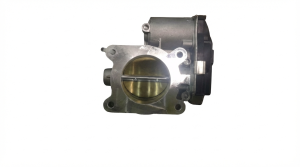
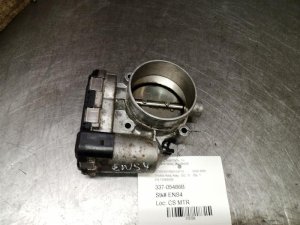
(OEM #ACDelco 12694878 (for 2007 3.6L LY7 & 2008-2011 3.0L/3.6L LLT) or ACDelco 12676296 (for 2012-2014 3.6L LFX). Part numbers are frequently superseded.)— This is the most common fix when cleaning the original part doesn't work. The internal motor or sensor fails, requiring replacement of the whole unit.
Trusted brands: ACDelco, Delphi, Hitachi, Dorman
OEM price range: $250-$400
Aftermarket price range: $150-$250 - Throttle Body Cleaner — Often, a simple but thorough cleaning is all that is needed to restore proper throttle plate movement and resolve the code, especially on direct-injection engines.
Trusted brands: CRC, Berryman, Gumout
OEM price range: $10-$20
Aftermarket price range: $10-$20 - Throttle Body Connector Pigtail
(OEM #ACDelco PT1522 / Dorman 645-234 (verify fitment))— If wiggling the connector causes the issue, the pigtail likely has broken wires or loose terminals from heat and vibration.
Trusted brands: ACDelco, Dorman, Standard Motor Products
OEM price range: $40-$60
Aftermarket price range: $20-$40
Related Codes That Often Appear With This One
- P2135 — This code indicates a 'Throttle/Pedal Position Sensor/Switch A/B Voltage Correlation' error. It often appears with P1516 because both codes relate to the PCM not getting reliable data about the throttle plate's position.
- P0121 — This code points to 'Throttle/Pedal Position Sensor 'A' Circuit Range/Performance'. Like P2135, it indicates a problem with the sensor data the PCM is receiving from the throttle body.
- P2101 — This code means 'Throttle Actuator Control Motor Circuit Range/Performance', pointing directly to a problem with the electric motor inside the throttle body, which is a common cause of P1516.
- P2119 — Indicates 'Throttle Actuator Control Throttle Body Range/Performance'. This often means the throttle plate is sticking or not closing properly, usually due to carbon buildup, which directly leads to the P1516 performance error.
Technical Service Bulletins (TSBs) & Recalls
- PIP4578B: Mentions DTC P1516 in relation to idle surge and reduced engine power on high mileage vehicles, suggesting a throttle body cleaning and idle learn reset is required.
- SCA 14582A: Not a TSB, but a Special Coverage Adjustment (warranty extension) from GM for failing throttle bodies on 2008-2011 CTS models, acknowledging the widespread problem.
- PI0746D: Addresses P1516 and other codes caused by ice or oil deposits in the air intake duct and throttle body on 3.6L engines in low ambient temperatures.
Platform-Specific Known Issues
- A GM Technical Service Bulletin (TSB #PIP4578B) addresses this code, along with others like P2101 and P2176, on high-mileage vehicles that experience idle surge or reduced power, pointing toward throttle body issues.
Mechanic-Grade Diagnostic Values
- Throttle Actuator Control (TAC) Motor Resistance — expected: 2 to 15 Ohms. Failure: A reading of less than 1 Ohm indicates a short; an Over Limit (OL) reading indicates an open circuit.
- Throttle Position Sensor (TPS) 1 Resistance Sweep — expected: Resistance should increase smoothly from a baseline (e.g., ~2.7 kOhms) as the throttle plate is opened by hand.. Failure: Value stays stuck, has gaps, or does not change smoothly, indicating a worn spot on the sensor's resistive track.
- Throttle Position Sensor (TPS) 2 Resistance Sweep — expected: Resistance should decrease smoothly from a baseline (e.g., ~2.2 kOhms) as the throttle plate is opened by hand (inverse of TPS1).. Failure: Value stays stuck, has gaps, or does not change smoothly, indicating a worn spot on the sensor's resistive track.
Scan Tool Commands That Help
- GDS2 / Tech2 / High-End Scanner: Analyze Freeze Frame Data — To see the exact engine conditions (RPM, speed, temp, etc.) that were present at the moment the P1516 code was triggered.
- GDS2 / Tech2 / High-End Scanner: Idle Learn Reset / Throttle Learn — This function is mandatory after cleaning or replacing the throttle body to reset learned values and establish a new baseline idle position. While a manual procedure exists, the scan tool command is the most reliable method.
Wiring & Ground Locations
- Throttle Body Connector (6-Pin) — The electrical connector plugged directly into the electronic throttle body assembly.. This is the single point of failure for all signals and power to the throttle body. Pin functions are typically: Pin A: TAC Motor Control, Pin B: TAC Motor Control, Pin C: Low Reference (Ground), Pin D: TPS 1 Signal, Pin E: 5-Volt Reference, Pin F: TPS 2 Signal.
- G130 — On the rear of the right cylinder head.. This is a primary ground point for the Engine Control Module (ECM). A poor connection here can cause erratic ECM behavior and false throttle-related codes.
- G131 — On the left rear of the engine.. This is another critical engine ground. Intermittent or poor connection can lead to a variety of sensor and actuator problems, including P1516.
- G107 — Often located on the front of the right cylinder head.. This is a main engine ground point. Verifying it is clean and tight is a key diagnostic step before replacing expensive parts.
Real Owner Repair Stories
- Tahoe Yukon Forum user (GM Truck (similar TAC system)) — Recurring P1516 and 'Reduced Engine Power' message, especially when hitting bumps.
❌ Tried (didn't work) Replacing parts repeatedly without success.
✅ What actually fixed it The final solution was adding multiple new, redundant ground wires. Specifically, new grounds were run from the battery to the throttle body, from the throttle body to the firewall, and from the firewall to the alternator bracket and PCM. This suggests the factory grounds were insufficient or had degraded, even if they appeared visually okay. - GM Forum user 'dpieroni3' (2006 GMC Sierra 2500HD 6.0L) — P1516, P2135, P0220, 'Reduced Engine Power' mode, especially at idle or after coming to a stop. Butterfly on throttle body was seen clicking back and forth before the error.
❌ Tried (didn't work) Cleaning the throttle body., Replacing the throttle position sensor on the side of the TB., Performing a throttle relearn procedure.
✅ What actually fixed it Replacing the entire throttle body assembly resolved all codes and the 'Reduced Engine Power' issue.
OEM Part Supersession History
12604075, 12609009, 12616994→ACDelco 12694878— Part revision and consolidation for the first-generation 3.6L engine.
Heads up: This part number is for the 2007 Cadillac CTS with the 3.6L LY7 engine. It is NOT compatible with 2008 and newer models.12632171, 12648414, 12669536, 12671014→ACDelco 12676296— Part revision and consolidation for the direct-injection 3.0L/3.6L engines.
Heads up: This part number is for the 2008-2011 CTS (LLT engine) and 2012-2014 CTS (LFX engine). It is NOT compatible with the 2007 model.
Model Year Variations Within This Range
- 2007: Uses the port-injected 3.6L LY7 engine. The correct throttle body is ACDelco P/N 12694878 or its predecessors.
- 2008-2011: Uses the direct-injected 3.6L LLT V6, which is highly prone to carbon buildup causing this code. The correct throttle body is ACDelco P/N 12676296 or its predecessors.
- 2012-2014: Uses the updated direct-injected 3.6L LFX V6. While still susceptible, it uses the same throttle body service part (ACDelco 12676296) as the LLT engine.
Helpful Videos

Used OEM Parts in Stock




New Aftermarket Parts Available




The information in this article is provided for general reference and educational purposes only. Vehicle specifications, procedures, and part compatibility can vary by production date, trim level, and region. Always consult your vehicle's factory service manual and verify part numbers before purchasing or performing repairs. Safety-critical components such as airbags, seat belts, and braking systems should be installed by a qualified professional.
- Cadillac CTS:
- 🎬 Helpful Videos
- 🛍️ Shop This Part
- What's Unique About the 2007-2014 Cadillac CTS
- Diagnostic Flowchart
- Symptoms You May Notice
- Most Likely Causes
- Rare But Worth Checking
- Diagnosis Steps
- Parts You'll Likely Need
- Related Codes That Often Appear With This One
- Technical Service Bulletins (TSBs) & Recalls
- Platform-Specific Known Issues
- Mechanic-Grade Diagnostic Values
- Scan Tool Commands That Help
- Wiring & Ground Locations
- Real Owner Repair Stories
- OEM Part Supersession History
- Model Year Variations Within This Range
- 🎟️ Get 5% Off