

OBD-II Code P1515: Electronic Throttle System Performance
What P1515 means, why it triggers, and how to fix it
- Code P1515 triggers 'Reduced Engine Power' mode, limiting your vehicle to 25-40 mph because the throttle plate position does not match the computer's command.
- Replacing the electronic throttle body assembly fixes P1515 in over 70% of cases, typically costing between $250 and $700 for parts and labor.
- Never drive on the highway with an active P1515 code; the sudden loss of acceleration creates a severe crash risk when merging or passing.
- Verify your manufacturer's specific code definition before buying parts, as BMW, Subaru, and VW use P1515 for unrelated battery or intake manifold faults.
What Does P1515 Mean?

P1515 means the Powertrain Control Module (PCM) detects a mismatch in the electronic throttle control system. The computer commanded the throttle blade to open to a specific angle, but the Throttle Position Sensor (TPS) reports a different angle.
Technical definition: Control Module Throttle Actuator Position Performance. The PCM detects that the actual throttle plate position, reported by the Throttle Position Sensor (TPS), deviates from the commanded position by more than the calibrated limit for over one second.
Can I Drive With P1515?
Yes, But With Caution. You can drive, but the vehicle enters 'Reduced Engine Power' mode. Acceleration drops to dangerously slow levels, capping top speed at 25-40 mph. This makes highway driving or merging unsafe. Short, low-speed trips to a repair shop are possible, but prolonged driving forces an improper air-fuel mixture that destroys the catalytic converter—an $800 to $2500 repair.
Common Causes

- Faulty Electronic Throttle Body Assembly (Very Common) — The internal electric motor, plastic gears, or built-in Throttle Position Sensor (TPS) fails, causing incorrect readings or a stuck throttle plate.
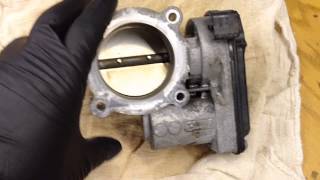
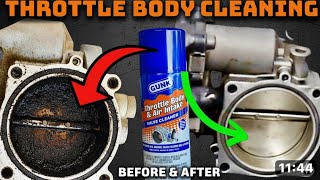
- Dirty or Obstructed Throttle Body (Common) — Carbon buildup or a foreign object physically jams the throttle plate, preventing it from reaching the commanded angle.
- Wiring Harness or Connector Issues (Common) — Wires leading to the throttle body break, corrode, or short out. The connector pigtail is highly susceptible to engine vibration and heat damage.
- Insufficient System Voltage (Common) — The electronic throttle requires a stable 12.4V to 14.7V. A weak battery or failing alternator causes the throttle control module to behave erratically.
- Failed Throttle Actuator Control (TAC) Module (Less Common) — On early 2000s GM trucks, a separate firewall-mounted TAC module controls the throttle body. Internal failure sends incorrect commands.
- Faulty Accelerator Pedal Position (APP) Sensor (Less Common) — The APP sensor sends erratic pedal position signals, causing the computer to command a throttle position that conflicts with actual engine load.
- Failed Throttle Body Relearn (Less Common) — Skipping the mandatory electronic relearn procedure after cleaning or replacing the throttle body leaves the PCM unaware of the correct closed-throttle baseline.
- PCM Failure or Software Glitch (Rare) — The Powertrain Control Module suffers a hardware failure or requires a manufacturer software update to correct logic errors misinterpreting throttle signals.
Symptoms

- Poor or Delayed Throttle Response — The car hesitates or responds slowly to the gas pedal, occasionally surging or jerking.
- Rough Idle or Stalling — The engine idles erratically, hunts for speed, or shuts off completely when coming to a stop.
- Engine Won't Start — If the PCM cannot determine the throttle position, it prevents the engine from starting as a safety measure.
- Reduced Engine Power / Limp Mode (also visible on scanner) — The computer intentionally limits engine power to prevent damage. The car feels sluggish and tops out at 25-40 mph. 🎬 Watch: A real-world diagnostic battle with P1515 and reduced power.
- Check Engine Light is On (also visible on scanner) — The Malfunction Indicator Lamp (MIL) illuminates immediately upon fault detection.
- Increased Fuel Consumption (also visible on scanner) — An inefficient throttle system forces the engine to burn excess fuel to maintain the air-fuel ratio.
Diagnostic Flowchart

Tap your situation to follow the diagnostic path that matches what you're seeing on this code.
Common Fixes & Costs
- Replace Electronic Throttle Body Assembly
— Parts: $150-$500, Labor: $100-$200, ~1.2 hr book time
(Intermediate)
Chevrolet Silverado / GMC Sierra (2003-2006): OEM ACDelco 217-2296 (Alt: Bosch 0280750131)
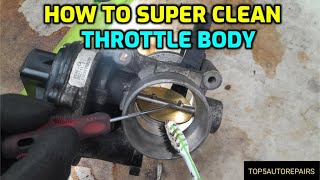
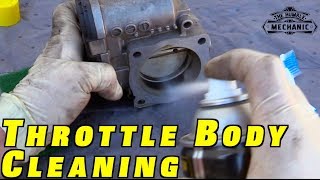
Ford Focus (2008-2011, 2.0L): OEM Motorcraft TB-11 (Alt: Dorman 977-588) - Clean Throttle Body — Parts: $10-$20, Labor: $100-$150, ~1 hr book time (DIY)
- Repair Wiring Harness or Connector — Parts: $10-$50, Labor: $150-$300, ~2.5 hr book time (Professional)
- Replace Throttle Actuator Control (TAC) Module
— Parts: $150-$400, Labor: $100-$200, ~1 hr book time
(Intermediate)
Chevrolet Silverado / GMC Sierra (2002): OEM ACDelco 12573059 (Alt: Dorman 600-500) - Replace Accelerator Pedal Position (APP) Sensor — Parts: $50-$200, Labor: $50-$150, ~0.8 hr book time (DIY)
DIY vs Professional
- Clean Throttle Body — Beginner:
Tools: Screwdrivers, ratchet/sockets, throttle body cleaner, rags. - Replace Accelerator Pedal Position (APP) Sensor — Beginner:
Tools: Basic hand tools (ratchet/sockets). - Replace Electronic Throttle Body Assembly — Beginner:
Tools: Ratchet/sockets, screwdrivers, torque wrench, new gasket, OBD-II scan tool. - Replace Throttle Actuator Control (TAC) Module — Beginner:
Tools: Basic hand tools (ratchet/sockets). - Repair Wiring Harness or Connector — Beginner:
Tools: Soldering iron, heat shrink tubing, wire strippers, multimeter, wiring diagrams.
Used vs. New Parts: Buying Guide
When a used part is worth it: For older, high-mileage vehicles where a new OEM part is cost-prohibitive, or if the part is discontinued and no new replacements exist.
Donor-vehicle mileage cap: roughly under 80000 miles for the part to have meaningful remaining life.
Donor quality checklist:
- Verify the part number matches your original exactly.
- Source from a reputable salvage yard offering at least a 90-day warranty.
- Inspect the part for physical damage, corrosion, or excessive carbon buildup.
Decision logic:
- If Vehicle is less than 8 years old or has under 100K miles → Buy a new OEM or high-quality aftermarket part for maximum reliability.
- If Vehicle is over 10 years old and budget is the primary concern → A tested, used part from a low-mileage vehicle is an acceptable risk.
- If The part is a known high-failure item for your specific model → Favor a new part, as a used one is prone to the exact same failure.
Warranty tradeoff: Used parts typically come with a 30-90 day part-only warranty. Aftermarket new parts offer a 1-year to limited lifetime warranty. OEM parts carry a 1-2 year warranty.
Worst-case if a used part fails: $200-$500 if a used part fails after the warranty period, requiring repeat labor and a second replacement part.
What Happens If You Wait — Timeline
- Immediate: Check Engine Light illuminates. Vehicle enters limp mode with severely limited acceleration and a top speed of 25-40 mph. (MPG impact: 5-10%% · Added cost: $0)
- 1 week - 2 months: Inefficient air-fuel mixture increases fuel consumption and causes occasional rough idle or stalling. (MPG impact: 10-20%% · Added cost: $50-$150 in wasted fuel)
- 2-6 months: Persistent incorrect air-fuel ratio causes the engine to run rich, overheating and damaging the catalytic converter substrate. (MPG impact: 15-25%% · Added cost: $800-$2500 (catalytic converter damage))
- 6+ months: Complete catalytic converter meltdown creates exhaust blockages. Prolonged rich conditions foul spark plugs and oxygen sensors. (MPG impact: 20-30%% · Added cost: $1500-$4000 (catalytic converter, O2 sensors, spark plugs))
Cost of Not Fixing It
- Immediate: Vehicle is stuck in 'Reduced Engine Power' mode, making it dangerously slow and potentially leaving you stranded. (Added cost: Negligible)
- 1-6 months: An incorrect air-fuel mixture causes the engine to run rich, overheating and destroying the catalytic converter. (Added cost: $1000-$2500)
- 6+ months: Prolonged rich conditions foul spark plugs and oxygen sensors, leading to misfires and further driveability issues. (Added cost: $200-$500)
Diagnosis Steps
- Check for Other Codes
Use an OBD-II scanner to read all stored codes. Codes P0120-P0124, P2135, P2138, P1516, or P2101 pinpoint specific sensor or module failures.
Tools: OBD-II Scanner (Beginner) - Inspect the Throttle Body
Remove the air intake tube. Inspect for heavy carbon buildup or foreign objects jamming the plate. With the key off, push the plate gently; it must move smoothly and spring back without sticking.
Tools: Screwdriver, Ratchet set (Beginner) - Inspect Wiring and Connectors
Visually trace the harness from the throttle body to the PCM. Look for chafed wires. Unplug the connector and check for bent pins, corrosion, or water intrusion.
Tools: Flashlight (Beginner) - Analyze Live Scan Tool Data
Compare 'Commanded Throttle Position' with 'Actual Throttle Position' (TPS1 and TPS2) on a scan tool. Slowly press the gas pedal. The values must track closely. If actual position lags, sticks, or TPS1/TPS2 voltages lack a smooth inverse relationship, the throttle body is faulty.
Tools: OBD-II Scan Tool with Live Data (Intermediate) - Perform a 'Wiggle Test'
With the engine running, monitor TPS voltage on a scan tool. Gently wiggle the wiring harness at the throttle body. Erratic voltage jumps or engine stumbling confirms a broken wire.
Tools: OBD-II Scan Tool with Live Data (Intermediate) - Test Circuit Voltages
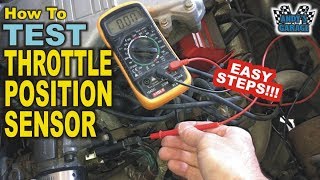
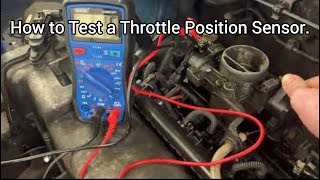
Use a multimeter to verify a stable 5V reference and a solid ground at the throttle body connector. This confirms the PCM is delivering proper power.
Tools: Digital Multimeter, Wiring diagram (Advanced) - Test Throttle Motor Resistance
Unplug the throttle body. Measure resistance across the actuator motor terminals (typically 3-100 ohms, check manual). Measure TPS resistance while sweeping the plate by hand; it must change smoothly without dropouts.
Tools: Digital Multimeter, Service manual (Advanced) - Scope Test Actuator and Sensors
Connect a 2-channel oscilloscope to the TPS1 and TPS2 signal wires. Sweep the throttle to catch micro-glitches or dropouts a multimeter misses.
Tools: 2-Channel Oscilloscope, Wiring diagram (Professional)
When This Code Triggers (Freeze-Frame Conditions)
- Engine Coolant Temp: 70-190°F (During warm-up or fully warmed up.)
- RPM: 0-800 (At startup or during idle.)
- Engine Load: 15-30% (Low load, such as idling or light throttle application.)
- Vehicle Speed: 0 mph (Often triggers when the vehicle is stationary, immediately after starting.)
Related Codes
- P1516 — Nearly identical to P1515. P1515 is set by the PCM, while P1516 is set by the Throttle Actuator Control (TAC) module. Diagnostics are identical.
- P2135 — Indicates a 'Throttle/Pedal Position Sensor Voltage Correlation' error. The two internal sensors give conflicting readings, directly condemning the throttle body assembly.
- P0121 / P0221 — Generic codes for TPS circuit performance. They point to a range issue with a single sensor circuit, whereas P1515 indicates the physical plate is out of position.
- P2101 — Points specifically to a performance problem with the throttle actuator motor or its circuit, rather than a general correlation error.
- P0068 — Indicates a MAP/MAF to Throttle Position correlation error. A stuck throttle plate causes a conflict between measured airflow and reported throttle angle.
Climate & Environmental Factors
- Cold Weather: Temperatures below freezing cause carbon buildup to harden, binding the throttle plate. Moisture inside connectors also freezes, causing temporary open circuits. The problem often vanishes once the engine bay warms up.
- High Humidity / Moisture: Water intrusion from heavy rain or pressure washing corrodes connector pins, causing intermittent signal loss.
How to Talk to a Mechanic About This Code
Say this: "I have a P1515 code and the car is in 'Reduced Power Mode.' Please check for wiring issues, proper system voltage, and live data correlation between the commanded and actual throttle position before recommending a new throttle body."
This signals you understand the common causes beyond just a bad part. It encourages thorough diagnosis to avoid paying for a throttle body when the issue is a simple wiring fix or weak battery.
Avoid saying:
- 'Just replace the throttle body.'
- 'My check engine light is on, can you look at it?'
- 'Whatever you think is best.'
Questions to ask before authorizing the repair:
- Did you perform a 'wiggle test' on the harness to check for intermittent connections?
- What were the TPS1 and TPS2 voltage readings during the test? Did they track correctly?
- Have you confirmed stable voltage and a good ground at the throttle body connector?
- What is the warranty on the recommended part and the labor?
Where to Take It: Dealer vs Independent vs Chain
- Dealer:
Recommended if the vehicle is under warranty or has a manufacturer-specific quirk. Otherwise, an independent shop is more cost-effective.
Best for: Vehicles under powertrain or emissions warranty., Vehicles with manufacturer-specific code definitions (e.g., BMW, VW, Subaru)., Complex electrical issues requiring a PCM software update.
Downsides: Highest labor rates., May default to replacing the entire throttle body assembly for minor wiring faults. (Typical cost: +50% vs. baseline) - Independent Shop:
Best fit for most P1515 repairs. Find a shop with strong electrical diagnostic skills.
Best for: Out-of-warranty vehicles, especially common domestic models (GM, Ford)., Vehicle owners seeking a better price than the dealer.
Downsides: Diagnostic skill varies. Vet shops based on reviews and ASE certifications., May lack access to the latest manufacturer software updates. (Typical cost: +0% vs. baseline) - Chain Shop:
Use with caution. Acceptable for a straightforward throttle body replacement, but avoid for initial diagnosis of an intermittent fault.
Best for: Simple part replacements when the diagnosis is already certain., Reading the initial code for free.
Downsides: Technicians may lack experience for proper electrical diagnosis., High pressure to sell parts leads to replacing the throttle body without confirming root cause. (Typical cost: -10% vs. baseline)
When to Walk Away From the Repair
If the estimated repair cost exceeds 40-50% of the car's private-party value, seriously consider selling or trading in the vehicle.
- Car worth $5000, fix is $750: Fix it. The repair cost is well below the 50% threshold and restores critical functionality.
- Car worth $3000, fix is $1200: Borderline. The cost is approaching 40% of the car's value. Get a second opinion to ensure the diagnosis is correct.
- Car worth $2000, fix is $1500: Walk away. The repair cost is over 75% of the vehicle's value. It is not an economically sound repair.
What Scan Tool You Need for This Code
Minimum: A scanner that reads and graphs live data, specifically Commanded Throttle Position and the two Throttle Position Sensors (TPS1, TPS2).
A basic $20 code reader only shows the P1515 code. Without live data, you cannot see the mismatch between the computer's command and the actual throttle position.
Budget: BlueDriver Pro (~$100) — Connects to your smartphone via Bluetooth. It reads the code, provides freeze-frame data, and graphs live data for the throttle position sensors to confirm a sensor glitch.
Mid-range: Autel MaxiCOM MK808S / Foxwell NT809 (~$300-400) — Offers live data graphing and adds bidirectional control. This is critical for performing the electronic throttle relearn procedure required after replacing the throttle body.
Professional: Autel MaxiSys MS906 / Launch X431 Series (~$900-1500) — Provides full professional-level diagnostics, advanced bidirectional controls, and ECU coding functions. Overkill for a single DIY repair.
How to Clear the Code After You Fix It
- Reconnect battery if disconnected for repair.
- Use an OBD-II scan tool to clear diagnostic trouble codes.
- Perform a throttle body relearn procedure as specified by the manufacturer.
- Complete a full drive cycle to allow readiness monitors to run.
Drive cycle (~20 minutes): Cold start, let idle for 2-3 minutes. Drive in stop-and-go traffic for 5-10 minutes. Drive at a steady highway speed (55 mph) for 5-10 minutes. Let the vehicle cool down completely.
Readiness monitors affected: Catalyst (CAT) monitor, Evaporative System (EVAP) monitor, Oxygen (O2) Sensor monitor
Before emissions retest: drive at least 100 miles to fully set monitors.
Watch out for:
- Disconnecting the battery clears the code but resets all readiness monitors to 'Not Ready', causing an automatic emissions failure.
- The code returns immediately if the underlying mechanical or electrical fault remains.
- Failing to perform the throttle body relearn procedure causes a new set of idle or performance codes.
Will This Fail Emissions / State Inspection?
Yes — this code typically fails an OBD-II emissions inspection.
- California: An illuminated Check Engine Light is an automatic failure. All readiness monitors must be 'Ready' before a retest.
- New York: An active P1515 code causes an immediate OBD-II inspection failure.
- Texas: An illuminated Check Engine Light is an automatic failure. After clearing the code, you can have at most one monitor 'Not Ready' to pass.
Most Commonly Affected Vehicles
- Chevrolet Silverado / Tahoe / Suburban (2002-2007) — Extremely common. Causes are typically a failed throttle body or broken wires at the connector. Remanufactured throttle bodies sometimes have incorrect internal voltage ranges, causing the code to return.
- GMC Sierra / Yukon (2002-2007) — Shares the exact powertrain as Chevrolet trucks, making it equally susceptible to throttle body and wiring failures.
- Chevrolet Trailblazer (2002-2009) — The throttle body is a high-failure item on these models, directly triggering P1515 and reduced power mode.
- Ford Focus / Fiesta / Fusion (2005-2016) — Points directly to a fault within the Electronic Throttle Control System (ETCS), requiring throttle body replacement.
- BMW 3-Series (E90) / Z4 (E85) (2003-2012) — CRITICAL: On BMWs, P1515 means 'Engine Off Timer Plausibility' or a CAN bus communication fault, NOT a throttle body issue. It is frequently caused by a weak or improperly registered battery.
- Volkswagen Golf / Jetta / Passat (2000-2010) — CRITICAL: Indicates a 'Short to Ground in Intake Manifold Changeover Valve Circuit'. This relates to the intake runner length mechanism, not the throttle body.
- Subaru Outback / Forester / Impreza (2000-2008) — CRITICAL: Points to a fault in the 'Idle Air Control (IAC) Solenoid Valve Circuit', which is separate from the main electronic throttle control system.
Manufacturer-Specific Notes
- General Motors (Chevrolet, GMC, Cadillac): GM vehicles trigger a 'Reduced Engine Power' message. Early 2000s trucks use a separate Throttle Actuator Control (TAC) module on the firewall that frequently fails. GM issued Special Coverage Adjustment 11273 for 2008-2011 V8 models, extending the TPS warranty to 10 years/120,000 miles.
- Ford: Ford defines this as an Electronic Throttle Control System (ETCS) issue. Diagnosis focuses on the throttle body, wiring, and sensors.
- Jeep / Chrysler: On some Jeeps, P1515 means 'Lost Communication with Brake System Control Module' and is entirely unrelated to the throttle.
- Hyundai / Kia: P1515 refers to an 'Idle Speed Actuator' coil fault or an 'Oil Temperature Sensor' issue. For Kia, it indicates an 'A/T to M/T Codification' error after module replacement.
Real Owner Stories
2002 Cadillac Escalade at 114K miles with intermittent P1515 in cold weather
Vehicle entered 'Reduced Engine Power' mode and stalled, but only when temperatures dropped below freezing. The issue vanished after the engine warmed up.
What they tried:
- Replaced the Throttle Position Sensor (TPS) and cleaned the throttle body.
- Replaced the Mass Airflow Sensor and throttle body gasket.
Outcome: The root cause was a failing electronic throttle body assembly. A remanufactured unit was sourced for $439, resolving the problem.
Lesson: Intermittent failures occurring only in cold weather point to mechanical binding or electronic components failing at low temperatures. Replacing the entire throttle body assembly is often required.
2003 Chevy Trailblazer stalled while driving, would not restart
The vehicle suddenly stalled, displayed codes P1515 and P1516, and refused to restart.
What they tried:
- Suspected a throttle body issue based on forum research.
Outcome: A new throttle body assembly was ordered online for $148. After installation, the vehicle started immediately and ran smoothly.
Lesson: A complete stall and no-start condition occurs when the PCM cannot verify throttle position and cuts fuel for safety. Replacing the throttle body assembly is the direct fix.
Corvette owner gets P1515 after DIY air intake work
After reinstalling an air bridge, the car immediately went into 'Reduced Engine Power' mode and set a P1515 code.
What they tried:
- Suspected an air leak or loose connection caused during the work.
Outcome: The owner found a rubber band-like reducer from the old intake had fallen into the throttle body bore, physically jamming the plate open. Removing it fixed the issue.
Lesson: If a code appears immediately after a repair, re-inspect your work. Foreign objects or loose connectors introduced during the repair are highly likely causes.
2001 Silverado 5.3L with cold weather stalling and P1515/P1221
Truck coughed and died upon startup only when parked outside in cold weather.
What they tried:
- Replaced the MAF sensor and cleaned the throttle body.
Outcome: The issue was a severe vacuum leak from worn intake manifold gaskets. Replacing the gaskets resolved the cold-start stalling.
Lesson: A significant vacuum leak causes the PCM to see a mismatch between expected airflow and throttle position, triggering P1515 during cold open-loop operation.
How to Prevent This Code From Triggering
- Clean the throttle body periodically (Every 30,000-50,000 miles) — Removes carbon and oil residue that causes the throttle plate to stick, ensuring smooth airflow and proper plate movement.
- Use high-quality, top-tier gasoline (Every fill-up) — Detergent packages prevent carbon deposits from forming, reducing blow-by gases recirculated through the PCV system.
- Ensure battery and charging system health (Annually) — The electronic throttle requires stable voltage. A weak battery causes the throttle actuator to behave erratically.
- Install an oil catch can (Once, with periodic draining) — Intercepts oil vapor from the PCV system before it coats the throttle body, significantly reducing carbon buildup.
Frequently Asked Questions
What is 'Reduced Engine Power' mode?
It is a safety feature where the computer drastically limits engine speed and power upon detecting a critical fault. This protects the engine and allows you to limp the car to a safe location. Top speed is usually capped at 25-40 mph.
What is the difference between P1515 and P1516?
Both codes point to a mismatch between commanded and actual throttle position. P1515 is set by the PCM, while P1516 is set by the Throttle Actuator Control (TAC) module. The diagnostic and repair procedures are identical.
Can a bad battery cause a P1515 code?
Yes. The electronic throttle system requires stable voltage to operate correctly. A weak battery or failing alternator causes voltage drops that lead to erratic throttle behavior. This is especially common on European vehicles.
What is a throttle body relearn and is it necessary?
A relearn procedure allows the PCM to calibrate the new closed and open positions of the throttle plate. It is mandatory after replacing or cleaning the throttle body. Skipping it results in a high or unstable idle and stalling.
Can I just clean the throttle body to fix P1515?
If the throttle plate sticks due to carbon buildup, cleaning restores function and clears the code. However, cleaning will not fix an electronic failure inside the throttle body's motor or sensors.
What are common misdiagnoses for P1515?
A frequent mistake is replacing the throttle body when the root cause is a poor ground connection, a weak battery, or a chafed wire. Another error is replacing only the TPS sensor when the internal motor has failed.
Why does my car only show a P1515 code when it's cold outside?
Moisture inside an electrical connector freezes, causing a poor connection that resolves when the engine bay warms up. Alternatively, carbon buildup hardens in the cold, binding the metal throttle plate until it expands from engine heat.
Will clearing the code make the problem go away?
No. Clearing the code only turns off the check engine light temporarily. As soon as the computer detects the mismatch again, the light returns and the car re-enters reduced power mode.
Key Takeaways
- Code P1515 triggers 'Reduced Engine Power' mode, limiting your vehicle to 25-40 mph because the throttle plate position does not match the computer's command.
- Replacing the electronic throttle body assembly fixes P1515 in over 70% of cases, typically costing between $250 and $700 for parts and labor.
- Never drive on the highway with an active P1515 code; the sudden loss of acceleration creates a severe crash risk when merging or passing.
- Verify your manufacturer's specific code definition before buying parts, as BMW, Subaru, and VW use P1515 for unrelated battery or intake manifold faults.
Helpful Videos


The information in this article is provided for general reference and educational purposes only. Vehicle specifications, procedures, and part compatibility can vary by production date, trim level, and region. Always consult your vehicle's factory service manual and verify part numbers before purchasing or performing repairs. Safety-critical components such as airbags, seat belts, and braking systems should be installed by a qualified professional.
- 🎬 Helpful Videos
- What Does P1515 Mean?
- Can I Drive With P1515?
- Common Causes
- Symptoms
- Diagnostic Flowchart
- Common Fixes & Costs
- DIY vs Professional
- Used vs. New Parts: Buying Guide
- What Happens If You Wait — Timeline
- Cost of Not Fixing It
- Diagnosis Steps
- When This Code Triggers (Freeze-Frame Conditions)
- Related Codes
- Climate & Environmental Factors
- How to Talk to a Mechanic About This Code
- Where to Take It: Dealer vs Independent vs Chain
- When to Walk Away From the Repair
- What Scan Tool You Need for This Code
- How to Clear the Code After You Fix It
- Will This Fail Emissions / State Inspection?
- Most Commonly Affected Vehicles
- Manufacturer-Specific Notes
- Real Owner Stories
- 2002 Cadillac Escalade at 114K miles with intermittent P1515 in cold weather
- 2003 Chevy Trailblazer stalled while driving, would not restart
- Corvette owner gets P1515 after DIY air intake work
- 2001 Silverado 5.3L with cold weather stalling and P1515/P1221
- How to Prevent This Code From Triggering
- Frequently Asked Questions
- What is 'Reduced Engine Power' mode?
- What is the difference between P1515 and P1516?
- Can a bad battery cause a P1515 code?
- What is a throttle body relearn and is it necessary?
- Can I just clean the throttle body to fix P1515?
- What are common misdiagnoses for P1515?
- Why does my car only show a P1515 code when it's cold outside?
- Will clearing the code make the problem go away?
- Key Takeaways
- 🎟️ Get 5% Off