

OBD-II Code P1510: Throttle Control System Malfunction
The Ultimate Guide to P1510: What it means, why it triggers, and how to fix it for good.
- Verify your specific vehicle's P1510 definition before buying parts; Toyota uses it for turbo boost faults, while GM uses it for throttle limitations.
- Clean the throttle body and check battery voltage (target 12.6V) before replacing any components, as carbon buildup causes over 40% of these faults on European makes.
- Do not drive with an active P1510 code; the resulting 30-50 mph 'limp mode' creates a severe safety hazard in traffic and risks a $2,000 catalytic converter failure.
- Inspect the throttle-by-wire harness for internal breaks using a physical 'pull test' if you own a 2008-2022 Harley-Davidson, especially after a handlebar swap.
- Scan for secondary codes like P2135 or P2138; these pinpoint the exact failing sensor circuit and prevent wasting $500 on an unnecessary throttle body replacement.
What Does P1510 Mean?

P1510 is a manufacturer-specific trouble code indicating a malfunction in the engine's throttle control system. The Engine Control Module (ECM) detects the electronic throttle is not performing as commanded. This stems from a physical obstruction, a stuck throttle plate, or a critical communication breakdown between the throttle body, its sensors, and the ECM.
Technical definition: The SAE/OBD-II definition for P1510 varies significantly by manufacturer, causing frequent misdiagnosis. For General Motors, it is 'Throttle Control System Performance - Throttle Limitation Active'. For Ford, it is 'Idle Signal Circuit Malfunction'. For BMW, it is 'Idle-Speed Control Valve Stuck'. For Harley-Davidson, it indicates a Throttle Actuator Control (TAC) system fault. 🎬 Watch: Troubleshooting Harley-Davidson P1510 and P2138 drive-by-wire issues. For Toyota, it means 'Boost Pressure Control Circuit' on turbos or 'Starter Signal Circuit Malfunction'. Always verify your specific make's definition.
Can I Drive With P1510?

Yes, But With Caution. Driving is possible but strongly discouraged. The vehicle enters a reduced power 'limp mode,' limiting speed to 30-50 mph and RPMs to 2000-3000 to prevent engine damage. This safety feature gets you to a safe location, not to your destination. Continuing to drive stresses the transmission and forces a rich fuel mixture, which destroys the catalytic converter—an $800-$2500 repair. Get the vehicle diagnosed immediately to avoid sudden power loss in traffic.
Common Causes

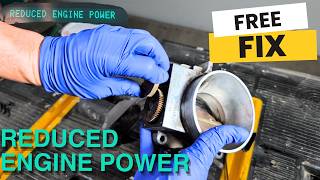
- Dirty or Sticking Throttle Body (Very Common) — Carbon and oil residue build up inside the throttle body, causing the throttle plate to stick, move slowly, or fail to close completely. This is the most frequent cause on European makes like BMW and high-mileage domestic trucks. 🎬 See how to fix reduced engine power on high-mileage trucks.
- Damaged, Corroded, or Broken Wiring (Very Common) — The wiring harness and connectors to the electronic throttle body or pedal sensor fray, pinch, stretch, or corrode. On motorcycles (especially Harley-Davidsons), wires break internally from vibration without visible damage to the outer insulation, creating a hidden intermittent connection.
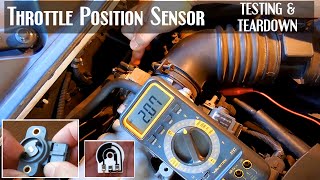
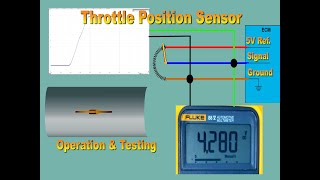
- Faulty Throttle Position Sensor (TPS) (Common) — The TPS is a variable resistor that reports the throttle angle to the computer. It wears out over time, developing dead spots or sending erratic voltage signals that confuse the ECM and trigger the code. 🎬 Watch: A mechanic's guide to testing and understanding TPS signals.
- Weak Battery or Poor Ground Connection (Common) — The electronic throttle system requires stable voltage. A weak battery (under 12.4V), failing alternator, or a corroded main ground strap causes unpredictable electronic dropouts, immediately triggering a P1510 code.
- Failing Throttle Actuator Control (TAC) Motor (Less Common) — In 'drive-by-wire' systems, a small electric motor controls the throttle plate. This motor burns out or its internal plastic gears strip, preventing the throttle from opening or closing correctly.
- Intake Manifold Runner Control (IMRC) Malfunction (Less Common) — On Ford vehicles, this code triggers when the IMRC flaps inside the intake manifold stick. The ECM misinterprets the resulting airflow performance issue as a primary throttle problem.
- Significant Vacuum Leak (Less Common) — A large vacuum leak from a cracked hose or failed intake gasket allows unmetered air into the engine. This spikes the idle RPM higher than the ECM expects for a closed throttle, causing it to flag a throttle control fault.
- Faulty Engine Control Module (ECM) (Very Rare) — The vehicle's main computer suffers a failed driver circuit or corrupted software. Suspect this only after exhaustively ruling out all wiring, sensor, and mechanical possibilities.
Symptoms
- Reduced Engine Power (Limp Mode) — The vehicle feels extremely sluggish and refuses to accelerate past 30-50 mph. The computer intentionally limits engine power to prevent further damage.
- Rough or Unstable Idle — The engine idles unevenly, hunts for a steady RPM, or stalls completely when coming to a stop.
- Poor, Delayed, or No Throttle Response — Pressing the accelerator pedal results in a significant delay, a jerky response, or zero increase in engine speed.
- Cruise Control Inoperative — The ECM disables the cruise control system as a mandatory safety measure because it cannot trust the throttle control data.
- Check Engine Light On (also visible on scanner) — The check engine light (CEL) illuminates immediately. BMWs also illuminate an 'EML' (Electronic Motor Load) warning light.
Diagnostic Flowchart
Tap your situation to follow the diagnostic path that matches what you're seeing on this code.
Common Fixes & Costs
- Cleaning the Throttle Body — Parts: $10-$20, Labor: $75-$150, ~0.5 hr book time (DIY)
- Wiring Harness Repair — Parts: $10-$50, Labor: $150-$400, ~2.0 hr book time (Intermediate)
- Replacing the Entire Electronic Throttle Body Assembly
— Parts: $200-$600, Labor: $150-$250, ~1.2 hr book time
(Professional)
: OEM
: OEM - Replacing the Throttle Position Sensor (TPS) — Parts: $80-$150, Labor: $75-$150, ~0.8 hr book time (Intermediate)
- Replacing the Intake Manifold Runner Control (IMRC) Valve/Actuator
— Parts: $50-$200, Labor: $300-$400, ~2.2 hr book time
(Professional)
: OEM
Used vs. New Parts: Buying Guide
When a used part is worth it: A used OEM electronic throttle body from a low-mileage, accident-damaged vehicle is a cost-effective option for older, high-mileage cars where a new OEM part is cost-prohibitive. It saves 50-75% off the new price.
Donor-vehicle mileage cap: roughly under 80000 miles for the part to have meaningful remaining life.
Donor quality checklist:
- Verify the donor vehicle was not scrapped for engine or electrical problems.
- Match the part number exactly. Superseded part numbers fail to communicate with your vehicle's software.
- Visually inspect the connector pins for corrosion and the throttle bore for excessive wear or scoring.
Decision logic:
- If Vehicle is under 100K miles and you plan to keep it long-term → Buy a new OEM or high-quality aftermarket part for maximum reliability and warranty coverage.
- If Vehicle is over 150K miles and budget is the primary concern → A used OEM part is an acceptable risk, but understand it has a limited remaining lifespan.
- If The specific part is known for high failure rates (e.g., sensor wear) → Strongly favor a new part. A used one likely has the same wear. Aftermarket parts often use improved sensor designs for better durability.
Warranty tradeoff: Used salvage yard parts carry a 30-90 day warranty covering only the part. New aftermarket parts offer 1-year to limited lifetime warranties. New OEM parts usually have a 1-year warranty.
Worst-case if a used part fails: 400-800. If a used throttle body fails after the short warranty period, you pay for a second replacement part plus labor and relearn procedures again.
What Happens If You Wait — Timeline
- 0-4 weeks: Check Engine Light is on. Code P1510 is stored. The vehicle occasionally shows a slight hesitation or unstable idle. Cruise control is disabled. (MPG impact: 0-5%% · Added cost: $0)
- 1-3 months: The vehicle enters 'Reduced Engine Power' or 'Limp Mode' intermittently, especially on startup. The problem becomes frequent, requiring a restart to temporarily fix. Fuel economy declines. (MPG impact: 5-15%% · Added cost: $50-150 in wasted fuel)
- 3-6 months: Limp mode becomes persistent and fails to reset. The incorrect air/fuel mixture stresses the catalytic converter, causing it to overheat. The vehicle is unsafe to drive in traffic. (MPG impact: 15-25%% · Added cost: $1200-2800 (High risk of catalytic converter damage))
- 6+ months: Severe limp mode puts significant strain on the transmission. The catalytic converter clogs, creating excessive engine backpressure. This causes severe engine damage, such as burnt valves or piston failure. (MPG impact: 25%+% · Added cost: $3000-7000+ (Engine or transmission damage))
Cost of Not Fixing It
- Immediate: Vehicle enters 'limp mode' at any time, causing a sudden loss of power that is a significant safety hazard in traffic. Fuel economy drops by 5-15%. (Added cost: Negligible)
- 1-6 months: The incorrect air/fuel mixture causes the catalytic converter to overheat. Continued driving leads to permanent damage and failure of the converter. (Added cost: 1200-2800)
- 6+ months: Persistent limp mode strains the transmission. A damaged catalytic converter clogs, creating excessive backpressure that causes severe engine damage, including burnt exhaust valves. (Added cost: 3000-7000+)
Diagnosis Steps

- Read Codes and Research Definition
Use an OBD-II scanner to confirm P1510 and check for secondary codes (like P2135 or P2138), which pinpoint specific sensor circuits. CRITICAL: Research the exact definition of P1510 for your vehicle's make and model to avoid misdiagnosis.
Tools: OBD-II Scanner (Beginner) - Check Battery and Grounds
Verify the battery is fully charged (12.4V+ with engine off). Clean and tighten the battery terminals. Inspect the main engine-to-chassis ground strap for corrosion. Low voltage is a primary cause of electronic throttle faults.
Tools: Multimeter, Wire Brush (Beginner) - Visual Inspection & Harness 'Wiggle' Test
Inspect the wiring harness to the throttle body and pedal sensor for chafing or melting. With the engine idling, carefully wiggle sections of the harness. If the engine stumbles or stalls, you have located an intermittent short or broken wire.
Tools: Flashlight, Hands (Beginner) - Clean the Throttle Body
Remove the air intake tube. Spray throttle body cleaner onto a rag or soft brush (never directly into the electronics) and meticulously clean the black carbon buildup around the throttle plate and bore. Manually move the plate to clean all edges.
Tools: Screwdrivers/Sockets, Throttle Body Cleaner, Rags, Soft Brush (Intermediate) - PRO TIP: Perform a TPS Voltage Sweep Test
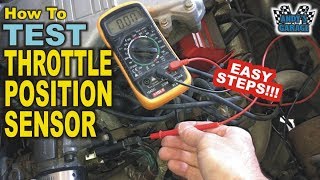
Back-probe the TPS connector signal wire with a multimeter (key on, engine off). It should read ~0.5V at closed throttle. Slowly open the throttle by hand; the voltage must increase smoothly to ~4.5V at wide-open throttle. Any jumps or dead spots confirm a failed TPS.
Tools: Multimeter with back-probes (Advanced) - PRO TIP: Test APP Sensor Correlation
Monitor the voltage outputs of Accelerator Pedal Position (APP) Sensor 1 and 2. On most systems, Sensor 2's voltage is exactly half of Sensor 1's voltage at all times. If the correlation is off by >0.1V, the pedal assembly is faulty.
Tools: Advanced Scan Tool or Multimeter with back-probes (Advanced) - Test the Throttle Actuator Motor
Disconnect the throttle motor and measure resistance across its two pins. The reading should be between 0.3 and 100 ohms (check service manual for exact spec). Infinite resistance means an open circuit; less than 1 ohm means a short. Both require replacement.
Tools: Multimeter (Advanced) - PRO TIP: Analyze Live Data PIDs
Using an advanced scan tool, compare the 'Commanded Throttle Actuator' PID to the 'Absolute Throttle Position' PID. If the computer commands 50% throttle but the sensor reads 20%, you have a failing TAC motor or a mechanically stuck throttle plate.
Tools: Advanced Scan Tool (Advanced)
When This Code Triggers (Freeze-Frame Conditions)
- Engine Coolant Temp: 180-210°F (Fully warmed up, during steady driving.)
- RPM: 700-2500 (Triggers at idle (if stuck) or during steady cruise when the commanded vs. actual position mismatch is detected.)
- Engine Load: 15-40% (Occurs under light to moderate load, not typically during heavy acceleration.)
- Vehicle Speed: 0-60 mph (Occurs at a standstill (stalling/rough idle) or during city/highway driving when throttle response is incorrect.)
Related Codes
- P2135 — Indicates a Throttle/Pedal Position Sensor Voltage Correlation error. P1510 is the result (limp mode), while P2135 is the specific cause. If both are present, the problem is a failing sensor or its wiring.
- P2138 — Points to a voltage correlation error in the Accelerator Pedal Position (APP) Sensor. The computer doesn't trust the driver's input and triggers P1510 as a safety measure. Focus diagnosis on the pedal assembly.
- P2122 / P2127 — Indicates a low voltage input from a specific throttle/pedal position sensor circuit. Use a multimeter on the specific circuit named in the code definition to find the open or short.
- P2004 / P2005 — Indicates the Intake Manifold Runner Control (IMRC) is stuck. An IMRC fault triggers P1510 on Fords because the engine's mismanaged airflow is interpreted as a throttle problem.
Climate & Environmental Factors
- Cold Weather: On older GM trucks, the grease inside the throttle body's actuator gearbox hardens in freezing temperatures. This prevents the motor from moving the throttle plate smoothly on a cold start, triggering a 'Reduced Engine Power' warning that clears once the engine warms up.
- High Humidity / Moisture: Moisture and oil vapor from the PCV system contaminate the electronic sensors and connectors within the throttle body assembly. This leads to corrosion on connector pins and circuit boards, causing intermittent signals.
How to Talk to a Mechanic About This Code
Say this: "I have a P1510 code with the engine going into reduced power mode. I'd like to book a diagnostic appointment. Please start by inspecting the throttle body wiring harness and cleaning the throttle plate before quoting a full throttle body replacement, as I understand those are common and cheaper fixes."
This signals to the shop that you are an informed customer. It directs them to check the most common and least expensive failure points first (wiring, dirt) before jumping to the most expensive one (full replacement), saving you hundreds of dollars.
Avoid saying:
- 'My check engine light is on, can you just fix it?'
- 'The car is acting weird, just do whatever you think is best.'
- 'I don't know anything about cars, please help!'
Questions to ask before authorizing the repair:
- Did you perform a 'wiggle test' on the wiring harness to check for intermittent shorts?
- Was the throttle body cleaned, and did that change the symptoms at all?
- If you are recommending a full throttle body replacement, is it because the sensor failed a voltage test or because the motor is inoperative?
- Does this repair require a throttle 'relearn' procedure, and is the cost for that included in the quote?
- What is the warranty on the recommended parts and labor?
Where to Take It: Dealer vs Independent vs Chain
- Dealer:
Recommended only if the vehicle is under warranty or has a known, complex, make-specific issue that an independent shop lacks the specific tools for.
Best for: Vehicles still under powertrain or emissions warranty., Complex, manufacturer-specific issues like software updates (some BMWs) or throttle calibration (some Subarus)., Owners who prioritize a guaranteed OEM part and are less sensitive to cost.
Downsides: Significantly higher labor rates (up to 50-100% more than independent shops)., More likely to recommend replacing a whole assembly rather than attempting a wiring or component repair. (Typical cost: +50% vs. baseline) - Independent Shop:
Best fit for most P1510 cases. A good independent shop performs the necessary diagnostic steps (cleaning, wiring checks) before recommending an expensive replacement.
Best for: Out-of-warranty vehicles where cost is a major factor., Diagnosing common but tricky issues like P1510, which require real-world diagnostic skill beyond just reading a code., Owners who want a direct relationship with the technician working on their car.
Downsides: Shop quality and diagnostic tool investment vary widely; vetting the shop through reviews and certifications (like ASE) is critical., Lacks access to the very latest manufacturer TSBs or proprietary software. (Typical cost: +0% vs. baseline) - Chain Shop:
Acceptable for a simple throttle body cleaning, but AVOID for comprehensive diagnosis. There is a high risk of misdiagnosis or being sold a new throttle body when a simpler fix suffices.
Best for: Simple, routine maintenance like oil changes, tires, and brake pads.
Downsides: Technician skill varies dramatically., High pressure to meet sales targets leads to upselling unnecessary parts and services., Lacks the expertise or time to diagnose complex electrical or intermittent faults common with P1510. (Typical cost: -10% vs. baseline)
When to Walk Away From the Repair
If the estimated repair cost exceeds 40-50% of the car's private-party value, sell or trade in the vehicle.
- Car worth $5000, fix is $950: Fix it. This repair is well below the threshold and provides several more years of service.
- Car worth $4000, fix is $1800: Borderline. The repair cost approaches 50% of the car's value. Get a second opinion and assess the car's overall health before proceeding.
- Car worth $2500, fix is $1500: Walk away. The repair cost is over 50% of the vehicle's value. It is not financially sensible to invest this much into an older, lower-value car.
What Scan Tool You Need for This Code
Minimum: A scanner that reads and graphs live data streams, specifically for throttle position (TPS) and accelerator pedal position (APP) sensors.
A basic $20 code reader only shows the P1510 code. It cannot display the live sensor data required to see if the throttle plate is sticking, if a sensor has a dead spot, or if the commanded position matches the actual position.
Budget: BlueDriver Pro / Ancel BD310 (~$60-120) — Connects to your smartphone via Bluetooth. Views and graphs live data for the throttle and pedal position sensors, essential for spotting dropouts or non-linear response. Reads freeze-frame data.
Mid-range: Foxwell NT510/NT650 Elite / XTOOL D7 (~$150-400) — Offers bidirectional controls to command the throttle actuator motor to open and close. Performs the electronic throttle relearn procedure required after cleaning or replacing the throttle body.
Professional: Autel MaxiCOM MK808S / Topdon Phoenix Series (~$500-1200) — Provides full bidirectional control, OEM-level diagnostics, and advanced functions like ECU coding. Offers comprehensive data and testing capabilities similar to a dealership tool.
Rent vs buy: Auto parts stores read codes for free, but their basic readers lack live data. If a throttle relearn procedure is required after your repair, you need a mid-range scanner with that function, making a purchase necessary to complete the job correctly.
How to Clear the Code After You Fix It
- Reconnect battery if disconnected for the repair.
- Use an OBD-II scan tool to clear any stored Diagnostic Trouble Codes (DTCs).
- Perform a throttle relearn procedure if the throttle body was cleaned or replaced.
- Complete a full OBD-II drive cycle to allow readiness monitors to run.
Drive cycle (~30 minutes): A general drive cycle involves a cold start (vehicle sat for 8+ hours), 2-3 minutes of idling, 15-20 minutes of mixed city/highway driving including steady speeds around 55 mph, and several periods of deceleration without braking.
Readiness monitors affected: Catalyst (CAT) monitor, Evaporative System (EVAP) monitor, Oxygen (O2) Sensor monitor
Before emissions retest: drive at least 100 miles to fully set monitors.
Watch out for:
- Disconnecting the battery clears the code but resets all emissions readiness monitors to 'Not Ready', causing an automatic emissions test failure.
- The code returns immediately if the root cause (bad wiring, faulty sensor) is not repaired.
- Forgetting to perform a throttle body relearn procedure after cleaning or replacement causes a persistent high or unstable idle.
Will This Fail Emissions / State Inspection?
Yes — this code typically fails an OBD-II emissions inspection.
- California: An active P1510 code is an automatic smog check failure. If cleared, it stores as a Permanent Diagnostic Trouble Code (PDTC), causing a failure until a specific drive cycle (approx. 200 miles and 15 warm-up cycles) is completed.
- New York: The NYS DMV emissions inspection includes an OBD-II scan. An illuminated Check Engine Light and an active P1510 code result in an automatic failure.
- Texas: In the 17 Texas counties requiring emissions testing, an active P1510 trouble code causes the vehicle to fail the OBD portion of the inspection.
Most Commonly Affected Vehicles
- Harley-Davidson Touring & Softail Models (Throttle-by-Wire) (2008-2022) — Extremely common wiring issue in the handlebars or at a connector. Occurs frequently after installing new handlebars. TSB TT418 addresses updating connector pins to fix poor connections.
- Chevrolet / GMC Silverado, Sierra, Tahoe, Yukon (2007-2014) — Appears as 'Throttle Limitation Active' and is frequently caused by a faulty throttle body assembly or poor connections at the throttle body connector.
- BMW 3-Series, 5-Series, X-Series (e.g., E46, E90) (2000-2013) — Defined as 'Idle-Speed Control Valve Stuck' or 'Throttle Stuck'. Commonly caused by heavy carbon buildup and fixable by cleaning. TSB SI B12 05 13 recommends a software update for throttle sensor sensitivity.
- Ford F-150, Focus, Mustang (2004-2012) — P1510 points to an 'Idle Signal Circuit Malfunction' or an issue with the Intake Manifold Runner Control (IMRC) system's plastic clips and actuator.
- Toyota RAV4, Camry, Hilux (2005-2015) — Means 'Boost Pressure Control Circuit' on turbo models or 'Starter Signal Circuit Malfunction' on others. Leads to frequent misdiagnosis if a technician assumes it is a throttle body issue.
- Subaru Outback, Forester, Impreza (2005-2016) — Indicates implausible data from other control modules over the CAN bus. If the TPS is replaced, it must be manually calibrated to read ~0.5V at idle.
- Volkswagen Jetta, Golf, Passat (2002-2010) — Defined as 'Idle Air Control (IAC) Circuit Short to B+', pointing to a fault in the IAC valve circuit rather than the main throttle body.
Manufacturer-Specific Notes

- Harley-Davidson: Extremely common after installing taller handlebars because the internal throttle-by-wire harness gets stretched, pinched, or its connector pins pull out. A physical 'pull test' on wires is more effective than a visual inspection.
- General Motors (GM): Triggers a 'Reduced Engine Power' message. The cause is almost always a failing electronic throttle body assembly. GM issued Special Coverage Adjustments (like N182188250) for related symptoms on specific models, covering reprogramming or repairs.
- BMW: The definition is 'Idle-Speed Control Valve Stuck'. Before replacing parts, thoroughly clean heavy carbon deposits from the throttle plate and bore, as this frequently resolves the issue.
- Subaru: Replacing the throttle position sensor is not plug-and-play. The new sensor must be manually calibrated by physically rotating it until a multimeter shows exactly ~0.5V on the signal wire at closed throttle.
Real Owner Stories
2010 Harley-Davidson Street Glide with intermittent P1510/P2138
Check engine light and limp mode activated intermittently. Problem became progressively worse over a year.
What they tried:
- Eliminated a connector in the throttle-by-wire harness.
- Replaced the battery.
- Replaced connector pins at the throttle body per TSB TT418.
Outcome: The owner found an internal break in a wire coming from the main harness. The wire looked fine externally but felt thin and stretched when pulled, revealing broken internal strands. Soldering and heat-shrinking the wire permanently solved the problem.
Lesson: On Harley-Davidsons, an intermittent P1510 is very often a hidden wiring fault from vibration. Perform a physical 'pull test' on the harness wires near the steering head before replacing expensive parts.
2007 Chevy Silverado with 'Reduced Engine Power' message
Truck suddenly went into limp mode with a P1516 code (a related GM-specific throttle code).
What they tried:
- Cleaned the throttle body and Mass Airflow (MAF) sensor.
- Replaced the entire throttle body assembly and performed an idle relearn procedure.
Outcome: Replacing the throttle body assembly resolved the 'Reduced Engine Power' issue.
Lesson: For 2007-2014 GM trucks, the 'Reduced Engine Power' message is a classic sign of electronic failure within the throttle body itself. While cleaning is a good first step, replacement is the definitive solution.
2002 Ford F-150 with 4.2L V6 and P1519 (IMRC Stuck)
Check engine light came on for an Intake Manifold Runner Control (IMRC) fault, misinterpreted as a primary throttle issue.
What they tried:
- Removed the upper intake manifold to access the IMRC assembly.
- Discovered a broken plastic bushing on the IMRC linkage arm.
Outcome: The owner replaced the broken plastic bushing for $6. A month later, another bushing broke, requiring them to repeat the repair and replace all bushings. The fix resolved the code without replacing the expensive IMRC actuator.
Lesson: On Ford vehicles, P1510-family codes often point to the IMRC system, not the throttle body. The cause is inexpensive but difficult-to-access plastic linkage clips. Always replace all bushings at once.
BMW E46 with rough idle and throttle-related codes
Car experienced a rough, shaky idle and threw a P1122 code (related to throttle position).
What they tried:
- Removed the throttle body and cleaned it thoroughly with a toothbrush and throttle body cleaner.
Outcome: Cleaning the throttle body fixed the code and restored drivability. Forum responses confirmed cleaning is the primary fix for BMWs, but returning issues point to failing electronics.
Lesson: For BMWs, where the code means 'Throttle Stuck', a thorough cleaning is the correct first diagnostic step and frequently solves the problem.
How to Prevent This Code From Triggering
- Clean the throttle body periodically. (Every 50,000-75,000 miles, or if a rough idle develops.) — Removes carbon and oil residue from the PCV system that causes the throttle plate to stick, a primary cause of P1510.
- Apply dielectric grease to key electrical connectors. (Whenever a connector is disconnected for service.) — Seals out moisture and prevents corrosion on connector pins, stopping intermittent signals and voltage-related fault codes. Apply to the connector seal, not directly onto the pins.
- Inspect and maintain battery and ground connections. (Every oil change or annually.) — The electronic throttle system is highly sensitive to voltage. Clean, tight battery terminals and a corrosion-free ground strap prevent low voltage conditions that trigger spurious electronic faults.
- Use high-quality Top Tier gasoline. (Every fill-up.) — Top Tier fuels contain detergents that keep the intake system and throttle body cleaner by reducing deposits from the PCV and EGR systems.
Frequently Asked Questions
Can I just clear the P1510 code and keep driving?
You can clear the code, but it returns immediately or within a few drive cycles if the mechanical or electrical problem remains. Clearing the code does not solve the root cause. It provides only a temporary illusion of a fix.
What are the most common misdiagnosis mistakes for P1510?
The biggest mistake is ignoring the manufacturer-specific definition, like replacing a Toyota throttle body when the code points to a turbocharger issue. Another is replacing the expensive throttle body before performing cheaper checks like cleaning it and verifying battery voltage.
My mechanic quoted me $900, but I see the part online for $80. Why?
A professional quote includes 1-2 hours of diagnostic time ($150-$300) and a high-quality OEM part, which costs significantly more than cheap online alternatives. It also covers labor for installation and mandatory computer relearn procedures. You are paying for a guaranteed repair, not just a part swap.
I just changed my handlebars on my motorcycle and now I have this code. What happened?
This is the classic scenario for P1510 on a throttle-by-wire motorcycle. You almost certainly pinched, stretched, or damaged a twist grip sensor wire during installation. You must inspect the entire length of the wiring harness run through the new bars.
Why did my cruise control stop working with code P1510?
When the ECM detects a serious throttle fault, it no longer trusts the signals related to engine speed. As a safety protocol, it immediately disables non-essential systems that rely on this data. Restoring cruise control requires fixing the root cause of the P1510 code.
My mechanic says the P1510 is caused by a vacuum leak. Is that possible?
Yes. A large, unmetered vacuum leak allows excess air into the engine, causing the idle speed to spike higher than the ECM expects for a closed throttle. The ECM interprets this RPM discrepancy as a throttle control failure, triggering P1510.
My mechanic wants to replace the whole throttle body. Is that necessary?
On many modern cars, the sensors and motor are integrated into the throttle body and cannot be replaced separately, making full replacement necessary. However, ask if they performed a thorough cleaning and a wiring harness 'wiggle test' first. These are cheaper, common fixes that should be ruled out before replacement.
Key Takeaways
- Verify your specific vehicle's P1510 definition before buying parts; Toyota uses it for turbo boost faults, while GM uses it for throttle limitations.
- Clean the throttle body and check battery voltage (target 12.6V) before replacing any components, as carbon buildup causes over 40% of these faults on European makes.
- Do not drive with an active P1510 code; the resulting 30-50 mph 'limp mode' creates a severe safety hazard in traffic and risks a $2,000 catalytic converter failure.
- Inspect the throttle-by-wire harness for internal breaks using a physical 'pull test' if you own a 2008-2022 Harley-Davidson, especially after a handlebar swap.
- Scan for secondary codes like P2135 or P2138; these pinpoint the exact failing sensor circuit and prevent wasting $500 on an unnecessary throttle body replacement.
Helpful Videos

The information in this article is provided for general reference and educational purposes only. Vehicle specifications, procedures, and part compatibility can vary by production date, trim level, and region. Always consult your vehicle's factory service manual and verify part numbers before purchasing or performing repairs. Safety-critical components such as airbags, seat belts, and braking systems should be installed by a qualified professional.
- 🎬 Helpful Videos
- What Does P1510 Mean?
- Can I Drive With P1510?
- Common Causes
- Symptoms
- Diagnostic Flowchart
- Common Fixes & Costs
- Used vs. New Parts: Buying Guide
- What Happens If You Wait — Timeline
- Cost of Not Fixing It
- Diagnosis Steps
- When This Code Triggers (Freeze-Frame Conditions)
- Related Codes
- Climate & Environmental Factors
- How to Talk to a Mechanic About This Code
- Where to Take It: Dealer vs Independent vs Chain
- When to Walk Away From the Repair
- What Scan Tool You Need for This Code
- How to Clear the Code After You Fix It
- Will This Fail Emissions / State Inspection?
- Most Commonly Affected Vehicles
- Manufacturer-Specific Notes
- Real Owner Stories
- 2010 Harley-Davidson Street Glide with intermittent P1510/P2138
- 2007 Chevy Silverado with 'Reduced Engine Power' message
- 2002 Ford F-150 with 4.2L V6 and P1519 (IMRC Stuck)
- BMW E46 with rough idle and throttle-related codes
- How to Prevent This Code From Triggering
- Frequently Asked Questions
- Can I just clear the P1510 code and keep driving?
- What are the most common misdiagnosis mistakes for P1510?
- My mechanic quoted me $900, but I see the part online for $80. Why?
- I just changed my handlebars on my motorcycle and now I have this code. What happened?
- Why did my cruise control stop working with code P1510?
- My mechanic says the P1510 is caused by a vacuum leak. Is that possible?
- My mechanic wants to replace the whole throttle body. Is that necessary?
- Key Takeaways
- 🎟️ Get 5% Off