

P1507 on 2019-2020 Ram 3500 6.7L Cummins: Crankcase Filter Restriction Causes and Fixes
This code means your crankcase ventilation (CCV) filter is clogged and needs to be replaced. It's a common maintenance item on the 6.7L Cummins engine with a service interval of approximately 75,000 miles for 2019+ models. Expect to pay between $70 and $120 for a new filter, and it's a straightforward DIY job for most owners.
- P1507 on a 2019-2020 Ram 3500 almost always means it's time to replace the Crankcase Ventilation (CCV) filter.
- This is a standard maintenance item with a service interval of approximately 75,000 miles for 2019 and newer models.
- The problem can be exacerbated by very cold weather, which can cause moisture in the system to freeze and create a blockage.
- Replacing the CCV filter is a simple, DIY-friendly job that requires basic tools (primarily an 8mm socket) and about an hour of time.
- Ignoring this code can lead to expensive oil leaks from engine seals due to excessive crankcase pressure.
What's Unique About the 2019-2020 Ram 3500
The 6.7L Cummins engine uses a closed crankcase ventilation (CCV) system that requires a special filter to separate oil mist and other aerosols from crankcase gases before they are rerouted into the intake. This filter is a routine maintenance part that becomes saturated over time. For 2019 and newer models, the recommended service interval is 75,000 miles, an increase from the 67,500 miles on previous model years. The issue is often more frequent in cold weather, as moisture in the system can freeze or cause the oil residue in the filter to thicken, leading to a blockage. Several manufacturer Technical Service Bulletins (TSBs) link this code to operation in extreme cold.
Diagnostic Flowchart
Tap your situation to follow the diagnostic path that matches what you're seeing on this vehicle.
Generation note: This issue affects all 2007.5 and newer Ram trucks with the 6.7L Cummins engine, as they all use a similar CCV filter system. The part numbers and service intervals may vary slightly, but the P1507 code and its primary cause remain consistent.
Symptoms You May Notice
- Check Engine Light (MIL) or 'Perform Service' message on the instrument cluster.
- Message on the overhead console indicating 'Crankcase Filter Clogged - Service Required'.
- Increased pressure in the crankcase, which can be checked by slightly loosening the oil cap while the engine is idling (use caution, pressure may be significant).
- Oil leaks from engine seals, such as the valve cover, front/rear main seals, or oil pan gasket, due to high pressure.
- Reduced engine performance, sluggish throttle response, or a rough idle.
- An oily film or residue found inside the turbocharger intake pipe or on the compressor wheel.
- Increased oil consumption as oil vapor is forced into the intake and burned.
- Replacing the crankcase pressure sensor when the filter is the actual problem.
- Assuming any oil leak is from a bad gasket without first checking for high crankcase pressure from a clogged CCV filter.
Most Likely Causes
- Clogged Crankcase Ventilation (CCV) Filter 🔴 High Probability The CCV filter is a maintenance item with a defined service life (typically around 75,000 miles for 2019+ models) and is designed to be replaced periodically. It naturally becomes saturated with oil, soot, and other contaminants over time, restricting airflow.
How to confirm: Check the vehicle's service records for the last replacement date/mileage. If it's past the 75,000-mile service interval or unknown, it's the most likely cause. The filter may also appear visibly saturated with black oil when removed.
Typical fix: Replace the CCV filter element located on top of the valve cover. The bolts for the cover should be torqued to 89 lb-in (about 7.4 lb-ft). Some DIY sources suggest simply snugging them down in a star pattern without a specific torque value, as they thread into brass inserts in the plastic valve cover.
Est. part cost: $70 - $120 - Frozen CCV System Hoses or Components 🟡 Medium Probability As noted in manufacturer TSBs (e.g., #1800824, #1800724), operation in extreme cold can cause moisture within the CCV system to freeze, creating a blockage and triggering the P1507 code.
How to confirm: Visually inspect the CCV hoses for ice or obstructions, particularly if the code appeared during or after a period of very cold weather. The diagnostic procedure in service manuals includes checking for obstructions in the outlet hose.
Typical fix: Thaw the system and ensure hoses are clear. If the filter is also saturated or near its service life, replace it at the same time.
Est. part cost: $0 - $50 (for new hoses if needed) - Faulty Crankcase Pressure Sensor ⚪ Low Probability
How to confirm: If a new filter and clear hoses do not resolve the code, the sensor itself may be faulty. The sensor operates on a 5-volt reference, with low voltage indicating low pressure and high voltage (near 5V) indicating high pressure. A scan tool can be used to monitor this voltage. If the voltage is high even with a new filter, the sensor may be biased or malfunctioning.
Typical fix: Replace the crankcase pressure sensor. It is located at the rear of the CCV filter housing.
Est. part cost: $50 - $100
Rare But Worth Checking
- Excessive Engine Blow-by: While rare on a newer truck, internal engine problems (like worn piston rings) can cause excessive crankcase pressure that overwhelms even a new filter quickly. A mechanic can perform a blow-by test to rule this out if the P1507 code returns quickly after a filter change. A visual check for smoke puffing from the oil fill cap (not just pressure) can be an initial indicator.
- Collapsed Air Intake Duct: In some cases, the flexible ducting leading to the air filter box can collapse, creating a major air restriction that can trigger various pressure-related codes.
- Stuck Crankcase Depression Valve: Service manuals note that the crankcase depression valve can get stuck shut. This valve is integrated into the breather filter cover and is not serviced separately. If found to be faulty, the entire cover assembly must be replaced.
Diagnosis Steps
- Verify the P1507 code is active using an OBD-II scanner.
- Check the vehicle's mileage. If it is near or over 75,000 miles since the last CCV filter change, plan to replace the filter.
- Remove the plastic engine cover (typically four 8mm bolts).
- Inspect the CCV filter housing (on top of the valve cover) and associated hoses for any signs of damage, leaks, or blockages (including ice in cold climates).
- If the filter is due for replacement, remove the CCV cover (held by eight 8mm bolts, some of which may be studs requiring a deep-well socket). Be careful not to overtighten when reinstalling, as the bolts thread into brass inserts in the plastic valve cover.
- Lift out the old filter element. Note its condition (e.g., saturated with oil).
- Lightly lubricate the two O-rings on the bottom of the new filter and the single O-ring on the top with fresh engine oil or grease to ensure a good seal and prevent pinching.
- Install the new filter, ensuring it seats correctly.
- Reinstall the CCV cover. Tighten the bolts in a crisscross pattern to ensure even pressure, torquing them to 89 lb-in (7.4 lb-ft).
- Reconnect any hoses and wiring clips.
- Reinstall the engine cover.
- Clear the trouble code with the scanner. The 'Perform Service' message may need to be reset separately. One method is to turn the ignition to 'RUN' (without starting), press the accelerator pedal slowly to the floor three times, and then turn the ignition off. Another described method involves pressing the brake pedal twice and the accelerator twice.
Parts You'll Likely Need
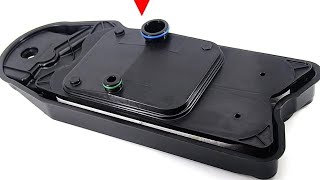
- Crankcase Ventilation (CCV) Filter
(OEM #68002433AC)— This is the primary cause of code P1507. It is a standard maintenance part that clogs with oil and contaminants over its service life.
Trusted brands: Mopar, Fleetguard (OEM supplier)
OEM price range: $90 - $120
Aftermarket price range: $70 - $100
Related Codes That Often Appear With This One
- P1508 — A more severe version of the same fault, often defined as 'Crankcase Filter Restriction - Replace Filter,' indicating the ECM has determined the restriction is critical and requires immediate service.
- P0116 — Engine Coolant Temperature Sensor Performance - Often cited in the same TSBs related to cold weather performance issues (TSB #1800824, #1800724).
- P226C — Turbocharger Boost Control 'A' Slow Response - Also mentioned in TSBs for cold weather issues, as extreme cold can affect various engine systems (TSB #1800824, #1800724).
- P203F — Reductant Level Too Low - Appears in the same TSBs, suggesting a cluster of codes can be triggered by cold weather operating conditions (TSB #1800824, #1800724).
Technical Service Bulletins (TSBs) & Recalls
- 1800824: Lists P1507 in the context of performance issues in extreme cold for 2020 models.
- 1800724: Lists P1507 in the context of performance issues in extreme cold for 2019 models.
- 18-056-22: Lists P1507 as a potential DTC for 2019 models.
- 18-101-22 REV. A: A comprehensive PCM flash update for 2019 models that addresses numerous DTCs and drivability issues, particularly related to cold weather operation, which is a known trigger for P1507.
Platform-Specific Known Issues
- The provided NHTSA Technical Service Bulletins (#1800824, #1800724, #18-056-22) all explicitly list P1507 - Crankcase Filter Restriction as a potential fault, often in conjunction with other codes related to performance in extreme cold ambient temperatures.
- For 2019 models, TSB 18-101-22 REV. A involves a PCM software update to address a wide range of DTCs and improve cold start performance, idle stability, and other parameters. While P1507 is not explicitly listed as a primary target of this flash, the TSBs that do mention P1507 often relate to cold weather, which this PCM update aims to improve.
Mechanic-Grade Diagnostic Values
- Crankcase Pressure Sensor Signal Voltage — expected: Low voltage when pressure is low.. Failure: Signal voltage is near the 5-volt reference, indicating high pressure.
- Crankcase Pressure Sensor Supply Voltage — expected: 5-volt reference from the ECM.. Failure: Voltage significantly lower or higher than 5V indicates a circuit or ECM issue.
- Sensor Ground Wire Voltage (Back-probed) — expected: Less than 50 mV.. Failure: Voltage higher than 50 mV suggests a poor ground connection.
Scan Tool Commands That Help
- wiTECH: Read DTCs / View Data — Used to confirm if P1507 is active and to monitor the live voltage from the crankcase pressure sensor to determine if it is reading high.
- wiTECH: Clear DTCs — After replacing the filter or performing repairs, the wiTECH application is used to clear the fault codes from all modules.
Wiring & Ground Locations
- Crankcase Pressure Sensor Connector — On the crankcase pressure sensor, which is located at the rear of the CCV filter housing on top of the valve cover.. This connector is the primary test point for checking the 5V reference, signal voltage, and ground for the sensor. A pigtail (Fleece FPE-HAR-CUMM-CCP-PT) is available for repairs if the connector or wiring is damaged.
- G304 — Center Body.. This is a potential ground point for the sensor circuit. A poor ground connection can cause incorrect sensor readings, leading to false codes. Verifying ground integrity is a key diagnostic step.
Real Owner Repair Stories
- Diesel Truck Resource Forums user 'tobyw' (4th Generation Ram (2010+)) — Getting a 'ding' from the EVIC and code P1507 under a decent load (16+ psi of boost).
❌ Tried (didn't work) Replacing the CCV filter with a new Cummins part from Geno's Garage.
✅ What actually fixed it The user had installed a DIY CCV delete/reroute kit with a breather filter. The code appeared after this modification. The implied fix was to revert the CCV system back to the stock configuration to see if the code disappeared, as the sensor was detecting pressure changes outside its expected range due to the modification. - Reddit user r/Diesel 'robalo226' (2013 Ram 2500) — 'Perform Service' light and P1507 code on heavy acceleration.
❌ Tried (didn't work) The truck already had a CCV reroute with no filter. The shop checked the sensor and confirmed it was receiving the correct 5V reference.
✅ What actually fixed it The issue started after a valve lash adjustment and replacement of the crankcase breather cover (due to a crack). One user suggested that the new, un-cracked breather cover was now properly sealed, allowing pressure to build to the sensor's trigger point during heavy acceleration (heavy blow-by), whereas the old cracked cover was letting some pressure escape before the sensor could detect it. The resolution was not definitively posted, but the cause was linked to the combination of a CCV reroute and a newly sealed system.
OEM Part Supersession History
68002433AB→68002433AC— Standard part revision and update by the manufacturer.
Heads up: The parts are interchangeable. 68002433AC is the current replacement for earlier versions like ...AA and ...AB.Cummins 4984575, 4954400; Mopar 68005161AB→Cummins 5462277 / Mopar 68453737AA— Standard part revision for the crankcase pressure sensor.
Heads up: These are the old and new part numbers for the same crankcase pressure sensor. They are cross-compatible for the specified model years.
Model Year Variations Within This Range
- 2019-2020: While the CCV system is fundamentally the same, minor changes for the 2020 model year included increased availability of optional equipment like lane keep assist and a standard 50-gallon fuel tank on certain configurations. No specific changes to the CCV filter or P1507 diagnostics were noted between these two years.
Helpful Videos
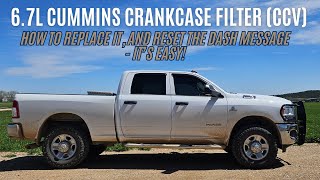
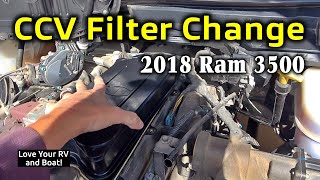
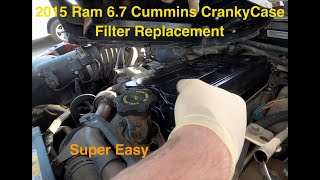
We Have This Part in Stock




The information in this article is provided for general reference and educational purposes only. Vehicle specifications, procedures, and part compatibility can vary by production date, trim level, and region. Always consult your vehicle's factory service manual and verify part numbers before purchasing or performing repairs. Safety-critical components such as airbags, seat belts, and braking systems should be installed by a qualified professional.
- Ram 3500:
- 🎬 Helpful Videos
- 🛍️ Shop This Part
- What's Unique About the 2019-2020 Ram 3500
- Diagnostic Flowchart
- Symptoms You May Notice
- Most Likely Causes
- Rare But Worth Checking
- Diagnosis Steps
- Parts You'll Likely Need
- Related Codes That Often Appear With This One
- Technical Service Bulletins (TSBs) & Recalls
- Platform-Specific Known Issues
- Mechanic-Grade Diagnostic Values
- Scan Tool Commands That Help
- Wiring & Ground Locations
- Real Owner Repair Stories
- OEM Part Supersession History
- Model Year Variations Within This Range
- 🎟️ Get 5% Off