

P1507 on 2019 Ram 2500 6.7L Cummins: Crankcase Filter Restriction Causes and Fixes
P1507 on a 2019 Ram 2500 with the 6.7L Cummins engine means the crankcase ventilation (CCV) filter is clogged and needs to be replaced. This is a routine maintenance item with a service interval of 75,000 miles. Replacing the filter assembly, a straightforward DIY task, typically resolves the issue and the accompanying 'Perform Service' message. Expect to pay around $100-$150 for the part.
- P1507 on a 2019 Ram 2500 6.7L Cummins is a maintenance code telling you to replace the Crankcase Ventilation (CCV) filter.
- The recommended service interval for this filter is 75,000 miles or 60 months, whichever comes first.
- Ignoring this code can lead to increased crankcase pressure, causing oil leaks from engine seals and potential turbocharger issues.
- The fix is a simple, 20-minute DIY replacement of the filter element (Mopar 68477482AA or Fleetguard CV52001) and resetting the service message.
What's Unique About the 2019-2019 Ram 2500
On the 6.7L Cummins engine, the CCV filter is a scheduled maintenance item, much like an oil or air filter. For 2019 and newer models, Ram specifies a replacement interval of 75,000 miles or 60 months. The P1507 code is not just a fault code but also serves as a maintenance reminder, directly telling the driver that the filter is saturated and no longer functioning efficiently. Ignoring this can lead to oil leaks from main seals and other engine gaskets due to the excessive pressure buildup.
🎬 Watch: Diagnosing the P1507 code and replacing the filter.Diagnostic Flowchart
Tap your situation to follow the diagnostic path that matches what you're seeing on this vehicle.
Symptoms You May Notice
- Check Engine Light illuminated.
- "Perform Service" message on the instrument cluster.
- Increased oil consumption.
- Oil leaks or seepage, especially around the valve cover, oil pan, or front/rear main seals.
- Oil film or residue found inside the turbocharger inlet or intake piping.
- Rough or high idle.
- Blueish-white smoke from the exhaust, especially under acceleration, as oil is forced past turbo seals.
- Audible pressure release or 'whoosh' sound from the engine bay under certain conditions.
- Replacing the turbocharger due to oil in the intake, when the oil is actually coming from a saturated CCV filter being overwhelmed by normal crankcase pressure.
- Fixing oil leaks (e.g., replacing a valve cover gasket) without addressing the root cause, which is the high crankcase pressure from the clogged CCV filter. The leak will likely return or appear elsewhere.
Most Likely Causes
- Clogged Crankcase Ventilation (CCV) Filter 🔴 High Probability The CCV filter is a consumable part with a defined service life of 75,000 miles for 2019+ models. It becomes saturated with oil, soot, and condensation over time, which is a normal function. Severe duty cycles, such as frequent towing or long idle times, can shorten this interval.
How to confirm: Check the vehicle's mileage against the 75,000-mile service interval. If the mileage is near or over this, the filter is the prime suspect. The 'Perform Service' message on the dash is also a direct indicator. A visual inspection of the intake for oil residue further points to a saturated filter.
Typical fix: Replace the CCV filter element. This is a maintenance task that involves removing the plastic engine cover and the CCV housing (held by eight 8mm bolts) to access and swap the filter. After replacement, the service message needs to be reset.
Est. part cost: $90-$150
Rare But Worth Checking
- Blocked or Kinked CCV Hoses: The hoses that connect the CCV system can become blocked, kinked, or collapse, mimicking the symptoms of a clogged filter. This is less common than a saturated filter but should be checked if a new filter doesn't solve the code.
- Faulty Crankcase Pressure Sensor: The sensor that measures crankcase pressure can fail and send incorrect readings to the PCM, triggering the P1507 code even if the pressure is normal. This is rare and should only be considered after verifying the filter and hoses are in good condition. The sensor operates on a 5-volt reference from the ECM.
- Excessive Engine Blow-by: In high-mileage or damaged engines, worn piston rings can allow excessive combustion gases into the crankcase, overwhelming the CCV system and clogging the filter prematurely. A quick check involves removing the oil cap while the engine is idling; excessive 'puffing' of smoke or pressure can indicate a deeper mechanical issue.
- Stuck Crankcase Depression Valve: A service manual for older 6.7L models notes that the crankcase depression valve can get stuck shut. This valve is part of the breather filter cover and is not serviced separately; the entire cover must be replaced if this is the issue.
Diagnosis Steps
- Verify the P1507 code is active using an OBD-II scanner.
- Check the vehicle's mileage. If it is approaching or has exceeded the 75,000-mile service interval for the CCV filter, plan to replace the filter.
- Visually inspect the engine bay for signs of oil leaks, particularly around the valve cover and CCV housing assembly.
- Remove the intake tube connected to the turbocharger and inspect for an oily film. The presence of oil confirms the CCV system is allowing oil vapor into the intake.
- Replace the CCV filter element. This is the most likely solution. The job requires an 8mm socket and takes approximately 15-20 minutes.
- After replacement, clear the trouble codes. To reset the 'Perform Service' message, some owners report a procedure of turning the key to 'Run', pressing the brake pedal three times, then the accelerator pedal to the floor twice slowly, then turning the key off before starting the engine.
- If the code returns, inspect all CCV hoses for kinks, collapses, or blockages from the valve cover to the intake connection point.
- If hoses are clear and the filter is new, consider testing the crankcase pressure sensor for proper operation as a final step.
Parts You'll Likely Need
- Crankcase Ventilation (CCV) Filter
(OEM #68477482AA)— This is the primary consumable part designed to be replaced at a set interval. It becomes saturated with contaminants, causing the restriction that triggers code P1507.
Trusted brands: Mopar, Fleetguard (Cummins Filtration)
OEM price range: $120-$170
Aftermarket price range: $90-$120
Related Codes That Often Appear With This One
- P1508 — P1508 is a more severe version of the same fault, often defined as 'Crankcase Filter Restriction - Replace Filter'. It indicates the filter is severely clogged and requires immediate replacement.
- P20E8 — This code for 'Reductant Pressure Too Low' is related to the DEF system. It is listed alongside P1507 in manufacturer TSBs, suggesting they can appear together during general powertrain diagnostics or software updates. (Bulletin #18-059-20, #18-052-19 REV. A)
Technical Service Bulletins (TSBs) & Recalls
- 18-059-20: Mentions P1507 - Crankcase Filter Restriction in a list of codes addressed by a potential PCM software update for 2019 Ram 2500/3500 trucks. This TSB was later superseded by 18-010-21.
- 18-052-19 REV. A: Also lists P1507 - Crankcase Filter Restriction among several codes related to a software update. This TSB was superseded by 18-059-20.
Platform-Specific Known Issues
- The 'Perform Service' message on the dash is directly tied to the CCV filter life monitor and is the most common indicator for this issue, often appearing before the driver notices any performance problems.
- Resetting the service light after filter replacement is a necessary step. A common DIY procedure involves a sequence of brake and accelerator pedal presses with the key in the 'Run' position.
Mechanic-Grade Diagnostic Values
- Crankcase Pressure Sensor - 5V Supply — expected: ~5.0 Volts with key on, engine off.. Failure: No voltage or significantly low voltage indicates a wiring or ECM problem.
- Crankcase Pressure Sensor - Return/Ground — expected: Near 0 Ohms continuity to ground.. Failure: High resistance or an open circuit indicates a bad ground connection.
- Crankcase Pressure Sensor - Signal Voltage — expected: Voltage varies with engine crankcase pressure, typically between 0.5V and 4.5V.. Failure: Voltage that is stuck high, low, or does not change with pressure indicates a failed sensor.
Scan Tool Commands That Help
- Manual Procedure: Perform Service Message Reset — After replacing the CCV filter to extinguish the 'Perform Service' message on the instrument cluster. This is separate from clearing the P1507 DTC. The procedure typically involves a sequence of key-on, brake pedal presses, and accelerator pedal presses.
Wiring & Ground Locations
- Crankcase Pressure Sensor Connector — On the crankcase breather cover, located on top of the valve cover assembly, under the plastic engine dress cover.. This is the primary sensor that triggers P1507. Testing for power, ground, and signal at this connector is a key diagnostic step if a new filter doesn't solve the code.
- Crankcase Pressure Sensor Pinout — At the sensor connector.. Pin A: Signal (to ECM Pin 53), Pin B: Return/Ground (to ECM Pin 44), Pin C: 5 Volt Supply (from ECM Pin 2). Knowing the pinout is essential for accurate electrical testing.
Real Owner Repair Stories
- YouTube channel 'RAM 6.7 2013 FIXED' (2013 Ram 2500 6.7L Cummins, 89,000 miles) — 'Perform Service' light, 'Service Air Filter' message, P1507 (Crankcase Breather), P20E8 (Reductant Pressure), limited power.
❌ Tried (didn't work) Initially suspected the CCV filter or DEF system based on the codes.
✅ What actually fixed it The flexible air intake snorkel pipe running through the fender had collapsed on itself, severely restricting airflow to the engine. Removing the restriction and clearing the codes resolved all issues, including the P1507. - Diesel Truck Resource Forums user 'Joe Cannon' (3rd Gen Ram 6.7L Cummins (2007.5-2009 model year)) — P1507 and 'Perform Service' light came on after a clutch slip caused the engine to over-rev. Could not reset the light with the pedal procedure.
❌ Tried (didn't work) Standard pedal reset procedure for the service light.
✅ What actually fixed it The truck had a gutted CCV filter with a reroute hose vented down the frame rail. The user found a low spot in the hose had collected water, which then froze and completely blocked the vent path. Clearing the ice blockage from the hose was the fix.
"I Checked Everything" — The Actual Cause
- In one documented case, a P1507 code was accompanied by an air filter service message. The root cause was not the CCV system, but a collapsed fresh air intake snorkel inside the fender well. This restricted the main air supply to the engine, creating a pressure imbalance that the PCM interpreted as a crankcase restriction. A technician only focused on the CCV system would completely miss this.
OEM Part Supersession History
Mopar 68002433AA, 68002433AB→Mopar 68002433AC / Fleetguard CV52001— Standard part revision updates.
Heads up: These part numbers are generally cross-compatible for 2007.5+ models, but always verify with the vehicle's VIN. The OEM part for the 2019 model is typically 68477482AA, which uses the same CV52001 filter element.Cummins Crankcase Pressure Sensor 4984575→Cummins 5462277 (often sold as 5462277NX)— Part revision for pre-2019 models.
Heads up: For 2019 and newer models, the correct Mopar part number is 68453737AA. Using the older sensor may not work correctly.
Model Year Variations Within This Range
- 2019+: The Crankcase Pressure Sensor part number changed for the 2019 model year to Mopar P/N 68453737AA. Earlier models used a different sensor (Cummins P/N 5462277). Using the incorrect sensor may lead to persistent codes.
- 2019+: The CCV filter service interval was extended to 75,000 miles for 2019 and newer trucks, compared to 67,500 miles on many earlier models.
Helpful Videos
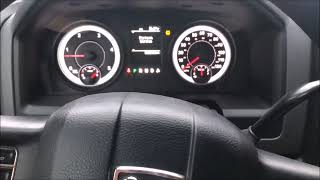
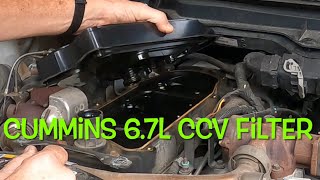
We Have This Part in Stock

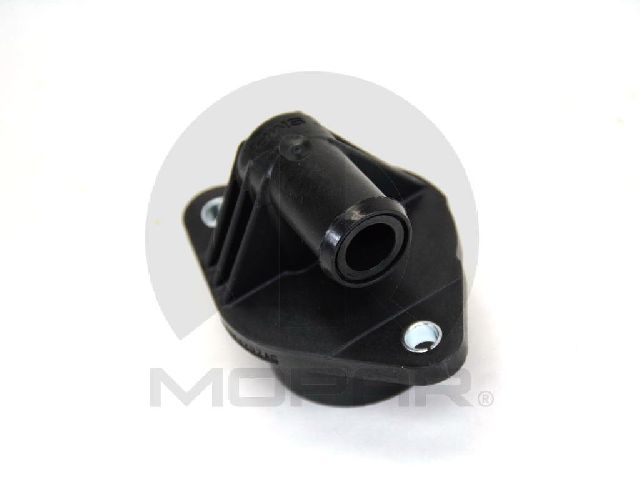
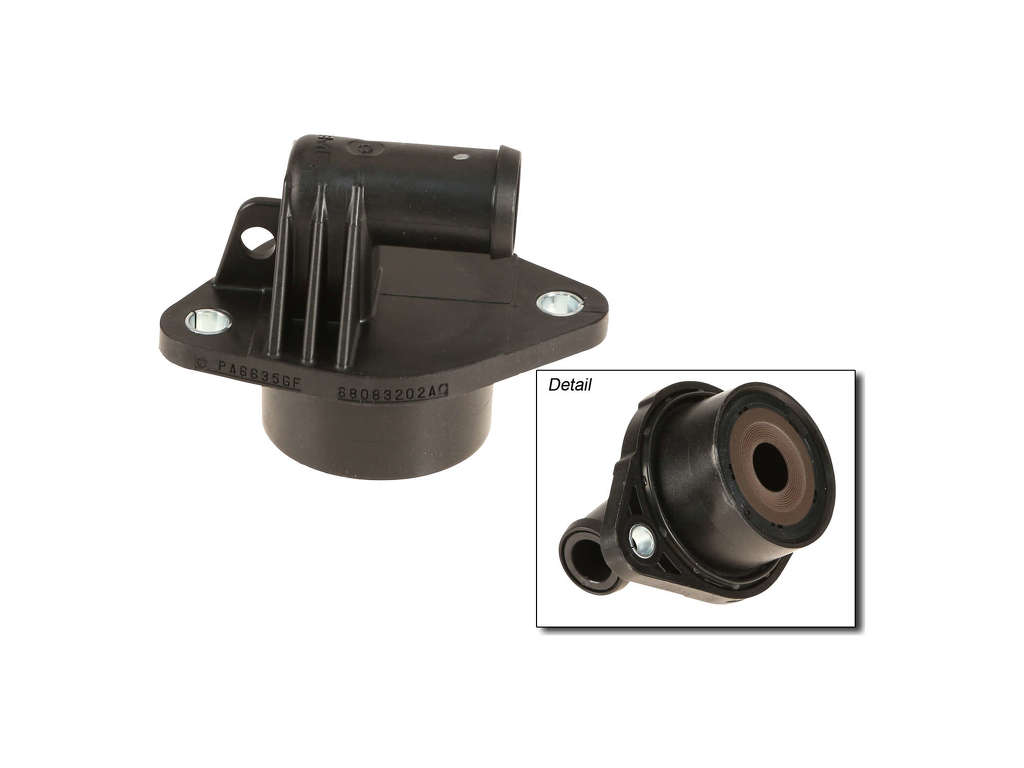


The information in this article is provided for general reference and educational purposes only. Vehicle specifications, procedures, and part compatibility can vary by production date, trim level, and region. Always consult your vehicle's factory service manual and verify part numbers before purchasing or performing repairs. Safety-critical components such as airbags, seat belts, and braking systems should be installed by a qualified professional.
- Ram 2500:
- 🎬 Helpful Videos
- 🛍️ Shop This Part
- What's Unique About the 2019-2019 Ram 2500
- Diagnostic Flowchart
- Symptoms You May Notice
- Most Likely Causes
- Rare But Worth Checking
- Diagnosis Steps
- Parts You'll Likely Need
- Related Codes That Often Appear With This One
- Technical Service Bulletins (TSBs) & Recalls
- Platform-Specific Known Issues
- Mechanic-Grade Diagnostic Values
- Scan Tool Commands That Help
- Wiring & Ground Locations
- Real Owner Repair Stories
- "I Checked Everything" — The Actual Cause
- OEM Part Supersession History
- Model Year Variations Within This Range
- 🎟️ Get 5% Off