

P1500 on 2011-2013 Lincoln Navigator: Sudden Downshift Causes and Leadframe Fix
On a 2011-2013 Navigator, P1500 almost always means the internal transmission molded leadframe has failed. This is a serious safety issue that can cause a sudden downshift to first gear. The only fix is to replace the leadframe, a job costing $700-$1,400 at a shop. The repair was covered under an extended warranty (19N01) for 10 years/150,000 miles, which has now expired for most vehicles.
- P1500 on a 2011-2013 Navigator is a critical safety code, not a minor issue.
- The cause is a known faulty internal transmission part called the molded leadframe, not an external sensor.
- DO NOT continue to drive the vehicle, as a sudden and dangerous downshift can occur at any time.
- Before paying for a repair, contact a Lincoln dealer with your VIN to see if your vehicle is covered by Safety Recall 16V248 or Extended Warranty 19N01.
- The only correct repair is the replacement of the leadframe assembly, filter, and fluid.
What's Unique About the 2011-2013 Lincoln NAVIGATOR
The 2011-2013 Navigator uses the Ford 6R80 transmission, which has a well-documented, widespread design flaw. The Output Shaft Speed (OSS) sensor is not a separate, bolt-on part but is built into a larger internal component called the molded leadframe. This leadframe is known to fail due to heat and vibration causing cracks in the electrical connections. The failure was so common and the primary symptom—a sudden downshift to first gear at any speed—was so dangerous that it prompted Ford to issue safety recalls (16V248 / 16S19) and an extended warranty program (19N01).
Diagnostic Flowchart
Tap your situation to follow the diagnostic path that matches what you're seeing on this vehicle.
Symptoms You May Notice
- Sudden, violent downshift into first gear while driving
- Illuminated Malfunction Indicator Light (Check Engine Light) and/or wrench light.
- Erratic or non-functional speedometer (may drop to 0 mph)
- Harsh or delayed transmission shifting
- Cruise control is inoperative
- Transmission stuck in 'limp mode' (often 3rd or 5th gear).
- Replacing an external Vehicle Speed Sensor (VSS). This vehicle does not use a traditional external VSS for this function; the sensor is internal to the transmission on the leadframe. Replacing an ABS wheel speed sensor will not fix this code.
- Assuming the Recall 16V248 software flash fixed the problem. The software update only mitigates the most dangerous symptom (the 1st gear downshift) but does not fix the underlying hardware failure of the leadframe. The part will still need to be replaced to clear the code and restore normal transmission function.
Most Likely Causes
- Failed Internal Transmission Molded Leadframe 🔴 High Probability This is a known, widespread component failure for the 6R80 transmission used in this vehicle. The Output Shaft Speed (OSS) sensor is integrated into this part and fails intermittently due to cracks in the electrical connections from thermal cycles and vibration.
How to confirm: Scan the PCM for codes P1500, P0720, or P0722. The presence of any of these codes strongly indicates leadframe failure, as explicitly outlined in Ford's Customer Satisfaction Program 19N01. A professional scan tool can monitor live OSS data to watch for signal dropouts during a test drive.
Typical fix: Replace the entire molded leadframe assembly inside the transmission oil pan. This requires draining the fluid, dropping the pan, and removing the transmission valve body to access the part. It is also best practice to replace the bulkhead connector sleeve and valve body separator plate seals at the same time.
Est. part cost: $180-$300
Rare But Worth Checking
- Wiring Harness or Connector Damage: While far less common than leadframe failure, damage to the main transmission bulkhead connector or wiring could theoretically cause an intermittent signal. Fluid leaking past a failed bulkhead connector sleeve can also contaminate the pins and disrupt the signal. This should be inspected before condemning the leadframe, but it is rarely the root cause of the P1500 code.
- Powertrain Control Module (PCM) Fault: A PCM software glitch or internal failure is extremely rare but possible. Ford issued a recall (16V248, also known as 16S19) to reprogram the PCM. This software update did not fix the failing leadframe; it was a preventative measure to stop the PCM from commanding a 1st gear downshift if the OSS signal was lost, thus preventing the most dangerous symptom. If the code is present, a hardware fault in the leadframe is almost certain.
Diagnosis Steps
- Confirm the presence of code P1500 (and/or P0720, P0722) using an OBD-II scanner capable of reading transmission codes.
- Contact a Lincoln dealer with your VIN to check the status of Safety Recall 16V248 and Customer Satisfaction Program 19N01. Although the program has likely expired due to age (10 years/150,000 miles), it's crucial to verify its history.
- If not covered by a warranty extension, the next step is to visually inspect the main transmission electrical connector (the bulkhead connector) for fluid intrusion, corrosion, or damaged pins. A leaking bulkhead sleeve is a common issue and can cause electrical problems.
- If the external connector is clean and secure, the diagnosis is a failed internal molded leadframe, as this is the overwhelming cause for these specific codes on this platform.
- The repair involves draining the transmission fluid, removing the transmission pan, disconnecting the electrical connector, and removing the valve body to access and replace the leadframe.
- After replacement, the transmission is reassembled with a new pan gasket, filter, and often a new bulkhead connector sleeve. It must be refilled with the correct specification of MERCON LV fluid.
- Some sources recommend using an inch-pound torque wrench for the valve body bolts, as they are different lengths and must be torqued correctly to avoid damage.
Parts You'll Likely Need
- Transmission Molded Leadframe Assembly
(OEM #AL3Z-7G276-D)— This is the component that houses the failing Output Shaft Speed sensor, which is the direct cause of the P1500 code on this vehicle. The 'D' revision supersedes older, more failure-prone versions like AL3Z-7G276-A and AL3Z-7G276-B.
Trusted brands: Motorcraft (OEM), Dorman
OEM price range: $210-$320
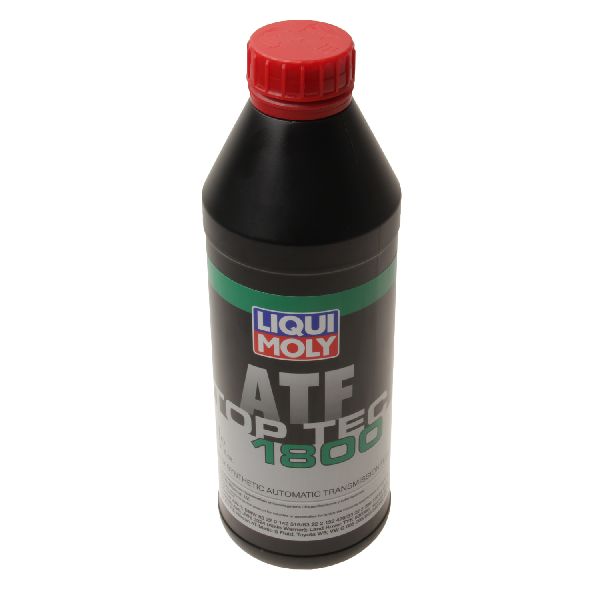
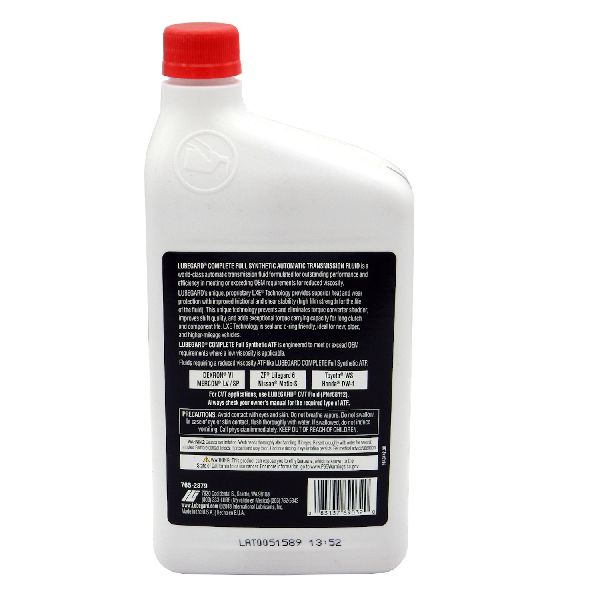
Aftermarket price range: $180-$250 - Automatic Transmission Fluid
(OEM #XT-10-QLVC)— The transmission fluid must be drained to perform the repair and must be replaced with the correct OEM-specification fluid (MERCON LV). The job requires 9-10 quarts for a pan drop and fill.
Trusted brands: Motorcraft, Valvoline, Castrol
OEM price range: $10-$15 per quart
Aftermarket price range: $8-$12 per quart - Transmission Filter Kit
(OEM #BL3Z-7A098-A)— The filter should always be replaced whenever the transmission pan is removed for service.
Trusted brands: Motorcraft, Wix, ATP
OEM price range: $30-$50
Aftermarket price range: $20-$40 - Transmission Pan Gasket
(OEM #BL3Z-7A191-C)— A new gasket is required to prevent leaks after reinstalling the transmission pan. The original gasket is technically reusable, but replacement is highly recommended for a leak-free repair.
Trusted brands: Motorcraft, Fel-Pro
OEM price range: $25-$40
Aftermarket price range: $15-$30 - Transmission Bulkhead Connector Sleeve
(OEM #BL3Z-7Z276-A (Seal Kit))— This plastic sleeve passes the electrical connection through the transmission case. Its O-rings are known to leak fluid, and it's a highly recommended 'while you're in there' replacement part to prevent future leaks and potential electrical issues. Care must be taken to ensure it is fully seated upon installation to avoid no-start or communication errors.
Trusted brands: Motorcraft (OEM)
OEM price range: $20-$35
Aftermarket price range: $15-$25
Related Codes That Often Appear With This One
- P0720 — This code for 'Output Speed Sensor (OSS) Circuit Malfunction' points to the exact same component (the OSS sensor on the leadframe). It is explicitly listed alongside P1500 in Ford's TSB 19N01.
- P0722 — This code for 'Output Speed Sensor Circuit No Signal' indicates a complete, rather than intermittent, loss of the signal from the same sensor on the leadframe. It is also a primary indicator of leadframe failure per Ford's TSB.
- P0731 — This code for 'Gear 1 Incorrect Ratio' can be triggered as a consequence of the leadframe failure. The PCM may command a downshift to first gear as a fail-safe when it loses the speed signal, causing this ratio error code.
Technical Service Bulletins (TSBs) & Recalls
- 19N01-S4: 'Certain 2011 - 2013 Model Year F-150 and 2012- 2013 Model Year Expedition/Navigator Vehicles Equipped With A 6R80 Transmission Transmission Molded Leadframe Extended Coverage'. This bulletin confirms that P1500 is a key DTC for leadframe replacement under the extended warranty and details the program terms.
- 11-3-25: This TSB addresses fluid leaks from the transmission bulkhead connector sleeve on 6R80 transmissions, a common related issue.
Platform-Specific Known Issues
- Ford issued Safety Recall 16V248 (Ford ID 16S19) for the sudden downshift risk caused by this part's failure. The initial fix was a PCM software update to prevent the downshift, not to fix the failing part.
- Ford also created Customer Satisfaction Program 19N01, which extended the warranty on the molded leadframe to 10 years or 150,000 miles for vehicles exhibiting codes P1500, P0720, P0722, or P0731. For most 2011-2013 vehicles, this warranty has expired.
Mechanic-Grade Diagnostic Values
- Valve Body-to-Case Bolts Torque — expected: 8 Nm (71 lb-in). Failure: Incorrect torque can cause internal pressure leaks or damage to the valve body.
- Molded Leadframe-to-Valve Body Bolts Torque — expected: 53-62 lb-in (approx. 6-7 Nm). Failure: Incorrect torque can damage the plastic lead frame assembly.
- Transmission Pan Bolts Torque — expected: 11-12 Nm (97-106 lb-in). Failure: Improper torque can lead to pan leaks or stripped bolts.
- OSS Pulses Per Revolution — expected: Approximately 40-44 pulses per revolution of the output shaft.. Failure: An erratic or absent pulse count when turning the output shaft indicates a failed sensor.
Hidden / Shadow Codes Worth Checking
- Mode 6 Data (Misfire Monitor): While not a shadow code for P1500, Mode 6 data is a powerful, underused diagnostic function on Ford vehicles that can reveal issues before a code is set. For transmission issues, it can show test results for various components. For intermittent misfires that can sometimes be confused with transmission shudder, Mode 6 provides raw misfire counts per cylinder, even if they aren't high enough to trigger a CEL. (see via Requires a scan tool that can access OBD-II Mode 6, such as FORScan software with a compatible OBD-II adapter.)
Scan Tool Commands That Help
- FORScan or Ford IDS: Clear Transmission Adaptive Tables / Reset All Adaptations — This is a mandatory step after replacing the lead frame or valve body. Failure to reset the learned values can result in continued poor shift quality, as the TCM is still using parameters adapted to the old, failing component.
- FORScan or Ford IDS: Adaptive Learning Drive Cycle — After clearing the adaptive tables, a specific drive cycle must be performed to allow the TCM to relearn shift pressures and timing. This involves a series of gentle accelerations and stops to allow the transmission to shift through all gears at low RPMs.
Wiring & Ground Locations
- G107 / G108 — Located at the right rear of the engine compartment.. These are primary grounds for the powertrain system. A poor connection here could potentially cause erratic sensor readings or control module behavior, although it is a very rare cause for this specific code.
- G200 — Located behind the right kick panel inside the cabin.. This is a major body ground point that services multiple interior modules. While less likely to be the direct cause, verifying major grounds is a good practice in diagnosing any electrical fault.
- C1575 (Transmission Bulkhead Connector) — The main 16-pin electrical connector on the passenger side of the transmission case.. This is the single point of connection for all internal transmission electronics, including the OSS sensor. All diagnostic voltage and resistance tests of internal components are performed at the pins of this connector. A common failure point is the seal, which can leak fluid and contaminate the pins.
Real Owner Repair Stories
- FordTechMakuloco YouTube Channel (2014 Ford Expedition (same 6R80 powertrain)) — Fault code P0720 (Output Shaft Sensor), limp mode, Tire Pressure Monitoring System light on, and miles to empty display went blank.
❌ Tried (didn't work) The video directly identifies the lead frame as the cause without detailing other failed attempts, as this is a well-known issue.
✅ What actually fixed it Replacement of the internal molded lead frame assembly, along with the bulkhead connector sleeve and a rectangular pass-through seal as preventative 'while-in-there' measures. - Ford Truck Enthusiasts Forum User (2015 F-150 3.5 EcoBoost (same 6R80 transmission)) — Truck got stuck in 5th gear, check engine light with an output shaft sensor code.
❌ Tried (didn't work) Initially, after replacement, the gear position indicator would not work. This was caused by a poor connection at the main pigtail plug, which was resolved by ensuring the connector was fully seated before locking the lever.
✅ What actually fixed it The user replaced the lead frame, which was the correct diagnosis. However, they encountered a secondary issue where the truck would not read the gear position. The final resolution is not posted, but the problem was isolated to the connection or alignment of the new lead frame's range sensor. This highlights the importance of ensuring the manual valve is correctly engaged with the range sensor slider and the main electrical connector is perfectly seated.
OEM Part Supersession History
AL3Z-7G276-A, AL3Z-7G276-B→AL3Z-7G276-D— The 'D' revision is the latest updated part designed to address the inherent failure of the OSS sensor circuit in the earlier versions. It often includes a foam strip to protect solenoid contacts from metallic debris, another known failure point.
Heads up: The older revisions (-A, -B) should not be used as they are prone to the same failure. Always install the latest 'D' revision.
Model Year Variations Within This Range
- 2011+: The lead frame issue is specific to 2011 and newer 6R80 transmissions. The 2009-2010 models used a different design where the Transmission Control Module (TCM) was integrated with the lead frame, and these earlier units did not suffer from the same widespread OSS sensor failure.
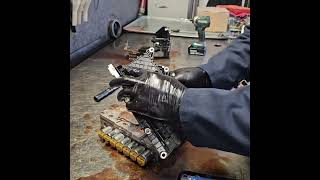
Helpful Videos
We Have This Part in Stock


The information in this article is provided for general reference and educational purposes only. Vehicle specifications, procedures, and part compatibility can vary by production date, trim level, and region. Always consult your vehicle's factory service manual and verify part numbers before purchasing or performing repairs. Safety-critical components such as airbags, seat belts, and braking systems should be installed by a qualified professional.
- Lincoln NAVIGATOR:
- 🎬 Helpful Videos
- 🛍️ Shop This Part
- What's Unique About the 2011-2013 Lincoln NAVIGATOR
- Diagnostic Flowchart
- Symptoms You May Notice
- Most Likely Causes
- Rare But Worth Checking
- Diagnosis Steps
- Parts You'll Likely Need
- Related Codes That Often Appear With This One
- Technical Service Bulletins (TSBs) & Recalls
- Platform-Specific Known Issues
- Mechanic-Grade Diagnostic Values
- Hidden / Shadow Codes Worth Checking
- Scan Tool Commands That Help
- Wiring & Ground Locations
- Real Owner Repair Stories
- OEM Part Supersession History
- Model Year Variations Within This Range
- 🎟️ Get 5% Off