

OBD-II Code P1499: Hydraulic Fan Solenoid Circuit / EGR System Failure
A Comprehensive Guide to What P1499 Means, Why It Triggers, and How to Fix It Across Different Vehicle Brands
- Code P1499 means a hydraulic cooling fan circuit failure on Chrysler/Jeep vehicles, an EGR system fault on Ford/Subaru/Kia, and a DPF overheat on Mitsubishi diesels.
- On 1999-2004 Jeep Grand Cherokees, a shorted O2 sensor wire blowing shared fuse #16 is the number one cause of a P1499 code.
- Driving a Chrysler or Jeep with an active P1499 code risks a $1,500+ head gasket repair, as the inoperative cooling fan causes rapid engine overheating in stop-and-go traffic.
- Never replace a $500+ hydraulic fan assembly or EGR valve without first testing the component's resistance with a multimeter and verifying power at the electrical connector.
What Does P1499 Mean?

Code P1499's meaning depends entirely on your vehicle's manufacturer. For Chrysler, Dodge, and Jeep, it signifies that the Powertrain Control Module (PCM) detects an electrical fault in the hydraulic cooling fan solenoid's control circuit. The computer sees a voltage that is too high (short circuit) or too low (open circuit), preventing it from regulating the fan's speed. For brands like Ford, Subaru, Kia, and Volkswagen, P1499 points to a completely different system: a malfunction in the Exhaust Gas Recirculation (EGR) stepper motor or solenoid valve circuit. For certain diesel Mitsubishi models, it indicates an abnormally high temperature in the Diesel Particulate Filter (DPF).
Technical definition: For Chrysler/Dodge/Jeep: An open or shorted condition is detected in the Hydraulic Cooling Fan Solenoid control circuit by the Powertrain Control Module (PCM). For Ford/Subaru/Kia: A malfunction, high input signal, or open/short is detected in the EGR Stepper Motor Control Circuit. For Mitsubishi Diesel: The engine-ECU detects an abnormally high temperature via the No. 3 exhaust gas temperature sensor, or the estimated DPF center temperature exceeds the specified value.
Can I Drive With P1499?
Yes, But With Caution. You can drive, but it is a massive financial gamble on Chrysler/Dodge/Jeep vehicles. The cooling fan is inoperative, meaning the engine overheats rapidly in stop-and-go traffic or on warm days, causing catastrophic damage like a warped cylinder head or blown head gasket. Ignoring the code turns a $500 fan repair into a $3,000+ engine replacement. For other makes where the code points to the EGR system, driving is less risky to the engine's immediate health but causes failed emissions tests, poor fuel economy, and long-term catalytic converter damage.
Common Causes

- Blown Fuse or Faulty Relay (Chrysler/Dodge/Jeep) (Very Common) — On many Jeep Grand Cherokees, the fuse for the fan relay also powers the O2 sensor heaters. A short in an O2 sensor's wiring blows this shared fuse, disabling both systems and setting multiple codes simultaneously.
- Damaged Wiring or Corroded Connector (Very Common) — The wiring harness degrades from engine heat, vibrations, or chafing against other components. Connectors accumulate moisture and corrode, destroying electrical contact and triggering open or short circuit codes.
- Failed Hydraulic Fan Solenoid (Chrysler/Dodge/Jeep) (Very Common) — The solenoid is an electromagnetic coil that controls hydraulic fluid flow to the fan motor. The internal coil winding breaks (open circuit) or shorts out, causing complete component failure.
- Carbon Buildup in EGR Valve (Ford/Subaru) (Common) — Soot and carbon from the exhaust build up inside the EGR valve, causing it to stick open or closed. This mechanical restriction strains the control motor and triggers an electrical fault code.
- Failed EGR Stepper Motor or Solenoid (Ford/Subaru/Kia) (Common) — The EGR valve's motor fails electrically, with internal windings shorting out or breaking. This prevents the PCM from accurately controlling the flow of exhaust gases.
- Low Power Steering Fluid (Chrysler/Dodge/Jeep) (Common) — The hydraulic fan is powered by the power steering pump. Low fluid prevents the pump from generating enough pressure to operate the fan correctly, leading to overheating and triggering a fault.
- Failed Hydraulic Cooling Fan Assembly (Less Common) — The entire fan unit, which includes the hydraulic motor that the solenoid controls, fails mechanically. This requires replacing the whole assembly rather than just the solenoid.
- Failed Powertrain Control Module (PCM) (Rare) — The internal driver circuit within the PCM that sends the control signal to the solenoid or EGR motor fails. Consider this only after exhaustively ruling out all wiring and component issues.
Symptoms

- Check Engine Light is on — The PCM illuminates the Malfunction Indicator Lamp (MIL) on the dashboard as soon as it confirms the fault.
- Engine Overheating (Primarily Chrysler/Dodge/Jeep) — With the cooling fan inoperative, engine temperature rises rapidly, especially at low speeds or when idling in traffic.
- Poor Air Conditioning (A/C) Performance — The cooling fan pulls air across the A/C condenser. An inoperative fan causes the A/C to blow warm air when the vehicle is stationary.
- Cooling Fan Runs Constantly or Not at All — The fan fails to spin when the engine is hot, or it defaults to running at full speed continuously as a PCM fail-safe measure.
- Rough Idle or Engine Stalling (Primarily Ford/Subaru/Kia) — An EGR valve stuck open or closed disrupts the air-fuel mixture, causing a rough idle, hesitation during acceleration, and engine stalling.
- Failed Emissions Test — For vehicles where P1499 relates to the EGR system, the vehicle automatically fails an emissions test due to higher-than-normal NOx emissions.
Diagnostic Flowchart
Tap your situation to follow the diagnostic path that matches what you're seeing on this code.
Common Fixes & Costs
- Replace Blown Fuse — Parts: $1-$5, Labor: $0, ~0.1 hr book time (DIY)
- Replace Cooling Fan Relay
— Parts: $15-$40, Labor: $0, ~0.1 hr book time
(DIY)
Jeep Grand Cherokee (WJ): OEM Mopar: 56042352AA (Alt: Dorman: 902-303 (Kit), Standard Motor Products: RY438T) - Replace Hydraulic Fan Solenoid (if available separately)
— Parts: $100-$200, Labor: $80-$160, ~1.2 hr book time
(Intermediate)
Jeep Grand Cherokee (WJ): OEM Mopar: 56041891AA (per TSB 07-003-02) (Alt: Dorman: 902-310 (often includes solenoid)) - Clean or Replace EGR Valve or Solenoid (Ford, Subaru, VW)
— Parts: $150-$450, Labor: $100-$300, ~1.8 hr book time
(Intermediate)
Subaru (various diesel models): OEM Subaru: 14710AA740, 14710AA741 (Alt: D2P: TSUB14710AA740_94)
Subaru (WRX/Forester 2.0L): OEM Subaru: 14710AA780 (Alt: Various based on specific model year.) - Replace Complete Hydraulic Fan Assembly
— Parts: $500-$1200, Labor: $150-$300, ~2.5 hr book time
(Professional)
Jeep Grand Cherokee (WJ, 4.7L): OEM Mopar: 52079528AF (Alt: Four Seasons: 36015, UAC: FA50011C)
Dodge Ram SRT-10: OEM Mopar: 5290438AF, 5290438AB (Alt: Primarily available as used/remanufactured OEM units.)
Used vs. New Parts: Buying Guide
When a used part is worth it: A used hydraulic fan assembly from a low-mileage, accident-damaged vehicle is a cost-effective option for older, high-mileage Jeeps where the cost of a new OEM part is prohibitive.
Donor-vehicle mileage cap: roughly under 70000 miles for the part to have meaningful remaining life.
Donor quality checklist:
- Verify the donor vehicle was not scrapped due to engine overheating or power steering issues.
- Inspect the part for leaks, cracks in the housing, or damage to the hydraulic lines/connectors.
- Match the part number exactly. Hydraulic systems are precisely engineered and substitutions fail.
Decision logic:
- If The vehicle is a high-value model (like a Ram SRT-10) or you plan to keep it long-term → Buy a new OEM or high-quality aftermarket assembly. The risk of a used part failing and repeating labor costs is too high.
- If The vehicle is over 15 years old and a daily driver on a tight budget → A tested, warranted used part from a reputable salvage yard is a reasonable gamble.
- If Only the solenoid is confirmed bad and is available separately (e.g., per a TSB) → Buy a new solenoid. Do not install a used solenoid, as it is the most common failure point.
Warranty tradeoff: Used parts typically have a 30-90 day warranty, which is not long enough to reveal a latent defect. New aftermarket parts carry a 1-year to limited lifetime warranty. OEM parts offer a 1-2 year warranty.
Worst-case if a used part fails: $500-1000 if a used fan assembly fails shortly after installation, requiring a second part purchase and repeat labor costs.
What Happens If You Wait — Timeline
- 0-2 weeks: For Fan Fault: Check Engine Light on, fan is inoperative. Overheating risk is immediate in traffic. For EGR Fault: Check Engine Light on, slight rough idle on cold starts. (MPG impact: 0-5%% · Added cost: $0)
- 2 weeks - 3 months: For Fan Fault: First significant overheating event occurs, causing coolant to boil over. This heat cycle warps the cylinder head. For EGR Fault: Noticeable drop in MPG as the air-fuel mixture is consistently wrong. Carbon buildup accelerates. (MPG impact: 5-15%% · Added cost: $50-150 in wasted fuel, plus risk of $1,500+ head gasket repair for fan fault.)
- 3-6 months: For Fan Fault: Repeated overheating damages head gaskets, cracks cylinder heads, and contaminates oil with coolant. For EGR Fault: A stuck-open valve causes constant stalling at idle. A stuck-closed valve causes engine knocking under load and damages pistons. (MPG impact: 10-20%+% · Added cost: $1,500 - $3,500 for warped heads or blown head gasket repair.)
- 6+ months: For Fan Fault: Catastrophic engine failure. Coolant mixing with oil destroys bearings, leading to engine seizure. For EGR Fault: Sustained poor combustion and high NOx emissions poison and destroy the catalytic converter. (MPG impact: 20%+% · Added cost: $3,000 - $8,000+ for a replacement engine or catalytic converter.)
Cost of Not Fixing It
- Immediate (First Overheating Event): For Chrysler/Jeep, a single instance of severe overheating in traffic warps a cylinder head or blows a head gasket. (Added cost: $1,500 - $3,500+)
- 1-6 Months: For EGR-related faults, sustained poor combustion leads to carbon buildup, reduced fuel economy, and potential damage to the catalytic converter from unburnt fuel. (Added cost: $500 - $2,500)
- 6+ Months: Continued overheating events on a Chrysler/Jeep lead to catastrophic engine failure, requiring a complete engine replacement. Ignored EGR issues lead to complete catalytic converter failure. (Added cost: $2,000 - $8,000+)
Diagnosis Steps

- Check for Related Fuses
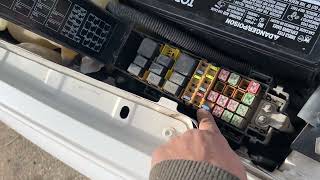
Before any other step, inspect the fuse box. On 1999-2004 Jeep Grand Cherokees, a blown fuse #16 in the engine bay's Power Distribution Center is the most common cause. This fuse protects the O2 sensors but also supplies power to the fan relay. A shorted O2 sensor wire blows it, triggering P1499. 🎬 Watch: How a shorted O2 sensor blows the fan fuse
Tools: Fuse puller or needle-nose pliers (Beginner) - Visually Inspect Wiring and Connectors
Thoroughly inspect the wiring harness leading to the fan solenoid (Chrysler/Jeep) or EGR valve (Ford/Subaru). Look for melted insulation, chafed wires, and corrosion or bent pins in the electrical connector.
Tools: Flashlight, inspection mirror (Beginner) - Swap the Cooling Fan Relay (Chrysler/Dodge/Jeep)
Locate the hydraulic fan relay in the fuse box. Find an identical relay for a non-critical component (like the horn) and swap them. If the fan begins working, the relay is faulty.
Tools: Pliers (optional) (Beginner) - Test Component Resistance (Ohms)
With the component disconnected, set a multimeter to Ohms (Ω). For a fan solenoid, measure the resistance between its two electrical pins; a typical value is 2-20 Ω. For an EGR stepper motor, measure resistance between the specified pairs of pins. A common specification is 20-24 Ω at 68°F. An infinite reading (OL) means an open coil, while near-zero ohms indicates a short.
Tools: Multimeter (Intermediate) - Test for Power and Ground at the Connector
Disconnect the component's connector. With the key on (engine off), use a multimeter to check for battery voltage on the power supply wire. Then, while a helper commands the component on with a scan tool, check for a ground signal on the control wire. No power indicates a fuse or wiring issue upstream; no ground signal points to a wiring or PCM driver problem.
Tools: Multimeter, scan tool (Intermediate) - Command the Component with a Bi-Directional Scan Tool
A professional-grade scan tool actively commands the fan solenoid or EGR motor to operate. If you command the fan on and hear/see no response, the problem lies in the wiring, the component itself, or its power supply. If it responds, the issue is with the sensor inputs or the PCM.
Tools: Bi-directional OBD-II scan tool (Intermediate) - Advanced: Check Live Scan Tool Data (PIDs)
Using a capable scan tool, monitor relevant Parameter IDs (PIDs). For Chrysler/Jeep, look for 'Fan Speed Command' and 'Fan Speed Actual'. The values must correlate. If 'Command' changes but 'Actual' does not, it confirms a fault in the fan system. For Ford/Subaru, monitor 'EGR Commanded (%)' and 'EGR Error (%)'. A high error percentage indicates the valve is not responding correctly.
Tools: Advanced OBD-II scan tool (Advanced) - Advanced: Check for Voltage and Duty Cycle at Solenoid
For a Chrysler/Jeep hydraulic fan solenoid, back-probe the connector with it plugged in. On the power wire, you should have constant battery voltage (~12.6V key on, ~14V engine running). On the control wire, the PCM sends a Pulse Width Modulated (PWM) ground signal. A low duty cycle % means low fan speed, and a high % means high fan speed.
Tools: Multimeter with Duty Cycle function, back-probe pins (Advanced) - Pro Tip: Check for AC Ripple Voltage
A failing alternator produces excessive AC voltage (noise) that interferes with computer modules. Set your multimeter to AC volts. With the engine running at 1500 RPM and electrical loads on, connect the leads directly to the alternator's main output post and ground. A reading above 0.5V (500mV) AC indicates a bad alternator diode causing false codes.
Tools: Multimeter with AC voltage setting (Advanced) - Pro Tip: Scope the Control Wire Signal
For the most precise diagnosis, use an oscilloscope to view the signal on the control wire while the component is connected and operating. For a PWM-controlled fan, you should see a clean square wave with a changing duty cycle. For an EGR stepper motor, you should see stepped pulses. A flat line or erratic pattern indicates a problem with the PCM driver or wiring.
Tools: Oscilloscope, back-probe pins (Advanced)
When This Code Triggers (Freeze-Frame Conditions)
- Engine Coolant Temp: 195-220°F (90-104°C) (The code for a fan fault sets when the engine is fully warmed up and the PCM actively tries to command the fan on to control the temperature.)
- Engine RPM: 600-1200 RPM (Fan Fault) / 1500-2500 RPM (EGR Fault) (A fan fault appears at idle or low speeds in traffic. An EGR fault typically occurs at steady-state cruising RPMs when the EGR system is active.)
- Vehicle Speed: 0-15 MPH (Fan Fault) / 40-60 MPH (EGR Fault) (Fan faults are most critical at low vehicle speeds where there is no natural airflow through the radiator. EGR faults set during highway cruising.)
- Engine Load: 20-50% (The code sets under moderate engine load, such as when accelerating lightly or maintaining speed, which are common conditions for both fan and EGR operation.)
Related Codes
- P0031 / P0051 / P0135 etc. — These codes for 'O2 Sensor Heater Control Circuit' frequently appear with P1499 on Jeeps. A single fuse powers both the O2 sensor heaters and the fan relay. A shorted O2 sensor wire blows the shared fuse, killing power to both systems.
- P1491 — This is another Chrysler/Dodge/Jeep code for 'Radiator Fan Control Relay Circuit'. P1499 points specifically to the solenoid and its wiring downstream of the relay. P1491 points to the relay's control circuit (the signal from the PCM).
- P0400 - P0409 — On Ford, Subaru, and other makes, P1499 is an EGR code. It appears alongside other EGR-related codes like P0401 (Insufficient Flow) or P0402 (Excessive Flow). This indicates a broader problem with the EGR system, such as a clogged valve.
- P1299 — On Ford vehicles, P1299 means 'Cylinder Head Overtemperature Protection Active'. This is triggered by actual overheating, but is also caused falsely by electrical noise from a failing alternator. Test the alternator for excessive AC ripple voltage.
Climate & Environmental Factors
- High Humidity and Road Salt (Winter Climates): Moisture, especially salt-laden brine from treated roads, significantly accelerates corrosion of wiring harnesses and electrical connectors. This is a leading cause of the open/short circuits that trigger P1499. The corrosion wicks up inside the wire insulation, causing hidden damage.
- High Ambient Temperatures (Hot Climates): In hot weather, the cooling system is under maximum stress. A non-functional fan (due to P1499 on a Chrysler/Jeep) causes rapid overheating, especially in stop-and-go traffic. High under-hood temperatures also contribute to the degradation of plastic connectors and wire insulation over time.
How to Talk to a Mechanic About This Code
Say this: "I have a P1499 code on my [Vehicle Year/Make/Model]. For my vehicle, this points to the [hydraulic fan circuit/EGR system]. I'd like to schedule a diagnostic appointment. Please start by checking [the shared O2 sensor fuse and wiring/for carbon buildup in the EGR passages] before recommending a full component replacement."
This signals you've done research on your specific vehicle's common failure points. It directs the technician to the most likely (and cheapest) fixes first, preventing them from immediately quoting an expensive part like a full fan assembly or new EGR valve.
Avoid saying:
- 'My check engine light is on, can you just fix it?' (This is too vague and invites a shop to run up the bill with unnecessary diagnostics or part replacements).
- 'I think I need a new [fan assembly/EGR valve].' (Don't diagnose it for them; this gives them an easy opening to sell you the most expensive part without proper troubleshooting).
- 'Just do whatever it takes.' (This is a blank check for the repair shop).
Questions to ask before authorizing the repair:
- Can you show me the failed part or the diagnostic readings (e.g., multimeter test, scan tool data) that confirm the failure?
- For a Jeep, did you find a blown fuse or a shorted O2 sensor wire? If not, what was the voltage and resistance at the fan solenoid connector?
- For a Ford/Subaru, did you confirm the EGR passages are clear? Did you command the valve with a scan tool to check its response?
- What is the warranty on the recommended parts and labor?
Where to Take It: Dealer vs Independent vs Chain
- Dealer:
Recommended only if the vehicle is under warranty or if it's a complex case on a newer model where specialized factory tools are required.
Best for: Vehicles still under a powertrain or emissions warranty., Complex, manufacturer-specific electrical issues after an independent shop has failed to diagnose it.
Downsides: Highest labor rates, often 1.5x to 2x more than independent shops., Defaults to replacing an entire assembly (e.g., full fan unit) when a smaller component (solenoid, relay) or wiring repair suffices. (Typical cost: +50% vs. baseline) - Independent Shop:
Best fit for most P1499 scenarios. An experienced independent mechanic has seen this code many times, especially on common vehicles like the Jeep Grand Cherokee, and knows the diagnostic shortcuts.
Best for: Out-of-warranty vehicles where cost is a major factor., Diagnosing well-known issues like the Jeep P1499/O2 sensor fuse problem or common EGR valve cleaning/replacement.
Downsides: Shop quality and diagnostic skill vary widely. Vet shops based on local reviews and ASE certifications. (Typical cost: +0% vs. baseline) - Chain Shop:
AVOID for P1499 diagnosis. The risk of misdiagnosis (e.g., replacing a fan when the fuse is blown) or being sold unnecessary parts is high.
Best for: Simple, non-diagnostic work like tire changes or oil services.
Downsides: Technicians lack the deep diagnostic experience for a code like P1499, which has multiple meanings., High pressure to meet sales targets leads to upselling unnecessary services or replacing parts without a confirmed diagnosis. (Typical cost: -10% vs. baseline)
When to Walk Away From the Repair
If the estimated repair cost exceeds 50% of the car's private-party value, you should seriously consider selling the car as-is or trading it in rather than repairing it.
- Car worth $4500, fix is $2500: Walk away. The repair cost is over 50% of the car's value. It's not a sound financial decision.
- Car worth $10000, fix is $1200: Fix it. The repair cost is well below the threshold and is a reasonable investment to keep a more valuable car running.
- Car worth $2000, fix is $1200: Walk away. A $1,200 repair on a $2,000 car is a poor investment, as other age-related failures are likely imminent.
What Scan Tool You Need for This Code
Minimum: A scan tool that reads manufacturer-specific codes and views live data streams for the relevant system (Cooling Fan or EGR).
A basic $20 code reader only shows the P1499 code but won't tell you if it's a fan or EGR issue, nor will it let you view the live sensor data needed to pinpoint the problem.
Budget: BlueDriver Bluetooth Pro (~$100) — Pairs with your smartphone to read and clear codes, view freeze frame data, and graph live data for the fan or EGR system. Its database of verified fixes confirms common causes for your specific vehicle.
Mid-range: Foxwell NT510 Elite / Innova 5610 (~$150) — These handheld scanners offer bi-directional control. This is critical for P1499 as it allows you to directly command the fan relay/solenoid or the EGR valve to operate, confirming if the component itself or its circuit is faulty.
Professional: Autel MaxiCOM MK808 / MK906BT (~$500-1200) — Provides full, OEM-level bi-directional control and diagnostics. It performs advanced functions like system recalibrations and resets (e.g., DPF reset on a Mitsubishi) required after a component replacement.
Rent vs buy: Most AutoZone locations read your codes for free using their Fix Finder service. For a one-time fix, the free in-store reading is a good start. If you plan to do your own diagnosis and repairs, buying a mid-range scanner with bi-directional control is a worthwhile investment.
How to Clear the Code After You Fix It
- Ensure the underlying fault is repaired.
- Use an OBD-II scan tool to clear the Diagnostic Trouble Codes (DTCs).
- Perform a complete drive cycle to allow readiness monitors to run.
Drive cycle (~20 minutes): A generic drive cycle includes: 1) Cold start and idle for 2-3 minutes. 2) Drive at a steady speed (e.g., 55 mph) for 5-10 minutes. 3) Perform 5-10 minutes of mixed city driving with stops. 4) Let the vehicle sit with the ignition off for 10 minutes to run the O2 heater monitor.
Readiness monitors affected: Oxygen (O2) Sensor Monitor, O2 Sensor Heater Monitor, Catalyst Monitor, EGR System Monitor
Before emissions retest: drive at least 50 miles to fully set monitors.
Watch out for:
- Simply disconnecting the battery clears the code but resets all readiness monitors to 'Not Ready', guaranteeing an emissions test failure.
- If the root cause (e.g., a shorted wire) is not fixed, the code returns immediately upon the next key cycle.
Will This Fail Emissions / State Inspection?
Yes — this code typically fails an OBD-II emissions inspection.
- California: An illuminated Check Engine Light from code P1499 is an automatic smog check failure. After repair, a full drive cycle must be completed to set readiness monitors before a retest is possible.
- New York: NYS vehicle inspections include an OBD-II scan. An active P1499 code causes the vehicle to fail the emissions portion of the inspection.
- Texas: In the 17 counties requiring emissions testing, an active Check Engine Light is an automatic failure.
Most Commonly Affected Vehicles

- Jeep Grand Cherokee (WJ) (1999-2004) — Extremely common on models with the 4.7L V8. Often caused by a shorted O2 sensor wire blowing the shared fuse (#16). A TSB (07-005-02) for the 2001-2004 models allows for solenoid-only replacement, avoiding the cost of the full fan assembly.
- Dodge Ram SRT-10 (2004-2006) — Uses a Viper V10 and a powerful hydraulic fan. The code is a known issue. Some owners convert to an electric fan setup to eliminate the complex and failure-prone hydraulic system. These trucks are also known for leaking power steering lines.
- Jeep Commander (XK) (2006-2010) — Models with the 5.7L Hemi V8 were equipped with a hydraulic cooling fan that experiences solenoid circuit failures. Repair costs for the fan assembly on a Commander range between $537-$577 for parts and labor.
- Dodge Durango (1998-2003) — Models with the 4.7L or 5.9L V8 engines used a hydraulic fan system highly susceptible to this code.
- Ford Focus, Fusion, Transit (1998-2012) — On Ford vehicles, P1499 indicates a fault with the EGR Stepper Motor Control Circuit, not the cooling fan.
- Subaru Legacy, Outback, Impreza (2008-2018) — For Subaru, P1499 points to a high input signal in the EGR Solenoid Valve Circuit (#4). On 2012-2015 models, the electronic EGR valve can often be cleaned to resolve the issue.
- Kia / Hyundai Various models with 1.8L engines (1998-2006) — On these vehicles, P1499 signifies a malfunction in the EGR stepper motor's fourth circuit.
- Volkswagen Jetta, Golf, Passat (1999-2010) — In Volkswagens, P1499 indicates an open circuit or short to ground in the EGR change-over valve.
Manufacturer-Specific Notes
- Chrysler / Dodge / Jeep: This is the primary group where P1499 means Hydraulic Cooling Fan Solenoid Circuit fault. A key diagnostic shortcut is to immediately check the O2 sensor fuse on suspect models. A Technical Service Bulletin (TSB 07-005-02) allows replacing just the solenoid instead of the entire expensive fan assembly.
- Ford / Mazda / Subaru / Kia: On these brands, P1499 universally points to a fault in the EGR (Exhaust Gas Recirculation) system, typically a stepper motor or solenoid control circuit. Diagnosis and repair involve the emissions system, not the cooling system.
- Mitsubishi: For some Mitsubishi diesel vehicles, P1499 indicates 'Abnormally high DPF temperature'. After replacing the DPF, a scan tool must be used to perform the 'DPF replacement learning value' initialization. Failure to do this causes the code to return immediately.
- Volkswagen / Audi: In the VAG family, P1499 translates to 'EGR Valve Change-Over Valve (N381) - Open Circuit / Short to Ground'. This points to a specific component within their EGR system.
Real Owner Stories
2003 Jeep Grand Cherokee 4.7L with multiple codes
Check Engine Light came on, and the fuse for the O2 sensors kept blowing. Codes P1499, P0031, P0051, and P0152 were present.
What they tried:
- Initially suspected the hydraulic cooling fan due to code P1499.
- Inspected the shared fuse (#16) which operates the O2 sensors and the fan relay.
- Traced the wiring for the O2 sensors on the passenger side of the transmission.
Outcome: Found a positive wire for an O2 sensor connector had chafed and was shorting to ground. After repairing the wire and replacing the fuse, all codes, including P1499, were resolved.
Lesson: On a Jeep with P1499 and O2 sensor codes, the root cause is almost always a short in the O2 sensor wiring blowing the shared fuse. Always inspect the wiring harness near the hot exhaust before replacing expensive fan components.
2005 Dodge Ram SRT-10 with fan noise
P1499 code appeared, followed by a loud, odd noise and vibration from the front of the engine when parked. The brake pedal also vibrated.
What they tried:
- Verified the code related to the hydraulic fan solenoid circuit.
- Observed that the fan seemed unbalanced and was vibrating excessively.
- Considered low power steering fluid or a failed solenoid.
Outcome: The issue was diagnosed as a failing hydraulic fan assembly itself, which was physically vibrating. This is a known issue on SRT-10 trucks, leading some owners to convert to a more reliable electric fan setup.
Lesson: A P1499 code is sometimes the first electrical sign of a larger mechanical failure. Physical symptoms like noise or vibration point away from a simple wiring issue and towards a problem with the fan motor assembly itself.
Subaru with P1499 and failed emissions
Car failed an emissions test due to a non-functional EGR system, even though there were no other obvious symptoms like rough idle.
What they tried:
- Owner performed a vacuum test on the EGR valve, which held vacuum, suggesting the diaphragm was intact.
- Manually actuated the EGR valve at idle, but the engine RPM did not drop.
- This indicated that even though the valve was moving, the passages were completely blocked with carbon.
Outcome: The EGR valve and the intake manifold passages had to be removed and physically cleaned of heavy carbon deposits. After cleaning and reassembly, the engine stalled when the valve was manually opened, confirming proper flow.
Lesson: For EGR-related P1499 codes, the valve itself might be electrically and mechanically fine, but the passages it flows exhaust through can be completely clogged. A functional test (stalling the engine) is necessary to confirm flow.
How to Prevent This Code From Triggering
- Perform regular highway driving (Weekly) — For EGR systems, driving at higher engine speeds and temperatures for 20-30 minutes burns off soft carbon deposits before they harden and clog the valve or passages.
- Use quality fuel with detergents or a fuel system cleaner additive (Every fill-up or every few thousand miles) — Keeps the entire fuel and exhaust system cleaner, reducing the amount of soot and carbon produced during combustion. Less soot means less buildup in the EGR valve and DPF.
- Check and maintain power steering fluid level and condition (Every oil change) — The hydraulic fan is powered by the power steering pump. Low or contaminated fluid causes the pump to fail and starves the fan motor, leading to overheating and component damage.
- Periodically clean engine bay electrical connectors (Every 1-2 years, or after driving in salty/humid conditions) — Corrosion on electrical connectors for the fan solenoid or EGR valve is a primary cause of failure. Disconnecting, cleaning with electrical contact cleaner, and applying dielectric grease prevents moisture-related open/short circuits.
Frequently Asked Questions
Why did my P1499 code appear with O2 sensor codes on my Jeep?
The fan control relay and the oxygen sensor heaters share the same fuse on Jeep Grand Cherokees. A common failure is for an O2 sensor wire to short to the exhaust, blowing the fuse. This cuts power to both systems and triggers all the codes simultaneously.
Can I just replace the fan solenoid, or do I need the whole fan assembly?
For the 2001-2004 Jeep Grand Cherokee, a service bulletin (07-005-02) allows technicians to replace only the solenoid. For many other models, the solenoid is integrated into the fan assembly and is only sold as a complete unit.
What happens if I ignore code P1499?
Ignoring this code on a Chrysler/Jeep risks severe engine damage like a blown head gasket or warped cylinder head. Without the cooling fan, your engine overheats rapidly in traffic.
My car isn't a Chrysler/Jeep. Why did I get a P1499 code?
If your car is a Ford, Subaru, Kia, or VW, the code relates to your emissions system, specifically the EGR valve or its control circuit. If it's a diesel Mitsubishi, it indicates your Diesel Particulate Filter (DPF) has overheated.
I replaced my Mitsubishi DPF but code P1499 came back. Why?
The Engine Control Unit (ECU) must be reset using a compatible scan tool to let it know a new DPF has been installed. If this 'learning procedure' is not performed, the ECU continues to believe the old, faulty DPF is installed.
What is a common misdiagnosis for P1499?
For Chrysler/Jeep, the most common mistake is replacing the entire expensive hydraulic fan assembly when the actual problem is a cheap blown fuse. For other makes, it's replacing the EGR valve when the issue is simply a clogged passage.
How can I do a quick functional test of the fan system on my Jeep?
Disconnect the engine coolant temperature (ECT) sensor. When the PCM loses this signal, it enters a fail-safe mode and commands the cooling fan to run at high speed. If the fan turns on, the relay, solenoid, and fan motor are functional.
Key Takeaways
- Code P1499 means a hydraulic cooling fan circuit failure on Chrysler/Jeep vehicles, an EGR system fault on Ford/Subaru/Kia, and a DPF overheat on Mitsubishi diesels.
- On 1999-2004 Jeep Grand Cherokees, a shorted O2 sensor wire blowing shared fuse #16 is the number one cause of a P1499 code.
- Driving a Chrysler or Jeep with an active P1499 code risks a $1,500+ head gasket repair, as the inoperative cooling fan causes rapid engine overheating in stop-and-go traffic.
- Never replace a $500+ hydraulic fan assembly or EGR valve without first testing the component's resistance with a multimeter and verifying power at the electrical connector.
Helpful Videos

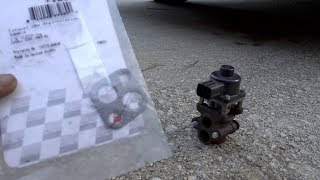
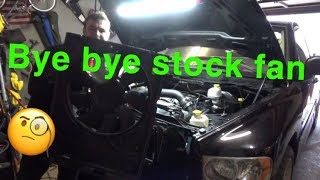

The information in this article is provided for general reference and educational purposes only. Vehicle specifications, procedures, and part compatibility can vary by production date, trim level, and region. Always consult your vehicle's factory service manual and verify part numbers before purchasing or performing repairs. Safety-critical components such as airbags, seat belts, and braking systems should be installed by a qualified professional.
- 🎬 Helpful Videos
- What Does P1499 Mean?
- Can I Drive With P1499?
- Common Causes
- Symptoms
- Diagnostic Flowchart
- Common Fixes & Costs
- Used vs. New Parts: Buying Guide
- What Happens If You Wait — Timeline
- Cost of Not Fixing It
- Diagnosis Steps
- When This Code Triggers (Freeze-Frame Conditions)
- Related Codes
- Climate & Environmental Factors
- How to Talk to a Mechanic About This Code
- Where to Take It: Dealer vs Independent vs Chain
- When to Walk Away From the Repair
- What Scan Tool You Need for This Code
- How to Clear the Code After You Fix It
- Will This Fail Emissions / State Inspection?
- Most Commonly Affected Vehicles
- Manufacturer-Specific Notes
- Real Owner Stories
- 2003 Jeep Grand Cherokee 4.7L with multiple codes
- 2005 Dodge Ram SRT-10 with fan noise
- Subaru with P1499 and failed emissions
- How to Prevent This Code From Triggering
- Frequently Asked Questions
- Why did my P1499 code appear with O2 sensor codes on my Jeep?
- Can I just replace the fan solenoid, or do I need the whole fan assembly?
- What happens if I ignore code P1499?
- My car isn't a Chrysler/Jeep. Why did I get a P1499 code?
- I replaced my Mitsubishi DPF but code P1499 came back. Why?
- What is a common misdiagnosis for P1499?
- How can I do a quick functional test of the fan system on my Jeep?
- Key Takeaways
- 🎟️ Get 5% Off