

OBD-II Code P1489: High Speed Fan Control Circuit Malfunction
What P1489 means, why it triggers, and how to fix it
- On Chrysler, Dodge, and Jeep vehicles, P1489 indicates a high-speed cooling fan circuit failure, with the $20-$60 fan relay being the culprit in over 70% of cases.
- Stop driving immediately if the temperature gauge spikes; continuing to drive with a failed high-speed fan causes warped cylinder heads and head gasket failures exceeding $2,000 in repair costs.
- The two most immediate symptoms of a P1489 code are the engine temperature gauge hitting the red zone and the A/C blowing warm air while idling.
- Verify the code definition for your specific make; while it means a fan fault on a Jeep, P1489 points to a PCV heater on Fords and an EGR sensor on Nissans.
What Does P1489 Mean?

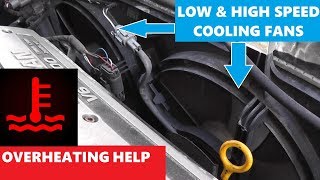
Trouble code P1489 signifies the Powertrain Control Module (PCM) detected an electrical fault in the high-speed cooling fan circuit. This fan dissipates heat from the engine coolant when the vehicle is stationary, moving slowly, or running the A/C. When this circuit fails, the fan cannot activate at high speed, causing rapid engine overheating.
Technical definition: The PCM detects an open or shorted condition in the high-speed radiator fan relay control circuit. This manufacturer-specific code (common for Chrysler, Dodge, and Jeep) sets when the PCM commands the relay to activate but does not see the expected voltage drop on the control circuit.
Can I Drive With P1489?
no_recommended. Stop driving immediately if the temperature gauge spikes. Continuing to drive with a failed high-speed fan causes rapid overheating, turning a $50 relay replacement into a warped cylinder head or blown head gasket with repair costs exceeding $2,000.
Common Causes

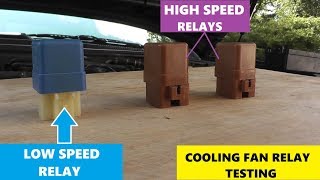
- Faulty High-Speed Fan Relay (Very Common) — The electromagnetic fan relay manages high current flow to the fan motor. Constant heat and electrical stress make it the most frequent failure point in this circuit. 🎬 Watch: How to test both low and high speed fan relays.
- Failed Cooling Fan Motor (Common) — The fan motor burns out from age, internal wear, or physical obstruction. A seized motor draws excessive current, destroying the relay and blowing the fuse.
- Damaged Wiring or Connectors (Common) — Wires leading to the relay or motor corrode, fray, or break, interrupting the electrical signal. The harness near the fan shroud and radiator support is highly vulnerable.
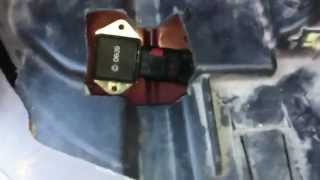
- Faulty Totally Integrated Power Module (TIPM) (Common) — Modern Chrysler, Dodge, and Jeep vehicles integrate fan relays directly into the TIPM. Internal circuit board failures disrupt power to the fan, triggering the code even if external components work perfectly. 🎬 Watch: How to remove and address a faulty TIPM unit.
- Blown Fuse (Less Common) — A short circuit in the motor or wiring blows the high-amperage fuse. Replacing the fuse without fixing the underlying short guarantees the new fuse will blow immediately.
- Faulty A/C Pressure or Coolant Temperature Sensor (Less Common) — The PCM uses A/C pressure and engine coolant temperature (ECT) inputs to activate the fan. Irrational signals prevent the PCM from commanding the fan on.
- Physical Obstruction (Rare) — Road debris or small animals lodge in the fan shroud, physically stopping the blades. This overloads the motor and blows the fuse.
- Faulty Powertrain Control Module (PCM) (Rare) — The PCM's internal driver circuit fails. Consider this only after thoroughly testing relays, wiring, fuses, and the motor.
Symptoms

- Engine Overheating — The temperature gauge spikes into the red zone during idle, stop-and-go traffic, or low speeds. A high coolant temperature warning light illuminates.
- A/C Blows Warm Air — The cooling fan pulls air across the A/C condenser. Without high-speed airflow, the A/C system cannot dissipate heat, causing warm air from the vents at idle.
- Check Engine Light is On — The PCM illuminates the Malfunction Indicator Lamp (MIL) immediately upon detecting the electrical fault.
- Unusual Noises or No Fan Noise — A failing motor produces grinding or clicking noises. Complete silence when the fan should be roaring indicates an electrical failure or seized motor.
- Cooling Fan Does Not Engage at High Speed (also visible on scanner) — The fan operates on low speed but fails to switch to high speed when engine temperature exceeds 220°F or the A/C turns on.
Diagnostic Flowchart
Tap your situation to follow the diagnostic path that matches what you're seeing on this code.
Common Fixes & Costs
- Replace High-Speed Fan Relay — Parts: $15-$60, Labor: $50-$100, ~0.5 hr book time (DIY)
- Replace Cooling Fan Assembly — Parts: $150-$400, Labor: $200-$700, ~2.5 hr book time (Professional)
- Replace/Repair Totally Integrated Power Module (TIPM) — Parts: $300-$1200, Labor: $100-$250, ~1.5 hr book time (Professional)
- Repair Fan Circuit Wiring — Parts: $10-$50, Labor: $150-$400, ~2 hr book time (Intermediate)
- Replace Blown Fuse — Parts: $1-$10, Labor: $0-$50, ~0.2 hr book time (DIY)
DIY vs Professional
- Replace High-Speed Fan Relay — Beginner: Yes
Tools: Small flathead screwdriver, fuse puller, basic socket set (10mm). - Replace Cooling Fan Assembly — Beginner: No
Tools: Socket set, wrenches, screwdrivers, hose clamp pliers, trim removal tools. - Replace/Repair Totally Integrated Power Module (TIPM) — Beginner: No
Tools: Socket set, screwdrivers, dealer-level scan tool for programming. - Repair Fan Circuit Wiring — Beginner: No
Tools: Multimeter, wire strippers, crimpers, soldering iron, heat shrink tubing. - Replace Blown Fuse — Beginner: Yes
Tools: Fuse puller or needle-nose pliers.
Used vs. New Parts: Buying Guide
When a used part is worth it: Complete fan assembly or TIPM from a low-mileage donor. Never for a simple relay.
Donor-vehicle mileage cap: roughly under 60000 miles for the part to have meaningful remaining life.
Donor quality checklist:
- Verify mileage.
- Inspect plastic shroud for cracks.
- Match TIPM part numbers exactly.
Decision logic:
- If The part is a simple plug-in relay → Buy new aftermarket.
- If The part is a complete fan assembly → Used OEM from reputable yard.
- If The part is a TIPM → Professionally refurbished unit.
Warranty tradeoff: Used 30-90 days, New aftermarket 1-year, New OEM best warranty.
Worst-case if a used part fails: $300-$800 if used part fails.
What Happens If You Wait — Timeline
- 0-1 month: MIL on, runs slightly hotter, A/C degrades. (MPG impact: 0-2%% · Added cost: $0)
- 1-2 months: First overheating event, coolant boils. (MPG impact: 0%% · Added cost: $100-$300)
- 2-4 months: Warped cylinder head, blown head gasket. (MPG impact: 5-15%% · Added cost: $2,000-$4,000)
- 4+ months: Catastrophic engine failure. (MPG impact: N/A% · Added cost: $5,000-$10,000+)
Cost of Not Fixing It
- Immediate (First Overheating Event): Engine overheats, coolant boils over. Risk of damage to plastic cooling components. (Added cost: $100-$300 for a tow and diagnostics.)
- 1-3 Months: Repeated overheating cycles warp the cylinder head or blow the head gasket. (Added cost: $2,000-$4,000 for head gasket replacement and cylinder head machining.)
- 3+ Months: Catastrophic engine failure requiring complete replacement. (Added cost: $5,000-$10,000+ for a used or remanufactured engine installation.)
Diagnosis Steps

- Visual Inspection
Inspect the cooling fan system. Check blades for damage, clear debris, and examine the wiring harness for melting, chafing, or corrosion near hot components.
Tools: Flashlight (Beginner) - Check Fuses and Relays
Locate the 'High Speed Fan' fuse and relay in the Power Distribution Center or TIPM. Check for a blown fuse. Swap the relay with an identical non-essential relay (like the horn) to see if the fan activates.
Tools: Owner's Manual, Fuse Puller (Beginner) - Test the Fan Motor Directly
Disconnect the fan motor connector. Use fused jumper wires to apply 12V power and ground directly from the battery to the motor terminals. If it spins at full speed, the motor is good. If not, replace the assembly.
Tools: Fused Jumper Wires, Car Battery (Intermediate) - Pro Tip: Test the Fan Relay
Remove the relay. Measure resistance between control terminals (85 and 86) using a multimeter; it should be 40-100 ohms. Apply 12V to these terminals and listen for a click. Check for continuity (near zero ohms) across switched terminals (30 and 87) while energized.
Tools: Multimeter, Jumper Wires, 12V Power Source (Intermediate) - Test for Power at the Relay Socket
With the relay removed and ignition on, verify 12V+ at the switch power terminal (usually 30) and one control terminal (85 or 86). This confirms battery and ignition power reach the circuit.
Tools: Multimeter, Vehicle-Specific Wiring Diagram (Intermediate) - Pro Tip: Use a Bidirectional Scan Tool
Command the high-speed fan ON using a bidirectional scan tool. If it runs, the issue is likely an input sensor (ECT or A/C pressure). If it doesn't run, test for power at the relay and motor.
Tools: Bidirectional Scan Tool (Advanced) - Pro Tip: Perform a Voltage Drop Test
Connect the positive multimeter lead to the battery positive and the negative lead to the fan motor power wire while commanded on. A reading over 0.5V indicates excessive resistance. Repeat on the ground side; over 0.2V indicates a bad ground.
Tools: Multimeter, Jumper Wires (Advanced) - Check for PCM Ground Signal
Connect a test light to battery positive and probe the PCM control wire at the back of the relay socket while commanding the fan on. Illumination confirms the PCM provides the ground signal.
Tools: 12V Test Light, Vehicle-Specific Wiring Diagram (Advanced) - Advanced: Test Fan Motor Amperage Draw
Connect a DC clamp-on ammeter around the fan's power wire and command high speed. A continuous draw above 15 amps indicates a failing motor requiring replacement.
Tools: DC Clamp-On Ammeter, Bidirectional Scan Tool (Advanced) - Advanced: Test ECT Sensor Resistance
Disconnect the ECT sensor and measure resistance. Compare to a temperature chart (e.g., 2,200-3,000 Ω at 68°F). Incorrect readings require sensor replacement.
Tools: Multimeter, Temperature Probe, ECT Resistance Chart (Advanced)
When This Code Triggers (Freeze-Frame Conditions)
- Engine Coolant Temp: 220-240°F (Engine overheating triggers the high-speed command.)
- RPM: 600-900 (Vehicle at idle with minimal natural airflow.)
- A/C System Status: On (A/C places high demand on the condenser.)
- Vehicle Speed: 0-15 mph (Stationary or moving slowly.)
Related Codes
- P1490 — Low Speed Fan Control Relay Circuit. If present with P1489, test the fan motor directly, as it is the most likely single point of failure for both speeds.
- P0480 — Generic code for Cooling Fan 1 Control Circuit. Identical diagnostic process, but P1489 on Chrysler/Jeep points to specific pattern failures like the TIPM.
- P0481 — Generic code for Cooling Fan 2 Control Circuit. Equivalent to P1489 on GM or Ford two-fan systems.
- P0117 / P0118 — ECT Sensor Circuit Low/High. An irrational ECT signal prevents the PCM from commanding the fan.
Climate & Environmental Factors
- Hot Climate: High ambient temperatures force the high-speed fan to run longer, accelerating thermal and electrical wear on the motor and relay.
- Winter Climate / Road Salt: Saltwater spray infiltrates wiring harnesses and connectors, causing corrosion that creates high resistance or open circuits.
How to Talk to a Mechanic About This Code
Say this: "I have a P1489 code and suspect a high-speed cooling fan circuit problem. I need a diagnostic on the fan relay, motor, and wiring."
Directs mechanic, prevents broad diagnostics, signals informed customer.
Avoid saying:
- 'Just fix it'
- 'Car is overheating'
- 'Do whatever it takes'
Questions to ask before authorizing the repair:
- Did you test the motor directly?
- Did you check amperage draw?
- Can you show me the failed part?
- Warranty?
Where to Take It: Dealer vs Independent vs Chain
- Dealer:
Recommended only for complex TIPM issues or vehicles under warranty.
Best for: Vehicles under warranty., Complex TIPM programming.
Downsides: Highest labor rates., Prefers replacing expensive modules over repairing them. (Typical cost: +50% vs. baseline) - Independent Shop:
Best fit for most P1489 scenarios.
Best for: Out-of-warranty vehicles., Common failures (relay, motor).
Downsides: Shop quality varies. (Typical cost: +0% vs. baseline) - Chain Shop:
Use with caution. Acceptable for a simple relay swap, but avoid for initial diagnosis.
Best for: Simple relay swap only.
Downsides: Technician skill varies greatly., Lacks advanced diagnostic tools. (Typical cost: -10% vs. baseline)
When to Walk Away From the Repair
Repair exceeds 40-50% of vehicle value.
- Car worth $4000, fix is $750: Fix it.
- Car worth $3000, fix is $2200: Walk away.
- Car worth $6000, fix is $1400: Borderline.
What Scan Tool You Need for This Code

Minimum: Basic reader for codes and live ECT data.
Cannot command the fan ON to test the circuit.
Budget: BlueDriver Pro or Foxwell NT301 (~$100) — Reads codes, displays live ECT.
Mid-range: Innova 5610 or Topdon ArtiDiag Pro (~$300) — Bidirectional controls to command fan.
Professional: Autel MaxiCOM MK808S or XTOOL D7 (~$450-600) — Full bidirectional, ECU coding, TIPM access.
Rent vs buy: Buy budget scanner for live data; free store scans lack diagnostics.
How to Clear the Code After You Fix It
- Use an OBD-II scan tool to clear the P1489 trouble code.
- Perform a complete drive cycle to allow the vehicle's readiness monitors to run.
- Verify the Check Engine Light does not return.
Drive cycle (~20 minutes): Start engine, warm up for 5 mins. Drive 40-60 mph for 8 mins. Stop and idle for 3 mins. Drive over 20 mph for 2 mins. Turn off and sit for 10 mins.
Readiness monitors affected: Catalyst Monitor, O2 Sensor Monitor, Evaporative System Monitor
Before emissions retest: drive at least 50 miles to fully set monitors.
Watch out for:
- Clearing without driving fails emissions.
- Unrepaired faults return immediately.
- Fuel tank must be 15-85% full for EVAP.
Will This Fail Emissions / State Inspection?
Yes — this code typically fails an OBD-II emissions inspection.
- California: Active MIL is automatic failure. Full drive cycle required after repair.
- New York: Active MIL fails emissions portion. Code must be cleared and monitors ready.
- Texas: Active P1489 causes automatic OBD-II failure. MIL must be off.
Most Commonly Affected Vehicles
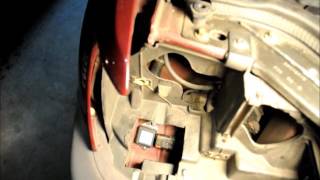
- Jeep Grand Cherokee (WJ) (1999-2004) — The dedicated fan relay module behind the passenger headlight fails constantly. Replace it as a complete unit.
- Chrysler Town & Country (2001-2007) — Failed fan relays in the under-hood fuse box or chafed wiring near the radiator support are the primary culprits.
- Dodge Grand Caravan (2001-2007) — Shares the Town & Country platform and identical electrical vulnerabilities.
- Chrysler PT Cruiser (2001-2010) — Straightforward replacement of the high-speed fan relay in the Power Distribution Center resolves most cases.
- Dodge Intrepid (1998-2004) — Service manuals specifically link P1489 to the high-speed fan relay circuit.
- Dodge Stratus (2001-2006) — P1489 and P1490 frequently appear together, pointing directly to the fan relay.
- Dodge Ram 1500/2500 (2006-2013) — P1489 typically indicates an internal failure of the Totally Integrated Power Module (TIPM) rather than an external relay.
- Chevrolet Cobalt (2005-2010) — Some scanners report P1489 instead of the generic P0480 for a failed cooling fan relay or burned-out motor.
Manufacturer-Specific Notes
- Ford: P1489 means 'PCV Heater Control Circuit Fault', pointing to a small electric heater on the PCV valve, completely unrelated to the cooling fan.
- Nissan: Refers to an 'EGR Temperature Sensor' or 'Vapor Canister Purge Valve Solenoid' fault. Some 2014-2018 models require a dealership ECU update.
- Volkswagen/BMW: Defined as an 'O2 Sensor Heater Circuit Malfunction' or EGR system issue, unrelated to the cooling fan.
- Chrysler/Jeep/Dodge: Check TSB 08-007-08 REV. A for TIPM electrical issues. Internal fan control circuit failures are common but rarely covered by extended warranties.
Real Owner Stories
2004 Jeep Grand Cherokee (WJ) 4.0L with P1489 & P1490
Check Engine Light came on, but the vehicle seemed to be running fine with no overheating.
What they tried:
- Posted on a forum seeking advice for codes P1489 and P1490.
- Another owner experienced intermittent no-start conditions along with the fan codes.
Outcome: Replaced the dedicated fan relay module behind the passenger headlight, resolving the issue.
Lesson: Check known weak points first. On a 1999-2004 Jeep Grand Cherokee, the fan relay block is the primary suspect.
2005 Chrysler PT Cruiser with A/C Blowing Hot
The vehicle's A/C was not working. A mechanic found the A/C compressor venting high pressure.
What they tried:
- Commanded the low and high-speed fans on using a scan tool.
- Tapping on the fan motor sometimes made it work, indicating worn-out motor brushes.
Outcome: Replaced the entire cooling fan assembly, resolving both the fan issue and the A/C high-pressure problem.
Lesson: A/C problems are early symptoms. Always test the fan motor directly.
2011 Dodge Ram 1500 with Multiple Electrical Issues
The truck would turn over but not start, or the battery would be dead overnight.
What they tried:
- A shop replaced the fuel pump, but the new pump ran continuously with the truck off.
- The shop diagnosed a TIPM failure and quoted $1200.
Outcome: The owner found a service that repaired the original TIPM for under $350.
Lesson: P1489 with unrelated electrical faults points directly to the TIPM. Investigate repair services before buying a new unit.
How to Prevent This Code From Triggering
- Clean debris from radiator and A/C condenser (Annually) — Clear airflow reduces the workload on the fan motor.
- Apply dielectric grease to electrical connectors (When servicing) — Seals out moisture and prevents corrosion.
- Perform cooling system flushes (Every 30,000 to 50,000 miles) — Ensures efficient heat transfer, reducing fan runtime.
- Use rust-proofing oil sprays on undercarriage (Annually in salt belts) — Displaces moisture and prevents road salt corrosion.
Frequently Asked Questions
Can I just replace the relay to fix P1489?
Yes, replacing the inexpensive high-speed fan relay is a logical and cost-effective first step.
Why does my A/C blow warm air with a P1489 code?
The cooling fan pulls air over the A/C condenser. Without high-speed airflow, the condenser cannot cool the refrigerant, causing the A/C to blow warm air.
I replaced the fan relay, but the code came back. What's next?
Test the fan motor directly by applying 12V power. A failing motor draws excessive current and destroys the new relay. On Chrysler products, a recurring code points to a failing TIPM.
Where is the high-speed fan relay located?
Location varies. It is a plug-in relay in the fuse box on PT Cruisers, a bolted module behind the headlight on 1999-2004 Grand Cherokees, or integrated inside the TIPM on newer models.
What is the most common misdiagnosis for P1489?
The most common mistake is replacing the expensive cooling fan assembly when the fault is a $20 relay. Another is replacing a relay without testing the fan motor's amperage draw.
Is it dangerous to drive with a P1489 code?
Yes, driving is extremely risky. Without a functional high-speed fan, the engine overheats rapidly, causing catastrophic damage like a blown head gasket.
My fan still runs, so why do I have a P1489 code?
Your vehicle has a two-speed fan system. The low-speed fan operates, but it cannot cool the engine under heavy loads or when the A/C is on.
Can I clear the P1489 code to fix the problem?
No. Clearing the code only turns off the light temporarily. The PCM detects the hard electrical fault immediately upon commanding the fan, and the code returns.
Key Takeaways
- On Chrysler, Dodge, and Jeep vehicles, P1489 indicates a high-speed cooling fan circuit failure, with the $20-$60 fan relay being the culprit in over 70% of cases.
- Stop driving immediately if the temperature gauge spikes; continuing to drive with a failed high-speed fan causes warped cylinder heads and head gasket failures exceeding $2,000 in repair costs.
- The two most immediate symptoms of a P1489 code are the engine temperature gauge hitting the red zone and the A/C blowing warm air while idling.
- Verify the code definition for your specific make; while it means a fan fault on a Jeep, P1489 points to a PCV heater on Fords and an EGR sensor on Nissans.
Helpful Videos
![TIPM [Dodge, Chrysler, Jeep] Removal and Solution](https://img.youtube.com/vi/qea1H85HBwU/mqdefault.jpg)

The information in this article is provided for general reference and educational purposes only. Vehicle specifications, procedures, and part compatibility can vary by production date, trim level, and region. Always consult your vehicle's factory service manual and verify part numbers before purchasing or performing repairs. Safety-critical components such as airbags, seat belts, and braking systems should be installed by a qualified professional.
- 🎬 Helpful Videos
- What Does P1489 Mean?
- Can I Drive With P1489?
- Common Causes
- Symptoms
- Diagnostic Flowchart
- Common Fixes & Costs
- DIY vs Professional
- Used vs. New Parts: Buying Guide
- What Happens If You Wait — Timeline
- Cost of Not Fixing It
- Diagnosis Steps
- When This Code Triggers (Freeze-Frame Conditions)
- Related Codes
- Climate & Environmental Factors
- How to Talk to a Mechanic About This Code
- Where to Take It: Dealer vs Independent vs Chain
- When to Walk Away From the Repair
- What Scan Tool You Need for This Code
- How to Clear the Code After You Fix It
- Will This Fail Emissions / State Inspection?
- Most Commonly Affected Vehicles
- Manufacturer-Specific Notes
- Real Owner Stories
- 2004 Jeep Grand Cherokee (WJ) 4.0L with P1489 & P1490
- 2005 Chrysler PT Cruiser with A/C Blowing Hot
- 2011 Dodge Ram 1500 with Multiple Electrical Issues
- How to Prevent This Code From Triggering
- Frequently Asked Questions
- Can I just replace the relay to fix P1489?
- Why does my A/C blow warm air with a P1489 code?
- I replaced the fan relay, but the code came back. What's next?
- Where is the high-speed fan relay located?
- What is the most common misdiagnosis for P1489?
- Is it dangerous to drive with a P1489 code?
- My fan still runs, so why do I have a P1489 code?
- Can I clear the P1489 code to fix the problem?
- Key Takeaways
- 🎟️ Get 5% Off