

OBD-II Code P1486: EVAP System Blockage, Cooling Fault, or EGR/ESP Issue
The Ultimate Guide to P1486: What it means for your Chrysler, Honda, Ford, VW, and more.
- Verify your manufacturer's definition first: P1486 means an EVAP blockage on a Jeep, a critical cooling fault on a Honda, and an ABS/ESP test mode on a VW.
- Fix 80% of Chrysler, Dodge, and Jeep P1486 codes by visually inspecting the underbody to find and replace a $15 pinched or crushed EVAP hose.
- Stop driving immediately if P1486 appears on a Honda; ignoring this cooling system fault guarantees a blown head gasket requiring a $2,000 to $4,000 repair.
- Clear the VW/Audi '01486' ABS/ESP test code without tools by driving exactly 13 mph and turning the steering wheel 90 to 180 degrees.
- Pinpoint hidden EVAP blockages instantly by paying a shop $100 to $200 for a professional smoke test before replacing expensive parts like the charcoal canister.
What Does P1486 Mean?

P1486 is a manufacturer-specific code. For Chrysler, Dodge, and Jeep, the Powertrain Control Module (PCM) detected a blockage in the Evaporative Emission Control (EVAP) system. During a self-test, the PCM found a restriction, like a pinched hose, preventing proper fuel vapor flow. For Honda, Ford, and VW, this code points to entirely different systems.
Technical definition: For Chrysler, Dodge, and Jeep, the official definition is "EVAP Leak Monitor Pinched Hose Found". The PCM pressurizes the EVAP system using the Leak Detection Pump (LDP); if pressure builds too quickly, it registers a blockage. Honda uses this code for a "Cooling System Malfunction", Ford for an "EGRA Circuit Malfunction", and Volkswagen uses 01486 for an "ABS/ESP System Test Activated".
Can I Drive With P1486?

Yes, But With Caution. Driving a Chrysler, Dodge, or Jeep is safe, but you will fail an emissions test. For Honda, this indicates a critical cooling system failure; stop driving immediately to prevent a blown head gasket or cracked block, which cost $2,000+ to repair. For Ford or Nissan, short-term driving is possible but risks long-term catalytic converter damage.
Common Causes

- Pinched, kinked, or clogged EVAP hose (Very Common) — The most frequent cause for Chrysler/Dodge/Jeep. A rubber or plastic hose running from the fuel tank to the EVAP canister gets folded, crushed by road debris, or clogged with dirt.
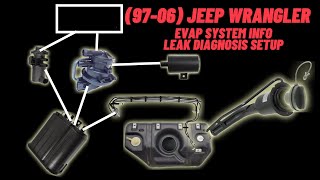
- Clogged or failed Leak Detection Pump (LDP) (Common) — The LDP pressurizes the system for the test. Its internal filter clogs with dust, or the pump fails mechanically, which the PCM interprets as a blockage. Highly common on Jeep Wranglers. 🎬 Watch: Jeep Wrangler EVAP system and leak diagnosis guide.
- Faulty Thermostat or Cooling Fan (Honda) (Common) — On Honda vehicles, a thermostat stuck closed or a dead radiator fan motor are the primary triggers for the P1486 "Cooling System Malfunction" code.
- Clogged EVAP canister from overfilling (Common) — Habitually topping off the gas tank forces liquid fuel into the charcoal canister. This saturates the charcoal, creating a permanent blockage that prevents air from flowing during the EVAP test.
- Spider webs or insect nests in vent lines (Less Common) — Spiders are attracted to fuel vapors and build dense nests inside the EVAP vent hose outlet, creating a physical blockage.
- Faulty EVAP vent or purge solenoid (Less Common) — If the vent or purge solenoid is mechanically stuck in the closed position, it creates a total airflow restriction.
- Faulty Powertrain Control Module (PCM) (Rare) — On 2000-2002 Honda Accords (per TSB 01-022), P1486 is triggered by a software glitch in the ECU itself, requiring module replacement.
Symptoms
- Check Engine Light is on — The primary symptom for an EVAP-related P1486. The computer illuminates the light immediately after confirming the fault.
- Engine Overheating (Honda-specific) — The temperature gauge rises into the red, or steam billows from the engine bay. 🎬 Watch: How to troubleshoot a Honda Accord overheating issue. Stop driving immediately.
- Difficulty filling the gas tank — If the EVAP canister or vent line is severely blocked, the gas pump will constantly click off while refueling.
- Failing an emissions test — An active P1486 code triggers an automatic failure during the OBD-II portion of a state smog check.
- Engine Knocking or Pinging (EGR-related) — On Ford or Nissan vehicles, an EGR fault causes higher combustion temperatures, resulting in a metallic pinging sound under acceleration.
Diagnostic Flowchart

Tap your situation to follow the diagnostic path that matches what you're seeing on this code.
Common Fixes & Costs
- Replacing a pinched or cracked EVAP hose — Parts: $10-$50, Labor: $100-$250, ~1.5 hr book time (DIY)
- Replacing the Leak Detection Pump (LDP) — Parts: $40-$130, Labor: $100-$200, ~1 hr book time (Intermediate)
- Replacing the Thermostat (Honda) — Parts: $20-$60, Labor: $150-$300, ~2 hr book time (DIY)
- Replacing the EVAP Canister — Parts: $200-$450, Labor: $100-$250, ~1 hr book time (Intermediate)
- Replacing the Powertrain Control Module (PCM) — Parts: $200-$800, Labor: $150-$300, ~2 hr book time (Professional)
Used vs. New Parts: Buying Guide
When a used part is worth it: For expensive, non-wear items like an EVAP canister on an older vehicle, a used part from a low-mileage donor offers significant savings. For cheap parts like thermostats or wear items like pumps, buy new.
Donor-vehicle mileage cap: roughly under 80000 miles for the part to have meaningful remaining life.
Donor quality checklist:
- Verify the donor vehicle was not scrapped for an emissions-related failure.
- Match the OEM part number exactly.
- Ensure the seller offers a functional guarantee for electronic parts like an LDP or PCM.
- Avoid parts from regions with heavy road salt usage.
Decision logic:
- If The part is electronic or a known wear item (LDP, thermostat, PCM). → Buy a new OEM or high-quality aftermarket part for reliability.
- If The part is expensive (EVAP Canister >$300) AND the vehicle is over 10 years old. → Buy a used part from a reputable salvage yard.
- If The vehicle is under 80,000 miles and the part costs less than $150 new. → Buy new. The cost savings of a used part are minimal compared to the risk.
Warranty tradeoff: Used parts offer a 30-90 day warranty. New aftermarket parts offer 1-year to lifetime warranties. New OEM parts carry a 1-2 year warranty.
Worst-case if a used part fails: $250-$600 (Cost of repeat labor plus a second replacement part).
What Happens If You Wait — Timeline
- 0-1 Month: EVAP (Chrysler): CEL is on, fails emissions test. HONDA: CEL is on, cooling fan or thermostat is faulty. EGR (Ford): CEL is on, slight hesitation. (MPG impact: 0-5%% · Added cost: $0-$50 in wasted fuel or failed test fees.)
- 1-4 Months: EVAP (Chrysler): Difficulty filling fuel tank begins. HONDA: First overheating event occurs, potentially warping the cylinder head. EGR (Ford): Engine knocking becomes frequent. (MPG impact: 3-10%% · Added cost: EVAP: $0. HONDA: $1,500-$3,000 (warped head). EGR: $50-$100 (wasted fuel).)
- 4-8 Months: EVAP (Chrysler): Constant pressure damages the fuel tank pressure sensor. HONDA: Severe overheating blows the head gasket. EGR (Ford): High temps damage the catalytic converter. (MPG impact: 5-15%% · Added cost: EVAP: $50-$150 (sensor). HONDA: $2,000-$4,000 (head gasket). EGR: $800-$1,500 (catalytic converter).)
- 8+ Months: EVAP (Chrysler): Saturated canister releases charcoal granules, clogging valves. HONDA: Catastrophic engine block failure. EGR (Ford): Catalytic converter completely fails. (MPG impact: 10-25%% · Added cost: EVAP: $400+ (canister + valves). HONDA: $4,000-$7,000+ (engine replacement). EGR: $1,200-$2,500 (full catalyst replacement).)
Cost of Not Fixing It
- Immediate (0-1 Month): Automatic failure of an emissions test. For Honda, immediate risk of engine overheating. (Added cost: $50-$100 (failed test fees and wasted fuel))
- Medium-Term (1-6 Months): For Honda, continued driving leads to a blown head gasket. For Ford/Nissan, increased combustion temperatures degrade the catalytic converter. For Chrysler, you experience difficulty filling the fuel tank. (Added cost: $2,500-$7,000 (Honda engine damage), $500-$2,000 (Ford/Nissan catalytic converter))
- Long-Term (6+ Months): Engine failure is certain for Honda. Catalytic converter failure is highly likely for EGR codes. EVAP blockages cause secondary damage to the fuel tank pressure sensor. (Added cost: $2,500-$7,000 (Engine), $1,200-$2,800 (Catalytic Converter), $200-$500 (Fuel Tank Pressure Sensor))
Diagnosis Steps
- Verify the Code's Meaning for Your Vehicle
Confirm what P1486 means for your specific make. A P1486 on a Jeep is an EVAP problem; on a Honda, it's a cooling problem. Misinterpreting the code guarantees incorrect repairs.
Tools: OBD-II Scanner, Vehicle Service Manual (Beginner) - Check for Accompanying Codes
Scan for other codes. On a Chrysler, P1494 points directly to a failed LDP. On a Honda, P0128 points directly to a stuck thermostat.
Tools: OBD-II Scanner (Beginner) - Visually Inspect EVAP Hoses (Chrysler/Dodge/Jeep)
Look under the car along the frame rails from the fuel tank to the engine bay. Check all rubber and plastic EVAP lines for kinks, sharp bends, or crush damage. Pay close attention to hoses around the black plastic charcoal canister.
Tools: Flashlight, Safety Glasses (Beginner) - Inspect Cooling System (Honda)
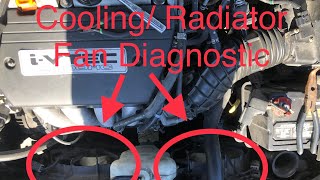
Check the coolant level. With the engine cool, start the car and turn the A/C on maximum. Both radiator fans must turn on. If one or both fail to spin, the fan motor, relay, or circuit is dead.
Tools: Flashlight (Beginner) - Perform an EVAP Smoke Test
The most effective method for finding EVAP blockages. Connect a smoke machine to the EVAP service port. The harmless smoke stops flowing at the exact point of the blockage, pinpointing the crushed hose or clogged canister.
Tools: EVAP Smoke Machine (Advanced) - Check for Airflow in EVAP Lines (DIY Alternative)
Disconnect an EVAP hose at the canister and another at the engine's purge valve. Use a hand pump to gently blow air through the hose. If air cannot pass, you found the blocked line.
Tools: Pliers, Low-pressure air source (Intermediate) - Test Radiator Fan Circuit & Motor (Honda)
If a fan fails to run, disconnect its 2-pin connector. Apply 12V directly to the fan motor terminals using a jumper wire. If it doesn't run, the motor is dead. If it does run, use a multimeter to test the fan relay and temperature switch.
Tools: Multimeter, Jumper Wire, 12V Power Source (Advanced) - Use Scan Tool Live Data (Chrysler/Dodge/Jeep)
Monitor the 'Fuel Tank Pressure' (FTP) PID. Command the EVAP Purge Valve to 0% (off) and the Vent Valve to 'Closed'. The FTP reading must remain steady. If pressure drops, the Purge Valve is mechanically stuck open.
Tools: Bi-directional OBD-II Scanner (Advanced) - Bench Test the Leak Detection Pump (Chrysler/Dodge/Jeep)
Remove the LDP. Connect a hand vacuum pump to the engine vacuum port and ground the LDP. Place a balloon over the canister port. Apply 12V to cycle the solenoid. The balloon must inflate and hold air indefinitely. If it deflates, the LDP leaks internally.
Tools: Vacuum Pump, Jumper Wires, 12V Power Source, Balloon (Advanced)
When This Code Triggers (Freeze-Frame Conditions)
- Engine Coolant Temp: 170-210°F (77-99°C) (The engine must be fully warmed up and operating in closed loop for the EVAP monitor to run.)
- Vehicle Speed: 40-60 mph (64-97 km/h) (The test is performed during steady-state highway cruising.)
- Engine RPM: 1500-2500 RPM (Requires a steady throttle position, not accelerating or decelerating.)
- Fuel Level: 15-85% (The EVAP monitor aborts if the fuel tank is nearly full or empty.)
- Engine Load: 20-60% (Occurs under light to moderate engine load, consistent with maintaining speed on a level road.)
Related Codes
- P1494 — This Chrysler/Jeep code means "Leak Detection Pump SW or Mech Fault". If it appears with P1486, the LDP itself is almost certainly the source of the failure.
- P1495 — Points to an electrical problem with the LDP circuit. P1486 is a pressure fault (blockage), while P1495 is an electrical one. Diagnose P1495 with a multimeter first.
- P0455 — Indicates a "Large EVAP Leak," the exact opposite of P1486. A bad gas cap causes P0455 but will never cause P1486.
- P0128 — On Honda vehicles, this code means the engine isn't reaching operating temperature. If stored with P1486, the thermostat is the culprit.
Climate & Environmental Factors
- Cold Weather: Extreme cold causes rubber diaphragms inside the LDP to stiffen, leading to mechanical failure. It also freezes moisture trapped in EVAP lines, creating a physical blockage.
- Warm Climates / Insect Activity: Spiders are attracted to gasoline vapor. In warmer regions, they build dense nests inside the EVAP vent hose outlet, creating a perfect blockage.
- High Humidity: The charcoal canister absorbs excess water vapor from humid air, reducing its ability to absorb fuel vapors and contributing to clogs.
How to Talk to a Mechanic About This Code
Say this: "I have a P1486 code. On my Jeep, I suspect an EVAP blockage and authorize one hour of diagnostic labor for a smoke test. On my Honda, it's a cooling fault; test the fan motors, relays, and thermostat before replacing parts. On my VW, it's code 01486; please perform the ESP function test drive cycle to clear it."
This shows you understand the code is manufacturer-specific and directs the mechanic to the correct diagnostic procedure, preventing them from wasting time on the wrong system.
Avoid saying:
- 'My check engine light is on, can you look at it?' (Invites expensive, unnecessary diagnostics).
- 'Just fix the P1486 code.' (Doesn't specify the system and leads to replacing the wrong parts).
- 'I think it's the gas cap.' (A bad gas cap will not cause P1486; this misdirects the technician).
Questions to ask before authorizing the repair:
- For Chrysler/Jeep: Did the smoke test confirm the exact location of the blockage? Can you show me the pinched hose?
- For Honda: Did you test the fan motor directly with 12V power? Did you check the fan relay and switch?
- Can you provide a written estimate that breaks down parts and labor costs?
- What is the warranty on the recommended parts and your labor?
Where to Take It: Dealer vs Independent vs Chain
- Dealer:
Best for: Vehicles under warranty., Manufacturer-specific quirks like the VW/Audi 01486 'System Function Test' or the Honda Accord ECU TSB., Complex electrical diagnostics requiring proprietary software.
Downsides: Highest labor rates., Favors replacing larger, more expensive assemblies over repairing a smaller component. (Typical cost: +50% vs. baseline) - Independent Shop:
Best fit for the most common versions of P1486. A well-equipped independent shop provides the best balance of expertise and value.
Best for: Out-of-warranty Chrysler/Jeep EVAP issues., Common Honda cooling system repairs., Vehicles where cost is a primary concern.
Downsides: Diagnostic equipment varies; ensure the shop has an EVAP smoke machine., May lack specific tools like VCDS for VW. (Typical cost: +0% vs. baseline) - Chain Shop:
AVOID for P1486 diagnosis. The risk of incorrect diagnosis and unnecessary parts replacement is high due to the code's manufacturer-specific nature.
Best for: Simple, unrelated maintenance like oil changes or tires.
Downsides: Technician skill varies dramatically., High pressure to upsell leads to misdiagnosis., Lack advanced diagnostic tools for multi-definition codes. (Typical cost: -10% vs. baseline)
When to Walk Away From the Repair
If the estimated repair cost exceeds 50% of the car's private-party value, sell or trade it in.
- Car worth $3500, fix is $450: Fix it. This is a 2005 Jeep with a clogged EVAP canister. The repair cost is well below the threshold.
- Car worth $4000, fix is $3000: Walk away. This is a 2001 Honda Accord driven while overheating, resulting in a blown head gasket. The repair cost is 75% of the car's value.
- Car worth $15000, fix is $800: Fix it. This is a newer VW that needs a steering angle sensor reset and drive cycle. The cost is low relative to the vehicle's value.
What Scan Tool You Need for This Code
Minimum: A scanner that reads manufacturer-specific code definitions and shows live data.
A basic $20 code reader only shows 'P1486' without context. It won't tell you if it's an EVAP issue on your Jeep or a critical cooling fault on your Honda.
Budget: BlueDriver Pro (~$100) — Connects to your phone and provides the specific definition for your vehicle. Allows you to view live data, such as coolant temperature on a Honda.
Mid-range: Autel MaxiCOM MK808 (~$350) — Provides bi-directional control. Allows you to command EVAP solenoids on a Chrysler or activate cooling fans on a Honda to test them directly.
Professional: Launch X431 V Pro (~$900) — Offers full OEM-level diagnostics, including advanced programming necessary for reprogramming a new PCM on a Honda.
Rent vs buy: Free loaner scanners from auto parts stores are basic readers and insufficient for this code. Buying a mid-range scanner with bi-directional control offers the best long-term value.
How to Clear the Code After You Fix It
- Fix the underlying mechanical or electrical fault.
- Use an OBD-II scan tool to erase the Diagnostic Trouble Codes (DTCs).
- Perform a complete drive cycle to allow the readiness monitors to run their self-tests.
Drive cycle (~30 minutes): Cold start the vehicle after sitting for 8 hours. Idle for 3 minutes. Drive for 20 minutes with mixed stop-and-go city and steady 55 mph highway conditions. Allow the vehicle to cool down completely. Repeat over 2-3 days to set the difficult EVAP monitor.
Readiness monitors affected: EVAP System, Catalyst (CAT), Oxygen (O2) Sensor
Before emissions retest: drive at least 100 miles to fully set monitors.
Watch out for:
- Clearing the code resets all readiness monitors to 'Not Ready', guaranteeing an emissions test failure.
- The EVAP monitor has strict running conditions (fuel level between 15-85%) and will not run if the tank is full.
Will This Fail Emissions / State Inspection?
Yes — this code typically fails an OBD-II emissions inspection.
- California: An active Check Engine Light results in an automatic smog check failure. After repairs, you must complete a drive cycle to set the readiness monitors.
- New York: An illuminated Malfunction Indicator Lamp for any code, including P1486, causes an automatic inspection failure.
- Texas: In the 17 counties requiring emissions testing, a vehicle with an active P1486 code fails the OBD portion of the annual inspection.
Most Commonly Affected Vehicles
- Jeep Wrangler (TJ) (1999-2006) — Extremely common. Often a failed LDP or a clogged LDP filter. 2005-2006 models are also known for PCM failures.
- Dodge Grand Caravan (2001-2010) — Frequently caused by a failed Leak Detection Pump or obstructions in the long hose runs under the vehicle.
- Chrysler Town & Country (2001-2010) — Shares the same platform and EVAP system as the Grand Caravan, making it prone to the same LDP and hose issues.
- Dodge Ram 1500 (2002-2008) — EVAP hoses on these trucks are easily damaged or pinched by road debris. Check the lines running along the frame rail.
- Jeep Grand Cherokee (1999-2010) — The LDP and associated hoses are common failure points that trigger a P1486 code.
- Honda Accord (2000-2002) — Indicates a 'Cooling System Malfunction'. Often caused by a faulty thermostat, a bad radiator fan, or a known ECU issue covered by TSB 01-022.
- Volkswagen Jetta, Golf, Passat (2006-2015) — Displays as VAG code '01486 - System Function Test Activated'. Appears after an alignment and requires a special drive cycle to clear.
- Nissan Qashqai (2014-2021) — Typically points to a fault in the EGR system, such as a stuck-open exhaust flap or a defective EGR actuator circuit.
Manufacturer-Specific Notes

- Chrysler/Dodge/Jeep: Uses P1486 specifically to signal a blockage or restriction in the EVAP system, detected when system pressure builds too quickly during a self-test.
- Honda: Uses P1486 for a "Cooling System Malfunction", completely unrelated to the EVAP system. Often caused by a bad thermostat or cooling fan.
- Ford: Uses P1486 for an "EGRA Circuit Malfunction," indicating a problem with the exhaust gas recirculation actuator.
- Volkswagen/Audi: Uses code 01486 for "System Function Test Activated" in the ABS/ESP module. This is not an error, but a self-test mode cleared by a specific driving procedure.
Real Owner Stories
2005 Jeep Wrangler TJ at 110K miles
Check Engine Light came on with code P1486 after off-roading. No drivability symptoms.
What they tried:
- Initially suspected a complex canister or solenoid issue.
- Performed a detailed visual inspection of all EVAP hoses running along the frame.
- Found a plastic EVAP line near the transfer case skid plate crushed flat by a rock strike.
Outcome: Spliced in a new section of rubber fuel hose for $5. Cleared the code and it did not return.
Lesson: Always perform a thorough visual inspection for physical damage before buying parts. The problem is often simple mechanical damage.
2001 Honda Accord at 160K miles
P1486 'Cooling System Malfunction' appeared. Temperature gauge read normal.
What they tried:
- Mechanic replaced the thermostat and temperature sensor. The code returned.
- Owner checked the car and noticed only one radiator fan was working with the A/C on.
Outcome: Owner applied 12V directly to the non-working fan motor; it was dead. Replaced the fan assembly, permanently clearing the P1486 code.
Lesson: Don't just replace the thermostat on a Honda; test the entire fan system, as a dead fan motor is a common and overlooked cause.
2008 Dodge Grand Caravan with 95K miles
P1486 code present for months. The gas pump constantly clicked off during refueling.
What they tried:
- Replaced the Leak Detection Pump (LDP) and purge solenoid with no success.
- Authorized a professional smoke test before replacing the expensive charcoal canister.
Outcome: The smoke test revealed a dense spider nest completely blocking the EVAP vent tube orifice. Cleaning out the nest resolved the code and the fueling issue.
Lesson: If you've replaced common parts without success, pay for a smoke test to pinpoint the exact blockage location before replacing a $300 canister.
How to Prevent This Code From Triggering
- Stop fueling when the pump clicks off the first time (Every fill-up) — Overfilling forces liquid gasoline into the EVAP charcoal canister. This saturates the charcoal, causing a permanent blockage and triggering P1486.
- Perform a cooling system drain and fill (Every 5 years or 50,000 miles) — Old coolant loses anti-corrosive properties, creating rust that causes thermostats to stick. Use genuine Honda Type 2 coolant for Honda vehicles.
- Clean the EVAP vent hose outlet (Annually in warm climates) — Spiders build nests in the vent outlet, creating a physical blockage. A quick spray of compressed air prevents this.
Frequently Asked Questions
Can a bad gas cap cause a P1486 code?
No. A loose or faulty gas cap causes an EVAP leak code, such as P0455. The P1486 code is for an EVAP blockage, which is the exact opposite problem.
I replaced the Leak Detection Pump (LDP) but the P1486 code came back. What now?
This is a common misdiagnosis. P1486 indicates a blockage somewhere in the system, not necessarily a failed LDP. Perform a visual inspection of all EVAP hoses for kinks, followed by a smoke test to pinpoint the exact restriction.
Are there any recalls or Technical Service Bulletins (TSBs) for P1486?
Yes. Honda issued TSB 01-022 for 2000-2002 Accords where P1486 is caused by faulty ECU software, requiring an ECU replacement. Volkswagen has Tech Tip 45-09-05 for their related 01486 ESP code.
What is a Leak Detection Pump (LDP)?
The LDP is a small pump used on Chrysler, Dodge, and Jeep vehicles to temporarily pressurize the fuel tank and vapor lines so the computer can test for leaks or blockages.
Is it safe to keep driving with code P1486?
For a Chrysler/Dodge/Jeep EVAP blockage, yes, but you will fail emissions. For a Honda, absolutely not; stop driving to avoid severe engine damage from overheating.
How do I clear the 01486 code on my VW or Audi?
Start the car, press the brake pedal firmly, then drive straight at 13 mph and make a steady turn of 90-180 degrees until the ABS/ESP lights go out. Alternatively, use a VCDS tool to deactivate the test in channel 103.
Why does my Honda have a P1486 code if it's a Chrysler problem?
Codes starting with 'P1' are manufacturer-specific and not standardized across brands. While P1486 means an EVAP blockage on a Chrysler, it means a cooling system fault on a Honda.
Key Takeaways
- Verify your manufacturer's definition first: P1486 means an EVAP blockage on a Jeep, a critical cooling fault on a Honda, and an ABS/ESP test mode on a VW.
- Fix 80% of Chrysler, Dodge, and Jeep P1486 codes by visually inspecting the underbody to find and replace a $15 pinched or crushed EVAP hose.
- Stop driving immediately if P1486 appears on a Honda; ignoring this cooling system fault guarantees a blown head gasket requiring a $2,000 to $4,000 repair.
- Clear the VW/Audi '01486' ABS/ESP test code without tools by driving exactly 13 mph and turning the steering wheel 90 to 180 degrees.
- Pinpoint hidden EVAP blockages instantly by paying a shop $100 to $200 for a professional smoke test before replacing expensive parts like the charcoal canister.
Helpful Videos

The information in this article is provided for general reference and educational purposes only. Vehicle specifications, procedures, and part compatibility can vary by production date, trim level, and region. Always consult your vehicle's factory service manual and verify part numbers before purchasing or performing repairs. Safety-critical components such as airbags, seat belts, and braking systems should be installed by a qualified professional.
- 🎬 Helpful Videos
- What Does P1486 Mean?
- Can I Drive With P1486?
- Common Causes
- Symptoms
- Diagnostic Flowchart
- Common Fixes & Costs
- Used vs. New Parts: Buying Guide
- What Happens If You Wait — Timeline
- Cost of Not Fixing It
- Diagnosis Steps
- When This Code Triggers (Freeze-Frame Conditions)
- Related Codes
- Climate & Environmental Factors
- How to Talk to a Mechanic About This Code
- Where to Take It: Dealer vs Independent vs Chain
- When to Walk Away From the Repair
- What Scan Tool You Need for This Code
- How to Clear the Code After You Fix It
- Will This Fail Emissions / State Inspection?
- Most Commonly Affected Vehicles
- Manufacturer-Specific Notes
- Real Owner Stories
- 2005 Jeep Wrangler TJ at 110K miles
- 2001 Honda Accord at 160K miles
- 2008 Dodge Grand Caravan with 95K miles
- How to Prevent This Code From Triggering
- Frequently Asked Questions
- Can a bad gas cap cause a P1486 code?
- I replaced the Leak Detection Pump (LDP) but the P1486 code came back. What now?
- Are there any recalls or Technical Service Bulletins (TSBs) for P1486?
- What is a Leak Detection Pump (LDP)?
- Is it safe to keep driving with code P1486?
- How do I clear the 01486 code on my VW or Audi?
- Why does my Honda have a P1486 code if it's a Chrysler problem?
- Key Takeaways
- 🎟️ Get 5% Off