

P1477 on 2014-2015 Ram 3500 6.7L Cummins: Intake Diverter Valve Fixes
This code indicates a short circuit in the Intake Air Diverter Valve Position Sensor. While this can be a wiring or part failure, it is frequently caused by a software glitch. The first step for a lasting fix is often having a Ram dealer update the Powertrain Control Module (PCM) software per manufacturer Technical Service Bulletins, which have been released to address this and other erroneously set codes.
- P1477 means the Intake Air Diverter Valve's position sensor circuit is shorted to ground.
- Before replacing parts, check with a Ram dealer to see if your truck needs a PCM software update, as this is the most common fix according to multiple TSBs.
- If software is up to date, inspect the wiring harness for damage, especially near hot or vibrating parts.
- Also, check fuse F78 in the main fuse box.
- Replacing the Intake Air Diverter Valve assembly is the final step if all other diagnostics pass.
What's Unique About the 2014-2015 Ram 3500
On these 6.7L Cummins engines, the P1477 code is very often linked to software issues rather than a physical part failure. Ram has issued multiple Technical Service Bulletins (TSBs), with TSB 18-041-17 being a key update for 2014 models and 18-037-16 Rev. A for 2015 models, that involve reprogramming the PCM to correct false DTCs, including P1477. This means that before replacing any parts, the most important step is to check if the vehicle's software is up to date, as a simple reflash at the dealership can often resolve the problem permanently.
Symptoms You May Notice
- Check Engine Light (Malfunction Indicator Lamp) is on
- Bluish-white smoke from the exhaust.
- Rough idle or engine hesitation.
- Reduced engine performance and fuel economy
- Failed emissions test
- Engine sounds like it's starving for air, then stumbles and puffs smoke at idle.
- Replacing the Intake Air Diverter Valve without checking for software updates first. Many owners might replace the part only to have the code return because the root cause was a software glitch that requires a dealer reflash.
Most Likely Causes
- Outdated Powertrain Control Module (PCM) Software 🔴 High Probability Ram has released multiple TSBs (e.g., 18-041-17 for 2014 models, 18-037-16 REV. A for 2015 models) indicating that a PCM software update is required to fix a list of erroneously-set diagnostic codes, including P1477. These bulletins supersede older ones and contain the most current software fixes.
How to confirm: A Ram dealership or a properly equipped independent shop can check the current software calibration of the PCM using a wiTECH scan tool and compare it to the latest version available from the manufacturer.
Typical fix: Reprogramming (flashing) the PCM with the latest software using the wiTECH scan tool. The process requires a stable battery voltage (13.2-13.5V) and may take some time.
Est. part cost: $0 - Damaged Wiring or Connector 🟡 Medium Probability The engine bay has numerous sources of heat and vibration that can cause wiring insulation to chafe, melt, or break over time. While no specific chafe point is universally cited for this valve, general harness chafing is a known issue on Ram trucks and can lead to a short circuit.
How to confirm: Visually inspect the wiring harness and connector going to the Intake Air Diverter Valve for any signs of damage, corrosion, or loose pins. Use a multimeter to test the position sensor signal wire for continuity to ground. Check for the 5-volt reference signal from the PCM at the connector.
Typical fix: Repairing the damaged section of the wiring harness or replacing the connector pigtail.
Est. part cost: $10-$50 - Failed Intake Air Diverter Valve Assembly ⚪ Low Probability The position sensor is integrated into the valve assembly. An internal failure of the sensor can cause a short to ground. Soot and carbon buildup from the EGR system can also cause the valve to stick, potentially stressing the electronics.
How to confirm: After confirming the wiring and software are good, the valve assembly itself is the next suspect. A diagnostic scan tool may be able to actuate the valve and read its position to confirm a malfunction. A forum user on Turbo Diesel Register confirmed this was the likely culprit after ruling out other issues.
Typical fix: Replacement of the entire Intake Air Diverter Valve assembly. The part is also referred to as the Air Horn or Throttle Valve.
Est. part cost: $150-$300
Rare But Worth Checking
- Blown Fuse: A blown fuse for the diverter valve circuit can cause electrical issues. Check fuse F78 (a 10A fuse) in the main engine fuse box (Power Distribution Center).
- Faulty Powertrain Control Module (PCM): This is the least likely cause. The PCM's internal driver for the sensor circuit could fail, but all other possibilities should be exhausted before considering PCM replacement.
Diagnosis Steps
- Check for Technical Service Bulletins (TSBs): The first and most important step is to determine if your vehicle's VIN is covered by TSB #18-041-17 (for 2014 models) or #18-037-16 Rev. A (for 2015 models). If so, a PCM reflash at a dealership is the most likely fix.
- Scan for Other Codes: Use an OBD-II scanner to see if other codes, especially those listed in the TSBs (P1475, U110E, P20E8, etc.), are present. This strengthens the case for a software issue.
- Inspect the Fuse: Check fuse F78 (10A) in the under-hood fuse box to ensure it is not blown.
- Visual Inspection: Carefully inspect the wiring harness and electrical connector for the Intake Air Diverter Valve. Look for chafed, melted, or broken wires, and check for corrosion or damage inside the connector. Pay attention to areas where the harness may rub against engine or chassis components.
- Electrical Testing: Disconnect the valve's electrical connector. Use a multimeter to check for a short to ground on the position sensor's signal wire in the harness. You should also verify that the 5V reference and ground circuits from the PCM are present and correct at the connector. A good 5V reference should read around 5 volts, and the ground wire should have less than 50mV.
- Test the Component: If wiring, fuse, and software are all confirmed to be good, the Intake Air Diverter Valve assembly is likely faulty and should be replaced.
Parts You'll Likely Need
- Intake Air Diverter Valve
(OEM #68211292AB (Superseded by newer numbers, verify with dealer))— This part is replaced if the integrated position sensor has failed internally, causing the short circuit, and after software and wiring issues have been ruled out.
Trusted brands: Mopar, Dorman
OEM price range: $200-$300
Aftermarket price range: $150-$250
Related Codes That Often Appear With This One
- P1475 — This code for 'Intake Air Diverter Valve Out of Calibration' often appears with P1477, indicating a general electrical or calibration problem with the same component. A user on Turbo Diesel Register reported both codes appearing together.
- U110E — Lost Ambient Temperature Message. This code is listed alongside P1477 in multiple TSBs for PCM software updates, indicating a common software bug.
- P20E8 — Reductant Pressure Too Low. Also listed in the same TSBs, suggesting a common software-related trigger. The software update includes diagnostic improvements for this code.
- P2281 — Air Leak Between MAF And Throttle Body. Another code addressed by the same PCM reflash TSBs.
Technical Service Bulletins (TSBs) & Recalls
- TSB #18-041-17: Supersedes previous bulletins for 2014 models and lists P1477 as one of many DTCs addressed by a PCM reflash for diagnostic and system improvements.
- TSB #18-037-16 REV. A: A key bulletin for 2015 models that also addresses P1477 via a software update.
- TSB #18-054-16: Superseded by 18-041-17, but confirms the pattern of software updates for P1477 on 2014 models.
- TSB #18-045-15: An earlier bulletin for 2014 models also listing P1477 as being fixed by a reflash.
Platform-Specific Known Issues
- Multiple TSBs (including #18-041-17, #18-054-16, #18-037-16 Rev. A, and #18-041-15) confirm that P1477 is often triggered by a software error that requires a PCM reflash to resolve. This is the most critical vehicle-specific issue for this code.
Mechanic-Grade Diagnostic Values
- 5-Volt Reference Signal at Sensor Connector — expected: Approximately 5.0 Volts. Failure: Voltage significantly lower than 5.0V or 0V indicates an issue with the PCM or wiring.
- Sensor Ground Circuit Voltage Drop — expected: Less than 50mV. Failure: Voltage greater than 50mV suggests a poor ground connection, which can cause erratic sensor readings.
- Battery Voltage During PCM Flashing — expected: 13.2V - 13.5V. Failure: Dropping below 13.2V or exceeding 13.5V can cause the reflash to fail or corrupt the PCM.
Scan Tool Commands That Help
- wiTECH: PCM Configuration routine — This routine should be performed after a PCM reflash to ensure all modules are properly configured.
- wiTECH: Transmission Quicklearn — Required after a PCM reflash on vehicles with the 68RFE automatic transmission to ensure proper shift quality.
- wiTECH: Fuel Pressure Override and Fuel System Run Up tests — The TSB software updates include improvements to these tests, which can be used to diagnose related fuel system codes that may appear alongside P1477.
- wiTECH: Active Airbox Test — Can be used to cycle the diverter valve (part of the active air system) to check for mechanical or electrical response, helping to determine if the component is functioning.
Wiring & Ground Locations
- Fuse F78 — In the main engine fuse box (Power Distribution Center) under the hood on the driver's side.. This 10A fuse supplies power to the intake air diverter valve circuit. A blown fuse will cause a loss of power and trigger fault codes.
- Intake Air Diverter Valve Connector — On the intake air diverter valve assembly, which is part of the air horn/throttle valve located on the driver's side of the engine, connected to the intake piping.. This is the primary connection point for all electrical testing (5V reference, ground, signal wire) for the valve's position sensor.
Real Owner Repair Stories
- Turbo Diesel Register Forum (2014 Ram 2500 6.7L Cummins, 1,784 miles) — Check Engine Light, bluish-white smoke from exhaust.
❌ Tried (didn't work) Initial diagnosis pointed towards an electrical issue with the valve itself.
✅ What actually fixed it The owner was advised to take the truck to a dealer under warranty. Given the low mileage and the known TSBs, the fix is almost certainly a PCM reflash, as physical part failure at this mileage is extremely unlikely. The codes present (P1477 and P1475) directly match those addressed by software updates.
OEM Part Supersession History
68211292AA→68211292AB, and likely newer numbers.— Standard part revision and improvement by the manufacturer.
Heads up: Always verify the latest part number with a dealer using the vehicle's VIN. While physically similar, internal electronics or calibration could differ between revisions.
Model Year Variations Within This Range
- 2014 vs 2015: The primary TSBs addressing the P1477 software glitch are different for each model year. 2014 models are covered by TSB 18-041-17, while 2015 models are covered by TSB 18-037-16 REV. A. This is critical for ensuring the correct software is flashed to the PCM.
Diagnostic Flowchart
Other Known Issues on This Vehicle
Issues unrelated to this code that are worth knowing about as an owner of this generation:
- EGR Cooler and Valve Failure 🔴 High — Common after 70,000-100,000 miles, especially with frequent idling or short trips. Soot buildup clogs the valve and cooler passages.
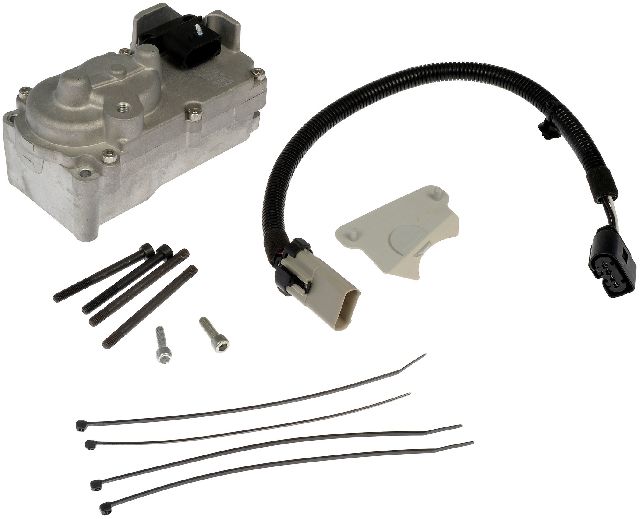
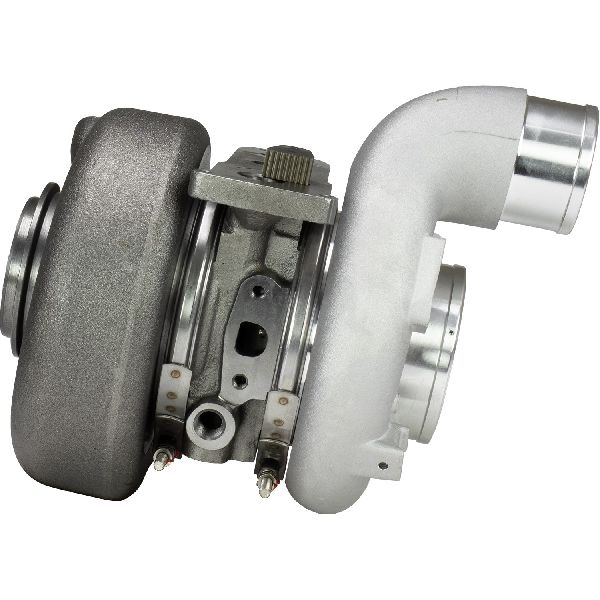
- Variable Geometry Turbo (VGT) Actuator Failure 🔴 High — Common failure item. The electronic actuator motor fails or the gears strip, causing loss of boost, no exhaust brake function, and limp mode. Soot can also cause the turbo's sliding nozzle ring to stick, leading to actuator strain.
- Water Pump Failure (Recall) 🔴 High — Affects 2013-2017 models with a specific Concentric-brand water pump. The pump bearing can fail, leading to coolant leaks and, in some cases, an engine compartment fire. (Ref: NHTSA Recall 17V-562 (FCA #T51))
- DEF System Problems 🟠 Medium — Issues with DEF pumps, sensors, and injectors are common across modern diesels. TSBs for the 6.7L Cummins mention software updates to improve diagnostics for codes like P20E8 (Reductant Pressure Too Low). (Ref: Software updates in various TSBs (e.g., 18-041-17))
- Radiator Leaks 🟠 Medium — Leaks often develop at the seams where the plastic end tanks are crimped to the aluminum core. Symptoms are often subtle, like overheating only when towing heavy loads.
- CP4.2 High-Pressure Fuel Pump Failure (2019-2020) 🔴 High — While not affecting the 2014-2015 model years, it's a critical issue for later 4th-gen trucks (2019-2020) where a recall was issued to replace the failure-prone CP4.2 pump with the more robust CP3 pump. (Ref: Recall for 2019-2020 models)
Used vs. New Parts: Buying Guide for This Vehicle
When a used part is the smart pick: A used Intake Air Diverter Valve from a junkyard is a reasonable choice if you have ruled out software and wiring issues. It is a mechanical/electrical assembly that is not a high-wear item, and a used OEM part can be more reliable than a new, cheap aftermarket alternative.
Donor-vehicle mileage cap: roughly under 100000 miles for the part to have meaningful remaining life.
What to inspect on the donor part:
- Inspect the electrical connector for any signs of corrosion, bent, or broken pins.
- Check the valve body for cracks or physical damage.
- Ensure the butterfly valve inside moves freely without binding (if possible to actuate manually).
- Look for donor vehicles with lower mileage and no signs of front-end collision damage.
OEM-only on this vehicle (don't cheap out):
- Powertrain Control Module (PCM) - Must be new or a professionally remanufactured unit programmed specifically for the vehicle's VIN and options.
Aftermarket brands forum-validated for this vehicle:
- Dorman is a widely available aftermarket option, but OEM (Mopar) is generally preferred by owners for electrical components.
Brands owners have reported issues with on this vehicle:
- Unbranded, no-name parts from online marketplaces should be avoided as their quality control and compatibility can be highly questionable.
Real Owner Stories
Aggregated from forums and TSBs cited above. Mileages and costs reflect what owners reported in those sources.
2014 Ram 2500 6.7L Cummins — 1784 miles
Symptoms: Check engine light with codes P1477 and P1475, accompanied by bluish-white smoke from the exhaust.
What fixed it: The issue was identified as an electrical problem with the Intake Air Diverter Valve (Position Sensor Circuit Shorted to Ground and Out of Calibration).
Source hint: Turbo Diesel Register (turbodieselregister.com/threads/first-check-engine-light-and-codes-questions.249672/)
2014 Ram 3500 6.7L Cummins
Symptoms: Engine stumbling, stalling, and puffing smoke at idle; felt like a 'never ending mystery issue' that no shop could solve.
What fixed it: A shop found the ram air box valve had lost its programming from the ECM and performed a software reflash.
Source hint: Reddit (r/Diesel - reddit.com/r/Diesel/comments/1bjjf9q/please_help_never_ending_mystery_issue_no_shop/)
Related OBD-II Codes
Frequently Asked Questions
Which TSB applies to my 2014 Ram 3500 6.7L Cummins for code P1477?
Is there a specific TSB for the 2015 Ram 3500 regarding this intake air diverter code?
My truck is puffing bluish-white smoke and stumbling at idle; could this be the P1477 code?
Which fuse should I check if I suspect an electrical issue with the Intake Air Diverter Valve?
Can I use any scan tool to perform the fix recommended in the Ram TSBs?
Is the Intake Air Diverter Valve the same thing as the Throttle Valve?
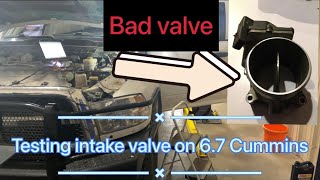
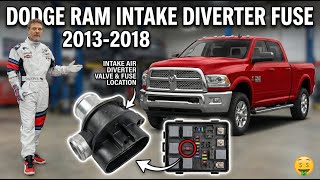
Helpful Videos
Used OEM Parts in Stock

New Aftermarket Parts Available


The information in this article is provided for general reference and educational purposes only. Vehicle specifications, procedures, and part compatibility can vary by production date, trim level, and region. Always consult your vehicle's factory service manual and verify part numbers before purchasing or performing repairs. Safety-critical components such as airbags, seat belts, and braking systems should be installed by a qualified professional.
- Ram 3500:
- 🎬 Helpful Videos
- 🛍️ Shop This Part
- What's Unique About the 2014-2015 Ram 3500
- Symptoms You May Notice
- Most Likely Causes
- Rare But Worth Checking
- Diagnosis Steps
- Parts You'll Likely Need
- Related Codes That Often Appear With This One
- Technical Service Bulletins (TSBs) & Recalls
- Platform-Specific Known Issues
- Mechanic-Grade Diagnostic Values
- Scan Tool Commands That Help
- Wiring & Ground Locations
- Real Owner Repair Stories
- OEM Part Supersession History
- Model Year Variations Within This Range
- Diagnostic Flowchart
- Other Known Issues on This Vehicle
- Used vs. New Parts: Buying Guide for This Vehicle
- Real Owner Stories
- 2014 Ram 2500 6.7L Cummins — 1784 miles
- 2014 Ram 3500 6.7L Cummins
- Related OBD-II Codes
- Frequently Asked Questions
- 🎟️ Get 5% Off