

P1477 on 2014-2015 Ram 2500 6.7L Cummins: Intake Diverter Valve Fault Causes and Fixes
P1477 on a 2014-2015 Ram 2500 most often indicates the need for a Powertrain Control Module (PCM) software update, as specified in multiple manufacturer bulletins. If a dealer software flash, which can cost between $275 and $350, doesn't resolve it, the cause is likely a damaged wire or the Intake Air Diverter Valve itself.
- P1477 on a 2014-2015 Ram 2500 is most commonly a software issue, not a failed part.
- The first step in diagnosis should always be to check with a dealer for an available PCM software update per TSBs #18-041-17 or #18-037-16 REV. A.
- Do not replace the Intake Air Diverter Valve until the PCM has been updated and the wiring harness has been thoroughly inspected for shorts.
- The dealer reflash typically costs between $275 and $350.
- The same issue affects the Ram 3500 of the same years.
What's Unique About the 2014-2015 Ram 2500
For this specific generation of Ram HD trucks, the P1477 code is very frequently triggered by a software logic issue in the Powertrain Control Module (PCM) rather than a hardware failure. Ram issued several Technical Service Bulletins (TSBs) advising dealerships to reprogram the PCM with updated software as the primary fix. This makes it unique, as a circuit code on most other vehicles would almost always point directly to a wiring or component fault. This issue is common enough that it's a well-documented first step in forum discussions among owners.
Symptoms You May Notice
- Check Engine Light (MIL) illuminated
- Reduced engine power or sluggishness
- Possible issues with cold starting
- Increased blue or white smoke on startup in cold weather
- Replacing the Intake Air Diverter Valve without first checking for software updates. Many owners have replaced the part only to have the code return, because the root cause was the PCM calibration. This is a frequent topic in owner forums.
Most Likely Causes
- Outdated Powertrain Control Module (PCM) Software 🔴 High Probability Multiple Technical Service Bulletins (TSBs 18-041-17, 18-037-16 REV. A) were released by Ram specifically to address this code with a software update, indicating the original calibration was overly sensitive or flawed.
How to confirm: A Ram dealership or a qualified shop with a wiTECH scan tool can check the current software calibration against the latest available version for your vehicle's VIN.
Typical fix: Reprogramming the PCM with the latest available software. This is a 15-30 minute procedure with the correct tool.
Est. part cost: $0 - Damaged Wiring Harness 🟡 Medium Probability The engine wiring harness can chafe against various points in the engine bay, such as the ECM/TCM bracket, upper control arm, and shock tower, leading to a short to ground.
How to confirm: Visually inspect the wiring harness leading to the Intake Air Diverter Valve for any signs of melting, chafing, or breaks. Pay close attention to where the harness may contact sharp metal edges. Use a multimeter to test the position sensor signal wire (Pin 2 on the 5-pin connector) for continuity to ground.
Typical fix: Repairing the damaged section of the wiring harness and securing it with protective loom and zip ties away from potential damage points.
Est. part cost: $5-$25 - Failed Intake Air Diverter Valve ⚪ Low Probability The position sensor is integrated into the valve assembly. An internal failure of this sensor can cause the short circuit described by the code. While less common than the software issue, it is the most likely hardware failure.
How to confirm: After confirming the software is up-to-date and the wiring is intact, the valve itself is the next logical point of failure. It can be tested by checking its internal resistance or by substitution with a known-good part.
Typical fix: Replacement of the entire intake air heater and diverter valve assembly.
Est. part cost: $200-$350 - Blown Fuse ⚪ Low Probability An electrical short in the circuit can cause the corresponding fuse to blow as a protective measure.
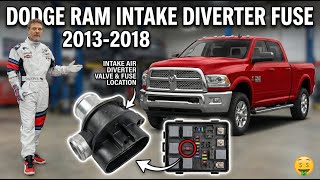
How to confirm: Check fuse F78 (10A) in the main engine bay fuse box. 🎬 Watch this quick guide to locate the air diverter valve fuse
Typical fix: Replace the blown fuse after diagnosing and fixing the underlying short circuit.
Est. part cost: <$5
Rare But Worth Checking
- Failed Powertrain Control Module (PCM): This is extremely rare, but if all other possibilities have been exhausted, the PCM's internal driver circuit for the sensor could have failed. This is a last resort diagnosis.
Diagnosis Steps
- Connect a professional scan tool (ideally wiTECH) and confirm P1477 is present. Note any other codes, as they may be related to the same required software update.
- Crucial First Step: Contact a Ram dealer or use a service like ALLDATA to check if TSB #18-041-17 (for 2014 models) or #18-037-16 REV. A (for 2015 models) apply to your vehicle's VIN.
- If a software update is available, have the PCM reprogrammed. This is the most common fix and should be done before any parts are replaced. A dealer or equipped independent shop must perform this.
- Clear the codes and perform a drive cycle. If P1477 returns, proceed with physical diagnosis.
- Check fuse F78 (10A) in the under-hood fuse box to ensure it is not blown.
- Locate the Intake Air Diverter Valve on the engine's air intake system. Carefully inspect the 5-pin electrical connector and wiring harness for any visible damage, such as chafing, melting, or corrosion. Pay special attention to areas where the harness routes near sharp edges or hot components.
- Disconnect the harness. Use a multimeter to test the signal wire (Pin 2) for continuity to ground. A reading of near-zero ohms indicates a short circuit in the harness that must be located and repaired.
- If the wiring and fuse are confirmed to be intact, the fault is likely internal to the Intake Air Diverter Valve assembly itself.
- Replace the Intake Air Diverter Valve assembly (Mopar P/N 68210522AA).
Parts You'll Likely Need
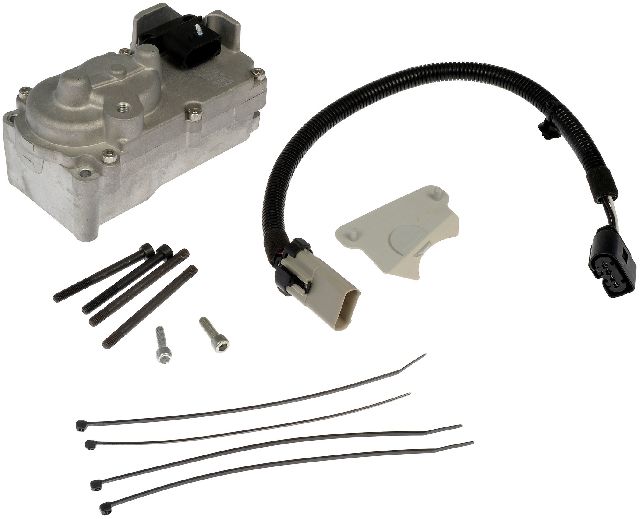
- Intake Air Heater and Diverter Valve Assembly
(OEM #68210522AA)— This assembly contains the diverter valve and the integrated position sensor that fails or whose circuit shorts, triggering code P1477. It is typically replaced as a single unit after software and wiring have been ruled out.
Trusted brands: Mopar
OEM price range: $250-$350
Aftermarket price range: $180-$280
Related Codes That Often Appear With This One
- P2281 — Air Leak Between MAF And Throttle Body. This code is listed in the same TSBs as P1477 and is often resolved by the same PCM software update.
- U110E — Lost Ambient Temperature Message. Also listed in the TSBs for the PCM reflash.
- P20E8 — Reductant Pressure Too Low. Another code frequently addressed by the same software update.
- U3017 — Control Module Timer/Clock Performance. This code is also mentioned in TSBs alongside P1477.
- P0087 — Fuel Rail Pressure Too Low. Also listed in TSB 18-041-17 as being resolved by the PCM flash.
Technical Service Bulletins (TSBs) & Recalls
- 18-041-17: For 2014 models, this TSB supersedes a previous version and lists P1477 as a code addressed by a PCM software update.
- 18-037-16 REV. A: For 2015 models, this TSB recommends a PCM reflash to resolve a list of DTCs including P1477.
- 1807622: Lists P1477 - Intake Air Diverter Valve Position Sensor Circuit Shorted To Ground among other codes.
- 1805416: Also lists P1477 with the same definition.
- 18-045-15: Recommends a PCM reflash to resolve a list of DTCs including P1477.
Platform-Specific Known Issues
- The primary vehicle-specific issue is the high likelihood of the P1477 code being caused by a software glitch in the PCM. Manufacturer TSBs #18-041-17 and #18-037-16 REV. A both list this code as being resolved by a PCM reflash, which also addresses a host of other potential DTCs.
Mechanic-Grade Diagnostic Values
- 5-Volt Reference Supply Voltage — expected: ~5.0 Volts DC. Failure: A reading of 0V or significantly below 5.0V indicates an open or a short to ground on the 5V reference circuit. This may affect other sensors on the same circuit.
- Sensor Ground Circuit Continuity — expected: Near 0 Ohms of resistance to chassis or battery ground.. Failure: A high resistance or open circuit (OL) reading indicates a bad ground connection, which can cause incorrect sensor readings.
Scan Tool Commands That Help
- wiTECH or equivalent professional scan tool: Intake Air Throttle Actuator / EGR Airflow Control Valve Functional Test — After verifying software is up-to-date, use this bidirectional test to command the valve open and closed while monitoring the 'Commanded Position' and 'Actual Position' PIDs. If the actual position does not match the commanded position, it points to a failure in the valve motor, position sensor, or wiring.
- wiTECH: PCM Configuration Routine — This routine should be performed after reprogramming the PCM with an updated software flash, as specified in service bulletins.
Wiring & Ground Locations
- Intake Air Diverter Valve Connector (5-Pin) — On the intake air heater assembly, connected to the diverter valve.. Knowing the pinout is critical for testing the electrical integrity of the circuit. The pins are: Pin 1 (Motor Power), Pin 2 (Position Sensor Signal), Pin 3 (Position Sensor Ground), Pin 4 (5V Reference Supply), Pin 5 (Motor Ground). P1477 specifically relates to a short on the Pin 2 signal circuit.
- Fuse F78 — In the main under-hood fuse box (Power Distribution Center), located in front of the battery on the driver's side.. This 10-amp fuse provides power to the intake air diverter valve circuit. If it is blown, the valve will be inoperative. A blown fuse indicates an overcurrent condition, likely a short circuit that must be found before replacing the fuse.
Real Owner Repair Stories
- Turbo Diesel Register user 'JHayward' (2014 Ram 2500 Laramie Limited 6.7L Cummins, 1,784 miles) — Check engine light on, bluish-white smoke when driving.
❌ Tried (didn't work) User pulled codes with a Smarty reader but could not identify all of them.
✅ What actually fixed it The thread concludes with another user identifying the codes P1477 and P1475 as an electrical problem with the intake air diverter valve and recommending an immediate dealer visit under warranty. This story is notable because the failure occurred at extremely low mileage, strongly supporting the theory that the root cause is often a software flaw present from the factory, not a wear-and-tear hardware failure.
"I Checked Everything" — The Actual Cause
- While not a smoke test issue, the electrical equivalent is when the component's own wiring appears intact, but the code persists. In these cases, the fault can be a short-to-ground in a different part of the harness that shares the same 5-volt reference circuit. For example, a wire chafing against the engine block behind the starter for a different sensor could pull the entire reference circuit down to 0 volts, triggering a fault code for the Intake Air Diverter Valve even though its own wiring is undamaged.
Model Year Variations Within This Range
- 2014 vs. 2015: While the P1477 code and its causes are the same for both years, Ram issued different Technical Service Bulletins with distinct software updates for each model year. TSB #18-041-17 applies to 2014 models, while TSB #18-037-16 REV. A applies to 2015 models. This means a dealership must use the correct calibration file specific to the vehicle's model year.
Diagnostic Flowchart
Other Known Issues on This Vehicle
Issues unrelated to this code that are worth knowing about as an owner of this generation:
- Exhaust Gas Recirculation (EGR) Cooler and Valve Failures 🔴 High — Common issue, especially on trucks with significant idle time. Can occur at various mileages. (Ref: Multiple TSBs exist for EGR-related codes, often recommending software updates or cleaning procedures.)
- Water Pump Failure 🟠 Medium — A known failure point, often occurring between 60,000 and 120,000 miles, leading to coolant leaks.
- Steering "Death Wobble" 🔴 High — A violent shaking of the front end after hitting a bump at highway speeds. Caused by worn track bars, ball joints, or steering dampers. Can occur at any mileage. (Ref: While no specific recall exists for this generation, numerous TSBs have been issued for steering components on Ram HD trucks over the years.)
- Selective Catalytic Reduction (SCR) / DEF System Failures 🔴 High — Failures of NOx sensors, DEF injectors, and DEF pumps are common and can be very expensive to repair, often costing thousands of dollars. (Ref: Numerous TSBs address DEF system codes, often with software updates.)
- Transmission Solenoid Pack Failure (68RFE) 🟠 Medium — Owners report issues with the 68RFE transmission, including solenoid pack failures that can cause erratic shifting or slipping.
- Cracked Exhaust Manifold Bolts 🟡 Low — The bolts securing the exhaust manifold can break due to heat cycles, causing an exhaust leak that presents as a ticking noise, especially when cold.
Used vs. New Parts: Buying Guide for This Vehicle
When a used part is the smart pick: For this specific repair, a used part is NOT recommended. The position sensor is electronic and integrated into the assembly. A used part carries a high risk of having the same internal electronic failure or being near the end of its life. The cost savings are minimal compared to the risk of the code returning.
What to inspect on the donor part:
- If forced to consider a used part, inspect the donor vehicle for signs of front-end damage or electrical fires.
- Inspect the electrical connector pins for any corrosion, bending, or melting.
- Be aware of the infamous 'grid heater bolt' issue; a used assembly may have a bolt that is already fatigued and close to failing, which could destroy the engine.
OEM-only on this vehicle (don't cheap out):
- Intake Air Diverter Valve Assembly: While full aftermarket intake horn assemblies exist, if replacing only the valve, sticking with the OEM Mopar part (68210522AA) is the safest bet to ensure correct position sensor calibration and function with the factory PCM software.
Aftermarket brands forum-validated for this vehicle:
- For a full assembly upgrade (which often deletes the problematic factory grid heater), brands like Banks Power and BD Diesel are well-regarded in the Cummins community for their complete intake horn kits.
Real Owner Stories
Aggregated from forums and TSBs cited above. Mileages and costs reflect what owners reported in those sources.
2014 Ram 2500 6.7L Cummins — 1784 miles
Symptoms: Check engine light illuminated with code P1477; identified as an electrical problem with the intake air diverter valve.
What fixed it: Dealer visit for repair under warranty (related to the intake air diverter valve circuit).
Source hint: Turbodieselregister.com thread titled 'First check engine light and codes - questions.'
2014-2015 Ram 2500 6.7L Cummins
Symptoms: The owner was seeking a software update to resolve the P1477 fault code.
What fixed it: PCM software reflash/reprogramming.
Cost: $275-$350
Source hint: Reddit r/Cummins thread 'Cost to just flash ECM?'
Related OBD-II Codes
Frequently Asked Questions
Does TSB 18-041-17 apply to my 2014 Ram 2500 with the 6.7L Cummins?
I have a 2015 Ram 2500; is there a specific software update for P1477?
Where should I check for wiring issues on my Ram 2500 to fix P1477?
Which fuse is associated with the Intake Air Diverter Valve circuit on the 6.7L Cummins?
What is the specific Mopar part number if I need to replace the Intake Air Diverter Valve?
How much does it typically cost to have a Ram dealer flash the PCM for this code?
Helpful Videos
Used OEM Parts in Stock

New Aftermarket Parts Available


The information in this article is provided for general reference and educational purposes only. Vehicle specifications, procedures, and part compatibility can vary by production date, trim level, and region. Always consult your vehicle's factory service manual and verify part numbers before purchasing or performing repairs. Safety-critical components such as airbags, seat belts, and braking systems should be installed by a qualified professional.
- Ram 2500:
- 🎬 Helpful Videos
- 🛍️ Shop This Part
- What's Unique About the 2014-2015 Ram 2500
- Symptoms You May Notice
- Most Likely Causes
- Rare But Worth Checking
- Diagnosis Steps
- Parts You'll Likely Need
- Related Codes That Often Appear With This One
- Technical Service Bulletins (TSBs) & Recalls
- Platform-Specific Known Issues
- Mechanic-Grade Diagnostic Values
- Scan Tool Commands That Help
- Wiring & Ground Locations
- Real Owner Repair Stories
- "I Checked Everything" — The Actual Cause
- Model Year Variations Within This Range
- Diagnostic Flowchart
- Other Known Issues on This Vehicle
- Used vs. New Parts: Buying Guide for This Vehicle
- Real Owner Stories
- 2014 Ram 2500 6.7L Cummins — 1784 miles
- 2014-2015 Ram 2500 6.7L Cummins
- Related OBD-II Codes
- Frequently Asked Questions
- 🎟️ Get 5% Off