

OBD-II Code P1477: Manufacturer-Specific Circuit Malfunction
What P1477 means, why it triggers, and how to fix it
- P1477 is a manufacturer-specific code indicating a failed Leak Detection Pump (LDP) on BMW/Mini, a faulty Intake Manifold Runner Control (IMRC) on Ford/Mazda, or a software glitch on Ram trucks.
- For BMW and Mini owners, check the 15A F04 fuse and inspect the right-rear wheel well wiring for corrosion before spending $150 on a new Leak Detection Pump.
- For Ford and Mazda vehicles experiencing sluggish acceleration, replacing the $40 IMRC solenoid on the intake manifold resolves the code 80% of the time.
- Owners of 2014-2015 Ram 2500/3500 6.7L trucks must not replace any hardware; a dealer PCM software update (TSB 18-037-16) is the official fix.
What Does P1477 Mean?

P1477 is a manufacturer-specific code, meaning its definition changes depending on your vehicle. For Ford and Mazda, it signals a problem with the Intake Manifold Runner Control (IMRC) system. For BMW and Mini, it points to a fault in the evaporative (EVAP) system's Leak Detection Pump (LDP). For Chrysler and Ram, it indicates issues with the secondary air injection or intake air diverter valve systems.
Technical definition: The official definition for P1477 varies by manufacturer. The most common definitions are: * **BMW/Mini:** Leakage Diagnostic Pump (LDP) Reed Switch Did Not Open. * **Ford/Mazda:** Intake Manifold Runner Control (IMRC) Circuit Malfunction. * **Chrysler/Dodge/Jeep:** Too Much Secondary Air Injected. * **Ram (6.7L Cummins):** Intake Air Diverter Valve Position Sensor Circuit Shorted To Ground. * **Land Rover:** Variable Intake System (VIS) Power/Butterfly Valve Motor Open or Short to Ground. * **Volvo:** Brake Booster Pressure Sensor Signal Too Low. * **Volkswagen:** EVAP Emission Control System LDP Malfunction. * **Daewoo:** Exhaust Gas Recirculation (EGR) Solenoid Fault (Shorted to Ground).
Can I Drive With P1477?
Yes, But With Caution. You can drive with this code, but consequences vary by manufacturer. On vehicles with an IMRC system (Ford, Mazda), P1477 causes reduced engine power and lower fuel economy. Driving for extended periods (hundreds of miles) in this condition leads to catalytic converter damage, a repair costing $800 to $2,500. If the code relates to an EVAP system (BMW, Mini, VW), it does not affect driveability, but you will automatically fail an emissions test.
Common Causes

- Faulty Leak Detection Pump (LDP) (Very Common) — The most frequent cause on BMW and Mini vehicles. The pump or its internal reed switch fails, preventing the vehicle from testing the EVAP system for leaks.
- Faulty Intake Manifold Runner Control (IMRC) Solenoid (Very Common) — On Ford and Mazda vehicles, the electronic solenoid controlling vacuum to the IMRC actuator shorts out or breaks internally.
- Cracked, Disconnected, or Leaking Vacuum/EVAP Hoses (Very Common) — IMRC and LDP systems rely on vacuum lines. Hard plastic lines become brittle from heat cycles and crack. On R53 Mini Coopers, the plastic nipple on the fuel tank breather line frequently breaks.
- Damaged Wiring or Corroded Electrical Connectors (Common) — Wiring to the LDP or IMRC solenoid frays, corrodes, or shorts. Mini LDP connector pins in the rear wheel well are exposed to moisture and frequently trigger P1477.
- Faulty Powertrain Control Module (PCM) Software (Common) — On 2014-2015 Ram 2500/3500 6.7L Cummins trucks, overly sensitive software triggers this code. A dealer PCM reflash is the official fix.
- Blown Fuse (Less Common) — A blown fuse de-energizes the LDP or IMRC circuit. Check fuse F04 (15A) on BMW/Mini or F78 (10A) on 2014-2015 Ram 6.7L.
- Clogged or Saturated EVAP Charcoal Canister (Less Common) — Overfilling the gas tank saturates the charcoal canister with fuel, preventing the LDP from functioning correctly on BMW, Mini, and VW vehicles.
- Stuck or Binding IMRC Plates/Actuator (Less Common) — Carbon buildup causes the mechanical butterfly plates inside the intake manifold to stick, preventing actuator movement on Ford/Mazda vehicles.
- Faulty Secondary Air Injection System Component (Less Common) — A faulty air pump, check valve, or blockage in the secondary air system triggers the code on Chrysler/Dodge vehicles.
Symptoms

- Check Engine Light is On — The computer illuminates the light immediately upon detecting the fault.
- Failed Emissions Test — P1477 causes an automatic failure on state smog checks because it flags critical emissions control systems (IMRC, LDP, or Secondary Air).
- Reduced Engine Power — Ford/Mazda engines feel sluggish at very low or very high RPMs because the intake runners are stuck in the wrong position. 🎬 See how to replace a Ford Focus IMRC valve
- Poor Fuel Economy — A malfunctioning IMRC system compromises engine efficiency, dropping fuel economy by 5-15%.
- Fuel Smell — A leak in the EVAP system (BMW, Mini, VW) that the LDP fails to detect manifests as a noticeable raw fuel vapor smell.
Diagnostic Flowchart
Tap your situation to follow the diagnostic path that matches what you're seeing on this code.
Common Fixes & Costs
- Replace Leak Detection Pump (LDP)
— Parts: $70-$250, Labor: $100-$250, ~1.2 hr book time
(Intermediate)
BMW 3-Series (E46, 2002+): OEM
Mini Cooper (R50, R53): OEM - Replace Intake Manifold Runner Control (IMRC) Solenoid
— Parts: $25-$100, Labor: $75-$150, ~0.8 hr book time
(DIY)
Ford Focus (2004-2011): OEM
Mazda 6 (2004-2008): OEM - Replace Cracked or Broken Vacuum/EVAP Hoses
— Parts: $10-$75, Labor: $50-$200, ~1.0 hr book time
(DIY)
Mini Cooper (R53): OEM - Reprogram Powertrain Control Module (PCM) — Parts: $0, Labor: $150-$300, ~1.5 hr book time (Pro Only)
- Repair Damaged Wiring or Connectors — Parts: $5-$20, Labor: $100-$250, ~1.5 hr book time (Intermediate)
- Replace EVAP Charcoal Canister — Parts: $200-$450, Labor: $125-$200, ~1.0 hr book time (Intermediate)
DIY vs Professional
- Replace IMRC Solenoid (Ford/Mazda) — Beginner:
Tools: Basic hand tools (socket set, screwdriver). - Replace Leak Detection Pump (BMW/Mini) — Beginner:
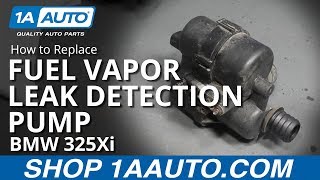
Tools: Jack and jack stands, wheel removal tools, socket set (8mm, 10mm), trim removal tools. - Replace Vacuum/EVAP Hoses — Beginner:
Tools: Pliers, screwdriver, trim removal tools. - Reprogram PCM (Ram) — Beginner:
Tools: Proprietary dealership scan tool and software subscription. - Repair Damaged Wiring — Beginner:
Tools: Multimeter, wire strippers, soldering iron or quality crimp connectors, heat shrink tubing.
Used vs. New Parts: Buying Guide
When a used part is worth it: For electronic components like an IMRC solenoid or LDP, buying used is not recommended. The low cost of new aftermarket parts makes the risk of a used part failing shortly after installation not worthwhile.
Donor-vehicle mileage cap: roughly under 50000 miles for the part to have meaningful remaining life.
Donor quality checklist:
- Match part numbers exactly; manufacturer revisions are common.
- For LDPs, avoid donors from rust-belt states due to high risk of corrosion on the housing and connector.
- Verify the seller offers at least a 30-day warranty.
Decision logic:
- If The part is an IMRC solenoid or LDP → Buy a new aftermarket part from a reputable brand (e.g., Bosch, Dorman). The cost is low and reliability is excellent.
- If The part is a complete intake manifold (for stuck IMRC plates) → A low-mileage used part is a cost-effective option, but it must be inspected for carbon buildup and free movement of the runners before installation.
- If The vehicle is older (>150k miles) and the budget is extremely tight → A used part is acceptable, but understand it has a significantly shorter lifespan.
Warranty tradeoff: Used parts typically have a 30-90 day warranty at best. New aftermarket parts carry a 1-year to limited lifetime warranty. OEM parts have a 1-2 year warranty.
Worst-case if a used part fails: 300-500 (The cost of paying for labor a second time to replace a faulty used part, plus the cost of another part.)
What Happens If You Wait — Timeline
- Immediate (LDP Fault): Code P1477 sets, Check Engine Light is on. Vehicle fails any emissions inspection. There are no performance or fuel economy symptoms. (MPG impact: 0%% · Added cost: $0)
- Immediate (IMRC Fault): Code P1477 sets, Check Engine Light is on. Engine power is noticeably reduced at very low or very high RPM. A slight drop in fuel economy begins. (MPG impact: 3-5%% · Added cost: $0)
- 1-3 months (IMRC Fault): The reduction in fuel economy becomes more significant as the engine consistently operates inefficiently. MPG loss is easily measurable. (MPG impact: 5-15%% · Added cost: $50-150 in wasted fuel)
- 6+ months (IMRC Fault): Sustained driving with the IMRC runners stuck in the wrong position alters the air/fuel mixture, causing the catalytic converter to run hotter than designed. This leads to cracking of the internal substrate. (MPG impact: 10-15%% · Added cost: $800-2500 (for potential catalytic converter replacement))
- Indefinite (LDP Fault): The vehicle continues to operate normally but remains unable to pass an emissions test. The only cost incurred is the eventual repair required to pass inspection. No additional components are damaged. (MPG impact: 0%% · Added cost: $0)
Cost of Not Fixing It
- Immediate: Guaranteed failure of any state emissions inspection (smog check). For EVAP/LDP faults, there are no other immediate consequences. (Added cost: 0)
- 0-3 months: For IMRC faults (Ford/Mazda), a 5-15% reduction in fuel economy and noticeable loss of power. (Added cost: 50-150 (in wasted fuel))
- 6+ months: On IMRC-equipped vehicles, prolonged driving with the runners stuck in the wrong position alters the air/fuel mixture, leading to overheating and damage to the catalytic converter. (Added cost: 800-2500 (for catalytic converter replacement))
Diagnosis Steps

- Identify Your System
Determine which system your car uses. Ford/Mazda points to the IMRC system. BMW/Mini/VW points to the EVAP Leak Detection Pump (LDP). Chrysler/Dodge points to Secondary Air Injection. A 2014-2015 Ram 2500/3500 requires a software version check first.
Tools: Owner's Manual or Online Search (Beginner) - Thorough Visual Inspection
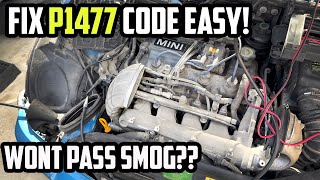
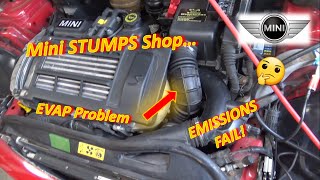
Check for broken plastic parts, disconnected hoses, or damaged wires. On R53 Mini Coopers (2002-2006), inspect the fuel tank breather line under the passenger side of the intercooler 🎬 Watch: Troubleshooting a tricky P1477 code on a Mini Cooper for a broken plastic nipple.
Tools: Flashlight, Inspection Mirror (Beginner) - Check Fuses and Connectors
For BMW/Mini LDP systems, check fuse F04 (15A) in the engine bay. For a 2014-2015 Ram 6.7L, check fuse F78 (10A). Unplug the main electrical connector from the component (LDP, IMRC solenoid) and inspect the pins for corrosion or moisture.
Tools: Fuse Puller, Flashlight (Beginner) - Check for Power and Ground
Using a multimeter on the unplugged connector, check for battery voltage at the power supply pin with the key on. For a BMW/Mini LDP, Pin 1 (Red/White wire) must have battery voltage. Check for a solid ground connection on the ground pin. A lack of power indicates a wiring problem or blown fuse.
Tools: Multimeter (Intermediate) - Test Component Electrical Resistance
With the component unplugged, measure the resistance across its pins. A Ford IMRC solenoid reads between 30-80 ohms. Infinity (OL) means the coil is open; near-zero means it is shorted. For an LDP, an open or shorted reading indicates a failed pump motor.
Tools: Multimeter (Intermediate) - Activate with a Scan Tool
Command the IMRC solenoid or LDP to activate using a bidirectional scan tool. Listen for a distinct click from the solenoid or the sound of the LDP motor running. If the component has power and good resistance but does not respond, the fault is internal.
Tools: Bidirectional Scan Tool (Intermediate) - Bench Test the Leak Detection Pump (LDP)
Remove the pump. Connect a constant ground and a switched 12V power source. Attach a vacuum source to the engine-side port and a small balloon over the canister-side port. Cycle the 12V power. The balloon must inflate and hold pressure indefinitely. If it deflates, the internal seal is faulty.
Tools: 12V Power Source, Vacuum Source, Balloon (Advanced) - Perform a Smoke Test (LDP System)
If the LDP works but the code persists, the issue is a leak in an EVAP hose. Connect an automotive smoke machine to the EVAP service port to push low-pressure smoke through the lines, making cracks visible.
Tools: Automotive Smoke Machine (Advanced) - Monitor IMRC Live Data (Ford/Mazda)
Monitor the PIDs for IMRC command (IMRC_CMD) and IMRC monitor (IMRCM). IMRC_CMD must change from Open to Closed (0% to 100%) as you rev past 3,000 RPM. If the command changes but the monitor does not, the actuator, linkage, or position sensor has failed.
Tools: Advanced Scan Tool (Advanced) - Test Ram Diverter Valve Circuit (Ram 6.7L)
After confirming software is up-to-date, disconnect the diverter valve connector. Test the position sensor signal wire in the wiring harness for continuity to ground. There must be no continuity (OL). Continuity confirms a short in the harness.
Tools: Multimeter, Wiring Diagram (Advanced)
When This Code Triggers (Freeze-Frame Conditions)
- Engine Coolant Temp: 40-95°F (at startup) (The EVAP monitor runs after a cold soak, requiring the initial ECT to be low and close to ambient air temperature.)
- Fuel Level: 15-85% (The LDP test requires the fuel tank to be neither full nor empty to run correctly.)
- Vehicle Speed: 30-55 mph (The test performs during steady-state cruising, not during stop-and-go traffic or aggressive acceleration.)
- Engine RPM: Below 3000 RPM (LDP and IMRC self-tests occur under normal operating loads, not during high-RPM conditions.)
- Engine Load: 20-60% (The test runs under partial throttle and moderate engine load, typical of highway cruising.)
Related Codes
- P2400 — On BMW/Mini, P2400 ('LDP Control Circuit/Open') points specifically to an electrical fault (bad wire, connector, or PCM driver), while P1477 points to a mechanical or internal failure of the pump itself. If you have both, the issue is a wiring problem preventing the pump from running.
- P2004 — On Ford/Mazda, P2004 means 'Intake Manifold Runner Control Stuck Open.' P1477 indicates a circuit malfunction, meaning the solenoid isn't responding electrically. If you have P1477, the solenoid is the prime suspect; if you only have P2004, the linkage or plates are the issue.
- P0442 — P0442 is a generic code for a 'Small EVAP System Leak.' On a BMW/Mini, a failing LDP (P1477) cannot pressurize the system to run the leak test, causing the ECU to set a P0442. Fix P1477 first; if P0442 returns, you have an actual leak.
- P1475 — On Ram 6.7L trucks, P1475 ('Intake Air Diverter Valve Out of Calibration') appears with P1477. Both codes are addressed by the same PCM software update outlined in TSBs. If software is up to date, P1477 points to an electrical short.
Climate & Environmental Factors
- Heat and Age: Hard plastic vacuum and EVAP lines become extremely brittle over time due to repeated heat cycles in the engine bay. A line that is flexible when new snaps like a twig after several years of service.
- Cold Weather: Cold weather exacerbates plastic degradation. Aged, brittle plastic is much more likely to crack or break when disturbed during service in freezing temperatures.
- Humidity and Moisture: High humidity and road salt in winter climates cause severe corrosion of electrical connectors, especially for components mounted in exposed areas like the LDP in the rear wheel well.
How to Talk to a Mechanic About This Code
Say this: "Start by stating your vehicle and the code. For a BMW/Mini: 'I have a P1477 on my Mini Cooper. Please test the LDP circuit for power, ground, and inspect the wiring in the wheel well before recommending a pump replacement.' For a Ford/Mazda: 'I have a P1477 on my Ford Focus. Please test the IMRC solenoid and check the vacuum lines for cracks before quoting a new intake manifold.' For a 2014-2015 Ram 6.7L: 'I have a P1477 and I am aware of TSB 18-037-16. Can you check if my PCM has the latest software before doing any hardware diagnosis?'"
This signals you are an informed consumer. It directs the technician to the most common and cost-effective diagnostic steps first, preventing them from immediately quoting an expensive part without proper troubleshooting. It saves diagnostic time and protects you from upselling.
Avoid saying:
- 'My check engine light is on.' (Too vague, invites a costly fishing expedition)
- 'Just fix it, whatever it takes.' (Gives the shop a blank check)
- 'My friend said it's probably the...' (This annoys technicians and leads them down the wrong path)
Questions to ask before authorizing the repair:
- What was the specific point of failure? (e.g., 'Did the LDP fail a bench test, or was the wire broken?')
- Can you show me the failed part or the corroded connector?
- Does the quoted price include diagnosing the issue or just replacing the part we discussed?
- What is the warranty on both the new part and your labor?
- If this doesn't fix the light, is there a charge for the follow-up diagnosis?
Where to Take It: Dealer vs Independent vs Chain
- Dealer:
Required for Ram software updates. A reasonable, but expensive, choice for complex BMW/Mini electrical faults. Otherwise, an independent shop is better value.
Best for: 2014-2015 Ram 6.7L Cummins trucks that require a PCM software update (TSB fix)., Vehicles still under a factory or emissions warranty., Complex electrical issues on German brands (BMW/Mini) if a trusted independent specialist is not available.
Downsides: Highest labor rates, often 1.5-2x more than independent shops., May recommend replacing an entire assembly (e.g., charcoal canister with LDP) when only one component has failed. (Typical cost: +75% vs. baseline) - Independent Shop:
Best fit for the vast majority of P1477 repairs. They are well-equipped to handle the common mechanical and electrical failures associated with this code at a fair price.
Best for: Out-of-warranty Ford, Mazda, BMW, and Mini vehicles., Diagnosing and replacing common failure parts like IMRC solenoids and Leak Detection Pumps., Owners who want to build a relationship with a mechanic.
Downsides: Quality and expertise vary widely; look for ASE certifications and brand specializations (e.g., a 'European Auto' shop for a BMW)., May not have the expensive, proprietary tools for software flashing. (Typical cost: +0% vs. baseline) - Chain Shop:
AVOID for P1477 diagnosis and repair. The risk of misdiagnosis and paying for unnecessary parts is extremely high.
Best for: Simple, unrelated services like oil changes or tires while you consider your repair options.
Downsides: Technician skill and diagnostic equipment are highly variable., High pressure to upsell common items (filters, flushes) and a tendency to 'throw parts' at a problem rather than diagnose it properly., Very unlikely to correctly diagnose a manufacturer-specific code like P1477. (Typical cost: -10% vs. baseline)
When to Walk Away From the Repair
If the total repair cost exceeds 50% of your car's private-party value, sell or trade it in.
- Car worth $3500, fix is $650: Fix it. The repair cost is significant but well below the 50% threshold. This is a typical scenario for a P1477 fix on an older car.
- Car worth $2500, fix is $1200: Walk away. The repair cost is nearly half the car's value. Unless the car is in otherwise perfect condition, this money is better put toward a down payment on a more reliable vehicle.
What Scan Tool You Need for This Code
Minimum: A tool that reads manufacturer-specific codes and views live data PIDs. For this code, a bidirectional function (active test) is highly recommended.
A basic $20 code reader only shows 'P1477' without context. It cannot identify if the issue is an IMRC or LDP, view live data, or command components to activate.
Budget: BlueDriver Pro (~$100) — Reads manufacturer codes to identify the specific P1477 meaning. Graphs live data to monitor IMRC position (IMRCM PID) or check LDP system status. An excellent choice for informed DIY diagnosis before going to a shop.
Mid-range: Foxwell NT510 Elite / Autel MaxiCOM MK808S (~$180-400) — Provides full bidirectional control. This allows you to command the IMRC solenoid or LDP to turn on/off directly from the tool, which is the definitive way to test the component and its circuit. These tools are essential for serious DIY diagnosis of this code.
Professional: Autel MaxiCOM MK906BT / Launch X431 Series (~$600-1500) — Offers all OEM-level diagnostic functions, including the ability to perform PCM software updates (with a subscription and proper hardware), advanced coding, and detailed wiring diagrams, often integrated into the tool.
Rent vs buy: Parts store loaner tools are typically basic code readers and lack the bidirectional functions needed to properly diagnose P1477. If you plan to DIY the diagnosis, you must buy at least a budget or midrange scanner with the necessary capabilities.
How to Clear the Code After You Fix It
- Use an OBD-II scan tool to clear the P1477 code.
- Perform a complete drive cycle to allow the readiness monitors to run.
- Do not disconnect the battery, as this resets all monitors to 'Not Ready'.
Drive cycle (~30 minutes): A generic drive cycle to set EVAP and Catalyst monitors: 1) Cold start (sit for 8+ hours). 2) Idle for 2-3 minutes. 3) Drive for 15-20 minutes with a mix of city (stop-and-go) and highway speeds (steady 40-60 mph). 4) Allow vehicle to idle for another 2 minutes before shutting down.
Readiness monitors affected: EVAP System Monitor, Catalyst Monitor, O2 Sensor Monitor
Before emissions retest: drive at least 100 miles to fully set monitors.
Watch out for:
- Clearing the code with a scanner right before an emissions test results in a 'Not Ready' failure.
- The code returns immediately if the underlying mechanical or electrical fault is not properly repaired.
- The EVAP monitor will not run if the fuel level is too high or too low, or if ambient temperatures are extreme.
Will This Fail Emissions / State Inspection?
Yes — this code typically fails an OBD-II emissions inspection.
- California: An active P1477 code is an automatic failure. After repair, a full drive cycle must be completed to set all readiness monitors before a re-test is possible.
- New York: Any illuminated Check Engine Light results in an automatic failure of the NYVIP3 emissions inspection. Clearing the code just before the test causes a failure due to 'Not Ready' monitors.
- Texas: In counties requiring emissions testing, an illuminated Check Engine Light is an automatic fail. Texas allows for one 'Not Ready' monitor to pass, but the EVAP monitor is often the one that is incomplete.
Most Commonly Affected Vehicles
- BMW 3-Series (E46) (1999-2006) — The Leak Detection Pump is a very common failure item, often due to internal failure or corrosion at the connector. For 2002+ models, use P/N 16137193479.
- Mini Cooper / Cooper S (R50, R52, R53) (2002-2008) — Extremely prone to P1477. Top causes are LDP failure (P/N 16137193479), corroded LDP wiring, or a broken fuel tank breather line nipple under the intercooler (P/N 13907515434).
- Ford Focus (2004-2011) — The IMRC solenoid (P/N 3S4Z-9J559-AA) and its associated vacuum lines are frequent failure points, especially on the 2.0L Duratec engine.
- Ford Escape (2005-2008) — V6 models commonly experience issues with the IMRC system, leading to P1477.
- Mazda 6 (2004-2008) — Shares the same V6 engine and IMRC system design as many Fords, making it susceptible to the same solenoid (P/N L301-18-741) and actuator failures.
- Ram 2500 / 3500 (6.7L Cummins) (2014-2015) — Code P1477 for the 'Intake Air Diverter Valve' is frequently caused by a software issue. A PCM update is the most common fix. See TSBs 18-045-15 and 18-037-16 REV. A.
- Chrysler 300, PT Cruiser, Sebring, Town & Country (2001-2010) — On these models, P1477 means 'Too Much Secondary Air Injected' or points to a general EVAP system fault.
- Volkswagen Jetta, Golf, Passat (2006-2016) — P1477 points to a malfunction of the EVAP Leak Detection Pump (LDP), located in the passenger rear wheel well.
Manufacturer-Specific Notes

- Ford / Mazda: The code points to the Intake Manifold Runner Control (IMRC) system, which adjusts intake airflow for better performance. The issue is almost always the control solenoid or its vacuum lines.
- BMW / Mini / Land Rover: The code indicates a problem with the EVAP system's Leak Detection Pump (LDP), specifically that its internal reed switch is stuck. This prevents the car from testing its fuel system for leaks.
- Chrysler / Dodge: On these vehicles, P1477 means 'Too Much Secondary Air Injected,' related to the secondary air injection system used for cold start emissions.
- Ram: On 2014-2015 6.7L Cummins models, P1477 is for the 'Intake Air Diverter Valve Position Sensor Circuit Shorted To Ground.' This is a software glitch fixed by a PCM update. See TSBs 18-045-15, 18-054-16, and 18-037-16 REV. A.
Real Owner Stories
2003 Mini Cooper S (R53) at ~64k miles
Persistent P1477 code returned even after a mechanic replaced the Leak Detection Pump (LDP).
What they tried:
- Reset the code; it returned.
- Mechanic replaced the LDP.
- Owner was about to have a smoke test performed.
Outcome: While replacing the rear brake wear sensor, the owner discovered chafed and broken wires in the LDP harness where it was routed through a sharp metal clamp on the rear suspension. A simple wiring repair using solder and electrical tape fixed the problem permanently.
Lesson: On Minis, always inspect the LDP wiring harness in the right-rear wheel well for physical damage before replacing the pump itself. A new pump cannot fix a wiring problem.
2004 Mini Cooper S (R53) with 88k miles
Check Engine Light came on with code P1477. Car seemed to run fine.
What they tried:
- Owner inspected the engine bay based on forum advice before checking the LDP in the rear.
Outcome: The owner found a vacuum line disconnected near the intercooler with a broken plastic nipple in his hand. The nipple was from the fuel tank breather line (P/N 13907515434). Replacing this line for about $60 and clearing the code resolved the issue.
Lesson: For R53 Mini Coopers, the very first step is a visual inspection under the intercooler for a broken fuel tank breather line nipple. This is an extremely common, vehicle-specific failure that is easier to check than the LDP itself.
2015 Ram 2500 6.7L Cummins
Malfunction Indicator Lamp (MIL) on with code P1477 for 'Intake Air Diverter Valve Position Sensor Circuit Shorted To Ground'.
What they tried:
- Many owners might first suspect a faulty diverter valve or a wiring short based on the code definition.
Outcome: The official fix from Ram is a software update for the Powertrain Control Module (PCM). Technical Service Bulletin (TSB) 18-037-16 REV. A was released to address this and other erroneous diagnostic codes by reprogramming the PCM.
Lesson: For 2014-2015 Ram 6.7L trucks, do not replace any hardware for P1477 until you confirm with a dealer that the PCM has the latest software. The problem is a software glitch, not a hardware failure.
2007 Ford Focus
Check Engine Light on with IMRC-related code P2008. Owner was quoted $400 for labor by a mechanic.
What they tried:
- The owner's father, an experienced home mechanic, was considering doing the repair himself.
Outcome: Forum consensus confirmed that for a Ford Focus, the IMRC solenoid is a very common failure and is typically an easy DIY job for someone with basic tools, as the part is usually accessible on the intake manifold.
Lesson: On a Ford Focus with an IMRC code, the solenoid is the most likely culprit. It is an inexpensive part and a straightforward DIY replacement, saving hundreds of dollars in labor costs.
How to Prevent This Code From Triggering
- Do not overfill the fuel tank (Every fill-up) — Topping off the tank forces liquid gasoline into the charcoal canister, saturating it and sending carbon granules into the LDP, causing it to fail.
- Periodically inspect and clean exposed connectors (Every 1-2 years or during tire rotation) — For components in wheel wells like the BMW/Mini LDP, connectors are exposed to road salt and moisture. Unplugging them and applying dielectric grease prevents corrosion that leads to electrical faults.
- Be careful when working in the engine bay (During any DIY maintenance) — Plastic vacuum lines for IMRC and EVAP systems become extremely brittle with age and heat. Accidentally bumping an old line causes it to snap, creating a vacuum leak and triggering codes.
- Use high-quality fuel and consider occasional fuel system cleaners (Ongoing) — On IMRC systems, this reduces the rate of carbon deposit formation on intake valves and runner plates, preventing them from sticking.
- Ensure engine reaches full operating temperature regularly (Weekly) — Frequent short trips worsen blow-by and deposit formation. Allowing the engine to get fully hot burns off contaminants within the crankcase and intake system, slowing IMRC carbon buildup.
Frequently Asked Questions
What does an Intake Manifold Runner Control (IMRC) system do?
The IMRC system uses butterfly valves inside the intake manifold to change the path air takes to the cylinders. At low engine speeds, it uses long, narrow paths to increase air velocity for better torque. At high engine speeds, it opens up short, wide paths for maximum airflow and horsepower.
What does a Leak Detection Pump (LDP) do?
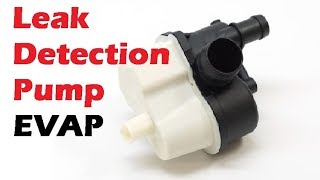
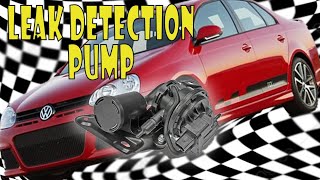
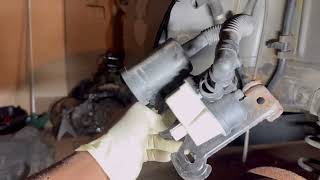
An LDP is an emissions component that tests the integrity of your fuel system. It lightly pressurizes the fuel tank and EVAP lines and uses a sensor to see if the pressure holds, ensuring no fuel vapors escape into the atmosphere.
What is a reed switch and why does it fail?
A reed switch is a simple electrical switch operated by a magnetic field. Inside the LDP, as the pump builds pressure, a diaphragm moves a magnet which opens or closes the switch. The P1477 code means the ECU commanded the pump to run, but never saw the expected signal change, indicating the diaphragm didn't move or the switch broke.
How serious is code P1477?
For an EVAP/LDP fault, it is not serious for vehicle operation but causes a failed emissions test. For an IMRC fault, it is moderately serious, negatively impacting engine performance and fuel economy, and leading to expensive catalytic converter damage if ignored.
What is a common misdiagnosis for P1477?
On BMW and Mini vehicles, replacing the LDP when the actual problem is a cracked vacuum hose or a corroded electrical connector is a frequent mistake. On 2014-2015 Ram trucks, replacing diverter valve hardware before checking for required software updates leads to unnecessary expense.
Can a loose gas cap cause P1477?
Indirectly. A loose gas cap causes a large EVAP leak (P0455), which the LDP is designed to detect. If the LDP fails during this test, it triggers P1477 alongside the leak code. Always tighten your gas cap first.
Can I just clean the LDP or IMRC solenoid?
Generally, no. The IMRC solenoid is a sealed electromagnetic coil and cannot be serviced. The LDP fails due to internal mechanical or electrical faults that are not accessible for cleaning. The components must be replaced if faulty.
Why does my car run fine even with the P1477 code?
If the code is for the Leak Detection Pump (BMW/Mini), it does not affect how the car drives because it is purely an emissions control part. If it is for the IMRC system (Ford/Mazda), you only notice a slight lack of power at the extreme ends of the RPM range.
Will a P1477 code clear itself?
No, this code indicates a 'hard' fault in hardware, software, or wiring that must be repaired. The Check Engine Light remains on until the underlying problem is fixed and the code is cleared with a scan tool.
Why does this one code have so many different meanings?
OBD-II codes starting with 'P1' are not standardized by the SAE and are left for manufacturers to define. This allows them to create codes for specific systems, leading to confusion when the same code number is used for different parts on different brands.
Key Takeaways
- P1477 is a manufacturer-specific code indicating a failed Leak Detection Pump (LDP) on BMW/Mini, a faulty Intake Manifold Runner Control (IMRC) on Ford/Mazda, or a software glitch on Ram trucks.
- For BMW and Mini owners, check the 15A F04 fuse and inspect the right-rear wheel well wiring for corrosion before spending $150 on a new Leak Detection Pump.
- For Ford and Mazda vehicles experiencing sluggish acceleration, replacing the $40 IMRC solenoid on the intake manifold resolves the code 80% of the time.
- Owners of 2014-2015 Ram 2500/3500 6.7L trucks must not replace any hardware; a dealer PCM software update (TSB 18-037-16) is the official fix.
Helpful Videos

The information in this article is provided for general reference and educational purposes only. Vehicle specifications, procedures, and part compatibility can vary by production date, trim level, and region. Always consult your vehicle's factory service manual and verify part numbers before purchasing or performing repairs. Safety-critical components such as airbags, seat belts, and braking systems should be installed by a qualified professional.
- 🎬 Helpful Videos
- What Does P1477 Mean?
- Can I Drive With P1477?
- Common Causes
- Symptoms
- Diagnostic Flowchart
- Common Fixes & Costs
- DIY vs Professional
- Used vs. New Parts: Buying Guide
- What Happens If You Wait — Timeline
- Cost of Not Fixing It
- Diagnosis Steps
- When This Code Triggers (Freeze-Frame Conditions)
- Related Codes
- Climate & Environmental Factors
- How to Talk to a Mechanic About This Code
- Where to Take It: Dealer vs Independent vs Chain
- When to Walk Away From the Repair
- What Scan Tool You Need for This Code
- How to Clear the Code After You Fix It
- Will This Fail Emissions / State Inspection?
- Most Commonly Affected Vehicles
- Manufacturer-Specific Notes
- Real Owner Stories
- 2003 Mini Cooper S (R53) at ~64k miles
- 2004 Mini Cooper S (R53) with 88k miles
- 2015 Ram 2500 6.7L Cummins
- 2007 Ford Focus
- How to Prevent This Code From Triggering
- Frequently Asked Questions
- What does an Intake Manifold Runner Control (IMRC) system do?
- What does a Leak Detection Pump (LDP) do?
- What is a reed switch and why does it fail?
- How serious is code P1477?
- What is a common misdiagnosis for P1477?
- Can a loose gas cap cause P1477?
- Can I just clean the LDP or IMRC solenoid?
- Why does my car run fine even with the P1477 code?
- Will a P1477 code clear itself?
- Why does this one code have so many different meanings?
- Key Takeaways
- 🎟️ Get 5% Off