

OBD-II Code P1472: A Deep Dive into IMRC, EVAP, and System-Specific Faults
The Ultimate Guide to P1472: What it means for Ford, BMW, VW, Subaru, and more, and how to fix it right the first time.
- Scan your vehicle with a manufacturer-specific OBD-II tool immediately; P1472 means a $250 EVAP pump repair on a BMW, but indicates a potentially engine-destroying cooling fan failure on a Ford.
- Inspect the wiring harness and connector before buying parts; over 30% of BMW and VW P1472 codes stem from a corroded $25 DMTL pump connector rather than a failed pump.
- For Ford V6 and V8 engines, P1472 typically indicates a stuck Intake Manifold Runner Control (IMRC) actuator, which causes a 10-15% drop in fuel economy and requires a $200-$500 repair.
- Subaru diesel owners must check the two small rubber hoses connecting the DPF to the pressure sensor for soot clogs before spending $300 on a replacement sensor.
What Does P1472 Mean?
P1472 is a manufacturer-specific code with drastically different definitions based on your vehicle brand. For Ford, Lincoln, and Mercury, it indicates a failure in the Intake Manifold Runner Control (IMRC) system or an electric cooling fan. For BMW, Audi, and Volkswagen, it flags an electrical fault in the evaporative emissions (EVAP) leak detection pump (DMTL/LDP) circuit. For Subaru diesels, it points to a faulty Diesel Particulate Filter (DPF) pressure sensor. For Land Rover, it highlights a Variable Intake System (VIS) motor failure.
Technical definition: The formal definition of P1472 varies by manufacturer. For Ford, it is "Intake Manifold Runner Control (IMRC) Circuit Malfunction" or "Electrodrive Fan 2 Operational Failure (Passenger Side)". For BMW, it is "Diagnostic Module Tank Leakage (DM-TL) Switching Solenoid Control Circuit Electrical". For Audi and Volkswagen, it is "EVAP Control System LDP Circuit Short to Ground". For Subaru diesel engines, it is "DPF Inlet/Outlet Pressure Deviation Sensor (Low)". For Land Rover, it is "VIS power/butterfly valves always open".
Can I Drive With P1472?
Yes, But With Caution. You can drive, but risks vary greatly by the affected system. For an EVAP (DMTL pump) fault on a BMW or VW, driving is safe for the engine but guarantees an emissions test failure. For a Ford IMRC fault, you will experience stalling and poor acceleration, and prolonged driving destroys the catalytic converter. If P1472 indicates a failed secondary cooling fan on a Ford, driving is extremely risky; the engine overheats in minutes in traffic, causing catastrophic damage with repair costs exceeding $2,500. For a Subaru DPF sensor issue, continued driving prevents diesel particulate filter regeneration, leading to a permanently clogged DPF and a $2,000+ repair.
Common Causes
- Failed EVAP Leak Detection Pump (DMTL/LDP) (BMW, VW, Audi) (Very Common) — The pump motor or its internal switching solenoid fails electrically, preventing the EVAP system from pressurizing for leak testing. This is a highly frequent failure on German vehicles.
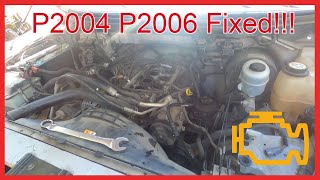
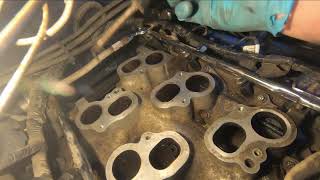
- Failed Intake Manifold Runner Control (IMRC) Solenoid or Actuator (Ford, Land Rover) (Very Common) — The electronic solenoid or vacuum actuator that moves the intake runners fails, causing the flaps to stick. This is a primary issue on Ford V6/V8 🎬 Watch: Step-by-step Ford IMRC motor and bushing replacement guide. and Land Rover KV6 engines.
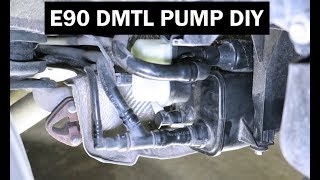
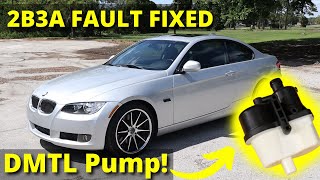
- Damaged or Corroded Wiring/Connectors (Common) — Wires for the IMRC actuator, DMTL pump, or DPF sensor chafe, break, or short to ground. Connector pins corrode heavily on the BMW DMTL pump due to moisture intrusion from the wheel well. 🎬 See this DIY walkthrough for replacing the BMW DMTL pump.
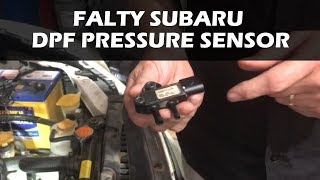
- Faulty DPF Pressure Sensor (Subaru Diesel) (Common) — The sensor measuring the pressure difference across the Diesel Particulate Filter fails or provides an implausible signal, triggering the code.
- Cracked or Blocked DPF Sensor Hoses (Subaru Diesel) (Common) — The two rubber hoses connecting the DPF to the pressure sensor become brittle, crack, or clog with soot, causing an inaccurate pressure reading even if the sensor works perfectly.
- Vacuum Leaks (Ford IMRC Systems) (Common) — Cracked, brittle, or disconnected vacuum lines operating the IMRC actuator prevent the runners from moving correctly, triggering a control fault.
- Failed Electric Cooling Fan Assembly (Ford) (Less Common) — On specific Ford models, this code points directly to a failure of the secondary (passenger side) electric cooling fan motor or its control circuit, leading to rapid engine overheating.
- Carbon Buildup on Intake Runners (Ford IMRC Systems) (Less Common) — Heavy carbon deposits physically jam the runner flaps, preventing them from opening or closing. The PCM detects the lack of movement and flags a control fault.
Symptoms
- Check Engine Light — The Malfunction Indicator Lamp (MIL) illuminates on your dashboard. This is the only symptom for EVAP-related faults.
- Reduced Engine Power and Acceleration — If the intake runners (IMRC) stick closed, the engine feels sluggish and asthmatic at higher RPMs. If stuck open, it lacks low-end torque.
- Rough Idle or Stalling — The engine runs unevenly or stalls when the IMRC runners stick in the open position, disrupting the air-fuel mixture at low speeds.
- Poor Fuel Economy — An inefficient air-fuel mixture from a malfunctioning IMRC, a faulty EVAP system, or a clogged DPF causes a noticeable 10-15% decrease in gas mileage.
- Engine Overheating (Ford Fan Issue) — If the code relates to the electrodrive fan, the engine overheats rapidly in stop-and-go traffic, while idling, or when using the A/C.
- Failed Emissions Test — Any fault triggering the Check Engine Light, especially EVAP, IMRC, or DPF issues, results in an automatic failure of an emissions inspection.
- Rattling Noise from Engine (Land Rover) — On Land Rover KV6 engines, a failing VIS motor or broken internal manifold flaps creates a distinct rattling or clicking sound from the intake manifold.
Diagnostic Flowchart
Tap your situation to follow the diagnostic path that matches what you're seeing on this code.
Common Fixes & Costs
- Replace EVAP Leak Detection (DMTL) Pump
— Parts: $80-$150, Labor: $150-$250, ~1.0 hr book time
(Intermediate)
BMW 3-Series (E90): OEM 16137193479 (Alt: Bosch: 0261222018 (OEM supplier))
VW Jetta (MK5/MK6): OEM 1K0906201D (Alt: Standard Motor Products: LDP49) - Replace Intake Manifold Runner Control (IMRC) Solenoid/Actuator
— Parts: $50-$250, Labor: $150-$450, ~2.5 hr book time
(Intermediate)
Ford F-150 (5.4L 3V, 2004-2008): OEM 3L3E9G730EA (Alt: Dorman: 911-912)
Ford F-150 (4.2L V6, 2005-2008): OEM 3F2Z9J559BD (Alt: Dorman: 911-918) - Repair Damaged Wiring or Replace Connector — Parts: $15-$50, Labor: $150-$350, ~1.5 hr book time (Intermediate)
- Replace DPF Pressure Sensor (Subaru Diesel)
— Parts: $300-$500, Labor: $100-$200, ~0.8 hr book time
(Intermediate)
Subaru Forester/Outback (Diesel, 2008-2014): OEM 22627AA500 (Alt: Bosch: 0986280718) - Clean Carbon Buildup from Intake Manifold Runners — Parts: $20-$50, Labor: $400-$800, ~5.5 hr book time (Professional)
DIY vs Professional
- Replace EVAP Leak Detection (DMTL) Pump (BMW/VW) — Beginner: Yes, with caution.
Tools: Jack and jack stands, wheel lug wrench, basic socket set (8mm, 10mm), Torx bit set (T15-T25), flathead screwdriver, safety glasses. - Replace Intake Manifold Runner Control (IMRC) Actuator (Ford) — Beginner: It depends heavily on the engine.
Tools: Basic socket set, extensions, torque wrench, screwdrivers, pliers. A full mechanic's toolset is needed if intake manifold removal is required. - Replace DPF Pressure Sensor (Subaru Diesel) — Beginner: Yes.
Tools: Basic socket set or wrenches, pliers for hose clamps.
Used vs. New Parts: Buying Guide
When a used part is worth it: Buying used electronic components like DMTL pumps, IMRC actuators, and DPF sensors is highly discouraged due to wear and unknown remaining lifespan. Savings are minimal compared to the risk of repeating the labor.
Donor-vehicle mileage cap: roughly under 50000 miles for the part to have meaningful remaining life.
Donor quality checklist:
- Verify the exact part number, as many revisions are not interchangeable.
- Avoid electrical donors from regions with heavy road salt use (rust belt) to prevent corrosion issues.
- Test the component before installation by applying voltage to verify movement.
Decision logic:
- If The part is electronic (DMTL pump, IMRC actuator, sensor). → Buy a new OEM or reputable aftermarket part. The risk of a used part failing quickly is too high.
- If The part is a simple mechanical item (e.g., a bracket or hose) and the new price is excessive. → A used part from a low-mileage vehicle is a reasonable choice.
- If The vehicle is old (>15 years) and the budget is extremely tight. → A used part is a viable option, but accept the risk of a shorter service life.
Warranty tradeoff: Used parts typically come with a 30-90 day warranty that excludes labor costs. New aftermarket parts offer 1-year to limited lifetime warranties. New OEM parts carry a 1-2 year warranty.
Worst-case if a used part fails: 300-600 (The cost of repeating the labor plus buying another part if the used one fails.)
What Happens If You Wait — Timeline
- 0-1 month: Check Engine Light illuminates. For EVAP faults, this is the only symptom. For IMRC faults, a slight drop in high-RPM power occurs. For DPF faults, regeneration cycles become slightly more frequent. (MPG impact: 0-5%% · Added cost: $0)
- 1-4 months: For IMRC: Noticeable hesitation above 3000 RPM and a 5-10% fuel economy loss. For DPF: DPF warning light flashes, the car feels sluggish, and fuel is wasted on frequent, failed regeneration attempts. (MPG impact: 5-15%% · Added cost: $50-200 (in wasted fuel))
- 4-9 months: For IMRC: Prolonged incorrect air-fuel mixture overheats and degrades the catalytic converter. For DPF: Soot levels reach a critical point (>135%) where the ECU blocks regeneration, forcing the vehicle into limp mode. (MPG impact: 10-20%% · Added cost: $300-800 (Professional DPF cleaning required))
- 9+ months: For IMRC: Catalytic converter failure occurs, a $1,500+ repair. For DPF: The filter permanently clogs with soot and ash, requiring full replacement costing $2,000-$6,000. (MPG impact: >20%% · Added cost: $1500-6000+)
Cost of Not Fixing It
- Immediate: Guaranteed failure of any OBD-II emissions or smog test. For EVAP-related P1472, this is the only immediate consequence. (Added cost: 0)
- 0-3 months: For IMRC faults: A 5-15% drop in fuel economy and poor engine performance. For Subaru DPF faults: Soot accumulation increases, forcing fuel-wasting regeneration cycles. (Added cost: 50-200 (in wasted fuel))
- 3-12 months: For IMRC faults: The catalytic converter overheats and fails. For Subaru DPF faults: The DPF critically clogs, requiring replacement. For Ford fan faults: The engine overheats, blowing the head gasket. (Added cost: 1500-4000+)
Diagnosis Steps
- Identify Your System with a Specific Scan
Use a high-quality OBD-II scanner to get the manufacturer-specific definition. A generic reader says 'manufacturer control,' while a proper tool specifies 'IMRC Circuit,' 'DMTL Pump Short to Ground,' or 'DPF Pressure Sensor Low.'
Tools: OBD-II Scanner (manufacturer-specific capable) (Beginner) - Thorough Visual Inspection
For IMRC: Inspect the actuator linkage and vacuum lines for cracks. For EVAP: Locate the DMTL/LDP near the rear wheel and inspect hoses. For DPF: Inspect the two rubber hoses connecting the sensor to the exhaust for blockages or cracks.
Tools: Flashlight, Safety Glasses (Beginner) - Check the Electrical Connector
Unplug the connector from the suspect part. Look for bent, corroded (green/white powder), or pushed-out pins. Moisture damage is extremely common on BMW DMTL pump connectors and is often the sole cause of the fault.
Tools: Small pick, electrical contact cleaner (Beginner) - Actuate the Component with a Bi-Directional Scanner
For electronic IMRC actuators and EVAP DMTL pumps, command the component to turn on/off. For an IMRC, you will hear/see it move. For a DMTL pump, the scanner reports if the motor activated. Failure to respond confirms a bad component or wiring.
Tools: Bi-directional scan tool (Advanced) - Test for Power and Ground at the Connector
Check for battery voltage and a solid ground connection at the harness-side connector with the key on. A lack of voltage or ground points to a wiring issue or a blown fuse, not the component itself.
Tools: Multimeter, Vehicle-specific wiring diagram (Intermediate) - Test Component's Internal Resistance
Measure the resistance between the power and ground pins on the unplugged component (e.g., DMTL pump or IMRC solenoid). Compare this to the manufacturer's specification (often 20-50 Ohms). An open circuit (OL) or a short (near 0 Ohms) confirms internal failure.
Tools: Multimeter, Manufacturer's resistance specifications (Intermediate) - Pro Tip: Check for a Short to Ground (VW/Audi)
Disconnect the component and negative battery terminal. Set your multimeter to continuity. Place one probe on the signal wire pin in the harness and the other on a clean chassis ground. A beep confirms a short circuit in the wiring harness.
Tools: Multimeter (Advanced) - Test Vacuum-Operated IMRC Systems (Ford)
Connect a handheld vacuum pump to the IMRC actuator. Apply vacuum and watch the linkage. If it fails to move smoothly or leaks down immediately, the actuator diaphragm is ruptured and requires replacement.
Tools: Handheld vacuum pump (Intermediate) - Advanced: Test Subaru DPF Sensor Voltage
Back-probe the DPF pressure sensor connector. With the key on, the reference wire shows 5.0V, ground shows 0V. At idle, a healthy DPF system shows a signal voltage of ~0.5V - 0.7V. A reading stuck below 0.5V or above 4.5V confirms a failed sensor.
Tools: Multimeter with back-probe pins, Vehicle-specific wiring diagram (Advanced) - Advanced: Monitor Live Data PIDs
For a Subaru DPF issue, monitor the 'Soot Accumulation' PID; readings over 135% indicate critical blockage. For Ford IMRC systems, monitor 'IMRC Monitor' or 'CMCV Position' to verify the computer's command matches the reported flap position.
Tools: Advanced OBD-II Scanner with Live Data (Advanced)
When This Code Triggers (Freeze-Frame Conditions)
- Engine Coolant Temp: 175-210°F (80-99°C) (The engine must be at full operating temperature for the ECU to run the self-tests that trigger P1472.)
- RPM: Varies by system (For Ford IMRC, the test runs when RPM crosses a specific threshold (approx. 3000 RPM) where the runners are commanded to open. For BMW DMTL, the test runs after the vehicle is shut off and sits for a period.)
- Engine Load: 20-70% (For IMRC faults, the code sets under moderate acceleration when the engine expects the runners to open to increase airflow.)
- Fuel Level: 15-85% (For EVAP (DMTL/LDP) faults, the diagnostic test only runs when the fuel level is within a specific range to ensure test accuracy.)
Related Codes
- P1473 — On BMWs, P1473 indicates 'DMTL Pump Current Plausibility,' an electrical performance issue (e.g., seized pump), while P1472 is a hard circuit fault (short/open wire).
- P1471 — On Land Rover KV6 engines, P1471 (balance motor) and P1472 (power motor) appear together. Replace both VIS motors simultaneously.
- P0442 / P0455 — P1472 is an electrical fault for the leak detection pump. P0442/P0455 are mechanical faults indicating a physical leak. A working pump is required to detect the leak causing P0442/P0455.
- P2004-P2008 — These confirm the IMRC is stuck open/closed. P1472 points to the control circuit, while P200x codes confirm the mechanical result of that fault.
Climate & Environmental Factors
- High Humidity / Moisture: This is the primary contributor to P1472 on BMWs. The DMTL pump and its electrical connector sit in the rear wheel well, exposed to water and road salt, causing severe pin corrosion.
- Carbon Buildup: Short trips and direct injection engine designs contribute heavily to carbon buildup on intake valves, physically jamming Ford IMRC flaps.
- Extreme Cold: Freezing temperatures make plastic and rubber components brittle, cracking Ford IMRC vacuum lines or Subaru DPF sensor hoses.
How to Talk to a Mechanic About This Code
Say this: "I have a P1472 code. For my [Ford/BMW/Subaru], I believe this relates to the [IMRC system/DMTL pump/DPF sensor]. Before replacing any major parts, could you please test the component's electrical circuit, including the connector for power, ground, and corrosion, and also check related hoses for leaks or blockages?"
This directs the mechanic to diagnose the most common and cheapest failure points first (wiring, connectors, hoses) before quoting an expensive part replacement. It prevents them from jumping to conclusions, like replacing an entire intake manifold for a bad Ford IMRC actuator.
Avoid saying:
- 'Just fix whatever's wrong'
- 'My check engine light is on, can you look at it?'
- 'I don't know anything about cars, just do what you recommend.'
Questions to ask before authorizing the repair:
- Did you test for power and ground at the component's connector?
- Can you show me the damaged part or a photo of the corrosion/wiring issue?
- For a Ford IMRC, is the problem the external actuator or are the internal manifold flaps broken?
- For a BMW DMTL, did you check if my VIN is covered by the extended warranty for this part?
- What is the warranty on the recommended parts and labor?
Where to Take It: Dealer vs Independent vs Chain
- Dealer:
A strong, safe choice for German brands or if you suspect a warranty/TSB issue. The cost is higher, but their specific expertise with this code is valuable.
Best for: Vehicles still under powertrain or emissions warranty., Complex manufacturer-specific quirks (e.g., BMW software updates, VW wiring TSBs)., Confirming eligibility for extended warranties (like the BMW DMTL pump).
Downsides: Labor rates are often $150-$250 per hour, significantly higher than independent shops., May recommend replacing a larger assembly when a smaller component has failed. (Typical cost: +40% vs. baseline) - Independent Shop:
Best fit for most owners. An independent shop specializing in your car's brand has extensive experience with P1472-related faults at a lower cost than the dealer.
Best for: Out-of-warranty vehicles where cost is a major factor., Shops specializing in your vehicle's make (e.g., a German car specialist for a BMW/VW)., Common, well-documented failures like Ford IMRC actuators or BMW DMTL pumps.
Downsides: Quality and diagnostic tool capability vary widely; vet shops based on reviews and ASE certifications., May lack access to the latest manufacturer service bulletins or software updates. (Typical cost: +0% vs. baseline) - Chain Shop:
AVOID for this code. The manufacturer-specific nature of P1472 requires expertise and diagnostic tools that are often lacking at general repair chains.
Best for: Simple, routine maintenance like oil changes or tire rotations.
Downsides: Technician skill varies dramatically; they often lack the specific knowledge for a nuanced code like P1472., High pressure to upsell; they frequently misdiagnose the issue and replace unnecessary parts. (Typical cost: -10% vs. baseline)
When to Walk Away From the Repair
If the estimated repair cost exceeds 40-50% of the car's private-party value, seriously consider selling or trading it in instead of repairing it.
- Car worth $3000, fix is $1800: Walk away. The repair cost is 60% of the car's value. It is not a sound investment.
- Car worth $9000, fix is $800: Fix it. The repair cost is less than 10% of the vehicle's value and is a worthwhile investment.
- Car worth $4500, fix is $2000: Borderline. The cost is ~44% of the car's value. Get a second opinion and assess the car's overall health before proceeding.
What Scan Tool You Need for This Code
Minimum: A scanner that reads manufacturer-specific code definitions.
A generic $20 reader only shows 'P1472: Manufacturer Control,' which is useless. You MUST know if it is a Ford IMRC, a BMW DMTL, or a Subaru DPF fault to begin diagnosis.
Budget: BlueDriver Pro (~$100) — Connects to your phone and provides the crucial manufacturer-specific code definition, live data, and freeze frame data.
Mid-range: Foxwell NT510 Elite (~$180) — Adds bi-directional control, allowing you to command the IMRC actuator or DMTL pump to turn on/off, providing a definitive test of the component itself.
Professional: Autel MaxiCOM MK808S (~$450) — A professional-level tablet with full bi-directional control for all systems, advanced service functions like DPF regeneration, and fast, comprehensive data logging.
Rent vs buy: AutoZone's Loan-A-Tool program offers basic code readers that lack manufacturer-specific definitions. Buying a budget pick like BlueDriver is a mandatory investment for this code.
How to Clear the Code After You Fix It
- Use an OBD-II scan tool to clear the code.
- Perform a complete OBD-II drive cycle to allow all readiness monitors to run.
- Avoid disconnecting the battery, as it resets all readiness monitors and delays emissions testing readiness.
Drive cycle (~30 minutes): A general OBD-II drive cycle includes a cold start, 2-3 minutes of idling, 5-10 minutes of city driving, followed by 15 minutes of steady-state highway driving (55-60 mph). The vehicle must then cool down completely.
Readiness monitors affected: EVAP System, Catalyst, Oxygen Sensor
Before emissions retest: drive at least 50 miles to fully set monitors.
Watch out for:
- Clearing the code with a scanner does not fix the underlying problem; the code returns immediately if the fault remains.
- Taking a vehicle for an emissions test immediately after clearing codes results in an automatic 'Not Ready' rejection.
Will This Fail Emissions / State Inspection?
Yes — this code typically fails an OBD-II emissions inspection.
- California: An illuminated Check Engine Light results in an automatic smog check failure. A full OBD-II drive cycle must be completed to set readiness monitors before a re-test.
- New York: The NYS vehicle inspection includes an OBD-II scan. A P1472 code causes an automatic failure of the emissions portion.
- Texas: In counties requiring emissions testing, a P1472 code results in a failed test. The Check Engine Light must be off and readiness monitors must show 'Ready'.
Most Commonly Affected Vehicles
- Ford F-150 (1997-2008) — Highly prone to IMRC failure. The 4.2L V6 actuator motor fails frequently. On 4.6L/5.4L 2V V8s, plastic linkage clips break.
- BMW 3-Series (E90/E92/E93) (2006-2013) — Extremely prone to DMTL pump failure. The wiring connector corrodes heavily from moisture. BMW issued a warranty extension for the DMTL pump on many of these vehicles.
- Volkswagen Jetta, Golf, Passat (1999-2006) — Frequently experiences P1472 due to a short in the EVAP Leak Detection Pump (LDP) circuit located near the passenger side rear wheel well.
- Ford Mustang (1999-2004) — The IMRC system on the 3.8L/3.9L V6 and 4.6L V8 engines is a known failure point, causing poor high-RPM performance.
- Subaru Forester, Outback (Diesel) (2008-2014) — This code specifically flags the DPF pressure differential sensor or its connecting hoses on 2.0L (EE20) diesel engines.
- Land Rover Freelander (2002-2005) — This code flags the VIS (Variable Intake System) motors on the 2.5L KV6 engine. A rattling from the intake manifold is a key symptom.
- Hyundai Elantra, Sonata, Tiburon (2001-2016) — Points to a fault in the EVAP system's Canister Close Valve (CCV) or its wiring harness.
- Ford Explorer, Windstar, Taurus (1998-2010) — Affected by IMRC issues on V6/V8 models or electric cooling fan failures on specific models like the Windstar.
- Honda Civic, Integra (1996-2002) — Refers to a fault in the EVAP Canister Bypass Solenoid Valve circuit on older models.
Manufacturer-Specific Notes
- Ford: P1472 has two drastically different meanings: an IMRC fault (poor performance) or a passenger-side electric cooling fan failure (rapid overheating). Using a manufacturer-specific scanner is mandatory.
- BMW: This code is exclusively for the DMTL pump. The wiring connector corrodes heavily due to moisture. BMW issued an extended warranty (Service Bulletin B010511) to 10 years/120,000 miles on many affected models.
- Audi / Volkswagen: Points to a 'short to ground' in the Leak Detection Pump (LDP) circuit. If multiple 'short to ground' codes appear, suspect a shared ground point or a damaged main wiring harness section.
- Subaru: On diesel models, P1472 indicates a low voltage signal from the DPF pressure differential sensor. Technicians frequently misdiagnose this as a failed DPF when the actual cause is the inexpensive sensor or its rubber hoses.
Real Owner Stories
2007 BMW 328i (E90) at 110K miles with P1472
Check Engine Light appeared with no noticeable driving symptoms. Car passed emissions a year prior.
What they tried:
- Read code P1472, indicating a DMTL pump circuit fault.
- Replaced the DMTL pump ($85 Bosch part). Code returned within a day.
- Inspected the wiring harness connector leading to the pump and found one severed wire and severe insulation cracking.
- Purchased a new connector pigtail ($25) and spliced it into the harness.
Outcome: Splicing in the new connector permanently fixed the issue. The original pump was likely still functional.
Lesson: On BMWs, the wiring connector for the DMTL pump is a major weak point due to wheel well exposure. Always inspect the wiring for corrosion before replacing the pump.
2002 Land Rover Freelander 2.5L V6 with P1471 & P1472
Loud rattling noise from the top of the engine, poor engine power, and lumpy gear changes.
What they tried:
- A garage read codes P1471 (VIS balance motor) and P1472 (VIS power motor).
- Owner replaced both external VIS motors, but the problem and codes returned immediately.
- Upon removing the new motors, the owner discovered the plastic linkage arm inside the intake manifold was broken and wiggled freely.
Outcome: The root cause was a broken butterfly valve assembly inside the intake manifold, requiring a complete $1,000+ manifold replacement.
Lesson: For Land Rover VIS faults, check the integrity of the internal linkage arms before replacing external motors. A loose arm indicates internal manifold failure that new motors cannot fix.
2009 Subaru Forester 2.0L Diesel with P1472
Check Engine Light and ESP light illuminated simultaneously during a drive in 17°F (-8°C) weather.
What they tried:
- Read code P1472, defined as 'DPF pressure difference sensor (low)'.
- Researched forums and found other owners experienced identical intermittent faults in freezing temperatures.
- Cleared the fault code with the scanner.
Outcome: After clearing the code, the fault did not reappear on subsequent trips in normal weather. The issue was a temporary, weather-related sensor glitch.
Lesson: Extreme cold causes intermittent, false readings from the Subaru DPF pressure sensor. If the code appears during a cold snap with no symptoms, clear it and wait for normal weather before replacing parts.
How to Prevent This Code From Triggering
- Protect BMW/VW EVAP Pump Connector (Once, or during tire rotation) — Applying dielectric grease to the DMTL/LDP connector pins and ensuring the wheel well liner is intact prevents the moisture corrosion that causes circuit faults.
- Perform regular highway driving (Subaru Diesel) (At least once per tank of fuel) — Consistent driving at highway speeds generates enough exhaust heat to allow the DPF to passively regenerate, preventing clogs that stress the pressure sensor.
- Use Top Tier Gasoline (Ford IMRC) (Every fill-up) — Higher detergent levels in Top Tier fuels prevent carbon deposits on intake valves, reducing the buildup that causes IMRC flaps to stick.
- Avoid over-filling the fuel tank (Every fill-up) — Topping off the tank forces liquid fuel into the charcoal canister and EVAP lines, saturating the canister and destroying the DMTL/LDP pump.
- Perform an occasional fuel injector cleaning service (Every 30,000-50,000 miles) — Professional cleaning services remove carbon buildup from intake runners and valves, preventing the physical jamming that leads to IMRC faults.
Frequently Asked Questions
Can I fix P1472 myself?
Yes, for many common causes. Replacing a BMW DMTL pump or Subaru DPF sensor is a manageable DIY job requiring basic hand tools. Ford IMRC actuator difficulty depends on whether intake manifold removal is required; stop and take the vehicle to a shop if manifold removal exceeds your comfort level.
What happens if I ignore P1472?
Ignoring it guarantees an automatic emissions test failure. Depending on the cause, you will also experience poor performance and fuel economy (IMRC), risk catastrophic engine overheating (Ford fan failure), or destroy the DPF (Subaru).
Will a loose gas cap cause a P1472 code?
No. A loose gas cap causes a large physical leak in the EVAP system, triggering codes like P0455 or P0457. P1472 points specifically to an electrical circuit problem with the leak detection pump itself, not a vapor leak.
What does 'short to ground' mean for a P1472 code on my VW or Audi?
It means the power wire in the Leak Detection Pump (LDP) circuit is making an unintended connection to the vehicle's metal frame (ground). This happens due to a chafed wire or an internal failure in the pump itself. The computer sees the voltage drop to zero when it shouldn't, triggering the code.
My BMW has a DMTL code but the pump is new. What else is it?
First, check the wiring and connector for corrosion or damage, as this is a frequent failure point. Second, verify if your vehicle falls under BMW's 10-year/120,000-mile extended warranty for the DMTL pump. Lastly, ensure the replacement pump is a quality OEM part, as cheap aftermarket units often fail out of the box.
My mechanic wants to replace the whole intake manifold for P1472 on my Ford. Is this necessary?
Not usually, as P1472 typically flags the external IMRC actuator or solenoid. However, if the internal runner flaps or the connecting rod are physically broken inside the manifold, a full replacement is mandatory. Ask the shop to physically demonstrate the broken internal linkage before authorizing a full manifold replacement.
Is the Land Rover VIS motor the same as an IMRC?
Yes, functionally they are identical. VIS stands for Variable Intake System, utilizing motors to control flaps inside the intake manifold to change runner length, just like Ford's IMRC. Both systems optimize torque at low RPM and horsepower at high RPM.
Key Takeaways
- Scan your vehicle with a manufacturer-specific OBD-II tool immediately; P1472 means a $250 EVAP pump repair on a BMW, but indicates a potentially engine-destroying cooling fan failure on a Ford.
- Inspect the wiring harness and connector before buying parts; over 30% of BMW and VW P1472 codes stem from a corroded $25 DMTL pump connector rather than a failed pump.
- For Ford V6 and V8 engines, P1472 typically indicates a stuck Intake Manifold Runner Control (IMRC) actuator, which causes a 10-15% drop in fuel economy and requires a $200-$500 repair.
- Subaru diesel owners must check the two small rubber hoses connecting the DPF to the pressure sensor for soot clogs before spending $300 on a replacement sensor.
Helpful Videos


![Ford 4.2L V6 Hydrolock and IMRC fix [1080 HD]](https://img.youtube.com/vi/bhIq9lsKvOU/mqdefault.jpg)

The information in this article is provided for general reference and educational purposes only. Vehicle specifications, procedures, and part compatibility can vary by production date, trim level, and region. Always consult your vehicle's factory service manual and verify part numbers before purchasing or performing repairs. Safety-critical components such as airbags, seat belts, and braking systems should be installed by a qualified professional.
- 🎬 Helpful Videos
- What Does P1472 Mean?
- Can I Drive With P1472?
- Common Causes
- Symptoms
- Diagnostic Flowchart
- Common Fixes & Costs
- DIY vs Professional
- Used vs. New Parts: Buying Guide
- What Happens If You Wait — Timeline
- Cost of Not Fixing It
- Diagnosis Steps
- When This Code Triggers (Freeze-Frame Conditions)
- Related Codes
- Climate & Environmental Factors
- How to Talk to a Mechanic About This Code
- Where to Take It: Dealer vs Independent vs Chain
- When to Walk Away From the Repair
- What Scan Tool You Need for This Code
- How to Clear the Code After You Fix It
- Will This Fail Emissions / State Inspection?
- Most Commonly Affected Vehicles
- Manufacturer-Specific Notes
- Real Owner Stories
- 2007 BMW 328i (E90) at 110K miles with P1472
- 2002 Land Rover Freelander 2.5L V6 with P1471 & P1472
- 2009 Subaru Forester 2.0L Diesel with P1472
- How to Prevent This Code From Triggering
- Frequently Asked Questions
- Can I fix P1472 myself?
- What happens if I ignore P1472?
- Will a loose gas cap cause a P1472 code?
- What does 'short to ground' mean for a P1472 code on my VW or Audi?
- My BMW has a DMTL code but the pump is new. What else is it?
- My mechanic wants to replace the whole intake manifold for P1472 on my Ford. Is this necessary?
- Is the Land Rover VIS motor the same as an IMRC?
- Key Takeaways
- 🎟️ Get 5% Off