

OBD-II Code P1467: A/C, EVAP, or Emissions System Fault
What P1467 means for Ford, GM, VW, Audi, BMW, and Subaru, why it triggers, and how to fix it
- P1467 is a manufacturer-specific code that indicates an A/C sensor failure on Fords, an EVAP pump fault on GMs, an SAI pump issue on BMWs, or a clogged DPF on Subaru diesels.
- GM owners must call a dealership with their VIN before buying parts, as the EVAP purge pump repair is frequently covered for free under the 15-year/150,000-mile Special Coverage N232395310.
- Ford vehicles logging P1467 will disable the A/C compressor to prevent overheating, requiring a $40-$80 temperature sensor replacement after ruling out low refrigerant levels.
- BMW owners hearing a loud vacuum-cleaner noise for 60 seconds on cold starts must replace the Secondary Air Injection pump and its one-way check valve to prevent repeat water damage.
What Does P1467 Mean?

P1467 is a manufacturer-specific code, meaning it has different definitions depending on your car's brand. For Ford, Lincoln, and Mercury vehicles, it points to a problem with the air conditioning (A/C) compressor's temperature sensor. For many newer General Motors (GM) vehicles like Chevrolet and GMC, it indicates a problem with the evaporative emission (EVAP) system's purge pump. For Volkswagen and Audi, it signals a short circuit in the EVAP purge solenoid. For some BMW models, it relates to the secondary air injection (SAI) system. On Subaru diesel vehicles, it indicates a problem with the Diesel Particulate Filter (DPF).
Technical definition: Because this is a manufacturer-specific code, there are several common official definitions: * **Ford/Lincoln/Mercury:** SAE J2012 defines P1467 as "A/C Compressor Temperature Sensor Malfunction". * **General Motors (GM):** Per Technical Service Bulletin 19-NA-148, P1467 is defined as "EVAP Purge Pump Under Speed". * **Volkswagen/Audi:** Defined as "EVAP Canister Purge Solenoid Valve Short Circuit to B+". * **BMW:** Refers to a fault within the Secondary Air Injection (SAI) system, specifically "Secondary Air Pump Flow Rate Too Low". * **Subaru (Diesel):** Defined as "DPF Ash Overfill".
Can I Drive With P1467?
Yes, But With Caution. Yes, you can drive with a P1467 code, but ignoring it causes secondary damage. For Ford, the main risk is a non-functional A/C. For GM, VW, and Audi, the immediate issue is failing an emissions test. For BMW and Subaru, ignoring the code long-term leads to expensive consequential damage. A failed BMW Secondary Air Injection pump allows exhaust gases to destroy other components, while an ignored DPF issue on a Subaru causes a permanently clogged filter requiring a $2,000+ replacement.
Common Causes

- Engine Computer Software Anomaly (GM) (Very Common) — On many affected GM vehicles, the most common cause is a software glitch. A simple update from the dealer is the first and only required fix, as specified in technical service bulletin 19-NA-148.
- Faulty EVAP Purge Pump (GM) (Very Common) — If a software update does not solve the issue on a GM vehicle, the EVAP purge pump itself has failed and is not running at the correct speed. GM covers this known issue under special warranty programs.
- Faulty A/C Compressor Temperature Sensor (Ford) (Very Common) — On Ford vehicles, the sensor monitoring the A/C compressor's temperature frequently fails. It sends incorrect high-temperature signals, causing the computer to shut down the A/C.
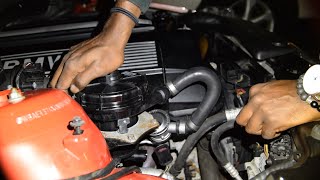
- Faulty Secondary Air Injection (SAI) Pump or Relay (BMW) (Common) — On BMWs, this code points to a problem with the SAI system, which reduces emissions on cold starts. The pump motor fails, or the relay controlling it sticks 🎬 Watch: How to replace the secondary air pump on a BMW, causing the pump to run continuously and burn out.
- Faulty EVAP Canister Purge Solenoid (VW/Audi) (Common) — For Volkswagen and Audi models, the code indicates the EVAP purge solenoid has an electrical short to the positive battery terminal (B+), due to internal failure of the solenoid or a wiring issue. 🎬 Watch: How VW EVAP purge valves fail and cause issues
- Clogged Diesel Particulate Filter (DPF) (Subaru Diesel) (Common) — For Subaru diesel engines, this code indicates the DPF is overloaded with soot and ash. Frequent short trips that prevent DPF regeneration or a faulty DPF pressure sensor cause this buildup.
- Damaged Wiring or High Resistance Ground (Common) — Damaged, corroded, or loose wires leading to the respective sensor or pump interrupt the signal and trigger the fault. On 2020-2021 GM models (TSB 21-NA-014), high resistance in the EVAP purge pump's ground circuit triggers the code, requiring the ground wire to be relocated.
- Low A/C Refrigerant or Failing Compressor Clutch (Ford) (Less Common) — If the refrigerant is low or the compressor clutch slips, the A/C compressor runs hotter than normal. The temperature sensor detects this overheating and triggers the code to protect the compressor.
- Fuel Overfill Causing Liquid Fuel in EVAP Pump (GM) (Rare) — Habitually overfilling the fuel tank (topping off) forces liquid fuel into the EVAP system, saturating the charcoal canister and destroying the EVAP purge pump.
- Carbon Buildup in Secondary Air Ports (BMW) (Rare) — Carbon deposits clog the passages in the cylinder head where the secondary air injection system introduces air. This blockage restricts airflow, triggering a 'flow rate too low' fault even if the pump and valve work correctly.
Symptoms
- Check Engine Light and OnStar Alert — The Check Engine Light illuminates for all versions of this code. GM owners also receive a diagnostic alert via OnStar.
- A/C Blows Warm, Cycles Rapidly, or Works Intermittently (Ford) — The computer disables the compressor because it falsely believes it is overheating, preventing it from cooling the air. You hear the compressor clutch rapidly clicking on and off.
- Loud Whining or 'Vacuum Cleaner' Noise on Cold Start (BMW) — A failing secondary air injection pump makes a loud howling noise for the first 30-90 seconds after a cold start before shutting off.
- Flashing DPF Light (Subaru Diesel) — Subaru vehicles illuminate or flash a specific DPF warning light, indicating a regeneration is needed or the system is clogged.
- Rough Idle or Stalling After Refueling (GM/VW) — If the EVAP purge valve or solenoid fails in the open position, it creates a vacuum leak, causing the engine to run rough, hesitate, or stall immediately after filling the gas tank.
- Failure to Pass Emissions Test (All Makes) (also visible on scanner) — Because the GM, VW/Audi, BMW, and Subaru versions of the code relate to emissions control systems, your vehicle automatically fails a state-mandated emissions inspection.
Diagnostic Flowchart
Tap your situation to follow the diagnostic path that matches what you're seeing on this code.
Common Fixes & Costs
- Reprogram Engine Control Module (ECM) (GM Vehicles) — Parts: $0, Labor: $0 - $250 (Often free under warranty/TSB), ~1 hr book time (Professional)
- Replace EVAP Purge Pump (GM Vehicles)
— Parts: $60-$150, Labor: $0 - $200 (Often free under Special Coverage N232395310), ~0.7 hr book time
(Intermediate)
Chevy Silverado 1500 (2019-2021): OEM 12734329 (Alt: ACDelco 12734329 ($60-$80), Standard Motor Products CP122 ($100-$120))
Buick Encore GX (2020-2022): OEM 12703879 (Alt: ACDelco 214-2317 ($70-$90), GM Genuine 12703879 ($80-$100))
Chevy Trailblazer (2021-2023): OEM 12703879 (Alt: ACDelco 214-2317 ($70-$90), Standard Motor Products CP122 ($100-$120)) - Replace A/C Compressor Temperature Sensor (Ford Vehicles)
— Parts: $40-$80, Labor: $150 - $1,200+ (F-150 is accessible; Fusion/Escape requires full dashboard removal), ~4 hr book time
(Intermediate)
Ford F-150 (2015-2020): OEM FR3Z19C734A (Alt: Motorcraft YH-2872 ($40-$50), Dorman 973-512 ($35-$45))
Ford Fusion (2013-2016): OEM AU5Z12A647B (Alt: Motorcraft YH1735 ($45-$60), Standard Motor Products AX351 ($40-$55)) - Replace Secondary Air Injection (SAI) Pump (BMW)
— Parts: $250-$450, Labor: $150-$300, ~1.5 hr book time
(Intermediate)
BMW 3-Series E46 (2000-2006): OEM 11727553056 (Alt: Pierburg 721852240 ($250-$300), Bosch 0580000025 ($280-$350)) - Replace EVAP Purge Solenoid (VW/Audi)
— Parts: $30-$80, Labor: $100-$180, ~0.5 hr book time
(Intermediate)
VW Jetta/Golf (1999-2010): OEM 06E906517A (Alt: Bosch 0280142431 ($35-$50), Standard Motor Products CP569 ($40-$55)) - Perform Forced DPF Regeneration (Subaru Diesel)
— Parts: $0, Labor: $150-$300, ~1 hr book time
(Professional)
Subaru Forester/Outback Diesel: OEM N/A (Procedure) (Alt: If sensor is faulty: OEM Sensor 22627AA500) - Repair Damaged Wiring or Relocate Ground Wire — Parts: $5-$25, Labor: $100-$300, ~1.5 hr book time (Intermediate)
- Perform A/C System Recharge (Ford Vehicles) — Parts: $0, Labor: $150-$300, ~1.2 hr book time (Professional)
DIY vs Professional
- Replace EVAP Purge Pump (GM) — Beginner:
- Replace A/C Temp Sensor (Ford F-150) — Beginner:
- Replace A/C Temp Sensor (Ford Fusion/Escape) — Beginner:
- Replace Secondary Air Pump (BMW) — Beginner:
- Replace EVAP Purge Solenoid (VW/Audi) — Beginner:
- Relocate Ground Wire (GM TSB 21-NA-014) — Beginner:
Used vs. New Parts: Buying Guide
When a used part is worth it: For the common GM EVAP pump failure, buying a used part is not recommended. The part is relatively inexpensive new, and a used part carries a high risk of premature failure, forcing you to pay for labor a second time.
Donor-vehicle mileage cap: roughly under 50000 miles for the part to have meaningful remaining life.
Donor quality checklist:
- Verify the exact OEM part number matches; superseded parts are not compatible.
- Avoid parts from vehicles in rust-belt states, as connectors and housings are corroded.
- Choose a part from a vehicle scrapped for non-engine related reasons (e.g., collision).
Decision logic:
- If The part is electronic and under $200 new (e.g., GM EVAP pump, Ford A/C sensor) → Buy new OEM or a reputable aftermarket brand. The savings from a used electronic part do not justify the risk of repeat labor costs.
- If The vehicle is older (>150k miles) and the new OEM part is very expensive (> $500) → A low-mileage used part is a budget-conscious choice, but accept that it has a shorter lifespan.
- If The part is known to fail from wear (e.g., pump motors, sensors) → Strongly favor a new part, as a used one has already expended part of its operational life.
Warranty tradeoff: Used parts from a salvage yard typically have a 30-90 day warranty. New aftermarket parts often carry a 1-year to limited lifetime warranty. New OEM parts usually have a 1-2 year warranty.
Worst-case if a used part fails: $200-$400 if a used electronic part fails shortly after installation, primarily due to the cost of repeat labor.
What Happens If You Wait — Timeline
- 0-1 month: Check Engine Light illuminates. For GM/VW/BMW/Subaru, the car immediately fails an emissions test. For Ford, A/C works intermittently or not at all. No other symptoms are likely. (MPG impact: 0-2%% · Added cost: $0-$50 (in failed test fees))
- 1-6 months: For Subaru Diesel, soot buildup worsens, causing more frequent regeneration attempts and a noticeable drop in fuel economy. For BMW, a stuck-open check valve allows moisture into the SAI pump, starting corrosion. For GM, a stuck-open purge valve causes rough idle after refueling and a slight MPG drop. (MPG impact: 3-8%% · Added cost: $50-$200 (in wasted fuel))
- 6-12 months: For Subaru Diesel, the DPF becomes saturated with soot and ash, and forced regeneration is no longer effective. For BMW, the SAI pump motor seizes from moisture damage. For GM, the charcoal canister becomes saturated with fuel, requiring replacement along with the pump. (MPG impact: 5-15%% · Added cost: $400-$900 (cost of now-damaged secondary parts like the SAI pump or charcoal canister))
- 12+ months: For Subaru Diesel, the clogged DPF creates extreme backpressure, which damages the turbocharger or internal engine seals, requiring a full DPF replacement. For BMW, a long-term ignored SAI fault reduces the life of the expensive catalytic converters. (MPG impact: 10-25%% · Added cost: $2000-$5000+ (cost of DPF/turbo replacement or catalytic converter damage))
Cost of Not Fixing It

- 0-3 months: Immediate failure of state emissions test (for GM, VW, BMW, Subaru). Inconvenience of no A/C (Ford). Potential for reduced fuel economy or rough idle. (Added cost: $50-$100 (for failed test fees and re-tests))
- 3-12 months: On GM vehicles, liquid fuel saturates and ruins the charcoal canister, adding to repair costs. On BMWs, a stuck SAI check valve allows moisture to destroy the pump. (Added cost: $400-$800)
- 12+ months: On Subaru diesel models, a persistently clogged DPF becomes un-cleanable and requires complete replacement. On BMWs, a long-term SAI fault reduces the lifespan of the catalytic converter. (Added cost: $2000-$4000+)
Diagnosis Steps

- Identify Your Vehicle's P1467 Definition
Determine which system the code refers to on your car. Use the 'What It Means' section of this guide to confirm if you are diagnosing a Ford A/C issue, a GM EVAP issue, a VW/Audi EVAP issue, a BMW SAI issue, or a Subaru DPF issue.
Tools: OBD-II Scanner (Beginner) - GM Diagnosis: Check for Software Updates & Special Coverage
For GM vehicles, the most common fix is a software update or a free part replacement. Contact a GM dealer with your VIN. Ask them to check for TSB 19-NA-148 (software update) and Special Coverage N232395310, which covers the EVAP purge pump for 15 years/150,000 miles.
Tools: Phone, Vehicle Identification Number (VIN) (Beginner) - GM Diagnosis: Command the EVAP Purge Pump with a Scan Tool
If software and warranty are ruled out, use a bi-directional scan tool to command the EVAP purge pump on. You should hear the pump running. Monitor the pump's pressure sensor data PID. If the pump is commanded on but makes no noise, verify it receives power and ground at the connector before condemning the pump.
Tools: Bi-directional Scan Tool, Multimeter (Advanced) - Ford Diagnosis: Advanced A/C Sensor Electrical Test
Disconnect the A/C evaporator temperature sensor. With a multimeter set to Ohms (Ω), measure the resistance across the sensor's two pins. A typical sensor reads approximately 10,000 Ω at 77°F (25°C). Place the sensor in a freezer for 10 minutes and re-test; the resistance must increase significantly (e.g., to 30,000 Ω). If resistance is infinite (OL) or does not change, the sensor is bad.
Tools: Multimeter, Vehicle-Specific Repair Manual (Advanced) - BMW Diagnosis: Test the Secondary Air Injection (SAI) System
On a cold start, listen for the SAI pump to run (sounding like a loud vacuum cleaner) for 60-90 seconds. If it doesn't run, check the SAI fuse and relay. If it runs, use a hand vacuum pump to test the check valve; it must hold vacuum. If the pump runs and the valve is good but the code persists, the air passages in the cylinder head are clogged with carbon.
Tools: Scan Tool, Hand Vacuum Pump (Intermediate) - VW/Audi Diagnosis: Test the EVAP Purge Solenoid Circuit
The code definition 'Short Circuit to B+' points to an electrical fault. Unplug the N80 purge solenoid. With the key on, use a multimeter to check for voltage on both pins of the harness connector. One must have battery voltage (power supply), the other must have 0 volts (the ECM-controlled ground). If both pins show battery voltage, you have a short to power in the control wire.
Tools: Multimeter, Vehicle-Specific Repair Manual (Intermediate) - Subaru Diesel Diagnosis: Analyze DPF Data and Attempt Regeneration
Using a professional scan tool, monitor the 'Soot Accumulation Ratio' or 'Ash Volume' PIDs. A value over 100% for soot or over 6-7 grams for ash indicates a full filter. Check the DPF differential pressure at idle (should be below 1.5 kPa). If values are high, attempt a 'Forced Regeneration' to burn off soot. If regeneration fails, the DPF is permanently clogged.
Tools: Professional Bi-directional Scan Tool (Professional) - Inspect Wiring and Check GM Purge Pump Ground Circuit
Visually inspect the electrical connector and wiring harness for the relevant component. Look for melting, corrosion, or chafing. For 2020-2021 GM Encore GX and Trailblazer models, check for high resistance on the pump's ground wire per TSB 21-NA-014. Measure resistance between the ground wire terminal and the negative battery post. A reading higher than 0.5 Ω indicates a bad ground requiring relocation.
Tools: Multimeter, Wiring Diagram, Flashlight (Advanced) - Ford Diagnosis: Inspect A/C System Pressures
Connect an A/C manifold gauge set. With the engine off, static pressure on high and low sides must be equal and correspond to ambient temperature. With the A/C on, typical pressures are 30-40 psi on the low side and 150-250 psi on the high side. Abnormally low pressure indicates a refrigerant leak, which causes the compressor to overheat and trigger the code.
Tools: A/C Manifold Gauge Set, Safety Goggles (Intermediate)
When This Code Triggers (Freeze-Frame Conditions)
- Engine Coolant Temp (at startup): 39-86°F (4-30°C) (Cold start; ECT must be close to Intake Air Temp.)
- Fuel Level: 15-85% (EVAP monitor will not run if tank is too full or too empty.)
- Vehicle Speed: 45-65 mph (Steady highway cruise for several minutes.)
- Barometric Pressure (BARO): >75 kPa (Test does not run at very high altitudes.)
Related Codes
- P1469 (Ford) — This code means 'Low A/C Cycling Period.' It often appears with P1467 because a faulty temperature sensor (P1467) gives bad data, causing the A/C compressor to cycle incorrectly (P1469). Test the sensor's electrical circuit directly for P1467; if the sensor is good, the P1469 cause is likely low refrigerant or a clutch issue.
- P0496 (GM) — This code indicates 'EVAP Flow During a Non-Purge Condition.' It frequently appears with P1467 because the failing purge pump gets stuck open, causing this fault. TSBs and Special Coverage address both codes. If you have P0496 with P1467, it strongly points to the purge pump/valve assembly.
- P146F (GM) — This code for 'EVAP Purge System Pressure Sensor Performance' is closely related to P1467 on models like the Trailblazer and Encore GX. TSB 21-NA-014 specifically addresses P146F being caused by a bad ground, a fix that also prevents P1467 from setting.
- P0442 (GM) — This code for a 'Small EVAP System Leak' appears alongside P1467. A P1467 fault prevents the system from building vacuum for a test, which is misinterpreted by the ECM as a small leak. Always address the P1467 code first, as fixing the pump resolves the P0442.
- P0534 (Ford) — Indicates 'A/C Refrigerant Charge Loss.' This appears with P1467 because low refrigerant makes the compressor overheat, which the temperature sensor then reports. If you have both codes, address the P0534 by checking for leaks and recharging the system first, as this resolves the P1467.
Climate & Environmental Factors
- Cold Climates: Cold weather is a major contributor to failures in BMW and Subaru systems. For BMWs, moisture from the exhaust gets past the check valve and freezes inside the secondary air pump, seizing the motor. For Subaru diesels, cold ambient temperatures make it harder for the engine to reach the high exhaust temperatures (~600°C) required for DPF regeneration, leading to soot buildup.
- Short Trip Driving: This is the primary cause of P1467 on Subaru diesel vehicles. Frequent short trips prevent the DPF from getting hot enough for long enough to perform a cleaning 'regeneration' cycle. The user manual specifies driving at speeds over 60km/hr for at least 15-20 minutes for a successful regeneration.
- High Humidity: High humidity accelerates corrosion on electrical connectors for any of the affected components, causing high resistance or intermittent signals that trigger a P1467 code.
How to Talk to a Mechanic About This Code
Say this: "This depends on your vehicle. Use the following scripts: * **For a GM vehicle (Chevy, Buick, GMC):** "Hi, I have a P1467 code on my [year/model]. Before scheduling a paid diagnostic, could you please run my VIN to see if it's covered under GM's Special Coverage N232395310 or any other related service bulletins?" * **For a Ford vehicle:** "Hi, I have a P1467 code on my [year/model] and the A/C isn't working. I'd like to schedule a diagnostic. Can you please start by checking the A/C system pressures and testing the evaporator temperature sensor circuit?" * **For a BMW:** "Hi, my BMW has a P1467 code and a loud vacuum-cleaner noise on cold starts. I'd like a diagnostic for the secondary air injection system. Please make sure to test the check valve to see if it's stuck open, in addition to checking the pump itself." * **For a Subaru Diesel:** "Hi, my Subaru diesel has a P1467 code and the DPF light is on. I'd like to schedule an appointment to have a forced DPF regeneration performed before we consider any parts replacement.""
This language shows the shop you've done your research. For GM, it directs them to a free repair. For others, it guides them to the most likely cause and requests specific, necessary diagnostic steps, preventing them from starting with unnecessary or unrelated work.
Avoid saying:
- 'My check engine light is on, can you just fix it?' (This is too vague and invites a costly, broad diagnosis.)
- 'I think I need a new [part name].' (Don't diagnose it for them; let them confirm the failure first.)
- 'Just do whatever it takes.' (This gives the shop a blank check.)
Questions to ask before authorizing the repair:
- For GM: Can you confirm this repair will be performed at no cost under the Special Coverage program?
- For Ford: Did the A/C system pressure test show a full charge? What were the resistance and voltage readings from the temperature sensor?
- For BMW: Did the check valve fail its vacuum test? Is there evidence of moisture inside the old pump?
- For Subaru: Was the forced regeneration successful? What is the current soot level and differential pressure reading after the procedure?
- For any paid repair: What is the warranty on the parts and labor for this specific job?
Where to Take It: Dealer vs Independent vs Chain
- Dealer:
The **only** choice for an initial diagnosis on an affected GM vehicle to secure a free repair. A reasonable, albeit expensive, choice for other makes if you prefer manufacturer-specific expertise.
Best for: GM vehicles, as the repair is likely free under a Special Coverage program only they can administer., Vehicles still under the original manufacturer's warranty., Complex jobs like a dashboard removal on a Ford Fusion.
Downsides: Typically the highest labor rate., Follows a rigid diagnostic tree that leads to more expensive repairs. (Typical cost: +50% vs. baseline) - Independent Shop:
The best choice for most non-GM P1467 repairs, especially if you find a specialist. A German auto specialist is ideal for BMW/VW/Audi, and a diesel specialist is highly recommended for Subaru.
Best for: Out-of-warranty Ford, BMW, and VW/Audi repairs where cost is a factor., Finding a shop that specializes in German or diesel vehicles for expert-level diagnosis without dealer prices., Building a long-term relationship with a mechanic.
Downsides: Quality and expertise vary widely; you must vet the shop's reputation and certifications (e.g., ASE)., Cannot perform free GM Special Coverage repairs. (Typical cost: +0% vs. baseline) - Chain Shop:
AVOID. This code's complexity and manufacturer-specific nature make it a poor fit for chain shops. They lack knowledge of the GM warranty, misdiagnose BMW or Subaru systems, and cause more problems than they solve.
Best for: Simple, unrelated services like oil changes or tires.
Downsides: Technician skill varies dramatically., High pressure to upsell services you do not need., Lacks the specialized tools or knowledge for manufacturer-specific systems like BMW's SAI or Subaru's DPF. (Typical cost: -10% vs. baseline)
When to Walk Away From the Repair
If the estimated repair cost exceeds 40% of the car's private-party value (e.g., from Kelley Blue Book), sell or trade in the vehicle instead of repairing it.
- Car worth $8000, fix is $4000: Walk away. The repair cost is 50% of the car's value. This is a classic case for selling as a 'mechanic special' or trading it in.
- Car worth $15000, fix is $800: Fix it. The repair cost is only about 5% of the vehicle's value, which is a sound investment.
- Car worth $3000, fix is $1200: Borderline. The cost is 40% of the car's value. Get a second opinion before proceeding. If the rest of the car is in excellent shape, it might be worth it; otherwise, it's time to move on.
What Scan Tool You Need for This Code
Minimum: A code reader that reads manufacturer-specific codes and views live sensor data. A basic reader that only gives the 'P' code is not enough.
A basic $20 scanner only tells you the code number. For P1467, you need to know if you're chasing a GM EVAP pump, a Ford A/C sensor, or a Subaru DPF. For diagnosis, you need to see live data (A/C pressures, DPF soot levels) or perform active tests, which cheap readers cannot do.
Budget: BlueDriver Pro (~$90) — Reads manufacturer-specific codes, displays live data for Ford A/C sensors, and accesses Mode 6 data to check monitor self-test results. It is NOT bi-directional, so it cannot command a GM pump or BMW SAI pump on.
Mid-range: Kingbolen S6 Elite / XTOOL D7 (~$240-350) — Offers full bi-directional control. This is crucial for commanding the GM EVAP pump or BMW SAI pump to run during testing. These tools also display advanced manufacturer PIDs, making them a powerful choice for DIY diagnosis.
Professional: Autel MaxiCOM MK808 / Launch X431 CRP919E (~$450-550) — Full bi-directional control plus special functions. Crucially, tools like the MK808 perform a 'forced DPF regeneration' on a Subaru diesel, a function that saves thousands of dollars and is impossible with cheaper scanners.
Rent vs buy: For a one-time diagnosis, auto parts stores offer a loaner tool program. However, these are basic code readers and lack the live data or bi-directional features needed to properly diagnose P1467. If you plan to do your own repairs, buying a mid-range tool is a worthwhile investment.
How to Clear the Code After You Fix It
- Use an OBD-II scan tool to clear the fault codes.
- Ensure fuel tank is between 1/4 and 3/4 full.
- Perform the manufacturer-specific drive cycle to set readiness monitors.
Drive cycle (~30 minutes): For GM: Start with a cold engine. Idle for 3 minutes with A/C on. Drive at a steady 55 mph for 10 minutes. Coast down to 20 mph without braking. Repeat if necessary.
Readiness monitors affected: Evaporative System (EVAP), Catalyst (CAT), Oxygen Sensor (O2S)
Watch out for:
- Clearing codes with a scanner or disconnecting the battery resets all readiness monitors to 'incomplete', requiring a full drive cycle before an emissions test.
- The EVAP monitor is notoriously difficult to set and does not run in very hot or cold weather, or if the fuel level is outside the 15-85% range.
- Some monitors, like the catalyst monitor, require up to five separate drive cycles to complete their self-test.
Will This Fail Emissions / State Inspection?
Yes — this code typically fails an OBD-II emissions inspection.
- California: An illuminated Check Engine Light is an automatic failure. All required readiness monitors must be 'Ready'. Driving 100-200 miles after a repair is often needed to complete the EVAP monitor.
- New York: An illuminated Malfunction Indicator Lamp (Check Engine Light) is an automatic failure of the OBD-II emissions inspection. For 2001 and newer vehicles, only one readiness monitor is allowed to be 'Not Ready'.
- Texas: In the 17 counties requiring emissions testing, an illuminated Check Engine Light is an automatic failure. For 2001 and newer vehicles, one 'Not Ready' monitor is permitted; two or more cause a failure.
Most Commonly Affected Vehicles
- Chevrolet Silverado 1500 (2019-2021) — Prone to the 'EVAP Purge Pump Under Speed' issue. 2019-2020 models with the 2.7L engine are covered by TSB 19-NA-148 (software) and Special Coverage N202324990 (pump). 2021 models are covered by Special Coverage N232395310.
- Chevrolet Trailblazer (2021-2023) — Commonly experiences the P1467 EVAP code. 2021 models with 1.2L/1.3L engines are covered by Special Coverage N232395310. Also check for TSB 21-NA-014 regarding a faulty ground wire.
- GMC Sierra 1500 (2019-2021) — Shares the same platform as the Silverado and is affected by the same EVAP pump issues. 2019-2020 (2.7L) covered by TSB 19-NA-148 and Special Coverage N202324990. 2021 models covered by N232395310.
- Buick Encore GX (2020-2022) — Frequently logs the P1467 'EVAP Purge Pump Under Speed' code. 2020-2021 models are covered by GM Special Coverage N232395310. Also check for TSB 21-NA-014 regarding a faulty ground wire.
- Ford F-150 / F-250 / F-350 (2015-2020) — Highly susceptible to A/C evaporator temperature sensor failure, causing intermittent or no A/C operation. On some F-150s, the sensor is located behind the glove box and is relatively easy to access.
- Ford Fusion / Escape / C-Max (2013-2016) — These models are known for having a faulty A/C evaporator temperature sensor that is extremely difficult to access, requiring full dashboard removal for replacement.
- Chevrolet Trax (2021-2022) — Affected by the EVAP purge pump issue. 2021 models with the 1.4L engine are covered by Special Coverage N232395310.
- Cadillac CT4, CT5, XT4, XT5 (2019-2020) — These models with 2.0L or 2.7L engines experience P1467 due to the faulty EVAP purge pump. Covered under Special Coverage N202324990 or N232395310.
- Volkswagen Golf, Jetta, Passat (1999-2010) — On these models, P1467 typically indicates 'EVAP Canister Purge Solenoid Valve (N80) Short Circuit to B+'. This is caused by a failed solenoid or a wiring fault.
- Audi A3, A4, A6 (1999-2012) — Like VW, this code points to a short circuit in the EVAP purge solenoid (N80) valve.
- BMW 3-Series (E46), 5-Series (E39), X3, X5 (2000-2016) — Commonly associated with a failure of the Secondary Air Injection (SAI) pump, its relay, or the check valve. The E46 is particularly known for this issue.
- Subaru Forester, Outback (Diesel Models) (2008-2015) — On turbo-diesel models, P1467 indicates the Diesel Particulate Filter (DPF) is full of ash, often accompanied by a flashing DPF light. This requires a forced regeneration or DPF replacement.
Manufacturer-Specific Notes

- General Motors: GM has multiple special coverages (N202324990, N232395310) for the P1467 issue, covering the EVAP purge pump for up to 15 years or 150,000 miles on a vast range of vehicles. Always check with a dealer first, as the repair is very likely free.
- Ford: The location of the A/C evaporator temperature sensor on many Ford models (like the Fusion and Escape) is notoriously difficult to access, requiring the removal of the entire dashboard to replace a small, inexpensive part.
- General Motors: For 2019-2020 Silverado/Sierra with the 2.7L engine, TSB 19-NA-148 was released because a software anomaly was the primary cause. This must be checked before replacing parts.
- Subaru: On diesel models, a P1467 code is a symptom of driving habits (too many short trips) that prevent the DPF from completing its automatic cleaning (regeneration) cycle. Before replacing the expensive DPF, a forced regeneration with a scan tool must be attempted.
- General Motors: On 2020-2021 Trailblazer and Encore GX models, EVAP codes are caused by a poor ground connection. TSB 21-NA-014 advises relocating the pump's ground wire to a new spot on the engine block instead of replacing any parts.
Real Owner Stories
2021 Chevy Trailblazer at 45K miles
Check Engine Light came on with code P1467. Owner needed the car for work and local dealers had a multi-week wait time for service.
What they tried:
- Owner knew from forums that the EVAP purge pump was covered by a special warranty (N232395310).
- Frustrated with the dealer wait, they purchased the part for about $50 and replaced it themselves, which was an easy repair.
- The Check Engine Light remained on immediately after the repair and clearing the code.
Outcome: The light stayed on because the EVAP system's readiness monitor had not completed its self-test. The owner had to perform a specific drive cycle (cold start, highway driving, coasting) before the monitor would run and confirm the fix, finally turning the light off.
Lesson: Even if you perform the correct repair, the Check Engine Light for an EVAP issue won't turn off until the car completes its complex self-test, which requires a specific drive cycle and takes several days of normal driving.
2004 BMW 3-Series (E46) at 110K miles
Check Engine Light appeared with a code for the secondary air injection system. A loud 'vacuum cleaner' noise was audible for about 90 seconds after every cold start.
What they tried:
- Owner suspected the SAI pump was failing due to the noise.
- As a first step, they checked the system's fuse and relay. The fuse was good.
- They then inspected the one-way check valve and found it was stuck open, allowing exhaust moisture to flow back into the pump.
- The owner replaced the faulty check valve and the noisy, water-damaged SAI pump at the same time.
Outcome: Replacing both the pump and the check valve resolved the code and the noise. Total cost for DIY was around $350 for an OEM-supplier pump and new valve.
Lesson: On BMWs, the root cause is often a failed check valve that allows moisture to destroy the pump. Simply replacing a noisy pump without also replacing the check valve leads to the new pump failing from water damage in a short time.
2014 Subaru Outback 2.0D at 83K miles
The DPF warning light and Check Engine Light (P1467) came on. The owner primarily used the car for short, in-town trips.
What they tried:
- The owner first attempted a manual regeneration by driving on the highway at a steady high speed for 20 minutes, which temporarily cleared the light, but it returned.
- The Subaru dealer diagnosed the issue and quoted £2,500 (approx. $3,000 USD) for a new DPF and sensors, stating the current one was too clogged to be saved.
- Seeking a second opinion, an independent diesel specialist used a professional scan tool to initiate a 'forced regeneration' while monitoring exhaust temperatures.
Outcome: The forced regeneration successfully burned off the excessive soot, clearing the code and restoring performance. The specialist also reset the 'oil dilution' counter, which is critical after a regen. The total cost was about $250.
Lesson: For a Subaru diesel with a P1467 code, don't immediately accept a quote for a multi-thousand dollar DPF replacement. Driving habits are the usual cause. A forced regeneration at a specialist shop is a much cheaper first step and is often all that is needed.
How to Prevent This Code From Triggering
- Avoid 'topping off' the fuel tank (GM/VW/Audi) (Every fill-up) — Habitually overfilling the gas tank forces liquid gasoline into the EVAP system's charcoal canister, saturating it and sending liquid fuel into the purge pump/solenoid, causing it to fail. Stop filling at the first click.
- Perform a weekly highway drive (Subaru Diesel) (Once per week) — A 20-30 minute drive at sustained highway speeds (above 40 mph) allows the exhaust to get hot enough to trigger a passive DPF regeneration, burning off the soot that accumulates during short, low-speed trips and preventing P1467.
- Use low-ash engine oil (Subaru Diesel) (Every oil change) — Using engine oil specifically rated as low-SAPS (Sulphated Ash, Phosphorus, and Sulphur) is critical. Regular oils create more metallic ash when burned, which cannot be removed by regeneration and permanently clogs the DPF over time.
- Run the A/C system periodically (Ford) (10 minutes every month) — Even in winter, running the A/C circulates refrigerant and oil through the system, which lubricates the compressor seals and O-rings. This prevents them from drying out, cracking, and causing refrigerant leaks that lead to compressor overheating and a P1467 code.
- Inspect/test the SAI check valve (BMW) (During any major service (e.g., spark plugs, valve cover gasket)) — The one-way check valve is the most common failure point that leads to SAI pump destruction. Since it's accessible during other engine work, a quick vacuum test to ensure it's not stuck open prevents a future $500+ repair bill.
Frequently Asked Questions
Why does P1467 mean something different for Ford, GM, and BMW?
Codes in the P1xxx range are not standardized by the SAE and are left for manufacturers to define. Ford, GM, VW, BMW, and Subaru all chose to use P1467 for completely different systems in their vehicles.
Is the GM P1467 repair covered under warranty?
Often, yes. GM has a special coverage program (N232395310) for this specific issue on many models that extends the warranty to 15 years or 150,000 miles. Contact a GM dealership with your VIN to see if your vehicle is covered.
My mechanic replaced the EVAP pump on my Chevy but the P1467 light is still on. What now?
There are three common reasons: a required ECM software update (TSB 19-NA-148), a bad ground wire needing relocation (TSB 21-NA-014), or an incomplete EVAP drive cycle. The vehicle must complete its complex self-test before the light turns off.
Will a loose gas cap cause a P1467 code?
No. While a loose gas cap causes other EVAP system codes (like P0455 or P0457), the P1467 code on a GM vehicle specifically relates to the performance of the purge pump itself ('Under Speed'), not a system leak.
My mechanic wants to charge a diagnostic fee for my GM vehicle even though the P1467 repair might be under warranty. Is this normal?
Yes, dealers charge a diagnostic fee to confirm the P1467 code is caused by the specific covered part. If the diagnosis proves the failure falls under the special coverage, the fee is waived. If the cause is unrelated, like rodent-damaged wiring, you are responsible for the fee.
What is GM Special Coverage N232395310?
This is a special warranty extension from General Motors that covers the replacement of a faulty evaporative emissions purge pump. It applies to many 2020-2021 vehicles including the Buick Encore/Encore GX, Chevy Blazer/Trailblazer/Trax, and Cadillac CT4/CT5/XT5, extending coverage to 15 years or 150,000 miles.
Can I just clear the P1467 code?
You can clear the code with a scanner, but it will return until the underlying problem is fixed. The Engine Control Module (ECM) continuously monitors the component, and if the fault condition persists, the Check Engine Light re-illuminates.
I have a Toyota with a C1467 code. Is this the same as the Ford/GM issue?
No, it is completely unrelated. On a Toyota Prius, code C1467 refers to a fault in the wheel speed sensor circuit, which is part of the ABS and traction control system. The first letter of the code (P, C, B, U) indicates the system, and P1xxx codes are manufacturer-specific.
Key Takeaways
- P1467 is a manufacturer-specific code that indicates an A/C sensor failure on Fords, an EVAP pump fault on GMs, an SAI pump issue on BMWs, or a clogged DPF on Subaru diesels.
- GM owners must call a dealership with their VIN before buying parts, as the EVAP purge pump repair is frequently covered for free under the 15-year/150,000-mile Special Coverage N232395310.
- Ford vehicles logging P1467 will disable the A/C compressor to prevent overheating, requiring a $40-$80 temperature sensor replacement after ruling out low refrigerant levels.
- BMW owners hearing a loud vacuum-cleaner noise for 60 seconds on cold starts must replace the Secondary Air Injection pump and its one-way check valve to prevent repeat water damage.
Helpful Videos


The information in this article is provided for general reference and educational purposes only. Vehicle specifications, procedures, and part compatibility can vary by production date, trim level, and region. Always consult your vehicle's factory service manual and verify part numbers before purchasing or performing repairs. Safety-critical components such as airbags, seat belts, and braking systems should be installed by a qualified professional.
- 🎬 Helpful Videos
- What Does P1467 Mean?
- Can I Drive With P1467?
- Common Causes
- Symptoms
- Diagnostic Flowchart
- Common Fixes & Costs
- DIY vs Professional
- Used vs. New Parts: Buying Guide
- What Happens If You Wait — Timeline
- Cost of Not Fixing It
- Diagnosis Steps
- When This Code Triggers (Freeze-Frame Conditions)
- Related Codes
- Climate & Environmental Factors
- How to Talk to a Mechanic About This Code
- Where to Take It: Dealer vs Independent vs Chain
- When to Walk Away From the Repair
- What Scan Tool You Need for This Code
- How to Clear the Code After You Fix It
- Will This Fail Emissions / State Inspection?
- Most Commonly Affected Vehicles
- Manufacturer-Specific Notes
- Real Owner Stories
- 2021 Chevy Trailblazer at 45K miles
- 2004 BMW 3-Series (E46) at 110K miles
- 2014 Subaru Outback 2.0D at 83K miles
- How to Prevent This Code From Triggering
- Frequently Asked Questions
- Why does P1467 mean something different for Ford, GM, and BMW?
- Is the GM P1467 repair covered under warranty?
- My mechanic replaced the EVAP pump on my Chevy but the P1467 light is still on. What now?
- Will a loose gas cap cause a P1467 code?
- My mechanic wants to charge a diagnostic fee for my GM vehicle even though the P1467 repair might be under warranty. Is this normal?
- What is GM Special Coverage N232395310?
- Can I just clear the P1467 code?
- I have a Toyota with a C1467 code. Is this the same as the Ford/GM issue?
- Key Takeaways
- 🎟️ Get 5% Off