

P1464 on 2019-2021 Ford Edge: Why an A/C Code Points to a Turbo Problem
On a 2019-2021 Ford Edge with the 2.0L EcoBoost engine, code P1464 is misleading. It almost always indicates a problem with the turbocharger wastegate actuator, typically a missing e-clip. The fix is a specific service kit from Ford (part #K2GZ-9G488-B) and does not require replacing the turbo.
- On a 2019-2021 Ford Edge 2.0L, P1464 is not an A/C problem; it is a strong indicator of a turbocharger wastegate fault.
- Before any other diagnosis, visually inspect the turbo wastegate actuator rod to see if it has disconnected from the turbo housing due to a missing e-clip.
- The official fix is a service kit from Ford (K2GZ-9G488-B) that costs around $65-$120.
- Do not let a repair shop replace the entire turbocharger for this issue without first confirming the actuator/clip is not the sole cause.
What's Unique About the 2019-2021 Ford EDGE
On this specific platform, the P1464 code is a classic red herring. While its definition points to the A/C system, Ford's own Technical Service Bulletins (TSBs) show it's set when the PCM detects a critical fault with the turbocharger wastegate. The PCM logs this A/C code likely as a protective measure, possibly to reduce engine load by discouraging A/C use when it cannot properly control boost pressure. Technicians or owners who focus on diagnosing the A/C system based on this code will waste time and money, as the true root cause lies with the turbocharger assembly.
Diagnostic Flowchart
Tap your situation to follow the diagnostic path that matches what you're seeing on this vehicle.
Symptoms You May Notice
- Significant lack of engine power
- Illuminated Malfunction Indicator Lamp (MIL) or Check Engine Light
- Wrench light may be illuminated
- Inoperative cruise control
- Audible rattling noise from the turbo area (more common with loose linkage, not a fully disconnected rod)
- Diagnosing the A/C system (pressure switches, refrigerant levels, compressor) based on the P1464 definition.
- Replacing the entire turbocharger assembly when only the actuator or clip is needed.
Most Likely Causes
- Missing Wastegate Actuator E-Clip 🔴 High Probability This is a well-documented failure specified in Ford TSBs SSM 50171 and SSM 49427. Vibration and heat cycles can cause the small retaining clip to fall off, disconnecting the actuator rod from the wastegate arm. This leaves the wastegate open, preventing the turbo from building boost.
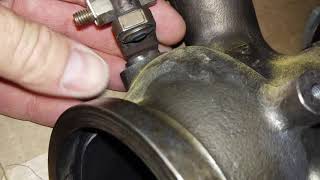
How to confirm: Visually inspect the turbocharger wastegate actuator on the back of the engine. An inspection mirror or a smartphone camera can be very helpful. Check if the actuator's control rod is disconnected from the small arm on the turbo housing. If it's dangling, the e-clip is missing.
Typical fix: Install the Ford service kit (K2GZ-9G488-B) which includes a new actuator, rod, and clips. While some owners in forums report using a generic e-clip or a spring as a temporary fix to reduce rattle or hold the arm, the official and most reliable repair involves the full kit.
Est. part cost: $65-$120 for the OEM service kit. - Inoperative Wastegate Actuator 🟡 Medium Probability The electronic actuator itself can fail internally, which is also a known issue covered by Ford's TSBs. This can be due to heat, vibration, or internal electronic failure, leading to the same set of fault codes.
How to confirm: If the e-clip and rod are intact but the vehicle has the same symptoms and codes, the actuator is the likely cause. A bi-directional scan tool can command the actuator to move to test its function. If it doesn't respond, it has failed. A multimeter can also be used to check the resistance of the internal coil.
Typical fix: Replace the wastegate actuator assembly using the Ford service kit (K2GZ-9G488-B). The entire turbocharger does not need to be replaced.
Est. part cost: $65-$120 for the OEM service kit.
Rare But Worth Checking
- Blown Fuse for Wastegate Actuator:
Diagnosis Steps
- Confirm the presence of P1464 along with other turbo-related codes like P0299 or P0243 using an OBD-II scanner.
- Allow the engine to cool completely before inspection. The turbocharger and exhaust components become extremely hot.
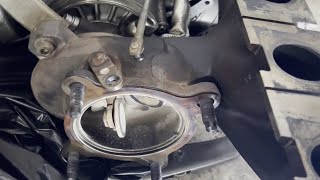
- Locate the turbocharger on the rear of the engine, below the intake manifold. Access is tight, and it's often best viewed from below the vehicle or from the passenger side wheel well.
- Visually inspect the electronic wastegate actuator mounted on the turbo. Use a bright light and an inspection mirror or a borescope/smartphone camera to get a clear view.
- Identify the actuator rod that connects the actuator to a small lever on the turbo's turbine housing.
- Check if the rod is securely connected to the lever. If it has fallen off, the e-clip is missing. This is the most common failure.
- If the rod is connected, check for excessive play in the linkage or damage to the actuator itself. Some owners report adding a small spring to reduce rattling from a loose (but not disconnected) linkage, though this is a separate issue from the P1464 limp mode condition.
- If the linkage is intact, use a bi-directional scan tool (like FORScan or Ford IDS) to command the wastegate actuator through its range of motion 🎬 Watch: How to diagnose wastegate failure and test the actuator. to verify its electronic function.
- If the clip is missing or the actuator is confirmed to be faulty, proceed with the repair using the specified service kit.
Parts You'll Likely Need
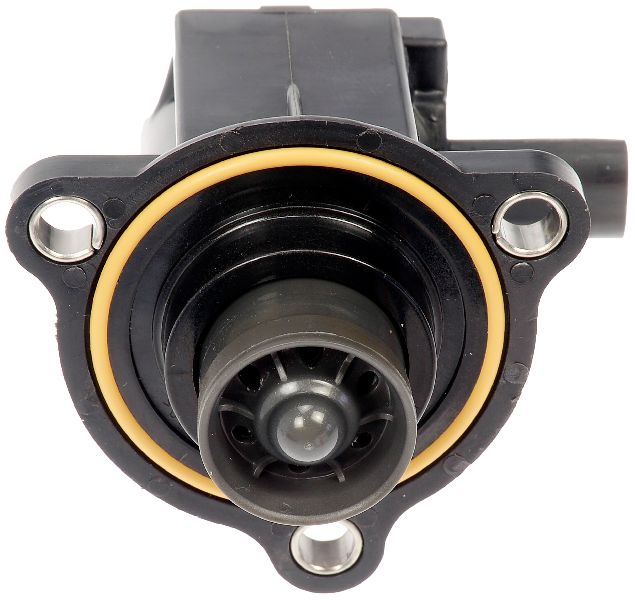
- Turbocharger Wastegate Actuator Service Kit
(OEM #K2GZ-9G488-B)— This is the official Ford-released part to fix the known issue of a missing e-clip or failed actuator, as per TSBs SSM 49427 and SSM 50171. It includes the actuator, rod, and necessary clips.
Trusted brands: Motorcraft (OEM)
OEM price range: $65-$120.
Aftermarket price range: N/A
Related Codes That Often Appear With This One
- P0299 — Turbocharger/Supercharger Underboost. This is a primary code indicating the turbo is not producing the commanded amount of boost, often because the wastegate is stuck open from the disconnected rod.
- P0243 — Turbocharger Wastegate Solenoid 'A' Malfunction. This points directly to an electrical or mechanical fault in the wastegate actuator circuit.
- P02AB — Turbocharger/Supercharger Boost Control 'A' Position Exceeded Learning Limit. This code is set when the PCM can't control the wastegate position as expected. [TSB SSM 50171]
- P25B3 — Turbocharger Wastegate 'A' Control - Position Sensor Performance. This indicates a problem with the sensor that reports the wastegate's position to the PCM. [TSB SSM 50171]
Technical Service Bulletins (TSBs) & Recalls
- SSM 50171: Lack of power with various DTCs including P1464 due to an inoperative wastegate actuator, missing e-clip, or damaged rod. Affects Edge, Nautilus, Ranger, Escape, Corsair, Explorer, and Bronco Sport.
- SSM 49427: Lack of power with various DTCs including P1464 due to a missing wastegate actuator e-clip. Notes the release of service kit K2GZ-9G488-B for Edge/Nautilus/Escape/Corsair.
Platform-Specific Known Issues
- Ford has issued Technical Service Bulletins (SSM 50171 and SSM 49427) for 2019-2021 Edge models with the 2.0L EcoBoost engine that exhibit a lack of power and set code P1464 along with other turbo codes.
- The bulletins identify the cause as a missing wastegate actuator e-clip, an inoperative actuator, or non-visible damage to the actuator rod.
- The TSBs explicitly state that the entire turbocharger assembly should not be replaced 🎬 See why you shouldn't replace the whole turbo for P0299. for this specific issue.
Mechanic-Grade Diagnostic Values
- Wastegate Actuator Solenoid Coil Resistance — expected: 5 Ω to 30 Ω (some manuals specify a tighter range, like 20 Ω ± 5 Ω).. Failure: A reading of infinite resistance (open circuit) or near-zero resistance (short circuit) indicates a failed coil.
- Voltage Supply at Actuator Connector — expected: ~11-14 Volts (Battery Voltage) on the power supply pin with Key On, Engine Off.. Failure: No voltage or significantly low voltage points to a problem in the wiring, fuse, or PCM supply circuit.
- Ground Continuity at Actuator Connector — expected: Near 0 Ω resistance between the ground pin on the harness connector and a known good chassis ground.. Failure: High resistance indicates a poor ground connection at a point like G100/G101.
Hidden / Shadow Codes Worth Checking
- P0243-68: The '-68' is a status byte often seen in FORScan or dealer-level tools. It provides more specific information about the nature of the P0243 fault, such as 'event information'. While not a separate code, its presence confirms a logged fault event in the module's memory. (see via Advanced OBD-II scanner like FORScan or Ford's Integrated Diagnostic System (IDS).)
Scan Tool Commands That Help
- FORScan or Ford IDS: Output State Control / Actuator Self-Test / Turbocharger Test — Use this command with the engine off to electronically cycle the wastegate actuator through its full range of motion. This is the definitive way to confirm if the actuator is mechanically stuck, slow, or electronically non-responsive, even if the linkage appears intact visually.
Wiring & Ground Locations
- Wastegate Actuator Connector — On the electronic wastegate actuator itself, mounted to the turbocharger assembly on the rear of the engine.. This is the primary connection point for all voltage and resistance tests of the actuator. The harness in this high-heat area is susceptible to melting or corrosion, which can cause the fault.
- G100 / G101 — These are primary engine grounds, typically located on the left side of the engine or engine compartment.. A loose or corroded connection at these main ground points can cause a voltage drop or open circuit for numerous components, including the wastegate actuator's control circuit, leading to erratic operation or failure.
- G105 — Located in the left front of the engine compartment, often near the battery junction box.. Serves various components in the front of the engine bay. Verifying its integrity is a key step when diagnosing any electrical fault in this area that could affect the PCM or related circuits.
Real Owner Repair Stories
- Ford Edge Forum user 'edjunior' (2020 Ford Edge SEL AWD 2.0L EcoBoost) — Wrench light came on during acceleration, followed by a permanent Check Engine Light. Vehicle had significantly reduced power and cruise control was inoperative. FORScan showed codes P0243-68 and P0299-EB.
❌ Tried (didn't work) The user did not report trying any fixes themselves, and took the vehicle to the dealer for diagnosis.
✅ What actually fixed it The Ford dealer diagnosed the issue as a failed 'wastegate solenoid' and replaced the entire electronic actuator assembly under the powertrain warranty. The part replaced was confirmed to be the actuator motor assembly, consistent with part number K2GZ-9G488-B.
OEM Part Supersession History
K2GZ-9G488-B→No supersession found. This part number remains current.— N/A
Heads up: This part is the standard service kit for a wide range of Ford/Lincoln vehicles with the 2.0L EcoBoost engine from ~2019-2025+, including the Edge, Bronco Sport, Maverick, and Lincoln Corsair/Nautilus, indicating a common design.
Model Year Variations Within This Range
- 2019-2021: No significant variations have been documented for this specific P1464/P0299 issue within this year range. The cause (missing e-clip or failed actuator) and the corrective part (K2GZ-9G488-B) are consistent across these model years according to TSBs and parts catalogs.
Helpful Videos



Used OEM Parts in Stock
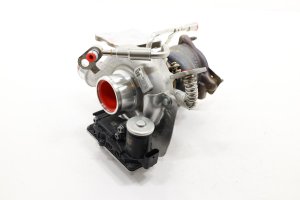

New Aftermarket Parts Available


The information in this article is provided for general reference and educational purposes only. Vehicle specifications, procedures, and part compatibility can vary by production date, trim level, and region. Always consult your vehicle's factory service manual and verify part numbers before purchasing or performing repairs. Safety-critical components such as airbags, seat belts, and braking systems should be installed by a qualified professional.
- Ford EDGE:
- 🎬 Helpful Videos
- 🛍️ Shop This Part
- What's Unique About the 2019-2021 Ford EDGE
- Diagnostic Flowchart
- Symptoms You May Notice
- Most Likely Causes
- Rare But Worth Checking
- Diagnosis Steps
- Parts You'll Likely Need
- Related Codes That Often Appear With This One
- Technical Service Bulletins (TSBs) & Recalls
- Platform-Specific Known Issues
- Mechanic-Grade Diagnostic Values
- Hidden / Shadow Codes Worth Checking
- Scan Tool Commands That Help
- Wiring & Ground Locations
- Real Owner Repair Stories
- OEM Part Supersession History
- Model Year Variations Within This Range
- 🎟️ Get 5% Off