

P1457 on 1999-2003 Acura TL: EVAP Canister Leak Causes and Fixes
This code almost always points to a failed EVAP Canister Vent Solenoid (also called a Canister Vent Shut Valve) located under the car near the driver's side rear wheel. The valve's metal body rusts and separates from its plastic housing, creating a leak. Expect to pay $45-$75 for an aftermarket valve and be prepared for a difficult repair due to rusted mounting screws that often need to be drilled or cut out.
- P1457 means the leak is in the EVAP canister area, not the gas cap.
- The most likely part you'll need to replace is the EVAP Canister Vent Solenoid (Valve).
- This valve is located under the car, near the driver's side rear wheel.
- Be prepared for a difficult fight with the two small screws holding the valve; they are almost always rusted solid and may need to be drilled out.
- This is a very common problem on many Honda and Acura models from this era, especially in areas that use road salt.
What's Unique About the 1999-2003 Acura TL
Honda and Acura vehicles of this era use a sophisticated diagnostic strategy that splits EVAP leaks into two codes. P1456 indicates a leak on the fuel tank side (often a loose gas cap), while P1457 specifically points to the canister side. This is more precise than the generic P04xx codes on many other vehicles and helps narrow down the search for the leak. On the 1999-2003 TL, the canister assembly is mounted under the car, exposing the vent solenoid to road salt and moisture. Honda explicitly acknowledged this in TSB 03-001, stating that salty water corrodes the solenoid windings, leading to failure, particularly in 'snowbelt' regions.
Diagnostic Flowchart
Tap your situation to follow the diagnostic path that matches what you're seeing on this vehicle.
Symptoms You May Notice
- Check Engine Light is on
- Possible faint smell of fuel around the rear of the vehicle
- Difficulty refueling (gas pump nozzle clicks off repeatedly), though this is less common
- Replacing the gas cap. A faulty gas cap on this vehicle will cause code P1456, not P1457.
- Replacing the EVAP Purge Solenoid. The purge solenoid is located in the engine bay and typically sets different codes when it fails, such as P0443.
Most Likely Causes
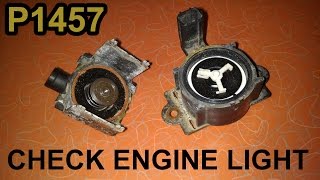
- Failed EVAP Canister Vent Solenoid / Vent Shut Valve 🔴 High Probability The valve is located under the car by the driver's side rear wheel, where it is highly susceptible to corrosion from road salt and moisture. The metal bracket of the valve rusts and expands, breaking the seal with the plastic solenoid body, causing a leak. This is the most common failure point by a wide margin.
How to confirm: Visually inspect the valve for heavy rust, especially a visible gap or flaking between the metal and plastic sections. You can test it by applying 9-12V power to its terminals; you should hear a distinct click. If it doesn't click, or if it's visibly rusted apart, it has failed. A smoke test will show smoke billowing from the valve body itself. The solenoid coil should have a resistance between 20 and 30 ohms.
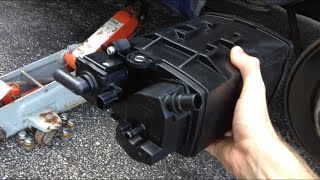
Typical fix: Replace the Canister Vent Solenoid. The two Phillips mounting screws are notoriously rusted solid and may need to be soaked in penetrating oil, clamped with vice-grips, or drilled out. Many owners find it easier to remove the entire canister assembly (one 12mm bolt and a hook) to work on the screws on a bench. 🎬 Watch this step-by-step replacement walkthrough for the 2002 TL.
Est. part cost: $45-$75 - Failed EVAP Two-Way or Bypass Solenoid Valve 🟡 Medium Probability Like the vent solenoid, these valves are mounted on the canister assembly and can fail over time, though less frequently. A smoke test may reveal a leak from one of these valves instead of the main vent solenoid.
How to confirm: A smoke test is the most effective way to confirm a leak from one of these valves. The Bypass Solenoid can be tested for resistance and should read approximately 35 ohms. The Two-Way valve can be tested with a hand vacuum pump; it should open at a pressure of 1.33 kPa.
Typical fix: Replace the specific valve that has failed. The OEM part number for the Two-Way Valve is 17371-S84-A01.
Est. part cost: $50-$100 - Cracked or Rusted EVAP Canister ⚪ Low Probability The canister body is plastic, but the metal plates and brass threaded inserts for the valve screws can rust or break, causing cracks and leaks. This can happen if excessive force is used trying to remove rusted screws.
How to confirm: A smoke test will show smoke leaking directly from the canister body or its seams. Visual inspection may reveal cracks or severe rust around the valve mounting points.
Typical fix: Replace the entire EVAP canister assembly. Often, the valves are replaced at the same time.
Est. part cost: $150-$250 - Cracked or Disconnected EVAP Hoses ⚪ Low Probability
How to confirm: Visually inspect all rubber hoses connected to the EVAP canister for cracks, brittleness, or loose connections. A smoke test will quickly reveal leaks from a damaged hose.
Typical fix: Replace the damaged section of hose.
Est. part cost: $10-$30
Rare But Worth Checking
- Failed Powertrain Control Module (PCM): Extremely rare, but officially acknowledged by Honda in TSB 03-001. A severely corroded EVAP solenoid can short-circuit internally, damaging the driver circuit within the PCM. This should only be considered after a new, known-good solenoid fails to actuate (click) when commanded by a scan tool or when installed.
Diagnosis Steps
- Verify the code is P1457 using an OBD-II scanner.
- Safely lift the rear of the vehicle and locate the EVAP canister assembly in front of the driver's side rear wheel.
- Visually inspect the Canister Vent Solenoid (CVS) valve. Look for a seam of rust between the metal bracket and the plastic body; this is the most common failure.
- If the CVS valve looks bad, plan to replace it. It's often easier to remove the entire canister assembly first. It is held by one 12mm bolt and a metal hook. Disconnect the hoses and electrical connector, then remove the assembly to a workbench.
- Attempt to remove the two Phillips screws holding the CVS valve. Expect them to be seized. Soak them in penetrating fluid, use a high-quality screwdriver, or resort to locking pliers (vice-grips). As a last resort, the screw heads may need to be drilled off.
- If the valve's condition is uncertain, test its coil resistance. It should be between 20-30 Ohms. With a bi-directional scanner, you can command the valve closed to see if it functions.
- If the valve appears functional or if replacing it does not solve the code, perform a smoke test on the canister system to find the source of the leak. Introduce smoke and look for leaks from hoses, the canister body, or the other valves on the assembly.
- Before replacing any part, check for power and ground at its electrical connector to rule out a wiring issue. The service manual provides detailed continuity and voltage checks, including checking specific pins at the PCM connectors. 🎬 Watch a pro mechanic diagnose and repair the shut valve.
Parts You'll Likely Need
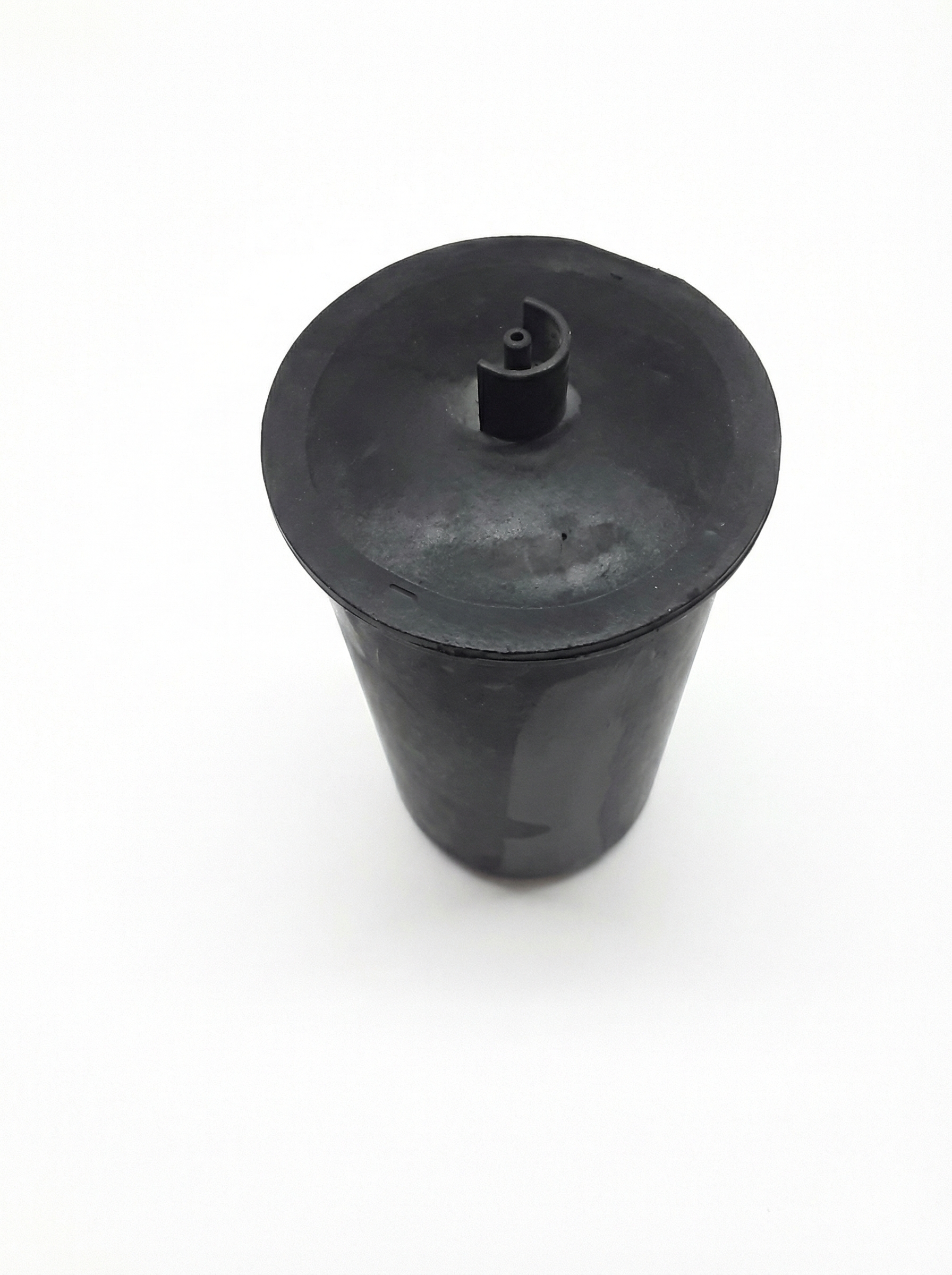
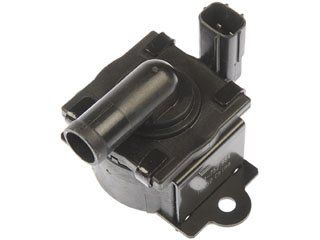
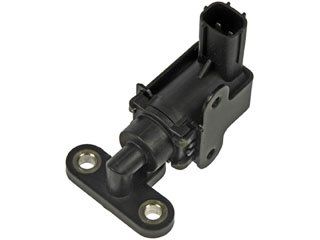
- EVAP Canister Vent Solenoid / Vent Shut Valve
(OEM #17310-S0X-A02)— This is the most frequent cause of P1457 due to its exposure to road elements, leading to rust that breaks the valve's seal. This part supersedes older numbers including 17310-S84-A01 and 17310-S84-A02.
Trusted brands: Dorman (911-762), Standard Motor Products (CVS78), Wells, Acura (OEM)
OEM price range: $70-$100
Aftermarket price range: $45-$75 - Vent Solenoid Mounting Screws
(OEM #93893-05010-08)— The original screws are almost guaranteed to be rusted solid and will likely be destroyed during removal. Having replacements on hand is critical to finishing the job. Two are required.
Trusted brands: Honda/Acura (OEM)
OEM price range: $2-$5 each
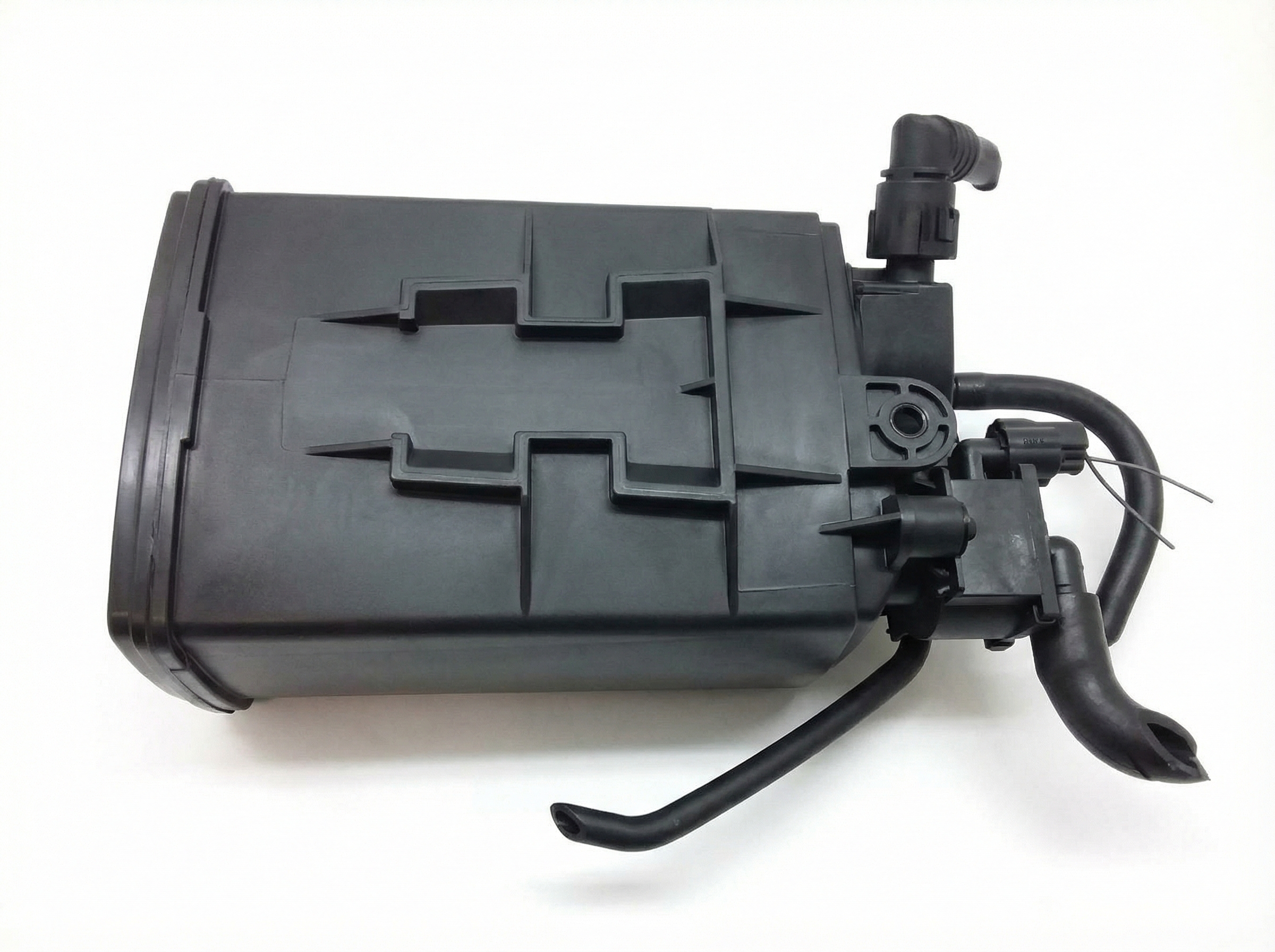
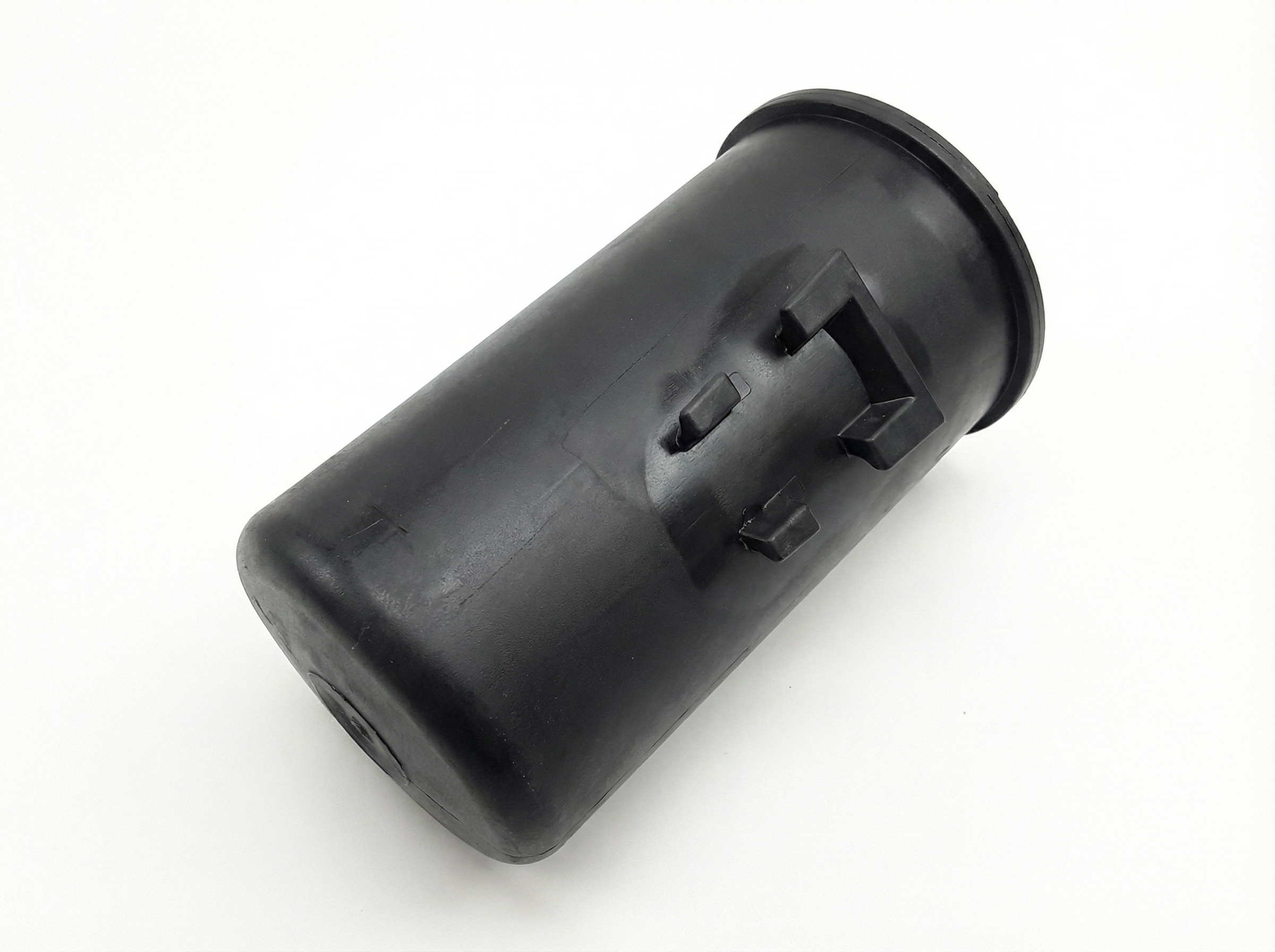
Aftermarket price range: $1-$3 each - EVAP Canister Assembly
(OEM #17011-S84-A00)— Replaced if the canister body itself is cracked or if the brass inserts for the solenoid screws are damaged during a difficult removal.
Trusted brands: Dorman, Standard Motor Products, Acura (OEM)
OEM price range: $220-$280
Aftermarket price range: $150-$200
Technical Service Bulletins (TSBs) & Recalls
- B99-040: "Updates the troubleshooting procedures for DTC P1456 (EVAP Control System Leakage [Fuel Tank System]) and DTC P1457 (EVAP Control System Leakage[EVAP Canister System])."
- 03-001 (January 2003): Titled 'MIL Comes On With DTC P1457: EVAP Bypass Solenoid Valve Failure'. This bulletin explicitly identifies the cause as corrosion within the solenoid valve due to water and road salt, especially in snowbelt regions. It also notes that in rare cases, a severe internal short can damage the ECM/PCM.
Platform-Specific Known Issues
- The two Phillips screws (Part # 93893-05010-08) holding the vent solenoid to the canister are notoriously prone to rusting into their brass inserts. It is highly recommended to soak them in penetrating oil for an extended period before attempting removal. Many owners report needing to use vice-grips on the screw heads or drilling them out completely. Applying anti-seize to the new screws is recommended.
Mechanic-Grade Diagnostic Values
- EVAP Canister Vent Solenoid (CVS) coil resistance — expected: 20 - 30 Ohms. Failure: Reading is outside of this range (open or shorted).
- EVAP Bypass Solenoid coil resistance — expected: ~35 Ohms. Failure: Reading is significantly different from 35 Ohms.
- EVAP Canister Purge Valve coil resistance — expected: ~33 Ohms at room temperature. Failure: Reading is significantly different from 33 Ohms.
- EVAP Two-Way Valve function test (vacuum) — expected: Valve opens at 1.33 kPa.. Failure: Valve does not open at the specified pressure or does not hold vacuum.
- Fuel Tank Pressure (FTP) Sensor voltage (baseline) — expected: 2.45 V - 2.55 V with gas cap off (at atmospheric pressure).. Failure: Voltage is outside this range, indicating a sensor or wiring issue.
Hidden / Shadow Codes Worth Checking
- TID$2D: Indicates a failure of the large leak self-test. This often points to a completely failed solenoid that won't actuate or a major disconnection. (see via Advanced scan tools (like Honda HDS or equivalent) that can display OBD self-test information or Mode 6 data.)
- TID$2E: Indicates a failure of the small leak self-test. This is the most common test failure for P1457, typically caused by a component that won't hold vacuum, like a rusted vent solenoid. (see via Advanced scan tools (like Honda HDS or equivalent) that can display OBD self-test information or Mode 6 data.)
- TID$2F: Indicates a failure due to a restriction in the EVAP canister vent path. This could be a vent solenoid stuck closed or, more rarely, a blockage in the vent tube (e.g., from insects). (see via Advanced scan tools (like Honda HDS or equivalent) that can display OBD self-test information or Mode 6 data.)
Scan Tool Commands That Help
- Honda HDS (or equivalent bidirectional scanner): EVAP FUNCTION TEST — This is the initial overall system test recommended by Acura TSBs. It runs a system self-test to confirm if a fault is currently present before beginning manual troubleshooting.
- Honda HDS (or equivalent bidirectional scanner): SINGLE SOLENOID > BYPASS SOLENOID (ON/OFF) — Used to manually command the bypass solenoid to check for an audible click and to seal the system for further vacuum testing as outlined in service procedures.
- Honda HDS (or equivalent bidirectional scanner): MULTI SOLENOIDS > CVS ON — Used to command the Canister Vent Shut (CVS) valve closed. This is a critical step before performing a smoke or vacuum test on the canister system to ensure the system is sealed from the atmosphere.
Wiring & Ground Locations
- PCM Connector A, Pin A3 — At the Powertrain Control Module (PCM), typically located behind the center console.. This pin controls the EVAP Bypass Solenoid Valve. Service procedures require grounding this pin to manually test the valve's function, helping to isolate a faulty valve from a wiring problem.
- PCM Connector B, Pin B2 — At the Powertrain Control Module (PCM).. This pin controls the EVAP Canister Purge Valve in the engine bay. While not the primary cause for P1457, checking continuity from the valve connector to this pin is part of a comprehensive electrical diagnosis.
- Ground Distribution Schematics — Referenced in the official service manual.. The EVAP solenoids require a solid ground to function. A corroded or loose ground point can cause intermittent or total failure. A technician would use the ground distribution diagrams to locate the specific ground point (e.g., G401, G402) that serves the EVAP components to test for high resistance.
Real Owner Repair Stories
- 2CarPros Forum User (1998 Honda Accord (similar EVAP system)) — Check Engine Light with code P1457.
❌ Tried (didn't work) The user had previously battled and fixed a P1456 code by replacing the two-way valve, bypass solenoid, cracked hoses, and the EVAP canister itself.
✅ What actually fixed it The user was still diagnosing P1457, but made a critical observation: after fixing P1456, they felt pressure release from the gas cap. Once P1457 appeared, that pressure was gone, confirming a new leak had developed on the canister side of the system, validating the code's accuracy. The recommended next step was a smoke test. - Honda Civic Forum User (2002 Honda Civic LX (similar EVAP system)) — Initially had P1456, then P1457 appeared after a repair.
❌ Tried (didn't work) Replaced the vapor canister vent solenoid with an aftermarket Dorman part to fix a P1456 code.
✅ What actually fixed it The P1456 was resolved, but a new P1457 code appeared shortly after. The user noted the electrical connector on the new aftermarket solenoid did not fit securely. This highlights a case where the initial repair attempt on one component may have been faulty or incomplete, leading to a related but different code. The next step was to investigate the purge solenoid valve on the canister.
OEM Part Supersession History
17310-S84-A01, 17310-S84-A02→17310-S0X-A02— Part consolidation and potential design updates by the manufacturer over time.
Heads up: The newer part number (17310-S0X-A02) is the correct service replacement for the 1999-2003 TL. Using older stock or incorrect variations may lead to fitment or function issues.17310-S84-L02→17310-S84-L31— Part revision by manufacturer.
Heads up: This part is listed for the canister on some 2003 TL models but is different from the more common S0X-A02 valve. It is critical to verify the correct part is on the vehicle before ordering a replacement.
Helpful Videos
Used OEM Parts in Stock
New Aftermarket Parts Available



The information in this article is provided for general reference and educational purposes only. Vehicle specifications, procedures, and part compatibility can vary by production date, trim level, and region. Always consult your vehicle's factory service manual and verify part numbers before purchasing or performing repairs. Safety-critical components such as airbags, seat belts, and braking systems should be installed by a qualified professional.
- Acura TL:
- 🎬 Helpful Videos
- 🛍️ Shop This Part
- What's Unique About the 1999-2003 Acura TL
- Diagnostic Flowchart
- Symptoms You May Notice
- Most Likely Causes
- Rare But Worth Checking
- Diagnosis Steps
- Parts You'll Likely Need
- Technical Service Bulletins (TSBs) & Recalls
- Platform-Specific Known Issues
- Mechanic-Grade Diagnostic Values
- Hidden / Shadow Codes Worth Checking
- Scan Tool Commands That Help
- Wiring & Ground Locations
- Real Owner Repair Stories
- OEM Part Supersession History
- 🎟️ Get 5% Off