

P1451 on 1998-2002 Lincoln Navigator 5.4L: EVAP Vent Solenoid Circuit Malfunction Causes and Fixes
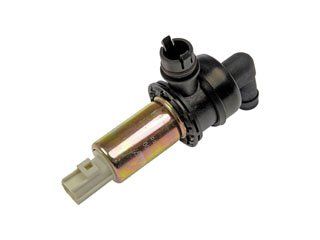
On a 1998-2002 Lincoln Navigator, code P1451 almost always points to a failed EVAP canister vent solenoid (Motorcraft P/N F75Z-9F945-CA) or its electrical connector. The part is located under the vehicle near the spare tire and is a common failure item due to corrosion from road debris and moisture. Expect to pay $50-$90 for a new solenoid, with a DIY difficulty of 2/5.
- P1451 is an electrical circuit code, not a leak code. Don't waste money on a new gas cap.
- The problem is almost certainly the EVAP vent solenoid (Motorcraft F75Z-9F945-CA) or its connector/wiring, located at the rear of the vehicle by the spare tire.
- Before ordering parts, inspect the wiring and connector for corrosion or damage, as you may need a new pigtail connector (Motorcraft WPT-1080) in addition to the solenoid.
- This is a very DIY-friendly repair that can be done with basic hand tools and a multimeter in about an hour.
- Test the solenoid with a multimeter before replacing; it should read between 48 and 65 ohms.
What's Unique About the 1998-2002 Lincoln Navigator
The first-generation Lincoln Navigator (UN173) shares its platform and many components with the 1997-2002 Ford Expedition and 1997-2003 Ford F-150. On these trucks, the EVAP canister and vent solenoid are mounted under the rear of the vehicle, often directly on the frame rail near the spare tire. This placement exposes them to road salt, water, and debris kicked up by the tires. This constant exposure makes the electrical connector and the solenoid itself highly susceptible to corrosion, leading to the P1451 circuit fault more frequently than on vehicles where these components are better protected.
Symptoms You May Notice
- Check Engine Light is on.
- Inability to pass a state emissions test.
- Difficulty refueling (gas pump clicks off repeatedly).
- Slight fuel odor near the rear of the vehicle if the valve is stuck open.
- Replacing the gas cap. A bad gas cap typically causes leak-related codes (like P0442 or P0455), not a circuit-specific code like P1451.
- Replacing the EVAP purge valve/solenoid. The purge valve is located in the engine bay and has its own diagnostic codes (like P0443). P1451 specifically refers to the vent solenoid circuit at the rear of the vehicle.
Most Likely Causes
- Failed EVAP Canister Vent Solenoid 🔴 High Probability The solenoid is located under the vehicle near the spare tire, where it is exposed to moisture and road salt, leading to internal corrosion and electrical failure.
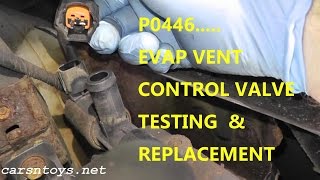
How to confirm: Disconnect the solenoid and measure the resistance between its two pins using a multimeter. The expected resistance is typically between 48 and 65 ohms. 🎬 Watch: How to test and replace the vent control valve A reading that is significantly higher (open circuit) or lower (short circuit) confirms the solenoid has failed. You can also apply 12V directly to the solenoid terminals and listen for an audible 'click'; no click means it's seized.
Typical fix: Replace the EVAP canister vent solenoid. The part is often mounted directly to the charcoal canister or on a nearby bracket.
Est. part cost: $50 - $90 - Corroded or Damaged Vent Solenoid Connector/Wiring 🟡 Medium Probability Due to its location, the wiring harness connector for the vent solenoid is prone to corrosion, which can cause a poor connection or an open circuit. Wires can also become brittle and break. On F-150 platform mates, the harness is known to rub against the frame, causing shorts.
How to confirm: Visually inspect the electrical connector and nearby wiring for green or white corrosion, broken plastic, or frayed wires. With the key on, engine off, check for battery voltage at the power wire in the connector (often a Red or Red/Yellow wire). If power is present, the issue is likely the solenoid or the ground control wire running to the PCM.
Typical fix: Clean the connector terminals with a small brush and electrical contact cleaner. If corrosion is severe, the connector may need to be cut out and a new pigtail (e.g., Motorcraft WPT-1080) spliced in. Repair any broken or broken or chafed wires, ensuring the repair is sealed against moisture.
Est. part cost: $15 - $40 for a new pigtail connector
Rare But Worth Checking
- Damaged Powertrain Control Module (PCM): This is extremely rare. Before condemning the PCM, all other possibilities, including the solenoid, wiring, and connectors, must be exhaustively tested and ruled out. A PCM failure is a last resort diagnosis.
Diagnosis Steps
- Retrieve the trouble code with an OBD-II scanner to confirm P1451 is present.
- Locate the EVAP canister and vent solenoid under the vehicle, typically mounted to the frame rail near the spare tire.
- Visually inspect the electrical connector and wiring going to the vent solenoid. Look for any signs of corrosion (green/white powder), damage, or loose connections. Pay close attention to where the harness may rub on the frame.
- If the connector is corroded, disconnect it and clean the terminals. If it's severely damaged, it will need to be replaced with a pigtail like the Motorcraft WPT-1080.
- If the wiring looks good, disconnect the solenoid and use a multimeter to test its internal resistance. A reading between 48-65 ohms is expected. If the reading is infinite (open) or near zero (short), the solenoid is bad and must be replaced.
- If the solenoid tests good, check for power at the connector. Turn the ignition to the 'ON' position (engine off). One of the pins in the connector (usually Red) should have battery voltage (~12V) relative to a good chassis ground.
- If there is no voltage, there is a problem in the power supply wire (VPWR circuit) between the fuse box and the connector.
- If voltage is present and the solenoid is good, the problem may lie in the ground control wire running back to the PCM, or, rarely, the PCM itself. Check this wire for continuity back to the PCM connector.
Parts You'll Likely Need
- EVAP Canister Vent Solenoid
(OEM #F75Z-9F945-CA)— This solenoid is the most common failure point for a P1451 code due to its exposed location leading to internal electrical failure from corrosion.
Trusted brands: Motorcraft (F75Z-9F945-CA), Standard Motor Products (CVS24), Dorman (911-106)
OEM price range: $70-$120
Aftermarket price range: $50-$90 - EVAP Vent Solenoid Connector Pigtail
(OEM #WPT-1080)— The original connector often becomes brittle and corroded, breaking upon removal or failing to make a good electrical connection. Replacing it is a common part of the repair.
Trusted brands: Motorcraft (WPT-1080), Dorman, Standard Motor Products
OEM price range: $30-$45
Aftermarket price range: $15-$30
Platform-Specific Known Issues
- Owners frequently report that the electrical connector for the vent solenoid becomes extremely corroded, sometimes breaking apart upon removal. It is wise to inspect the connector before ordering parts, as a new pigtail may also be needed.
- Real Owner Experience: On the Ford F-150 Forum, a user with a 2001 5.4L experiencing P1451 found that a previous repair to the harness where it rubbed on the frame was done improperly without weather-proof splices. After re-doing the repair correctly, the code was resolved. This highlights the importance of checking the full length of the harness for chafing and using sealed connectors for any repairs.
- Real Owner Experience 2: A user on the Ford Truck Enthusiasts forum chased a P1451 code on their Expedition, replacing two solenoids to no avail. The ultimate culprit was a wire for the solenoid that had rubbed through its insulation on a metal bracket underneath the air filter box in the engine bay, causing an intermittent short.
Mechanic-Grade Diagnostic Values
- EVAP Canister Vent Solenoid Resistance — expected: 48 - 65 Ohms. Failure: A reading of infinite ohms (open circuit) or near-zero ohms (short circuit) indicates a failed solenoid.
- Voltage at Solenoid Connector Power Wire (Key On, Engine Off) — expected: ~12 Volts (Battery Voltage). Failure: Significantly less than 12V (e.g., 2.6V) or 0V indicates an open or high-resistance in the VPWR power supply circuit, possibly from a corroded wire or connector.
- Voltage at Solenoid Connector Control Wire (Back-probed, Key On, Engine Off) — expected: ~12 Volts (Battery Voltage). Failure: A reading of 0V suggests the wire is shorted to ground. This test confirms the solenoid coil is not open, as voltage must pass through it.
- Voltage at Solenoid Control Wire (Commanded ON with Scan Tool) — expected: Near 0 Volts. Failure: If the voltage does not drop from ~12V to ~0V when commanded, it indicates a faulty PCM driver, a break in the control wire to the PCM, or a faulty scan tool command.
- Scan Tool Live Data PID 'EVAPCV' — expected: 0% (Solenoid Open) to 100% (Solenoid Closed). Failure: The PCM sets P1451 when the measured voltage on the circuit does not match the expected voltage for the commanded duty cycle (EVAPCV PID value).
Scan Tool Commands That Help
- Ford IDS, Forscan, or other professional bidirectional scanner: EVAP Canister Vent Solenoid ON/OFF Command or Duty Cycle Control — This is a critical diagnostic step after verifying power and resistance. It directly tests the PCM's ability to control the circuit. By commanding the solenoid on and off, a technician can listen for a click, feel for actuation, and watch the voltage on the control wire drop to zero, confirming the PCM driver and wiring integrity are good.
Wiring & Ground Locations
- Vent Solenoid Power Wire — Runs from a power source (fuse box, VPWR circuit) to the vent solenoid connector at the rear of the vehicle. Often Red or Red/Yellow.. This wire is known to chafe or corrode, causing an open circuit and a loss of power to the solenoid, which is a direct cause of P1451.
- Vent Solenoid Control Wire — Runs from the vent solenoid connector directly to a specific pin on the Powertrain Control Module (PCM). Wire color varies by year and model.. This wire provides the ground path switched by the PCM. A break or short in this wire will prevent the PCM from controlling the solenoid and will set a P1451 code.
- Potential Chafe Point under Air Filter Housing — In the engine bay, the wiring harness that runs to the rear of the truck passes under or near the air filter housing. On similar F-150 platforms, this harness can rub on a metal bracket.. A confirmed cause of P1451 on a platform mate was a power wire that had rubbed through its insulation at this location, causing an intermittent open/short. It's a non-obvious location to inspect for a rear-mounted component.
Real Owner Repair Stories
- Ford F150 Forum (1999 Ford F-150 4.2L V6) — P1451 code present.
❌ Tried (didn't work) Initial visual inspection of wiring near the solenoid.
✅ What actually fixed it The red power wire for the vent solenoid was found to be cut/chafed. It had rubbed through on a bracket located under the air filter housing in the engine compartment. Repairing the wire at that location resolved the code. - YouTube video by 'danny p' (1997 Ford F-150 5.4L) — Check Engine Light with code P1451.
❌ Tried (didn't work) The owner had been ignoring the light until an inspection was due.
✅ What actually fixed it The electrical connector for the vent solenoid was the point of failure. One of the pins in the connector had corroded and broken off, and the inside of the connector was filled with green corrosion, preventing any electrical contact. The fix required replacing both the vent solenoid and the connector pigtail.
OEM Part Supersession History
F75Z-9F945-BA→F75Z-9F945-CA— Part revision by manufacturer.
Heads up: The new part number (F75Z-9F945-CA) is the correct direct replacement for the original.
Diagnostic Flowchart
Used vs. New Parts: Buying Guide for This Vehicle
When a used part is the smart pick: Generally not recommended. The primary failure modes are internal corrosion and electrical failure due to exposure to the elements. A used part carries a high risk of having the same issue or a very short remaining life. Only consider a used part if it is from a verifiable low-mileage, dry-climate donor vehicle and can be tested before purchase.
Donor-vehicle mileage cap: roughly under 75000 miles for the part to have meaningful remaining life.
What to inspect on the donor part:
- Visually inspect for zero rust or corrosion on the solenoid's metal and plastic body.
- Ensure electrical pins are bright, clean, and not corroded.
- The plastic housing should be intact, not brittle or cracked.
- If possible, test with a multimeter before buying. Resistance must be within the 48-65 Ohm specification.
Aftermarket brands forum-validated for this vehicle:
- Motorcraft
- Standard Motor Products (SMP)
- Dorman
Real Owner Stories
Aggregated from forums and TSBs cited above. Mileages and costs reflect what owners reported in those sources.
2000 Lincoln Navigator
Symptoms: Check Engine Light with DTC P1451.
What fixed it: The original poster did not report a final fix after replacing the canister and solenoid failed to resolve the issue. The thread suggested the problem was likely electrical, with another user finding a solution in a corroded/exposed wire.
Cost: $174.38
Source hint: Ford Truck Enthusiasts Forums - 2000 Navigator trouble code P1451
2001 Ford F-150 5.4L
Symptoms: P1451 code persisted after troubleshooting.
What fixed it: The owner discovered a previous, improper repair to the wiring harness where it had rubbed on the frame. Re-doing the splice with weather-proof connectors resolved the code.
Source hint: Ford F150 Forum (f150forum.com): Thread 'PLEASE HELP DTC p1451' (2013)
Ford Expedition
Symptoms: Chased a P1451 code, replacing two solenoids to no avail.
What fixed it: The ultimate culprit was a wire for the solenoid that had rubbed through its insulation on a metal bracket located underneath the air filter box in the engine bay.
Source hint: Ford Truck Enthusiasts Forums (ford-trucks.com): Thread 'p1451 driving me crazy' (2017)
Frequently Asked Questions
Where is the EVAP vent solenoid located on my 1999 Lincoln Navigator?
What is the correct resistance for the vent solenoid on my 5.4L V8?
The electrical connector for my vent solenoid is corroded and broke. What part do I need to fix it?
I replaced the vent solenoid, but the P1451 code came back. What should I check next?
Is the P1451 code a common problem on other Ford trucks besides the Navigator?
What are the most common causes for P1451 on this vehicle?
Helpful Videos

Used OEM Parts in Stock

New Aftermarket Parts Available


The information in this article is provided for general reference and educational purposes only. Vehicle specifications, procedures, and part compatibility can vary by production date, trim level, and region. Always consult your vehicle's factory service manual and verify part numbers before purchasing or performing repairs. Safety-critical components such as airbags, seat belts, and braking systems should be installed by a qualified professional.
- Lincoln Navigator:
- 🎬 Helpful Videos
- 🛍️ Shop This Part
- What's Unique About the 1998-2002 Lincoln Navigator
- Symptoms You May Notice
- Most Likely Causes
- Rare But Worth Checking
- Diagnosis Steps
- Parts You'll Likely Need
- Platform-Specific Known Issues
- Mechanic-Grade Diagnostic Values
- Scan Tool Commands That Help
- Wiring & Ground Locations
- Real Owner Repair Stories
- OEM Part Supersession History
- Diagnostic Flowchart
- Used vs. New Parts: Buying Guide for This Vehicle
- Real Owner Stories
- 2000 Lincoln Navigator
- 2001 Ford F-150 5.4L
- Ford Expedition
- Frequently Asked Questions
- 🎟️ Get 5% Off