

P1450 on 2009-2012 Suzuki Equator: Fuel Tank Vacuum Causes and Fixes
On a 2009-2012 Suzuki Equator, code P1450 is almost always caused by a faulty EVAP Canister Vent Control Valve (Solenoid) located at the rear of the truck. It gets stuck closed due to dust and debris, causing excessive vacuum in the fuel tank. This is a well-known issue on its platform-mate, the Nissan Frontier. Expect to pay ~$70-$120 for the part, with a DIY difficulty of 2/5. A more comprehensive fix detailed in Nissan TSB NTB15-079g involves replacing the canister and valve, and can prevent
- P1450 on your Equator means the fuel tank isn't venting properly, creating excess vacuum.
- Don't start with the purge valve under the hood; the problem is almost certainly the EVAP vent control valve at the back of the truck, near the spare tire.
- The most common symptom, besides the Check Engine Light, is the gas pump clicking off constantly when you try to refuel.
- For a permanent fix, especially if you drive on dusty roads, consider replacing the entire EVAP canister along with the vent valve.
- This is a manageable DIY repair that can be done without lifting the vehicle.
What's Unique About the 2009-2012 Suzuki Equator
The Suzuki Equator is a rebadged Nissan Frontier, sharing the same engine, chassis, and emissions components. While P1450 on many other brands (like Ford) is commonly caused by a purge valve near the engine, on the Equator and Frontier (D40) platform, the issue is most often a faulty EVAP Canister Vent Control Valve at the rear of the truck. This valve is prone to getting clogged with dust and dirt, a frequent problem for these trucks that leads directly to this code. The low-mounted, forward-facing vent hose inlet is a known design flaw that allows dust and water to be ingested, especially when driving off-road or in dusty climates.
Symptoms You May Notice
- Check Engine Light is on.
- Difficulty refueling (gas pump nozzle clicks off repeatedly before the tank is full).
- A loud 'whoosh' of air rushing into the tank when you open the gas cap.
- Possible rough idle or stalling, especially after refueling.
- A 'farting' or buzzing noise from the rear of the vehicle as the system struggles to vent.
- Replacing the gas cap. While a faulty gas cap can cause other EVAP codes (like for small or large leaks), it is not a typical cause for P1450, which relates to an inability to vent existing vacuum. However, Nissan TSB NTB15-079g does recommend replacing the cap on 2011 and older models as part of the comprehensive fix.
- Immediately replacing the EVAP Purge Valve in the engine bay. This is the most common fix for P1450 on Ford vehicles, but on the Suzuki/Nissan platform, the problem is almost always the Vent Control Valve at the rear of the truck.
Most Likely Causes
- EVAP Canister Vent Control Valve (Solenoid) Stuck Closed 🔴 High Probability The valve is located at the rear of the truck, making it susceptible to contamination from road dust and debris, which causes it to jam. This is a very common failure on the Nissan Frontier (D40) platform. The original vent hose inlet is positioned in a way that encourages ingestion of dust and water.
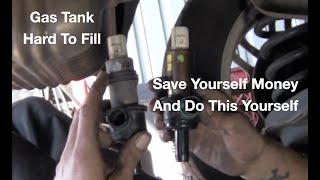
How to confirm: Locate the EVAP canister near the spare tire. The vent valve is attached to it. With the engine off, the valve should be open. You can try to command it with a capable scan tool or remove it and apply 12V power to see if the solenoid clicks and operates. A simple test is to remove the valve and try to blow through it; if no air passes, it's stuck closed and has failed. The valve twists to remove, usually counter-clockwise.
Typical fix: Replace the EVAP canister vent control valve. The valve often twists into the canister. It is a DIY-friendly repair. For a more permanent solution, consider relocating the vent hose inlet to a higher, more protected location, like behind a tail light.
Est. part cost: $70-$120 - Blocked or Clogged EVAP Canister 🟡 Medium Probability The same dust and debris that clogs the vent valve can also saturate the charcoal canister itself, blocking airflow. This is often the underlying cause of repeat vent valve failures. One owner on a forum noted their old canister was 7-8 lbs heavier than the new one due to saturation.
How to confirm: When the vent valve is removed, inspect the canister port for heavy dirt or charcoal pellets. If a smoke machine is used for diagnosis and smoke cannot pass through the canister and out the vent path (with the valve open), the canister is blocked. Shaking the canister may reveal loose charcoal sounds or dust falling out.
Typical fix: Replace the entire EVAP canister assembly. Nissan issued a TSB (NTB15-079g) for a similar code that recommends replacing the canister and valve together for a complete repair, along with a new fuel filler pipe and rerouted drain hose to prevent future contamination.
Est. part cost: $150-$250 - Kinked or Blocked EVAP Vent Hose ⚪ Low Probability The vent hose runs along the frame and can be blocked by mud or damaged during off-road use.
How to confirm: Visually inspect all rubber and plastic hoses connected to the EVAP canister and vent valve. Look for any obvious kinks, collapses, or blockages from mud or debris. The hose part number is Nissan 17226-EA000.
Typical fix: Straighten the kinked hose or replace the damaged section.
Est. part cost: $10-$30
Rare But Worth Checking
- Stuck-Open EVAP Purge Valve: While this is the most common cause on other manufacturers like Ford, it is less common on the Equator/Frontier for this specific code. The purge valve is located in the engine bay. If it sticks open, it will apply constant engine vacuum to the EVAP system. If the vent valve is also restricted, it will trigger P1450.
- Faulty Fuel Tank Pressure (FTP) Sensor: It is possible for the sensor that measures fuel tank pressure to fail and give false readings, but this is much less likely than a mechanical failure of the vent valve or canister.
Diagnosis Steps
- Read the code with an OBD-II scanner to confirm P1450 is present.
- Check for symptoms: Ask yourself if it's been difficult to refuel the truck recently. This is a hallmark symptom.
- Listen for a 'whoosh' sound when opening the gas cap after driving. This indicates a vacuum is being held.
- Locate the EVAP canister and vent control valve assembly. It is at the rear of the truck, usually above the spare tire and held by a 12mm bolt.
- Visually inspect the canister, valve, and all attached hoses for obvious damage, kinks, or blockages from mud/dirt.
- Test the Vent Control Valve. The valve is normally open when the truck is off. Disconnect the hose leading from the valve to fresh air and try to blow through it. If air cannot pass, the valve is stuck closed and is the culprit. You can also try applying 12V to the pins to see if the solenoid actuates.
- If you have a capable scan tool, you can try to command the vent valve closed and open to check for a response.
- If the vent valve seems to work but the problem persists, the charcoal canister is likely clogged with dust and should be replaced along with the valve. Consider performing the full TSB NTB15-079g repair which includes a new filler pipe and rerouted vent hose for a permanent fix.
Parts You'll Likely Need
- EVAP Canister Vent Control Valve / Solenoid
(OEM #14935-JF00E (Nissan))— This is the most common failure point for code P1450 on this platform due to its susceptibility to dust and debris contamination.
Trusted brands: Dorman (911-503), Standard Motor Products (SMP), Hitachi, TRQ
OEM price range: $100-$150
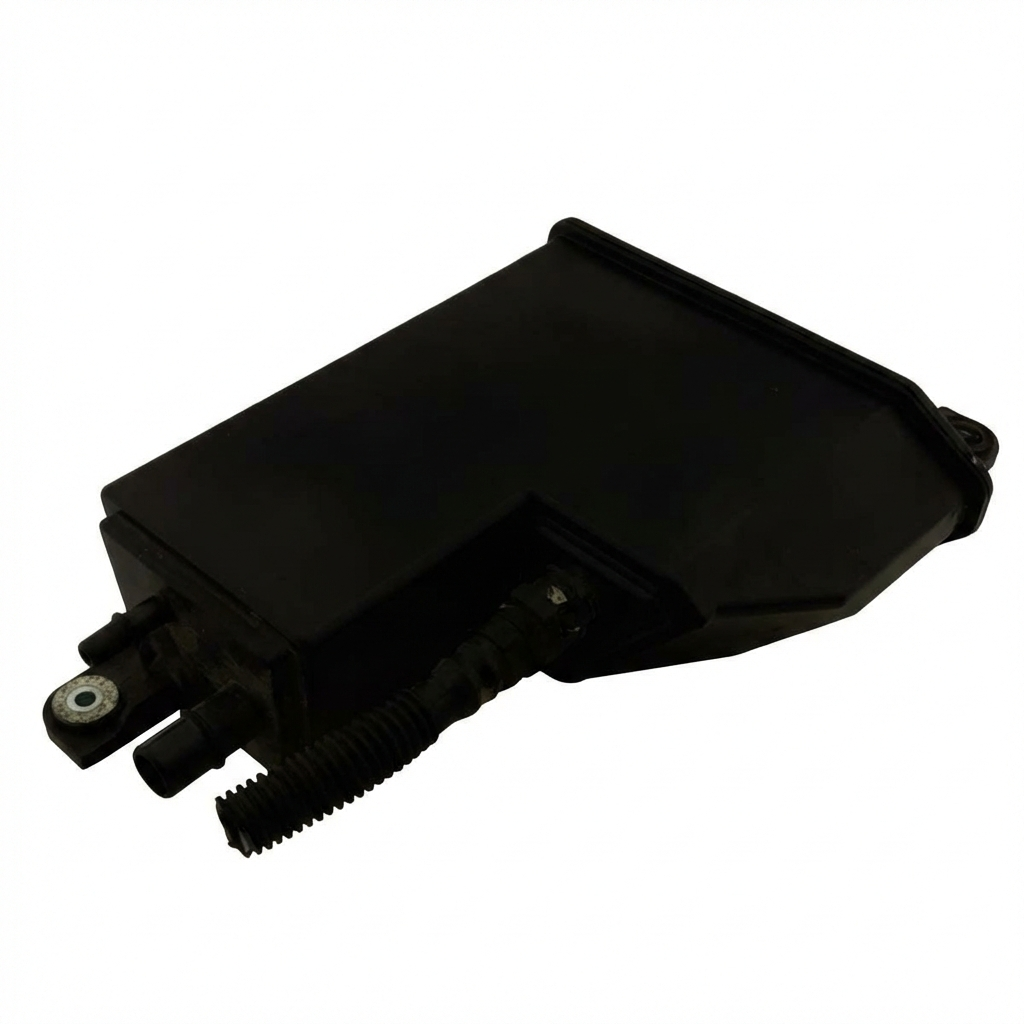
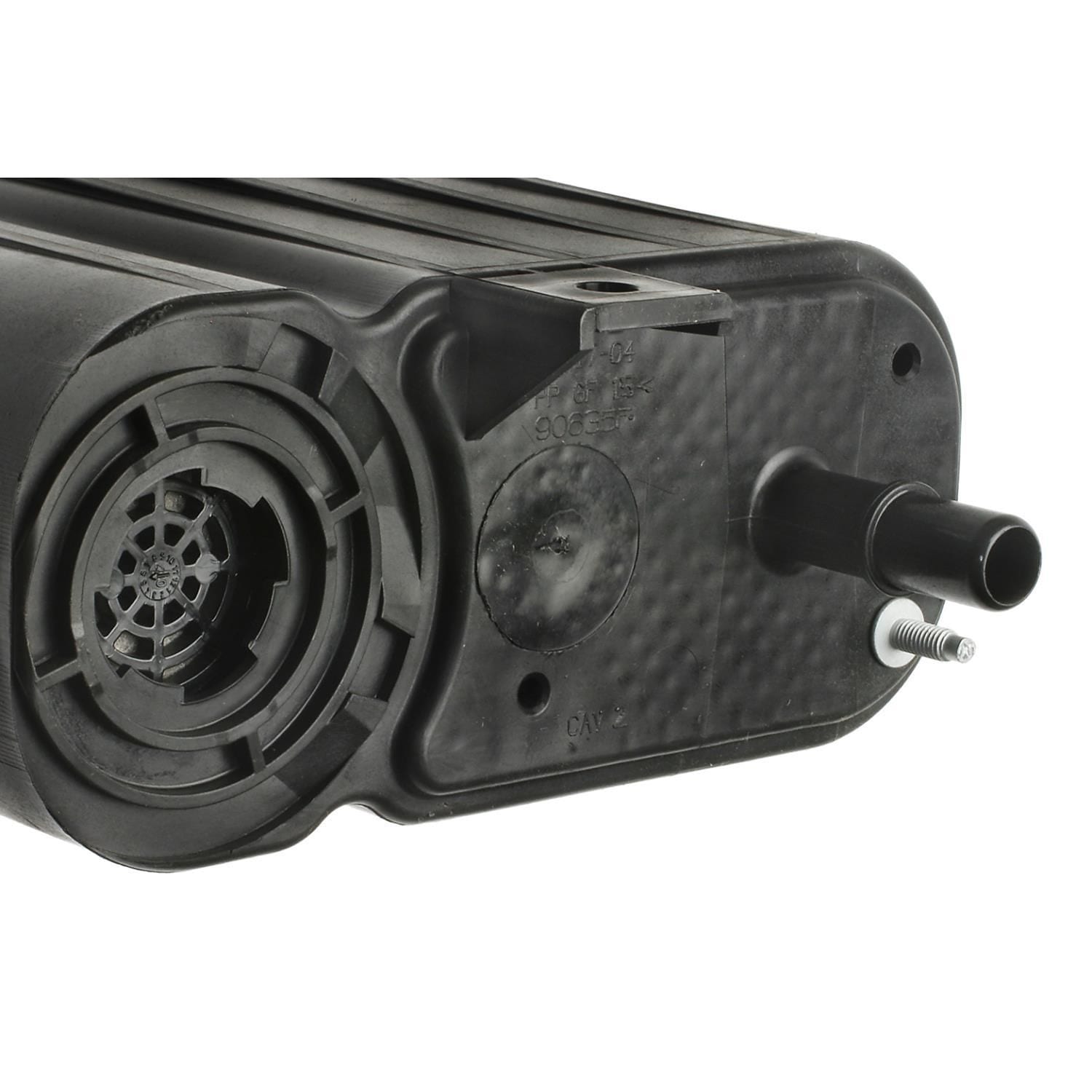
Aftermarket price range: $70-$120 - EVAP Vapor Canister
(OEM #14950-EA20D (Nissan, supersedes 14950-EA200))— If the canister is internally clogged with dust, simply replacing the vent valve will not be a permanent fix. A Nissan TSB for a related code recommends replacing both parts together. The canister includes the Fuel Tank Pressure sensor.
Trusted brands: Dorman, OE Spectra, Standard Motor Products (CP3235), Autozone Duralast (VC4526)
OEM price range: $200-$300
Aftermarket price range: $150-$250 - EVAP Vent Hose Relocation Kit — To prevent the issue from recurring, aftermarket kits are available to move the EVAP system's air intake from its low, vulnerable position to a higher spot, often behind the tail light, protecting it from water and dust.
Trusted brands: Z1 Off-Road
OEM price range: N/A
Aftermarket price range: $25-$50
Related Codes That Often Appear With This One
- P0448 — This code specifically indicates a problem with the EVAP vent control circuit. A Nissan TSB (NTB15-079g) addresses this code with the same root cause of dust contamination in the vent valve and canister, recommending a comprehensive replacement of multiple parts.
Technical Service Bulletins (TSBs) & Recalls
- NTB15-079g (Nissan): While for code P0448, this TSB is highly relevant as it addresses the root cause of dust contamination in the EVAP canister
Platform-Specific Known Issues
- The D40 platform (which the Equator is based on) is known for dust ingestion into the EVAP system, especially when driven on unpaved roads. This leads to premature failure of the vent control valve and canister, causing codes like P1450 and P0448.
- Nissan's comprehensive fix under TSB NTB15-079g involves not just the canister and valve, but also replacing the fuel filler pipe with a new version that has better sealing (an EPT foam wrap) to prevent dust from entering the system near the filler neck.
- Owners in dusty climates or who frequently drive off-road often find the issue returns until the vent hose inlet is relocated to a higher, cleaner location.
Mechanic-Grade Diagnostic Values
- EVAP Canister Vent Control Valve Solenoid Resistance — expected: 15 - 30 Ohms or 20 - 50 Ohms, depending on the source.. Failure: A reading of 0 Ohms (short circuit) or infinite/OL (open circuit) indicates a failed solenoid coil.
- Voltage at Vent Control Valve Connector — expected: Approximately 12V (Battery Voltage) on one pin with the ignition ON.. Failure: No voltage suggests a problem with the power supply from the IPDM E/R or a wiring issue.
- Fuel Tank Pressure (FTP) Sensor Signal Voltage (Key On, Engine Off, Gas Cap Open) — expected: Approximately 2.5 - 2.6 Volts.. Failure: A reading stuck near 0V or 5V points to a wiring issue or a faulty sensor.
Scan Tool Commands That Help
- Nissan CONSULT-III or equivalent professional scanner: EVAP System Active Test — After a repair, this function can run the EVAP readiness monitor to confirm the fix is effective and that no smaller, previously masked leaks are present. It can also be used to command the vent and purge valves open or closed to test their function while monitoring the FTP sensor.
Wiring & Ground Locations
- EVAP Canister Assembly — Under the vehicle at the rear, mounted to a bracket near the spare tire, typically on the driver's side.. This is the physical location of the vent control valve and charcoal canister, the primary points of failure for P1450.
- IPDM E/R (Intelligent Power Distribution Module Engine Room) — In the engine compartment, typically on the right (passenger) side at the rear.. This module contains the fuses and relays that supply power to the EVAP vent valve circuit. A failure here could cut power to the valve.
- Ground Points E15, E24 — Located in the right front of the engine compartment.. These are primary engine bay ground points. While not directly for the rear-mounted EVAP components, poor grounds here can cause a variety of electrical issues that could affect ECM operation and sensor readings.
Real Owner Repair Stories
- Ford F150 Forum user (describing identical symptoms on a different vehicle) (2015 Ford F-150) — Slow gas fill, Check Engine Light with code P1450.
❌ Tried (didn't work) Replacing the purge valve.
✅ What actually fixed it The owner replaced the charcoal canister, which was 7-8 lbs heavier than the new one due to saturation with dirt/debris. This provided a temporary fix, but the code returned, indicating the comprehensive fix (including vent valve) is necessary. - Ford F150 Forum user (describing identical symptoms on a different vehicle) (2008 Ford F-150 5.4L) — Hard starting after refueling, P1450 code when tank is over 3/4 full.
❌ Tried (didn't work) Initial diagnosis by a dealership suggested a faulty vent valve solenoid.
✅ What actually fixed it The owner removed the entire EVAP canister assembly and found a small pre-filter box on top was completely filled with dirt. After blowing it out with compressed air, the issue was resolved. This highlights that blockages can occur in associated filter components, not just the main valve or canister.
OEM Part Supersession History
14950-EA200, 14950-EA20A, 14950-EA20B→14950-EA20D— Likely minor revisions to improve durability or manufacturing process for the EVAP Vapor Canister.
Heads up: The newest part number, 14950-EA20D, is the correct replacement for all previous versions for the 2005-2020 Frontier platform.14935-JF00A, 14935-JF00B, 14935-JF00C, 14935-JF00D→14935-JF00E (and later 14935-JF02C)— Multiple revisions were made by Nissan to improve the EVAP Canister Vent Control Valve's durability and resistance to contamination from dust and moisture.
Heads up: The latest revisions are recommended and are backward compatible.
Model Year Variations Within This Range
- 2011 and older: According to Nissan TSB NTB15-079g, when performing the comprehensive repair (canister, valve, filler pipe), the fuel filler cap (Part # 17251-9BD0E) must also be replaced on 2011 and older models. This is not required for 2012 models under the same TSB.
Diagnostic Flowchart
Used vs. New Parts: Buying Guide for This Vehicle
When a used part is the smart pick: For this specific P1450 issue, buying a used EVAP canister or vent valve is generally not recommended. The primary failure cause is contamination from dust and debris over time. A used part from a junkyard is highly likely to suffer from the same issue or fail soon after installation.
Donor-vehicle mileage cap: roughly under 20000 miles for the part to have meaningful remaining life.
What to inspect on the donor part:
- If considering a used part, source it only from a very low-mileage vehicle.
- Visually inspect the part for any signs of dust, dirt, or mud caked on the exterior.
- Ask for the donor vehicle's history; a vehicle from a wet, non-dusty climate is preferable to one from an arid or off-road environment.
- Attempt to blow through the vent valve (when unpowered); air should pass freely. If it doesn't, it's already stuck closed.
Aftermarket brands forum-validated for this vehicle:
- Dorman (specifically part 911-503 for the vent valve) is a widely available and commonly used aftermarket replacement.
- Standard Motor Products (SMP)
- Hitachi
Brands owners have reported issues with on this vehicle:
- No specific brands are consistently reported as problematic, but ultra-cheap, unbranded parts from online marketplaces may have lower quality control and are best avoided for this repair.
Real Owner Stories
Aggregated from forums and TSBs cited above. Mileages and costs reflect what owners reported in those sources.
Nissan Frontier (D40)
Symptoms: The gas pump nozzle would click off constantly, making it impossible to fill the fuel tank.
What fixed it: Replacing the rear EVAP canister vent control valve solved the problem.
Source hint: ClubFrontier.org thread titled 'p0448-code-and-gas-tank-wont-fill'
Nissan Xterra (N50)
Symptoms: Kept getting an EVAP code due to the well-known dust and water ingestion issue on this platform.
What fixed it: The problem was permanently fixed by performing the 'breather hose mod' and relocating the EVAP vent inlet to a higher, cleaner location away from road debris.
Source hint: TheNewX.org discussions on the EVAP canister breather hose mod
Nissan Frontier (D40)
Symptoms: Check Engine Light with P1450 and a loud 'whoosh' of air when opening the gas cap.
What fixed it: Replaced the entire EVAP canister assembly. The old canister was 7-8 lbs heavier than the new one because it was completely saturated with debris.
Source hint: Forum owner report cited in the article's 'Common Causes' section
Related OBD-II Codes
Frequently Asked Questions
My Suzuki Equator has a P1450 code. Is this the same problem common on the Nissan Frontier?
What is the most likely part to fail for a P1450 code on my truck?
Where is the EVAP canister vent valve located on my Equator?
I saw a Nissan TSB (NTB15-079g) mentioned. Does it apply to my P1450 problem?
I live in a dusty area. Is there a more permanent fix for this recurring P1450 code?
Is it safe to buy a used EVAP canister from a junkyard to fix this?
What's the easiest way to test the vent control valve myself?
Helpful Videos

Used OEM Parts in Stock
New Aftermarket Parts Available


The information in this article is provided for general reference and educational purposes only. Vehicle specifications, procedures, and part compatibility can vary by production date, trim level, and region. Always consult your vehicle's factory service manual and verify part numbers before purchasing or performing repairs. Safety-critical components such as airbags, seat belts, and braking systems should be installed by a qualified professional.
- Suzuki Equator:
- 🎬 Helpful Videos
- 🛍️ Shop This Part
- What's Unique About the 2009-2012 Suzuki Equator
- Symptoms You May Notice
- Most Likely Causes
- Rare But Worth Checking
- Diagnosis Steps
- Parts You'll Likely Need
- Related Codes That Often Appear With This One
- Technical Service Bulletins (TSBs) & Recalls
- Platform-Specific Known Issues
- Mechanic-Grade Diagnostic Values
- Scan Tool Commands That Help
- Wiring & Ground Locations
- Real Owner Repair Stories
- OEM Part Supersession History
- Model Year Variations Within This Range
- Diagnostic Flowchart
- Used vs. New Parts: Buying Guide for This Vehicle
- Real Owner Stories
- Nissan Frontier (D40)
- Nissan Xterra (N50)
- Nissan Frontier (D40)
- Related OBD-II Codes
- Frequently Asked Questions
- 🎟️ Get 5% Off