

P1450 on 2006-2010 Mercury Mountaineer: Causes and Fixes for 'Unable to Bleed Up Vacuum'
On a 2006-2010 Mercury Mountaineer, code P1450 is most often caused by a faulty canister purge valve located in the engine bay. This is an affordable part (around $40-$60) and is a simple DIY fix for most owners, typically taking less than 30 minutes with an 8mm socket.
- P1450 on your Mountaineer is an emissions code and does not indicate a serious mechanical problem.
- The most likely cause is a stuck-open canister purge valve in the engine bay, a repair that is well within the scope of a DIYer.
- If you experience a rough idle or stalling after getting gas, the purge valve is almost certainly the problem.
- If you have trouble filling your gas tank, the canister vent solenoid on the frame rail is the more likely culprit.
- Do not replace the gas cap or other expensive components before testing the purge and vent valves first.
What's Unique About the 2006-2010 Mercury Mountaineer
The 2006-2010 Mountaineer, a twin to the Ford Explorer, has two very common failure points for this code: the purge valve in the engine bay and the vent solenoid on the frame rail. While many vehicles have this issue, owners of this platform frequently report symptoms like a rough idle after refueling, which almost always points directly to the easily accessible purge valve. Unlike some vehicles where EVAP components are buried on top of the fuel tank, both of the most common culprits on the Mountaineer are relatively easy to access and replace.
Symptoms You May Notice
- Check Engine Light is on.
- Difficulty starting the engine, especially after refueling.
- Rough or unstable idle immediately after filling the gas tank.
- Difficulty filling the fuel tank (gas pump nozzle clicks off repeatedly). This is a classic symptom of a stuck-closed vent solenoid.
- A slight decrease in fuel economy.
- Hesitation during acceleration.
- Replacing the gas cap. While a faulty gas cap can cause other EVAP codes (like P0455 for a large leak), it is not a typical cause for P1450, which relates to an inability to *relieve* excessive vacuum, not an inability to hold it.
- Replacing the fuel tank pressure (FTP) sensor before testing the purge and vent valves. The valves are mechanical parts that fail more frequently than the sensor.
Most Likely Causes
- Stuck-Open Canister Purge Valve 🔴 High Probability This is a very common failure item on many Ford products from this era, including the Explorer, Edge, and Taurus. The valve gets stuck open, allowing constant, unregulated engine vacuum to pull on the fuel tank, creating the excessive vacuum condition.
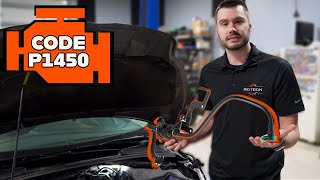
How to confirm: Locate the purge valve in the engine bay, typically mounted to the intake manifold and held by two 8mm bolts. With the engine running, disconnect the electrical connector from the valve. Then, disconnect the EVAP line from the valve (the line going towards the back of the vehicle). There should be NO vacuum felt at the port on the valve. If you feel suction on your fingertip, the valve is stuck open 🎬 Watch: A simple diagnosis and repair for the P1450 code and must be replaced. Alternatively, with the valve removed from the car, you should not be able to blow through it. If you can, it's faulty.
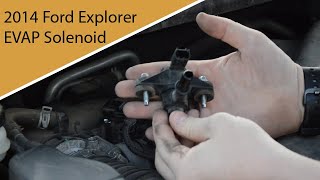
Typical fix: Replace the canister purge valve. This is a simple DIY job requiring an 8mm socket or wrench. 🎬 Watch: How to replace the purge solenoid on a Ford The OEM Motorcraft part number is often 6L2Z-9F945-AA for this application.
Est. part cost: $40-$70 - Stuck-Closed or Restricted Canister Vent Solenoid 🟡 Medium Probability The vent solenoid is located under the vehicle on the passenger-side frame rail, making it vulnerable to road debris, dust, and moisture. This exposure can cause the solenoid to fail electrically or mechanically, or its filter to become clogged with dirt or spider webs, preventing the system from venting.
How to confirm: Locate the vent solenoid on the passenger-side frame rail, in front of the rear axle near the fuel filler pipe. Visually inspect the solenoid and its hoses for visible blockages like dirt, debris, or insect nests. A scan tool can be used to command the valve to open and close; you should hear an audible click. If it doesn't click, test for power and ground at the connector. If it clicks but the problem persists, the vent path may be blocked internally.
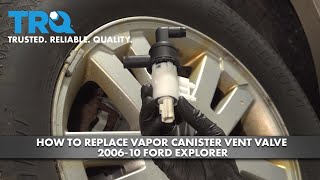
Typical fix: Replace the canister vent solenoid and clear any blockages 🎬 See this walkthrough for replacing the vent valve from the vent hoses. This is a straightforward replacement not requiring special tools.
Est. part cost: $50-$80 - Blocked EVAP Vent Hose ⚪ Low Probability The vent hose outlet, often located near the canister vent solenoid, is a common place for insects (especially spiders) and mud daubers to build nests, creating a physical blockage that prevents the tank from venting.
How to confirm: After locating the canister vent solenoid, disconnect the outlet hose and visually inspect it for blockages. Use low-pressure compressed air to blow through the hose and confirm it is clear.
Typical fix: Clear the blockage from the hose using a pick or compressed air. If the hose is damaged, it should be replaced.
Est. part cost: $0-$20
Rare But Worth Checking
- Faulty Fuel Tank Pressure (FTP) Sensor: This sensor reports the pressure/vacuum level to the PCM. While it can fail and give erroneous readings that trigger a P1450, it's much less common than the mechanical solenoids. It should only be suspected after the purge valve, vent solenoid, and all hoses have been confirmed to be in good working order.
- Saturated Charcoal Canister: This usually happens from habitually 'topping off' the fuel tank after the pump clicks off. Liquid fuel is forced into the canister, which is only designed for vapor. This can cause restrictions and multiple EVAP codes. On the Mountaineer, the canister is on top of the fuel tank and requires dropping the tank to replace. A saturated canister can also release charcoal pellets that travel through the EVAP lines and jam the purge or vent valves open.
Diagnosis Steps
- Read the code with an OBD-II scanner to confirm P1450 is present.
- Check for symptoms. If you have a rough idle after refueling, the canister purge valve is the prime suspect.
- Test the Canister Purge Valve: Locate it in the engine bay (often on the intake manifold, held by 8mm bolts). Start the engine. Unplug the electrical connector. Disconnect the EVAP hose leading to the rear of the vehicle. Place your finger over the port on the valve. If you feel any suction, the valve is stuck open and is faulty. Replace it.
- If the purge valve is good, proceed to inspect the Canister Vent Solenoid. Locate it on the passenger-side frame rail, forward of the rear axle.
- Visually inspect the vent solenoid and its associated hoses for any cracks, kinks, or blockages like spider webs or mud nests.
- Test the Vent Solenoid: If you have a capable scan tool, command the vent solenoid to open and close while listening for a click. If it doesn't operate, test for power and ground at its electrical connector. If it does operate, the vent path may still be blocked.
- Inspect Vent Hoses: Disconnect the hoses from the vent solenoid and charcoal canister and check for blockages. Use low-pressure compressed air to ensure they are clear.
- If all other components are confirmed working, the Fuel Tank Pressure (FTP) sensor may be providing incorrect readings, or there could be a restriction within the charcoal canister itself.
Parts You'll Likely Need
- Canister Purge Valve / Solenoid
(OEM #6L2Z-9F945-AA)— This is the most common cause of P1450. It gets stuck open, allowing constant engine vacuum to be applied to the fuel tank.
Trusted brands: Motorcraft (6L2Z-9F945-AA), Dorman (911-673), Standard Motor Products (CP596)
OEM price range: $60-$90
Aftermarket price range: $30-$60 - Canister Vent Solenoid / Valve
(OEM #CX-2116 (Motorcraft Service Part))— This is the second most common cause. It gets stuck closed or its vent path becomes blocked, preventing the EVAP system from venting to the atmosphere to relieve vacuum.
Trusted brands: Motorcraft (CX-2116), Dorman (911-105), Standard Motor Products (CVS17)
OEM price range: $70-$100
Aftermarket price range: $50-$80
Platform-Specific Known Issues
- Easy Access to Common Failures: Unlike many other vehicles, the two most common parts to fail for this code (purge valve and vent solenoid) are easily accessible on the 2006-2010 Mountaineer/Explorer. The purge valve is on top of the engine and the vent solenoid is on the frame rail, not on top of the fuel tank.
Mechanic-Grade Diagnostic Values
- Canister Purge Valve Solenoid Resistance — expected: 30 to 38 Ohms. Failure: A reading significantly outside this range indicates a faulty internal coil.
- Canister Vent Solenoid Resistance — expected: 48 to 65 Ohms. Failure: A reading outside this range suggests the solenoid coil is damaged.
- Fuel Tank Pressure (FTP) Sensor Voltage (Key On, Engine Off) — expected: Approximately 2.6 Volts (at atmospheric pressure). Failure: A voltage significantly different at rest, or a voltage that doesn't drop when vacuum is applied, indicates a faulty sensor.
Hidden / Shadow Codes Worth Checking
- Mode 6, Test ID $21: This test measures the EVAP system's ability to achieve and hold vacuum. For a P1450, the PCM is looking for a failure where the vacuum is excessive. (see via A professional scan tool capable of viewing Mode 6 data. The failure threshold for P1450 is typically when the system pulls a vacuum greater (more negative) than -8.0 inches of H2O over a 30-second evaluation.)
Scan Tool Commands That Help
- Ford IDS (or equivalent professional scanner): EVAP Purge Valve Control / Actuation Test — This is the definitive test for a stuck-open purge valve. Command the valve to 0% (closed) with the engine running. While monitoring the FTP sensor data, if vacuum still builds in the tank, the valve is mechanically stuck open and has failed, regardless of what electrical tests show.
- Ford IDS (or equivalent professional scanner): EVAP Canister Vent Solenoid Control — Use this to test the vent solenoid. Command the solenoid closed (energized) and listen for a click. If it clicks, the coil is likely good. You can then use a smoke machine to verify it seals properly when commanded closed. If it doesn't click, test for power and ground at the connector to differentiate a bad solenoid from a wiring issue.
- Ford IDS (or equivalent professional scanner): EVAP System Test — This is an automated test that runs the vehicle's onboard EVAP monitor. It can be used to verify a repair is successful without having to perform a full drive cycle. The tool will command the valves and monitor the FTP sensor to confirm the system can seal and vent correctly.
Wiring & Ground Locations
- G105 — Left side of the engine compartment, on the fender.. A poor ground here can affect components in the engine bay, potentially including the PCM or its inputs, leading to erratic sensor readings or behavior.
- G402 / G405 — Right rear corner of the vehicle, near the frame.. This is a critical ground for rear-mounted components. The Canister Vent Solenoid is located in this area, and a corroded or loose ground here is a potential cause for the solenoid failing to operate correctly.
OEM Part Supersession History
YL2Z-9F945-BA, 5U5Z-9F945-GA→6L2Z-9F945-AA— Standard part revision and consolidation over multiple model years.
Diagnostic Flowchart
Used vs. New Parts: Buying Guide for This Vehicle
When a used part is the smart pick: For this specific repair, buying used parts is generally not recommended. The primary failure components (purge valve and vent solenoid) are relatively inexpensive new (typically $30-$80 for aftermarket). The risk of getting a used part that has already failed or is near the end of its service life outweighs the minimal cost savings.
Donor-vehicle mileage cap: roughly under 80000 miles for the part to have meaningful remaining life.
What to inspect on the donor part:
- If buying used is unavoidable, look for a donor vehicle from a dry, non-salt-belt region to minimize corrosion on the vent solenoid.
- Visually inspect the electrical connector pins for any signs of corrosion (green or white powder).
- Check rubber hoses attached to the part for cracking or brittleness.
OEM-only on this vehicle (don't cheap out):
- No parts for this specific P1450 repair are strictly 'OEM-only'. The solenoids are simple devices.
Aftermarket brands forum-validated for this vehicle:
- Motorcraft (OEM)
- Standard Motor Products (SMP)
- Dorman
Brands owners have reported issues with on this vehicle:
- No-name, unbranded parts from online marketplaces should be avoided as quality control can be inconsistent.
Real Owner Stories
Aggregated from forums and TSBs cited above. Mileages and costs reflect what owners reported in those sources.
2006 Ford Explorer XLS 4.0L V6
Symptoms: Check Engine Light was on with code P1450, described as 'unable to bleed up fuel tank vacuum'.
What fixed it: Replacing the canister purge valve solenoid resolved the issue and allowed the vehicle to pass I/M readiness checks.
Source hint: Reddit r/MechanicAdvice
2010 Ford E-350 SD 5.4L
Symptoms: The Check Engine Light was on with codes P1450, P2196, and P2198. A 'whoosing' sound was also heard when disconnecting a vent hose.
What fixed it: The problem was a stuck-open purge solenoid, which was replaced.
Source hint: iATN (International Automotive Technicians Network)
2006 Explorer V6
Symptoms: The owner reported getting code P1450 even after having already replaced the purge valve.
What fixed it: While the final fix wasn't stated, other users suggested the next steps were to check for a stuck-closed vent valve or a clogged charcoal canister.
Source hint: Reddit r/MechanicAdvice
Documented NHTSA Reports
Mercury Platform Diagnostic Report
Symptoms: An owner of a related Mercury model reported that the traction light came on and the vehicle was involved in a wreck. Diagnostic scans revealed multiple codes including C1277, C1963, P0456, and P1450.
Context: While the primary complaint involved Electronic Stability Control, NHTSA ODI #11074537 confirms the presence of P1450 alongside other EVAP and chassis codes on this manufacturer's platform at approximately 117,000 miles.
Source hint: NHTSA ODI #11074537
Related OBD-II Codes
Frequently Asked Questions
Where are the most common parts that cause P1450 located on my 2006-2010 Mountaineer?
Is it difficult to replace the purge valve or vent solenoid myself on this vehicle?
What's the most likely cause of P1450 if my Mountaineer idles rough right after getting gas?
My gas pump nozzle keeps clicking off when I try to fill the tank. Is this related to code P1450?
Is there a specific part number I should look for when replacing the canister purge valve?
Since my Mountaineer is so similar to a Ford Explorer, does the Explorer have the same P1450 problem?
How can I test the canister purge valve on my Mountaineer without any special tools?
Helpful Videos

Used OEM Parts in Stock
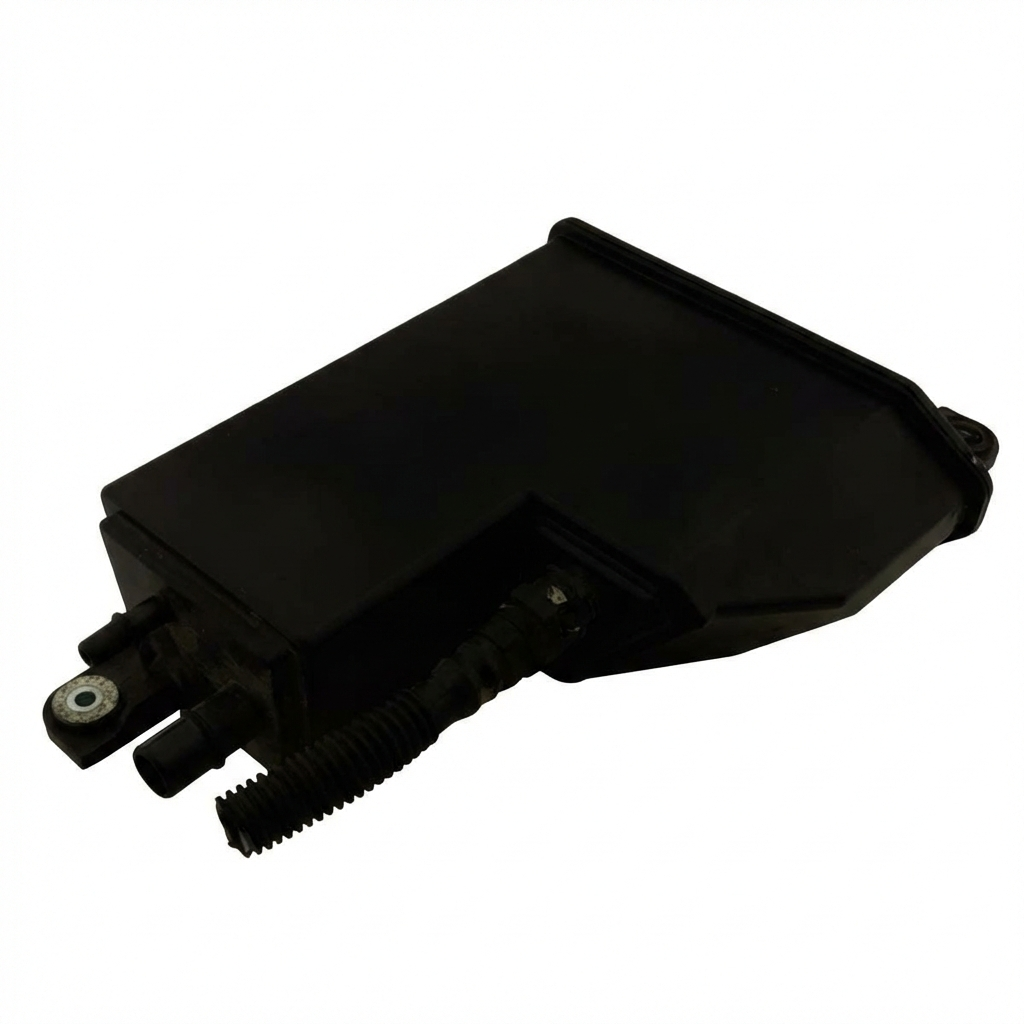
New Aftermarket Parts Available


The information in this article is provided for general reference and educational purposes only. Vehicle specifications, procedures, and part compatibility can vary by production date, trim level, and region. Always consult your vehicle's factory service manual and verify part numbers before purchasing or performing repairs. Safety-critical components such as airbags, seat belts, and braking systems should be installed by a qualified professional.
- Mercury Mountaineer:
- 🎬 Helpful Videos
- 🛍️ Shop This Part
- What's Unique About the 2006-2010 Mercury Mountaineer
- Symptoms You May Notice
- Most Likely Causes
- Rare But Worth Checking
- Diagnosis Steps
- Parts You'll Likely Need
- Platform-Specific Known Issues
- Mechanic-Grade Diagnostic Values
- Hidden / Shadow Codes Worth Checking
- Scan Tool Commands That Help
- Wiring & Ground Locations
- OEM Part Supersession History
- Diagnostic Flowchart
- Used vs. New Parts: Buying Guide for This Vehicle
- Real Owner Stories
- 2006 Ford Explorer XLS 4.0L V6
- 2010 Ford E-350 SD 5.4L
- 2006 Explorer V6
- Documented NHTSA Reports
- Mercury Platform Diagnostic Report
- Related OBD-II Codes
- Frequently Asked Questions
- 🎟️ Get 5% Off