

P1450 on 2010-2019 Ford Taurus: Causes, Fixes for 'Unable to Bleed Up Fuel Tank Vacuum'
On a 2010-2019 Ford Taurus, code P1450 is most often caused by a faulty canister purge valve that is stuck open, allowing constant engine vacuum into the fuel tank. This is a relatively easy and inexpensive DIY fix, with the OEM part costing between $30 and $80. Key symptoms are a Check Engine Light and difficulty starting the engine right after refueling.
- P1450 on a 2010-2019 Taurus means there's too much vacuum in the fuel tank that the system can't get rid of.
- The most probable cause, by a large margin, is a faulty canister purge valve that is stuck open.
- Symptoms often include a Check Engine Light and the car being hard to start immediately after getting gas.
- Replacing the purge valve is a beginner-friendly DIY repair that can usually be done in under 30 minutes with an 8mm socket.
- It is highly recommended to use an OEM Motorcraft replacement part, as aftermarket versions are known to fail prematurely.
- Other less common causes include a blocked vent solenoid near the tank or a charcoal canister saturated from over-filling the fuel tank.
What's Unique About the 2010-2019 Ford Taurus
The 2010-2019 Ford Taurus (sixth generation), along with its platform mates like the Ford Flex and Lincoln MKS, commonly experiences this code due to a failing canister purge valve. This part is known to stick open, allowing engine vacuum to constantly pull on the fuel tank. The issue is so prevalent that many owners report hard starting and a rough idle immediately after refueling, which are classic symptoms of a stuck-open purge valve on this platform. The fix is straightforward as the valve is typically located in an accessible spot on top of the engine, secured by two 8mm bolts.
Symptoms You May Notice
- Check Engine Light is on.
- Difficulty starting the engine, especially right after filling the gas tank.
- Rough or unstable idle, sometimes accompanied by stalling.
- A whooshing sound of air rushing in when opening the gas cap.
- Audible clicking from the purge valve even when the engine is off, or no clicking when it should be active.
- Associated lean or rich condition codes (like P2196, P2198) may appear as the leaking valve allows unmetered fuel vapor into the engine.
- Replacing the gas cap. While a loose or faulty gas cap can cause other EVAP codes (like for a small leak), it is not a typical cause for P1450, which relates to excessive vacuum, not a leak to the atmosphere.
- Replacing the Fuel Tank Pressure (FTP) sensor before testing the purge valve. The purge valve is a much more common failure point and should be tested first.
Most Likely Causes
- Faulty Canister Purge Valve 🔴 High Probability This is the most common failure point for this code on many Ford vehicles, including the Taurus. The valve, which is normally closed, gets stuck open or leaks internally, allowing constant, un-commanded engine vacuum to be pulled on the fuel tank.
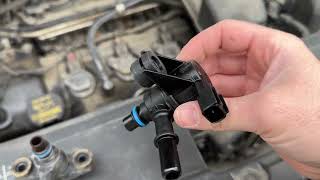
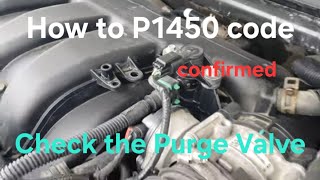
How to confirm: With the engine running, disconnect the electrical connector and the EVAP line from the purge valve. Place your finger over the port on the valve. 🎬 Watch: A simple walkthrough of this purge valve test. If you feel any suction, the valve is stuck open and is faulty. Alternatively, with the engine off, remove the valve and try to blow through it; if air passes, it needs to be replaced.
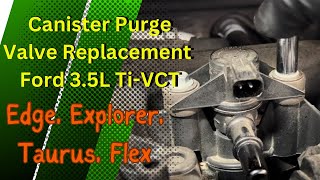
Typical fix: Replace the canister purge valve. It is typically located on top of the engine and is secured by two 8mm bolts and has two hose connections and an electrical connector. Using an OEM Motorcraft part is highly recommended, 🎬 See this step-by-step guide to replacing the purge valve. as aftermarket versions have been reported to fail quickly.
Est. part cost: $30-$80 - Blocked or Restricted EVAP Canister Vent Solenoid/Hose 🟡 Medium Probability The vent solenoid allows fresh air into the system to relieve vacuum. It can get stuck closed, or the vent filter/hoses can become clogged with dirt, spider webs, or debris, preventing the system from breathing.
How to confirm: Locate the EVAP canister and vent solenoid, usually near the fuel tank. Inspect the hoses for kinks, collapses, or blockages. A mechanic might use a smoke machine to verify that smoke can exit through the vent path when the solenoid is commanded open.
Typical fix: Clean the vent path and filter of debris. If the solenoid is stuck, it will need to be replaced.
Est. part cost: $40-$100 - Kinked or Collapsed EVAP Hose ⚪ Low Probability Rubber hoses can degrade over time or be improperly routed during previous repairs, causing a restriction that traps vacuum in the system.
How to confirm: Visually inspect all accessible EVAP hoses between the engine, charcoal canister, and fuel tank for obvious kinks, pinches, or damage.
Typical fix: Repair or replace the damaged section of the hose.
Est. part cost: $10-$30
Rare But Worth Checking
- Faulty Fuel Tank Pressure (FTP) Sensor: The sensor itself could be sending incorrect vacuum readings to the computer, even if the pressure is normal. This is less common than mechanical parts failing but can be a cause.
- Saturated Charcoal Canister: If you habitually 'top off' your fuel tank after the pump clicks off, liquid fuel can be forced into the charcoal canister, saturating it with raw fuel and blocking airflow. This can ruin the canister and cause this code.
Diagnosis Steps
- Read the Code: Confirm P1450 is the active code using an OBD-II scanner.
- Check for Vacuum at Gas Cap: When you next open the fuel cap (especially after a drive), listen for a loud, prolonged 'whoosh' of air rushing in. This indicates a significant vacuum is being held in the tank, a key symptom of this code.
- Test the Canister Purge Valve: This is the most likely culprit. Locate the valve on the engine. Start the engine. Disconnect the electrical plug and the hose coming from the rear of the car. Place your finger on the valve's inlet port. If you feel suction, the valve is stuck open and must be replaced.
- Inspect the EVAP Vent Path: If the purge valve is good, locate the charcoal canister and vent solenoid near the fuel tank. Inspect the vent hoses for any visible blockages, kinks, spider webs, or damage.
- Test the Vent Solenoid: A more advanced step involves using a capable scan tool to command the vent solenoid open and closed to check for proper function while monitoring the fuel tank pressure sensor. The vent solenoid is normally open, so applying voltage should cause it to close.
- Check for Restricted Hoses: If no other cause is found, perform a thorough inspection of all EVAP lines for non-obvious restrictions or internal collapses.
- Smoke Test: If the restriction cannot be found visually, a mechanic will introduce smoke into the EVAP system. If the smoke cannot find its way out through the vent path when the vent solenoid is open, it will confirm a blockage in a line, the canister, or the vent valve.
Parts You'll Likely Need
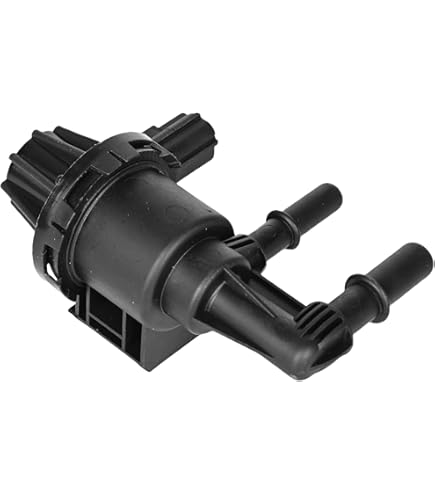
- Vapor Canister Purge Valve
(OEM #CX2628 (may be superseded))— This is the most frequent cause of P1450 on the Ford Taurus and its platform mates. It fails by sticking open, causing constant engine vacuum to be applied to the fuel tank.
Trusted brands: Motorcraft, Dorman, Standard Motor Products
OEM price range: $50-$90
Aftermarket price range: $30-$60
Related Codes That Often Appear With This One
- P2196 - O2 Sensor Signal Biased/Stuck Rich Bank 1 Sensor 1
- P2198 - O2 Sensor Signal Biased/Stuck Rich Bank 2 Sensor 1
- P144A - Evaporative Emission System Purge Vapor Line Restricted/Blocked 🎬 Watch: How to fix these codes on Police Interceptor models.
Technical Service Bulletins (TSBs) & Recalls
- TSB 15-0034: Mentions P1450 in relation to incorrect fuel gauge indications on some 2012-2014 Ford Focus models, showing the code's prevalence across the Ford lineup.
- TSB 19-2345: While not directly for P1450, this TSB deals with an unrelated water leak from the A/C evaporator drain. It is sometimes confused in searches but is not relevant to this EVAP code.
Mechanic-Grade Diagnostic Values
- Fuel Tank Pressure (FTP) Sensor Voltage — expected: 2.40V - 2.80V with key on, engine off (KOEO), representing atmospheric pressure. A common reading is ~2.6V.. Failure: A voltage outside this range at KOEO may indicate a biased sensor or a wiring issue (VREF circuit). A voltage that drops immediately upon starting the engine points to a leaking purge valve pulling premature vacuum.
- Canister Purge Valve Resistance — expected: 30 - 38 Ohms for standard valves. 2.5 - 6 Ohms for electronic-type valves.. Failure: A reading of infinite resistance (open circuit) or zero resistance (short circuit) indicates a failed valve coil.
- Canister Vent Solenoid Resistance — expected: 48 - 65 Ohms.. Failure: A reading outside this range indicates a faulty solenoid coil.
Hidden / Shadow Codes Worth Checking
- P1450-00: This is a sub-type code that may be displayed on more advanced scan tools. The '00' indicates no specific sub-fault type is identified, but it confirms the P1450 condition. The diagnostic procedure remains the same. (see via Ford IDS, FORScan, or other professional-level scan tools.)
Scan Tool Commands That Help
- Ford IDS, FORScan, or equivalent: EVAP Purge Valve (VMV) Bidirectional Control — This is the definitive test for a stuck-open purge valve. With the engine running, command the valve to 0% duty cycle (closed). While monitoring the FTP sensor PID, if vacuum continues to build in the tank (pressure/voltage drops), the valve is mechanically leaking and must be replaced.
- Ford IDS, FORScan, or equivalent: EVAP Vent Valve Bidirectional Control — Use this to test for a stuck-closed vent valve or a blockage in the vent path. The vent valve is normally open. Commanding it closed (100% duty cycle) should seal the system. If the system then fails to hold vacuum during a self-test, it indicates a leak elsewhere. If it holds vacuum when commanded closed but throws the P1450 code during normal operation, it suggests the valve is failing to open to vent the system.
Wiring & Ground Locations
- G301 — Located in the left kick panel area.. This is a common body ground point. A poor connection here could potentially affect the Body Control Module, which communicates with the PCM about various vehicle states, although it's not a primary suspect for P1450.
- G201 — Located under the right front of the center console.. This ground serves various components in the center of the vehicle. A fault in the VREF (reference voltage) circuit for the FTP sensor, which is a rare cause of P1450, could be related to a poor ground, though a direct link is not common.
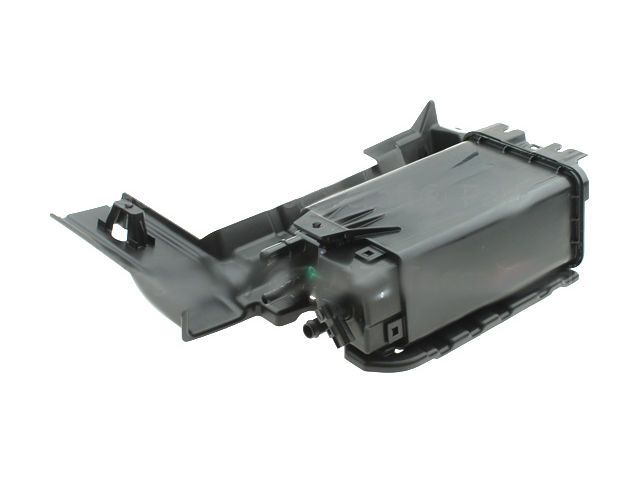
- EVAP Canister Location — Midship under the right (passenger) side of the vehicle for the 2010-2019 Taurus.. This is the location for inspecting the charcoal canister, vent solenoid, and associated hoses for blockages or damage, which is the second most likely cause of P1450.
Real Owner Repair Stories
- YouTube video on a 2010 Ford Fusion (similar platform/powertrain) (2010 Ford Fusion) — Check Engine Light with code P1450.
❌ Tried (didn't work) The purge valve initially tested as holding vacuum, suggesting it was good. It was an intermittent failure.
✅ What actually fixed it After re-testing, the purge valve failed a vacuum test, confirming it was intermittently sticking open. Replacing the purge valve resolved the code. - Ford F150 Forum thread (Ford F-150 (different platform, but identical code and system logic)) — P1450 code appearing randomly, especially in cold weather.
❌ Tried (didn't work) Replaced canister purge valve., Replaced the entire charcoal canister/vent solenoid/vapor filter assembly.
✅ What actually fixed it The user was still diagnosing, but the next step was to use FORScan to monitor the Fuel Tank Pressure (FTP) sensor's live data to check for correct voltage values, suspecting the sensor itself was faulty since the common parts were already replaced. This highlights the diagnostic path when the primary cause is not the issue.
"I Checked Everything" — The Actual Cause
- A smoke test is designed to find leaks where vapor escapes to the atmosphere (e.g., P0455, P0456). Code P1450 is caused by the system's inability to relieve vacuum, which is an internal flow problem, not an external leak. The most common cause, a stuck-open purge valve, will not be found by a smoke test because it's leaking engine vacuum *into* the EVAP system, not letting smoke *out*. A technician relying solely on a smoke test for P1450 would miss the primary culprit and might incorrectly condemn other parts.
OEM Part Supersession History
AU5Z-9C915-B→AU5Z-9C915-E— Part revision by the manufacturer, likely for improved durability or material changes to address the common failure mode.CX2628 (Pass 2 PN)→JX6Z-9D475-E— Part discontinued and replaced.
Heads up: One source incorrectly identifies this part as an EGR valve, which casts doubt on the accuracy of this specific supersession. It is critical to verify the correct part number by VIN, as different engines use different purge valve assemblies.
Model Year Variations Within This Range
- 2010-2019 (varies by engine): The physical design and part number of the purge valve assembly changes depending on the engine. For the 3.5L Ti-VCT (naturally aspirated), the purge valve is a small, standalone component bolted to the intake manifold. For the 3.5L GTDI (EcoBoost/SHO), the valve is often integrated into a larger vapor tube assembly, making replacement slightly more involved.
Diagnostic Flowchart
Used vs. New Parts: Buying Guide for This Vehicle
When a used part is the smart pick: For this specific P1450 repair, sourcing used parts is generally not recommended for the solenoids. However, obtaining simple plastic or rubber EVAP hoses from a junkyard is a reasonable choice, provided they are inspected for cracks, brittleness, and blockages. A used charcoal canister could be considered if it comes from a very low-mileage donor and there is no evidence of fuel saturation, but it's a gamble.
Donor-vehicle mileage cap: roughly under 40000 miles for the part to have meaningful remaining life.
What to inspect on the donor part:
- For hoses: Squeeze the hose to check for pliability; it should not be hard or brittle.
- For canisters: Check for any signs of liquid fuel saturation or strong raw fuel smell, which indicates it's ruined.
- Check the donor vehicle for collision damage near the canister, as it could be cracked.
OEM-only on this vehicle (don't cheap out):
- Vapor Canister Purge Valve: Forum and mechanic consensus strongly suggests that aftermarket purge valves for this application have a high premature failure rate. Using an OEM Motorcraft part is highly recommended to ensure a lasting repair.
Aftermarket brands forum-validated for this vehicle:
- Dorman
- Standard Motor Products (SMP)
Brands owners have reported issues with on this vehicle:
- Unbranded, 'white-box' parts from online marketplaces are frequently cited as failing within a short period for this specific component.
Real Owner Stories
Aggregated from forums and TSBs cited above. Mileages and costs reflect what owners reported in those sources.
2014 Ford Taurus 3.5L
Symptoms: After getting gas, the RPM will fluctuate for about 30 seconds and the engine seems like it may cut off, but it doesn't.
What fixed it: The owner did not report what ultimately fixed the issue. Another user suggested it could be as simple as a bad fuel cap.
Source hint: Reddit r/MechanicAdvice
Ford Edge
Symptoms: Struggles starting after filling up.
What fixed it: Replacing the faulty purge valve fixed the issue, but an initial attempt with a cheap aftermarket part led to a repeat failure, requiring a second replacement with an OEM part.
Source hint: Reddit r/FordEdge
Related OBD-II Codes
Frequently Asked Questions
What is the most common cause of a P1450 code on my 2010-2019 Ford Taurus?
Why is my Taurus difficult to start right after I fill it up with gas?
I hear a loud 'whoosh' of air when I open my gas cap. Is that related to the P1450 code?
I'm replacing the canister purge valve myself. Is it okay to use a cheaper aftermarket part?
Where is the canister purge valve located on my Taurus?
Does TSB 19-2345 apply to the P1450 EVAP issue?
Helpful Videos

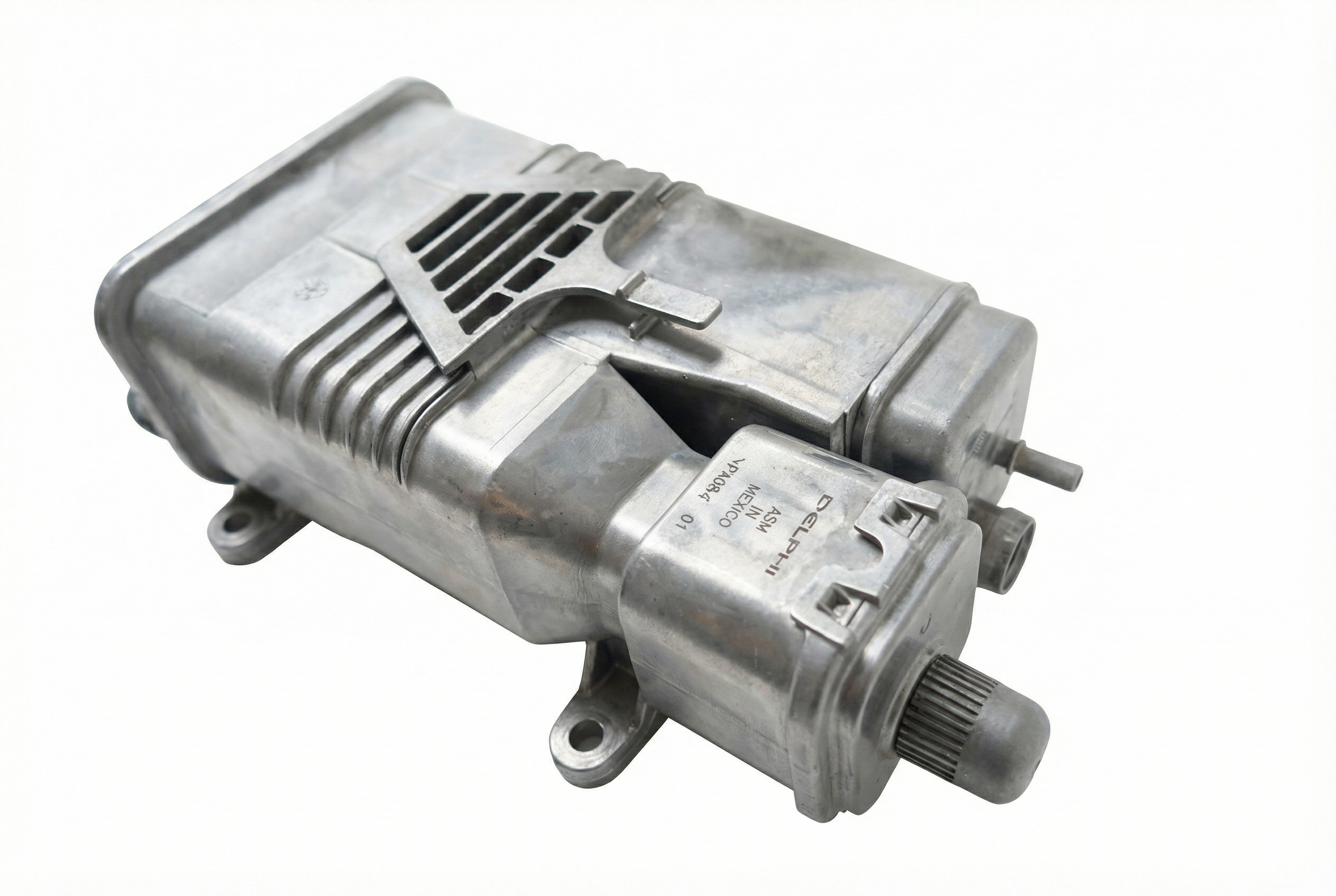
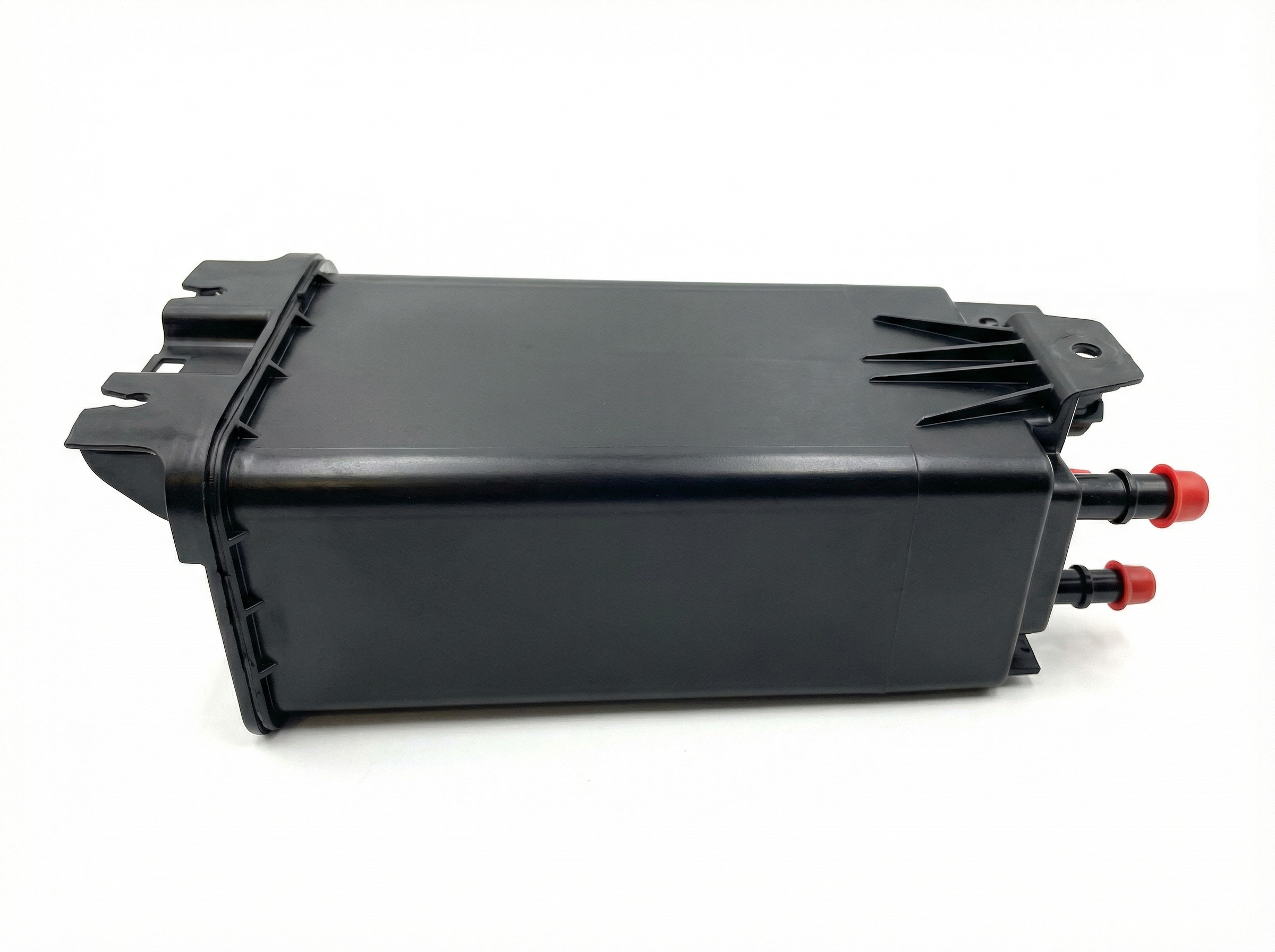
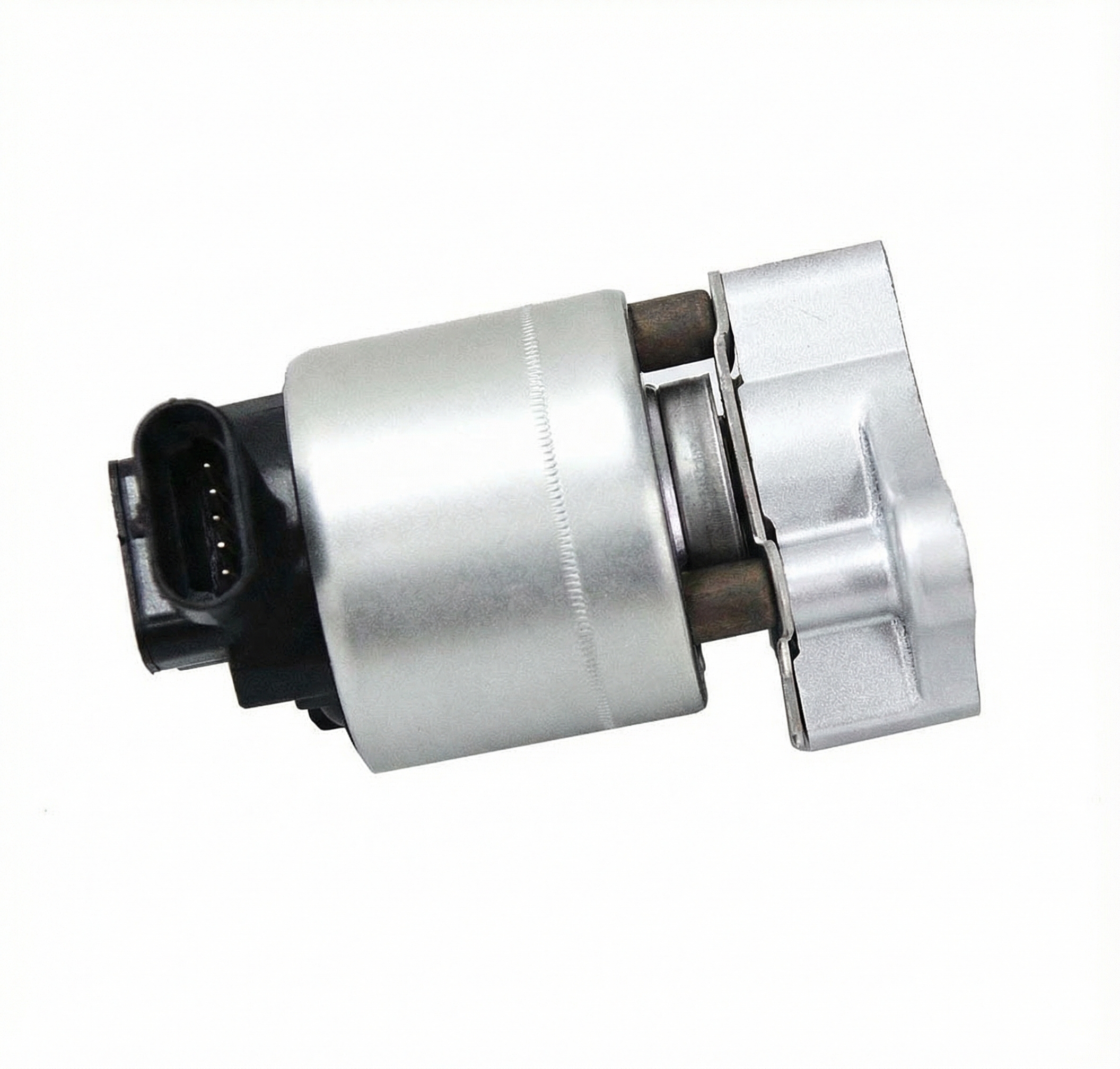
Used OEM Parts in Stock

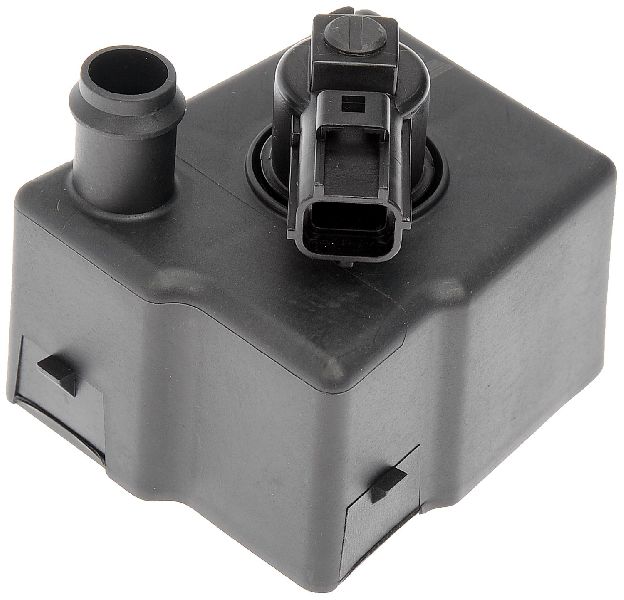
New Aftermarket Parts Available


The information in this article is provided for general reference and educational purposes only. Vehicle specifications, procedures, and part compatibility can vary by production date, trim level, and region. Always consult your vehicle's factory service manual and verify part numbers before purchasing or performing repairs. Safety-critical components such as airbags, seat belts, and braking systems should be installed by a qualified professional.
- Ford Taurus:
- 🎬 Helpful Videos
- 🛍️ Shop This Part
- What's Unique About the 2010-2019 Ford Taurus
- Symptoms You May Notice
- Most Likely Causes
- Rare But Worth Checking
- Diagnosis Steps
- Parts You'll Likely Need
- Related Codes That Often Appear With This One
- Technical Service Bulletins (TSBs) & Recalls
- Mechanic-Grade Diagnostic Values
- Hidden / Shadow Codes Worth Checking
- Scan Tool Commands That Help
- Wiring & Ground Locations
- Real Owner Repair Stories
- "I Checked Everything" — The Actual Cause
- OEM Part Supersession History
- Model Year Variations Within This Range
- Diagnostic Flowchart
- Used vs. New Parts: Buying Guide for This Vehicle
- Real Owner Stories
- 2014 Ford Taurus 3.5L
- Ford Edge
- Related OBD-II Codes
- Frequently Asked Questions
- 🎟️ Get 5% Off