

P1450 on 2018-2019 Ford Fusion Energi: Causes and Fixes for EVAP Vacuum Issues
On a 2018-2019 Ford Fusion Energi, code P1450 is almost always caused by a faulty canister purge valve that is stuck open or leaking. This is a well-documented issue confirmed by Ford's technical service bulletins. Replacing the purge valve is a common, DIY-friendly fix with parts costing between $40 and $100. Ford also recommends a PCM software update in conjunction with the valve replacement to fully resolve the issue.
- P1450 on your Fusion Energi almost certainly means you need a new canister purge valve.
- Key symptoms are a check engine light and difficulty starting the car right after you fill the gas tank.
- This is a known issue with a Ford Technical Service Bulletin, making the diagnosis highly confident.
- The repair is relatively simple, accessible in the engine bay, and can be done by a DIYer with basic tools in under an hour.
- When replacing the valve, ensure you get the correct part for your model year; the OEM part number is likely AU5Z-9C915-E.
What's Unique About the 2018-2019 Ford FUSION ENERGI
The Ford Fusion platform, particularly the Hybrid and Energi models from this generation (2013-2020), is known for this specific issue. Ford has issued multiple Technical Service Bulletins (TSBs) that directly point to a faulty canister purge valve as the primary cause for P1450. This makes diagnosis much more straightforward compared to other vehicles where P1450 might have a wider range of potential causes. The problem is so common that the purge valve is the first and most likely component to check.
Diagnostic Flowchart
Tap your situation to follow the diagnostic path that matches what you're seeing on this vehicle.
Symptoms You May Notice
- Check Engine Light (MIL) is illuminated.
- Difficulty starting the engine, or a long crank time, especially right after getting gasoline. Some owners report needing to hold the gas pedal to the floor to get it to start, which indicates a flooded condition.
- Engine may stall or run rough immediately after starting post-refuel. 🎬 Watch: Fixing a Fusion that won't start after pumping gas
- A distinct 'whoosh' sound of air rushing *into* the fuel tank when opening the capless fuel filler door.
- A buzzing or whining noise from the rear of the vehicle near the fuel tank area has also been reported by some owners.
- Replacing the gas cap. This vehicle has a capless fuel filler system, so there is no traditional cap to replace.
- Replacing the EVAP charcoal canister or vent solenoid before properly diagnosing the purge valve, which is the most common failure point by a wide margin.
- Performing only the PCM software update without replacing the faulty purge valve. Some owners have reported the dealer doing this, only for the P1450 code to return shortly after.
Most Likely Causes
- Faulty Canister Purge Valve 🔴 High Probability This is a known issue acknowledged by Ford in Technical Service Bulletins (TSB 19-2207 and SSM 48301). The valve's internal seal fails, causing it to stick open and constantly apply engine vacuum to the fuel tank when it should be closed.
How to confirm: With the engine off, disconnect the EVAP hose from the purge valve that runs toward the fuel tank. Try to blow through the valve; if air passes, it is stuck open and defective. Alternatively, start the engine and feel the port on the valve where the hose was connected. If you feel suction at idle, the valve is leaking internally and must be replaced.
Typical fix: Replace the canister purge valve assembly. On some models, this includes a small section of attached hoses. 🎬 See this quick walkthrough of the purge valve replacement Ford's TSB 19-2207 explicitly states to replace the valve and also perform a PCM software update to fully correct the condition. Some owners report the code returning if only the PCM update is performed without replacing the valve.
Est. part cost: $40-$100
Rare But Worth Checking
- Blocked Canister Vent Solenoid or Hoses: The vent solenoid is what allows fresh air into the system to relieve vacuum. It is normally open when de-energized. If it's stuck closed or its filter/hoses are clogged with dirt, spider webs, or other debris, the tank cannot vent.
- Clogged EVAP Charcoal Canister: If the charcoal canister becomes saturated with fuel (often from overfilling the gas tank by continuing to pump after the nozzle clicks off) or clogged with debris, it can restrict airflow and prevent the system from bleeding off vacuum.
- Faulty Fuel Tank Pressure (FTP) Sensor: The FTP sensor reports the pressure/vacuum level to the PCM. If the sensor is faulty and incorrectly reporting a high vacuum, it can trigger the code even if the pressure is normal. In one documented case, a dealer replaced the FTP sensor after a new purge valve didn't initially fix the issue.
- Debris in Capless Fuel Filler Neck: The capless system has a flap that must seal correctly. If debris prevents it from closing, it usually causes a small leak code. However, if the venting mechanism within the filler neck is compromised, it could contribute to a P1450 code.
Diagnosis Steps
- Scan the vehicle for any other accompanying trouble codes. Note codes like P0456, P04EE, P04EF, or P0496, which reinforce the diagnosis of a faulty purge valve.
- Listen for a 'whoosh' of air when opening the fuel filler door. This indicates a vacuum is present in the tank, confirming the symptom of P1450.
- Locate the canister purge valve in the engine bay. It's typically mounted on or near the intake manifold with two hoses and an electrical connector.
- With the engine OFF, disconnect the electrical connector and the EVAP line coming from the fuel tank.
- Attempt to blow through the valve from the intake side to the tank side. A new, functioning purge valve is normally closed. If you can blow through it, it is stuck open and is the cause of the code.
- If the blow-through test is inconclusive, reconnect the valve. Start the engine and let it idle. Disconnect the hose leading to the fuel tank and place your finger over the valve's port. If you feel any vacuum/suction at idle, the valve is leaking internally and needs to be replaced.
- If the purge valve tests good, the next step is to inspect the EVAP vent solenoid (usually near the fuel tank) and its hoses for blockages or insect nests. The vent solenoid is normally open when de-energized.
- If all valves and hoses appear clear, the next step would be to use a scan tool to monitor the Fuel Tank Pressure (FTP) sensor to ensure it is reading correctly and responding to pressure changes.
Parts You'll Likely Need
- Canister Purge Valve
(OEM #AU5Z-9C915-E)— This is the most common failure part for code P1450 on this vehicle, as confirmed by multiple Ford TSBs. It gets stuck open, causing excessive vacuum in the fuel tank. This part is also sold under the Motorcraft service number CX-2695. It supersedes previous part numbers AU5Z-9C915-A, AU5Z-9C915-B, AU5Z-9C915-C, and AU5Z-9C915-D.
Trusted brands: Motorcraft, Bosch, Standard Motor Products, Dorman
OEM price range: $60-$100
Aftermarket price range: $40-$75
Related Codes That Often Appear With This One
- P0456 — Small EVAP Leak Detected. TSB 19-2207 lists this code as appearing alongside P1450 due to the faulty purge valve.
- P04EE — EVAP System Canister Purge Valve 'A' Stuck Closed. This code is also cited in Ford's TSB 19-2207 related to purge valve failures.
- P04EF — EVAP System Canister Purge Valve 'A' Stuck Open. This directly relates to the failure mode that causes P1450.
- P0496 — EVAP Flow During a Non-Purge Condition. This is another code indicating the purge valve is passing vapor when it shouldn't be, as mentioned in TSB SSM 48301.
Technical Service Bulletins (TSBs) & Recalls
- SSM 48301: Mentions P1450 in a group of EVAP codes for 2018 Fusion Hybrid vehicles, suggesting a known pattern of faults.
- TSB 19-2207: Specifically calls out P1450 on 2013-2017 Fusion/MKZ/C-Max Hybrid/Energi vehicles. It states the cause is the sealing capability of the canister purge valve and instructs technicians to replace the valve and reprogram the PCM.
Platform-Specific Known Issues
- TSB 19-2207 was issued for 2013-2017 Fusion Hybrid/Energi models for code P1450, identifying a faulty canister purge valve and recommending its replacement along with a PCM software update. While the TSB's year range ends at 2017, the issue is known to persist with the same cause and fix on 2018-2019 models.
- TSB SSM 48301 applies to 2018 Fusion Hybrid models and also lists P1450 among a group of codes related to the EVAP system, pointing towards a common diagnostic path starting with the purge valve.
- Owner Experience: A user on the Car Talk Community with a 2015 Fusion experienced a recurring P1450. After replacing the purge valve, the dealer found the FTP sensor was also faulty. The final repair that solved the issue was replacing both the purge valve and the FTP sensor.
Mechanic-Grade Diagnostic Values
- Fuel Tank Pressure (FTP) Sensor Voltage — expected: Normal operating range is ~0.5V to 4.5V. Near atmospheric pressure (tank open) should be around 1.3V to 1.7V.. Failure: A reading of 4.78V or higher for 5+ seconds indicates a circuit high fault (P0453). A reading stuck at a high voltage even with the gas cap open points to a bad sensor.
- Canister Vent Valve Solenoid Resistance — expected: 12 - 80 Ohms between the two pins on the solenoid.. Failure: A reading outside of this range indicates a faulty solenoid coil.
Hidden / Shadow Codes Worth Checking
- P1450 00 EC: This is an extended trouble code format visible on some advanced or dealer-level scan tools. The '00' is a failure type byte, but the overall diagnostic path for P1450 remains the same, focusing on the purge valve and vent path. (see via Professional scan tools like Ford IDS, Snap-on Zeus, or high-end Autel/Launch scanners.)
Scan Tool Commands That Help
- Ford IDS, FORScan, advanced scan tools: EVAP System Test / Active Test — This is a guided test that commands the purge and vent solenoids through a sequence to check for leaks and proper function. For P1450, a technician would use this to command the vent solenoid closed and watch if the FTP sensor shows vacuum being pulled by a leaking purge valve when it should be at 0% duty cycle.
- Ford IDS, FORScan, advanced scan tools: Canister Vent Valve (CVV) Command — To manually command the vent valve closed (100%) to seal the system or open (0%) to vent it. This helps isolate whether the system can properly vent vacuum when commanded, testing the vent solenoid and its pathway for restrictions.
Wiring & Ground Locations
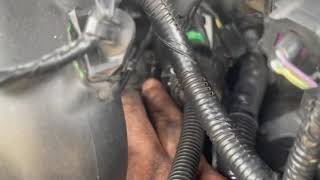
- Canister Purge Valve Connectors — The purge valve assembly in the engine bay uses several quick-connect fittings. One common style has a green locking tab that must be lifted to release the line. Another has two tabs (top and bottom) that must be squeezed simultaneously to disconnect.. Knowing how to operate these connectors without breaking them is crucial for replacing the purge valve assembly, which is the most common fix for P1450.
- Canister Vent Valve Wiring — On the canister vent valve solenoid near the fuel tank, the wiring for this generation is typically a 2-pin connector. Pin 1 is Green/Blue (control from PCM) and Pin 2 is Green (power).. These wire colors are essential for performing electrical tests (voltage, resistance) on the vent valve circuit if it is suspected of being stuck closed, which is a rare cause of P1450.
Real Owner Repair Stories
- Car Talk Community (2012 Ford Fusion (similar issue, same generation)) — Check Engine Light with P1450.
❌ Tried (didn't work) Initial diagnosis pointed to a P0451, for which the canister purge valve was replaced.
✅ What actually fixed it The code later returned as P1450. A dealership diagnosed that the Fuel Tank Pressure (FTP) sensor was faulty. After replacing the FTP sensor, their EVAP test still failed. They then found the (previously replaced) EVAP purge valve was stuck open. The final successful repair required replacing BOTH the FTP sensor and the purge valve. - YouTube - 'T-Time's Garage' (2018 Ford Focus, 71,000 miles) — Check Engine Light with P1450.
❌ Tried (didn't work) The diagnostic procedure first required fixing a broken flap on the capless fuel filler neck. This was done, but the P1450 code returned after a weekend of driving.
✅ What actually fixed it After the filler neck was repaired and the code came back, the technician tested the purge valve and found it was stuck open. Replacing the canister purge valve was the final fix that resolved the P1450 code. - Reddit r/fordfusion (2019 Ford Fusion SEL, 40,000 miles) — Check Engine Light with P0496 (High Purge Flow), poor MPG, and car took 5 attempts to start after refueling.
❌ Tried (didn't work) User was in the process of diagnosis.
✅ What actually fixed it The user was advised the cause was the canister purge valve. A commenter on the thread noted that after they replaced the purge valve assembly on their son's car for the same code and symptoms, the code returned, leading them to suspect a faulty Fuel Tank Pressure (FTP) sensor as the next step. This highlights the common diagnostic path from purge valve to FTP sensor.
OEM Part Supersession History
AU5Z-9C915-A, -B, -C, -D→AU5Z-9C915-E— The multiple revisions suggest an evolving design to improve the reliability of the valve's internal seal, which is the component that fails and causes the P1450 code.CX-2409, CX-2470 (Motorcraft Service Numbers)→CX-2695 (Motorcraft Service Number for AU5Z-9C915-E)— Corresponds to the OEM part number supersession.
Heads up: When ordering, using the latest part number (AU5Z-9C915-E or CX-2695) ensures the most updated design is received.
Model Year Variations Within This Range
- 2018-2019: No significant variations have been identified in the cause, diagnosis, or repair for code P1450 between the 2018 and 2019 model years for the Fusion Energi. Both use the same generation of EVAP system components and suffer from the same common purge valve failure.
Helpful Videos

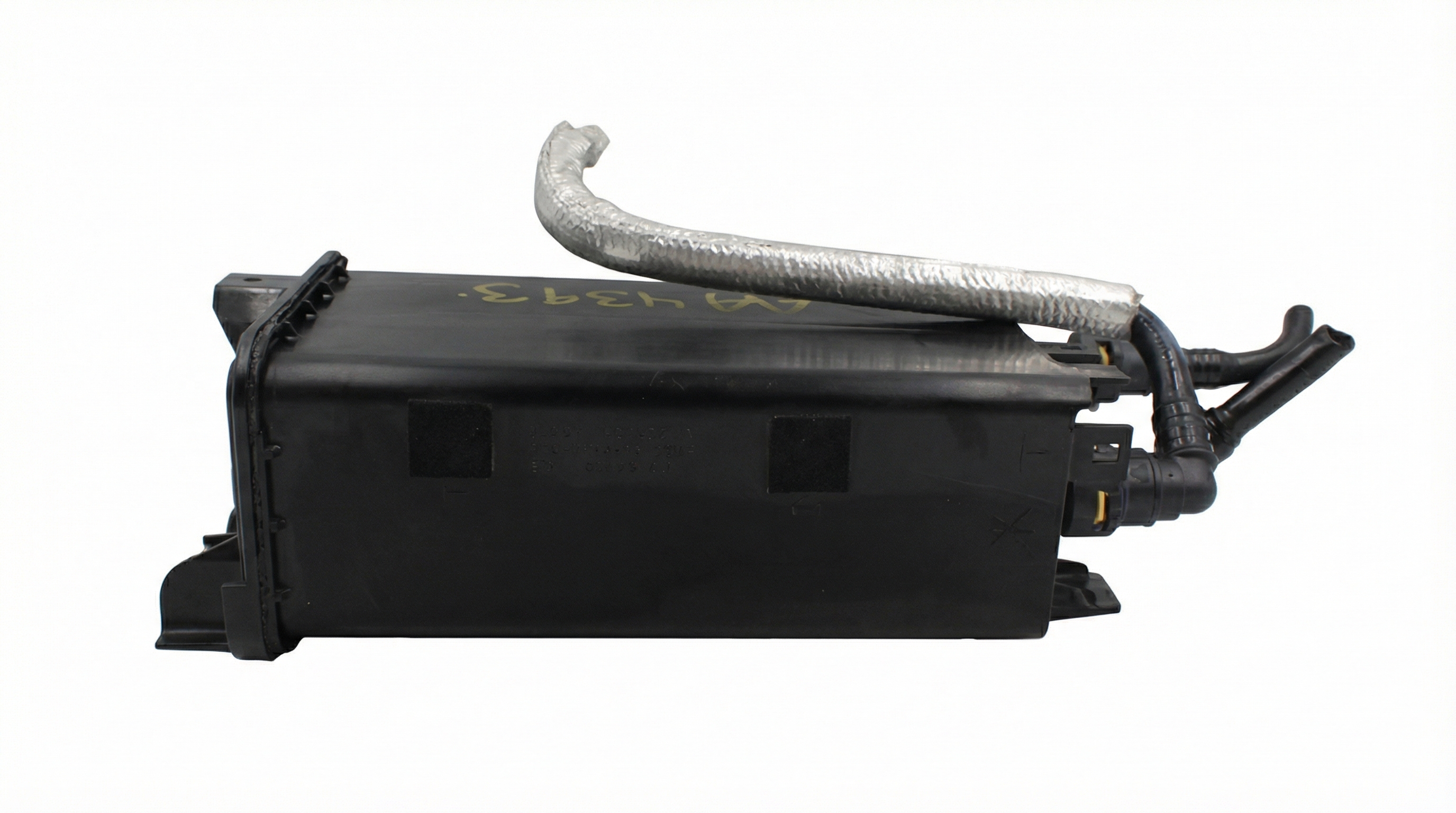
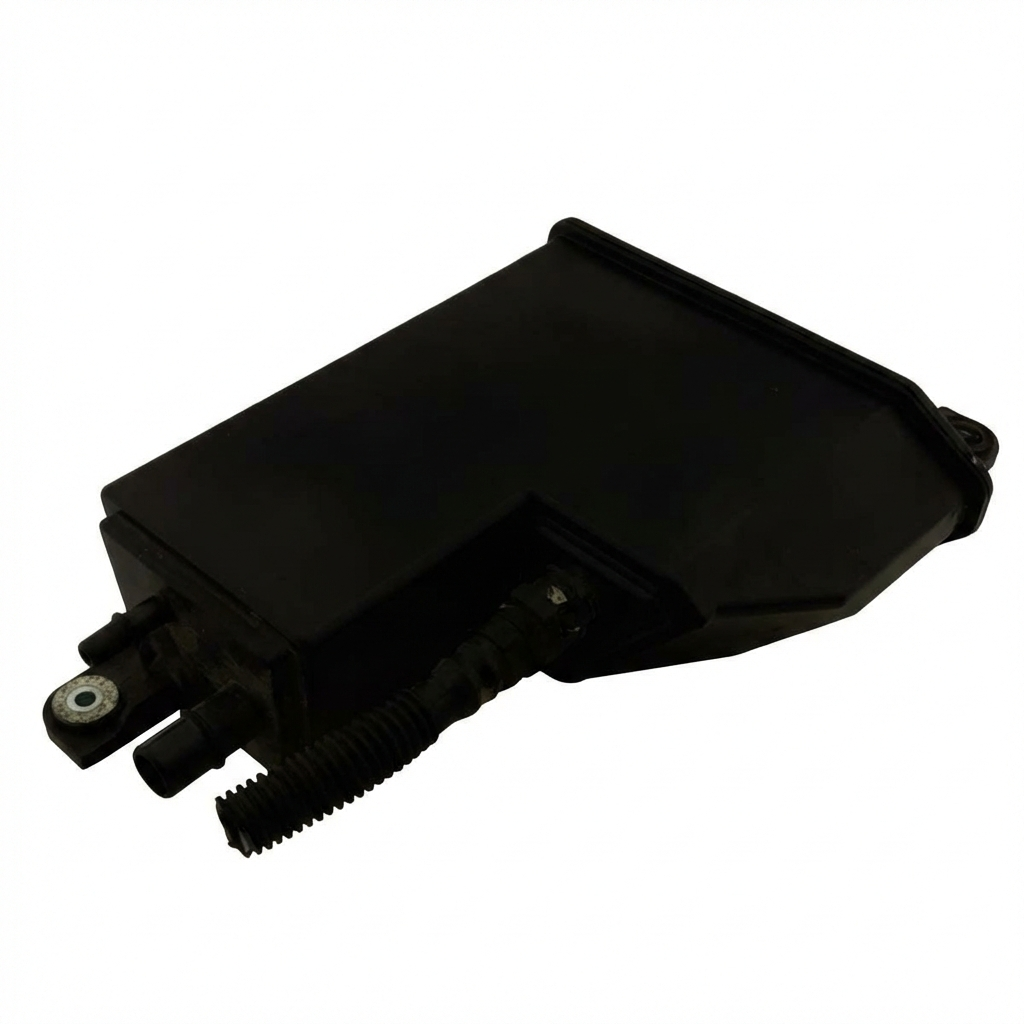
Used OEM Parts in Stock

New Aftermarket Parts Available

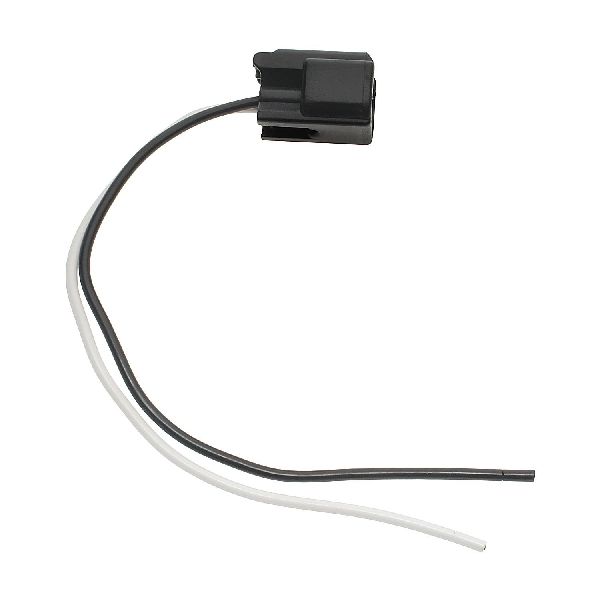

The information in this article is provided for general reference and educational purposes only. Vehicle specifications, procedures, and part compatibility can vary by production date, trim level, and region. Always consult your vehicle's factory service manual and verify part numbers before purchasing or performing repairs. Safety-critical components such as airbags, seat belts, and braking systems should be installed by a qualified professional.
- Ford FUSION ENERGI:
- 🎬 Helpful Videos
- 🛍️ Shop This Part
- What's Unique About the 2018-2019 Ford FUSION ENERGI
- Diagnostic Flowchart
- Symptoms You May Notice
- Most Likely Causes
- Rare But Worth Checking
- Diagnosis Steps
- Parts You'll Likely Need
- Related Codes That Often Appear With This One
- Technical Service Bulletins (TSBs) & Recalls
- Platform-Specific Known Issues
- Mechanic-Grade Diagnostic Values
- Hidden / Shadow Codes Worth Checking
- Scan Tool Commands That Help
- Wiring & Ground Locations
- Real Owner Repair Stories
- OEM Part Supersession History
- Model Year Variations Within This Range
- 🎟️ Get 5% Off