

P1450 on 2013-2017 Ford Fusion Energi: Causes and Fixes for EVAP System Faults
For the 2013-2017 Ford Fusion Energi, code P1450 is almost always caused by a faulty canister purge valve. Ford issued a Technical Service Bulletin (TSB 19-2207) for this exact issue. Replacing the valve is a straightforward DIY fix, with the part costing between $60 and $140. The original part number AU5Z-9C915-D has been superseded by AU5Z-9C915-E.
- P1450 on a 2013-2017 Fusion Energi is a very specific code that almost always points to a faulty canister purge valve.
- Ford has acknowledged this issue with Technical Service Bulletin TSB 19-2207, making diagnosis highly confident.
- Key symptoms include a 'whoosh' of air when opening the fuel filler and potential difficulty starting the car right after refueling.
- The repair involves replacing the canister purge valve, which is an accessible part in the engine bay and is considered a beginner-to-intermediate DIY job.
- While driving is possible, the issue will cause a failed emissions test and should be addressed to prevent potential long-term stress on the fuel tank.
What's Unique About the 2013-2017 Ford FUSION ENERGI

The Ford Fusion Energi, along with its hybrid siblings (C-Max, MKZ Hybrid), is specifically called out in manufacturer documents for this issue. Ford released Technical Service Bulletin (TSB) 19-2207, which directly identifies a faulty canister purge valve as the primary cause for P1450 on these models. This makes diagnosis much more certain compared to other vehicles where P1450 could have a wider range of potential causes.
Diagnostic Flowchart
Tap your situation to follow the diagnostic path that matches what you're seeing on this vehicle.
Symptoms You May Notice
- Check Engine Light is on.
- A loud 'whoosh' of air entering the tank when opening the fuel filler neck.
- Difficulty starting the engine, or the engine stalling, immediately after refueling. Some owners report having to hold the gas pedal to the floor to get the car to start after filling up.
- Rough or unstable idle, especially after starting the car post-refueling.
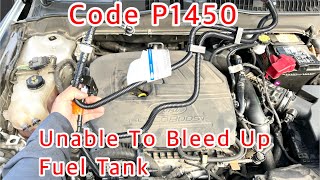
- An intermittent buzzing or humming noise from the rear of the vehicle near the fuel tank, which may be the vacuum popping the capless fuel door flap. 🎬 See this DIY fix for the unable to bleed vacuum error.
- Replacing the fuel filler cap. While a faulty cap can cause many other EVAP codes (like for large or small leaks), P1450 is about the system's inability to *release* vacuum, a function not controlled by the cap. This vehicle has a capless system, making this diagnosis irrelevant.
Most Likely Causes

- Stuck or Faulty Canister Purge Valve 🔴 High Probability Ford TSB 19-2207 explicitly states that the sealing capability of the original canister purge valve may be insufficient, leading to this code on Fusion Hybrid and Energi models. This is widely confirmed in owner forums as the number one cause.
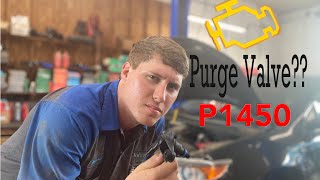
How to confirm: With the engine off, remove the purge valve. If you can blow air through it, it is stuck open and faulty. Alternatively, with the engine running, disconnect the EVAP hose from the purge valve. If you can feel vacuum from the valve's port with your finger, it is stuck open and must be replaced. A scan tool can also be used to command the valve closed and monitor fuel tank pressure (FTP) 🎬 Watch: A professional guide to diagnosing and repairing the purge valve.; if vacuum still builds, the valve is faulty.
Typical fix: Replace the canister purge valve and its associated hoses. Per TSB 19-2207, the PCM software should also be updated by a dealer or a properly equipped shop to fully correct the condition. Some owners report the code returning if the PCM update is skipped.
Est. part cost: $60-$140 - Blocked EVAP Canister Vent Solenoid or Hose 🟡 Medium Probability
How to confirm: Locate the EVAP canister and vent solenoid (usually near the fuel tank). Inspect the hoses for kinks, damage, or blockages from dirt or debris. The vent solenoid is normally open and should allow air to pass when unpowered. A scan tool can command it closed to test its function.
Typical fix: Clean any blockages from the vent hoses or replace the vent solenoid if it is faulty.
Est. part cost: $25-$75 - Kinked or Blocked EVAP Hose ⚪ Low Probability
How to confirm: Visually inspect all accessible EVAP system hoses between the engine bay, the fuel tank, and the charcoal canister for sharp bends, kinks, or collapses.
Typical fix: Straighten the kinked hose or replace the damaged section.
Est. part cost: $10-$50
Rare But Worth Checking
- Faulty Fuel Tank Pressure (FTP) Sensor: This is less common, but if the sensor provides incorrect data to the computer, it can mimic the symptoms of a vacuum issue. If the purge and vent valves test good, the FTP sensor's readings should be verified with a scan tool. One owner in a forum replaced multiple parts before finding the FTP sensor was the culprit.
- Faulty Capless Fuel Filler Neck Mechanism: While not the gas cap itself, the capless system has a flap and seal that can fail or get stuck. Some owners have reported temporary success by cleaning and lubricating the filler flap mechanism, though this is not a common fix for P1450 specifically.
Diagnosis Steps

- Scan for any other accompanying trouble codes. Note codes like P0456, P0457, P04EE, and P04EF, as they strongly point to the purge valve per TSB 19-2207.
- Listen for a 'whoosh' sound when opening the fuel filler neck. This indicates a significant vacuum is present in the tank, consistent with P1450.
- Locate the canister purge valve in the engine bay. It will have an electrical connector and two hoses attached.
- With the engine OFF, remove the purge valve assembly. Try to blow through the ports. If air passes through, the valve is stuck open and is defective.
- If the blow-through test is inconclusive, reinstall the valve. Start the engine and let it idle. Disconnect the hose that runs from the purge valve back towards the fuel tank. Place your finger over the port on the valve itself.
- If you feel suction, the valve is stuck open and is the cause of the problem. It should be closed at idle with no power commanded to it.
- If no suction is felt, the issue may be further down the line. Inspect the EVAP vent solenoid and hoses near the charcoal canister for blockages or damage.
- If all valves and hoses appear to be in good condition, the Fuel Tank Pressure (FTP) sensor may be faulty, requiring testing with an advanced scan tool that can read live EVAP pressure data.
Parts You'll Likely Need

- Canister Purge Valve
(OEM #AU5Z-9C915-E)— This is the part identified as the primary cause of P1450 in Ford's Technical Service Bulletin 19-2207. The original part, AU5Z-9C915-D, was superseded by this revised part number.
Trusted brands: Motorcraft (OEM), Dorman, Standard Motor Products
OEM price range: $90-$140
Aftermarket price range: $60-$100
Related Codes That Often Appear With This One
- P0456 — Small EVAP Leak Detected. TSB 19-2207 lists this code as commonly appearing with P1450 due to the faulty canister purge valve.
- P0457 — EVAP Leak Detected (Fuel Cap Loose/Off). Also listed in TSB 19-2207 as a related code.
- P04EE — EVAP System Canister Purge Valve 'A' Performance/Stuck Closed. This is another code pointing to the purge valve, mentioned in TSB 19-2207.
- P04EF — EVAP System Canister Purge Valve 'B' Performance/Stuck Closed. Also related to the purge valve circuit and mentioned in TSB 19-2207.
Technical Service Bulletins (TSBs) & Recalls
- TSB 19-2207: Supersedes TSB 14-0193. Addresses P1450, P0456, P0457, P04EE, and/or P04EF due to the canister purge valve's sealing capability. Recommends replacing the valve (part AU5Z-9C915-E) and updating PCM software.
- SSM 48301: Mentions P1450 along with several other EVAP DTCs on Fusion/MKZ Hybrid vehicles, pointing towards a common diagnostic procedure for a known issue cluster.
Platform-Specific Known Issues
- TSB 19-2207: The Definitive Guide: Ford issued this bulletin for 2013-2017 Fusion Hybrid/Energi models that show a P1450 code (among others). It states the cause is likely the 'sealing capability of the canister purge valve' and recommends replacing the valve and updating the PCM software. The labor time for a dealer to perform this is listed as 0.8 hours for the Fusion/MKZ Hybrid.
- SSM 48301: A Known Cluster of Faults: This Special Service Message also groups P1450 with other EVAP codes for Fusion/MKZ Hybrid vehicles and directs technicians to a specific pinpoint test in the service manual, indicating a known cluster of related faults that Ford is aware of.
- Real-World Repair Stories: On Reddit's r/fordfusion, a user with a 2013 Fusion described the classic P1450 symptom: 'Every time I get gas, the car will refuse to start unless I flood the engine by holding the gas pedal when starting, which even after I have to start moving car or it will stall out.' Another user confirmed the fix, stating, 'Replace your purge valve.' Some owners note that aftermarket valves may fail prematurely, suggesting that using the OEM Motorcraft part is a better long-term solution.
Mechanic-Grade Diagnostic Values
- Fuel Tank Pressure (FTP) Sensor Voltage at KOEO (Key On, Engine Off) — expected: 2.4 - 2.8 Volts (at rest/atmospheric pressure). Failure: A voltage significantly outside this range indicates a biased or faulty sensor.
- EVAP Canister Vent Valve Solenoid Resistance — expected: 12 - 80 Ohms. Failure: A reading outside this range indicates a faulty solenoid coil.
- EVAP Canister Vent Valve Connector Voltage — expected: Battery Voltage at Pin 2 (Green wire). Failure: No voltage indicates a wiring issue or problem with the power supply from the fuse box.
Scan Tool Commands That Help
- Ford IDS, FORScan, or advanced bidirectional scanner (Autel, Snap-on, etc.): EVAP Purge Valve Control / Purge Solenoid Command — This is the definitive test for a stuck purge valve. With the engine running, command the valve to 0% (closed). While monitoring the Fuel Tank Pressure (FTP) sensor, if vacuum continues to build (pressure drops), the valve is mechanically stuck open and must be replaced.
- Ford IDS, FORScan, or advanced bidirectional scanner: EVAP Vent Valve Control / Vent Solenoid Command — Used to test the function of the vent solenoid. The valve is normally open; this command forces it closed. This can help determine if the vent solenoid is stuck or if the vent path is blocked by debris.
- Ford IDS or equivalent: PCM Reprogramming / Software Update — After replacing the canister purge valve, Ford TSB 19-2207 requires a PCM software update to fully correct the condition and prevent the code from returning.
Wiring & Ground Locations
- EVAP Purge Valve — On the 2.0L Hybrid/Energi engine, it is located at the left rear of the engine, often mounted directly to the intake manifold.. This is the most common part to fail. Knowing its location is the first step in testing and replacement.
- G101 — Located at the left front of the engine compartment.. This is a primary engine bay ground point. A poor connection here could cause erratic behavior in various engine sensors and solenoids, including the EVAP system components.
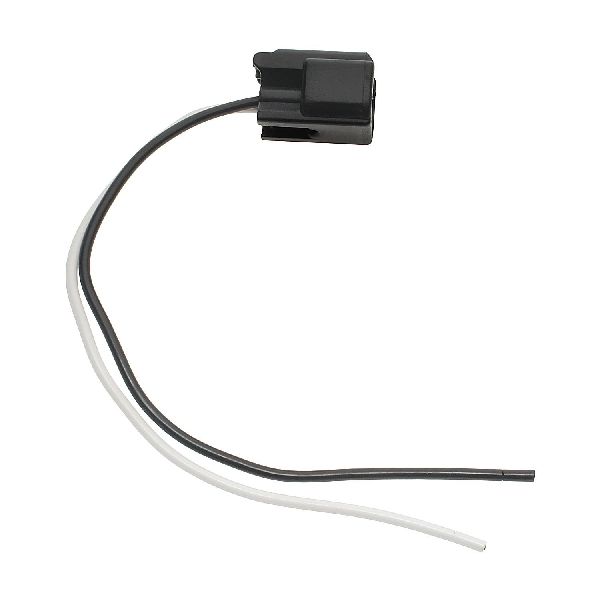
- EVAP Canister Vent Valve Connector — At the EVAP canister vent valve, located near the charcoal canister by the fuel tank.. Knowing the wire colors and expected voltages is critical for electrical diagnosis. On a 2016 Fusion, Pin 2 (Green) should have battery voltage, and Pin 1 (Green/Blue) is the control wire to the ECM.
Real Owner Repair Stories
- Reddit user on r/fordfusion (2013 Ford Fusion Titanium 2.0L) — Check engine light P1450 came on after the car wouldn't start after getting gas. Owner had to hold the gas pedal to the floor to get it to start, and even then it would want to stall.
❌ Tried (didn't work) An inexpensive purge valve purchased from Amazon, which caused the problem to return after a few thousand miles.
✅ What actually fixed it Replacing the canister purge valve. The user noted that after the cheap part failed, they switched to an AutoZone part with a lifetime warranty to get free replacements if it failed again.
"I Checked Everything" — The Actual Cause
- The P1450 code, 'Unable to Bleed Up Fuel Tank Vacuum', is fundamentally a problem with releasing vacuum, not a leak of vapor out of the system. A standard EVAP smoke test is designed to find leaks by pressurizing the system and seeing where smoke escapes. This test will typically come back 'clean' or 'pass' for a P1450 issue because the most common cause is a canister purge valve stuck open, which allows constant engine vacuum into the tank. A smoke test with the engine off will not identify a valve that is stuck open to the intake manifold. The correct diagnostic procedure is to use a scan tool to monitor fuel tank pressure while commanding the purge valve closed, or to physically test the valve for vacuum pass-through while the engine is running.
When the Usual Fixes Don't Work
- While the canister purge valve is the cause in over 90% of cases, it is not a guaranteed fix. In a documented case for a similar Ford 2.0L engine, a vehicle owner replaced the purge valve but continued to experience the hard-starting issue after refueling. This indicates that a proper diagnosis should not be skipped. If a new purge valve does not resolve the code, the next most likely causes are a blocked EVAP canister vent solenoid or a physical blockage in one of the EVAP hoses or the charcoal canister itself.
OEM Part Supersession History
AU5Z-9C915-A, -B, -C, -D→AU5Z-9C915-E— The original parts had insufficient sealing capability, as noted in TSB 19-2207, leading to the P1450 code. The revised part corrects this design flaw.
Heads up: Part number AU5Z-9C915-E also replaces alternate numbers CX-2409 and CX-2470. Using the latest revision (-E) is critical for a lasting repair.
Model Year Variations Within This Range
- 2013-2017: No significant variations have been identified for this specific P1450 issue on the Fusion Energi within this model year range. The cause (canister purge valve) and the primary fix (replacement with part AU5Z-9C915-E and a PCM update) are consistent across all affected years per TSB 19-2207.
Helpful Videos


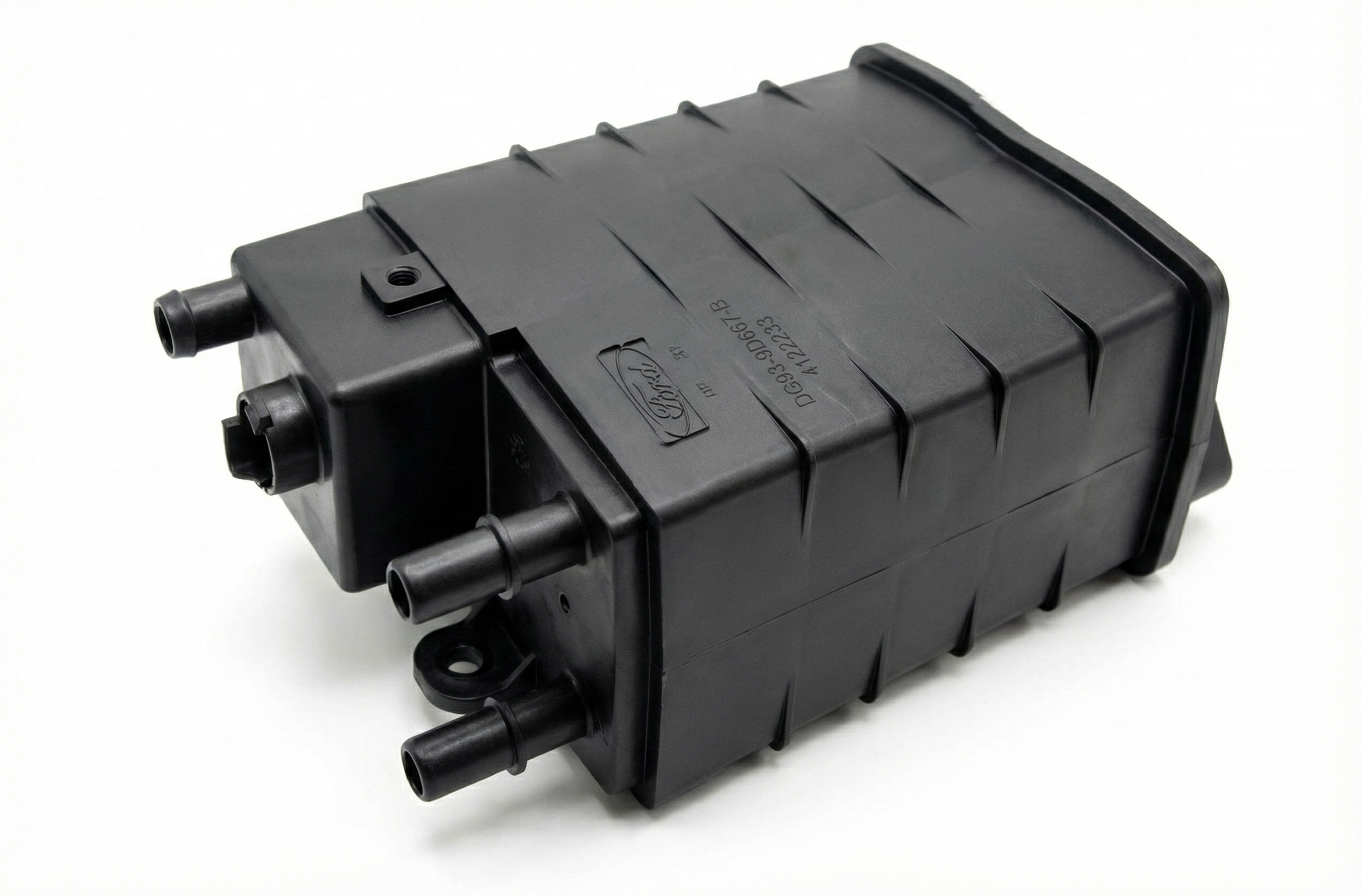
Used OEM Parts in Stock
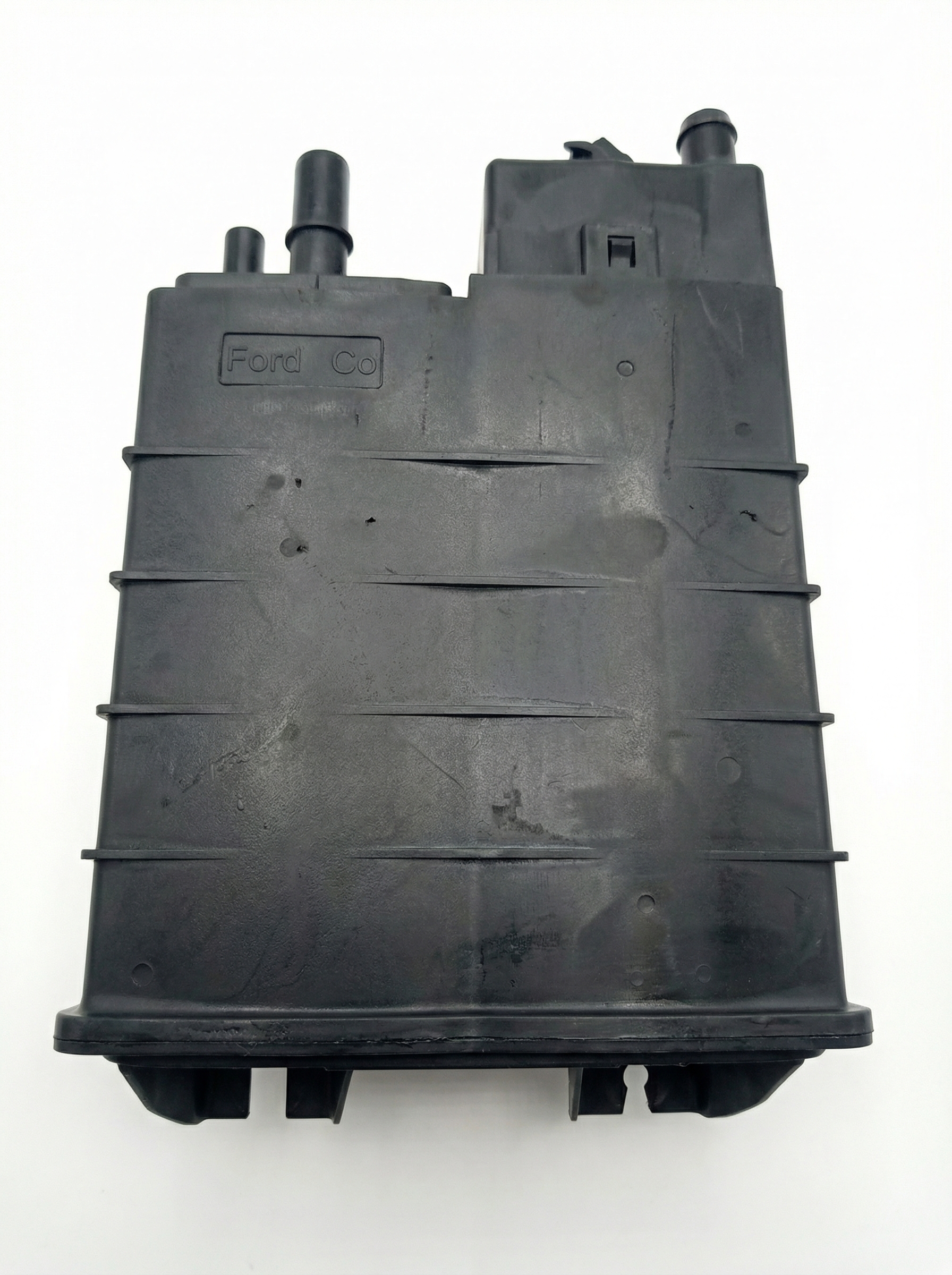
New Aftermarket Parts Available


The information in this article is provided for general reference and educational purposes only. Vehicle specifications, procedures, and part compatibility can vary by production date, trim level, and region. Always consult your vehicle's factory service manual and verify part numbers before purchasing or performing repairs. Safety-critical components such as airbags, seat belts, and braking systems should be installed by a qualified professional.
- Ford FUSION ENERGI:
- 🎬 Helpful Videos
- 🛍️ Shop This Part
- What's Unique About the 2013-2017 Ford FUSION ENERGI
- Diagnostic Flowchart
- Symptoms You May Notice
- Most Likely Causes
- Rare But Worth Checking
- Diagnosis Steps
- Parts You'll Likely Need
- Related Codes That Often Appear With This One
- Technical Service Bulletins (TSBs) & Recalls
- Platform-Specific Known Issues
- Mechanic-Grade Diagnostic Values
- Scan Tool Commands That Help
- Wiring & Ground Locations
- Real Owner Repair Stories
- "I Checked Everything" — The Actual Cause
- When the Usual Fixes Don't Work
- OEM Part Supersession History
- Model Year Variations Within This Range
- 🎟️ Get 5% Off