

P1450 on 2012-2017 Ford Focus: Causes for 'Unable to Bleed Up Fuel Tank Vacuum'
On a 2012-2017 Ford Focus with the 2.0L GDI engine, code P1450 is almost always caused by a faulty EVAP canister purge valve that gets stuck open. This is a well-documented issue, referenced in Ford TSBs and Safety Recall 18S32. Replacing the purge valve assembly is a common, DIY-friendly fix costing between $30 and $90 for the part.
- P1450 on a 2012-2017 Focus is overwhelmingly caused by a failed canister purge valve in the engine bay.
- This is a known issue with official Ford service bulletins and a safety recall.
- A simple test involves checking for vacuum at the valve's port while the engine is running and the valve is unplugged. If vacuum is present, the part is bad.
- Do not delay this repair. A prolonged stuck purge valve can cause the fuel tank to collapse, leading to a much more difficult and expensive fix.
- The repair is very DIY-friendly, typically taking less than 30 minutes with basic tools.
What's Unique About the 2012-2017 Ford FOCUS

The 2012-2017 Ford Focus with the 2.0L GDI engine is particularly susceptible to this code due to a known design flaw with the canister purge valve (CPV) sticking open. This problem is so prevalent that Ford issued multiple Technical Service Bulletins (TSBs) and a critical safety recall (18S32 / NHTSA 18V735). The recall acknowledges that the constant vacuum can deform the plastic fuel tank, leading to inaccurate fuel gauge readings, engine stalling without warning, and an increased risk of a crash. This isn't just a random part failure; it's a recognized, widespread pattern on this specific vehicle platform.
Diagnostic Flowchart

Tap your situation to follow the diagnostic path that matches what you're seeing on this vehicle.
Symptoms You May Notice

- Check Engine Light is on
- Engine stalling, sometimes immediately after refueling or while driving at low speeds.
- Rough idle or stuttering/shaking on acceleration.
- Difficulty starting the engine, especially after filling the gas tank. 🎬 Watch: Why your Focus stalls after refueling and how to fix it. The engine may crank but not start, or start and immediately stall.
- Inaccurate or erratic fuel gauge readings, and incorrect 'Distance to Empty' display.
- Audible 'whoosh' sound of vacuum when opening the gas cap (if the cap is opened shortly after the engine was running).
- Misfire on startup (sometimes triggering code P0316) due to excess fuel vapors being drawn into the intake.
- Replacing the gas cap. The Focus has a capless system. An issue with the filler neck seal would cause a leak code (e.g., P0456), not an excessive vacuum code like P1450.
- Replacing the fuel tank pressure (FTP) sensor. The sensor is almost always doing its job correctly by reporting the excessive vacuum caused by the stuck purge valve. Replacing the sensor will not fix the underlying mechanical problem.
- Replacing the EVAP Canister Vent Solenoid first. While this part can fail, the engine-bay mounted purge valve is the culprit in over 95% of P1450 cases on this vehicle. Always test the purge valve first.
Most Likely Causes

- Stuck-Open Canister Purge Valve (CPV) 🔴 High Probability This is the overwhelmingly common failure, acknowledged by Ford through TSBs 16-0062, 17-0016, 19-2363 and Safety Recall 18S32. The valve fails internally, allowing constant, un-commanded engine vacuum to pull on the fuel tank. The part is sold as a complete hose assembly, not just the valve itself.
How to confirm: With the engine running, disconnect the electrical connector from the purge valve. Then, disconnect the EVAP line running from the valve back toward the fuel tank. If you can feel engine vacuum on the valve's port with your finger, it is stuck open and has failed. This is a definitive test.
Typical fix: Replace the canister purge valve and hose assembly. This is a relatively simple DIY repair located in the engine bay, typically taking 15-30 minutes. 🎬 Watch this step-by-step guide to replacing the purge valve assembly.
Est. part cost: $30-$90 - Deformed or Damaged Fuel Tank 🟡 Medium Probability This is a direct consequence of a long-term stuck-open purge valve. The constant vacuum can physically collapse or deform the plastic fuel tank. TSB 16-0062 and Recall 18S32 specifically call for inspecting the tank for deformation.
How to confirm: Visually inspect the underside of the fuel tank. Look for any areas that appear sucked inward or collapsed. TSB 16-0062 specifies checking if the bottom is deformed more than 1 inch (25mm) upward. This may also manifest as a fuel gauge that reads incorrectly.
Typical fix: If the tank is deformed, it must be replaced along with the faulty purge valve to prevent a recurrence. This is a much larger and more expensive job, often requiring a professional. The recall service covers this replacement if deformation is found.
Est. part cost: $400-$800 - Blocked EVAP Canister or Vent Solenoid ⚪ Low Probability While less common than the purge valve, a blockage in the EVAP canister (sometimes from fuel overfilling) or a vent valve that is stuck closed can also prevent the system from bleeding off vacuum. However, these issues are far less frequent for this specific code on this platform.
How to confirm: Diagnosis involves testing the vent solenoid for proper operation with a scan tool or power probe and inspecting the EVAP canister and its lines for blockages or fuel saturation. A bad vent solenoid often causes issues filling the tank, which is a distinguishing symptom.
Typical fix: Replace the EVAP canister and/or the vent solenoid, which is located near the fuel tank.
Est. part cost: $50-$150
Rare But Worth Checking
- Damaged EVAP lines. A kinked or crushed line between the purge valve and the tank could theoretically contribute to a vacuum issue, but this is highly unlikely to be the root cause compared to the purge valve itself.
Diagnosis Steps
- Read the code with an OBD-II scanner to confirm P1450 is present. Note any other codes.
- Locate the canister purge valve (CPV) assembly in the engine bay. It's a small solenoid integrated into a plastic hose assembly, typically near the top rear of the engine.
- Perform the definitive purge valve function test: Start the engine and let it idle.
- Disconnect the electrical connector from the CPV solenoid. This ensures it is not being commanded open by the PCM.
- Disconnect the hose leading from the CPV back to the fuel tank. This is a quick-connect fitting; you may need to pull back a colored locking tab (often green or white) and then press on the fitting to release it.
- Place your finger over the port on the valve itself.
- If you feel any vacuum suction, the valve is stuck open and the entire assembly must be replaced. This is the most common failure.
- If no vacuum is felt, the issue is likely elsewhere, but this is rare. Proceed to inspect EVAP lines for kinks and test the vent solenoid near the tank.
- After replacing the part, clear the codes with a scanner. The check engine light may turn off on its own after several drive cycles, but clearing it is the best practice.
Parts You'll Likely Need
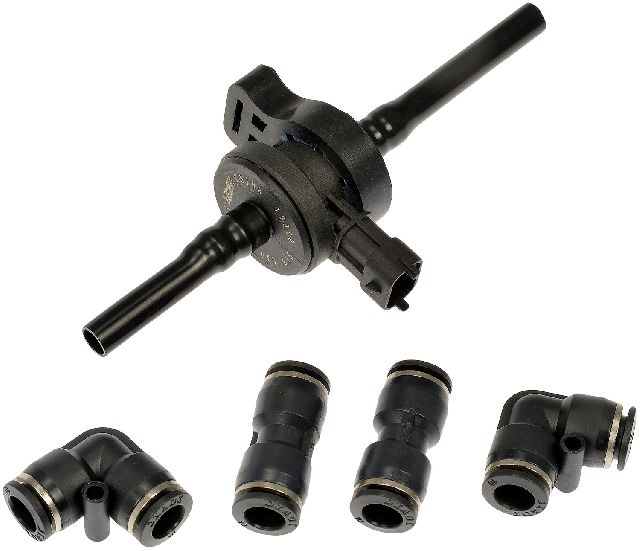
- Vapor Canister Purge Valve / Tube Assembly
(OEM #BV6Z-9D289-E (supersedes BV6Z-9D289-D and BV6Z-9D289-B))— This is the most frequent point of failure for this code on the 2012-2017 Focus, as documented by multiple Ford TSBs and owner complaints. It gets stuck open, creating constant vacuum. The part is an assembly with hoses.
Trusted brands: Motorcraft (OEM), Bosch, Dorman (PV964)
OEM price range: $60-$90
Aftermarket price range: $30-$60
Related Codes That Often Appear With This One
- P0420 — Catalyst System Efficiency Below Threshold. This code is explicitly mentioned alongside P1450 in TSB 16-0062 and owner complaints, likely due to the altered air/fuel mixture from the constant ingestion of un-metered fuel vapors.
- P0456 — EVAP System Small Leak Detected. Also mentioned in TSBs, indicating a general fault within the EVAP system that can be triggered alongside the primary P1450 fault.
- P144A — EVAP System Purge Vapor Line Restricted/Blocked. TSB 17-0016 and TSB 19-2363 link this code directly with P1450, as both relate to improper vapor flow caused by the same faulty valve.
- P0460 — Fuel Level Sensor Circuit. This code appears when the fuel tank deforms, causing the fuel level float to bind or give inaccurate readings.
- P0316 — Misfire Detected On Startup (First 1000 Revolutions). A stuck open purge valve allows excess fuel vapors to flood the intake manifold, causing a rich condition and misfires immediately after starting the engine.
Technical Service Bulletins (TSBs) & Recalls
- Safety Recall 18S32 / NHTSA 18V735: Addresses engine stalling from a stuck canister purge valve causing fuel tank deformation. The fix involves reprogramming the PCM and, if needed, replacing the purge valve, canister, and fuel tank.
Platform-Specific Known Issues
- Safety Recall 18S32 (NHTSA 18V735): Ford recalled over 1.2 million vehicles for this issue. The remedy involves reprogramming the PCM to better detect the stuck purge valve. 🎬 See how a technician diagnoses the P1450 code and recall issues. If codes are present after the reprogram, the dealer will then replace the purge valve and, if necessary, inspect and replace a deformed fuel tank, carbon canister, and fuel delivery module, all free of charge.
- TSB 19-2363: This TSB supersedes earlier versions and is associated with the recall. It provides the technical procedure for dealers to perform the PCM reprogram and subsequent hardware checks and replacements if the valve is found to be faulty.
- TSB 17-0016: Specifically calls out P1450 being caused by an intermittent sticking canister purge valve on 2017 models.
- TSB 16-0062: Addresses inaccurate fuel gauge readings and multiple DTCs including P1450, linking them to a faulty purge valve and potential fuel tank deformation on 2012-2015 models.
Mechanic-Grade Diagnostic Values
- Canister Purge Valve (Solenoid) Coil Resistance — expected: 12 to 130 ohms. Failure: A reading outside this range, or showing an open circuit (infinite resistance), indicates a failed solenoid coil.
- Canister Purge Valve Connector Voltage (Key On, Engine Off) — expected: Approximately 11 to 12 volts DC. Failure: No voltage at the harness connector suggests a wiring or fuse issue upstream of the valve.
- Fuel Tank Pressure (FTP) Sensor Voltage (Key On, Engine Off, system at atmospheric pressure) — expected: Approximately 2.6 to 2.65 volts. Failure: A significant deviation from this static value could indicate a sensor fault, but it's more likely to show a vacuum condition (lower voltage) upon startup if the purge valve is stuck open.
Scan Tool Commands That Help
- Ford IDS / FORScan: EVAP Purge Valve Command (Duty Cycle %) — This is the definitive bidirectional test. With the engine running, command the purge valve to 0% (closed). If live data for Fuel Tank Pressure (FTP) still shows a developing vacuum (pressure dropping), the valve is mechanically stuck open.
- Ford IDS / FORScan: EVAP Vent Valve Command (On/Off) — Used to diagnose a blocked EVAP system if a new purge valve doesn't fix the issue. Commanding the vent valve closed should seal the system; if it fails to hold pressure during a test, it may be stuck open or there's a leak elsewhere.
- Ford IDS: Manual EVAPs Test — This is a guided test function within the Ford factory scan tool that automatically commands the necessary components to check for large leaks, small leaks, and blockages. It can be run to verify a repair is complete.
Wiring & Ground Locations
- Main Engine Bay Grounds — Underneath the airbox, in front of the battery. There are typically two ground points on the chassis in this area.. A poor ground connection can cause erratic behavior in electronically controlled components like the canister purge valve and other sensors monitored by the PCM.
- PCM Ground — Right next to the Powertrain Control Module (PCM) itself. On a Focus, this is often near the firewall or under the battery tray area.. The PCM is the brain of the operation. A bad ground directly at the PCM can cause a host of phantom codes and misdiagnoses, including incorrect readings from the EVAP system.
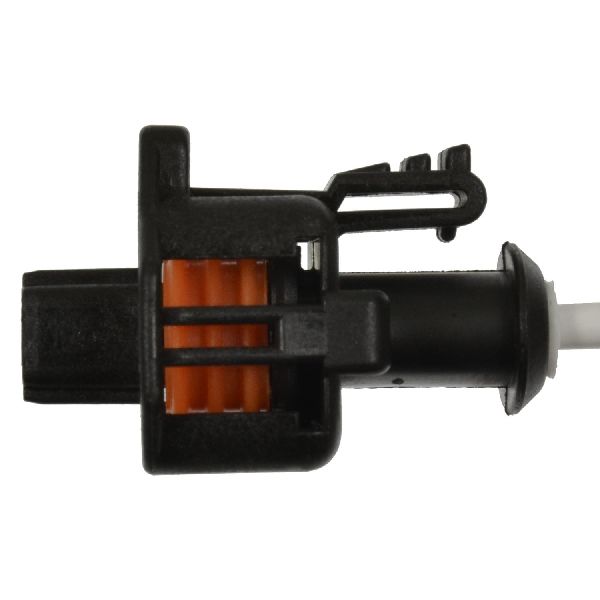
- Canister Purge Valve Connector — A 2-pin male connector that plugs directly into the purge valve solenoid in the engine bay.. The connector itself or its wiring can become corroded or damaged, preventing the PCM from controlling the valve. The wires can be tested for voltage (power) and continuity (ground).
Real Owner Repair Stories
- Reddit user, r/FordFocus (2014 Ford Focus SE) — Difficulty filling the gas tank (pump clicks off repeatedly) followed by a P1450 check engine light.
❌ Tried (didn't work) Replaced the canister purge valve with an aftermarket part from O'Reilly's and cleared the code.
✅ What actually fixed it The check engine light returned after 100-150 miles. The user was advised that the problem was likely a blocked canister vent valve or a saturated charcoal canister, as the symptom of the fuel pump clicking off points more towards a venting issue rather than just a stuck-open purge valve. The final resolution was not posted, but the diagnosis shifted away from the already-replaced purge valve. - Reddit user, r/FordFocus (2014 Ford Focus, manual transmission, 170,000 miles) — Check Engine Light with code P1450.
✅ What actually fixed it Replaced the canister purge valve with an OEM part from the dealership for $36. The user asked how long it would take for the light to go out on its own. Other users confirmed it can take several drive cycles (up to a week or 100 miles) for the car's EVAP readiness monitor to complete and turn off the light.
OEM Part Supersession History
BV6Z-9D289-B→BV6Z-9D289-D, then BV6Z-9D289-E— Part redesign to improve durability and prevent the internal valve from sticking open, which was the root cause of the widespread failures and recall.
Model Year Variations Within This Range
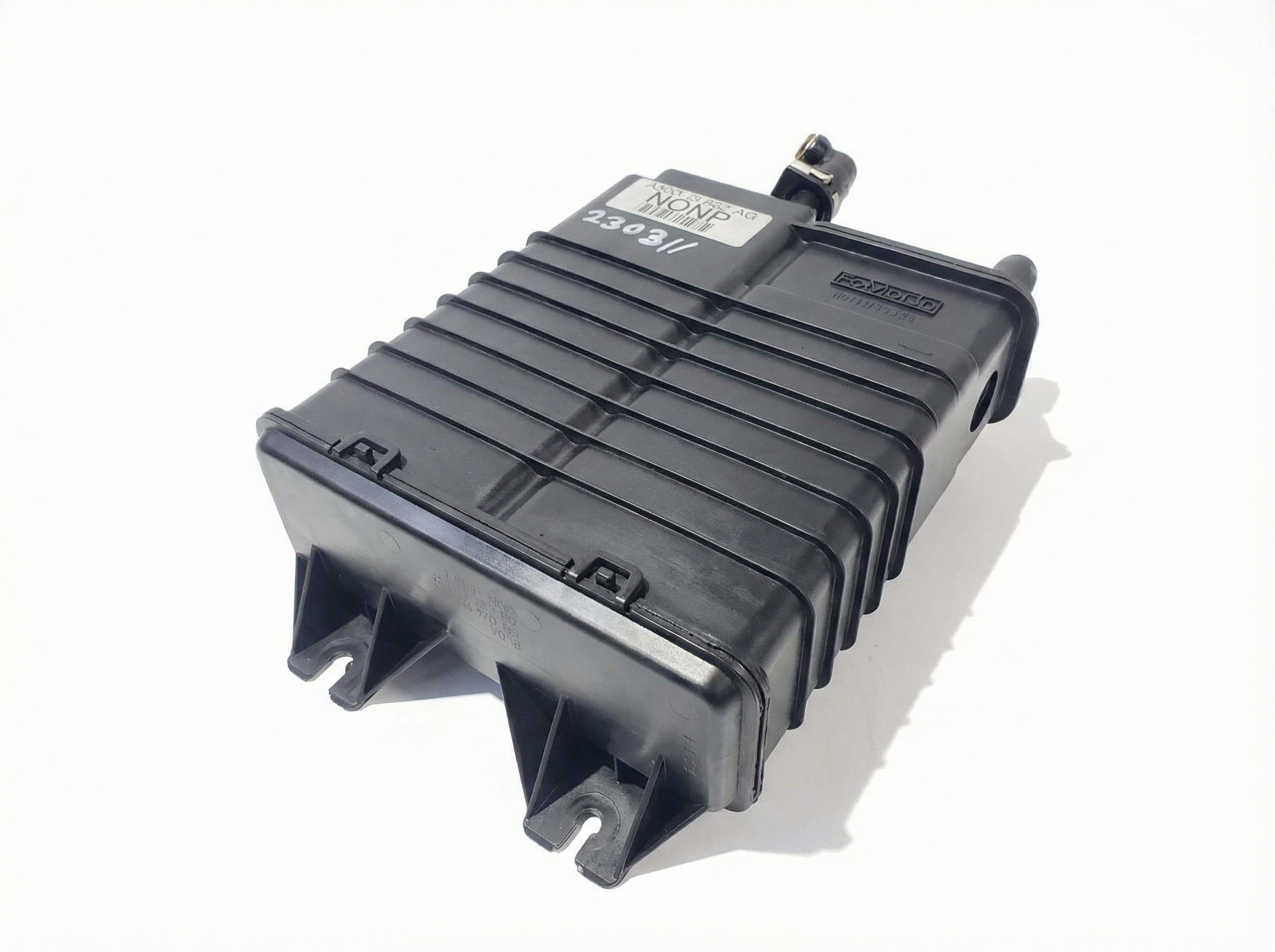
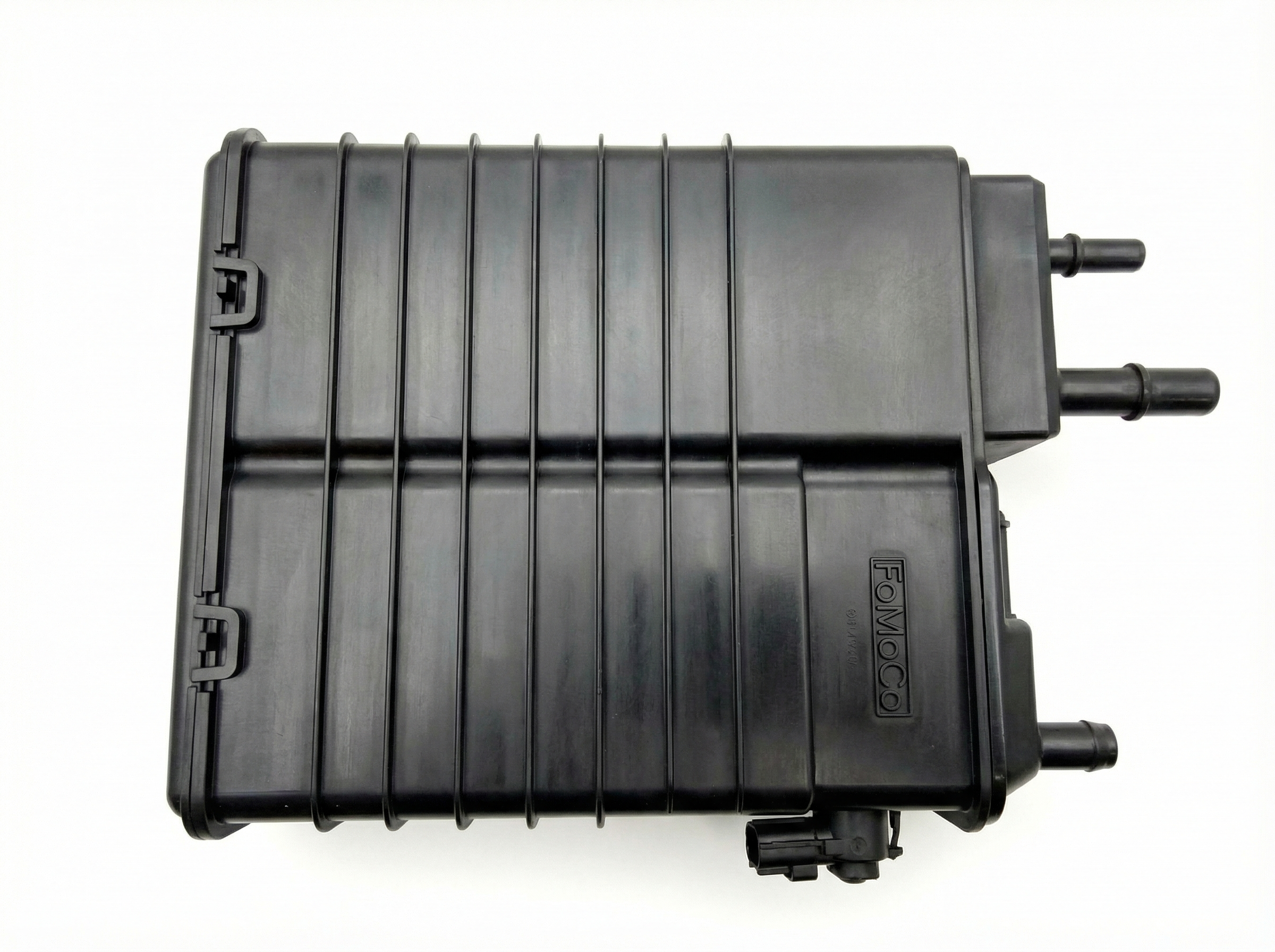
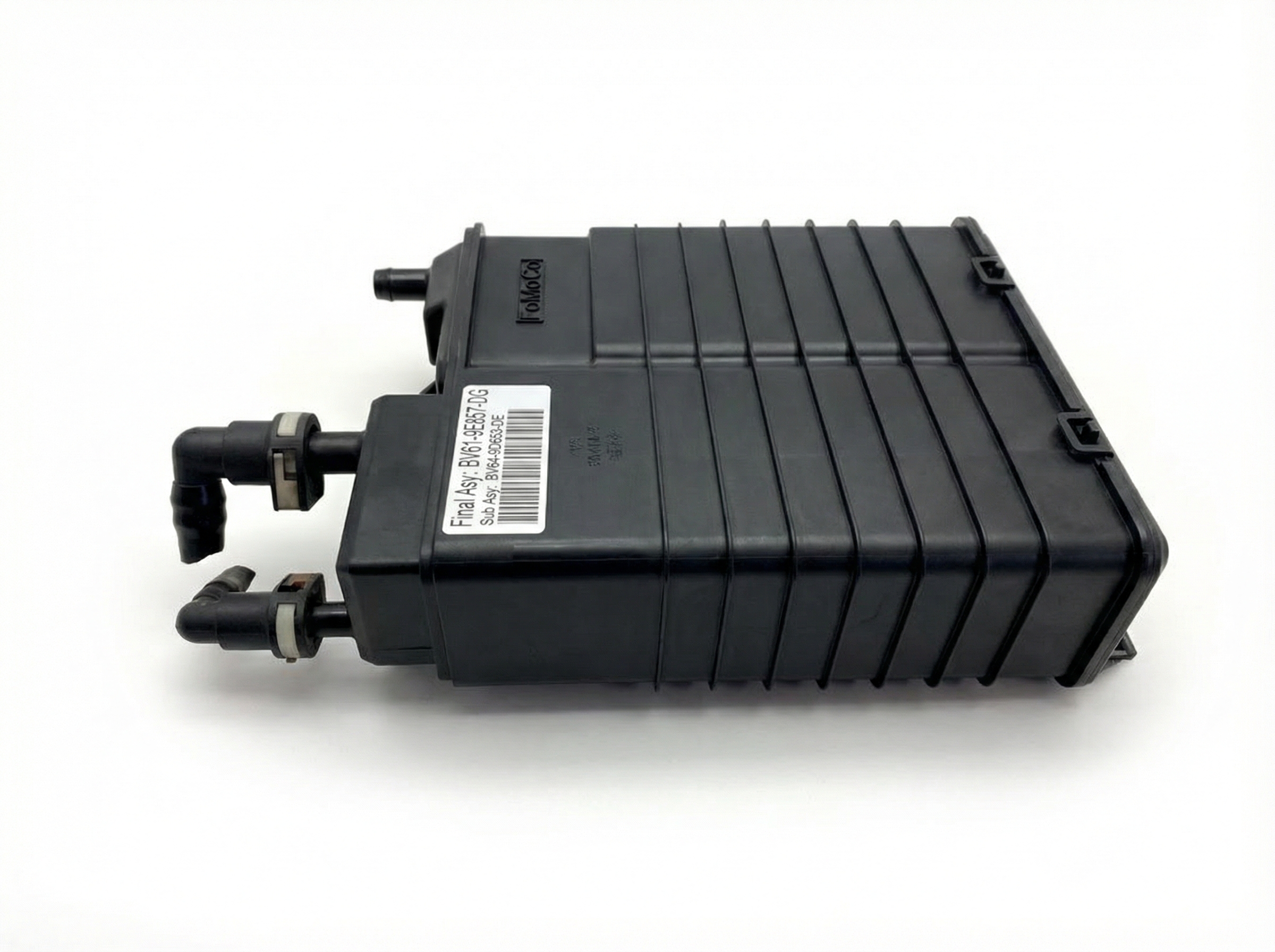
- 2012-2018: Vehicles were built with either a Federal (non-PZEV) or a PZEV (Partial Zero Emission Vehicle) emissions package, primarily for California-spec cars. The vapor canister located near the fuel tank is different between these two systems and is not interchangeable. Installing the wrong canister will cause persistent EVAP codes. The correct version must be identified by checking the Vehicle Emission Control Information (VECI) sticker under the hood before ordering a replacement canister.
- 2015-2018 (Facelift): The 2015 model year introduced a significant facelift with revised exterior styling. However, the 2.0L GDI engine, transmission, and the fundamental design of the EVAP system, including the failure-prone purge valve, were carried over from the pre-facelift (2012-2014) models. Therefore, the cause and fix for P1450 remain identical across the entire 2012-2017 range.
Helpful Videos

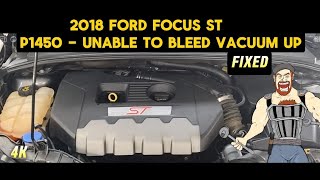

Used OEM Parts in Stock
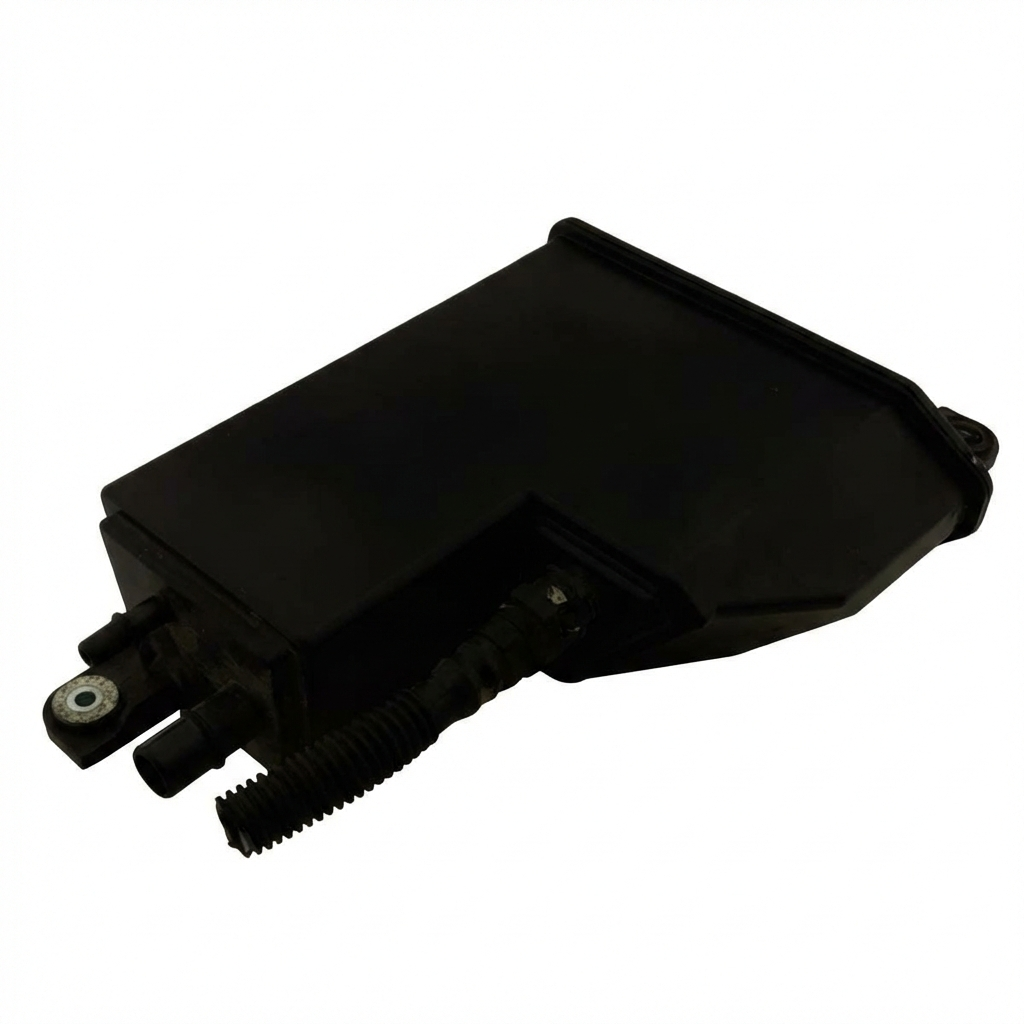
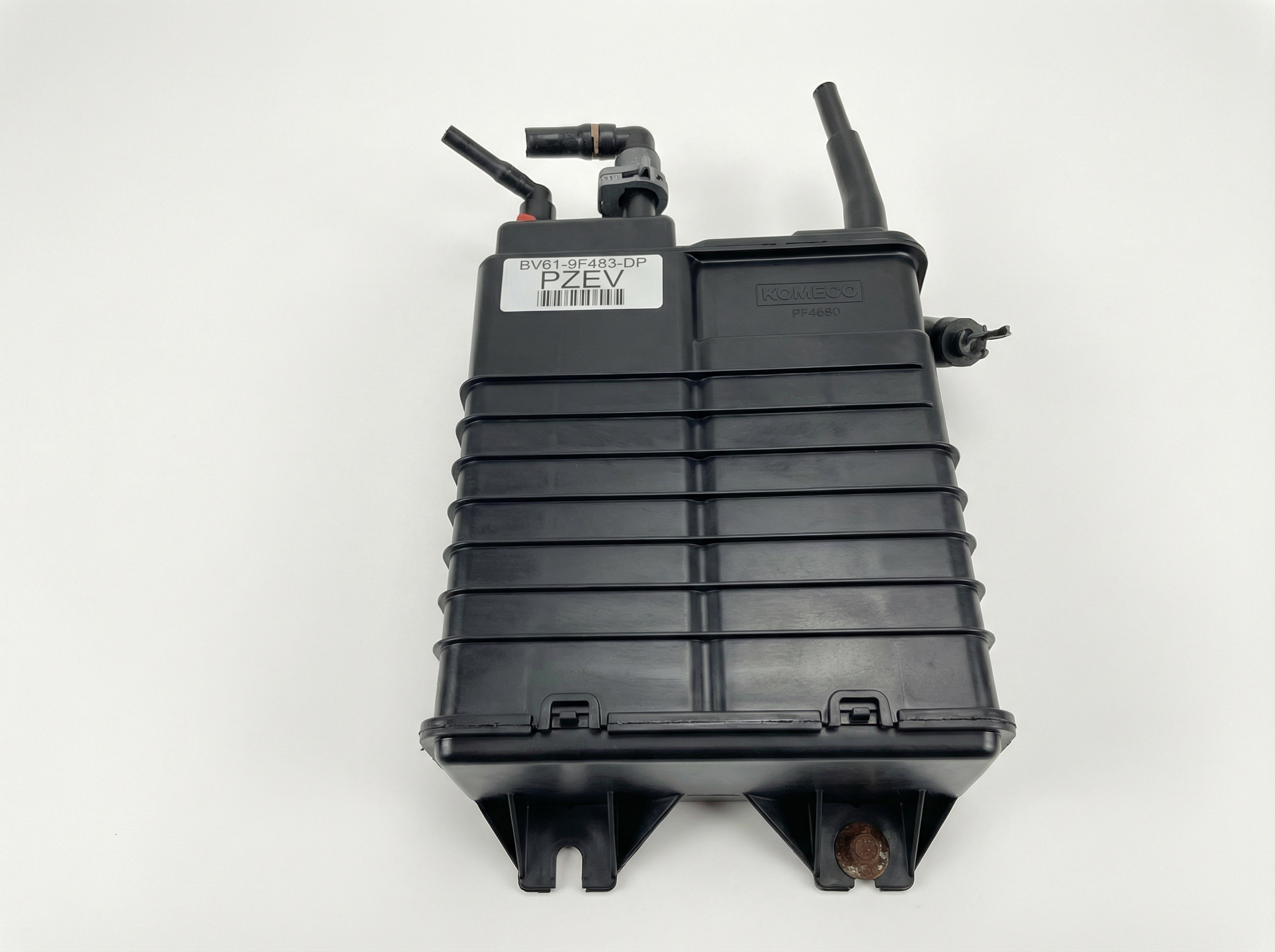
New Aftermarket Parts Available


The information in this article is provided for general reference and educational purposes only. Vehicle specifications, procedures, and part compatibility can vary by production date, trim level, and region. Always consult your vehicle's factory service manual and verify part numbers before purchasing or performing repairs. Safety-critical components such as airbags, seat belts, and braking systems should be installed by a qualified professional.
- Ford FOCUS:
- 🎬 Helpful Videos
- 🛍️ Shop This Part
- What's Unique About the 2012-2017 Ford FOCUS
- Diagnostic Flowchart
- Symptoms You May Notice
- Most Likely Causes
- Rare But Worth Checking
- Diagnosis Steps
- Parts You'll Likely Need
- Related Codes That Often Appear With This One
- Technical Service Bulletins (TSBs) & Recalls
- Platform-Specific Known Issues
- Mechanic-Grade Diagnostic Values
- Scan Tool Commands That Help
- Wiring & Ground Locations
- Real Owner Repair Stories
- OEM Part Supersession History
- Model Year Variations Within This Range
- 🎟️ Get 5% Off