

P1450 on 2004-2008 Ford F-150: Causes and Fixes for 'Unable to Bleed Up Fuel Tank Vacuum'
On a 2004-2008 F-150, code P1450 is almost always caused by a faulty canister purge valve that is stuck open. A classic symptom is the truck struggling to start right after refueling. Replacing the purge valve is a simple DIY job that usually costs between $40 and $100 for the part. If the purge valve isn't the cause, the next most likely culprit is a clogged canister vent solenoid filter located near the spare tire.
- P1450 on your F-150 means the fuel tank has too much vacuum that it can't release.
- The most likely symptom you'll notice is the truck struggling to start right after you get gas. This strongly points to a bad canister purge valve.
- Start your diagnosis by testing the canister purge valve in the engine bay; it's a 5-minute check that often finds the problem.
- If the purge valve is good, your next step is to inspect the canister vent solenoid and its filter near the spare tire for blockages or damage.
- This is a very DIY-friendly repair, with the most common parts costing under $100.
What's Unique About the 2004-2008 Ford F-150
For the 11th generation F-150 (2004-2008), the P1450 code is an extremely common issue that very frequently points to a single, inexpensive part: the canister purge valve. While other EVAP system failures can trigger this code, the purge valve is the culprit in the vast majority of cases for this specific truck. The symptom of a hard start immediately after refueling is a classic sign that directly points to this valve failing on this platform, as it allows raw fuel vapors to be drawn directly into the intake manifold, flooding the engine.
Symptoms You May Notice
- Check Engine Light is on.
- Difficulty starting the engine, especially right after filling the gas tank.
- Engine cranks for a long time but won't start, or starts and then immediately stalls after refueling.
- Rough idle or stalling at low speeds.
- Loud hissing or 'whoosh' sound when opening the gas cap, indicating a strong vacuum.
- Remote start is disabled (a feature of the truck's software when a CEL is active).
- Replacing the gas cap. A faulty gas cap typically causes a large leak code (like P0455 or P0457), not an excessive vacuum code like P1450.
- Replacing the Fuel Tank Pressure (FTP) sensor first. This part is less likely to fail than the purge or vent valves and is much more difficult and expensive to replace as it requires dropping the fuel tank.
- Replacing the fuel pump. The symptoms of a hard start can be mistaken for a weak fuel pump, but the specific timing (only after refueling) is the key indicator of an EVAP system problem like P1450.
Most Likely Causes
- Canister Purge Valve Stuck Open or Leaking 🔴 High Probability This is a very common failure point on many Ford vehicles from this era, including the F-150. The valve gets stuck, allowing engine vacuum to constantly pull on the fuel tank, which causes the hard start after fueling symptom.
How to confirm: Locate the purge valve in the engine bay, typically on the driver's side of the intake manifold or on the firewall. Disconnect the electrical plug and the EVAP line coming from the rear of the truck. Start the engine. If you feel any suction from the valve's port with your finger, it has failed and must be replaced. A good valve should be completely closed with no vacuum passing through when unpowered. 🎬 Watch: How to test for a faulty purge valve
Typical fix: Replace the canister purge valve. It is held on by two 8mm or 10mm bolts and is a 15-minute job.
Est. part cost: $40-$110 - Canister Vent Solenoid Stuck Closed or Blocked 🟡 Medium Probability The vent solenoid and its filter are located under the truck near the spare tire, making them susceptible to clogging from dirt, mud, and road debris. Spider webs are also a known cause of blockages in the vent tube or filter box.
How to confirm: Visually inspect the vent solenoid and its filter box for obstructions. Lowering the spare tire is necessary for access. You can attempt to blow through the vent hose to check for restrictions. A user on f150forum.com found a small 'prefilter' box on the EVAP assembly was completely filled with dirt, causing the code. A bidirectional scan tool can command the valve to open and close to test its function.
Typical fix: Clean any debris from the vent filter and hose. If the solenoid itself is stuck closed (which can be tested by applying 12V and listening for a click), it will need to be replaced. 🎬 See this walkthrough for replacing the canister vent solenoid
Est. part cost: $45-$90 - Blocked or Kinked EVAP Hoses ⚪ Low Probability Hoses can become brittle over time and may collapse or get kinked, especially the lines running over the fuel tank and to the canister. Two specific rubber hoses on the intake manifold under the cover have been noted to deteriorate.
How to confirm: Visually inspect all accessible EVAP hoses for kinks, collapses, or obvious damage. A smoke test is the most effective way to find a restriction in the lines that isn't visually apparent.
Typical fix: Replace the damaged or kinked section of the hose. Some owners have used 3/8 inch fuel hose as a cheap and effective replacement for deteriorated vacuum lines on the intake. 🎬 Watch: A budget-friendly guide to replacing EVAP hoses
Est. part cost: $10-$50
Rare But Worth Checking
- Faulty Fuel Tank Pressure (FTP) Sensor: While not common, the sensor that reports the vacuum level to the PCM can fail, sending incorrect data. This is typically diagnosed after confirming the purge and vent valves are working correctly. Replacement requires dropping the fuel tank, making it a more involved repair.
- Restricted Charcoal Canister: If you frequently 'top off' your fuel tank after the pump clicks off, liquid fuel can saturate the charcoal canister, causing it to become restricted and unable to flow air. This is an expensive part to replace and should only be done after confirming it's the source of the restriction, often by disconnecting it and seeing if the vacuum issue resolves.
Diagnosis Steps
- Read the code with an OBD-II scanner to confirm P1450 is present.
- Note the symptoms. If the truck is hard to start only after refueling, the canister purge valve is the primary suspect.
- Test the canister purge valve. Locate it in the engine bay, disconnect the electrical plug and the rear EVAP line, start the engine, and check for vacuum on the valve's port. If vacuum is present, replace the valve.
- If the purge valve test passes, move to the rear of the vehicle. Lower the spare tire for access.
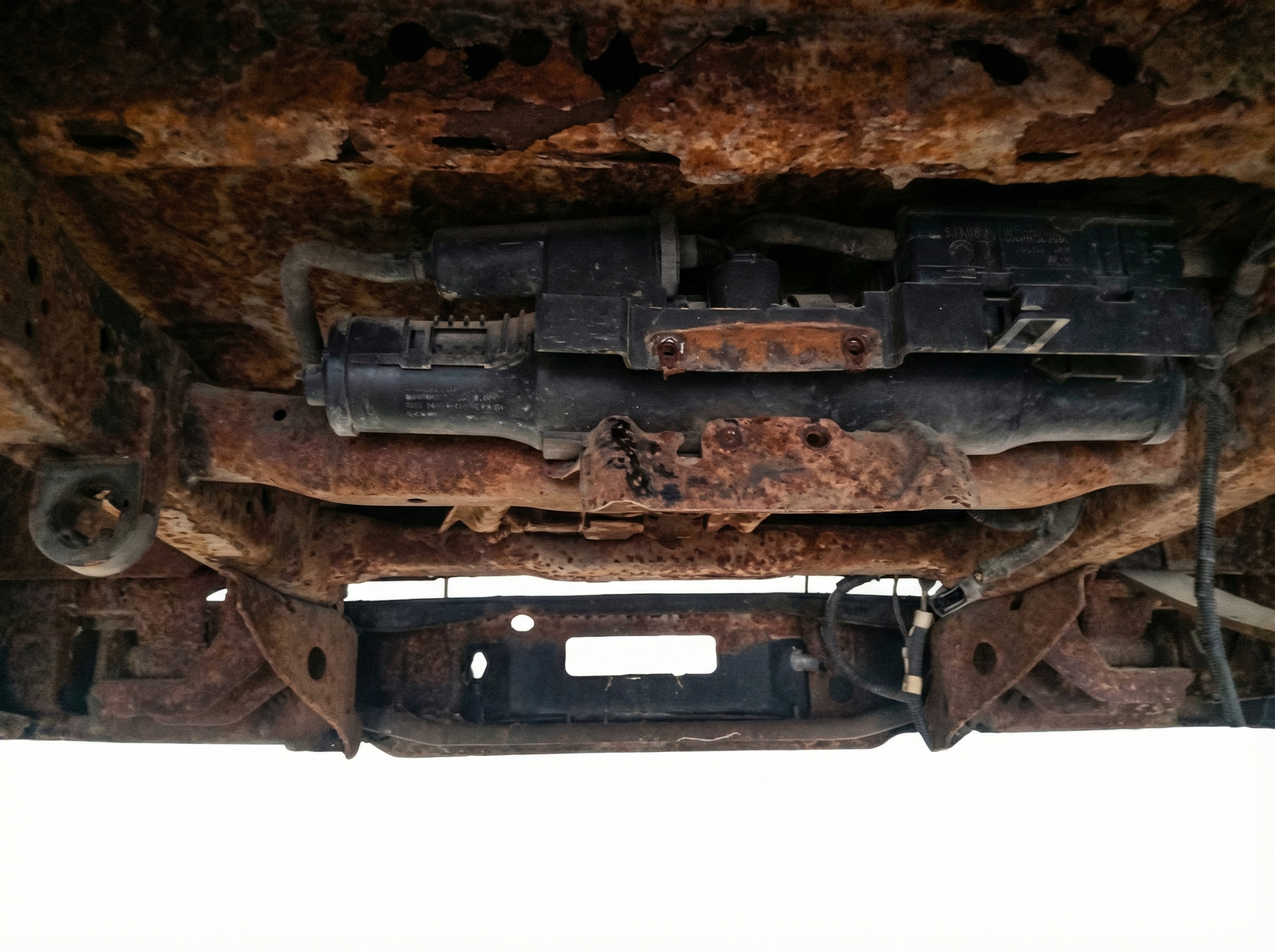
- Inspect the canister vent solenoid and its filter box, located near the spare tire, attached to the charcoal canister. Check for mud, dirt, spider webs, or other blockages in the filter box and vent hose. Clean as necessary.
- If the vent path is clear, test the vent solenoid's operation. Use a scan tool to command it open and closed, or apply 12V and ground to its pins and listen for a distinct click.
- If both valves seem to be working, visually inspect the EVAP lines for kinks or damage, particularly the lines running from the tank to the canister and the small rubber lines on the intake manifold.
- If no other cause is found, a professional smoke test may be needed to find a restriction, or further investigation into the Fuel Tank Pressure (FTP) sensor may be required.
Parts You'll Likely Need
- Canister Purge Valve / Solenoid
(OEM #6L3Z-9C915-A (Motorcraft CX-2082))— This is the most frequent cause of P1450 on this truck, leading to the classic 'hard start after fueling' symptom. It gets stuck open, allowing constant engine vacuum into the fuel tank. This part number is for vehicles built before 12/05/2005. A different part may be needed for later models, so VIN verification is crucial.
Trusted brands: Motorcraft, Dorman, Standard Motor Products (CP524)
OEM price range: $90-$120
Aftermarket price range: $40-$80 - Canister Vent Solenoid / Valve
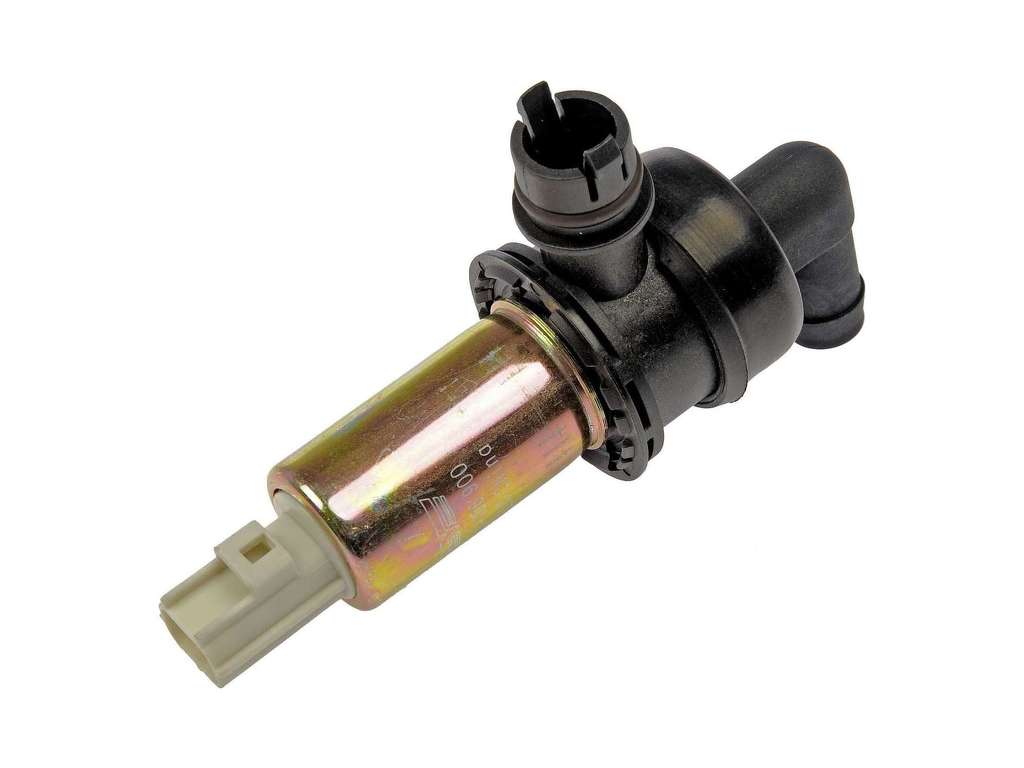
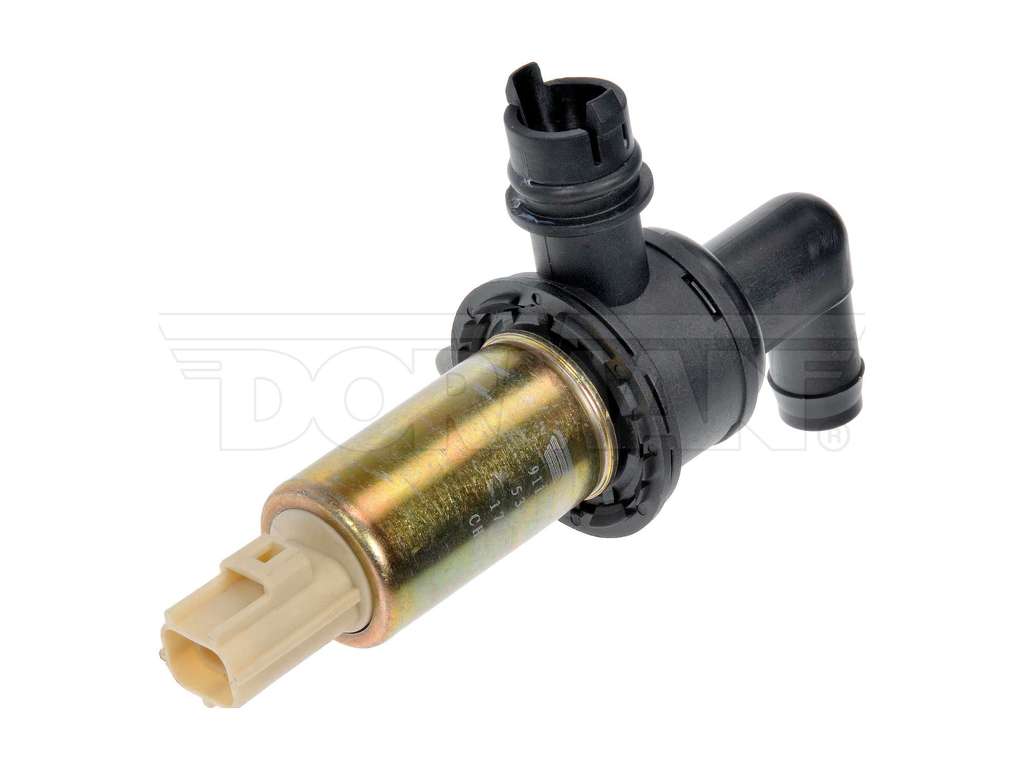
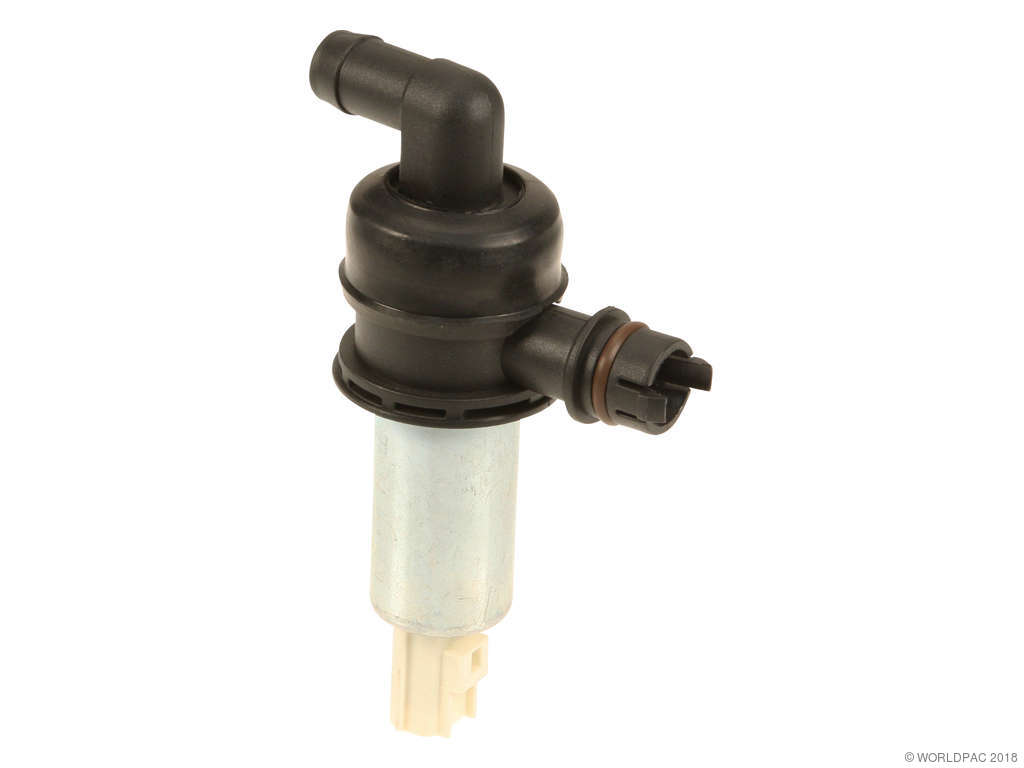
(OEM #9L3Z-9F945-A (Motorcraft CX-2137))— This is the second most common cause. It gets stuck closed or its filter gets clogged with debris, preventing the EVAP system from venting vacuum. It is located near the spare tire.
Trusted brands: Motorcraft, Standard Motor Products, Dorman (911-216), SKP
OEM price range: $70-$150
Aftermarket price range: $45-$90
Related Codes That Often Appear With This One
- P0446 — This code points to a fault in the vent control circuit. Since a blocked or faulty vent solenoid is a possible cause of P1450, it's common to see both codes together if the vent solenoid is electrically faulty or physically stuck.
- P0451 — This code indicates a problem with the Fuel Tank Pressure (FTP) sensor's performance or range. It can appear with P1450 if the sensor itself is failing or if the vacuum is so extreme that it goes outside the sensor's expected operating parameters.
Platform-Specific Known Issues
- Note that Ford used different purge valves during this production run, with a changeover reportedly occurring around December 5, 2005. It is critical to verify the correct part number for your specific vehicle using its VIN before purchasing. Part numbers like 5L34-9G683-AA and 6L34-9G683-AA (engineering numbers) correspond to service part 6L3Z-9C915-A (Motorcraft CX-2082). Later models may use a different part.
- The location of the canister vent solenoid near the spare tire makes it highly vulnerable to being packed with mud and dirt, especially on trucks used in off-road or dusty conditions. This is a very common source of restriction leading to P1450.
Mechanic-Grade Diagnostic Values
- Canister Purge Valve Coil Resistance — expected: 30 to 38 Ohms. Failure: A reading significantly outside this range, or an open (OL) or shorted (near 0 Ohms) circuit indicates a failed coil.
- Canister Vent Solenoid Coil Resistance — expected: 48 to 65 Ohms. Failure: Readings outside this range indicate a faulty solenoid coil.
- Fuel Tank Pressure (FTP) Sensor Voltage (Key On, Engine Off) — expected: Approximately 2.5 Volts at atmospheric pressure.. Failure: A reading below 2.4V indicates vacuum, while above 2.6V indicates pressure. If the engine is off and the gas cap is removed, the voltage should be stable near 2.5V.
- Fuel Tank Pressure (FTP) Live Data (Engine Running) — expected: Should be near 0 inches of water (inH2O) at idle when the purge valve is closed.. Failure: If the scan tool shows a negative pressure (vacuum) greater than -8.0 inH2O, the PCM may set a P1450 code. If vacuum builds when the purge valve is commanded closed, the valve is stuck open.
Hidden / Shadow Codes Worth Checking
- Mode 6, TID$80 & $81: These are not shadow codes, but Test IDs within OBD-II Mode 6 that monitor misfire counts. While not directly related to P1450, a severe vacuum leak from a stuck purge valve can cause a rough idle that might be perceived as a misfire. A technician might check these counts to rule out a separate ignition or fuel issue causing the rough idle. (see via A professional scan tool with Mode 6 data capabilities.)
Scan Tool Commands That Help
- Ford IDS / Professional Scan Tool: EVAP Purge Valve Actuation Test / Bi-Directional Control — This is the definitive test for a stuck purge valve. Command the valve to 0% (closed) with the engine running. If the FTP sensor still shows vacuum building in the tank, the valve is mechanically stuck open and must be replaced.
- Ford IDS / Professional Scan Tool: EVAP Vent Valve Actuation Test / Bi-Directional Control — This command allows you to cycle the canister vent solenoid open and closed. It's used to verify if the solenoid is functioning electrically (you should hear it click) and to see if it correctly relieves tank vacuum when commanded open. This is used after the purge valve has been confirmed to be good.
Wiring & Ground Locations
- G401 — Under the center rear of the vehicle, on a rear crossmember.. This is a primary ground point for components at the rear of the truck. Corrosion or a loose connection here could potentially affect the canister vent solenoid, which is located nearby.
- G104 — On the rear of the left-hand (driver's side) fender apron in the engine bay.. This is a major engine bay ground. While less likely to be the sole cause, a poor connection here can contribute to various PCM and sensor issues, including problems with the VREF (Voltage Reference) circuit that the FTP sensor relies on.
- Fuse F32 (Passenger Fuse Box) — In the fuse panel located under the right-hand side of the instrument panel.. This fuse often supplies power to the canister purge valve and canister vent solenoid. If this fuse is blown, neither valve will operate, though this would typically set different circuit codes (like P0443 or P0446) rather than P1450.
Real Owner Repair Stories
- f150forum.com user 'ahlbe1cl' (2006 Ford F-150 5.4L) — P1450 code and hard starting after refueling.
❌ Tried (didn't work) Initial visual inspection of hoses showed no obvious issues.
✅ What actually fixed it The user removed the entire EVAP canister assembly from under the truck. A small, separate 'pre-filter' box attached to the assembly was discovered to be completely packed with fine dirt. After cleaning out this pre-filter and blowing out the main canister with compressed air, the code was resolved.
"I Checked Everything" — The Actual Cause
- A smoke test is designed to find leaks, but P1450 is caused by a restriction or an inability to vent, not a leak. Therefore, a smoke test will almost always come back clean and is not the correct primary diagnostic procedure for this specific code. The problem is that vacuum is being trapped, which a smoke test (which applies pressure) will not identify. The root cause is typically a purge valve stuck open (allowing constant vacuum) or a vent valve/path stuck closed (preventing vacuum release).
OEM Part Supersession History
4L3Z-9C915-AB→6L3Z-9C915-A (Motorcraft CX-2082)— Part redesign/update by Ford.
Heads up: The changeover occurred for vehicles built on or after 12/05/2005. Using the wrong valve may result in fitment issues or improper operation. Always verify the correct part number with the vehicle's VIN.
Model Year Variations Within This Range
- 2004: The 2004 model year was a transition period. Ford sold both the old 10th generation body style as the 'F-150 Heritage' and the new 11th generation body style. These two trucks use different EVAP components and diagrams. It is critical to identify which 2004 model you are working on before ordering parts.
Diagnostic Flowchart
Other Known Issues on This Vehicle
Issues unrelated to this code that are worth knowing about as an owner of this generation:
- 5.4L 3V Spark Plug Breakage 🔴 High — Extremely common on engines built before 10/9/07. Occurs during spark plug removal. Failure to follow the specific TSB removal procedure greatly increases the risk of breakage, requiring a special extraction tool. (Ref: TSB 08-7-6)
- 5.4L 3V Cam Phasers & Timing Chain Failure 🔴 High — Very common, often presenting as a ticking or diesel-like knocking sound at hot idle. Caused by failing VCT solenoids, low oil pressure, or worn timing chain guides. If ignored, can lead to catastrophic engine failure.
- Fuel Pump Driver Module (FPDM) Corrosion 🔴 High — Extremely common, especially in regions with road salt. The aluminum module is mounted directly to the steel frame above the spare tire, causing galvanic corrosion that destroys the module, leading to a no-start or stalling condition.
- Cracked Exhaust Manifold 🟠 Medium — Common on both 4.6L and 5.4L engines, causing an exhaust leak tick that is most noticeable on a cold start and may quiet down as the engine warms up.
- 4x4 IWE Solenoid / Actuator Failure 🟠 Medium — A common issue where a faulty IWE (Integrated Wheel End) solenoid allows vacuum to leak, partially engaging the front hubs and causing a grinding noise while driving in 2WD.
Used vs. New Parts: Buying Guide for This Vehicle
When a used part is the smart pick: For the canister purge valve and vent solenoid, a used part from a low-mileage donor vehicle can be a cost-effective option, as they are simple electrical solenoids. It is a gamble on remaining lifespan, but the low cost and ease of replacement make it a reasonable one for budget repairs.
Donor-vehicle mileage cap: roughly under 80000 miles for the part to have meaningful remaining life.
What to inspect on the donor part:
- For solenoids, ensure the plastic housing is not cracked or brittle.
- Check that electrical pins are clean and free of corrosion.
- Inspect hose ports to ensure they are not clogged with debris.
- Avoid parts from vehicles in heavy salt-belt regions, as corrosion is more likely.
OEM-only on this vehicle (don't cheap out):
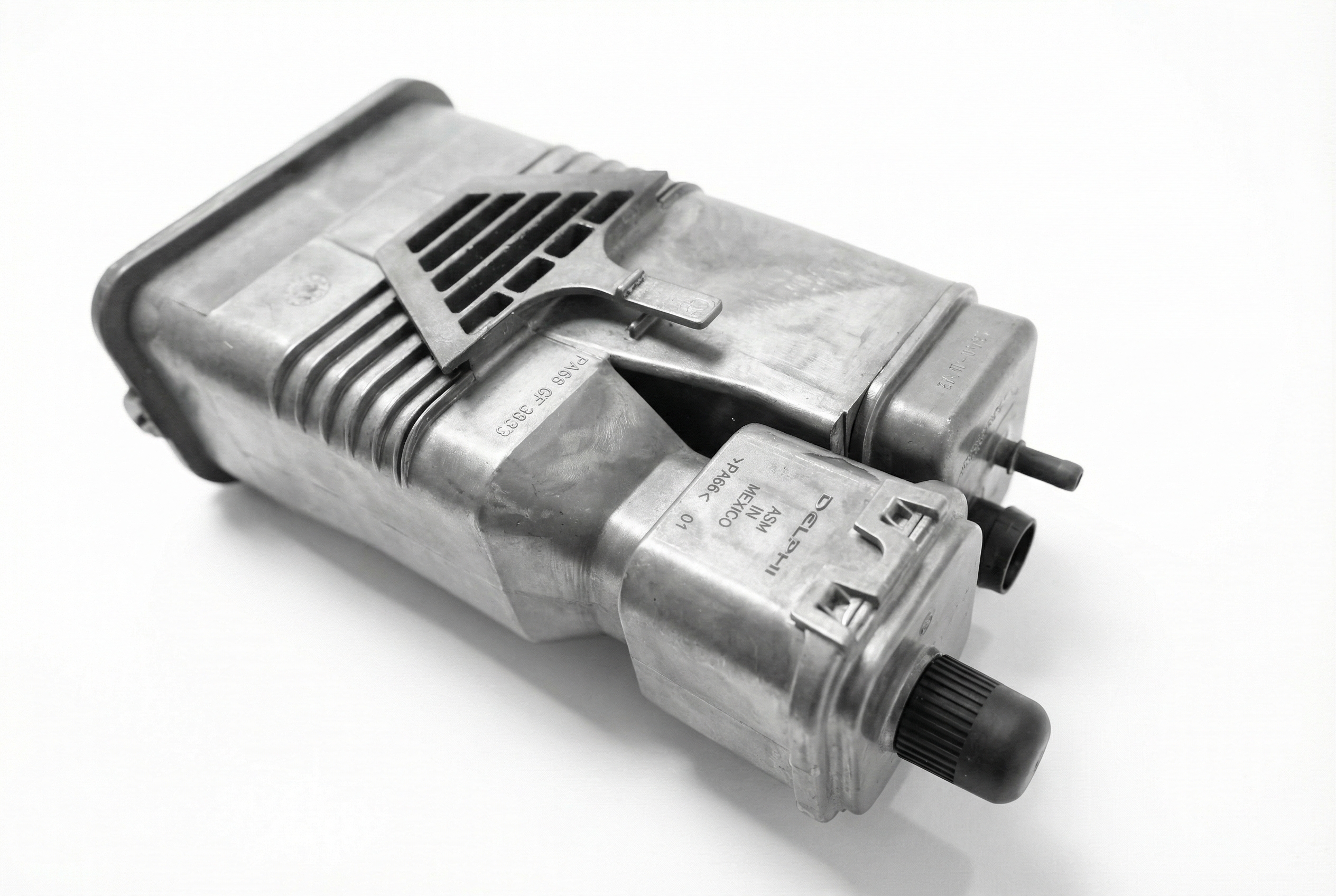
- Charcoal Canister: Avoid used charcoal canisters. There is no way to know if the donor vehicle's owner frequently 'topped off' the tank, which can saturate the canister with liquid fuel and render it useless.
Aftermarket brands forum-validated for this vehicle:
- Motorcraft (OEM)
- Standard Motor Products (SMP)
- Dorman (Often includes design improvements, such as better standoffs for modules exposed to the elements)
Brands owners have reported issues with on this vehicle:
- No-name, unbranded parts from online marketplaces can have high failure rates and may not perform to OEM specifications. One user reported a non-OEM purge valve failing within 2,000 miles.
Real Owner Stories
Aggregated from forums and TSBs cited above. Mileages and costs reflect what owners reported in those sources.
2004-2008 Ford F-150
Symptoms: The truck had a hard time starting after filling the tank. A P1450 fuel code for excessive fuel tank vacuum was present.
What fixed it: Cleaning a small 'prefilter' box on the EVAP canister assembly that was completely filled with dirt.
Source hint: f150forum.com thread titled 'P1450 Error Code Excessive Fuel tank Vacuum'
Related OBD-II Codes
Frequently Asked Questions
Why is my 2004-2008 F-150 hard to start specifically after I fill up the gas tank?
I heard there was a change in the purge valve part for the 2005 model year. How do I know which one to buy?
Why did my remote start stop working on my F-150 when the P1450 code appeared?
Does the spark plug breakage issue (TSB 08-7-6) have anything to do with my P1450 code?
Where is the canister vent solenoid located on my F-150, and why does it fail?
Can I use standard fuel hose to fix the deteriorated vacuum lines on my intake manifold?
Helpful Videos

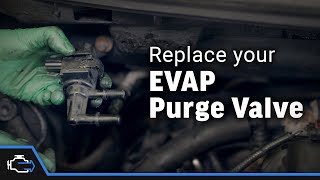
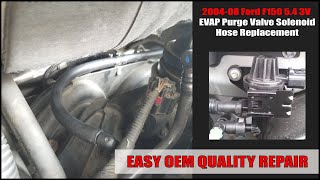
Used OEM Parts in Stock
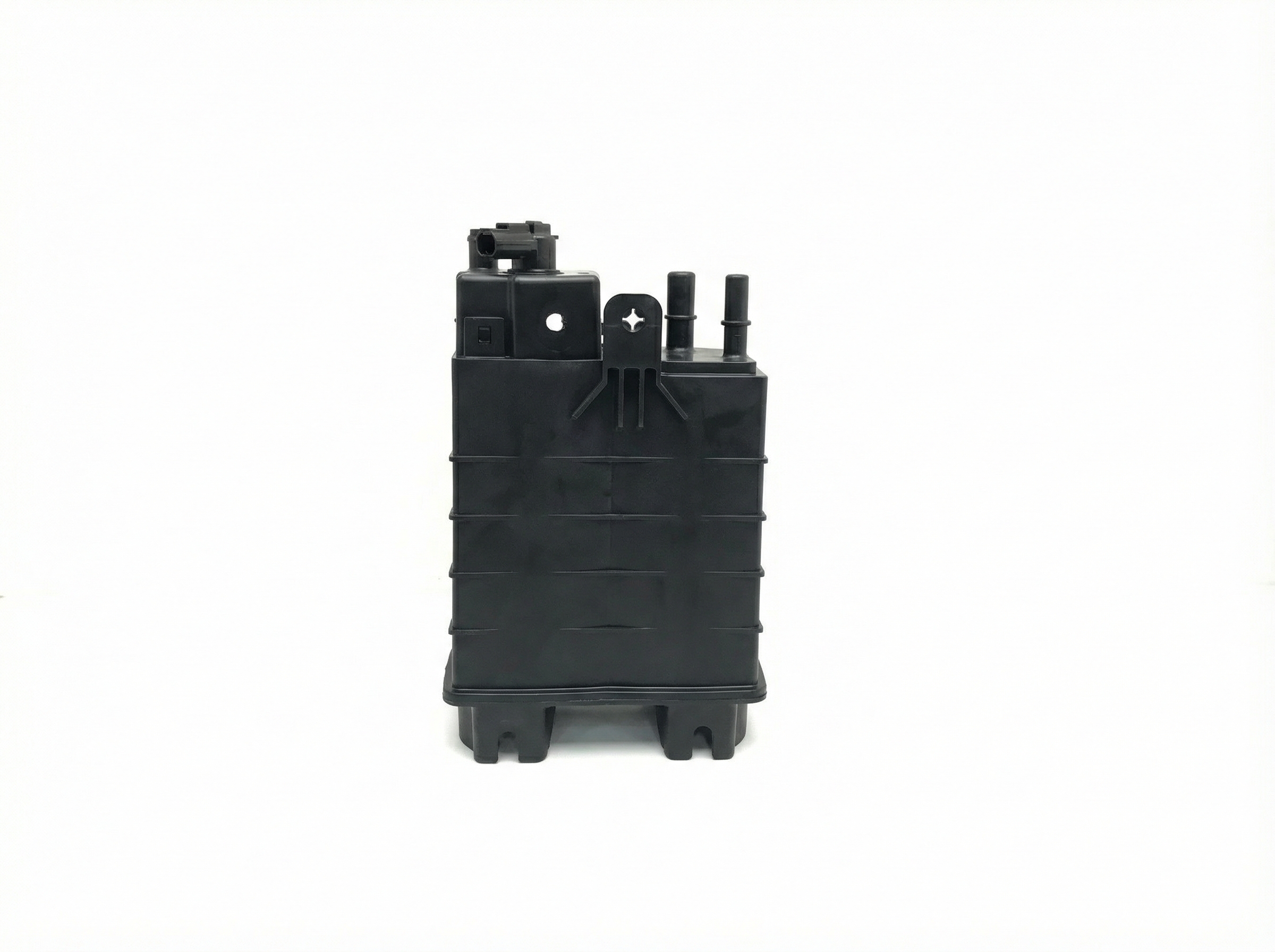
New Aftermarket Parts Available


The information in this article is provided for general reference and educational purposes only. Vehicle specifications, procedures, and part compatibility can vary by production date, trim level, and region. Always consult your vehicle's factory service manual and verify part numbers before purchasing or performing repairs. Safety-critical components such as airbags, seat belts, and braking systems should be installed by a qualified professional.
- Ford F-150:
- 🎬 Helpful Videos
- 🛍️ Shop This Part
- What's Unique About the 2004-2008 Ford F-150
- Symptoms You May Notice
- Most Likely Causes
- Rare But Worth Checking
- Diagnosis Steps
- Parts You'll Likely Need
- Related Codes That Often Appear With This One
- Platform-Specific Known Issues
- Mechanic-Grade Diagnostic Values
- Hidden / Shadow Codes Worth Checking
- Scan Tool Commands That Help
- Wiring & Ground Locations
- Real Owner Repair Stories
- "I Checked Everything" — The Actual Cause
- OEM Part Supersession History
- Model Year Variations Within This Range
- Diagnostic Flowchart
- Other Known Issues on This Vehicle
- Used vs. New Parts: Buying Guide for This Vehicle
- Real Owner Stories
- 2004-2008 Ford F-150
- Related OBD-II Codes
- Frequently Asked Questions
- 🎟️ Get 5% Off