

P1450 on 2013-2017 Ford C-MAX: Causes and Fixes for EVAP System Faults
On a 2013-2017 Ford C-MAX, code P1450 almost always points to a faulty canister purge valve that is stuck or leaking, preventing the fuel tank from venting properly. Replacing this valve, a known issue cited in a Ford TSB, is a common, relatively inexpensive DIY fix that often resolves the hard-start-after-refueling and check engine light symptoms.
- P1450 on a 2013-2017 Ford C-MAX means the EVAP system has excessive vacuum, usually due to a blockage.
- The most probable cause, by far, is a faulty canister purge valve, a known issue confirmed by Ford TSB 19-2207.
- Key symptoms are the fuel pump nozzle clicking off repeatedly during refueling and the engine struggling to start right after.
- This is an excellent DIY-friendly repair; the purge valve is inexpensive and typically easy to access in the engine bay. However, a PCM update recommended by the TSB requires a professional tool.
- Do not misdiagnose this as a loose gas cap; P1450 points to a blockage or stuck-open valve, not a leak.
What's Unique About the 2013-2017 Ford C-MAX

The Ford C-MAX, along with its platform mates like the Fusion and MKZ Hybrid, has a well-documented issue with the canister purge valve. Ford issued a Technical Service Bulletin (TSB 19-2207) specifically mentioning that the sealing capability of this valve can degrade, making it the primary suspect for a P1450 code. This TSB also instructs technicians to update the PCM software when replacing the valve. This makes the diagnosis on a C-MAX more straightforward than on other vehicles where the cause might be less obvious.
Diagnostic Flowchart
Tap your situation to follow the diagnostic path that matches what you're seeing on this vehicle.
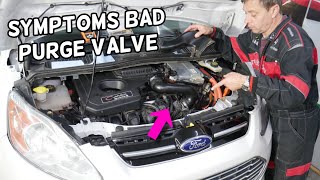
Symptoms You May Notice 🎬 Watch: Common symptoms of a failing Ford purge valve

- Check Engine Light is on
- Difficulty refueling (the fuel pump nozzle clicks off before the tank is full)
- Difficulty starting the engine immediately after refueling, sometimes requiring the gas pedal to be held down to start.
- A hissing sound from the fuel tank area when opening the fuel door.
- Rough idle or stalling at low speeds or stop signs, particularly after a recent fill-up.
- In rare cases, a whining noise from the rear of the car near the charcoal canister.
- Replacing the gas cap or capless filler neck. A faulty gas cap or capless filler neck issue typically causes a leak code (like P0455 or P0457), not a code for excessive vacuum. P1450 indicates a blockage or inability to vent, which is the opposite of a leak.
Most Likely Causes

- Faulty Canister Purge Valve 🔴 High Probability Ford issued TSB 19-2207 for this exact issue on the 2013-2017 C-MAX, indicating a known problem with the valve's sealing capability. This part is known to fail intermittently, sometimes testing correctly and then failing again.
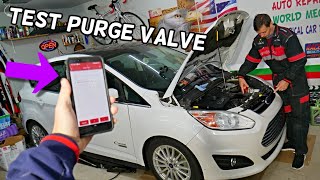
How to confirm: With the engine off, disconnect the electrical connector and the EVAP line from the purge valve. Try to blow through the valve in the direction of engine airflow. If any air passes through, the valve is stuck open and has failed. It should be normally closed when unpowered. A hand vacuum pump can also be used; the valve should hold vacuum without bleeding down. 🎬 See how to test the purge valve solenoid yourself
Typical fix: Replace the canister purge valve (and attached hoses if it's an assembly). Per TSB 19-2207, the PCM software should also be updated by a dealer or a qualified shop with a Ford diagnostic scan tool.
Est. part cost: $30-$90 - Blocked or Kinked EVAP Hose ⚪ Low Probability
How to confirm: Visually inspect all accessible EVAP system hoses between the engine, purge valve, and charcoal canister for any visible kinks, collapses, or blockages. This is especially important after other unrelated repairs have been performed in the engine bay.
Typical fix: Straighten any kinked hoses or replace any that are damaged or collapsed.
Est. part cost: $10-$50 - Blocked EVAP Canister or Vent Solenoid ⚪ Low Probability This can happen if the fuel tank is habitually overfilled, which forces liquid gasoline into the charcoal canister, saturating it and causing a blockage.
How to confirm: This is more difficult to diagnose. If the purge valve and hoses are confirmed to be good, the canister and vent solenoid are the next items to inspect for blockages. The vent solenoid is normally open with the key off, so it should allow air to pass. A professional smoke test may be required to find a restriction.
Typical fix: Replace the EVAP charcoal canister and/or the vent solenoid.
Est. part cost: $100-$250
Rare But Worth Checking
- Faulty Fuel Tank Pressure (FTP) Sensor: While less common for this specific code, a faulty FTP sensor can send incorrect vacuum readings to the PCM, causing it to believe there is a problem when there isn't one. A scan tool that can read live data can help diagnose this by observing the pressure readings at rest and while running.
Diagnosis Steps

- Read the trouble codes with an OBD-II scanner and confirm P1450 is present. Note any other codes, as they can confirm the purge valve as the root cause per TSB 19-2207.
- Locate the canister purge valve in the engine compartment. It will have two hoses and an electrical connector.
- With the engine off, disconnect the electrical connector from the purge valve.
- Disconnect the hose that runs from the purge valve back towards the fuel tank/charcoal canister.
- Attempt to blow air through the valve from the port you just disconnected. No air should pass through. If you can blow through it, the valve is stuck open and must be replaced. Some owners report the valve fails intermittently, so it may test good but still be faulty.
- If the valve tests good, visually inspect all EVAP hoses for obvious kinks, damage, or blockages.
- If no issues are found, the next step would be to inspect the EVAP canister and vent valve (usually located near the fuel tank) for blockages. This may require a professional smoke test to properly diagnose.
- As a final, less likely step, use a scan tool with live data to monitor the Fuel Tank Pressure (FTP) sensor to ensure it is reading correctly (near 0 PSI or 2.5-2.65V at rest with the gas cap off).
Parts You'll Likely Need

- Canister Purge Valve
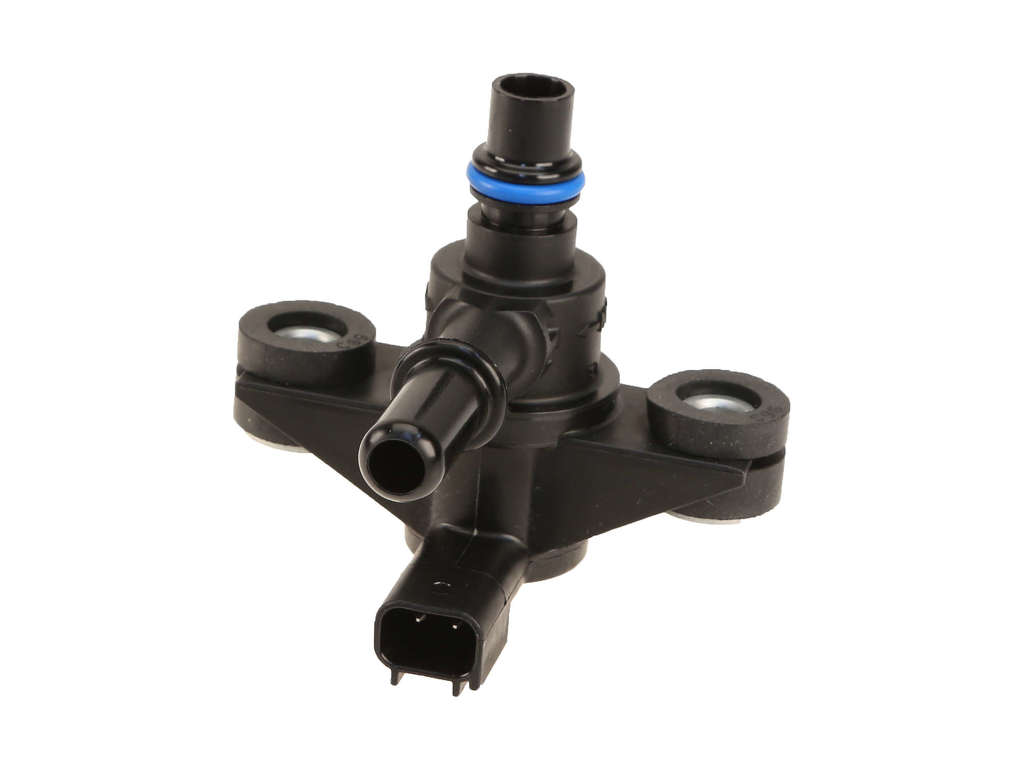
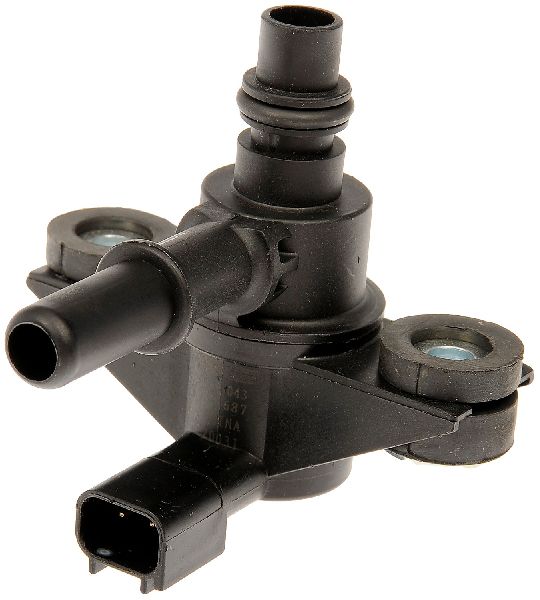
(OEM #AU5Z-9C915-E)— This is the most common failure part for code P1450 on this vehicle, as documented by Ford's own Technical Service Bulletin (TSB 19-2207). This part number supersedes several previous versions including AU5Z-9C915-A, -B, -C, and -D.
Trusted brands: Motorcraft (OEM), Dorman (e.g., 911-222), Standard Motor Products (SMP), Bosch (e.g., 0280142519)
OEM price range: $50-$90
Aftermarket price range: $30-$60
Related Codes That Often Appear With This One
- P0456 — Small EVAP Leak Detected. A faulty purge valve can cause multiple, seemingly contradictory EVAP system faults. This code is explicitly mentioned in TSB 19-2207 alongside P1450.
- P0457 — EVAP Leak Detected (Fuel Cap Loose/Off). As with P0456, a malfunctioning purge valve can lead the system to incorrectly flag other leak-related codes. This code is also cited in TSB 19-2207.
- P04EE — EVAP System Very Small Leak Detected. This is another code mentioned in TSB 19-2207 that can accompany P1450 due to a faulty purge valve.
- P04EF — EVAP System Very Small Leak Detected Between Fuel Tank and Canister. Also cited in TSB 19-2207 as a related code.
Technical Service Bulletins (TSBs) & Recalls
- TSB 19-2207: Issued June 27, 2019, this bulletin supersedes a previous TSB (14-0193). It instructs technicians to address DTC P1450 (and others) by replacing the canister purge valve and reprogramming the PCM with the latest software.
Platform-Specific Known Issues
- Ford issued Technical Service Bulletin (TSB) 19-2207 for 2013-2017 C-MAX models, explicitly stating that DTCs P1450, P0456, P0457, P04EE, and/or P04EF may be due to the poor sealing capability of the canister purge valve.
- The TSB also specifies that in addition to replacing the valve, the Powertrain Control Module (PCM) software should be updated by a dealer or qualified shop to correct the monitoring strategy.
Mechanic-Grade Diagnostic Values
- Fuel Tank Pressure (FTP) Sensor Voltage (Key On, Engine Off) — expected: 2.6 to 2.65 Volts. Failure: A significant deviation at rest, or a drop in voltage immediately upon startup without the purge valve being commanded, indicates a stuck-open purge valve or faulty sensor.
- EVAP Canister Vent Valve Solenoid Resistance — expected: 12 - 80 Ohms. Failure: A reading outside this range indicates a faulty solenoid coil.
- Canister Purge Valve Connector Voltage (Key On, Engine Off) — expected: 11 to 12 Volts DC. Failure: No voltage at the harness connector suggests a wiring or fuse issue upstream of the valve.
Hidden / Shadow Codes Worth Checking
- P1450 00 EC: This is an extended code format that may be displayed on dealer-level or advanced scan tools like Ford IDS. The '00' indicates no subtype information, and 'EC' is a component identifier. The diagnostic path remains the same, focusing on the purge valve and vent path. (see via Ford IDS, FORScan, or other advanced bidirectional scan tools.)
Scan Tool Commands That Help
- Ford IDS / FORScan: EVAP Purge Valve Command (Duty Cycle %) — This is the definitive test for a stuck purge valve. With the engine running, command the purge valve to 0% (closed). If live data for Fuel Tank Pressure (FTP) still shows vacuum building (voltage dropping), the valve is mechanically stuck open and must be replaced.
- Ford IDS / FORScan: EVAP Vent Valve Command (On/Off) — Use this to test the vent side of the system if a new purge valve doesn't fix the code. Commanding the vent valve closed should seal the system for a pressure/vacuum test. If it fails to seal, the vent valve may be stuck open.
Wiring & Ground Locations
- Primary Jump-Start Ground Point — An unpainted metal stud or bolt on the chassis located to the right of the battery, near the engine compartment fuse box.. While not exclusively for the EVAP system, this is a major, easily accessible chassis ground point in the engine bay. A poor connection here can cause a variety of electrical issues for engine components, including EVAP solenoids.
- G101 — Located at the left front of the engine compartment.. This is a primary engine bay ground point. A poor connection here could cause erratic voltage and incorrect operation of various engine sensors and solenoids, including the canister purge valve.
- EVAP Canister Vent Valve Connector — At the EVAP canister vent valve, near the charcoal canister by the fuel tank.. For electrical diagnosis, Pin 2 (Green wire) should have battery voltage. Lack of voltage points to a wiring or fuse problem, not a faulty valve.
Real Owner Repair Stories
- YouTube video, 'Rick's Garage' (2010 Ford Fusion (similar platform and engine family)) — Check Engine Light with code P1450.
✅ What actually fixed it Replacement of the canister purge valve. The mechanic demonstrated that the original valve was failing intermittently; it would sometimes hold vacuum with a hand pump and sometimes not, confirming the erratic nature of the failure. - Reddit user, r/FocusST (Ford Focus ST (uses similar 2.0L engine and EVAP components)) — P1450 code and the car 'doesn't really wanna start' after putting fuel in.
✅ What actually fixed it The user confirmed the fix was to 'swap the purge valve,' describing it as a cheap and easy repair.
When the Usual Fixes Don't Work
- While the canister purge valve is the cause in the vast majority of P1450 cases, it is not a 100% guaranteed fix. If a new, quality OEM purge valve is installed and the PCM software is updated per the TSB, but the code returns, the issue lies elsewhere. The next most likely culprits are a blockage in the vent path (clogged vent solenoid, saturated charcoal canister) or, more rarely, a faulty Fuel Tank Pressure (FTP) sensor providing incorrect data to the PCM.
OEM Part Supersession History
AU5Z-9C915-A, -B, -C, -D→AU5Z-9C915-E— Revisions to improve the sealing capability and prevent sticking, which was the root cause of the failures cited in TSB 19-2207.
Model Year Variations Within This Range
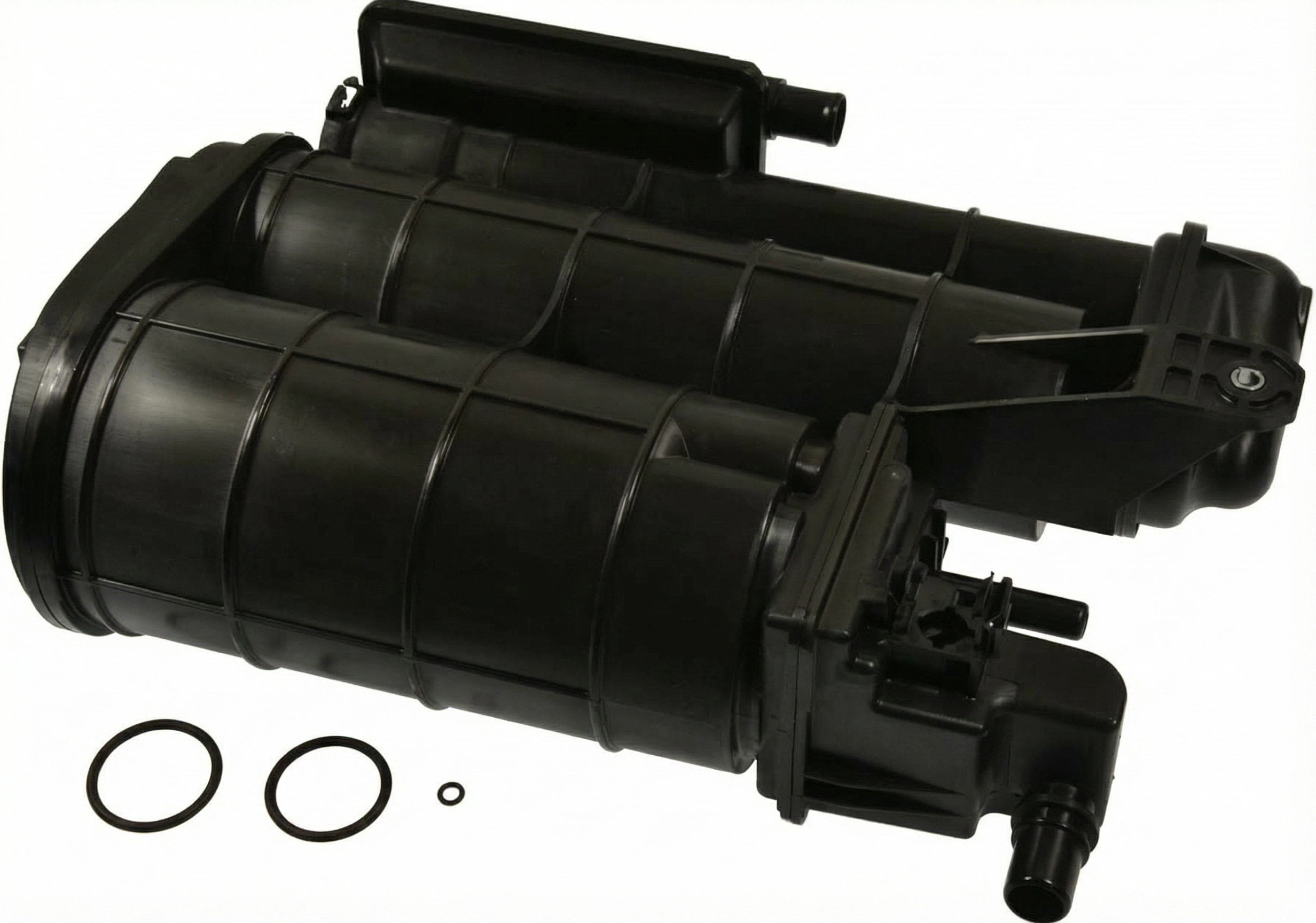
- 2013-2017: The standard C-MAX Hybrid (non-plug-in) and the C-MAX Energi (plug-in) use different, non-interchangeable vapor canisters. The standard Hybrid uses part number FV6Z-9D653-K. While P1450 is usually the purge valve, if the canister is suspected, it is critical to order the correct part for the specific model.
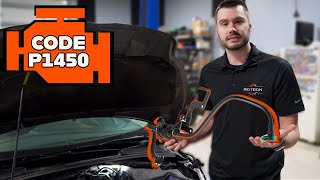
Helpful Videos

Used OEM Parts in Stock
New Aftermarket Parts Available


The information in this article is provided for general reference and educational purposes only. Vehicle specifications, procedures, and part compatibility can vary by production date, trim level, and region. Always consult your vehicle's factory service manual and verify part numbers before purchasing or performing repairs. Safety-critical components such as airbags, seat belts, and braking systems should be installed by a qualified professional.
- Ford C-MAX:
- 🎬 Helpful Videos
- 🛍️ Shop This Part
- What's Unique About the 2013-2017 Ford C-MAX
- Diagnostic Flowchart
- Symptoms You May Notice
- Most Likely Causes
- Rare But Worth Checking
- Diagnosis Steps
- Parts You'll Likely Need
- Related Codes That Often Appear With This One
- Technical Service Bulletins (TSBs) & Recalls
- Platform-Specific Known Issues
- Mechanic-Grade Diagnostic Values
- Hidden / Shadow Codes Worth Checking
- Scan Tool Commands That Help
- Wiring & Ground Locations
- Real Owner Repair Stories
- When the Usual Fixes Don't Work
- OEM Part Supersession History
- Model Year Variations Within This Range
- 🎟️ Get 5% Off