

P1444 on 2005-2007 Toyota Sequoia: Air Injection Valve Stuck Open Causes and Fixes
On a 2005-2007 Toyota Sequoia, code P1444 means the Secondary Air Injection Switching Valve for Bank 2 is stuck open. This is a very common failure caused by moisture intrusion from a faulty air pump, often requiring replacement of the air pump and valves, a costly repair. Many owners opt for a more affordable aftermarket bypass kit from brands like Hewitt Technologies to permanently solve the issue.
- P1444 on your Sequoia means the air injection valve for Bank 2 is stuck open, a very common problem for this engine.
- This will cause a Check Engine Light, VSC/TRAC lights, and put the truck into 'limp mode' with reduced power.
- The official fix is to replace the air pump and valves under the intake manifold, which is very expensive (>$2,000).
- A much cheaper and very popular alternative is to install an aftermarket electronic bypass kit with block-off plates, which resolves the codes and limp mode for under $200, but may not be emissions-legal in all states.
What's Unique About the 2005-2007 Toyota SEQUOIA

This is a notoriously common and well-documented issue on the 4.7L 2UZ-FE V8 engine used in the 2005-2007 Sequoia, as well as its platform mates like the Tundra, 4Runner, and Lexus GX470/LX470. The design of the air pump and valves, located in the engine valley under the intake manifold, makes them highly susceptible to moisture and condensation buildup. This moisture corrodes the internal components, causing the valves to seize and the pump motor to fail. The failure is so common that Toyota issued a Technical Service Bulletin (T-SB-0230-12) acknowledging the problem is caused by debris from the pump contaminating the system. This often leads to an expensive repair bill quoted by dealers, sometimes between $1800 and $3000.
Diagnostic Flowchart
Tap your situation to follow the diagnostic path that matches what you're seeing on this vehicle.
Symptoms You May Notice

- Check Engine Light is on
- VSC TRAC and TRAC OFF lights are illuminated
- Vehicle enters "limp mode," with severely limited power and acceleration.
- Loud noise, similar to a vacuum cleaner or leaf blower, coming from the engine bay for about a minute on cold starts.
- Failure to pass an emissions inspection.
- Replacing only one component of the system. Because moisture and debris from the failing pump contaminate the entire system, replacing just a valve or just the pump often leads to a repeat failure when the old component sends debris into the new one. A complete repair involves replacing the pump and both valves.
- Mistaking the issue for a bad gas cap. While a loose gas cap can cause other EVAP codes, it is not related to the P144x family of SAIS codes.
Most Likely Causes

- Seized Air Switching Valve #2 (Bank 2) 🔴 High Probability The valves are located in a valley under the intake manifold where moisture from the failing air pump collects, leading to internal corrosion and seizure. The foam pre-filter in the air pump is also known to disintegrate, sending fine debris through the lines that jams the valves open.
How to confirm: The valve must be accessed by removing the intake manifold. Once accessed, it can be tested for function with a handheld vacuum pump or by applying 12V to its solenoid. 🎬 Watch: How to test and fix stuck air switching valves. A stuck valve will not hold vacuum or actuate. A bidirectional scan tool can also command the valve open and closed to check for response.
Typical fix: Replace the seized air switching valve (Part #25710-50022) and its gaskets. It is highly recommended to replace both valves (Bank 1 and 2) and the air pump at the same time, as the pump is the root cause.
Est. part cost: $150-$300 - Failed Secondary Air Injection Pump 🔴 High Probability The pump's internal foam pre-filter is known to degrade and disintegrate over time, sending debris into the air switching valves and causing them to stick open. The pump motor itself can also fail from ingesting moisture, which is drawn in from the wheel well area where it is located.
How to confirm: Listen for the pump running on a cold start; it should sound like a loud vacuum for 30-60 seconds. If it doesn't run, check the dedicated fuse and relay. If it runs but sounds gritty, weak, or is always on, the motor is failing and is the source of the system contamination.
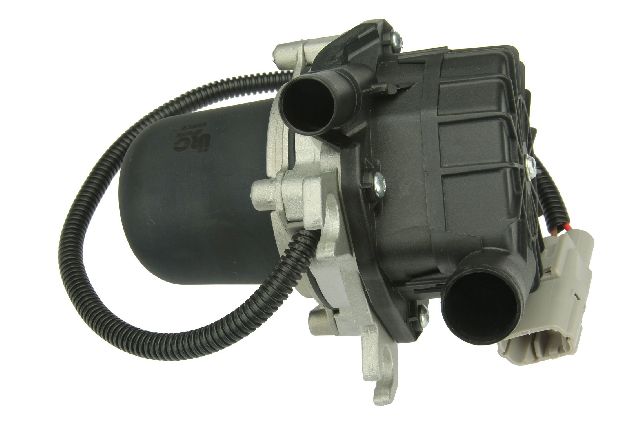
Typical fix: Replace the air injection pump assembly (Part #17600-0F010). This is a labor-intensive job as the intake manifold must be removed for a complete system repair. 🎬 Watch: Step-by-step guide to replacing the pump and valves.
Est. part cost: $400-$1200 - Installation of an Aftermarket Bypass Kit 🟡 Medium Probability Due to the high cost of OEM repair ($2000+), many owners install an electronic bypass kit. These kits trick the ECU into thinking the system is working correctly. Since code P1444 means the valve is stuck open, block-off plates must also be installed to prevent exhaust from flowing backward and damaging the pressure sensors, which would cause new codes and limp mode.
How to confirm: Visually inspect the engine bay for a non-factory wiring module spliced near the Mass Airflow Sensor or connected to the SAIS wiring harness. Look for block-off plates on the air injection ports at the rear of the engine, near the firewall. 🎬 See how to properly install a bypass kit and plates.
Typical fix: If a bypass kit is desired, ensure it is installed correctly with block-off plates to seal the stuck-open valves. This is intended for off-road use and may not be legal for street-driven vehicles in emissions-controlled areas.
Est. part cost: $50-$250
Rare But Worth Checking
- Wiring or Connector Damage: The wiring harness to the valves and pump runs under the intake manifold and can be damaged by heat or rodents, though this is far less common than component failure due to moisture and debris. A corroded connector deep in the engine bay has been identified as a root cause in some cases.
- Failed Air Injection Control Driver: The electronic module that controls the pump and valves can fail. TSB T-SB-0230-12 Rev1 suggests checking for this if codes P0418 and/or P2445 are also present, as a seized pump can damage the driver.
Diagnosis Steps
- Confirm P1444 and any other related codes are present using an OBD-II scanner.
- On a cold start, listen for a loud vacuum-cleaner sound from the engine for 30-60 seconds. If the sound is present, the pump motor is likely running, but may be failing.
- If no sound is heard, check the SAIS-related fuses and relays in the engine bay fuse box.
- Use a scan tool like Toyota Techstream to perform an 'Air Injection Check' active test to command the pump and valves on and off, monitoring pressure readings.
- If fuses are good and the active test fails, a full diagnosis requires removing the intake manifold to access the components. This is a significant job requiring 4-7 hours.
- Once the intake is removed, visually inspect the air pump and valves for corrosion, moisture, and carbon tracking.
- Test the valves for operation by applying 12V power to the solenoids and using a vacuum pump to check if they hold vacuum.
- Inspect the foam filter on the air pump inlet; if it is degraded or missing, it is the confirmed source of contamination.
- If repairing, it is best practice to replace the pump, both switching valves, and all associated gaskets as a complete set to prevent repeat failures.
- Alternatively, if legal in your area, install a reputable bypass kit with block-off plates according to the manufacturer's instructions. Hewitt Technologies is a well-regarded brand with plug-and-play options.
Parts You'll Likely Need

- Secondary Air Injection System Bypass Kit — This is the most common and cost-effective solution chosen by owners to permanently eliminate the problem. It electronically bypasses the system, preventing codes and limp mode. Block-off plates are required since the valve is stuck open.
Trusted brands: Hewitt Technologies (Gen 1 or Gen 2 Plug & Play), Rutech Solutions
OEM price range: N/A
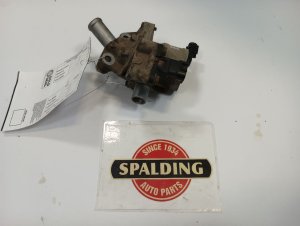
Aftermarket price range: $150-$250 - Air Switching Valve
(OEM #25710-50022)— This is the valve that the code directly identifies as being stuck open. It's best to replace both bank 1 and bank 2 valves simultaneously. The OEM part has been superseded by 25710-50021 and 25710-50020.
Trusted brands: Toyota (OEM), Dorman, SKP
OEM price range: $200-$300
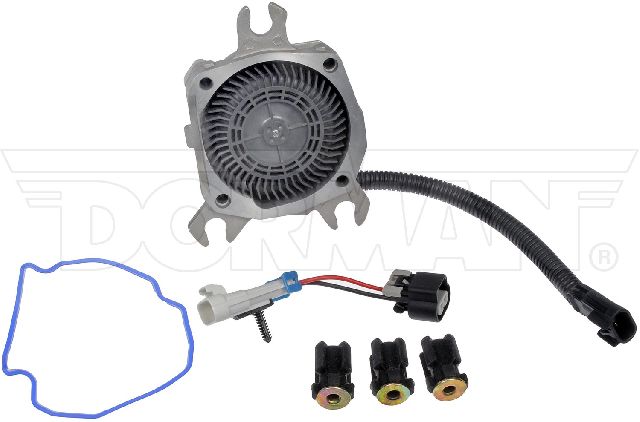
Aftermarket price range: $100-$200 - Air Injection Pump
(OEM #17600-0F010)— The pump is often the root cause of the failure due to its disintegrating filter or moisture damage. It is almost always replaced along with the valves in a standard repair.
Trusted brands: Toyota (OEM), Dorman
OEM price range: $470-$720
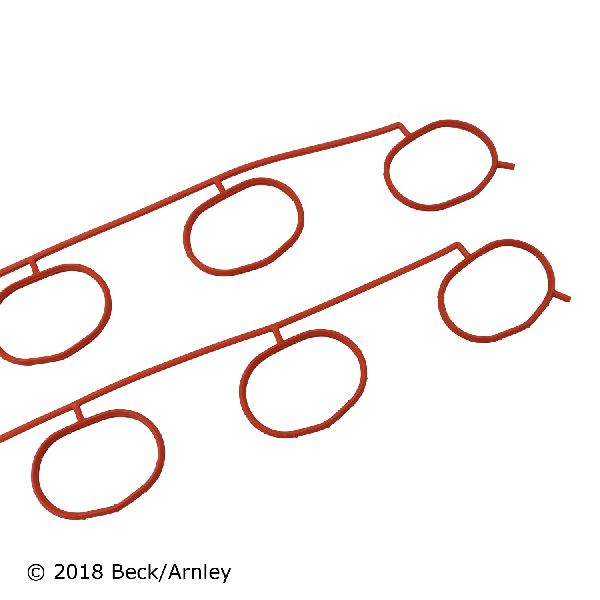
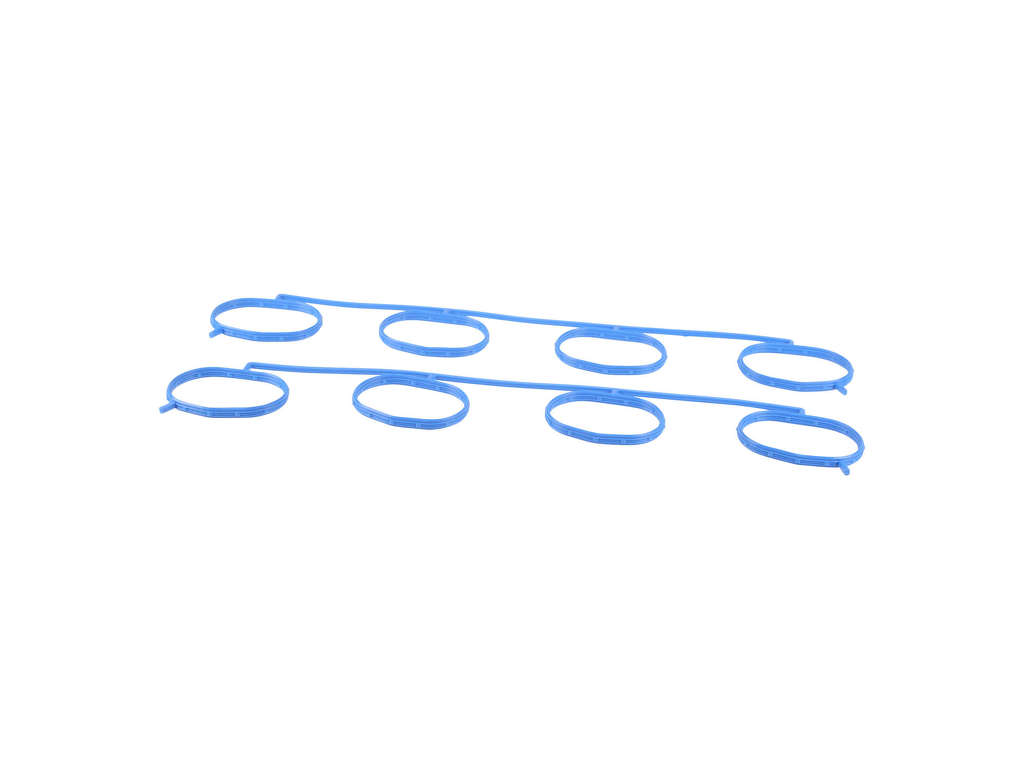
Aftermarket price range: $300-$600 - Intake Manifold Gasket Set
(OEM #17171-50030)— The intake manifold must be removed to access the SAIS components. The gaskets are single-use and must be replaced to prevent vacuum leaks.
Trusted brands: Fel-Pro, Toyota (OEM)
OEM price range: $20-$80
Aftermarket price range: $25-$40
Related Codes That Often Appear With This One
- P1441 — This is the identical code for Bank 1 (driver's side). The valves are exposed to the same contaminants and often fail together or in quick succession.
- P2440 — A more generic code for 'Secondary Air Injection System Switching Valve Stuck Open Bank 1'. It points to the same fundamental problem on the opposite bank.
- P2442 — A more generic code for 'Secondary Air Injection System Switching Valve Stuck Open Bank 2'. It points to the same fundamental problem as P1444.
- P0418 — This code indicates a problem with the air pump's control circuit or relay, often seen when the pump motor seizes and blows a fuse or damages the driver module.
- P2445 — This code means the 'Secondary Air Injection System Pump is Stuck Off'. It is frequently seen alongside valve codes and confirms the pump, the root cause, has failed.
Technical Service Bulletins (TSBs) & Recalls
- T-SB-0230-12 Rev1: Dated October 17, 2013, this bulletin covers multiple 2UZ-FE powered vehicles from 2005-2009. It acknowledges that codes P1441, P1444, P0418, P2445 and others are caused by debris from the air pump contaminating the valves. It provides a diagnostic flowchart but does not offer a warranty extension beyond the basic 36k/36mo warranty.
Platform-Specific Known Issues
- The 2005-2007 Sequoia's 4.7L V8 has a well-known design flaw in the Secondary Air Injection System where moisture collects and causes premature failure of the pump and valves, leading to P1444 and related codes.
- Toyota issued Technical Service Bulletin T-SB-0230-12 (revised Oct 2013), which outlines the diagnostic procedure for a list of SAIS codes including P1444. It identifies the cause as debris from the air pump contaminating the system and instructs technicians to inspect and replace affected components.
- Due to the high dealer repair cost of $2000-$3500, the vast majority of owners on forums like TundraSolutions.com and IH8MUD.com opt for an aftermarket bypass kit.
Mechanic-Grade Diagnostic Values
- SAIS Pressure (Normal Operation) — expected: 3 to 11 kPa. Failure: Pressure significantly outside this range during the active test indicates a problem.
- SAIS Pressure (Pump On, ASV Commanded Closed) — expected: Approximately 20 to 30 kPa. Failure: Low pressure in this state suggests a leak or a valve that is not fully closed.
- SAIS Pressure (Pump On, ASV Commanded Open) — expected: 1 kPa or more. Failure: Pressure below 1 kPa indicates a non-functioning pump or a major blockage/leak.
- SAIS Shared Circuit Voltage Reference — expected: 5 Volts (Key On). Failure: No voltage indicates a wiring issue, possibly a broken wire or corroded connector.
Scan Tool Commands That Help

- Toyota Techstream: Air Injection Check (Manual Mode) — This is the primary diagnostic function to test the SAIS. It allows the technician to individually command the air pump and air switching valves (ASV) on and off to verify their operation and monitor the system's pressure sensor response.
Wiring & Ground Locations

- E1 — At the top center rear of the engine.. This is a primary engine ground point. A poor connection here could affect multiple systems, including the SAIS components mounted on the engine.
- General Ground Points — Wiring diagrams show grounds for the Air Pump, Air Switching Valve, and Air Injection Control Driver located on the left side of the engine compartment and at the right kick panel.. Loss of ground to any of these components will cause them to fail, triggering fault codes. Verifying these grounds is a key electrical diagnostic step.
- SAIS Component Connectors — Under the intake manifold for the pump and valves; deep in the engine bay near the firewall for some harness connectors.. These connectors are susceptible to heat and moisture. A corroded or broken wire in a hidden connector has been documented as a root cause of SAIS failure, mimicking a component failure.
Real Owner Repair Stories
- Instructables user (2006 Toyota Sequoia, 149k miles) — Secondary Air Injection Pump failure.
❌ Tried (didn't work) Attempting to use the extended warranty, which did not apply to the 2006 model year at the time of failure.
✅ What actually fixed it The owner performed a complete replacement of the smog pump and its associated valves, documenting the process in a multi-part video series. - IH8MUD.com forum user (2005 Toyota Tundra 4.7L, 84k miles) — Loud air pump noise after a timing belt replacement.
✅ What actually fixed it Having previously experienced an AIP failure on another 2UZ-FE vehicle, the owner pre-emptively installed a Hewitt-Tech bypass module to permanently eliminate the system and prevent future codes. - Reddit user (2007 Toyota Sequoia SR5, 125k miles) — Air pump failure.
✅ What actually fixed it The owner purchased a new air pump on Amazon and had a shop install it for a total cost of around $600.
OEM Part Supersession History
25710-50020→25710-50021, then 25710-50022— Standard part revision and improvement by the manufacturer.
Heads up: The newer parts are direct replacements for the older numbers. Always use the latest available part number for repair.89580-34010 / 89580-34011→89580-34012— Part revision for the Air Injection Control Driver.
Heads up: The newer part number is the correct service replacement.
Model Year Variations Within This Range
- 2005-2007: The 2005 model year marked a significant refresh, introducing the 4.7L 2UZ-FE with VVT-i and the problematic Secondary Air Injection System. Models from 2001-2004 have a non-VVT-i engine and do not have this system, so they are not susceptible to P1444.
- 2005 vs 2006-2007: While mechanically identical regarding the SAIS, the 2005 model was rated at a slightly higher 282 horsepower, compared to 272 horsepower for the 2006-2007 models. This does not affect the diagnosis or repair of code P1444.
Helpful Videos
Used OEM Parts in Stock
New Aftermarket Parts Available


The information in this article is provided for general reference and educational purposes only. Vehicle specifications, procedures, and part compatibility can vary by production date, trim level, and region. Always consult your vehicle's factory service manual and verify part numbers before purchasing or performing repairs. Safety-critical components such as airbags, seat belts, and braking systems should be installed by a qualified professional.
- Toyota SEQUOIA:
- 🎬 Helpful Videos
- 🛍️ Shop This Part
- What's Unique About the 2005-2007 Toyota SEQUOIA
- Diagnostic Flowchart
- Symptoms You May Notice
- Most Likely Causes
- Rare But Worth Checking
- Diagnosis Steps
- Parts You'll Likely Need
- Related Codes That Often Appear With This One
- Technical Service Bulletins (TSBs) & Recalls
- Platform-Specific Known Issues
- Mechanic-Grade Diagnostic Values
- Scan Tool Commands That Help
- Wiring & Ground Locations
- Real Owner Repair Stories
- OEM Part Supersession History
- Model Year Variations Within This Range
- 🎟️ Get 5% Off