

P1444 on 2005-2009 Toyota 4Runner: Secondary Air Injection Valve Failure Causes & Fixes
P1444 on a 4th Gen 4Runner with the 4.7L V8 indicates the Bank 2 secondary air injection switching valve is stuck open. This is a very common failure, often caused by a faulty air pump that has ingested moisture from a poorly designed foam filter. The moisture corrodes the valves. The complete fix usually involves replacing the pump and both switching valves, which can be costly. Many owners opt for an aftermarket electronic bypass kit as a more permanent and affordable solution.
- P1444 on a 2005-2009 4Runner almost exclusively applies to the 4.7L V8 and points to a stuck-open air injection valve on the driver's side.
- The most common root cause is a failed air pump that ingests moisture, which then damages the valves. A complete repair should address the pump and both valves.
- This failure will trigger a Check Engine Light and often puts the vehicle into a 'limp mode' with severely reduced power.
- Repair is expensive ($1,100-$2,500+) and labor-intensive due to parts being located under the intake manifold.
- Aftermarket electronic bypass kits are a very common and much cheaper alternative to a full OEM parts replacement, but may have emissions legality implications.
What's Unique About the 2005-2009 Toyota 4RUNNER

This issue is extremely common on the 2005 and newer Toyota 4.7L V8 (2UZ-FE) engines, as 2005 was the year Toyota added the Secondary Air Injection system to this VVT-i engine. The system's air pump, located in the engine valley under the intake manifold, has a widely acknowledged design flaw where its foam filter can become saturated with water or disintegrate. This moisture and debris is then forced through the system, corroding and damaging the air switching valves, causing them to fail and get stuck open or closed. Due to the high cost of OEM repair (often quoted at $2,000-$4,000) and the likelihood of recurrence, many owners opt for aftermarket bypass kits to disable the system electronically.
Diagnostic Flowchart
Tap your situation to follow the diagnostic path that matches what you're seeing on this vehicle.
Symptoms You May Notice
- Check Engine Light is on
- VSC and TRAC OFF lights may also illuminate simultaneously, which is an indicator of 'limp mode'.
- Vehicle enters 'limp mode' (reduced engine power, won't accelerate quickly or go over a certain speed).
- Loud noise, like a vacuum cleaner or leaf blower, from the engine bay for about 30-60 seconds on a cold start, which is the sound of the SAIS pump running. A failing pump may be much louder, grind, or whine.
- Failed emissions inspection
- Replacing only the failed switching valve without inspecting or replacing the air pump. If the pump is damaged and full of moisture, it will quickly cause the new valve to fail, sometimes within days or weeks.
- Clearing the code without repair. The code will inevitably return on the next cold start, and the vehicle will re-enter limp mode, often at an inconvenient time.
- Mistaking the issue for a transmission problem due to the symptoms of limp mode (inability to accelerate or shift properly).
Most Likely Causes

- Failed Air Injection Switching Valve #2 (Stuck Open) 🔴 High Probability The valve is highly susceptible to corrosion and damage from moisture and carbon debris passed down from the failing air pump. This is the direct cause of the code.
How to confirm: Test the valve's operation with a hand-held vacuum pump or by applying voltage to its solenoid. The valve is located on the rear of the engine against the firewall, making access extremely difficult, even with the intake manifold removed.
Typical fix: Replace the air switching valve assembly. It is highly recommended to replace both valves (Bank 1 and Bank 2) and the air pump at the same time, as the pump is the root cause.
Est. part cost: $200-$400 for an OEM valve assembly. - Failed Secondary Air Injection Pump 🔴 High Probability The pump's design allows it to ingest water and its internal foam filter disintegrates, which not only destroys the pump's plastic impeller blades but also sends this contamination downstream to the switching valves, causing them to fail. This is the root cause of the entire problem.
How to confirm: Listen for a loud whining or grinding noise on cold start. The pump is located under the intake manifold, so visual inspection requires removing the manifold. Once removed, check for broken fan blades, a disintegrated filter, or signs of water intrusion.
Typical fix: Replace the air pump assembly. When this is the cause, the switching valves must also be replaced as they are almost certainly contaminated and will fail soon.
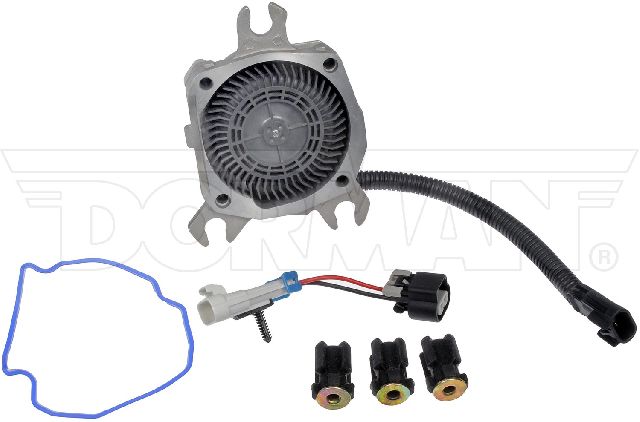
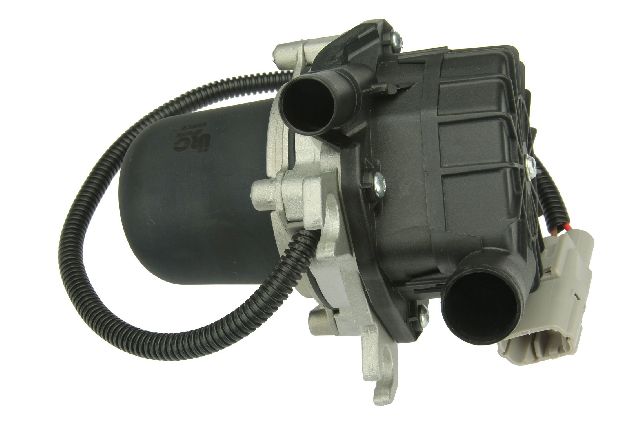
Est. part cost: $300-$600 for an OEM pump, with some owners using a Dorman replacement.
Rare But Worth Checking
- Damaged Wiring or Connectors: Rodent damage or corrosion at the connectors for the switching valves or pump can cause a loss of signal. This is less common than mechanical failure of the parts themselves but should be inspected while the intake manifold is removed.
- Faulty Air Injection Control Driver or ECM: In very rare cases, the computer (ECM) or the specific Air Injection Control Driver that controls the system can fail. T-SB-0230-12 Rev1 provides diagnostic procedures for this. This should only be considered after all other components have been tested and confirmed to be working.
Diagnosis Steps
- Confirm the presence of P1444 and any other related SAI codes (P1441, P1445, P2440, P2442, P0418) using an OBD-II scanner.
- On a cold start (after sitting overnight), listen for the SAI pump. It should run for 30-60 seconds and sound like a powerful blower. A very loud, grinding, or whining noise indicates a failing pump.
- If the pump runs, check for airflow at the exhaust manifold ports to verify the valves are opening. A lack of flow or weak flow can indicate stuck valves.
- To properly diagnose the valves and pump, the intake manifold must be removed to gain access. This is a significant job requiring 4-7 hours of labor.
- Once the manifold is off, inspect the air pump in the engine valley. Look for a disintegrated foam filter, broken plastic impeller blades, rust, or signs of water damage.
- Inspect the air switching valves located at the very rear of the engine valley against the firewall. Check for corrosion and test their function using a hand-held vacuum pump. Access is extremely tight.
- Check the wiring harnesses for the pump and valves for any signs of damage, corrosion, or rodent activity. Trace vacuum lines to ensure they are connected and not cracked.
Parts You'll Likely Need

- Secondary Air Injection Pump
(OEM #17610-0C010)— This is the root cause of the problem. It fails by ingesting moisture and sends debris to the valves, causing them to fail.
Trusted brands: Toyota (OEM), Dorman (e.g., 306-010, may require swapping connector)
OEM price range: $300-$600
Aftermarket price range: $150-$300 - Air Switching Valve Assembly
(OEM #25710-50022 (supersedes 25710-50020, 25710-50021))— These valves are the final point of failure, getting stuck open or closed due to corrosion and debris from the failed pump.
Trusted brands: Toyota (OEM)
OEM price range: $200-$400
Aftermarket price range: $100-$200 - SAIS Bypass Kit — A popular and cost-effective alternative to replacing the entire system. These kits electronically trick the ECU into thinking the system is working perfectly, preventing codes and limp mode. Note: Use of these kits may not be legal for street use in all states and is intended for off-road use.
Trusted brands: Hewitt Technologies (Gen 1 and Gen 2 kits), Slyfox75 (popular on forums like T4R.org)
OEM price range: N/A
Aftermarket price range: $50-$350
Related Codes That Often Appear With This One
- P1441 — This is the code for the Bank 1 switching valve stuck open. Since the root cause (a bad air pump) affects the entire system, it's common for both valves to fail around the same time.
- P1442 — Code for Bank 1 switching valve stuck closed.
- P1445 — Code for Bank 2 switching valve stuck closed.
- P2440, P2442 — These are similar codes for 'Switching Valve Stuck Open' for Bank 1 and Bank 2, respectively, under a different diagnostic logic. Toyota groups them together for the same fault.
- P0418 — This code relates to the Secondary Air Injection System Relay or pump circuit. A failing pump drawing too much current or a complete pump failure can trigger this code alongside valve codes.
- P2445 — This code indicates the air pump is stuck OFF. It is often seen in conjunction with valve codes as part of the total system failure.
Technical Service Bulletins (TSBs) & Recalls
- T-SB-0230-12 Rev1 (October 17, 2013): Supersedes the earlier version. Lists P1441/P1444 and other related codes, confirms the cause may be debris from the air pump, and adds diagnostic procedures for the Air Injection Control Driver. It covers the 4Runner, Land Cruiser, Sequoia, and Tundra with the 2UZ-FE engine.
- T-SB-0230-12 (November 27, 2012): An earlier version of the same bulletin with the same code definition.
Platform-Specific Known Issues
- The repair is labor-intensive because the intake manifold must be removed to access the pump and valves.
- The switching valves are located at the very back of the engine against the firewall, making them extremely difficult to access and replace, even with the manifold off. Some owners state it's one of the hardest jobs on this vehicle.
- Due to the high cost and likelihood of recurrence, many owners install an electronic bypass kit from companies like Hewitt Technologies or Slyfox75, which prevents the system from running and stops the codes from appearing. This is often seen as a permanent, though potentially not emissions-legal, solution.
Mechanic-Grade Diagnostic Values
- Air Switching Valve Assembly Resistance — expected: 4.5 to 5.5 Ω at 20°C (68°F). Failure: Resistance outside of this range indicates a faulty valve assembly.
- Air Pump Assembly Resistance — expected: 0.4 to 1.0 Ω at 20°C (68°F). Failure: Resistance outside this range suggests a faulty air pump motor.
- Air Injection Control Driver Connector Voltage — expected: 11 to 14 V (Battery Voltage). Failure: Lack of voltage at the BATT or +B terminals indicates a power supply issue to the control driver.
Hidden / Shadow Codes Worth Checking
- Mode $06, TID $81-$84: Mode $06 provides raw test data from the ECU's self-diagnostics before a code is set. For Toyota SAIS, Test IDs (TIDs) in the $81-$84 range often correspond to the Air Injection System monitor, showing pressure sensor readings and valve response times. A value outside the manufacturer's min/max threshold can indicate an impending failure even without a DTC. (see via A professional scan tool with Mode $06 capability, such as Toyota Techstream.)
- C1201: This is a common 'shadow code' for 'Engine Control System Malfunction' that accompanies SAIS codes. It is the direct cause of the VSC/TRAC lights and limp mode. It does not point to a specific fault but indicates the ECU has disabled vehicle stability systems due to the primary engine fault (P1444). (see via Most advanced OBD-II scanners that can read Chassis (C-prefix) codes, including Toyota Techstream.)
Scan Tool Commands That Help
- Toyota Techstream: Active Test: Control the Secondary Air Injection — This function allows a technician to command the air pump and switching valves to turn on and off manually. It is used to verify if the components are responding to ECU commands, helping to distinguish between a mechanical failure (stuck valve) and an electrical/control issue.
- Toyota Techstream: Utility: EVAP System Check (Cold Soak Bypass) — While primarily for the EVAP system, running this utility can force the ECU to run related emissions monitors, including the SAIS monitor, without waiting for a natural cold start. This can help verify a repair's success quickly.
Wiring & Ground Locations

- Engine Block Ground (Driver Side) — On the rear of the driver's side cylinder head, near the transmission bell housing.. A poor ground connection at this point can cause intermittent electrical issues for various engine sensors and actuators, including the SAIS components controlled by the ECU.
- Engine Block Ground (Passenger Side) — On the passenger side of the engine block, often near the starter motor or engine mount. A ground strap connects from here to the chassis.. This is a primary ground path for the engine harness. Corrosion or a loose connection here can lead to a variety of electrical faults and codes.
- Air Injection Control Driver — Located on the inner driver's side fender in the engine bay, typically in front of the brake master cylinder.. This module directly controls the air pump and valves. Its connectors and ground should be inspected for corrosion or damage if electrical fault codes (like P0418) are present with P1444.
Real Owner Repair Stories
- Reddit user in r/Justrolledintotheshop (2007 Toyota 4Runner, 4.7L V8) — Secondary air injection codes appeared, dealer quoted $4,000 for a full system replacement.
❌ Tried (didn't work) One owner reported replacing the pump, only for it to fail again three months later, indicating the valves were also bad or the replacement pump was faulty.
✅ What actually fixed it The owner installed an aftermarket SAIS bypass kit from Hewitt Technologies around 2015/2016. The kit successfully cleared the codes and prevented limp mode, and the owner reported no further issues since installation. - YouTube user installing Hewitt Tech kit (2005 Toyota 4Runner, 2UZ-FE) — Check Engine Light, VSC, and TRAC lights all illuminated, indicating limp mode due to a secondary air injection system failure.
❌ Tried (didn't work) The owner opted not to pursue the OEM repair due to the high cost (estimated around $3,000).
✅ What actually fixed it Installed a Hewitt Technologies Gen 1 SAIS bypass kit. The installation involved adding block-off plates to the air switching valves (accessed through the front wheel wells) and wiring the bypass module into the MAF sensor circuit. After clearing the codes, the lights did not return after two cold starts, confirming a successful installation.
OEM Part Supersession History
25710-50020, 25710-50021→25710-50022— Part revision and improvement by Toyota. The newer part number is the current replacement for the Air Switching Valve Assembly.
Heads up: The newer part number 25710-50022 is the correct and compatible replacement for the earlier versions on all affected 2005-2009 4.7L V8 models.89580-34010, 89580-34011, and others→89580-34012— Part revision for the Air Injection Control Driver.
Heads up: T-SB-0230-12 Rev1 lists multiple previous part numbers for the control driver, all superseded by a newer version. Using the latest part number is recommended if replacement is necessary.
Model Year Variations Within This Range
- 2005-2009: The Secondary Air Injection System (SAIS) was added to the 4.7L 2UZ-FE engine starting in the 2005 model year, coinciding with the addition of VVT-i. Therefore, 2003-2004 4Runners with the 4.7L V8 do not have this system and are not susceptible to this code.
Helpful Videos


We Have This Part in Stock



The information in this article is provided for general reference and educational purposes only. Vehicle specifications, procedures, and part compatibility can vary by production date, trim level, and region. Always consult your vehicle's factory service manual and verify part numbers before purchasing or performing repairs. Safety-critical components such as airbags, seat belts, and braking systems should be installed by a qualified professional.
- Toyota 4RUNNER:
- 🎬 Helpful Videos
- 🛍️ Shop This Part
- What's Unique About the 2005-2009 Toyota 4RUNNER
- Diagnostic Flowchart
- Symptoms You May Notice
- Most Likely Causes
- Rare But Worth Checking
- Diagnosis Steps
- Parts You'll Likely Need
- Related Codes That Often Appear With This One
- Technical Service Bulletins (TSBs) & Recalls
- Platform-Specific Known Issues
- Mechanic-Grade Diagnostic Values
- Hidden / Shadow Codes Worth Checking
- Scan Tool Commands That Help
- Wiring & Ground Locations
- Real Owner Repair Stories
- OEM Part Supersession History
- Model Year Variations Within This Range
- 🎟️ Get 5% Off