

P1444 on 1995-1997 Ford Ranger 4.0L V6: Purge Flow Sensor Circuit Low Input Causes and Fixes
This code almost always points to a failed Purge Flow Sensor (PFS) or a problem in its electrical circuit. On this Ranger, the sensor is a small, 3-wire component located near the charcoal canister on the driver's side of the engine bay. Expect to pay $25-$40 for a new aftermarket sensor, which is a 1/5 difficulty DIY fix. The OEM part is sold as a more expensive assembly with the purge valve and hoses.
- P1444 on your Ranger means the Purge Flow Sensor's electrical circuit has a 'low input' fault.
- Don't immediately suspect a vacuum leak; the number one cause for this specific code on this truck is a failed sensor.
- The fix is usually cheap and easy: replace the 3-wire sensor located on the driver's side of the engine bay near the charcoal canister.
- While you're there, inspect the vacuum hoses for cracks, as this is a common secondary cause.
- The official Ford replacement part is an assembly (F57Z-9C987-AB) that includes the sensor, valve, and hoses, but cheaper aftermarket sensors are available individually.
What's Unique About the 1995-1997 Ford Ranger
On this generation of Ford Ranger, the EVAP system uses a separate Purge Flow Sensor (sometimes called a thermistor) and a Purge Solenoid, unlike newer vehicles that often integrate them into a single unit. The Purge Flow Sensor itself has a notably high failure rate on the 1995-1997 models, making it the primary suspect for a P1444 code, often more so than vacuum leaks which might trigger a different code like P1443.
Symptoms You May Notice
- Check Engine Light is on
- Failing a state emissions inspection
- Possible fuel odor, especially after refueling or from the engine bay due to rotted hoses.
- Slightly increased fuel consumption.
- Replacing the Purge Solenoid/Valve. The P1444 code specifically points to an electrical fault in the *sensor* circuit, not the solenoid. The solenoid is more commonly associated with code P0443.
Most Likely Causes
- Failed Purge Flow Sensor (PFS) 🔴 High Probability This specific sensor is known to have a high failure rate on 95-97 Rangers, often failing internally and causing a short in the signal circuit. Forum users repeatedly confirm this is the most common fix.
How to confirm: After confirming the wiring is intact, replacing the sensor is the most common fix. You can also test the signal wire at the PCM; if it shows near-zero voltage with the sensor connected, the sensor is likely shorted internally. The sensor contains a small thermistor that can become clogged with charcoal granules from a failing canister.
Typical fix: Replace the Purge Flow Sensor. It is located in the engine bay on the driver's side, in the vacuum lines between the purge solenoid and the charcoal canister, behind the headlight.
Est. part cost: $25-$60 - Shorted or Damaged Wiring 🟡 Medium Probability After 25+ years, wiring harnesses in the engine bay can become brittle and insulation can crack, leading to shorts to ground. The location behind the headlight exposes it to moisture and potential damage.
How to confirm: Visually inspect the wiring harness going to the 3-wire Purge Flow Sensor. Check for chafed wires, corrosion in the connector, or breaks. Use a multimeter to check for continuity and for a short to ground on the signal wire with the sensor disconnected.
Typical fix: Repair the damaged section of the wiring harness or clean/replace the connector.
Est. part cost: $5-$25 - Cracked or Disconnected EVAP Hoses ⚪ Low Probability The original rubber vacuum hoses become brittle and crack with age, a very common issue on older vehicles. A user on Ford-Trucks.com reported their P1444 was caused by a hose that had dry-rotted off its connection at the charcoal canister.
How to confirm: Visually inspect all vacuum lines around the purge solenoid and flow sensor. A disconnected hose can sometimes cause erratic sensor readings, though it more commonly sets a P1443 flow code. When replacing, use fiber-reinforced, fuel-vapor-rated hose, as cheap, thin-walled hose may not seal properly on the barbs.
Typical fix: Replace the cracked or broken vacuum hose sections with new, fuel-vapor-rated hose.
Est. part cost: $5-$15
Rare But Worth Checking
- Clogged Purge Flow Sensor or Lines: If the charcoal canister is failing, bits of charcoal can break loose and travel up the EVAP lines, potentially clogging the small passages in the sensor or the purge solenoid. If you find black granules when disconnecting the hoses, the canister may also need replacement.
- Faulty Powertrain Control Module (PCM): This is extremely rare. The PCM's internal driver for the sensor circuit could fail. This should only be considered after all other possibilities have been exhaustively ruled out.
Diagnosis Steps
- Retrieve the P1444 code with an OBD-II scanner.
- Locate the Purge Flow Sensor. On the driver's side of the engine bay, find the charcoal canister (a black plastic box) behind the headlight. Follow the vacuum lines from it to find the purge solenoid and the nearby 3-wire Purge Flow Sensor.
- Visually inspect the vacuum hoses connected to the sensor and solenoid. Look for obvious cracks, breaks, or disconnections. One owner found the hose connecting to the canister had completely dry-rotted off.
- Inspect the electrical connector and wiring harness for the Purge Flow Sensor. Check for green corrosion, pushed-out pins, or frayed wires.
- If the visual inspection reveals no issues, test the circuit. With the key on, engine off, disconnect the sensor. Use a multimeter to check for a 5-volt reference and a good ground at the connector. Then, check the signal wire; it should not be shorted to ground.
- If the wiring is confirmed to be good, the most likely cause is a failed sensor. Replacing the sensor is the most common and direct fix.
- When replacing hoses, use high-quality, fiber-reinforced tubing to ensure a proper seal on the barbed fittings.
- Clear the code with the scanner and perform a drive cycle to ensure the code does not return.
Parts You'll Likely Need
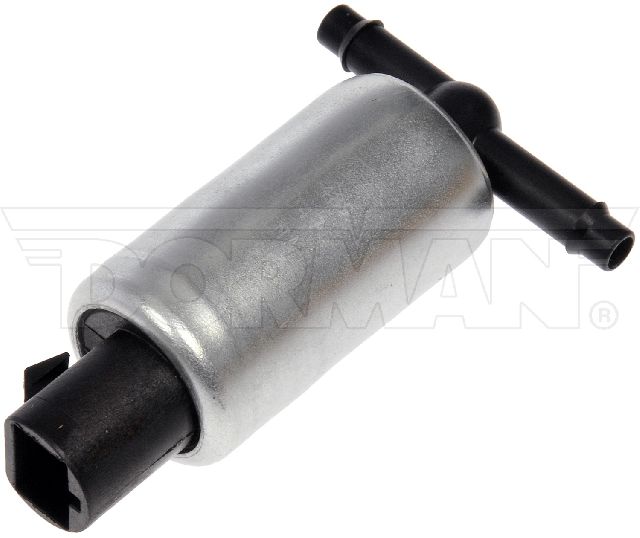
- Evaporative Emissions System Purge Flow Sensor — This sensor has a high failure rate and directly corresponds to the 'Circuit Low Input' fault described by the P1444 code. This is typically sold as an aftermarket part.
Trusted brands: Standard Motor Products (CP416), Dorman (911-129), Wells, Motorcraft
OEM price range: N/A (Sold as assembly)
Aftermarket price range: $25-$45 - Valve Assembly (includes Purge Flow Sensor, Purge Valve, and Hoses)
(OEM #F57Z-9C987-AB)— This is the official Ford OEM replacement part. It replaces the entire assembly including the sensor, solenoid, and pre-formed hoses, which can prevent issues with cracked old hoses.
Trusted brands: Ford
OEM price range: $220-$260
Aftermarket price range: N/A
Related Codes That Often Appear With This One
- P1445 — If a repair is attempted and fails, or wiring is disturbed, you might see P1445 (Purge Flow Sensor Circuit High Input), which is the opposite fault (an open circuit). 🎬 Watch: A diagnostic walkthrough for P1443, P1444, and P1445 codes. One user reported getting P1445 after fixing a hose for P1444, indicating a new problem was created.
- P1443 — This code indicates an incorrect amount of purge flow was detected (e.g., flow when none was commanded). It's often caused by a bad purge solenoid or a vacuum leak, which are in the same physical system as the P1444 components.
Technical Service Bulletins (TSBs) & Recalls
- No specific TSBs directly addressing the P1444 code on this platform were identified during research. A recall (09V399000) exists for the speed control deactivation switch, which can cause a fire, but it is unrelated to the EVAP system.
Platform-Specific Known Issues
- The Purge Flow Sensor and Solenoid assembly is located in a relatively accessible spot on the driver's side of the engine bay, tucked behind the headlight and near the charcoal canister. This location, however, does expose the wiring and vacuum lines to moisture and dirt thrown up from the road.
Mechanic-Grade Diagnostic Values
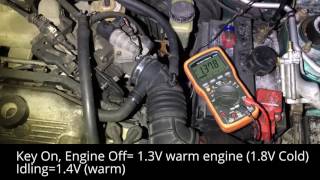
- Purge Flow Sensor (PFS) Signal Voltage — expected: Varies between approx. 1.3V (no flow) and 4.8V (max flow).. Failure: A reading below approximately 0.4V will trigger a P1444 code.
- Scan Tool EVAPPF PID (Purge Flow Sensor Voltage) — expected: Normal operating range is 0.40 to 4.80 volts.. Failure: A value below 0.40 volts indicates a fault consistent with P1444.
- Purge Solenoid Coil Resistance — expected: Approximately 52 ohms.. Failure: A reading significantly higher (open) or lower (shorted) indicates a failed solenoid. While not the direct cause of P1444, 🎬 See how to quickly test if your purge valve is working. it's a related component in the same assembly.
Scan Tool Commands That Help
- Ford IDS / Professional Scan Tool: EVAP System Test / Purge Solenoid Bidirectional Control — This command allows the technician to manually open and close the purge solenoid. While watching the 'EVAPPF' live data PID, activating the solenoid should cause a significant voltage change on the Purge Flow Sensor. If the solenoid clicks but the voltage doesn't change, it points to a faulty sensor or a blockage. If the solenoid doesn't click, the solenoid or its circuit is faulty.
Wiring & Ground Locations
- Purge Flow Sensor Connector Pinout — The 3-wire connector on the Purge Flow Sensor, located behind the driver's side headlight.. Testing at this connector is crucial. The three pins are typically for 5V reference (VREF), ground (GND), and the signal wire that sends voltage back to the PCM. A P1444 is caused by the signal wire being shorted to ground or the sensor failing internally and pulling the voltage low.
- G101 — Located on the left-hand (driver's) side of the upper radiator support.. This is a primary grounding point for the front driver's side of the engine bay, where the Purge Flow Sensor and other EVAP components are located. A corroded or loose G101 can cause a floating ground and erratic voltage readings for nearby sensors, potentially leading to a P1444.
- Engine-to-Firewall Ground Strap — Typically runs from the back of the driver's side cylinder head to a stud on the firewall.. This is a main ground for the powertrain control system. A common issue on older Rangers is this strap being loose, corroded, or incorrectly re-attached after engine work, which can cause numerous electrical gremlins, including sensor circuit faults.
Real Owner Repair Stories
- Ford-Trucks.com forum user (1995-1997 Ford Ranger (specific year not stated, but applies to range)) — Check Engine Light with code P1444.
❌ Tried (didn't work) Initial visual inspection of the sensor and solenoid appeared normal.
✅ What actually fixed it A more thorough inspection revealed the vacuum hose from the purge solenoid assembly to the charcoal canister had completely dry-rotted and fallen off the canister fitting. Reconnecting/replacing the hose resolved the code.
OEM Part Supersession History
F57Z-9C987-AB→No supersession found.— This appears to be the final and current OEM part number for the valve, sensor, and hose assembly.
Diagnostic Flowchart
Other Known Issues on This Vehicle
Issues unrelated to this code that are worth knowing about as an owner of this generation:
- Cracked Cylinder Heads 🔴 High — Very common on the 4.0L OHV engine, often appearing after 100,000 miles. The cracks typically form between the valve seats.
- Automatic Transmission Failure (4R55E/5R55E) 🔴 High — Owners frequently report issues like slipping between gears (especially 2-3 shift), harsh shifting, or complete failure. Problems can occur at various mileages.
- Rusted Rear Leaf Spring Hangers and Shackles 🔴 High — A very common structural rust issue, especially in regions using road salt. Failure can cause the rear of the truck to drop, affecting control.
- HVAC Blend Door Failure 🟡 Low — Extremely common problem where the plastic blend door inside the dashboard breaks, causing the climate control to be stuck on full heat.
- Valvetrain Ticking/Clatter 🟠 Medium — A persistent ticking noise is common at higher mileage, often caused by wear on the rocker arms and pushrods rather than lifters.
Used vs. New Parts: Buying Guide for This Vehicle
When a used part is the smart pick: For this repair, a used part is generally not recommended for the electronic sensor itself due to its high failure rate. However, sourcing used plastic EVAP lines or the charcoal canister body from a junkyard is a reasonable option if they are visually inspected and found to be free of cracks and damage.
Donor-vehicle mileage cap: roughly under 100000 miles for the part to have meaningful remaining life.
What to inspect on the donor part:
- For hoses: Squeeze the hose to check for brittleness or sponginess. It should be firm but flexible.
- For the charcoal canister: Shake the canister. You should not hear significant rattling, which would indicate broken internal baffles and loose charcoal.
- For connectors: Ensure the plastic isn't brittle and the locking tabs are intact.
OEM-only on this vehicle (don't cheap out):
- None for this repair. Aftermarket sensors are widely available and considered a reliable fix.
Aftermarket brands forum-validated for this vehicle:
- Standard Motor Products (SMP) - Part CP416 is frequently cited as a reliable replacement.
- Dorman - Part 911-129 is a common and effective aftermarket solution.
Real Owner Stories
Aggregated from forums and TSBs cited above. Mileages and costs reflect what owners reported in those sources.
1995 Ford Ranger 4.0L
Symptoms: Check engine light on with code P1444, rough idle when warm at stoplights, and lean codes for both bank 1 and 2.
What fixed it: The original poster did not report the final fix for their combination of symptoms.
Source hint: Ford Truck Enthusiasts Forums
1996 Ford Ranger 4.0L V6
Symptoms: Check Engine Light illuminated with code P1444.
What fixed it: Replacing the Purge Flow Sensor (PFS), which is noted to have a high failure rate on these specific models.
Source hint: Ranger-Forums.com: Multiple threads corroborate that P1444 on a '95-'97 Ranger is almost always the Purge Flow Sensor (PFS) itself...
1997 Ford Ranger 4.0L V6
Symptoms: Check Engine Light on and a possible fuel odor from the engine bay.
What fixed it: The owner found and replaced a vacuum hose that had 'dry rotted off' its connection at the charcoal canister.
Source hint: Ford-Trucks.com: A user discussion confirmed common causes including the sensor and dry-rotted hoses...
Related OBD-II Codes
Frequently Asked Questions
Where is the Purge Flow Sensor located on my 1996 Ford Ranger 4.0L?
Is a P1444 code an emergency that I need to fix immediately?
What is the most common part that fails to cause a P1444 code on these Rangers?
I'm replacing the EVAP hoses near the sensor. Is there a specific type of hose I should use?
Is there a recall or TSB from Ford for the P1444 code on my Ranger?
My 1997 Mazda B4000 has a P1444 code. Is the diagnosis the same as for the Ranger?
Helpful Videos
Used OEM Parts in Stock

New Aftermarket Parts Available


The information in this article is provided for general reference and educational purposes only. Vehicle specifications, procedures, and part compatibility can vary by production date, trim level, and region. Always consult your vehicle's factory service manual and verify part numbers before purchasing or performing repairs. Safety-critical components such as airbags, seat belts, and braking systems should be installed by a qualified professional.
- Ford Ranger:
- 🎬 Helpful Videos
- 🛍️ Shop This Part
- What's Unique About the 1995-1997 Ford Ranger
- Symptoms You May Notice
- Most Likely Causes
- Rare But Worth Checking
- Diagnosis Steps
- Parts You'll Likely Need
- Related Codes That Often Appear With This One
- Technical Service Bulletins (TSBs) & Recalls
- Platform-Specific Known Issues
- Mechanic-Grade Diagnostic Values
- Scan Tool Commands That Help
- Wiring & Ground Locations
- Real Owner Repair Stories
- OEM Part Supersession History
- Diagnostic Flowchart
- Other Known Issues on This Vehicle
- Used vs. New Parts: Buying Guide for This Vehicle
- Real Owner Stories
- 1995 Ford Ranger 4.0L
- 1996 Ford Ranger 4.0L V6
- 1997 Ford Ranger 4.0L V6
- Related OBD-II Codes
- Frequently Asked Questions
- 🎟️ Get 5% Off