

P1443 on 2005-2009 Toyota 4Runner 4.7L V8: Secondary Air Injection Valve Fixes
On a 2005-2009 4Runner with the 4.7L V8, P1443 indicates a fault with the Secondary Air Injection (SAI) system's Bank 2 valve circuit. The most common cause is water intrusion destroying the air pump and valves. The official repair is very expensive, so most owners opt for a cost-effective electronic bypass kit to solve the issue permanently.
- P1443 on a 2005-2009 4Runner is a Secondary Air Injection fault, specific to the 4.7L V8 engine.
- The root cause is almost always water getting into the air pump, which then damages the entire system.
- The vehicle can enter a low-power 'limp mode', making it unsafe to drive normally.
- Do not confuse this with an EVAP code, which is what P1443 means on many other brands.
- The most practical and cost-effective solution for most owners is installing an electronic bypass kit, which costs a fraction of the multi-thousand-dollar OEM repair.
What's Unique About the 2005-2009 Toyota 4RUNNER
This issue is infamous on the 4.7L V8 (2UZ-FE) engine used in this generation of 4Runner, Tundra, Sequoia, Land Cruiser, and their Lexus counterparts (GX470/LX470). The system's air pump is located in the front passenger-side fender well, an area highly susceptible to water ingestion from rain, puddles, and even car washes. This water travels through the unsealed hoses, corroding the air pump and the switching valves, leading to seizure and electrical faults. Furthermore, the foam filter inside the pump assembly is known to degrade over time, sending foam debris through the system, which jams the delicate air switching valves. Due to the extremely high cost of OEM replacement parts (often quoted at $2000-$4000 at a dealership), a large aftermarket has emerged providing electronic bypass kits that are a popular, permanent, and much cheaper solution.
Diagnostic Flowchart
Tap your situation to follow the diagnostic path that matches what you're seeing on this vehicle.
Symptoms You May Notice
- Check Engine Light is on
- TRAC OFF and VSC TRAC lights are often on at the same time
- Vehicle enters 'limp mode' with significant loss of power
- Loud noise similar to a vacuum cleaner or leaf blower from the passenger side front fender on cold starts (if the pump is still working but failing).
- Absence of the typical pump noise on a cold start (if the pump has completely failed)
- Engine stalling when cold or under heavy load, as reported by some owners.
- Replacing only one failed valve without addressing the root cause (water intrusion) or the condition of the air pump. The new valve will likely fail again soon.
- Confusing the code with an EVAP system fault. On many other vehicle brands like Ford and on some other Toyota models (especially diesels), P1443 refers to the EVAP system. For the 2UZ-FE V8, it is strictly related to the Secondary Air Injection system.
Most Likely Causes
- Failed Air Switching Valve (Bank 2) 🔴 High Probability The valves are prone to seizing from corrosion caused by water that gets ingested by the air pump. The internal foam filter of the pump can also disintegrate, sending debris into the valves and causing them to jam.
How to confirm: Use a bidirectional scan tool to command the Bank 2 valve to open and close. If it doesn't respond, or if you test the valve's solenoid with a multimeter and find it's out of spec, it has failed. Visual inspection may show corrosion or debris in the ports.
Typical fix: Replace the failed air switching valve and its gasket. However, if one valve has failed from water, the rest of the system (other valve, pump) is likely compromised and will fail soon. This is why complete system bypass is the most common DIY repair.
Est. part cost: $150-$300 - Failed Air Injection Pump 🔴 High Probability The pump is mounted in a location where it can easily suck in water, causing the motor to short out, rust, and fail. This is the root cause of most SAI system failures on this platform.
How to confirm: Listen for the pump during a cold start. If it doesn't run, check the 50A fuse and the AIR PUMP relay first. If those are good, the pump motor has likely burned out. You can also test for power at the pump connector. A failing pump may draw excessive current, sometimes over 60 amps on startup.
Typical fix: Replace the air injection pump. It is highly recommended to also replace the valves or install a preventative filter modification to prevent a repeat failure. Due to the high cost, most owners opt for a bypass kit instead of replacing the pump.
Est. part cost: $200-$500 - Wiring or Connector Damage ⚪ Low Probability The wiring to the valve is located in the engine bay and can be damaged by heat, age, or rodents. The connector itself can also corrode from moisture.
How to confirm: Visually inspect the wiring harness and connector going to the Bank 2 air switching valve. Check for continuity and voltage with a multimeter.
Typical fix: Repair the damaged section of the wiring harness or replace the connector.
Est. part cost: $10-$50
Rare But Worth Checking
- Failed Air Injection Driver/Relay: The system uses an Air Injection Control Driver and relays to control the high-current pump motor. While less common than pump or valve failure, the driver or relay can fail and is a relatively simple and inexpensive part to test and replace.
- Cold Weather ECM Glitch (P2445): On some 2005-2006 models, a known ECM glitch can occur when starting the vehicle in freezing temperatures and then driving above 50 mph, triggering a P2445 (Pump Stuck Off) code. This is not a mechanical failure but an ECM software issue. The only solution was a limited-service campaign from Toyota to re-flash the computer.
Diagnosis Steps
- Verify the code with an OBD-II scanner. Note any other accompanying SAI system codes (P0418, P1440, P244x, etc.).
- On a cold engine start, listen for the air pump running for 30-60 seconds. It sounds like a loud vacuum cleaner and is located in the passenger fender area.
- If the pump does not run, check the 50A fuse and the AIR PUMP relay in the engine bay fuse box.
- If the fuse and relay are good, inspect the air pump itself for signs of water damage and corrosion. Test for power at the pump connector during a cold start.
- Inspect the air switching valves located on top of the engine, under the intake manifold cover. Check the electrical connector for the Bank 2 (driver's side) valve for corrosion or damage.
- If you have a bidirectional scanner (like Toyota Techstream), command the Bank 2 valve and the pump to activate to test their function independently.
- If component replacement is the chosen path, remove the valve and inspect the ports for carbon buildup, moisture, or bits of foam from the failed pump filter.
- If opting for the bypass kit, follow the manufacturer's instructions carefully, which involves installing an electronic module and physical block-off plates on the exhaust manifolds.
Parts You'll Likely Need
- Secondary Air Injection System Bypass Kit — This is the most common and cost-effective fix. It electronically tricks the ECU into thinking the system is working perfectly, clearing all related codes and limp mode without replacing the expensive mechanical parts. The kit includes an electronic module and metal block-off plates to seal the exhaust ports.
Trusted brands: Hewitt-Tech, Sly Fox
OEM price range: N/A
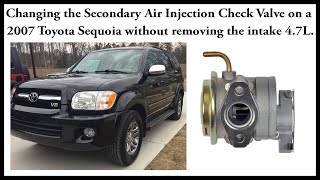
Aftermarket price range: $150-$300 - Air Switching Valve
(OEM #25710-50022 (supersedes 25710-50020, 25710-50021))— This is the valve indicated by the P1443 code. It fails due to corrosion from water or debris from the pump. TSB T-SB-0230-12 shows the part number has been updated several times.
Trusted brands: Toyota (OEM), Dorman (e.g., 911-643, though some users report issues)
OEM price range: $250-$400
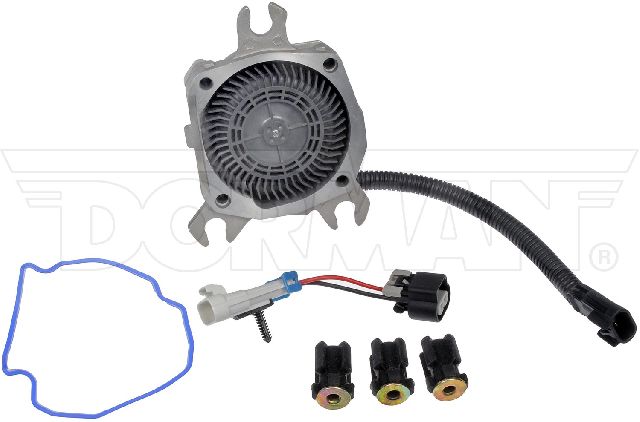
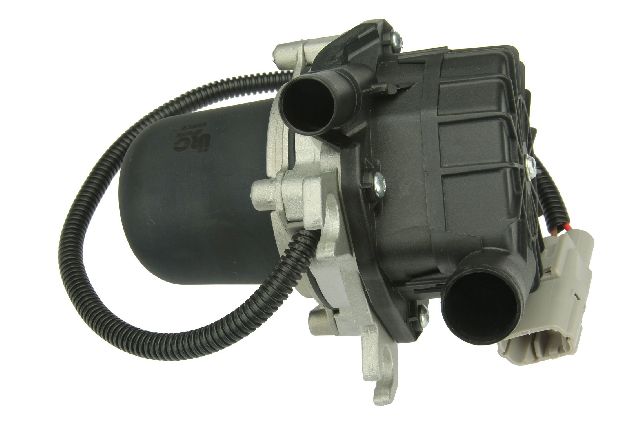
Aftermarket price range: $150-$250 - Air Injection Pump
(OEM #17600-0F010)— This is the source of the problem. It ingests water and fails, sending moisture and debris to the valves.
Trusted brands: Toyota (OEM), Dorman, Cardone
OEM price range: $400-$600
Aftermarket price range: $200-$350
Related Codes That Often Appear With This One
- P0418 — Relates to the 'Secondary Air Injection System Relay 'A' Circuit'. This often appears when the air pump itself fails or has a circuit issue.
- P1440 — This is the companion code for the Bank 1 valve circuit, indicating a widespread system failure affecting both sides of the engine.
- P2440 / P2441 / P2442 / P2443 — These codes indicate that an air switching valve is stuck open or closed, which is the mechanical result of the corrosion and damage that also causes the P1443 electrical circuit fault.
- P2445 — Indicates the 'Secondary Air Injection System Pump Stuck Off Bank 1'. This is very common when the pump motor has seized or burned out due to water intrusion.
Technical Service Bulletins (TSBs) & Recalls
- T-SB-0230-12 Rev1 (October 17, 2013): The most comprehensive TSB for this issue. It lists P1443 and a host of other SAIS codes, acknowledges the cause as debris from the pump, and provides updated part numbers for the valves and driver.
Platform-Specific Known Issues
- The 4.7L V8 4Runner is notorious for Secondary Air Injection system failures due to the poor placement of the air pump in the passenger fender well, making it highly susceptible to water damage.
- Failure of this emissions system will put the vehicle into a 'limp mode', severely reducing power, which is a major drivability and safety concern.
- Dealership repairs are prohibitively expensive (often $2,000+), leading to the widespread adoption of electronic bypass kits as the preferred long-term solution by the owner community.
Mechanic-Grade Diagnostic Values
- Air Switching Valve (ASV) Resistance — expected: 4.5 to 5.5 Ω at 20°C (68°F). Failure: Resistance is outside the specified range.
- Air Pump Resistance — expected: 0.4 to 1.0 Ω at 20°C (68°F). Failure: Resistance is outside the specified range, indicating a faulty pump motor.
Scan Tool Commands That Help
- Toyota Techstream: Active Test: "Control the Air Injection System" — This function allows a technician to individually command the air pump and air switching valves to turn on or off, verifying their operation without needing a cold start. The test is limited to 5-second activations and can only be performed a few times per drive cycle.
- Toyota Techstream: Data List — To monitor live data from the SAIS. The ECM uses diagnostic signals from the Air Injection Control Driver (AID) to monitor the system. For example, the duty ratio signal from the AID should be 70-90% when the system is active and 0% when it's not. An incorrect reading can confirm a circuit fault.
Wiring & Ground Locations
- ECM Connector A, Pins 26 & 27 — At the main Engine Control Module (ECM).. A 2006 4Runner wiring diagram shows the circuits for the Air Injection Valves (AIV1 and AIV2) run to pins 26 (AIV1) and 27 (AIV2) on connector A of the ECM. P1443 corresponds to the Bank 2 valve, so checking for voltage/continuity at the corresponding pin can diagnose a wiring break or a fault in the Air Injection Control Driver.
- Air Injection Control Driver (AID) — Typically located on the driver's side inner fender well in the engine bay.. This module is the intermediary between the ECM and the high-current air pump and valves. P1443 is a circuit code, and the AID is a critical part of that circuit. A failure in the driver itself can trigger this code. TSB T-SB-0230-12 Rev1 lists an updated part number for this driver (89580-34012).
Real Owner Repair Stories
- IH8MUD.com Forum User (2006 Lexus LX470 (mechanically identical SAIS to 4Runner)) — Initially had P2445 (Pump Stuck Off). After installing a Hewitt-Tech bypass kit, new codes P1440 and P1443 appeared. The engine idled rough and felt sluggish, smelling rich of fuel.
❌ Tried (didn't work) Replacing the Hewitt-Tech module and wiring loom did not solve the P1443 code., Plugging the valves back into the OEM harness (bypassing the bypass kit) made the codes disappear but the rough idle remained.
✅ What actually fixed it The user's story highlights a complex interaction after installing a bypass kit. While the final post is not a definitive "it was X", the symptoms (rough idle, rich smell, codes appearing 90 seconds after start) pointed toward a problem created by the interaction of the bypass kit with another underlying issue, possibly a failing O2 sensor or a vacuum leak introduced during installation, which was being diagnosed with Hewitt-Tech's support. This serves as a caution that even the 'easy fix' bypass can have complications.
OEM Part Supersession History
25710-50020→25710-50021, then 25710-50022— Part revision by Toyota, likely to improve durability or address failure modes. The supersession is documented in TSB T-SB-0230-12 and by OEM parts dealers.89580-34010 / 89580-34011→89580-34012— Part revision for the Air Injection Control Driver, as noted in TSB T-SB-0230-12 Rev1.
Model Year Variations Within This Range
- 2005-2009: The problematic Secondary Air Injection (SAI) system was added to the 4.7L V8 (2UZ-FE) engine starting with the 2005 model year, coinciding with the addition of VVT-i. The 2003-2004 4Runners with the non-VVT-i 4.7L V8 do not have this system and are not susceptible to this failure.
- 2008-2009: Minor cosmetic and safety updates were made, such as standard rollover-sensing side curtain airbags and a slightly modified grille for the 2008 model year, but these did not affect the SAIS system design or its failure mode.
Helpful Videos

We Have This Part in Stock



The information in this article is provided for general reference and educational purposes only. Vehicle specifications, procedures, and part compatibility can vary by production date, trim level, and region. Always consult your vehicle's factory service manual and verify part numbers before purchasing or performing repairs. Safety-critical components such as airbags, seat belts, and braking systems should be installed by a qualified professional.
- Toyota 4RUNNER:
- 🎬 Helpful Videos
- 🛍️ Shop This Part
- What's Unique About the 2005-2009 Toyota 4RUNNER
- Diagnostic Flowchart
- Symptoms You May Notice
- Most Likely Causes
- Rare But Worth Checking
- Diagnosis Steps
- Parts You'll Likely Need
- Related Codes That Often Appear With This One
- Technical Service Bulletins (TSBs) & Recalls
- Platform-Specific Known Issues
- Mechanic-Grade Diagnostic Values
- Scan Tool Commands That Help
- Wiring & Ground Locations
- Real Owner Repair Stories
- OEM Part Supersession History
- Model Year Variations Within This Range
- 🎟️ Get 5% Off