

P1442 on 2005-2009 Toyota 4Runner: Air Injection Valve Stuck Closed Causes and Fixes
P1442 on a 4th Gen Toyota 4Runner with the 4.7L V8 almost always means the Secondary Air Injection (SAI) switching valves are seized due to moisture damage. The root cause is a design flaw where the air pump ingests water, which then corrodes the valves. The complete repair often involves replacing both valves and the air pump, costing over $1,500. Due to the high cost and common nature of the failure, many owners opt for an aftermarket bypass kit to disable the system and prevent future issues.
- P1442 on a 2005-2009 4Runner V8 points directly to a stuck Secondary Air Injection (SAI) valve.
- The root cause is almost always moisture being ingested by the air pump, which then corrodes the valves.
- A complete, long-term repair requires replacing both air valves and the air pump, which is a difficult and expensive job ($1000+).
- For those in areas without strict emissions testing, an aftermarket bypass kit is a much cheaper and permanent solution that prevents the code and limp mode.
- This is a well-known design flaw, and you should not replace just one part of the system; address the pump and both valves at once or install a bypass kit.
What's Unique About the 2005-2009 Toyota 4RUNNER

This issue is extremely common on 2005 and newer Toyota trucks and SUVs with the 4.7L V8 (2UZ-FE) engine, including the 4Runner, Tundra, Sequoia, Land Cruiser, and the Lexus GX470 and LX470. The problem stems from a design flaw where the air pump, located in the engine valley under the intake manifold, can ingest moisture. This moisture is then pushed through the system, causing the metal air switching valves to corrode and seize. The failure is so prevalent that Toyota issued Technical Service Bulletin T-SB-0230-12 Rev1 and a warranty enhancement program (ZLC), though it is now expired for most vehicles. A large aftermarket of bypass kits has emerged as a popular, permanent, and more affordable solution.
Diagnostic Flowchart

Tap your situation to follow the diagnostic path that matches what you're seeing on this vehicle.
Symptoms You May Notice

- Check Engine Light is on
- VSC and Traction Control lights may also be illuminated
- Vehicle may enter 'limp mode,' with significantly reduced engine power, often limited to ~2500 RPM.
- Audible whirring or loud vacuum-cleaner noise from the engine bay on cold starts (or a lack of this normal sound, indicating a dead pump).
- Vehicle will not pass an emissions inspection.
- Replacing only one air switching valve. Since the failure is systemic (moisture), the other valve is often on the verge of failing and should be replaced at the same time to avoid a repeat repair.
- Replacing the valves without inspecting or replacing the air pump. If the pump is damaged or full of water, it will quickly destroy the new valves.
- Mistaking a loose gas cap for the issue. A loose gas cap will trigger an EVAP system code, not an SAI code.
Most Likely Causes

- Seized/Stuck Air Switching Valve #2 🔴 High Probability The valves are made of metal and are highly susceptible to corrosion from moisture ingested by the air pump. They are located at the back of the engine under the intake manifold, where they are exposed to extreme heat and are very difficult to access for service.
How to confirm: Using a diagnostic tool like Toyota Techstream, you can attempt to actuate the valve. Physically, you can test if the valve holds a vacuum with a hand pump and actuates properly. A stuck valve will either not open with vacuum applied or will not hold vacuum. This requires removing the intake manifold for access.
Typical fix: Replace the faulty air switching valve. It is highly recommended to replace both valves (Bank 1 and Bank 2) at the same time, as the other is likely to fail soon due to the same systemic moisture issue.
Est. part cost: $75-$250 per valve - Failed Secondary Air Injection Pump 🟡 Medium Probability The pump's foam filter, located inside the housing, can degrade or become saturated with water, allowing moisture and debris to be sucked into the system. The pump's plastic fan blades can also break apart, sending shrapnel into the air switching valves, causing them to jam open or closed.
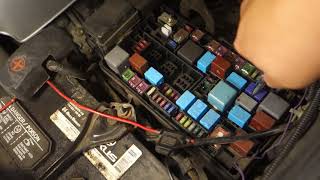
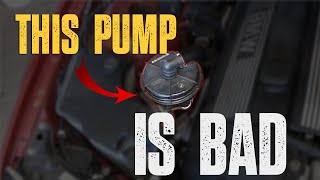
How to confirm: Listen for the pump to run for about 30-60 seconds on a cold start. If it doesn't run, check the 50A fuse and relay in the engine bay fuse box. If it runs but sounds rough or you suspect internal damage, it must be removed for inspection. 🎬 See the symptoms and replacement steps for a failed pump. This requires removing the intake manifold.
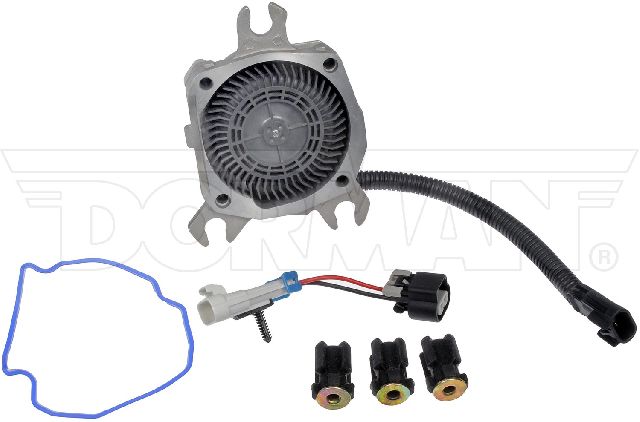
Typical fix: Replace the air pump assembly. This is often done along with the valves to prevent the new valves from being damaged by a faulty pump. Some owners have successfully used the Dorman 306-010 pump as a more affordable alternative.
Est. part cost: $200-$700 - Moisture Contamination 🔴 High Probability This is the root cause of most SAI system failures on this platform. The pump's design and location under the intake manifold do not adequately protect it from water, which then gets distributed throughout the system, corroding the valves.
How to confirm: Upon disassembly, inspect the inside of the air pump housing, the hoses, and the valves for any signs of water, rust, or white-colored residue.
Typical fix: After replacing the failed components (pump and valves), some mechanics and owners drill a tiny drain hole in the lowest point of the new pump housing to allow any future moisture to escape. Another preventative measure is relocating the pump's air intake to a higher, drier location.
Est. part cost: $0 (for drilling a hole)
Rare But Worth Checking
- Damaged Wiring or Vacuum Lines: The main engine wiring harness runs very close to the air switching valves at the back of the engine. The harness can rub against the plastic vacuum nipples, causing them to break off the valve body. Rodents are also known to chew on the wiring or vacuum hoses in the engine valley.
- Failed Air Injection Control Driver: This is the electronic module that controls the pump and valves. While failure is less common, it can happen. TSB T-SB-0230-12 Rev1 provides a diagnostic procedure for this component.
Diagnosis Steps
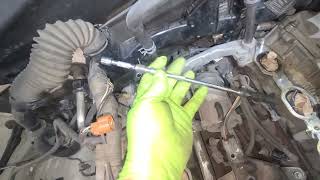
- Scan for all DTCs to see if other related codes are present, such as P1445 🎬 Watch this diagnostic walkthrough for codes P1445 and P1442. (Bank 2 valve) or pump-related codes like P0418.
- On a cold engine start, listen for the air pump. It should sound like a loud vacuum cleaner for 30-60 seconds and then shut off. If it doesn't run, check the 50A fuse and AIR relay.
- If the pump runs, the issue is likely the valves. If it doesn't, the problem could be the pump motor, relay, or the Air Injection Control Driver.
- To access the components, the intake manifold must be removed. The pump and valves are located in the engine valley, with the valves at the rear against the firewall.
- Visually inspect the valves, hoses, and wiring for damage, corrosion, or broken vacuum nipples. Pay close attention to the rear valve's vacuum nipple for breakage from the main wiring harness.
- Once the valves are accessible, disconnect the vacuum line to a switching valve and connect a hand-held vacuum pump. Apply vacuum to see if the valve opens and holds. A faulty valve will leak down or fail to actuate.
- Inspect the air pump and its foam filter for signs of water intrusion, rust, or physical damage to the impeller from disintegration.
- If replacing parts, it is best practice to replace both switching valves and the air pump assembly at the same time to ensure a lasting repair.
Parts You'll Likely Need

- Air Switching Valve Assembly
(OEM #25710-50022)— This is the valve assembly (Bank 1) that seizes and gets stuck closed, directly causing code P1442. It is highly recommended to also replace the Bank 2 valve (P/N 25720-50020) simultaneously.
Trusted brands: Toyota (OEM), Dorman
OEM price range: $200-$300
Aftermarket price range: $75-$150 - Secondary Air Injection Pump
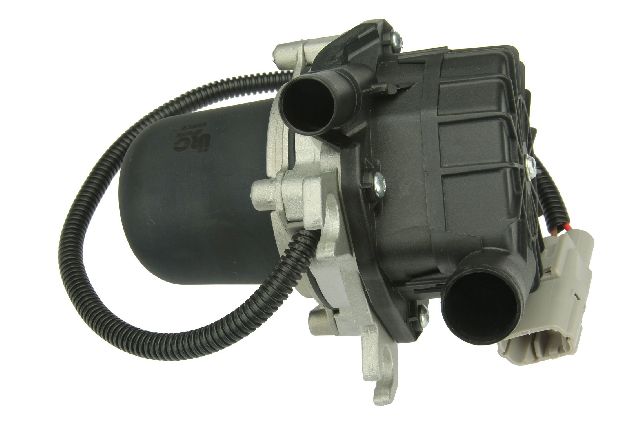
(OEM #17600-0F010)— This pump is the source of the moisture and debris that causes the valves to fail. Replacing it is critical for a long-term repair.
Trusted brands: Toyota (OEM), Dorman (306-010), A-Premium
OEM price range: $450-$700
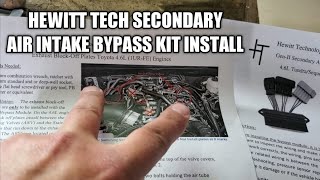
Aftermarket price range: $150-$300 - SAI System Bypass Kit — For owners in regions without emissions testing, a bypass kit is a popular and cost-effective alternative to a full repair. It electronically tricks the ECU into thinking the system is working, preventing the check engine light and limp mode, 🎬 Watch a step-by-step installation of a bypass kit. without replacing the expensive hardware.
Trusted brands: Hewitt-Tech, Slyfox
OEM price range: N/A
Aftermarket price range: $150-$400 - Intake Manifold Gaskets
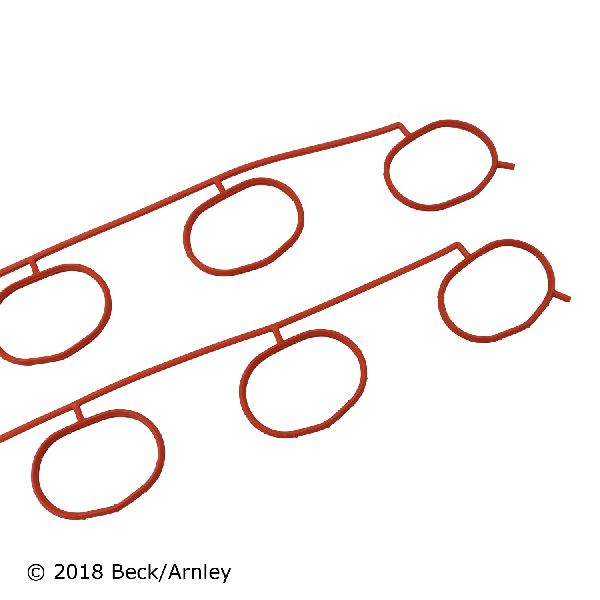
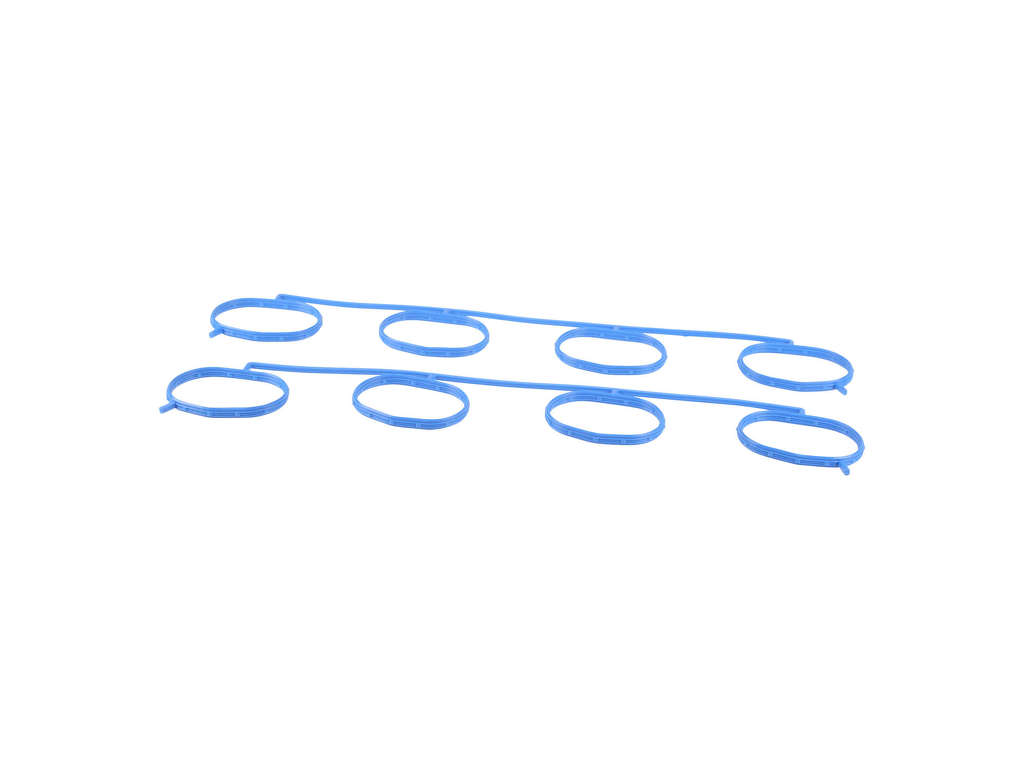
(OEM #17171-50030)— These are one-time use gaskets that must be replaced anytime the intake manifold is removed to access the SAI components.
Trusted brands: Toyota (OEM)
OEM price range: $20-$40
Aftermarket price range: $10-$25
Related Codes That Often Appear With This One
- P1445 — This is the identical code for the Bank 2 switching valve stuck closed. They often fail together or in close succession due to the shared moisture problem.
- P2440, P2441, P2442, P2443 — These are related codes for the air switching valves being stuck open or closed. A 'stuck open' valve is more severe as it can allow hot exhaust gas to flow backward and destroy the air pump.
- P0418, P2445 (Pump Stuck Off) — These codes point to a problem with the air injection pump motor, its driver, or its relay, which is often the root cause of the subsequent valve failure.
Technical Service Bulletins (TSBs) & Recalls
- T-SB-0230-12 Rev1 (October 17, 2013): This is the primary document from Toyota covering the diagnosis and repair of a wide range of SAI system DTCs, including P1442, for the 4.7L 2UZ-FE engine across multiple vehicle platforms.
Platform-Specific Known Issues
- Toyota issued Technical Service Bulletin T-SB-0230-12 Rev1, which details the diagnostic and repair procedure for a list of SAI system codes, including P1442. It acknowledges that debris from the pump can contaminate the system.
- Toyota had a Customer Support Program (code ZLC) for this issue, which extended the warranty coverage. However, for a 2005-2009 vehicle, this program has long since expired.
- The repair is labor-intensive due to the need to remove the entire intake manifold to access any of the SAI system components located in the engine valley.
- A common point of failure is the plastic vacuum nipple on the rear-most switching valve, which can be broken by the pressure of the main engine wiring harness resting against it.
Scan Tool Commands That Help
- Toyota Techstream: Active Test for Secondary Air Injection System — This function allows the technician to command the air pump and switching valves to operate independently of a cold start. It is used to verify if the valves are physically stuck or if the pump motor is functional without having to remove the intake manifold for initial diagnosis.
Wiring & Ground Locations
- MAF Sensor Connector Wire #4 — On the Mass Airflow (MAF) sensor connector at the engine airbox.. When installing a preventative or remedial bypass kit, this specific wire (often yellow with a black stripe) must be cut and spliced into the bypass module's wiring. It is the signal wire the module uses to trick the ECU.
- Air Injection Control Driver — Typically located behind the glove box, near the main Engine Control Module (ECM).. This module is the 'brain' of the SAI system. If codes P0418 or P2445 are present along with valve codes, TSB T-SB-0230-12 suggests this driver may have failed and requires replacement. Knowing its location is key for testing and replacement.
- Engine Ground Straps — Multiple ground straps are bolted to the intake manifold and cylinder heads.. During the extensive repair which requires removing the intake manifold, multiple ground straps must be disconnected. Failure to properly clean and securely re-attach these grounds during reassembly can cause a host of unrelated electrical issues and codes.
Real Owner Repair Stories
- Reddit user in /r/GXOR (2009 Lexus GX470 (mechanically identical SAI system)) — Check Engine Light with code P1442.
❌ Tried (didn't work) Resetting the code by disconnecting the battery (code returned).
✅ What actually fixed it The owner and a friend performed the repair themselves by removing the intake manifold and replacing the faulty air switching valve. The job was estimated to be around 8 labor hours. - Reddit user in /r/4Runner (2008 Toyota 4Runner V8 with 161k miles) — Check Engine Light came on a few times for SAI codes P1442 and P1445.
❌ Tried (didn't work) N/A, owner opted for a bypass kit directly.
✅ What actually fixed it Installed a Hewitt-Tech Gen 2 SAIS bypass kit. This prevented the codes from returning and resolved the issue without a full mechanical repair.
When the Usual Fixes Don't Work
- In some rare cases, owners have replaced both the air pump and the air switching valves (#2) but continue to get P1442 and P1445 codes. One documented case on a Tundra forum showed a user who confirmed the new valves were receiving vacuum on startup, indicating the vacuum switching solenoids (VSVs) were working, yet the 'stuck closed' codes returned. This points the diagnosis away from the most common causes and towards more elusive electronic issues, such as a faulty Air Injection Control Driver or, in the worst case, the main Engine Control Module (ECM).
OEM Part Supersession History
25710-50020, 25710-50021→25710-50022— Part revision by the manufacturer, likely for improved durability or minor design changes.
Heads up: The newer part number is the correct and direct replacement for the older versions.89580-34010, 89580-34011, 89581-34040, 89581-34041, 89581-71010→89580-34012— Part consolidation and revision for the Air Injection Control Driver.
Heads up: 89580-34012 is the current service part number per Toyota TSB T-SB-0230-12.
Model Year Variations Within This Range
- 2008-2009: The ECU monitoring strategy for the SAI system differs from the 2005-2007 models. This requires a different generation of bypass kit (e.g., Hewitt-Tech Gen 2 / V54) to properly interface with the system. Using a kit designed for earlier models on a 2008+ vehicle can trigger other fault codes, such as P011B (Temperature Correlation Error).
Helpful Videos


Used OEM Parts in Stock


New Aftermarket Parts Available


The information in this article is provided for general reference and educational purposes only. Vehicle specifications, procedures, and part compatibility can vary by production date, trim level, and region. Always consult your vehicle's factory service manual and verify part numbers before purchasing or performing repairs. Safety-critical components such as airbags, seat belts, and braking systems should be installed by a qualified professional.
- Toyota 4RUNNER:
- 🎬 Helpful Videos
- 🛍️ Shop This Part
- What's Unique About the 2005-2009 Toyota 4RUNNER
- Diagnostic Flowchart
- Symptoms You May Notice
- Most Likely Causes
- Rare But Worth Checking
- Diagnosis Steps
- Parts You'll Likely Need
- Related Codes That Often Appear With This One
- Technical Service Bulletins (TSBs) & Recalls
- Platform-Specific Known Issues
- Scan Tool Commands That Help
- Wiring & Ground Locations
- Real Owner Repair Stories
- When the Usual Fixes Don't Work
- OEM Part Supersession History
- Model Year Variations Within This Range
- 🎟️ Get 5% Off