

OBD-II Code P1442: A Comprehensive Guide for Diagnosis and Repair
What P1442 means, its multiple manufacturer-specific definitions, and how to fix it for good.
- P1442 is a manufacturer-specific code; you must look up the exact definition for your make and model before buying parts, as it means a $1,500 Toyota SAI failure but a $20 Nissan EVAP leak.
- For Nissan and Mazda vehicles, a loose or damaged gas cap is the number one cause of P1442, fixable in 2 minutes with a $20 to $35 OEM replacement cap.
- On 2005-2013 Toyota and Lexus V8 models, P1442 indicates a seized Secondary Air Injection valve, a repair requiring intake manifold removal that costs between $750 and $1,850.
- Driving with an active P1442 code guarantees an emissions test failure and, if left unresolved for over 6 months, destroys the catalytic converter, adding $1,500 to $3,000 to your repair bill.
What Does P1442 Mean?

P1442 is a manufacturer-specific diagnostic trouble code (DTC), meaning its definition changes depending on your vehicle's brand. On Toyota, Lexus, and some German vehicles, it signals a stuck valve in the Secondary Air Injection (SAI) system, which pumps fresh air into the exhaust on cold starts to heat the catalytic converter faster. For brands like Nissan, Honda, and Mazda, it indicates a leak or malfunction within the Evaporative Emission (EVAP) system, designed to trap and recycle fuel vapors from the gas tank. On Volkswagen models, it points to the Exhaust Gas Recirculation (EGR) system. On European diesel vehicles from Peugeot, Citroën, and Fiat, it signifies a broken Diesel Particulate Filter (DPF) additive pump.
Technical definition: The official definition for P1442 varies significantly by manufacturer. For Toyota/Lexus, it is 'Secondary Air Injection System Switching Valve No. 2 Stuck Closed Bank 1'. For Nissan/Infiniti, it is 'EVAP Canister System – Small Leak Detected'. For BMW, it is 'Leakage Diagnostic Pump (LDP) Control Circuit Signal Low'. For Volkswagen, it is 'EGR Valve Position Sensor Signal Too High'. For Peugeot/Citroën/Fiat diesels, it is 'Additive Pump Open Circuit'.
Can I Drive With P1442?
Yes, But With Caution. You can drive with this code active, but it causes an automatic failure on an emissions test. On certain Toyota and Lexus models, a severe Secondary Air Injection (SAI) fault triggers a low-power 'limp mode,' making highway driving unsafe. Driving for over 500 miles with an unresolved SAI or EVAP fault masks other serious issues and destroys the catalytic converters, a repair costing $1,500 to $3,000.
Common Causes


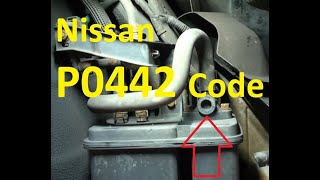
- Loose, Damaged, or Incorrect Gas Cap (Very Common) — For makes where P1442 indicates an EVAP leak (Nissan, Mazda), this is the most frequent cause. An ill-fitting, cross-threaded, or worn-out gas cap seal allows fuel vapors to escape, triggering the code.
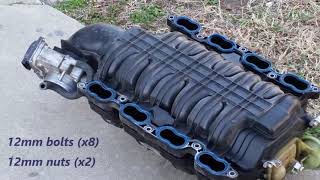
- Faulty Secondary Air Injection (SAI) Switching Valve (Very Common) — This is the primary cause on Toyota and Lexus V8 models. The valve, located under the intake manifold, 🎬 Watch: How to fix stuck Toyota secondary air injection valves. seizes closed due to moisture and corrosion originating from a failing air pump.
- Failed Secondary Air Injection (SAI) Pump (Common) — The air pump motor fails due to moisture ingestion. A classic symptom is a loud roaring or whining noise, similar to a vacuum cleaner, for 30-90 seconds after a cold start. This failure directly causes the switching valves to seize.
- Faulty EVAP Purge Control Valve or Solenoid (Common) — For brands where P1442 is EVAP-related, this valve controls the flow of fuel vapors from the charcoal canister to the engine. It fails electrically or becomes mechanically stuck open or closed.
- Cracked, Disconnected, or Clogged Vacuum Hoses (Common) — Both SAI and EVAP systems rely heavily on vacuum hoses. Over time, these rubber hoses dry rot, crack, split, or disconnect, causing pressure and vacuum leaks that trigger the code.
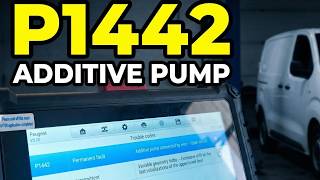
- Wiring or Connector Issues (Common) — Damaged, corroded, or loose wiring to system components causes an open or short circuit. This is a known issue on Peugeot/Fiat models with the DPF additive pump, where exposed wires near the tank break. 🎬 See this walkthrough for fixing a Peugeot DPF additive pump.
- Faulty Fuel Level Sensor (Less Common) — On Subaru models, P1442 specifically points to a 'Fuel Level Sensor Circuit Range/Performance' issue. The ECU sets this code if it detects the fuel level signal has not changed over an extended period, assuming the sensor is stuck.
- Faulty EGR Valve or Position Sensor (Less Common) — On Volkswagen models, P1442 is triggered by a high signal from the EGR valve position sensor, indicating a fault in the sensor itself or a valve that is jammed with carbon.
- Clogged EVAP Canister (Rare) — The charcoal canister in the EVAP system becomes saturated with liquid fuel or blocked with debris, always from habitually overfilling the fuel tank. This obstructs vapor flow and triggers EVAP codes.
- Faulty Engine Control Unit (ECU) (Very Rare) — In extremely rare cases, the engine computer itself fails, causing it to misinterpret signals from emissions sensors and set a false P1442 code.
Symptoms
- Check Engine Light is On — This is the most common and often the only symptom. An active P1442 code always illuminates the Malfunction Indicator Lamp (MIL).
- Loud Roaring Noise at Startup — A loud roaring or squealing sound from the engine bay for 30-90 seconds after a cold start is a classic sign of a failing secondary air injection pump.
- Fuel Smell — A noticeable smell of raw gasoline around the vehicle, especially after parking, strongly suggests a leak in the EVAP system.
- Difficulty Refueling — If the gas pump nozzle clicks off repeatedly before the tank is full, it indicates a blocked EVAP system vent hose or a saturated charcoal canister.
- Reduced Engine Power ('Limp Mode') — In some Toyota and Lexus models, a critical SAI system failure triggers a safety mode that limits engine RPM and speed to prevent further damage.
- Poor Engine Performance or Rough Idle — If the code is related to a faulty EGR valve (VW/Audi), you experience rough idling, stalling, hesitation on acceleration, or a general decrease in power.
- Difficult Starting After Refueling — If an EVAP purge valve is stuck open, it creates a rich fuel mixture after refueling, leading to a temporary hard-starting condition.
- Increased Fuel Consumption (also visible on scanner) — A malfunctioning EVAP or EGR system leads to a measurable decrease in fuel economy over time.
Diagnostic Flowchart
Tap your situation to follow the diagnostic path that matches what you're seeing on this code.
Common Fixes & Costs
- Replace Gas Cap — Parts: $15-$35, Labor: $0, ~0.1 hr book time (DIY)
- Replace Secondary Air Injection Pump — Parts: $150-$400, Labor: $150-$300, ~2.0 hr book time (Intermediate)
- Replace Secondary Air Injection Switching Valves — Parts: $350-$650, Labor: $400-$1200, ~8.5 hr book time (Professional)
- Replace EVAP Purge or Vent Solenoid — Parts: $50-$150, Labor: $75-$150, ~1.0 hr book time (DIY)
- Replace DPF Additive Pump/Reservoir — Parts: $250-$500, Labor: $150-$300, ~2.0 hr book time (Intermediate)
- Install Secondary Air Injection System Bypass Kit — Parts: $200-$400, Labor: $100-$200, ~1.5 hr book time (Intermediate)
DIY vs Professional
- Replace Gas Cap — Beginner:
Tools: None - Replace EVAP Purge or Vent Solenoid — Beginner:
Tools: Basic hand tools (socket set, pliers). - Replace Secondary Air Injection Pump — Beginner:
Tools: Socket set, extensions, jack and jack stands (depending on location). - Install Secondary Air Injection System Bypass Kit — Beginner:
Tools: Basic wiring tools (wire strippers, crimpers, connectors), socket set. - Replace DPF Additive Pump/Reservoir — Beginner:
Tools: Socket set, fluid transfer pump, protective gloves, diagnostic scan tool. - Replace Secondary Air Injection Switching Valves — Beginner:
Tools: Extensive tool set, torque wrench, potentially specialized tools.
Used vs. New Parts: Buying Guide
When a used part is worth it: For high-cost electronic components like a Secondary Air Injection pump or DPF additive pump on a vehicle older than 10 years, a used part from a low-mileage, accident-damaged donor is a cost-effective option.
Donor-vehicle mileage cap: roughly under 80000 miles for the part to have meaningful remaining life.
Donor quality checklist:
- Verify the donor vehicle was not scrapped for an engine or emissions-related failure.
- Avoid used EVAP canisters, as they are often saturated with fuel from the donor vehicle's overfilling habits.
- Match the OEM part number exactly. 'Interchangeable' aftermarket parts lack the correct flow rates or electrical resistance.
Decision logic:
- If The part is a simple mechanical or electrical valve (e.g., EVAP purge solenoid) and a new aftermarket version is under $100 → Buy new. The savings from a used part are not worth the risk and lack of warranty.
- If The part is a high-cost assembly (e.g., Toyota SAI valves, >$500) on a high-mileage vehicle (>150k miles) → A used part is a reasonable gamble, but expect a significantly shorter lifespan. Factor in the cost of labor to do the job twice.
- If The part has a known wear-out failure mode due to moisture/corrosion (e.g., SAI pumps and valves) → Strongly favor new OEM or a quality aftermarket part, as a used part suffers from the same hidden corrosion.
Warranty tradeoff: Used parts from a salvage yard offer a 30-90 day warranty on the part only, not labor. New aftermarket parts have a 1-year to limited lifetime warranty. New OEM parts have a 1-year/12,000-mile warranty.
Worst-case if a used part fails: $500 - $1500 if a used part fails after installation, requiring repeat labor costs plus the price of another replacement part.
What Happens If You Wait — Timeline
- 0-1 month: Code is set, Check Engine Light is on. For most causes (EVAP leak, SAI fault), there are no noticeable driving symptoms. The car automatically fails an emissions test. (MPG impact: 0-2%% · Added cost: $0)
- 1-6 months: For an EVAP leak, a fuel smell becomes noticeable after parking. Fuel economy drops slightly. For an SAI fault, the catalytic converter heats up slowly on every cold start, increasing long-term stress and carbon fouling. (MPG impact: 2-5%% · Added cost: $20-80 in wasted fuel)
- 6-18 months: A long-term SAI fault causes a significant decline in catalytic converter efficiency, triggering a P0420 code. The converter sustains permanent damage. For a stuck-open EVAP purge valve, incorrect fuel trims stress and overheat the converter. (MPG impact: 5-10%% · Added cost: $300 - $1,000 (Cost to diagnose the new P0420 code and replace O2 sensors))
- 18+ months: Catastrophic failure of the catalytic converter. The internal honeycomb substrate breaks apart, creating a major exhaust blockage. This causes severe power loss, poor fuel economy, and engine damage from excessive backpressure. (MPG impact: 10-25%+% · Added cost: $1,500 - $3,000)
Cost of Not Fixing It
- 0-3 months: Guaranteed failure of emissions/smog test. For EVAP faults, a 5-10% drop in fuel economy and fuel smell occurs. For SAI faults, no noticeable performance change happens. (Added cost: Negligible, aside from re-test fees.)
- 3-12 months: For SAI faults, the catalytic converter does not warm up efficiently, leading to carbon fouling and a premature decline in converter efficiency, triggering a P0420 code. For EVAP faults, a stuck-open purge valve causes long-term fuel trim issues, stressing the catalytic converter. (Added cost: $0 - $200 (for diagnostics if P0420 appears))
- 12+ months: Continued inefficient cold starts from a failed SAI system lead to irreversible catalytic converter damage. A once-$500 SAI repair becomes a $2,500 catalytic converter replacement. For EVAP systems, long-term vacuum leaks damage purge valves or the fuel tank. (Added cost: $1500 - $3000)
Diagnosis Steps

- Read the Code and Research the Specific Definition
Use an OBD-II scanner to confirm P1442 is the active code. Before touching any tools, you must research the exact definition for your vehicle's make, model, and year. This dictates whether you diagnose the EVAP, SAI, EGR, or DPF system.
Tools: OBD-II Scanner (Beginner) - Inspect the Gas Cap
If your vehicle's code definition points to an EVAP leak, this is the first check. Ensure the cap is tightened until it clicks. Remove it and inspect the rubber O-ring seal for cracks, tearing, or brittleness. If the seal is compromised, replace the cap with an OEM part.
Tools: Your hands (Beginner) - Listen for the SAI Pump at Cold Start
If your vehicle has an SAI system, let the car sit overnight until the engine is completely cold. Have an assistant start the engine while you listen in the engine bay. A healthy pump makes a distinct 'vacuum cleaner' sound for 30-90 seconds. If you hear nothing, the pump, fuse, or relay is dead.
Tools: Your ears (Beginner) - Visually Inspect Hoses, Lines, and Wiring
Locate the relevant system components (SAI pump/valves, EVAP canister/solenoids, EGR valve). With a flashlight, perform a thorough visual inspection. Look for cracked, split, or disconnected vacuum lines and electrical connectors. Trace wiring harnesses for rodent damage, melting, or corrosion.
Tools: Flashlight (Beginner) - Perform a Smoke Test for EVAP/SAI Leaks
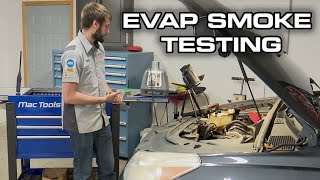
This is the definitive test for finding leaks in the EVAP or SAI system. A smoke machine forces low-pressure smoke mixed with UV dye into the system. Smoke pours out of cracks in hoses, faulty seals, or leaking components, making small leaks obvious.
Tools: Automotive Smoke Machine (Intermediate) - Test Component Power and Ground
Using a multimeter, check for the correct voltage and ground at the connector for the suspected faulty component (e.g., SAI pump, EVAP purge valve). This confirms the component receives power from the computer and has a good ground connection. You should see 12V at the SAI pump connector when commanded on.
Tools: Multimeter (Intermediate) - Pro Tip: Perform Bi-Directional Control Tests
A professional scan tool allows for bi-directional control. Command the ECU to activate specific components on demand. For an EVAP issue, command the purge valve to open and close while monitoring the fuel tank pressure sensor's live data. If you command the valve to close and the pressure doesn't change, the valve is stuck.
Tools: Bi-Directional Scan Tool (Advanced) - Pro Tip: Test Toyota/Lexus SAI Component Resistance
To test SAI switching valves, disconnect the valve and measure resistance between the terminals. A good valve reads between 4.5 and 5.5 ohms at 68°F (20°C). To test air pumps, measure resistance between the two pins in the pump's connector. A healthy pump is between 0.4 and 1.0 ohms. Readings outside these ranges indicate a failed component.
Tools: Multimeter (Advanced) - Pro Tip: Test DPF Additive Pump Resistance (Peugeot/Citroën/Fiat)
For P1442 defined as 'Additive Pump Open Circuit' on PSA diesel vehicles, unplug the pump and use a multimeter to measure the resistance between the two motor pins. A healthy pump has a resistance of 15-25 ohms. A reading of 'OL' (Open Loop) indicates an open circuit in the pump motor, meaning the pump must be replaced.
Tools: Multimeter (Advanced) - Pro Tip: Analyze EVAP Live Data Parameters
Using a scan tool, monitor the Fuel Tank Pressure (FTP) sensor. With the engine off, the pressure should be near 0 volts. When the EVAP leak test runs, the purge valve closes, and the system pulls a slight vacuum, registering as a negative voltage. If the voltage is stuck at 0V or 5V, the sensor or its circuit is faulty.
Tools: Bi-Directional Scan Tool (Advanced)
When This Code Triggers (Freeze-Frame Conditions)
- Engine Coolant Temp: 40-95°F (4-35°C) (During a cold start for the SAI monitor; or fully warmed up (180-210°F) for the EVAP monitor.)
- RPM: Idle (for SAI) or 1500-2500 (for EVAP) (The SAI system test runs at idle immediately after a cold start. The EVAP leak test runs during steady-state cruise.)
- Fuel Level: 15-85% (A critical parameter for the EVAP monitor to run; the ECU aborts the leak test if the tank is too full or too empty.)
- Vehicle Speed: 0 mph (for SAI) or 45-65 mph (for EVAP) (The code sets at 0 mph if it is an SAI fault at startup, or at highway speeds if it is an EVAP leak detected during a cruise test.)
Related Codes
- P1441 / P2441 — These codes are sisters to P1442 on SAI-equipped vehicles. P1441 indicates a valve is stuck open, while P1442 indicates it is stuck closed. P2441 refers to the same 'stuck closed' fault but for the valve on the opposite engine bank. Seeing them together points to a systemic SAI failure.
- P0410 — P0410 is a generic code for 'Secondary Air Injection System Malfunction'. P1442 is much more specific, pointing to a particular valve. If you only have P1442, your diagnostic starting point is more precise than the general P0410.
- P0440 / P0443 — If your car's P1442 code is EVAP-related, seeing P0440 (General EVAP System Malfunction) or P0443 (Purge Control Valve Circuit Malfunction) alongside it points strongly toward an electrical problem rather than a simple mechanical leak from a gas cap.
- P0420 — P0420 means 'Catalyst System Efficiency Below Threshold'. This code is a direct consequence of a P1442 fault. If the SAI system fails, it cannot help the catalytic converter heat up quickly, making the ECU think the converter itself is failing. Always fix the P1442 code first.
- P1445 — On Peugeot/Citroën diesel vehicles, P1445 ('Additive adding: Max threshold exceeded') is seen with P1442. It indicates the system tried to inject the DPF additive fluid but failed due to the 'Open Circuit' fault identified by P1442.
Climate & Environmental Factors
- Moisture and Humidity: This is the primary environmental cause for P1442 on Toyota and Lexus vehicles. The SAI pump design ingests moisture-laden air, which is pumped into the switching valves. This water causes internal corrosion, leading to the valves seizing open or closed. The problem is prevalent in humid climates or areas with significant temperature swings.
- Ambient Temperature: The ECU requires specific ambient temperature conditions to run the EVAP system's self-test for leaks. The temperature must be between 40°F and 95°F (4°C and 35°C), and the vehicle must be started after sitting for 8+ hours. In extreme climates, these conditions are not met for long periods, causing the code to appear intermittently.
- Altitude: EVAP system tests rely on pressure sensors that compare canister pressure to barometric pressure. At high altitudes, the lower barometric pressure affects the test's parameters. Extreme changes or faulty barometric pressure sensors contribute to inaccurate EVAP test results.
How to Talk to a Mechanic About This Code
Say this: "I have a P1442 check engine light code. I know this is a manufacturer-specific code, so I'd like to authorize one hour of diagnostic time to confirm the definition for my [Make, Model, Year] and pinpoint the root cause before we discuss replacing any parts."
This signals you've done your research and prevents a shop from just guessing. It focuses the mechanic on proper diagnosis (e.g., smoke test for EVAP, resistance test for a pump) rather than immediately replacing the most expensive component.
Avoid saying:
- 'My check engine light is on.' (This is too vague and invites a costly, open-ended diagnostic process).
- 'Just fix whatever is wrong.'
- 'I think it's the [part name], can you replace it?' (Let the technician diagnose the issue; guessing is expensive if you're wrong.)
Questions to ask before authorizing the repair:
- Can you show me the failed part or the results of the test (e.g., the smoke from the leak, the resistance reading)?
- If it's a Toyota SAI issue, did you confirm the failure is the valve and not just the pump? Are you recommending replacing both?
- If it's an EVAP leak, did a smoke test confirm the location of the leak?
- Will you provide a written estimate with a full breakdown of parts and labor costs?
- What is the warranty on this specific repair, for both the parts and your labor?
Where to Take It: Dealer vs Independent vs Chain
- Dealer:
Best for: Vehicles potentially under an extended warranty or Customer Support Program (e.g., Toyota/Lexus SAI issue)., Complex, brand-specific electronic issues (e.g., BMW LDP, VW EGR faults)., Brand new vehicles where using the dealer is required to maintain the factory warranty.
Downsides: Typically the highest labor rate, often 20-40% more than independent shops., Recommends replacing an entire assembly when only one component has failed. (Typical cost: +40% vs. baseline) - Independent Shop:
The best choice for most P1442 scenarios, especially common EVAP faults. For complex issues like the Toyota SAI system, a specialty independent shop (e.g., Toyota/Lexus specialist) is an excellent, more affordable alternative to the dealer.
Best for: Out-of-warranty vehicles where cost is a major factor., Common, well-documented P1442 causes (e.g., Nissan gas cap, Honda purge valve)., Owners who want to build a long-term relationship with a technician.
Downsides: Quality and diagnostic tool availability vary widely; vetting is crucial., A generalist shop lacks deep expertise on rare or complex manufacturer-specific faults. (Typical cost: +0% vs. baseline) - Chain Shop:
AVOID for initial diagnosis. The manufacturer-specific nature of P1442 requires a level of diagnostic precision not typically found at chain shops. Only use them if you are 100% certain the fix is simple, like a gas cap.
Best for: Simple, unambiguous fixes like replacing a gas cap you've already identified as faulty.
Downsides: High pressure to upsell services; technicians are incentivized by commission., Technician skill and diagnostic capabilities are inconsistent; high risk of misdiagnosis for a complex code like P1442. (Typical cost: -10% vs. baseline)
When to Walk Away From the Repair
If the estimated repair cost exceeds 50% of the car's private-party value (from a source like Kelley Blue Book), you should pause and strongly consider selling or trading in the vehicle instead of repairing it.
- Car worth $4000, fix is $2200: Walk away. The repair cost is over 50% of the car's value. This is a classic money pit scenario.
- Car worth $12000, fix is $800: Fix it. The repair cost is well below the 50% threshold and represents a small fraction of the car's value.
- Car worth $3000, fix is $250: Fix it. This is an inexpensive repair that restores the car's value and makes it pass emissions.
What Scan Tool You Need for This Code
Minimum: A scanner that reads manufacturer-specific code definitions and displays live data streams for the relevant system (EVAP, SAI, etc.).
A basic $20 reader only shows 'P1442,' leaving you to guess the cause. You need to know if it's a Toyota SAI valve or a Nissan EVAP leak. Without the specific definition and live data, you are diagnosing blind.
Budget: BlueDriver Pro Scan Tool (~$100) — Connects to your phone and provides specific code definitions, freeze-frame data, and live data graphing. It helps you distinguish between a simple gas cap issue and a more complex valve failure before going to a shop.
Mid-range: Innova 5610 (~$350) — Offers bi-directional control, allowing you to command components like the EVAP purge solenoid or SAI pump to activate. This confirms if a component is truly dead or if the problem is in the wiring. It is highly recommended for serious DIYers.
Professional: Autel MaxiCOM MK808BT PRO / Launch X431 Series (~$500-1200) — Provides full, dealer-level bi-directional control, system-specific tests, and access to advanced functions like ECU coding and resets needed after replacing certain modules.
Rent vs buy: Many auto parts stores scan your codes for free. This is a good first step, but ask for the specific P-code number, not just their verbal diagnosis. If you diagnose issues more than once a year, buying a scanner like the BlueDriver Pro is a worthwhile investment.
How to Clear the Code After You Fix It
- Use an OBD-II scan tool to clear the P1442 code.
- Ensure the fuel tank is between 1/4 and 3/4 full.
- Perform a complete drive cycle to allow readiness monitors to run.
Drive cycle (~30 minutes): A full drive cycle requires a cold start (sitting 8+ hours), 2-3 minutes of idling, 10-15 minutes of steady highway driving (55-65 mph), followed by 5-10 minutes of stop-and-go city driving. The vehicle must then sit and cool down completely.
Readiness monitors affected: Evaporative System (EVAP), Secondary Air System, Catalyst, O2 Sensor
Before emissions retest: drive at least 100 miles to fully set monitors.
Watch out for:
- Disconnecting the battery clears the code but resets all readiness monitors to 'Not Ready', guaranteeing an emissions test failure.
- Not having the correct fuel level (15-85%) prevents the EVAP monitor from running.
- The code returns immediately if the root cause is not fixed; clearing the code is not a repair.
Will This Fail Emissions / State Inspection?
Yes — this code typically fails an OBD-II emissions inspection.
- California: An active P1442 is an automatic smog check failure. After repairs, a full drive cycle must be completed to set all readiness monitors to 'Ready'. Using an SAI bypass kit is illegal and fails the visual inspection portion of the test.
- New York: The NYS DMV inspection includes an OBD-II scan. An illuminated Check Engine Light for P1442 causes an automatic failure.
- Texas: In counties requiring emissions testing, an illuminated Check Engine Light is an automatic failure. Clearing the code is not enough; readiness monitors must be set, and you can only have one 'Not Ready' monitor to pass.
Most Commonly Affected Vehicles
- Toyota Tundra / Sequoia (2005-2010) — Extremely common for the 4.7L and 5.7L V8 engines. The SAI pump design allows moisture ingestion, which corrodes and seizes the switching valves located under the intake manifold. A very expensive repair.
- Lexus GX470 / LX470 (2005-2009) — Sharing the 4.7L V8 with Toyota trucks, these models suffer from the exact same high rate of SAI valve and pump failures for the same reasons.
- Nissan Altima / Sentra / Maxima / Frontier (2002-2013) — For Nissan, P1442 almost universally means 'EVAP Small Leak Detected'. The most frequent cause is a loose, faulty, or incorrect (non-OEM) gas cap.
- Subaru Outback / Forester / Impreza (2005-2016) — Unique to Subaru, P1442 typically indicates a 'Fuel Level Sensor Circuit Range/Performance' problem, not a traditional EVAP or SAI fault.
- Volkswagen Golf / Jetta / Passat (2002-2012) — For many VW models, P1442 indicates 'EGR Valve Position Sensor Signal Too High', pointing to a problem within the Exhaust Gas Recirculation system, requiring cleaning or replacement of the EGR valve.
- Honda Accord / Civic / CR-V / Odyssey (1999-2010) — On Honda models, P1442 is related to the EVAP system, often a 'Vacuum Switch Malfunction' or a fault with the canister vent valve or purge solenoid.
- BMW Various 3, 5, X Series (2000-2010) — On BMWs, this code points to a failure in the EVAP system's Leak Detection Pump (LDP) or its associated wiring and hoses.
- Mazda Mazda3 / Mazda6 / CX-7 (2003-2014) — On Mazda vehicles, P1442 indicates an EVAP system leak, similar to Nissan. On some models, it points to a fault with an oxygen (O2) sensor.
- Peugeot / Citroën / Fiat Expert / Dispatch / Scudo (2007-2016) — On 2.0 HDi and other diesel engines, P1442 points to an 'Open Circuit' in the DPF additive (Eolys) pump, caused by a broken wire near the pump or a failed pump motor.
Manufacturer-Specific Notes

- Toyota / Lexus: The root cause of the common SAI failure is a design flaw where the air pump ingests moisture. This water is forced into the switching valves, causing corrosion that makes them seize. The repair is notoriously expensive, often exceeding $1,500. Due to the high failure rate, Toyota and Lexus initiated a Warranty Enhancement Program extending coverage for these parts to 10 years or 150,000 miles for affected models.
- Nissan / Infiniti: The definition is almost always 'EVAP Small Leak Detected'. The first, and most common, culprit is the gas cap. Technicians recommend always checking, tightening, or replacing the gas cap with an OEM part before attempting any complex EVAP system diagnosis.
- Subaru: P1442 on a Subaru is unique, pointing to a fault in the fuel level sensor circuit, not the EVAP or SAI systems. The ECU expects the fuel level reading to change over a set amount of driving time and sets this code if the signal remains static.
- Volkswagen / Audi: On these German makes, P1442 is defined as 'EGR Valve Position Sensor Signal Too High'. Diagnosis focuses entirely on the EGR system—checking the sensor, wiring, and for carbon buildup in the valve—not the EVAP or SAI systems.
- Peugeot / Citroën / Fiat: On diesel models, P1442 means 'Additive Pump Open Circuit'. This is very often a broken wire in the harness near the additive tank, which is exposed to the elements. Before replacing the expensive pump, technicians check for 12V power at the connector and measure the pump's resistance, which should be 15-25 Ohms.
Real Owner Stories
2011 Nissan Altima with recurring 'Loose Fuel Cap' warning
Check Engine Light was on for 4 years, with an intermittent 'Loose Fuel Cap' warning. The owner made sure the cap clicked, but the light and warning persisted.
What they tried:
- Ignored the light, assuming it was a sensor glitch.
- Consistently ensured the gas cap was tightened with multiple clicks.
- Noticed a friend with the same car had the identical issue even after replacing the cap with a cheap aftermarket version.
Outcome: The actual cause for Nissans with EVAP codes like P1442 is a worn-out gas cap seal, even if the cap still clicks. Replacing the cap with a genuine OEM Nissan part resolved the issue permanently for $25.
Lesson: On Nissan and Infiniti vehicles, a P1442 code is almost always a faulty gas cap. The clicking mechanism works even when the rubber seal fails. Always replace with an OEM cap before attempting expensive EVAP repairs.
2006 Toyota Tundra V8 with persistent P1442 after multiple part replacements
A mechanic replaced the SAI pumps and valves multiple times, but the P1442 code returned immediately, preventing the truck from passing a smog check.
What they tried:
- Replaced both SAI pumps and valves twice.
- Cleared codes, but they returned after the readiness check completed.
- Began inspecting downstream exhaust components.
Outcome: The mechanic finally tested the wiring harness and found a corroded ground wire leading to the driver module. Repairing the wire allowed the new valves to function, and the vehicle passed its smog test.
Lesson: The Toyota SAI system is complex. A 'Stuck Closed' code is caused by a failed valve, a dead pump, or a wiring fault. Throwing parts at the problem without testing electrical continuity wastes thousands of dollars.
2013 Peugeot Expert 2.0 HDi with P1442 'Additive Pump Open Circuit'
The van displayed a 'Risk of Particle Filter Clogging' message and logged a P1442 fault code.
What they tried:
- Jacked up the vehicle to access the DPF additive tank under the passenger seat.
- Disconnected the multi-plug connector to the additive pump.
- Used a multimeter to measure resistance across the pump's pins and found an 'Overload' (open loop) reading, confirming an internal break in the pump motor.
Outcome: The owner replaced the faulty additive pump assembly, transferred the remaining fluid, and cleared the codes. The fault was resolved.
Lesson: For Peugeot, Citroën, and Fiat diesels, P1442 points to an electrical fault with the additive pump. An open circuit reading on a multimeter confirms the pump is dead; a reading of 15-25 ohms means the pump is good and the wiring harness is broken.
2002 Subaru Outback Sport with P1442, P0133, and P0420
The Check Engine Light illuminated with three codes at once on a vehicle with 141,000 miles. The owner wanted to avoid throwing parts at the problem.
What they tried:
- Researched the codes online.
- Discovered that for Subaru, P1442 means 'Fuel Level Sensor Circuit Range/Performance', not an EVAP or SAI fault.
- Learned that a bad front O2 sensor (P0133) causes a false P0420 (Catalyst Efficiency) code.
Outcome: The owner replaced the front O2 sensor and cleaned the fuel level sensor contacts. All three codes cleared and did not return.
Lesson: Manufacturer-specific definitions are critical. On a Subaru, P1442 points to the fuel level sensor. A technician chasing an EVAP or SAI fault based on generic definitions wastes significant time and money.
How to Prevent This Code From Triggering
- Stop 'topping off' your fuel tank (Every fill-up) — Squeezing extra fuel in after the pump clicks off forces liquid gasoline into the charcoal canister, which is designed only for vapor. This saturates the charcoal, clogs the system, and leads to a $500 repair.
- Click your gas cap correctly (Every fill-up) — For EVAP-related P1442 codes, a loose gas cap is the primary cause. Always tighten it until you hear at least one click.
- Install a unifilter on the SAI pump intake (Toyota) (Once) — On Toyota trucks, SAI pump failure is caused by moisture and debris ingestion from the fender well. Adding a pre-filter (like a Uni-Filter UP-107) to the intake line prevents water and dust from entering the pump, extending its life.
- Inspect EVAP and vacuum hoses (Every oil change) — Rubber hoses used in EVAP and SAI systems become brittle and crack with age and heat exposure. A visual inspection for cracks or splits catches a potential leak before it triggers a code.
- Address engine misfires immediately (As needed) — An engine that misfires dumps raw, unburned fuel into the exhaust system. This super-heats and destroys the catalytic converter and fouls components of the secondary air injection system.
Frequently Asked Questions
What is the most common misdiagnosis for P1442?
The single biggest mistake is not researching the manufacturer-specific definition. A technician wastes hours smoke testing the EVAP system on a Toyota Tundra when the code refers to the Secondary Air Injection system. Another common error is replacing expensive EVAP components on a Nissan when the problem is a $20 loose gas cap.
Can a vacuum leak cause a P1442 code?
Yes. Both the EVAP and SAI systems use a network of vacuum hoses. A crack or disconnection in one of these hoses causes a leak that the system's pressure sensors detect, triggering a P1442 code.
Can I just clear the P1442 code and continue driving?
You can clear the code with an OBD-II scanner, but it returns within a few drive cycles if the underlying mechanical or electrical problem remains. Clearing the code does not fix the car.
Will P1442 cause my car to fail an emissions test?
Yes. The systems associated with P1442 are critical emissions control components. An active code with the Check Engine Light on results in an automatic failure of any state emissions inspection or smog check.
Is it safe to drive with a P1442 code?
For short-term local driving, it is safe as engine performance remains unaffected. However, on some Toyota and Lexus models, it triggers a 'limp mode' with severely reduced power, making highway driving dangerous. Long-term driving without repair destroys the catalytic converter.
My car has a P1442 and a P0420 code. Are they related?
Yes, they are directly related. A P1442 code for a failing Secondary Air Injection (SAI) system means the catalytic converter lacks the extra air needed to heat up quickly on cold starts. The ECU misinterprets this slow warm-up as a failing converter and sets a P0420 code; fixing the P1442 fault first resolves the P0420 code.
What is a secondary air injection bypass kit and is it legal?
For vehicles with recurring SAI system failures, aftermarket bypass kits electronically trick the computer into thinking the system works perfectly. This turns off the check engine light and prevents limp mode. However, it permanently disables a key emissions system, making it illegal for road use and an automatic failure for visual emissions inspections.
Key Takeaways
- P1442 is a manufacturer-specific code; you must look up the exact definition for your make and model before buying parts, as it means a $1,500 Toyota SAI failure but a $20 Nissan EVAP leak.
- For Nissan and Mazda vehicles, a loose or damaged gas cap is the number one cause of P1442, fixable in 2 minutes with a $20 to $35 OEM replacement cap.
- On 2005-2013 Toyota and Lexus V8 models, P1442 indicates a seized Secondary Air Injection valve, a repair requiring intake manifold removal that costs between $750 and $1,850.
- Driving with an active P1442 code guarantees an emissions test failure and, if left unresolved for over 6 months, destroys the catalytic converter, adding $1,500 to $3,000 to your repair bill.
Helpful Videos

The information in this article is provided for general reference and educational purposes only. Vehicle specifications, procedures, and part compatibility can vary by production date, trim level, and region. Always consult your vehicle's factory service manual and verify part numbers before purchasing or performing repairs. Safety-critical components such as airbags, seat belts, and braking systems should be installed by a qualified professional.
- 🎬 Helpful Videos
- What Does P1442 Mean?
- Can I Drive With P1442?
- Common Causes
- Symptoms
- Diagnostic Flowchart
- Common Fixes & Costs
- DIY vs Professional
- Used vs. New Parts: Buying Guide
- What Happens If You Wait — Timeline
- Cost of Not Fixing It
- Diagnosis Steps
- When This Code Triggers (Freeze-Frame Conditions)
- Related Codes
- Climate & Environmental Factors
- How to Talk to a Mechanic About This Code
- Where to Take It: Dealer vs Independent vs Chain
- When to Walk Away From the Repair
- What Scan Tool You Need for This Code
- How to Clear the Code After You Fix It
- Will This Fail Emissions / State Inspection?
- Most Commonly Affected Vehicles
- Manufacturer-Specific Notes
- Real Owner Stories
- 2011 Nissan Altima with recurring 'Loose Fuel Cap' warning
- 2006 Toyota Tundra V8 with persistent P1442 after multiple part replacements
- 2013 Peugeot Expert 2.0 HDi with P1442 'Additive Pump Open Circuit'
- 2002 Subaru Outback Sport with P1442, P0133, and P0420
- How to Prevent This Code From Triggering
- Frequently Asked Questions
- What is the most common misdiagnosis for P1442?
- Can a vacuum leak cause a P1442 code?
- Can I just clear the P1442 code and continue driving?
- Will P1442 cause my car to fail an emissions test?
- Is it safe to drive with a P1442 code?
- My car has a P1442 and a P0420 code. Are they related?
- What is a secondary air injection bypass kit and is it legal?
- Key Takeaways
- 🎟️ Get 5% Off