

P1440 on 2013-2018 Ford Focus ST: EVAP Vacuum Trouble, Causes, and Fixes
On a 2013-2018 Focus ST, code P1440 almost always means the canister purge valve has failed and is stuck open. This is a very common issue covered by Ford recall 18S32 and extended by Customer Satisfaction Program 24N07. Replacing the valve (Part No. BV6Z-9D289-E or newer revisions) is a simple DIY fix, with the OEM part costing around $50-$90.
- Before buying any parts, check with a Ford dealer using your VIN to see if your Focus ST is covered by recall 18S32 or program 24N07 for a free repair.
- P1440 on this car, especially when paired with P1450, is almost certainly a failed canister purge valve.
- The most common symptom confirming the issue is the engine sputtering or having trouble starting right after you get gas.
- This is a very easy DIY repair that takes less than 20 minutes with basic tools. Use the latest OEM part revision (e.g., BV6Z-9D289-F or -G) for best results.
- Ignoring this code can lead to engine stalling and fuel tank damage, so it should be addressed promptly.
What's Unique About the 2013-2018 Ford Focus ST
The 2012-2018 Ford Focus platform, including the ST model, is uniquely susceptible to this issue. A stuck-open purge valve is so common that Ford issued a safety recall (18S32) and a customer satisfaction program (24N07). Unlike on many other cars, this failure can create excessive vacuum that physically deforms and collapses the plastic fuel tank, leading to severe secondary problems like inaccurate fuel gauge readings, erratic distance-to-empty calculations, and engine stalling.
Symptoms You May Notice
- Check Engine Light is on
- Difficulty starting the engine, sputtering, or stalling immediately after refueling
- Rough or unstable idle
- Fuel gauge reading incorrectly or erratically
- Engine stalling during low-speed driving or when coming to a stop.
- A 'whooshing' or 'sucking' sound from the rear of the car near the fuel tank as vacuum builds.
- Replacing the gas cap. While a bad gas cap can cause other EVAP codes, P1440 on this specific vehicle almost always points directly to the purge valve.
- Replacing the fuel tank pressure sensor. This is unlikely to be the cause unless all other possibilities, especially the purge valve, have been ruled out. The recall documentation does not list this sensor as a primary failure point.
Most Likely Causes
- Faulty Canister Purge Valve / Solenoid 🔴 High Probability This is a well-documented, widespread failure on this platform, leading to Ford issuing recall 18S32 and customer satisfaction program 24N07 for the 2.0L engine used in the ST. The valve's internal components fail, causing it to remain open.
How to confirm: Remove the purge valve. With the valve disconnected from power, try to blow through it from the side that connects to the EVAP canister towards the intake manifold port. If air passes through, the valve is stuck open and has failed. A properly functioning valve should be closed when not energized.
Typical fix: Replace the entire canister purge valve and hose assembly. It is highly recommended to use an OEM Motorcraft part for longevity. The original part number BV6Z-9D289-E has been superseded by newer revisions like BV6Z-9D289-F and BV6Z-9D289-G, which should be used if available.
Est. part cost: $50-$90
Rare But Worth Checking
- Damaged EVAP hoses or lines: While the purge valve is the most likely culprit, visually inspect the connected plastic lines and rubber hoses for any cracks, brittleness, or loose connections that could cause a vacuum leak. The quick-connect fittings can sometimes become loose or damaged.
- Saturated Charcoal Canister: Consistently overfilling the fuel tank ('topping off') can force liquid fuel into the charcoal canister, damaging it and causing flow problems that could trigger this code. Under recall 18S32, the dealer will inspect and replace the canister if the purge valve has failed and liquid fuel is present.
Diagnosis Steps
- Check for Ford Safety Recall 18S32 or Customer Satisfaction Program 24N07. Your vehicle may be eligible for a free repair at a Ford dealership. Contact a dealer with your VIN to verify. Be aware that some dealers may charge a diagnostic fee if the code is caused by a different issue.
- Scan for other related trouble codes, such as P1450, P144A, or P2196, which strongly suggest a purge valve failure.
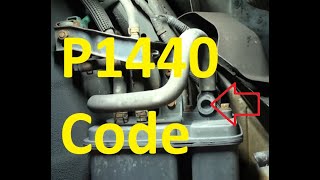
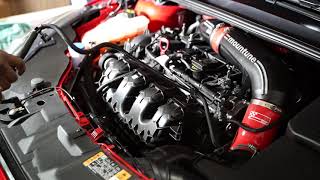
- Locate the canister purge valve. On the 2.0L EcoBoost, it is a black plastic valve and tube assembly located on top of the engine, under the decorative engine cover. The cover pulls straight off.
- Visually inspect the valve and its connected hoses for any obvious cracks, damage, or loose fittings.
- Perform a functional test: Disconnect the valve's electrical connector and remove the part from the engine. The connections are quick-disconnect style. Try to blow air through the port that connects to the intake manifold. If you can blow through it, the valve is stuck open and must be replaced.
- If the valve is not stuck open, check the wiring harness and connector for damage, corrosion, or loose pins.
- If the valve and wiring are good, the next step would be a smoke test of the EVAP system to check for leaks in other hoses or the charcoal canister, though this is a much less common cause for this code on this car.
Parts You'll Likely Need
- Vapor Canister Purge Valve
(OEM #BV6Z-9D289-E (superseded by BV6Z-9D289-F, BV6Z-9D289-G))— This is the component that fails in over 95% of P1440 cases on this vehicle, causing it to stick open. It is recommended to use the latest available OEM revision.
Trusted brands: Motorcraft (OEM), Duralast (PV964), Standard Motor Products (CP902)
OEM price range: $50-$90
Aftermarket price range: $30-$60
Related Codes That Often Appear With This One
- P1450 — This code for 'Unable to Bleed Up Fuel Tank Vacuum' is frequently seen with P1440 and is explicitly mentioned in Ford's recall 18S32 documents as being caused by the same faulty purge valve.
- P144A — This is another Ford-specific code that points directly to a fault in the purge valve or its circuit, reinforcing the diagnosis.
- P0455 / P0456 — These codes indicate a large or small EVAP leak. A purge valve stuck open can be interpreted by the system as a leak, sometimes triggering these codes as well.
- P2196 — This code for 'O2 Sensor Signal Stuck Rich' can be triggered because the stuck-open purge valve allows un-metered fuel vapors to be constantly drawn into the intake manifold, creating a rich running condition. This code is also listed in the recall TSB.
Technical Service Bulletins (TSBs) & Recalls
- Recall 18S32 / NHTSA 18V735: Fuel Tank Deformation due to stuck Canister Purge Valve.
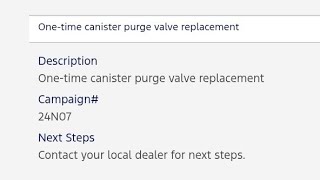
- Customer Satisfaction Program 24N07: Extends replacement of the canister purge valve for certain vehicles for 15 years/unlimited miles.
- TSB 19-2171: Addresses other EVAP codes on similar engines, pointing to potential issues with loose EVAP line connections.
Platform-Specific Known Issues
- Recall 18S32 / NHTSA 18V735: Fuel Tank Deformation: Ford issued this recall for 2012-2018 Focus models with 2.0L engines because a stuck canister purge valve can create excessive vacuum, deforming the fuel tank. This can cause stalling and an inaccurate fuel gauge, increasing crash risk. The dealer fix involves reprogramming the PCM to better detect the fault and, if codes are present, replacing the purge valve. If the fuel tank is found to be deformed by more than 25mm (1 inch), the tank, fuel delivery module, and charcoal canister are also replaced.
- Customer Satisfaction Program 24N07: A follow-up program that provides a one-time, no-cost replacement of the canister purge valve for up to 15 years from the vehicle's warranty start date, with no mileage limit. This addresses vehicles that may experience the failure after the initial recall period.
Mechanic-Grade Diagnostic Values
- Canister Purge Valve (CPV) Solenoid Resistance — expected: 30 to 38 Ohms. Failure: A reading far outside this range indicates a damaged internal circuit in the solenoid.
- Fuel Tank Pressure (FTP) Sensor Voltage (Key On, Engine Off) — expected: Approximately 2.6V to 2.65V. Failure: If the voltage immediately drops when the vehicle is started, it can indicate a purge valve that is stuck open and already pulling vacuum on the tank.
- Fuel Tank Pressure (FTP) during IDS EVAP Test — expected: Should drop below 2.6V as the purge valve is commanded open, and rise above 2.6V as the vent valve is closed.. Failure: If pressure goes excessively negative (e.g., below -8.0 in-H2O) and does not recover, it points to a stuck-open purge valve or a blocked vent.
Scan Tool Commands That Help
- Ford IDS (or FORScan): EVAP System Test — This is a comprehensive, automated test that commands the purge and vent solenoids in sequence while monitoring the Fuel Tank Pressure (FTP) sensor. It's the most thorough way to verify the entire system's integrity, including its ability to seal, pull a vacuum, and vent, providing a clear pass/fail result.
- Ford IDS (or FORScan): Datalogger > Bidirectional Control — This allows a technician to manually command the purge valve (Vapor Management Valve) and vent valve open or closed while watching the FTP sensor voltage in real-time. This is used to confirm if the valves are physically responding to PCM commands, isolating a failed component from a wiring issue.
Wiring & Ground Locations
- G1 — Underneath the air cleaner assembly in the engine compartment.. This is a primary chassis ground. Poor contact here due to looseness or corrosion can cause a variety of electrical issues and sensor-related codes, including those for the EVAP system.
- Purge Valve Connector — On the purge valve solenoid, located on top of the engine under the engine cover.. The two pins are for power and ground control from the PCM. Testing here can verify if the PCM is commanding the valve to open. One pin should have battery voltage with the key on, and the other is a duty-cycled ground provided by the PCM.
- Main Chassis Ground — On the driver's side strut tower area, connected to the negative battery terminal cable.. This is the main grounding point for the entire vehicle chassis. Some owners have reported that cleaning the paint from under this connection to ensure a better metal-to-metal contact can resolve strange electrical issues.
Real Owner Repair Stories
- Reddit user in r/FocusST (Ford Focus ST (year not specified), 70k miles) — EVAP code, likely P1440/P1450.
❌ Tried (didn't work) Replaced the original Motorcraft purge valve with a Duralast (aftermarket) part.
✅ What actually fixed it The Duralast part failed within 5,000 miles and nearly caused the gas tank to collapse. The user strongly advises that the only reliable fix is to use a genuine Ford Motorcraft replacement assembly, as aftermarket versions may use weaker internal check valves and materials that corrode or fail quickly. - Reddit user in r/FocusST (Ford Focus ST (year not specified)) — Multiple codes including P2196 (O2 Stuck Rich), P0131 (O2 Circuit Low), and white smoke from exhaust.
❌ Tried (didn't work) Replacing O2 sensors, MAP sensors, PCV valve, fuel injectors, spark plugs, cam position sensors, and VVT solenoids.
✅ What actually fixed it Another user commented that they had all the same codes when their purge valve failed, as it was causing the engine to suck in raw fuel vapors, creating the rich condition and smoke. The original poster's final outcome was a separate issue (low compression), but the symptom overlap strongly points to the purge valve as a primary suspect for this combination of codes.
"I Checked Everything" — The Actual Cause
- A standard EVAP smoke test may show no leaks even when codes P1440 and P1450 are present. This is because the failure is typically not a leak to the atmosphere, which a smoke test is designed to find. Instead, the purge valve is stuck open, creating an internal leak from the EVAP system directly into the engine's intake manifold. The correct diagnostic procedure is to test the valve's function directly (the 'blow-through' test or using a scan tool's bidirectional controls), not to perform a smoke test.
OEM Part Supersession History
BV6Z-9D289-A, BV6Z-9D289-B, BV6Z-9D289-D→BV6Z-9D289-E (and later -F, -G revisions)— The original part design was prone to premature failure, causing it to stick open. Later revisions are intended to be more durable.
Heads up: While all revisions are physically interchangeable, it is critical to use the latest available Motorcraft OEM part. Forum users report that aftermarket versions (like Dorman or Duralast) can fail very quickly, sometimes within a few thousand miles, due to inferior internal components that cannot withstand the pressure or fuel vapor exposure.
Model Year Variations Within This Range
- 2013-2018: There are no significant documented changes to the EVAP purge valve assembly or its failure mode across the 2013-2018 ST model years, including the 2015 facelift. The same part numbers and recall/customer satisfaction programs apply to the entire generation.
Diagnostic Flowchart
Other Known Issues on This Vehicle
Issues unrelated to this code that are worth knowing about as an owner of this generation:
- Passenger-Side Engine Mount (RMM) Failure 🟠 Medium — Very common. The stock, oil-filled mount is known to leak and fail, often within 50,000 miles, causing excessive engine movement, poor shifting, and wheel hop. (Ref: A TSB exists for this issue, allowing for replacement under warranty if reported.)
- Overheating 🟠 Medium — Occurs intermittently, especially in stop-and-go traffic or during spirited driving. Common causes include a failing thermostat, radiator fan control module, or air in the cooling system.
- HVAC Blend Door Actuator Failure 🟡 Low — A common annoyance where the plastic gears inside the actuator fail, causing a repetitive clicking/knocking sound from behind the dashboard and incorrect air temperature from vents.
- Low-Speed Pre-Ignition (LSPI) 🔴 High — More prevalent on earlier models and tuned vehicles. Aggressive acceleration at low RPMs can cause engine-damaging pre-ignition. Using high-quality, API SN PLUS or newer oil and avoiding 'lugging' the engine can mitigate risk.
- Cracked Cylinder Head 🔴 High — A rare but catastrophic failure where the integrated exhaust manifold ('headifold') design can develop cracks, leading to coolant loss and severe overheating.
- Manual Transmission Synchronizer Wear 🟠 Medium — The Getrag 6-speed manual can develop issues with synchronizers, particularly on cars that are driven hard, leading to grinding or difficulty shifting into gears.
Used vs. New Parts: Buying Guide for This Vehicle
When a used part is the smart pick: Buying a used purge valve is strongly discouraged for this vehicle. The part has an extremely high failure rate, and a used part from a donor vehicle is likely to have either already failed or have very little remaining service life. The only exception would be if you could verify it is a very recent OEM replacement part.
Donor-vehicle mileage cap: roughly under 10000 miles for the part to have meaningful remaining life.
What to inspect on the donor part:
- Verify the part number is the latest OEM revision (e.g., BV6Z-9D289-G).
- Ask for proof of purchase to confirm it was bought recently.
- Even with these cues, the risk is high compared to the cost of a new part.
OEM-only on this vehicle (don't cheap out):
- Vapor Canister Purge Valve Assembly
Brands owners have reported issues with on this vehicle:
- Duralast
- Dorman
- General 'Chinese equivalent' parts
Real Owner Stories
Aggregated from forums and TSBs cited above. Mileages and costs reflect what owners reported in those sources.
2014 Ford Focus 2.0L
Symptoms: Experienced Check Engine Light with code P1440.
What fixed it: Replaced the purge valve under Ford safety recall 18S32.
Source hint: FocusFanatics thread titled 'P1440 Code - Purge Valve Stuck Open'
2013-2018 Ford Focus ST 2.0L EcoBoost
Symptoms: Check engine light, rough idle and then eventually I would stall out after filling up at the pump.
What fixed it: Replacement of the canister purge valve.
Source hint: Reddit r/FocusST - Thread Title: 'Purge Valve is the most common failure. LSPI is the most common induced damage.'
2013-2018 Ford Focus ST 2.0L EcoBoost
Symptoms: Check Engine Light P1450 & P144A.
What fixed it: Replacing the purge valve (specifically mentioning part BV6Z-9D289-E). One user notes it was a 'Super easy fix, took 10 minutes.'
Source hint: focusst.org - Thread Title: 'Check Engine Light P1450 & P144A'
Related OBD-II Codes
Frequently Asked Questions
Is there a recall for the P1440 code on my 2013-2018 Ford Focus ST?
What is the specific Motorcraft part number I should use to fix this?
Why does my Focus ST stall specifically after I fill up the gas tank?
Can a bad purge valve actually damage my fuel tank?
How can I quickly test if the purge valve is the cause of my P1440 code?
Are there any other common engine issues I should look out for on my ST while fixing this?
Helpful Videos

Used OEM Parts in Stock

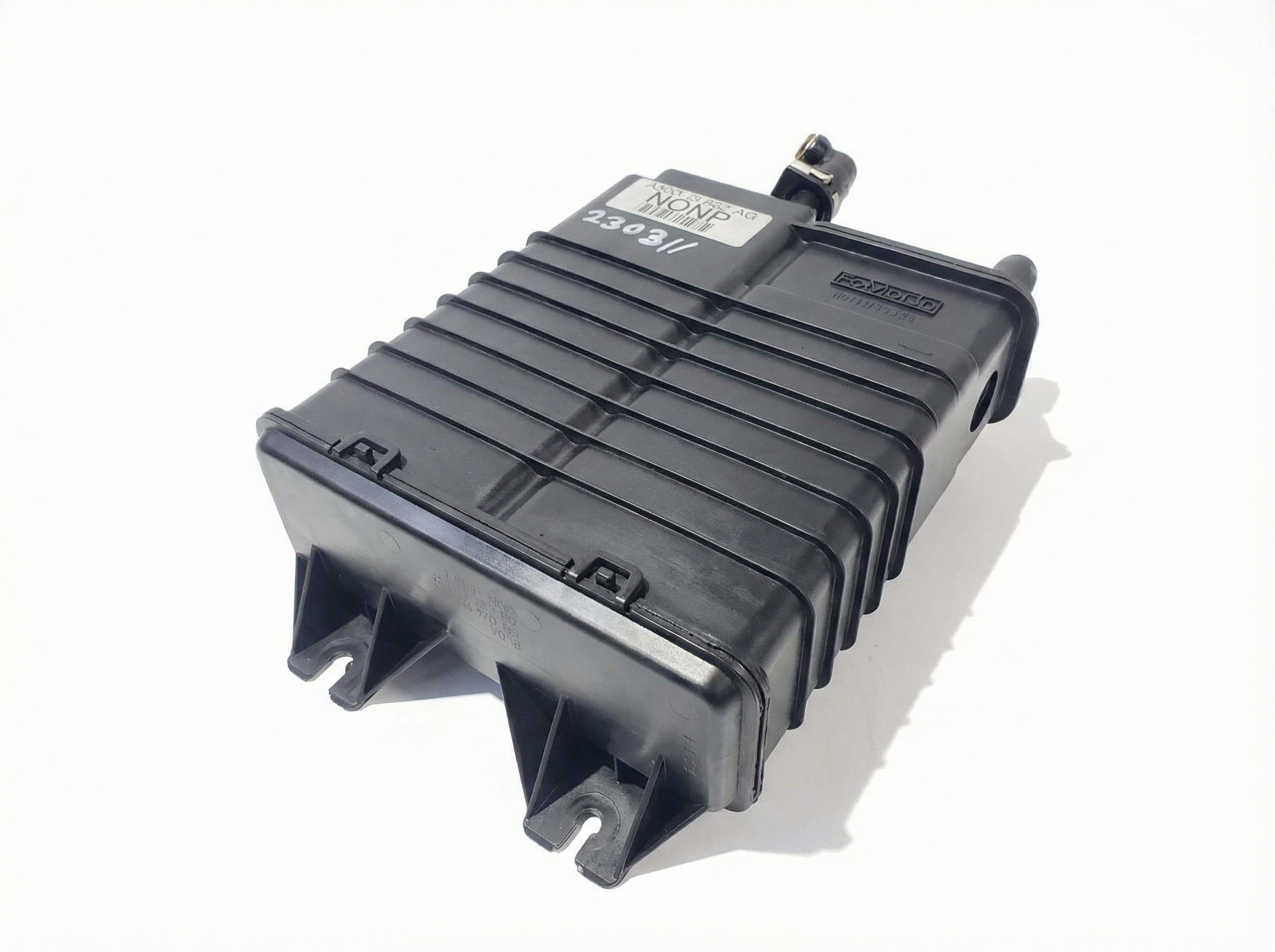
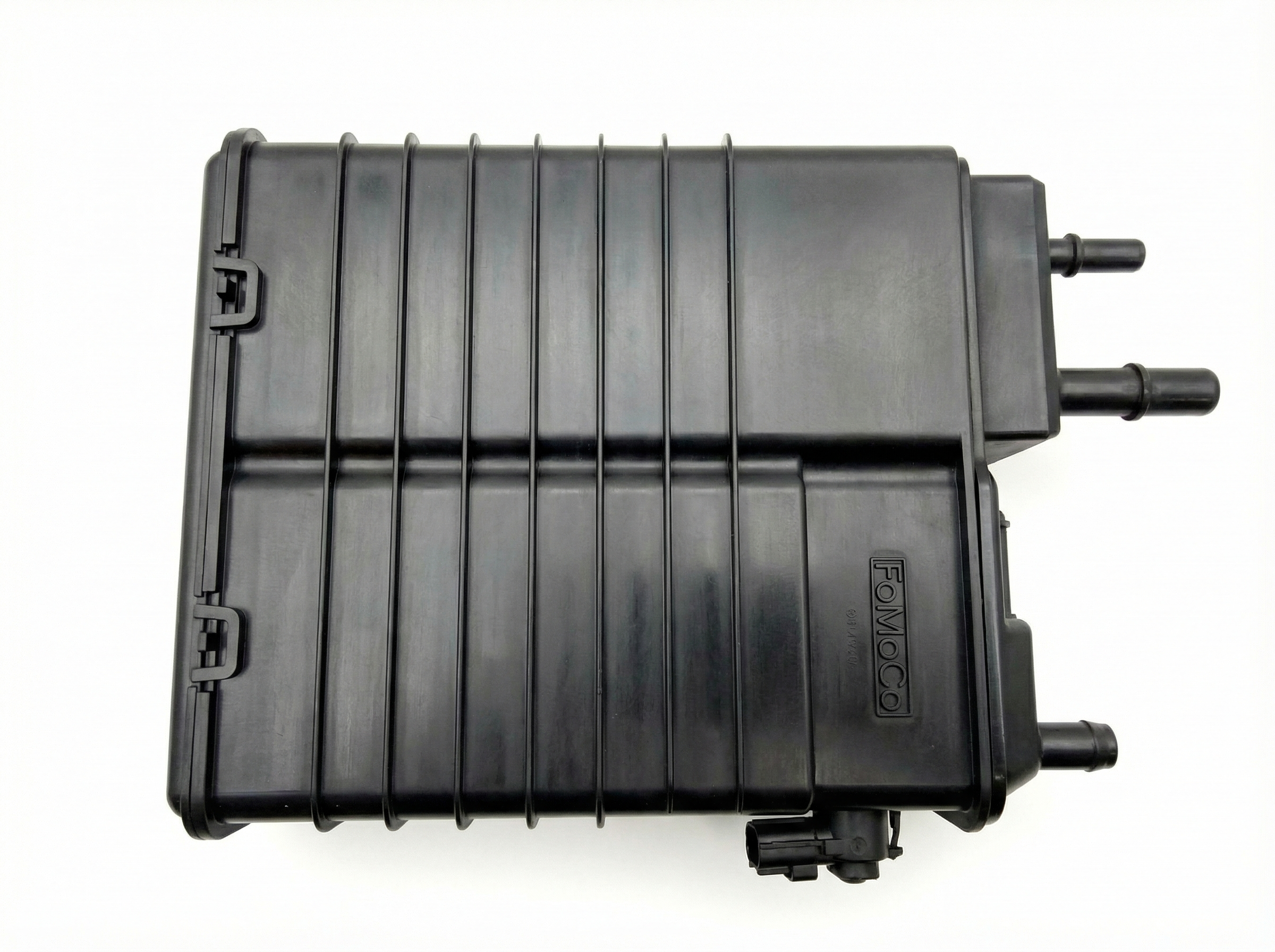
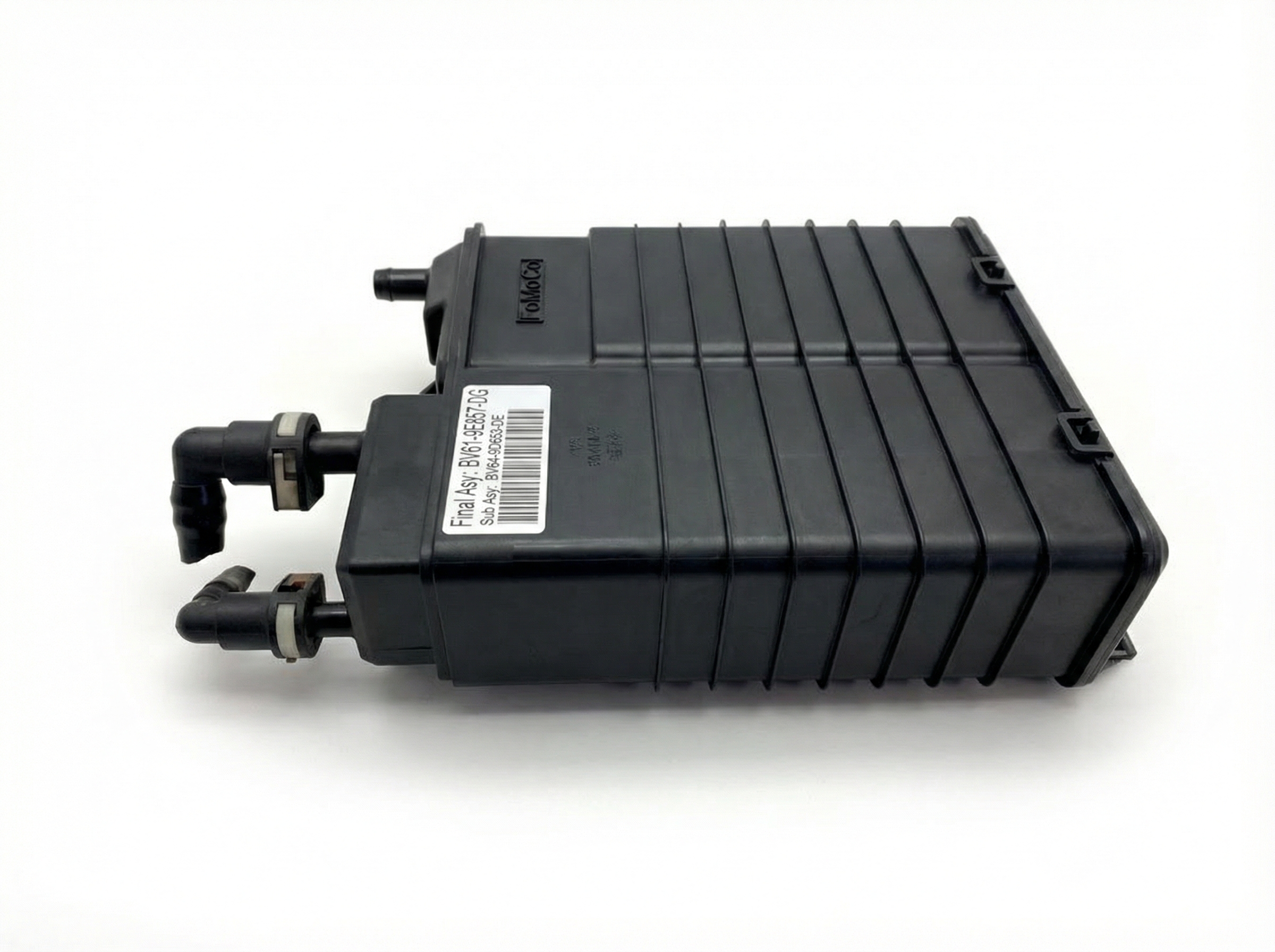
New Aftermarket Parts Available

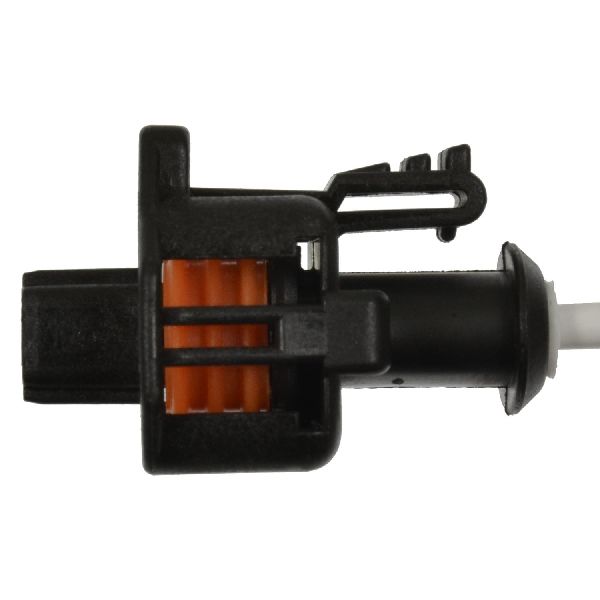

The information in this article is provided for general reference and educational purposes only. Vehicle specifications, procedures, and part compatibility can vary by production date, trim level, and region. Always consult your vehicle's factory service manual and verify part numbers before purchasing or performing repairs. Safety-critical components such as airbags, seat belts, and braking systems should be installed by a qualified professional.
- Ford Focus ST:
- 🎬 Helpful Videos
- 🛍️ Shop This Part
- What's Unique About the 2013-2018 Ford Focus ST
- Symptoms You May Notice
- Most Likely Causes
- Rare But Worth Checking
- Diagnosis Steps
- Parts You'll Likely Need
- Related Codes That Often Appear With This One
- Technical Service Bulletins (TSBs) & Recalls
- Platform-Specific Known Issues
- Mechanic-Grade Diagnostic Values
- Scan Tool Commands That Help
- Wiring & Ground Locations
- Real Owner Repair Stories
- "I Checked Everything" — The Actual Cause
- OEM Part Supersession History
- Model Year Variations Within This Range
- Diagnostic Flowchart
- Other Known Issues on This Vehicle
- Used vs. New Parts: Buying Guide for This Vehicle
- Real Owner Stories
- 2014 Ford Focus 2.0L
- 2013-2018 Ford Focus ST 2.0L EcoBoost
- 2013-2018 Ford Focus ST 2.0L EcoBoost
- Related OBD-II Codes
- Frequently Asked Questions
- 🎟️ Get 5% Off