

P1440 on 2012-2018 Ford Focus 2.0L: EVAP Vacuum Trouble, Causes, and Fixes
On a 2012-2018 Ford Focus, P1440 almost always means the canister purge valve is stuck open. This is a known issue covered by Ford recall 18S32 and customer satisfaction program 24N07. The most common fix is replacing the purge valve, which costs about $30-$80 for the part and is a DIY-friendly job. Before paying, call a dealer with your VIN to check for free repair eligibility.
- Before you buy any parts, call a Ford dealer with your VIN to see if your vehicle is covered by recall 18S32 or program 24N07 for a free repair.
- P1440 on this car is almost certainly a bad canister purge valve, especially if you have trouble starting the car right after filling the gas tank.
- This is a serious issue that can cause your car to stall while driving and should be addressed promptly.
- The repair itself is simple and inexpensive for DIYers if not covered by Ford's programs.
What's Unique About the 2012-2018 Ford Focus
The 2012-2018 Ford Focus (Mk3 generation) with the 2.0L engine is uniquely prone to severe side effects from this code. The stuck-open canister purge valve is so common that Ford issued safety recall 18S32 (NHTSA 18V735) for nearly 1.5 million vehicles. Unlike on many other cars, this failure can create enough vacuum to physically deform the plastic fuel tank, leading to an inaccurate fuel gauge and dangerous engine stalling while driving. Ford even advised owners to keep the fuel tank at least half full until the recall repair could be performed to prevent the tank from collapsing.
Symptoms You May Notice
- Difficulty starting, sputtering, or stalling immediately after refueling. 🎬 Watch this diagnostic video on stalling after refueling.
- Check Engine Light is on.
- Erratic or incorrect fuel gauge readings.
- Inaccurate 'Distance to Empty' display.
- Rough or unstable idle.
- Engine stalling while driving, especially at low speeds or when coming to a stop.
- A 'whooshing' or suction sound from the fuel tank area after turning the engine off.
- Running a smoke test. A smoke test is designed to find leaks to the atmosphere. Since a stuck-open purge valve leaks internally into the engine's intake manifold, a smoke test will often show no leaks and lead to a misdiagnosis.
- Replacing the gas cap. While a bad gas cap can cause other EVAP codes, the unique symptoms of stalling after refueling and potential tank deformation on this Focus model point directly to the purge valve.
Most Likely Causes
- Faulty Canister Purge Valve (Vapor Management Valve) 🔴 High Probability This specific part is known to fail and stick open, which prompted Ford to issue recall 18S32 and customer satisfaction program 24N07 for nearly 1.5 million vehicles built between August 1, 2010, and May 10, 2018.
How to confirm: Remove the purge valve from the engine bay. With no power connected, try to blow through it. If air can pass through, it is stuck open and must be replaced. Alternatively, with the engine running, disconnect the EVAP line leading from the valve to the intake manifold and check for vacuum with your finger; if vacuum is present when the valve's electrical connector is unplugged, the valve is stuck open.
Typical fix: Replace the canister purge valve assembly. Before paying for the repair, contact a Ford dealer with your VIN to check if your vehicle is covered under recall 18S32 or program 24N07. Some owners report dealers may charge a diagnostic fee if the Check Engine Light is not on or if the code is caused by another issue, so clarify this when booking.
Est. part cost: $30-$80
Rare But Worth Checking
- Cracked or disconnected EVAP hoses: While the purge valve is the most likely culprit, always visually inspect the thin plastic hoses connected to it and around the intake manifold for any obvious cracks or loose connections.
- Faulty EVAP Canister Vent Solenoid: Located near the fuel tank, this valve is normally open. If it gets stuck closed, it can trap vacuum in the system and trigger this code. It's a much less common failure than the purge valve on this platform.
Diagnosis Steps
- Check for Recalls: Before any diagnosis, contact a Ford dealership with your vehicle's VIN. Ask if Safety Recall 18S32 or Customer Satisfaction Program 24N07 are open for your car. The entire repair may be free.
- Scan for Codes: Confirm P1440 is present. Note any other codes, especially P1450 or P144A.
- Test the Canister Purge Valve: Locate the valve in the engine bay near the intake manifold. Disconnect the electrical connector and the two EVAP lines. Try to blow air through the valve. If air passes, it has failed and is stuck open. This is the most common failure.
- Inspect Hoses: While the valve is removed, visually inspect the connected plastic hoses for any cracks or damage.
- Check Electrical Connector: With the key on and engine off, use a multimeter to check for battery voltage at one pin of the purge valve's electrical connector.
- Replace the Purge Valve: If the valve failed the blow-through test, replace it with a new part. This is a simple DIY job for most owners. 🎬 See this step-by-step purge valve replacement walkthrough.
- Clear Codes: After the repair, use a scan tool to clear the trouble codes and turn off the Check Engine Light.
Parts You'll Likely Need
- Canister Purge Valve / Vapor Management Valve
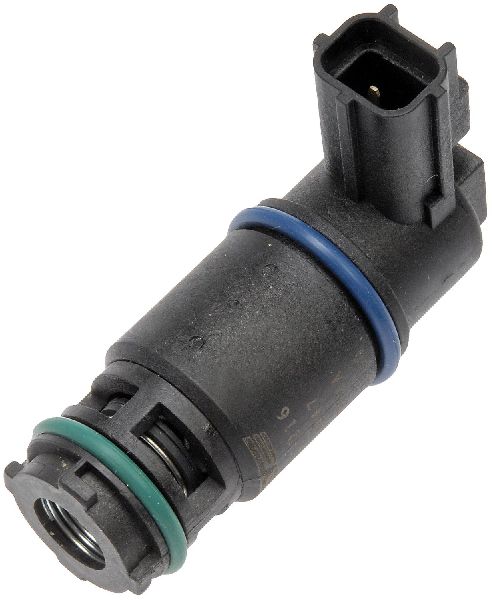
(OEM #BV6Z-9D289-E (Supersedes AS4Z-9D653-F))— This is the component that fails and sticks open, causing code P1440 and its associated symptoms on this vehicle.
Trusted brands: Motorcraft, Dorman, Bosch, Genuine Ford
OEM price range: $50-$80
Aftermarket price range: $30-$60
Related Codes That Often Appear With This One
- P1450 — This code for 'Unable to Bleed Up Fuel Tank Vacuum' is a direct result of the purge valve being stuck open and is frequently seen with P1440. It is explicitly mentioned in the Ford recall documentation. 🎬 Watch a mechanic fix the P1450 code and stalling issues.
- P144A — This is another Ford-specific code for 'Evaporative Emission System Purge Vapor Line Restricted/Blocked' that often points to the same faulty purge valve.
- P0420 — Catalyst System Efficiency Below Threshold. This code can appear alongside P1440 because a constantly open purge valve creates a rich fuel mixture that can, over time, damage the catalytic converter.
Technical Service Bulletins (TSBs) & Recalls
- 18S32 / NHTSA 18V735: Safety recall addressing the stuck canister purge valve and its potential to deform the fuel tank, causing stalling.
- 19S22: A follow-up recall to properly update the PCM software on certain vehicles that were incorrectly serviced under the original 18S32 recall.
- 24N07: A customer satisfaction program extending the warranty on the canister purge valve to 15 years/unlimited miles for a one-time replacement.
- 24N09: A separate customer satisfaction program for certain models related to transmission gear noise and potential failure, highlighting broader platform reliability concerns.
Platform-Specific Known Issues
- Recall 18S32 / NHTSA 18V735: Ford issued a safety recall for 2012-2018 Focus models because a stuck canister purge valve can cause excessive vacuum, deforming the fuel tank, leading to inaccurate fuel readings and engine stalling. The fix involves a PCM software update to better detect the failure and, if evidence of a stuck valve is found, replacement of the purge valve, carbon canister, and fuel tank.
- Customer Satisfaction Program 24N07: Ford later created this program to provide a one-time replacement of the canister purge valve for up to 15 years from the vehicle's warranty start date, regardless of mileage. This covers vehicles that may experience the failure after the original recall was performed.
Mechanic-Grade Diagnostic Values
- Canister Purge Valve Solenoid Resistance — expected: 15-38 Ohms across the two electrical pins.. Failure: An open circuit (infinite resistance), a short (near zero Ohms), or a reading significantly outside the expected range (e.g., over 50 Ohms) indicates a failed coil.
- Fuel Tank Pressure (FTP) Sensor Voltage (Key On, Engine Off) — expected: Approximately 2.6V to 2.65V.. Failure: A reading that is significantly different, or one that drops immediately upon starting the engine (with the purge valve commanded closed), points towards a purge valve stuck open.
- Mode $06, Test ID $26-$2B (EVAP System Pressure) — expected: Value should be near 0 inches of H2O at rest.. Failure: A negative value that persists or grows when the engine is running (and purge is not commanded) indicates an unwanted vacuum, consistent with a stuck-open purge valve. Note: Raw data from the scan tool may require a conversion formula (Value - 32768) * 0.00195 to get inches of H2O.
Scan Tool Commands That Help
- Ford IDS, FORScan, or equivalent professional scanner: EVAP System Test — This is a comprehensive, automated test that commands the purge and vent solenoids in sequence while monitoring the Fuel Tank Pressure (FTP) sensor. It's the most thorough way to verify the entire system's integrity after basic checks fail.
- Ford IDS, FORScan, or equivalent professional scanner: Bi-Directional Control: EVAP Purge Valve — Allows a technician to manually command the purge valve open by a specific percentage. If you command it to 0% (closed) and still detect vacuum on the line from the canister, the valve is confirmed to be mechanically stuck open.
- Ford IDS, FORScan, or equivalent professional scanner: Bi-Directional Control: EVAP Vent Valve — Used to command the normally-open vent valve closed to seal the system for a leak test. If the system cannot hold vacuum or pressure when this is commanded closed, it confirms a leak elsewhere in the system (hoses, canister, etc.).
Wiring & Ground Locations
- G104 — Left side of the engine compartment.. A poor engine-to-chassis ground can cause a wide range of unpredictable electrical issues and incorrect sensor readings. While not a direct cause, it should be checked if other electrical tests are inconclusive.
- G107 — Right front of the engine compartment.. Serves as another critical engine-area ground point. Ensuring it is clean and tight is part of good diagnostic practice for any electronic fault code.
- Purge Valve Connector — On the purge valve itself, near the intake manifold.. This connector provides power and the control signal from the PCM. One pin should have battery voltage with the key on, and the other is the ground-side control from the PCM. Corrosion or damage here will prevent the valve from operating correctly.
Real Owner Repair Stories
- AliExpress Product Review / Technical Write-up (2014 Ford Focus) — P0446 (related EVAP code)
❌ Tried (didn't work) Replacing the gas cap, Cleaning the charcoal canister (three times)
✅ What actually fixed it The mechanic finally tested the purge valve's resistance and found it was 52 ohms (significantly higher than the 20-30 ohm spec). Replacing the purge valve with OEM part number BV6Z-9D289-A permanently resolved the code. - Reddit user on r/FordFocus (2015 Ford Focus) — Check Engine Light, code for purge valve.
❌ Tried (didn't work) Replacing the purge valve with a Ford OEM part under recall.
✅ What actually fixed it The issue returned 6 months later. The user replaced it again with an aftermarket part. The story highlights that even new OEM parts can fail prematurely, and this can be a recurring problem, not a one-time fix. Another user in the thread suggests that if the valve fails repeatedly, the root cause could be a faulty PCM driver circuit that is burning out the solenoid.
"I Checked Everything" — The Actual Cause
- A standard EVAP smoke test will often show no leaks and result in a misdiagnosis. This is because the P1440 code on this Focus is typically caused by the purge valve being stuck open, which creates an *internal* leak from the EVAP system directly into the engine's intake manifold. A smoke test is designed to find *external* leaks to the atmosphere and will not detect this internal fault. The correct test is to check for vacuum at the valve when it should be closed, not to perform a smoke test.
OEM Part Supersession History
AS4Z-9D653-F, BV6Z-9D289-A, BV6Z-9D289-B→BV6Z-9D289-E, BV6Z-9D289-R— Part revision and improvement due to high failure rates.
Heads up: While all are for the 2012-2018 2.0L, forum users report that early-production, German-made valves lasted longer than some later recall replacements. Aftermarket versions from brands like Dorman are reported to have weaker internal check valves and fail much more quickly than the OEM Motorcraft part.
Model Year Variations Within This Range
- 2012-2018: While a facelift occurred in 2015, the 2.0L GDI/GTDI engine and the associated EVAP system components, including the failure-prone purge valve, remained fundamentally the same across the entire generation for the North American market. The issue and fix are consistent for all years in the range.
Diagnostic Flowchart
Other Known Issues on This Vehicle
Issues unrelated to this code that are worth knowing about as an owner of this generation:
- PowerShift (DPS6) Automatic Transmission Failure 🔴 High — Extremely common on 2012-2016 models. Issues include shuddering, jerking, slipping, and complete failure to engage gears. (Ref: Multiple TSBs and warranty extensions were issued, but problems persist. Subject of major class-action lawsuits.)
- Electric Power Steering (EPAS) Rack Failure 🔴 High — A very common failure, often occurring suddenly and without warning. Can be intermittent at first. (Ref: Ford issued a TSB recommending a software update, but the most common long-term fix is a complete steering rack replacement.)
- Passenger-Side Engine Mount Collapse 🟠 Medium — Common failure item. The fluid-filled mount leaks and collapses, causing the engine to rest on the frame, leading to severe vibration felt in the cabin at idle and while driving.
- Dual-Clutch Transmission Grounding Issues 🟠 Medium — Poor body ground connections can cause erratic transmission behavior, including shifting problems and failure to start.
Used vs. New Parts: Buying Guide for This Vehicle
When a used part is the smart pick: For this specific repair, a used part from a salvage yard is NEVER a smart choice. The canister purge valve is a known high-failure item on this vehicle, and the cost of a new, warrantied part is very low. The risk of purchasing a used part that is already faulty or will fail shortly is extremely high.
What to inspect on the donor part:
- Do not purchase this part used.
OEM-only on this vehicle (don't cheap out):
- Canister Purge Valve (Vapor Management Valve)
Aftermarket brands forum-validated for this vehicle:
- None consistently recommended over OEM. The consensus strongly favors using the genuine Ford / Motorcraft part.
Brands owners have reported issues with on this vehicle:
- Dorman
- Duralast
Real Owner Stories
Aggregated from forums and TSBs cited above. Mileages and costs reflect what owners reported in those sources.
2014 Ford Focus
Symptoms: Check engine light came on, though the car was running fine with no strange smells or sounds.
What fixed it: Advised to replace the evap purge valve. Other owners noted it is a simple DIY job requiring only flat-head screwdrivers and a YouTube video for guidance.
Source hint: Reddit r/FordFocus - 2 issues
2014 Ford Focus Titanium
Symptoms: Check Engine Light with code P1450 on a vehicle with a capless gas tank.
What fixed it: Replacement of the Purge Valve. The owner was advised it takes about 10 minutes to swap out.
Cost: ~$50
Source hint: 2014 Ford focus p1450 : r/FordFocus
2014 Ford Focus Titanium Hatchback
Symptoms: Owner received a letter regarding Customer Satisfaction Program 24N07.
What fixed it: The program provides a one-time replacement of the canister purge valve, though the owner noted concerns about dealer diagnostic fees if the valve isn't the confirmed cause.
Source hint: Reddit r/FordFocus - Thread Title: 'Customer Satisfaction Program- 24N07 for 2014 Ford Focus Titanium Hatchback'
Related OBD-II Codes
Frequently Asked Questions
Is there a recall for the P1440 code on my 2012-2018 Ford Focus?
My car is past the standard warranty; can I still get the purge valve fixed for free?
Why is my fuel gauge acting erratic and my 'Distance to Empty' display inaccurate?
Will the dealership charge me a fee to diagnose the P1440 code under the recall?
Can I test the purge valve myself before going to the dealer?
Does this EVAP issue affect other Ford models with the 2.0L engine?
Helpful Videos




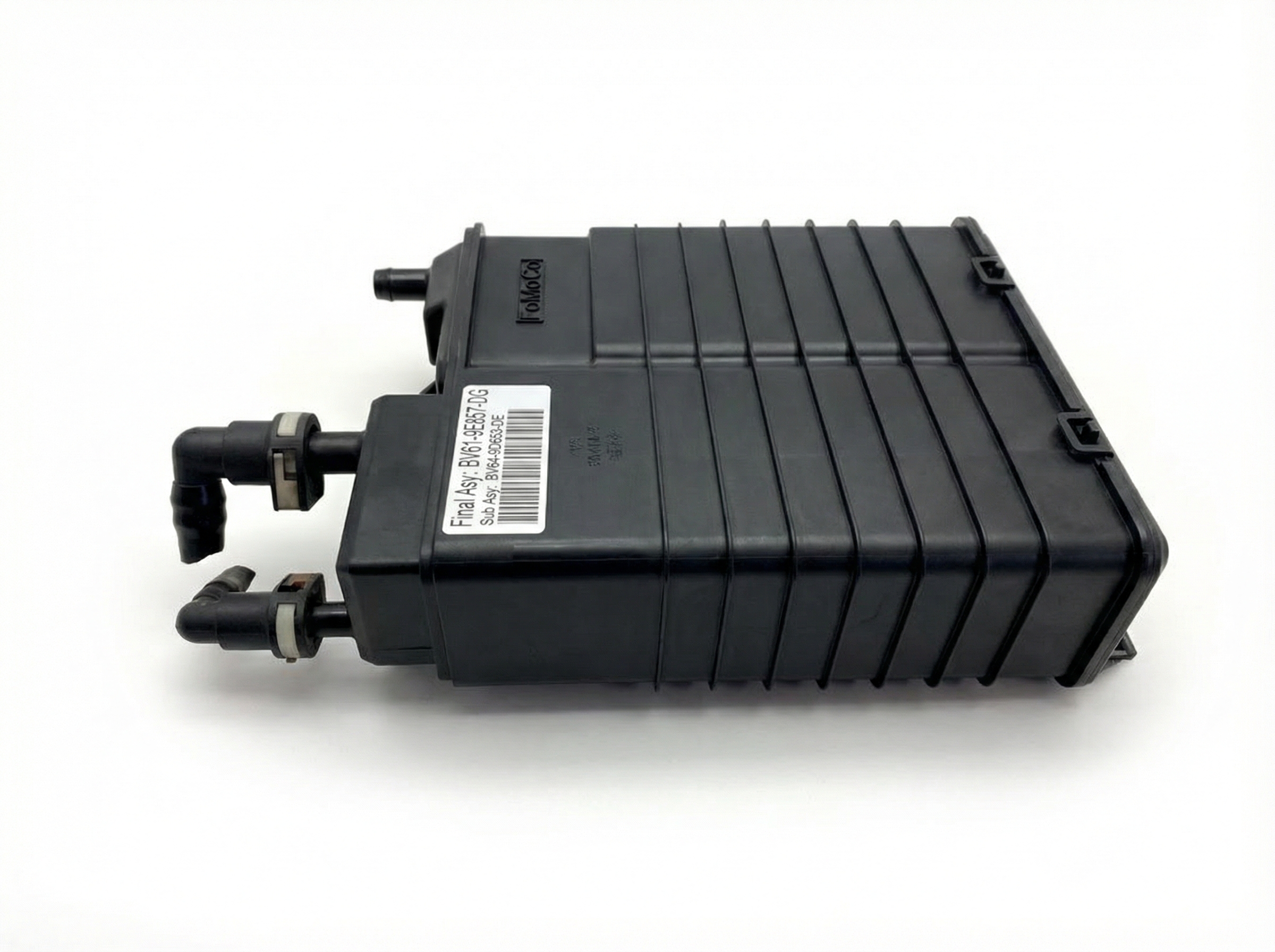
Used OEM Parts in Stock

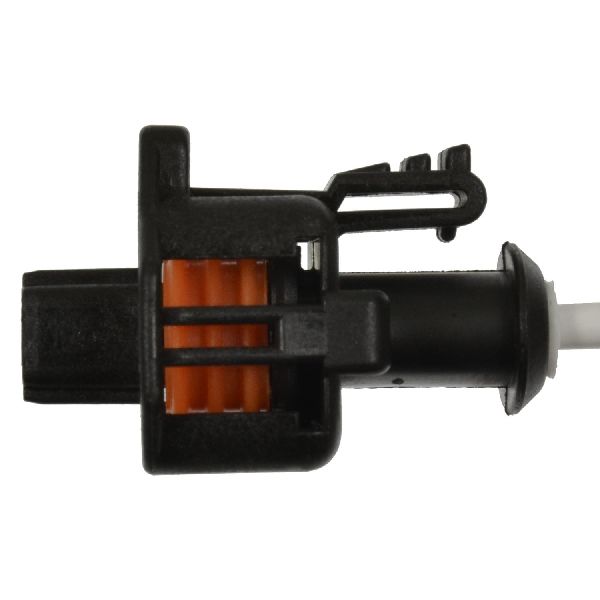
New Aftermarket Parts Available


The information in this article is provided for general reference and educational purposes only. Vehicle specifications, procedures, and part compatibility can vary by production date, trim level, and region. Always consult your vehicle's factory service manual and verify part numbers before purchasing or performing repairs. Safety-critical components such as airbags, seat belts, and braking systems should be installed by a qualified professional.
- Ford Focus:
- 🎬 Helpful Videos
- 🛍️ Shop This Part
- What's Unique About the 2012-2018 Ford Focus
- Symptoms You May Notice
- Most Likely Causes
- Rare But Worth Checking
- Diagnosis Steps
- Parts You'll Likely Need
- Related Codes That Often Appear With This One
- Technical Service Bulletins (TSBs) & Recalls
- Platform-Specific Known Issues
- Mechanic-Grade Diagnostic Values
- Scan Tool Commands That Help
- Wiring & Ground Locations
- Real Owner Repair Stories
- "I Checked Everything" — The Actual Cause
- OEM Part Supersession History
- Model Year Variations Within This Range
- Diagnostic Flowchart
- Other Known Issues on This Vehicle
- Used vs. New Parts: Buying Guide for This Vehicle
- Real Owner Stories
- 2014 Ford Focus
- 2014 Ford Focus Titanium
- 2014 Ford Focus Titanium Hatchback
- Related OBD-II Codes
- Frequently Asked Questions
- 🎟️ Get 5% Off