

P1440 on 2005-2013 BMW 3-Series: DMTL Pump and EVAP System Guide
On a 2005-2013 BMW 3-Series (E9x), code P1440 almost always points to a failed Diagnostic Module Tank Leakage (DMTL) pump. This is a common issue, and replacing the pump is the most likely fix. Expect to pay $70-$120 for a quality aftermarket part and about 30-60 minutes for a DIY replacement.
- Do not be misled by the generic definition of P1440; on a 2005-2013 BMW 3-Series, the problem is almost always with the DMTL pump or its wiring.
- The most likely fix is replacing the DMTL pump, located in the driver's side rear wheel well.
- Thoroughly inspect the pump's electrical connector and wiring for corrosion or breaks before replacing the pump, as this is a very common failure point.
- This is a DIY-friendly repair for those comfortable with removing a wheel and wheel well liner.
- A P1440 code will not leave you stranded but will cause an automatic emissions test failure.
What's Unique About the 2005-2013 BMW 3-Series
The key confusion with P1440 on this platform is the generic code definition versus the actual cause. Many scan tools will mislead you by mentioning the 'purge valve,' which is a separate component in the engine bay. However, for the E9x generation 3-Series, P1440 is strongly linked by owner experiences to the DMTL pump, located near the charcoal canister by the driver's side rear wheel. This pump is a known failure point on these cars, and mechanics or owners familiar with the platform will immediately suspect it when this code appears. Using a BMW-specific scanner often reveals more precise codes like 2A17 (DMTL system fault), which directly confirms the issue is with the DMTL system and not the purge valve.
Generation note: This guide covers the E90 (Sedan), E91 (Wagon), E92 (Coupe), and E93 (Convertible) generation of the BMW 3-Series. The DMTL system design and the common failure of the pump are consistent across all models in this 2005-2013 year range. The pump is located on the driver's side rear for 335i models and may be in a slightly different position on other models, but remains in the rear wheel well area.
Symptoms You May Notice
- Check Engine Light (or Service Engine Soon light) is illuminated.
- No noticeable drivability issues (e.g., rough idle, stalling).
- Vehicle will not pass an emissions test.
- In some cases, a faint buzzing or humming noise may be heard from the rear driver's side of the car after shutdown as the pump attempts to run its test cycle.
- Replacing the fuel tank purge valve (located in the engine bay) based on the generic code definition. On this specific vehicle, P1440 rarely points to this part.
- Replacing the DMTL pump when the actual fault is a broken or corroded wire in the harness leading to it.
Most Likely Causes
- Failed DMTL Pump 🔴 High Probability The DMTL pump is a well-documented common failure item on the E9x platform due to age and its exposed location under the vehicle, which subjects it to weather, road salt, and debris. The internal motor can burn out or the electronics can fail, leading to excessive current draw.
How to confirm: Use a high-end scan tool (like INPA or ISTA) to run the EVAP leak test function. If the test fails to start or you hear no noise from the pump (located inside the driver's side rear wheel well), it has likely failed. You can also test for power and ground at the pump's electrical connector. A BMW-specific code like 2A17 strongly points to a faulty pump.
Typical fix: Replace the DMTL pump. It is mounted to the charcoal canister and can often be replaced without removing the canister itself.
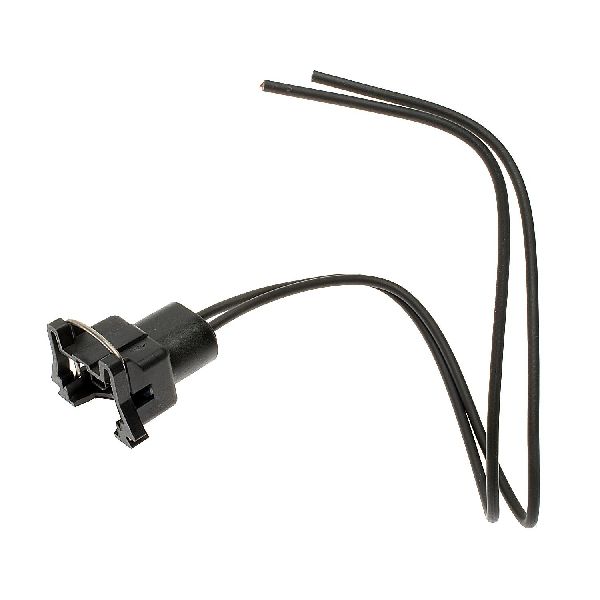
Est. part cost: $70-$150 - Corroded Wiring or Connector to DMTL Pump 🟡 Medium Probability Due to its location in the wheel well, the connector and its wiring are highly susceptible to water, salt, and physical damage from road debris or tire rub. The wiring harness is often short from the factory, putting stress on the connection. This can lead to corrosion on the connector pins or broken wires.
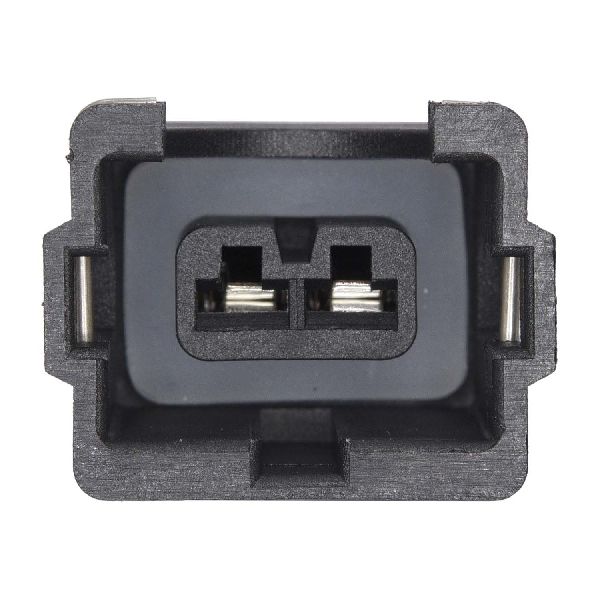
How to confirm: Unplug the 4-pin connector (X1714) from the DMTL pump and inspect the pins on both the harness side and the pump side for green/white corrosion or broken wires. A common failure is the red/white power wire breaking off. A continuity test from the DME to the pump connector can confirm a wire break.
Typical fix: Clean the connector terminals with an electrical contact cleaner. If corrosion is severe or wires are broken, replace the connector pigtail and splice in new wires, ensuring the repair is sealed against moisture.
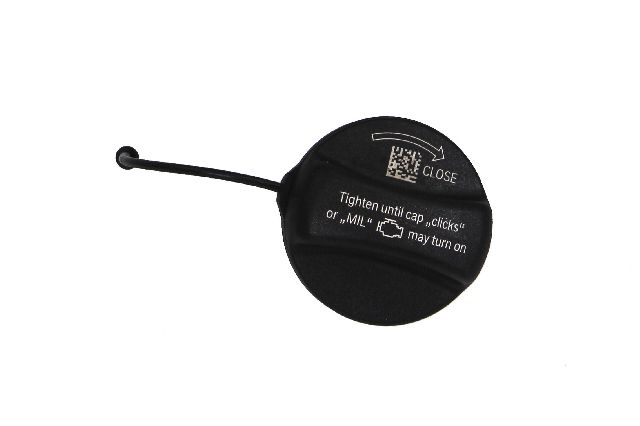
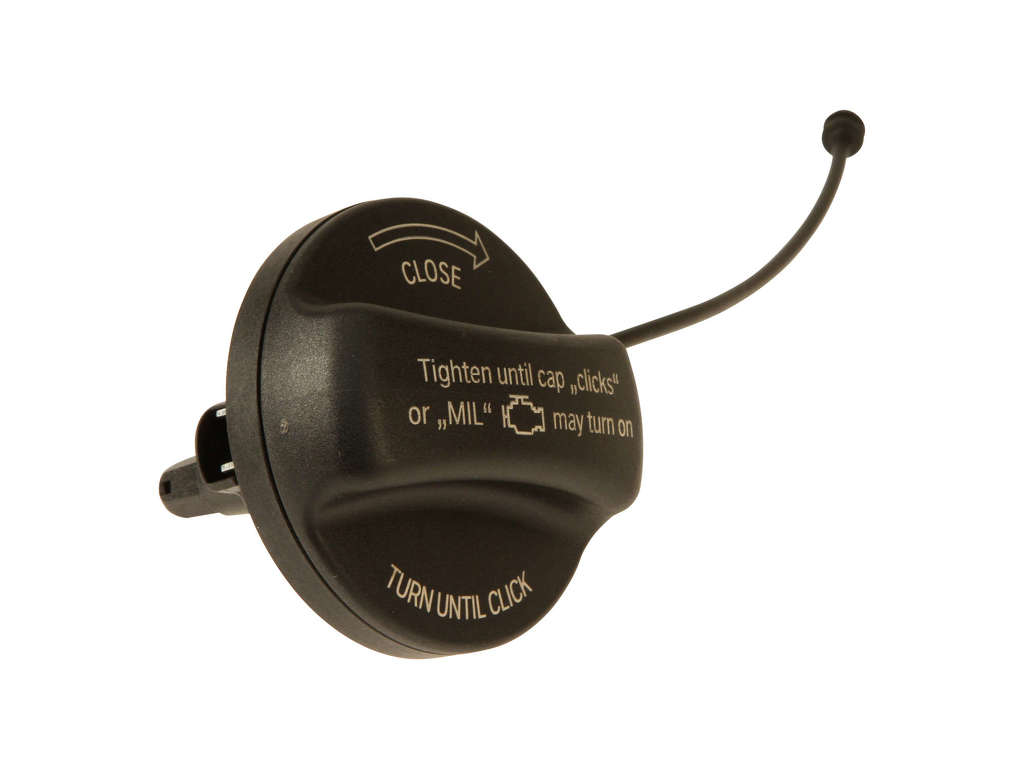
Est. part cost: $15-$40 for a new pigtail connector - Loose or Faulty Gas Cap ⚪ Low Probability While less common than the pump failure for this specific code, a gas cap with a worn or cracked seal can create a leak that the DMTL system detects. This may also present with other leak codes like 2A15 or 2A16.
How to confirm: Inspect the gas cap's rubber seal for cracks, stiffness, or damage. Ensure it is tightened until it clicks. A smoke test is the definitive way to confirm a leak at the cap.
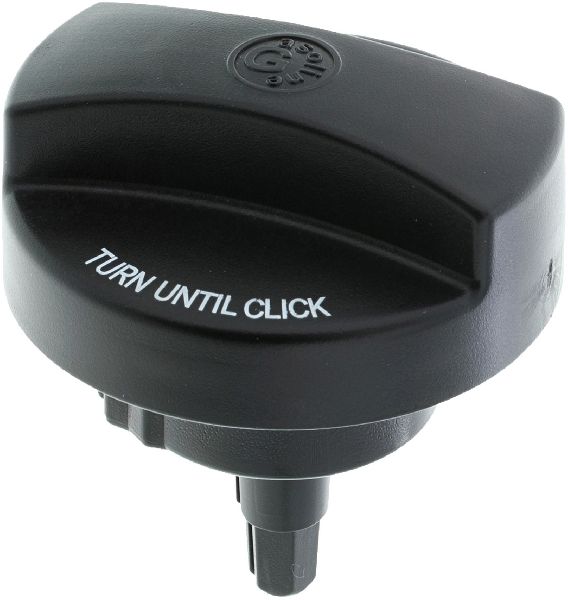
Typical fix: Replace the gas cap. It is highly recommended to use an OEM or OE-spec replacement, as some aftermarket caps do not seal correctly.
Est. part cost: $20-$40 - Cracked or Disconnected EVAP Hoses ⚪ Low Probability
How to confirm: Visually inspect the rubber and plastic hoses connected to the charcoal canister and DMTL pump for any visible cracks, brittleness, or loose connections. The quick-disconnect hose with the blue tab is a point to check for a secure connection. A smoke test is the most effective method to find small, hard-to-see leaks.
Typical fix: Replace the damaged section of hose.
Est. part cost: $15-$50
Rare But Worth Checking
- Faulty Fuse:
Diagnosis Steps
- Read the fault codes with a BMW-capable OBD-II scanner to check for more specific codes like 2A17.
- Inspect the gas cap. Ensure it is tight and the seal is in good condition. If it looks old or cracked, consider replacing it as a cheap first step.
- Safely raise the vehicle and remove the driver's side rear wheel.
- Remove the wheel well liner to access the charcoal canister and the attached DMTL pump.
- Visually inspect the DMTL pump, its connector, and all surrounding EVAP hoses for obvious damage, cracks, or corrosion. Pay close attention to the wiring harness for any signs of chafing or breaks.
- Disconnect the 4-pin electrical connector (X1714) and inspect the pins for corrosion. The power wire (Pin 4, Red/White) is a known point of failure.
- If you have a capable scan tool, command the DMTL pump to activate. You should hear the small electric motor run. If there is no sound, proceed to check wiring.
- Using a multimeter, check for power (12V on Pin 4, Red/White wire) and ground at the DMTL pump connector. The DME provides ground signals to activate the pump, heater, and valve on the other three pins. The system runs its test after the engine is shut down.
- If power and ground are present but the pump does not run when commanded, the DMTL pump is faulty and needs to be replaced.
- If the pump runs but the code returns, or if you suspect a leak, a smoke test of the EVAP system is the next step to find the source of the leak.
Parts You'll Likely Need
- Diagnostic Module Tank Leakage (DMTL) Pump
(OEM #16137193479)— This is the most frequent failure point for code P1440 on this platform.
Trusted brands: Bosch (OEM), VDO, Dorman
OEM price range: $120-$180
Aftermarket price range: $70-$120 - Fuel Cap
(OEM #16117222391)— A faulty gas cap seal is a possible, though less common, cause for EVAP leak codes.
Trusted brands: BMW (OEM), Blau
OEM price range: $25-$40
Aftermarket price range: $15-$25 - DMTL Pump Connector Pigtail — If the original connector is corroded or the wires are broken, a replacement pigtail is needed for a durable repair.
Trusted brands: URO Parts, Dorman
Aftermarket price range: $15-$40
Related Codes That Often Appear With This One
- 2A17 — This is a BMW-specific code for 'DMTL, system fault'. It more directly indicates a failure of the DMTL pump to run its diagnostic routine, often appearing alongside or instead of P1440 when using a BMW-specific scan tool. It can be triggered by excessive current draw from a failing pump motor.
- 2A15 / 2A16 — These are BMW-specific codes for minor EVAP leaks. If the DMTL pump is working but detects a small leak (like from a bad gas cap or cracked hose), one of these codes may be stored.
- 2A18 / P240A — This BMW-specific code points to an open circuit in the DMTL pump's internal heater element, often caused by a break in the specific wire (Black/Red at the connector) leading from the DME.
Technical Service Bulletins (TSBs) & Recalls
- While no specific TSB for P1440 was found, BMW TSB SI B16 01 07 addresses general EVAP leak diagnosis, which is relevant to the system but not the specific code. A similar TSB, SI B01 05 11 for the X5 with N52K engine, extended the warranty on the DMTL pump (P/N 16137193479) to 10 years/120,000 miles for fault code 2A17, highlighting BMW's awareness of pump durability issues.
Platform-Specific Known Issues
- The DMTL pump on the E9x platform is known to fail frequently, with some owners reporting having to replace it multiple times over the life of the vehicle.
- The wiring harness for the DMTL pump is routed in a vulnerable location behind the driver's rear wheel, making it prone to corrosion and physical damage from road spray and debris.
Mechanic-Grade Diagnostic Values
- DMTL pump motor current draw (reference check) — expected: 20-30 mA. Failure: If the amperage value is not achieved, a large leak is suspected. If the amperage is higher than the reference, the system is considered sealed. A reading significantly lower than the reference during the system test can indicate a leak.
- DMTL pump heater current draw — expected: ~334 mA. Failure: No or very low current draw indicates an open circuit in the heater element or its wiring, often triggering code 2A18/P240A.
- DMTL pump solenoid valve current draw — expected: ~465 mA. Failure: No or very low current draw indicates a failure in the changeover valve solenoid or its wiring.
Scan Tool Commands That Help
- ISTA: Component triggering > DME > Motor of diagnostic module / Changeover valve of diagnostic module — This allows a technician to individually activate the pump motor and the internal valve to listen for operation, confirming if the pump is receiving the command and is mechanically functional.
- ISTA: DMTL System Test (Service Function) — This is the full, automated test routine. The software commands the pump to run a reference measurement and then pressurize the tank system to test for major and minor leaks. It provides a pass/fail result and can take up to 12 minutes.
- INPA: Engine > MSV80 (or similar DME) > F9 System Tests > F9 DMTL System Test — This function in the older INPA software performs a similar automated test to ISTA, providing current (mA) values for the reference leak, a 'large scale' measurement, and the final system test measurement. Comparing these values helps determine if the system is sealed or leaking.
Wiring & Ground Locations
- X1714 — The 4-pin electrical connector at the DMTL pump itself, located in the driver's side rear wheel well.. This is the primary point of failure for wiring issues due to its exposure to road salt and debris. Pin 4 (Red/White) is 12V+ power, Pin 1 (Brown/Blue) is the pump motor ground signal from the DME, Pin 2 (Black/Red) is the heater ground signal, and Pin 3 (Black/Green) is the valve ground signal.
- X60002 — A 26-pin black connector at the DME (Engine Control Module) located in the under-hood electronics box (E-box).. This is the source connector for the ground signals that control the DMTL pump. For example, the heater circuit wire (which can cause code 2A18/P240A) runs from Pin 17 of this connector to Pin 2 at the pump. A continuity test between X60002 and X1714 can definitively diagnose a broken wire.
- Main Engine Ground Strap — On the driver's side (US models), it connects the engine block to the chassis, located under the car near the engine mount/driver's footwell area.. While not directly part of the DMTL circuit, a corroded or broken main engine ground strap can cause a wide range of bizarre, hard-to-diagnose electrical faults and codes across the vehicle due to unstable system voltage and poor grounding paths. It's a common wear item and should be inspected if multiple, seemingly unrelated electrical issues are present.
Real Owner Repair Stories
- Bimmerpost user 'Bims328i' (E9x 328i) — Recurring 2A17 (DMTL, system fault) code.
❌ Tried (didn't work) Replacing the DMTL pump (worked temporarily, but code returned after a year)., Replacing the DMTL pump a second time (code returned again)., Replacing the gas cap with a new OE part.
✅ What actually fixed it The user's problem was recurring, suggesting an issue beyond the pump itself, such as intermittent wiring or a problem with the charcoal canister. The final fix was not explicitly stated in the thread, but the detailed discussion pointed towards diagnosing the wiring harness for breaks or testing for a clogged canister as the next logical steps after multiple pump failures. - Bimmerpost user discussion (2008 335i) — P240A / 2A18 (DMTL Pump Heater Circuit Open).
❌ Tried (didn't work) Visual inspection of wires near the pump connector.
✅ What actually fixed it The confirmed fix is a continuity test of the specific wire for the heater circuit. The Black/Red wire at the pump connector (Pin 2) becomes a White/Black wire at the DME connector X60002 (Pin 17). A break anywhere along this wire will cause the code. The fix is to find the break or run a new wire.
OEM Part Supersession History
16136752551→16136764191, then 16137193479— Improved durability and reliability. BMW issued a TSB for other models (like the X5) recommending replacement of older pumps with the latest part number (16137193479) to resolve recurring DMTL fault codes, indicating an engineering improvement.
Model Year Variations Within This Range
- 2009-2013 (LCI models): The Life Cycle Impulse (LCI) refresh (starting model year 2009 for the E90 sedan) brought cosmetic updates (hood, lights, bumpers) and some mechanical changes. While the DMTL pump and its function remained largely the same, some wiring and module software may have been updated. For example, the iDrive controller and radio were changed, which could affect how diagnostic functions are accessed in the infotainment system. However, the core P1440 diagnosis remains focused on the same components across the entire 2005-2013 range.
Diagnostic Flowchart
Other Known Issues on This Vehicle
Issues unrelated to this code that are worth knowing about as an owner of this generation:
- Electric Water Pump & Thermostat Failure 🔴 High — Common failure item, often between 50,000 and 80,000 miles. Failure can be sudden and lead to overheating.
- Oil Filter Housing Gasket (OFHG) & Oil Cooler Gasket Leaks 🔴 High — Extremely common leak point. The gasket hardens over time. If left unfixed, leaking oil can drip onto the serpentine belt, causing it to slip off and potentially get ingested by the main crank seal, leading to catastrophic engine failure.
- Valve Cover & Gasket Leaks 🟠 Medium — Very common oil leak source as the gasket becomes brittle with heat cycles. The plastic valve cover itself can also crack.
- N54 High-Pressure Fuel Pump (HPFP) Failure 🔴 High — A notorious issue on early twin-turbo N54 engines (e.g., 335i models 2007-2010), causing long cranks, stalling, and limp mode. (Ref: Subject to multiple recalls and extended warranties by BMW. (NHTSA Action Number: PE10017))
- VANOS Solenoid Failure 🟠 Medium — Commonly occurs at higher mileage, causing rough idle, poor performance, and camshaft position fault codes. Often, cleaning the solenoids can be a temporary fix, but replacement is usually required. (Ref: Some models were recalled for VANOS housing bolts, but the solenoids themselves are a separate common wear item.)
- N54 Turbo Wastegate Rattle / Failure 🔴 High — Common on the N54 engine, where the wastegate actuator rod or bushing wears out, causing a distinct rattling noise on deceleration or startup and leading to low boost fault codes. (Ref: BMW extended the warranty on turbochargers for this issue on many affected vehicles.)
- N54/N55 Ignition Coil and Fuel Injector Failure 🟠 Medium — Ignition coils are a frequent replacement item causing misfires. The Piezo-electric fuel injectors on the N54 are also a known failure point, leading to rough running and misfires. (Ref: BMW issued extended warranties for certain index injectors.)
Used vs. New Parts: Buying Guide for This Vehicle
When a used part is the smart pick: A used DMTL pump is generally not recommended. Given that this part has a high failure rate due to its design and exposure to the elements, a used part from a salvage yard carries a significant risk of premature failure. One owner noted a salvage yard wanted more for a used pump than a new aftermarket one cost. The only scenario where it might be considered is for a very temporary fix on a low-budget project.
Donor-vehicle mileage cap: roughly under 50000 miles for the part to have meaningful remaining life.
What to inspect on the donor part:
- Check for physical damage to the housing or connector.
- Inspect the connector pins for any signs of green or white corrosion.
- If possible, ask for the donor vehicle's mileage; lower is always better.
- Avoid parts from vehicles in the 'salt belt' or regions with harsh winters, as corrosion is the main enemy of this part.
OEM-only on this vehicle (don't cheap out):
- Fuel Cap - While not expensive, some owners report that only OEM gas caps seal correctly to satisfy the EVAP test, whereas some aftermarket caps can cause persistent small leak codes.
Aftermarket brands forum-validated for this vehicle:
- Bosch - Bosch is the Original Equipment Manufacturer (OEM) for this part, so a Bosch-branded pump is identical to the Genuine BMW part but usually costs less.
- Dorman - Mentioned as a viable aftermarket alternative with a lifetime warranty in some cases.
- Standard Motor Products (SMP) - Mentioned as a readily available aftermarket option.
Real Owner Stories
Aggregated from forums and TSBs cited above. Mileages and costs reflect what owners reported in those sources.
2014 BMW 3-Series (E90 platform)
Symptoms: Owner experienced code P1447 (a variant of P1440).
What fixed it: Repairing a broken power cable leading to the DMTL pump.
Source hint: e90post.com: Thread 'DMTL Pump issues? HELP' (2014)
2024 BMW 3-Series (E90 platform)
Symptoms: Recurring 2A17 codes (BMW-specific version of EVAP faults) despite previous repairs.
What fixed it: Addressing wiring harness corrosion at the DMTL connector (X1714).
Source hint: e90post.com: Thread 'DMTL Pump Faulty Again' (2024)
2015 BMW 3-Series (E90 platform)
Symptoms: Check engine light remained on even after installing a new DMTL pump and gas cap.
What fixed it: Thorough inspection of wiring and hose connections which revealed the fault was not the pump itself.
Source hint: e90post.com: Thread 'New DMTL PUMP and GAS CAP still throwing codes!' (2015)
2024 BMW 335xi (N55 engine)
Symptoms: EVAP system fault codes caused by the short factory wiring harness being exposed to the elements.
What fixed it: Repairing corroded and broken wires at the DMTL electrical connector.
Source hint: YouTube: 'E92 335xi N55 DMTL Fuel Tank Leak Detection Pump Wiring Repair' by BavhausTV (2024)
Related OBD-II Codes
Frequently Asked Questions
Is there a TSB or extended warranty for the DMTL pump on my BMW?
I replaced the DMTL pump and gas cap on my E90, but the code is still there. What else should I check?
Where is the DMTL pump located on the 2005-2013 3-Series?
Why does my BMW make a buzzing noise from the rear driver's side after I turn it off?
Can I use an aftermarket gas cap to fix this code on my 3-Series?
Which specific wire is most likely to break on the DMTL connector?
Used OEM Parts in Stock


New Aftermarket Parts Available


The information in this article is provided for general reference and educational purposes only. Vehicle specifications, procedures, and part compatibility can vary by production date, trim level, and region. Always consult your vehicle's factory service manual and verify part numbers before purchasing or performing repairs. Safety-critical components such as airbags, seat belts, and braking systems should be installed by a qualified professional.
- BMW 3-Series:
- 🛍️ Shop This Part
- What's Unique About the 2005-2013 BMW 3-Series
- Symptoms You May Notice
- Most Likely Causes
- Rare But Worth Checking
- Diagnosis Steps
- Parts You'll Likely Need
- Related Codes That Often Appear With This One
- Technical Service Bulletins (TSBs) & Recalls
- Platform-Specific Known Issues
- Mechanic-Grade Diagnostic Values
- Scan Tool Commands That Help
- Wiring & Ground Locations
- Real Owner Repair Stories
- OEM Part Supersession History
- Model Year Variations Within This Range
- Diagnostic Flowchart
- Other Known Issues on This Vehicle
- Used vs. New Parts: Buying Guide for This Vehicle
- Real Owner Stories
- 2014 BMW 3-Series (E90 platform)
- 2024 BMW 3-Series (E90 platform)
- 2015 BMW 3-Series (E90 platform)
- 2024 BMW 335xi (N55 engine)
- Related OBD-II Codes
- Frequently Asked Questions
- 🎟️ Get 5% Off