

OBD-II Code P1440: EVAP System Purge Malfunction
What P1440 means, why it triggers, and how to fix it
- Always tighten or replace the gas cap first; a loose cap or a degraded $20 seal is the most common trigger for EVAP leaks.
- Test the purge valve with a multimeter before replacing it; a healthy solenoid reads between 15 and 30 Ohms.
- Do not diagnose a Toyota 4.7L V8 or 2012-2015 Honda Civic Hybrid for EVAP issues; P1440 indicates a Secondary Air Injection failure or a critical hybrid inverter fault on these specific vehicles.
- Expect a 5% to 10% drop in fuel economy and an automatic emissions test failure until the underlying EVAP leak or stuck valve is repaired.
What Does P1440 Mean?

The P1440 code means your car's Engine Control Unit (ECU) detects a fault in the Evaporative Emission (EVAP) control system. This system prevents gasoline vapors from escaping the fuel tank into the atmosphere. Most commonly, this code points to a purge valve stuck open or a small leak in the system's hoses.
Technical definition: P1440 is a manufacturer-specific code, meaning its exact definition changes depending on your vehicle. For Nissan, Ford, and Mazda, it indicates a fault like 'Purge Valve Stuck Open' or 'EVAP Purge Volume Control System'. For Toyota 4.7L V8 engines, it signifies a 'Secondary Air Injection System' fault. On 2012-2015 Honda Hybrids, it indicates a 'Motor Power Inverter (MPI) Module Output Circuit Malfunction'.
Can I Drive With P1440?
Yes, But With Caution. For most EVAP-related faults, you can drive for a short time, but prompt repair prevents poor fuel economy, hard starting, and guaranteed emissions test failure. Ignoring a stuck-open purge valve alters the air-fuel ratio, damaging the catalytic converter over time—a repair costing $800-$2,500+. On specific vehicles, the risk is higher: Toyota 4.7L V8s enter a low-power 'limp mode', and certain Honda Hybrids experience serious hybrid system faults that cause stalling.
Common Causes

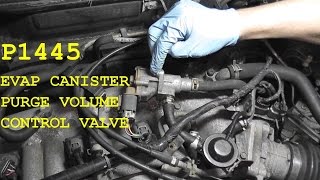
- Faulty EVAP Purge Valve/Solenoid (Very Common) — Controls the flow of fuel vapors from the charcoal canister to the engine. It gets stuck open or closed due to carbon buildup or electrical failure, making it the most frequent mechanical cause for P1440.
- Loose or Faulty Gas Cap (Very Common) — The gas cap provides a critical seal for the EVAP system. If it is loose, cracked, worn out, or an incorrect aftermarket type, the system cannot hold pressure and triggers a fault code.
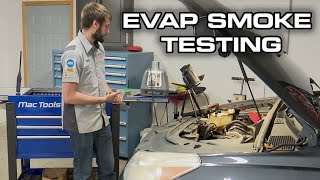
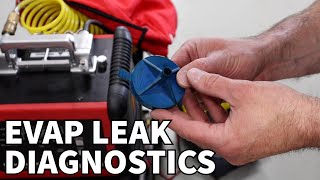
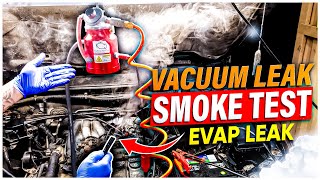
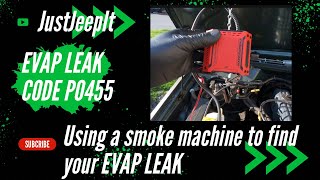
- Cracked or Disconnected EVAP Hoses (Common) — Rubber hoses in the EVAP system become brittle, crack, or disconnect over time, creating vacuum leaks. These leaks are hard to spot visually and usually require a smoke test to locate. 🎬 Watch: How to perform an EVAP smoke test for leaks.
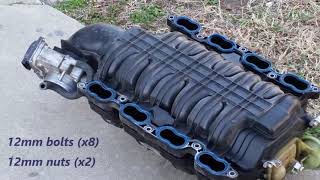
- Failed Secondary Air Injection System (Toyota 4.7L V8) (Common For Specific Model) — On Toyota 4.7L V8 engines, this is not an EVAP code. It triggers when the air injection pump fails, sending plastic debris into the air switching valves and causing them to stick.
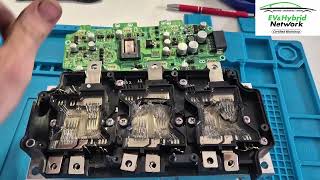
- Failed Motor Power Inverter (Honda Hybrid) (Common For Specific Model) — On 2012-2015 Honda Civic Hybrids, P1440 is caused by a known defect in the Motor Power Inverter (MPI) module due to a bad solder joint. 🎬 Watch this Honda Civic Hybrid P1440 diagnosis and repair guide. This is a critical hybrid component failure.
- Faulty EVAP Vent Valve/Solenoid (Less Common) — Located near the charcoal canister, this valve seals the EVAP system for pressure testing. If it fails to close or clogs with dirt, it triggers a P1440 code.
- Defective Charcoal Canister (Less Common) — Stores fuel vapors. It becomes saturated with liquid fuel (from overfilling the gas tank), develops an internal restriction, or cracks, leading to system faults.
- Faulty Wiring or Connectors (Less Common) — Corroded, loose, or damaged wiring to the purge or vent valves causes an open or short circuit. This prevents the component from functioning, especially in vehicles exposed to road salt.
Symptoms

- Check Engine Light is On — This is the first and often only sign that the EVAP system has a fault.
- Fuel Smell — You notice a smell of raw gasoline around the car, especially after refueling, as vapors escape the compromised system.
- Drivability Issues (Rough Idle, Hesitation, Hard Start) — A stuck-open purge valve allows unmetered fuel vapor into the engine, disrupting the air-fuel mixture. This causes the engine to run rough, hesitate during acceleration, or struggle to start right after getting gas.
- Poor Fuel Economy — Gas mileage decreases by 5-10% because fuel vapors escape into the atmosphere instead of being burned by the engine.
- Limp Mode (Toyota 4.7L V8) — On affected Toyotas, a P1440 code is accompanied by VSC and TRAC lights, forcing the vehicle into a protective 'limp mode' with drastically reduced engine power.
Diagnostic Flowchart
Tap your situation to follow the diagnostic path that matches what you're seeing on this code.
Common Fixes & Costs
- Replace Gas Cap — Parts: $15-$30, Labor: $0, ~0.1 hr book time (DIY)
- Replace EVAP Purge Valve/Solenoid
— Parts: $30-$100, Labor: $50-$150, ~0.8 hr book time
(Intermediate)
Nissan Frontier/Maxima/Altima: OEM
Ford Focus/Fiesta: OEM - Replace Cracked EVAP Hoses — Parts: $10-$50, Labor: $100-$200, ~1.2 hr book time (DIY)
- Replace Charcoal Canister — Parts: $150-$500, Labor: $100-$300, ~1.0 hr book time (Intermediate)
- Replace/Repair Secondary Air Injection System (Toyota 4.7L V8)
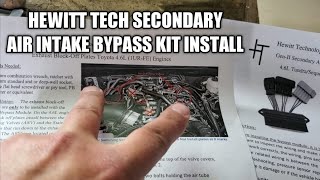
— Parts: $450 (Bypass Kit) to $1200+ (OEM Parts), Labor: $150-$500, ~2.5 hr book time
(Advanced)
Toyota Tundra/Sequoia (4.7L V8): OEM
Used vs. New Parts: Buying Guide
When a used part is worth it: For purely mechanical or structural parts like hoses or the canister housing from a low-mileage vehicle, used is a cost-effective option. For electronic components like the purge valve/solenoid or the entire charcoal canister assembly, new is strongly recommended.
Donor-vehicle mileage cap: roughly under 60000 miles for the part to have meaningful remaining life.
Donor quality checklist:
- Verify the donor vehicle was not scrapped for emissions-related failures.
- Avoid parts from vehicles in the Rust Belt, as corrosion is a primary failure mode for valves.
- Match the part number exactly; EVAP components are vehicle-specific.
Decision logic:
- If The part is an electronic solenoid (e.g., purge valve) or a complete canister assembly. → Buy new. Used ones carry a high risk of having the same wear-related failure or being saturated from the donor car's issues.
- If Vehicle is over 10 years old and the budget is extremely tight. → A used part is a gamble but acceptable. Be prepared for the possibility of it failing soon after installation.
- If The part is a simple hose or bracket. → Used is acceptable if it is in good physical condition with no cracks or rust.
Warranty tradeoff: Used parts from salvage yards typically offer a 30-90 day warranty. New aftermarket parts come with a 1-year to limited lifetime warranty. OEM parts offer a 1-year warranty.
Worst-case if a used part fails: $200-$500 if a used part fails shortly after install, requiring repeat labor costs plus the cost of another replacement part.
What Happens If You Wait — Timeline
- 0-1 month: Check Engine Light on. Possible faint fuel smell. Guaranteed emissions test failure. No other major symptoms. (MPG impact: 0-5%% · Added cost: $0-25 in wasted fuel)
- 1-3 months: A stuck-open purge valve causes intermittent hard starting (especially after refueling) and a noticeable rough idle. Fuel economy loss becomes more consistent. (MPG impact: 5-10%% · Added cost: $50-100 in wasted fuel)
- 3-8 months: The constant rich air-fuel mixture from the stuck valve overwhelms the catalytic converter, causing it to run hotter than designed. Its internal structure degrades, leading to irreversible efficiency loss. (MPG impact: 10-15%% · Added cost: $800-$2,500 (catalytic converter replacement is now likely required))
- 8+ months: Catalytic converter substrate melts or fractures, creating an exhaust blockage. This leads to severe loss of engine power, potential engine damage, and fouls O2 sensors and spark plugs. (MPG impact: 15-25%% · Added cost: $1,500-$3,500+ (includes catalytic converter, O2 sensors, and potential spark plug replacement))
Cost of Not Fixing It
- 0-1 month: Noticeable drop in fuel economy (up to 10%), strong fuel smell, and guaranteed emissions test failure. (Added cost: Negligible, other than increased fuel cost.)
- 1-6 months: A stuck-open purge valve creates a constant rich air-fuel mixture. This overwhelms and overheats the catalytic converter, leading to premature failure. (Added cost: $1200-$2800)
- 6+ months: Prolonged rich conditions foul spark plugs and oxygen sensors, leading to misfires, rough running, and additional component replacement costs on top of a damaged catalytic converter. (Added cost: $1500-$3500+)
Diagnosis Steps

- Check the Gas Cap
Ensure your gas cap is tight by turning it until it clicks. Remove it and inspect the rubber seal for cracks or flattening. If it looks worn, replace it with an OEM part.
Tools: None (Beginner) - Visually Inspect EVAP Hoses and Wiring
Look under the hood and around the charcoal canister (near the gas tank) for rubber hoses that look cracked, disconnected, or brittle. Inspect the wiring and connectors going to the EVAP valves for corrosion.
Tools: Flashlight (Beginner) - Quick Purge Valve Check (No Tools)
With the engine cold and off, disconnect the EVAP hose from the canister side of the purge valve. Start the engine. For the first few minutes, there should be no vacuum felt at the valve's inlet port. If you feel vacuum immediately, the valve is stuck open.
Tools: None (Beginner) - Bench Test the Purge Valve (Blow, Multimeter, 12V)
Remove the purge valve. First, try to blow through it; air should not pass. Next, use a multimeter set to Ohms (Ω) on the pins; expect 15-30 Ohms. Finally, apply 12V power to the terminals; listen for a sharp click. Failure in any of these three tests means the valve is dead.
Tools: Multimeter, 12V power source, Basic hand tools (Intermediate) - Perform a Smoke Test
This is the definitive method for finding hard-to-see leaks. A smoke machine forces low-pressure smoke into the EVAP system. Smoke escapes from any cracks in hoses, a faulty canister, or bad seals, pinpointing the exact location of the leak.
Tools: EVAP Smoke Machine (Advanced) - Analyze Live Data & Bidirectional Control
Use a bidirectional scanner to command the purge and vent valves open and closed while monitoring Fuel Tank Pressure. Watch 'EVAP Purge Command (%)' and 'Short-Term Fuel Trim'; consistently highly negative fuel trims at idle indicate a stuck-open purge valve.
Tools: Bidirectional OBD-II Scanner (Advanced)
When This Code Triggers (Freeze-Frame Conditions)
- Engine Coolant Temp: 149-200°F (Fully warmed up)
- RPM: 1200-3000 (Idle or steady cruise)
- Fuel Tank Level: 15-85% (Not full and not empty)
- Vehicle Speed: 45-65 mph (Steady highway driving)
Related Codes
- P0442 — Indicates a small leak in the EVAP system. P1440 is a manufacturer code triggered by the same condition, but P1440 also points to specific component failures. A smoke test finds the source of a P0442 leak.
- P0455 — Indicates a large leak in the EVAP system. If you have both P1440 and P0455, you almost certainly have a large physical leak, such as a completely loose gas cap or severed hose.
- P0441 — Means 'Incorrect Purge Flow' was detected. This sets when the computer opens the purge valve but doesn't see the expected pressure change. A P1440 caused by a stuck-open purge valve also causes a P0441.
- P0446 — Points specifically to a problem with the EVAP vent control valve circuit. P1440 is a broader code but is caused by the same vent valve failure. Diagnosis starts at the vent valve and its wiring.
Climate & Environmental Factors
- Cold Weather: Low temperatures cause rubber and plastic EVAP hoses and seals to become brittle and shrink, leading to cracks and small leaks that trigger the P1440 code.
- High Humidity / Rust Belt: In regions with high humidity and road salt usage, electrical connectors for the purge and vent valves corrode. Valves mounted on the chassis, like on Nissan models, seize from rust.
- Altitude: Changes in atmospheric pressure at high altitudes affect the EVAP system's pressure sensor readings. A marginal sensor is pushed out of its normal operating range, triggering a fault.
How to Talk to a Mechanic About This Code
Say this: "I have a P1440 EVAP code. I've already checked that the gas cap is tight. I'd like to schedule a diagnostic, likely including a smoke test, to pinpoint the cause, whether it's a valve or a hose leak."
This signals you have done basic homework, directs the mechanic toward the correct diagnostic procedure (a smoke test), and helps avoid a shop simply replacing the most common part (the purge valve) without confirming it's the actual point of failure.
Avoid saying:
- 'My check engine light is on, can you look at it?'
- 'Just fix whatever's wrong.'
- 'My friend said it's probably the...' (This short-circuits a proper diagnostic process.)
Questions to ask before authorizing the repair:
- Did the smoke test show the exact location of the leak?
- If you're recommending a valve replacement, was the valve tested electrically and for being stuck open or closed?
- Can you show me the old part and where it failed?
- What is the warranty on the replacement part and your labor?
Where to Take It: Dealer vs Independent vs Chain
- Dealer:
Best for: Vehicles still under an emissions warranty., Manufacturer-specific quirks, like the Toyota 4.7L V8 (SAIS failure) or Honda Civic Hybrid (inverter failure), as they have specific training and access to TSBs., Complex electrical diagnostics or issues requiring proprietary software.
Downsides: Highest labor rates, often 40-50% more than independent shops., Recommends replacing a whole assembly when only a small component has failed. (Typical cost: +40% vs. baseline) - Independent Shop:
Best fit for most common EVAP-related P1440 issues on makes like Nissan, Ford, and Chevy, offering the best balance of cost and expertise.
Best for: Out-of-warranty vehicles with common P1440 causes (purge valve, hose leak, vent valve)., Building a long-term relationship with a mechanic who knows your car's history.
Downsides: Quality and diagnostic capabilities vary greatly. Ensure they have an EVAP smoke machine and good reviews., Less familiar with brand-specific P1440 definitions (like on Toyota or Honda). (Typical cost: +0% vs. baseline) - Chain Shop:
Use with caution. Acceptable for a simple gas cap or purge valve replacement if you are certain it's the cause, but AVOID for initial diagnosis of an unknown EVAP leak.
Best for: Simple, confirmed part swaps where you have already diagnosed the problem (e.g., 'Please replace my EVAP purge valve').
Downsides: Technician skill varies dramatically., High pressure to upsell unnecessary services., Less likely to perform a thorough, time-consuming smoke test diagnosis. (Typical cost: -10% vs. baseline)
When to Walk Away From the Repair
If the estimated repair cost exceeds 40-50% of your car's private-party value (use KBB or Edmunds), seriously consider not doing the repair.
- Car worth $4000, fix is $350: Fix it. This is a standard repair cost for a common P1440 cause and is well below the threshold.
- Car worth $4000, fix is $2200: Walk away. This repair cost (typical for a Toyota SAIS failure) exceeds 50% of the car's value. Consider an aftermarket bypass kit or selling the vehicle as-is.
- Car worth $2500, fix is $1500: Walk away. The repair cost is 60% of the vehicle's value. It is not economically sound to proceed.
What Scan Tool You Need for This Code
Minimum: A basic OBD-II reader that reads and clears codes and views live data. This confirms the P1440 code and monitors fuel trims.
A basic code reader cannot command the EVAP purge and vent valves to open or close. This 'bidirectional control' is crucial for quickly testing the valves and is the main reason a DIYer gets stuck and needs a professional.
Budget: BlueDriver Pro / XTOOL A30M (~$100) — These Bluetooth scanners connect to your phone and offer live data streaming to watch EVAP purge commands and fuel trims. Some offer limited bidirectional controls to test a purge valve.
Mid-range: XTOOL D7 / Launch CRP919E (~$350) — This is the sweet spot for serious DIYers. These tablet scanners provide full bidirectional control, allowing you to command the purge and vent valves directly to confirm if they are working.
Professional: Autel MaxiCOM MK808 / MK906BT (~$500-1200) — Provides full OEM-level diagnostics, including bidirectional control, special EVAP system leak tests, and access to manufacturer-specific data PIDs for the most accurate diagnosis possible outside of a dealership.
Rent vs buy: If this is a one-time fix, auto parts stores (like AutoZone) have a free loaner tool program for basic OBD-II scanners. This reads the code, but you need to buy a tool if you want the bidirectional controls necessary for a full DIY diagnosis.
How to Clear the Code After You Fix It
- Use an OBD-II scan tool to clear the code
- Perform the specific drive cycle for your vehicle
- Check readiness monitors with a scan tool to confirm completion
Drive cycle (~30 minutes): Requires a cold start (sit for 8+ hours). Start engine, idle for 2-3 minutes. Drive at a steady speed between 45-65 mph for 10-15 minutes. Allow the vehicle to coast down without hard braking. Repeat if necessary over 1-2 days.
Readiness monitors affected: Evaporative (EVAP) System, Catalyst (CAT), Oxygen Sensor (O2)
Before emissions retest: drive at least 100 miles to fully set monitors.
Watch out for:
- Disconnecting the battery clears the code but also resets all readiness monitors, requiring a full drive cycle to complete them again.
- The EVAP monitor is often the last to become 'Ready' and has strict run criteria, including fuel level and ambient temperature.
- The code returns if the root cause of the fault is not properly repaired.
Will This Fail Emissions / State Inspection?
Yes — this code typically fails an OBD-II emissions inspection.
- California: An active P1440 code is an automatic smog check failure. For gasoline vehicles year 2000 and newer, all readiness monitors must be complete, though an exception is sometimes made for the EVAP monitor if it's the only one incomplete.
- New York: The NYS DMV emissions inspection includes an OBD-II scan. An illuminated Check Engine Light and a P1440 code causes an automatic failure.
- Texas: As of 2025, safety inspections are no longer required for most non-commercial vehicles, but an emissions test is still required in 17 of the most populous counties. A P1440 code causes a failure in these counties.
Most Commonly Affected Vehicles
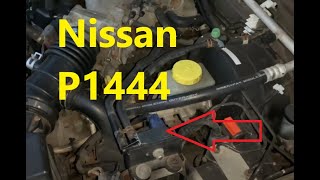
- Nissan Frontier, Maxima, Altima, Q45 (1998-2012) — Extremely common. The code points to a failed 'EVAP Canister Purge Volume Control Solenoid Valve', which is mounted on the charcoal canister and fails from rust.
- Toyota 4Runner, Tundra, Sequoia, Land Cruiser (2005-2009) — On models with the 4.7L (2UZ-FE) V8 engine, P1440 indicates a failure in the Secondary Air Injection system, not the EVAP system. Owners often opt for an aftermarket bypass kit.
- Honda Civic Hybrid (2012-2015) — P1440 means 'Motor Power Inverter (MPI) Module Output Circuit Malfunction'. This is a serious hybrid system fault. Honda issued TSB A20-030 extending the warranty for this part to 15 years/150,000 miles.
- Ford Focus, Fiesta, Mondeo, Kuga (2005-2018) — On these Ford models, P1440 typically means 'EVAP System Vacuum Trouble,' caused by a faulty purge valve or vent valve.
- Mazda 3, 6, CX-5, MX-5 (2008-2019) — Mazda vehicles log this code for general EVAP system faults, similar to Ford and Nissan, related to the purge solenoid or small system leaks.
- BMW Various (1998-2013) — On many BMWs, P1440 is not an EVAP code. It means 'Cruise control signal – interface fault' or relates to the Diagnostic Module Tank Leakage (DMTL) pump.
- Chevrolet Blazer, Silverado, Impala (1998-2010) — P1440 on Chevrolet vehicles points to a general EVAP system fault, related to a stuck purge valve or a clogged vent valve.
- Subaru Outback, Forester, Impreza (2000-2015) — On Subarus, P1440 translates to 'Fuel Tank Pressure Control System Low Input', pointing to a faulty purge control solenoid valve or related wiring.
Manufacturer-Specific Notes

- Nissan / Infiniti: The definition is 'EVAP Purge Volume Control System'. It is frequently caused by a purge control solenoid valve located on the charcoal canister that rusts and seizes.
- Toyota / Lexus: On 4.7L V8 engines, P1440 means 'Secondary Air Injection System Control Valve Circuit Malfunction'. The root cause is a failed air pump that disintegrates and sends debris into the switching valves, triggering limp mode.
- Honda: On 2012-2015 Civic Hybrids, P1440 means 'Motor Power Inverter (MPI) Module Output Circuit Malfunction'. This is a known issue from a bad solder joint inside the inverter, covered by TSB A20-030.
- BMW: P1440 is not a standard EVAP code. It refers to a 'Cruise control signal – interface fault' or an issue with the Diagnostic Module Tank Leakage (DMTL) pump. Diagnosis must follow BMW-specific procedures.
- Ford / Mazda: The definition is 'EVAP System Vacuum Trouble'. It points to a general failure to hold a vacuum during a system self-test, with the purge valve being the primary culprit.
- Audi / Volkswagen: On some models, P1440 points to the 'Exhaust gas recirculation (EGR) valve – open circuit', a completely different emissions system from the EVAP system.
Real Owner Stories
2002 Infiniti Q45 with persistent P1440
Check Engine Light came on. No other noticeable symptoms.
What they tried:
- Replaced the gas cap with an OEM part, but the code returned.
- Took it to a mechanic who performed a smoke test and found no leaks.
- Mechanic activated all solenoids and valves, which appeared to function correctly.
Outcome: The issue remained unresolved in the forum thread, with users suggesting intermittent failure of the purge valve solenoid or a hard-to-see crack in the EVAP canister itself.
Lesson: Even a professional smoke test misses intermittent or very small leaks. If initial tests are inconclusive, consider the possibility of an intermittently failing electronic component like a purge valve or a hairline crack in the canister.
2007 Toyota Tundra 4.7L V8 with P1440
Check Engine Light, VSC, and TRAC lights came on simultaneously. The truck entered 'limp mode' with severely limited power.
What they tried:
- Owner researched the code and found it related to the Secondary Air Injection (SAIS) system, not the EVAP system.
- Discovered this is a common failure on this specific engine.
Outcome: Instead of a $2,000+ OEM repair, the owner opted for an aftermarket SAIS bypass kit for around $450. Installing the kit resolved the code and restored full engine power.
Lesson: Always verify the P1440 definition for your exact vehicle. On Toyota 4.7L V8s, it is a known SAIS failure, and an aftermarket bypass kit is a cheaper solution than replacing OEM components.
2004 Nissan Pathfinder at ~120k miles
Service Engine Soon light appeared, code P1440. After clearing, the code returned. A strong smell of gasoline was noticeable after parking.
What they tried:
- Replaced the gas cap with a new OEM part, but the code came back the next day.
Outcome: The owner suspected the issue was the charcoal canister or the associated vent control valve located behind the driver's side rear wheel, a common failure point due to rust and debris.
Lesson: On older Nissans, the canister-mounted vent control valve is a primary suspect for P1440, especially if a new gas cap doesn't solve it. A fuel smell near the rear of the vehicle points diagnosis toward the canister area.
2013 Honda Civic Hybrid with multiple warning lights
IMA, ABS, Charging, and Check Engine lights came on. The car was hard to start and the 12V battery was not charging properly.
What they tried:
- Replaced the 12V battery, which did not solve the issue.
- A scan revealed code P1440, 'MPI Module Output Circuit Malfunction'.
- Owner discovered Honda TSB A20-030 for this issue but was told by the dealer their VIN was not covered.
Outcome: This is a known defect in the Motor Power Inverter (MPI) module. The repair involves replacing this expensive hybrid component. Even if a dealer denies warranty coverage, it is critical to know this is the root cause and not a simple EVAP fault.
Lesson: For 2012-2015 Civic Hybrids, P1440 is a critical hybrid system code. Immediately reference Honda TSB A20-030 and press the dealer on the 15-year/150,000-mile warranty extension. Do not attempt to diagnose it as a standard EVAP problem.
How to Prevent This Code From Triggering
- Stop pumping fuel after the first click (Every fill-up) — Overfilling the gas tank forces liquid gasoline into the charcoal canister, which is designed only for vapor. This saturates the charcoal, ruins its effectiveness, and leads to blockages and damage to the purge and vent valves.
- Use an OEM-quality gas cap (When replacing a lost or worn cap) — The gas cap is a calibrated pressure-sealing device. Cheap aftermarket caps use inferior seals that fail to hold pressure correctly, causing a persistent EVAP code even if the rest of the system is fine.
- Periodically inspect visible EVAP hoses (Once a year or during oil changes) — Rubber and plastic hoses in the engine bay become brittle and crack from heat and age. A quick visual inspection catches obvious cracks or disconnections before they become a persistent, hard-to-diagnose leak.
- Keep the undercarriage clean, especially in the Rust Belt (Seasonally) — On many vehicles, the vent valve and canister are mounted under the car and exposed to road salt and moisture. Washing the undercarriage helps prevent corrosion that causes valves to seize and electrical connectors to fail.
Frequently Asked Questions
Is it safe to drive with a P1440 code?
For most EVAP-related P1440 codes, it is safe to drive short-term, though you will experience poor fuel economy and fail emissions tests. If your car is a Toyota 4.7L V8 or a Honda Hybrid, the code indicates a serious problem causing limp mode or stalling. In those specific cases, driving is not recommended.
Can a loose gas cap really cause the P1440 code?
Absolutely. The gas cap is a primary seal for the EVAP system. If it is not tight or the seal is bad, the system fails its pressure test, triggering this code.
I replaced the purge valve, but the P1440 code came back. What now?
If the code returns, the problem is likely a hidden hose leak or a bad vent valve. Perform a visual inspection of all EVAP lines and check the gas cap seal. The most definitive way to find a hidden leak is to have a professional perform a smoke test.
What's the difference between a purge valve and a vent valve?
The purge valve is in the engine bay and controls the flow of stored fuel vapors into the engine to be burned. The vent valve is near the canister and allows fresh air in, closing only when the system runs a self-test to check for leaks.
Can I clean an EVAP purge valve?
Mechanics attempt to clean sticky purge valves with carburetor cleaner, but it is a temporary fix. The internal solenoid or seal is typically worn out or has failed electrically. Given the low cost of a new valve, replacement is the reliable repair.
Will I fail my emissions test with a P1440 code?
Yes, you will absolutely fail an emissions test. The P1440 code indicates a fault in an emissions control system, resulting in an automatic failure in any jurisdiction using OBD-II testing.
What's the difference between P1440 and a code like P0442 (Small Leak)?
P0442 is a generic OBD-II code meaning 'EVAP System Small Leak Detected.' P1440 is a manufacturer-specific code that relates to a leak or purge flow issue, but its exact meaning varies significantly by brand.
Key Takeaways
- Always tighten or replace the gas cap first; a loose cap or a degraded $20 seal is the most common trigger for EVAP leaks.
- Test the purge valve with a multimeter before replacing it; a healthy solenoid reads between 15 and 30 Ohms.
- Do not diagnose a Toyota 4.7L V8 or 2012-2015 Honda Civic Hybrid for EVAP issues; P1440 indicates a Secondary Air Injection failure or a critical hybrid inverter fault on these specific vehicles.
- Expect a 5% to 10% drop in fuel economy and an automatic emissions test failure until the underlying EVAP leak or stuck valve is repaired.
Helpful Videos

The information in this article is provided for general reference and educational purposes only. Vehicle specifications, procedures, and part compatibility can vary by production date, trim level, and region. Always consult your vehicle's factory service manual and verify part numbers before purchasing or performing repairs. Safety-critical components such as airbags, seat belts, and braking systems should be installed by a qualified professional.
- 🎬 Helpful Videos
- What Does P1440 Mean?
- Can I Drive With P1440?
- Common Causes
- Symptoms
- Diagnostic Flowchart
- Common Fixes & Costs
- Used vs. New Parts: Buying Guide
- What Happens If You Wait — Timeline
- Cost of Not Fixing It
- Diagnosis Steps
- When This Code Triggers (Freeze-Frame Conditions)
- Related Codes
- Climate & Environmental Factors
- How to Talk to a Mechanic About This Code
- Where to Take It: Dealer vs Independent vs Chain
- When to Walk Away From the Repair
- What Scan Tool You Need for This Code
- How to Clear the Code After You Fix It
- Will This Fail Emissions / State Inspection?
- Most Commonly Affected Vehicles
- Manufacturer-Specific Notes
- Real Owner Stories
- 2002 Infiniti Q45 with persistent P1440
- 2007 Toyota Tundra 4.7L V8 with P1440
- 2004 Nissan Pathfinder at ~120k miles
- 2013 Honda Civic Hybrid with multiple warning lights
- How to Prevent This Code From Triggering
- Frequently Asked Questions
- Is it safe to drive with a P1440 code?
- Can a loose gas cap really cause the P1440 code?
- I replaced the purge valve, but the P1440 code came back. What now?
- What's the difference between a purge valve and a vent valve?
- Can I clean an EVAP purge valve?
- Will I fail my emissions test with a P1440 code?
- What's the difference between P1440 and a code like P0442 (Small Leak)?
- Key Takeaways
- 🎟️ Get 5% Off