

P1437 on 2004-2011 Audi A6: Air Suspension 'Control Position Not Learned' Fixes
On a 2004-2011 Audi A6, code P1437 (more accurately, VAG code 01437) means the adaptive air suspension has lost its calibration. This is often caused by a leaking air spring, a faulty ride height sensor, or a bad compressor relay. The fix requires repairing the underlying hardware issue and then recalibrating the system with a diagnostic tool like VCDS.
- The code P1437 on a generic scanner is the Audi-specific fault 01437: 'Control Position not Learned' for the air suspension.
- This fault is almost always a symptom of another problem. Do not just try to clear the code. Find the root cause, which is most likely a leaking air spring, a bad level sensor, or a faulty compressor/relay.
- Never lift an A6 with air suspension without first enabling 'Jack Mode' in the MMI to prevent this fault.
- Fixing this code requires two steps: 1) Repairing the broken hardware. 2) Performing a system calibration with a VAG-specific diagnostic tool like VCDS.
- Check the compressor relay in the passenger-side plenum box for water damage; it's a common and inexpensive part that causes major system failure.
What's Unique About the 2004-2011 Audi A6
The Audi A6 C6 platform's optional adaptive air suspension is a complex system. The 'Control Position not Learned' fault is a common issue, frequently triggered by something as simple as jacking up the car without enabling 'Jack Mode' in the MMI. Unlike many powertrain codes, this chassis code almost always points to a sequence of events: an underlying hardware failure (like a leak or bad sensor) occurs, which then prevents the system from being able to calibrate itself, logging the 01437 fault as a result. Simply clearing the code will not work; the root cause must be fixed first, followed by a specific recalibration procedure using a VAG-compatible scan tool.
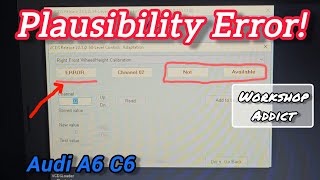
🎬 Watch: Step-by-step guide to calibrating your air suspension with VCDS.Symptoms You May Notice

- Yellow or green suspension warning light on the instrument cluster, often flashing.
- Vehicle is sagging or sitting too low on one or more corners, especially after being parked overnight.
- Ride height adjustment options are grayed out or unavailable in the MMI (Multi Media Interface).
- A harsh, bouncy, or uncomfortable ride.
- Air suspension compressor seems to run constantly or not at all.
- A 'Plausibility of Level Control System' error (02646) occurs when trying to calibrate.
- Car automatically enters 'Jacking Mode' and will not exit.
- Replacing the air suspension compressor when the actual fault is a cheap, failed relay or a hidden leak.
- Attempting to repeatedly clear the 01437 code without fixing the underlying hardware issue (like a leak or bad sensor) that is preventing the calibration from completing successfully.
- Condemning the control module before thoroughly checking all sensors, the compressor, relay, and the entire system for leaks.
Most Likely Causes

- Leaking Air Spring (Airbag) 🔴 High Probability The rubber air springs, particularly the rear ones, degrade over time, developing small cracks and punctures in the rolling folds. This is the most common failure point in the system.
How to confirm: With the system trying to operate, spray the air springs with a soapy water solution and look for bubbles forming, which indicates a leak. A corner sagging overnight is a classic symptom. A leaking strut may also make a hissing sound when jacked up.
Typical fix: Replace the leaking air spring. 🎬 See this walkthrough on how to replace a front air strut. Aftermarket brands like Arnott are a popular alternative to OEM. It is recommended to replace them in pairs (both fronts or both rears).
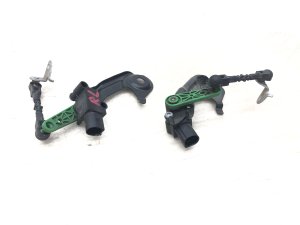
Est. part cost: $200-$500 per air spring - Faulty Ride Height Level Sensor 🔴 High Probability These sensors are mounted on the suspension control arms and are exposed to road debris, salt, and water. The plastic linkage arms can break, or the sensor's internal electronics can fail, sending incorrect, erratic, or no data to the control module.
How to confirm: Use a diagnostic tool (like VCDS) to view live data from all four sensors in the Level Control module (Address 34, Measuring Blocks, Group 006 or similar). Check for erratic readings or a sensor that doesn't change its value when the suspension is raised or lowered.
Typical fix: Replace the faulty ride height sensor and its linkage. OEM part numbers include 4F0941285B (Front Left) and 4F0941286B (Front Right). After replacement, the system must be recalibrated.
Est. part cost: $70-$150 - Failed Air Suspension Compressor Relay 🟡 Medium Probability The relay (often labeled '614' or part number 4H0951253A) is located in a plenum box under the windshield that is prone to water ingress from clogged drains. Corrosion from water can cause the relay to fail open (compressor won't turn on) or stick closed (compressor runs until it burns out).
How to confirm: Locate the relay in the ECU box on the passenger side plenum chamber. Check for signs of water, corrosion, or test the relay's function. If the compressor doesn't run at all, this is a prime suspect.
Typical fix: Replace the relay and ensure the plenum drains are clear to prevent future water damage. It is highly recommended to replace the relay whenever the compressor is replaced. 🎬 Watch: How to locate and remove the air suspension relay.
Est. part cost: $15-$40 - Improper Jacking Procedure 🟡 Medium Probability The system must be put into 'Jack Mode' via the MMI before lifting the vehicle. Failure to do so causes the system to misinterpret the extreme suspension travel as a fault, leading to lost calibration and this fault code.
How to confirm: The fault appeared immediately after tire service or other work where the vehicle was lifted. A user on AudiWorld forums reported this exact scenario after getting new tires.
Typical fix: Perform the suspension level control calibration procedure using a diagnostic tool. If the calibration fails, there is likely an underlying hardware issue that was coincidentally triggered.
Est. part cost: $0 - Failing Air Suspension Compressor 🟡 Medium Probability The compressor's piston ring wears out over time, reducing its ability to generate sufficient pressure (below 7 bar). Leaks elsewhere in the system cause the compressor to overwork and fail prematurely, often logging an over-temp fault (01577) first.
How to confirm: The compressor will run for a long time without lifting the vehicle, or it may sound weak. An output test using a diagnostic tool can check its function. If the system cannot reach the specified pressure during calibration, the compressor is a likely culprit.
Typical fix: Replace the air suspension compressor. It's highly recommended to also replace the relay (PN: 4H0951253A) at the same time.
Est. part cost: $250-$700
Rare But Worth Checking
- Leaking Valve Block or Air Lines: While less common than air spring leaks, the valve block (which distributes air) or the plastic air lines can develop cracks or have faulty fittings. In one documented case, a user on the Ross-Tech forums mixed up the compressor feed and accumulator lines on the valve block after replacement, which prevented the system from raising and led to the 01437 fault.
- Faulty Level Control Module (J197): It is rare for the control module itself to fail. However, after exhausting all other possibilities, a user on AudiWorld forums resolved their persistent 01437 and 02646 codes by replacing a used control module. All other components should be thoroughly tested before condemning the module.
- Faulty Compressor Temperature Sensor (G290): A faulty temperature sensor on the compressor can send an incorrect high-temperature reading (e.g., stuck at 185°C) to the control module. This will cause the system to shut down to protect the compressor, preventing it from running and making calibration impossible. A Ross-Tech forum user solved their issue by replacing this sensor.
Diagnosis Steps

- Connect a VAG-compatible diagnostic tool (like VCDS) and scan the Level Control module (Address 34). Note all fault codes.
- If code 01437 is present, check for other codes that point to a specific component (e.g., a specific level sensor, pressure issue, or over-temp).
- Visually inspect the vehicle's ride height. Note any corners that are obviously sagging.
- Using the diagnostic tool, go to Address 34 -> Measuring Blocks -> Group 006. Check the live data from all four ride height sensors. Manually push down or lift each corner of the car and verify that the sensor readings change accordingly.
- Check the compressor temperature sensor reading in Measuring Blocks (e.g., Group 11 on some models). A stuck high value indicates a faulty sensor.
- Inspect the air springs for leaks using a soapy water solution. Pay close attention to the rubber folds, especially on the rear axle.
- If a leak is suspected but not found, or if the compressor seems weak, attempt to run an Output Test on the compressor using the diagnostic tool. Listen to the compressor and observe if the vehicle rises.
- Inspect the compressor relay area (passenger side plenum chamber, under the ECU) for signs of water damage or corrosion.
- Once all hardware faults are repaired (e.g., new air spring, sensor, or compressor/relay), proceed to the calibration procedure with the engine running and all doors closed.
- Using VCDS: Go to Module 34 -> Security Access - 16 -> Enter code 31564.
- Go to Adaptation - 10. For channels 01 (Front Left), 02 (Front Right), 03 (Rear Left), and 04 (Rear Right), measure the height from the wheel center to the fender lip in millimeters and enter the value. Save each channel.
- Go to Adaptation - 10, Channel 05, enter a value of 1, and save to finalize the calibration. The 01437 fault should clear.
Parts You'll Likely Need

- Ride Height Level Sensor
(OEM #4E0907503C)— These sensors fail frequently due to exposure and plastic linkage fatigue, providing incorrect data and preventing system calibration.
Trusted brands: Bosch, HELLA, VEMO
OEM price range: $120-$180
Aftermarket price range: $50-$100 - Air Spring Bag — The most common point of failure in the system. The rubber perishes and leaks, causing the compressor to overwork and the system to lose pressure.
Trusted brands: Arnott Industries, Bilstein
OEM price range: $600-$900
Aftermarket price range: $200-$400 - Air Suspension Compressor
(OEM #4F0616005E)— Fails due to wear and tear, but most often fails from being overworked due to an undetected leak elsewhere in the system.
Trusted brands: WABCO, Arnott Industries
OEM price range: $700-$1000
Aftermarket price range: $250-$500 - Air Suspension Compressor Relay
(OEM #614 / 8K0951253)— A cheap part that is a very common point of failure due to water ingress in its location, causing the compressor to either not run or run continuously until it burns out.
Trusted brands: Genuine VW/Audi
OEM price range: $20-$40
Aftermarket price range: $10-$20
Related Codes That Often Appear With This One
- 02646 — This code for 'Plausibility of Level Control System' often appears with 01437 when the system fails the calibration attempt due to a hardware fault like a leak or bad sensor.
- 01577 — Turn-Off due to Over-Temp. This indicates the compressor has been running too long (likely due to a leak) and has shut down to prevent damage. This often precedes total compressor failure.
- 01772 — Signal from Level Control Pressure Sensor (G291) Implausible. This points towards an issue with the pressure sensor, which is integrated into the valve block, or a significant leak preventing pressure from building.
- 01400 — Suspension Level Control - Control Limit Not Reached. This code is logged when the system tries to reach a target height but fails, usually due to a major leak, a weak compressor, or a blocked line.
Technical Service Bulletins (TSBs) & Recalls
- While TSB 430816 / 2018765/3 is mentioned in forums regarding erratic behavior, a specific TSB directly addressing the 01437 fault is not consistently cited. The issue is typically resolved through standard diagnostic procedures.
Platform-Specific Known Issues
- Water Ingress in ECU/Plenum Box: A well-documented issue on the C6 platform is the clogging of the plenum drains under the windshield. This allows water to fill the box containing the engine ECU and the air suspension relay, causing corrosion and electrical failure. One owner on AudiWorld found standing water in the box, which had destroyed the relay and fuses, leading to the 01437 code.
- Calibration Failing Due to Hidden Leaks: Owners often report that the VCDS calibration procedure repeatedly fails, throwing the 02646 'Plausibility' fault alongside 01437. In one case on MHH Auto forums, this was caused by hairline leaks in both front struts that were not detectable until the struts were removed and pressure-tested in water.
- Aftermarket Air Spring Quality: Many owners opt for aftermarket air springs from brands like Arnott, which are considered a quality alternative. However, there are discussions on forums about the varying quality of unbranded or lesser-known Chinese-made parts, which may not have the same durability or damping characteristics as OEM or established aftermarket brands.
Mechanic-Grade Diagnostic Values
- Air Compressor Pressure Output — expected: Should build to at least 7 bar quickly and max out around 11-13 bar.. Failure: Struggling to build pressure past 3-4 bar, or taking an excessively long time to reach 7 bar, often indicates a worn compressor piston ring or a system leak.
- Compressor Temperature Sensor (G290) Reading — expected: Should reflect ambient temperature when the system is cold.. Failure: A value that is stuck at a very high number (e.g., 185°C) regardless of actual temperature indicates a failed sensor. This will cause the control module to prevent the compressor from running.
- Ride Height Sensor Live Data (VCDS Measuring Blocks) — expected: Values in Measuring Block Group 006 should change smoothly and logically as you physically push down or lift up on each corner of the car.. Failure: A sensor value that is frozen, jumps erratically, or doesn't respond to suspension movement indicates a failed sensor or wiring issue.
- Ride Height Deviation (VCDS Measuring Blocks) — expected: In Measuring Block Group 004, the 'deviation' values show how far each corner is from its target height. In a healthy, level system, these should be close to 0 mm.. Failure: Large, persistent deviation values on one or more corners point to a leak, a sensor error, or a calibration problem.
Scan Tool Commands That Help
- VCDS (VAG-COM): Security Access (Function 16) — This is a mandatory first step before performing adaptations. For the Level Control Module (34), enter the code 31564 to unlock the ability to change calibration values.
- VCDS (VAG-COM): Adaptation (Function 10) — This is the main function used to perform the suspension level calibration after a hardware repair. It involves sequentially entering the measured height (in mm) for each of the four corners into channels 01-04, and then saving a '1' in channel 05 to confirm.
- VCDS (VAG-COM): Output Tests — Used to diagnose specific components without running the whole system. You can command the compressor to run, or command individual strut valves to open/close. This helps isolate a non-functional compressor from a bad relay or test if a corner lowers correctly.
- VCDS (VAG-COM): Basic Settings (Function 04) — Can be used to perform specific service functions like venting the pressure from the accumulator tank or individual air springs before service.
Wiring & Ground Locations
- J197 Control Module — Located behind the glove compartment, mounted to the bulkhead.. This is the brain of the system. All sensor inputs and component commands route through here. While rarely the point of failure, its location is critical for advanced wiring diagnostics.
- Compressor Relay Socket — In the electronics box (plenum box) on the passenger side of the engine bay, near the windshield.. This location is notorious for collecting water due to clogged plenum drains, leading to corrosion on the relay pins and socket, causing the compressor to either not run or run continuously.
- Ground Point 51 — In the luggage compartment on the right side.. A poor ground connection for the control module or related components can cause intermittent and difficult-to-diagnose electronic faults.
- Ground Point 387 — Described in wiring diagrams as 'Ground Connection 22 (in main wiring harness)'.. This is a key ground connection for the J197 control module. A fault here could lead to a variety of implausible signals and control module errors.
Real Owner Repair Stories
- MHH Auto Forum User (Audi A6 C6) — Persistent 01437 and 02646 codes during calibration attempts.
❌ Tried (didn't work) Replacing rear level sensors, Swapping in a known-good test compressor, Swapping in a known-good test control module (J197)
✅ What actually fixed it The discovery of hairline leaks in both front air struts. The leaks were not visible with a soapy water spray test on the vehicle; they were only found after removing the struts and testing them under pressure while submerged in water. - Ross-Tech Forum User (2007 Audi A6 C6 Allroad) — After replacing compressor and valve block, the system would not raise and calibration failed.
❌ Tried (didn't work) Running adaptation procedure multiple times, Checking for new fault codes
✅ What actually fixed it The user had accidentally swapped the compressor feed line and the accumulator tank line on the new valve block. The compressor was pressurizing the tank, but the air couldn't get from the valve block to the struts. Correcting the hose positions resolved the issue immediately. - AudiWorld Forum User (2006 Audi A6 Quattro 4.2) — Rear suspension was completely lowered, 01437 code present, and calibration would not complete.
❌ Tried (didn't work) Clearing codes and attempting recalibration via VCDS, Cleaning electrical connectors at the compressor and valve block
✅ What actually fixed it The user found standing water and heavy corrosion in the ECU box in the passenger-side plenum. Replacing the corroded 40A compressor relay (and associated fuses) restored power to the system, which was the necessary prerequisite to performing a successful calibration. - YouTube Creator 'Yugi's Electronics' (Audi A6 C6 Allroad) — Yellow and green suspension lights flashing, one corner dropping overnight, then spreading to other corners.
❌ Tried (didn't work) A workshop diagnosed a bad compressor and leaking rear air bags for a €2,000 quote., The owner performed a leak check with soapy water on all air springs and lines and found no leaks.
✅ What actually fixed it The owner suspected the diagnosis was wrong and instead replaced the air suspension valve block. This single part replacement fixed all the symptoms of the car dropping and allowed the system to be recalibrated successfully.
"I Checked Everything" — The Actual Cause
- A common diagnostic pattern for this system is the 'soapy water test is clean, but it's still leaking'. In a well-documented case, a technician chased persistent calibration failures (01437 and 02646) after swapping multiple electronic components. The actual cause was minuscule leaks in the front air struts that were completely invisible during on-car spray tests. The leaks were only found when the struts were removed from the vehicle, pressurized, and fully submerged in a water tank, revealing a stream of bubbles.
OEM Part Supersession History
8K0951253, 8D0951253A→4H0951253A— Standard component evolution and consolidation across multiple VAG platforms.
Heads up: This is a widely used 40A multi-purpose relay often stamped with a large '614' or '645'. While physical fitment is the same, using the latest revision (4H0951253A) is recommended for reliability.4F0616040AA (OEM Front Right Strut)→Arnott AS-2816 (Aftermarket New)— Aftermarket alternative.
Heads up: A key difference is that many new Arnott struts (not their remanufactured OEM units) intentionally eliminate the factory electronic adaptive damping (CDC). They use a custom-valved passive shock absorber instead. This simplifies the system and can be more reliable, but the vehicle's damping adjustment feature will no longer function.
Model Year Variations Within This Range
- 2004-2011: The C6 platform received a facelift around the 2009 model year, which included updates to the MMI system and some electronics. However, the fundamental design, failure points (leaking bags, bad relay, weak compressor), and the 01437 calibration fault remain consistent across the entire 2004-2011 generation. The diagnostic and repair procedures are virtually identical for pre- and post-facelift models.
Diagnostic Flowchart
Used vs. New Parts: Buying Guide for This Vehicle
When a used part is the smart pick: Electronic components with no moving parts are the best candidates for used parts. This includes the Level Control Module (J197) and the wiring harnesses. A used Valve Block can also be a viable option if it comes from a reputable dismantler and is confirmed to be from a vehicle without water damage or suspension issues.
Donor-vehicle mileage cap: roughly under 80000 miles for the part to have meaningful remaining life.
What to inspect on the donor part:
- For a used compressor: Ask for mileage and history. Avoid parts from cars that had known air leaks, as the compressor will have been overworked.
- For a used valve block or control module: Inspect for any signs of corrosion or water marks. Ensure all electrical pins are clean and straight.
- For used level sensors: Check that the plastic linkage arms are intact and not brittle or cracked.
OEM-only on this vehicle (don't cheap out):
- While not strictly required, many forum veterans recommend sticking with OEM/OES (Sachs/Continental) air struts if ride quality and adaptive damping functionality are top priorities. Some aftermarket struts can have different damping characteristics.
Aftermarket brands forum-validated for this vehicle:
- Arnott Industries: The most widely recommended aftermarket brand. They offer both remanufactured OEM struts (which retain adaptive damping) and their own newly designed struts (which often replace adaptive damping with a passive shock). They are known for their lifetime warranty.
- Bilstein: Offers high-quality OEM replacement (B4) and performance-oriented (B6) options that are well-regarded.
Brands owners have reported issues with on this vehicle:
- Unbranded 'eBay/Alibaba' parts: Users report a high degree of variability in quality with cheap, unbranded Chinese-made air springs and struts. While tempting due to low cost, they often have poor ride quality, incorrect spring rates, and a high premature failure rate.
Real Owner Stories
Aggregated from forums and TSBs cited above. Mileages and costs reflect what owners reported in those sources.
Audi A6 (C6 Platform)
Symptoms: The vehicle had a 01437 'Control Position not Learned' fault after the owner found standing water in the ECU box.
What fixed it: The owner found the air suspension compressor relay was destroyed by corrosion from the water. Replacing the relay and clearing the clogged plenum drains resolved the fault.
Source hint: AudiWorld.com thread titled 'adaptive air suspension - 01437 - Control Position not Learned - 005 - a-2864391/'
Audi A6 Allroad (C6)
Symptoms: The owner was experiencing a 01437 fault code along with plausibility faults after replacing the air suspension compressor.
What fixed it: The issue was traced to air lines that had been crossed on the valve block during the compressor replacement. Correcting the air line connections fixed the problem.
Source hint: Ross-Tech.com thread titled '11981/'
Audi A6 (C6 Platform)
Symptoms: The VCDS calibration procedure repeatedly failed, throwing the 02646 'Plausibility' fault alongside the 01437 code.
What fixed it: The cause was found to be hairline leaks in both front struts. The leaks were not visible with a simple soapy water test and were only discovered when the struts were removed and pressure-tested in a water tank.
Source hint: MHH Auto forums (as cited in 'Calibration Failing Due to Hidden Leaks')
Related OBD-II Codes
Frequently Asked Questions
My 2007 Audi A6 is sagging on one corner after being parked overnight. Is this related to the P1437 code?
I just had new tires installed on my A6 and now the suspension warning light is on with code P1437. What happened?
What is the part number for the air suspension relay that fails from water damage on the C6 A6?
I'm trying to recalibrate my A6 suspension with VCDS but it keeps failing. What could be the cause?
What is the security access code needed to perform the suspension calibration on my Audi A6?
Are aftermarket air springs from brands like Arnott a good option for my 2004-2011 A6?
My air suspension compressor seems to run all the time. Is it failing?
Helpful Videos
Used OEM Parts in Stock

New Aftermarket Parts Available

The information in this article is provided for general reference and educational purposes only. Vehicle specifications, procedures, and part compatibility can vary by production date, trim level, and region. Always consult your vehicle's factory service manual and verify part numbers before purchasing or performing repairs. Safety-critical components such as airbags, seat belts, and braking systems should be installed by a qualified professional.
- Audi A6:
- 🎬 Helpful Videos
- 🛍️ Shop This Part
- What's Unique About the 2004-2011 Audi A6
- Symptoms You May Notice
- Most Likely Causes
- Rare But Worth Checking
- Diagnosis Steps
- Parts You'll Likely Need
- Related Codes That Often Appear With This One
- Technical Service Bulletins (TSBs) & Recalls
- Platform-Specific Known Issues
- Mechanic-Grade Diagnostic Values
- Scan Tool Commands That Help
- Wiring & Ground Locations
- Real Owner Repair Stories
- "I Checked Everything" — The Actual Cause
- OEM Part Supersession History
- Model Year Variations Within This Range
- Diagnostic Flowchart
- Used vs. New Parts: Buying Guide for This Vehicle
- Real Owner Stories
- Audi A6 (C6 Platform)
- Audi A6 Allroad (C6)
- Audi A6 (C6 Platform)
- Related OBD-II Codes
- Frequently Asked Questions
- 🎟️ Get 5% Off