

OBD-II Code P1437: A Manufacturer-Specific Fault (Climate, Hybrid, or Emissions)
The Ultimate Guide: What P1437 means, why it triggers, and how to fix it on your specific vehicle
- Identify your vehicle's specific P1437 definition first, as it ranges from a $50 Ford blower resistor fix to a $4,000 Honda inverter failure.
- Stop driving 2012-2015 Honda Civic or 2013 Acura ILX hybrids immediately; P1437 indicates a critical inverter failure covered by a 15-year/150,000-mile warranty extension.
- Expect A/C or heating failures on Ford, BMW, and Mazda vehicles, requiring a $70-$300 sensor or resistor replacement.
- Never replace the 12V battery on a Honda hybrid to fix P1437; the dead battery is a symptom of the failed DC-DC converter inside the inverter.
What Does P1437 Mean?
P1437 is a manufacturer-specific code with different definitions depending on your car's make. For Ford, BMW, and Mazda, it indicates a heating and air conditioning (HVAC) system fault. For Honda hybrids, it signals a critical short circuit in the hybrid power inverter. For Volkswagen and Mercedes-Benz, it indicates an EGR or exhaust temperature sensor circuit fault. For early Toyota Prius models, it relates to the emissions system.
Technical definition: The official definition of P1437 varies significantly by manufacturer. Common definitions include: Honda: MPI (Motor Power Inverter) Module Short Circuit. Ford: A/C Refrigerant Temperature Sensor Circuit High or Blower Motor Speed Circuit Malfunction. BMW: Heater Core Temperature Sensor Circuit. Mazda: A/C Evaporator Temperature Sensor Circuit High. Toyota: HCAC (Hydrocarbon Adsorber and Catalyst) System Variable Valve Close. Volkswagen: EGR Valve 2 Short Circuit to B+. Mercedes-Benz: Exhaust Gas Temperature Sensor Voltage Too Low.
Can I Drive With P1437?
Yes, But With Caution. Driving is safe for most vehicles, but causes A/C, heating, or emissions failures. However, on affected Honda hybrids, the vehicle will stall or fail to start, leaving you stranded. Service Hondas immediately. For Gen 1 Prius models, ignoring the code leads to expensive catalytic converter damage over time.
Common Causes
- Failed Motor Power Inverter (Honda Hybrid) (Very Common) — On 2012-2015 Honda Civic and 2013 Acura ILX Hybrids, this code indicates a critical internal short circuit in the Motor Power Inverter (MPI) module caused by a defective factory solder joint.
- Failed Blower Motor Resistor or Module (Ford) (Very Common) — On many Ford vehicles, the blower motor resistor fails due to corrosion or overheating. A failing blower motor drawing excessive current often causes the resistor to burn out.
- Faulty Sensor (Heater/AC/Exhaust Temperature) (Common) — On BMW, Mazda, and Mercedes-Benz vehicles, a failed temperature sensor in the heater core, A/C system, or exhaust sends incorrect readings to the control module.
- Sticking or Seized Mechanical Parts (Toyota/VW) (Common) — On Gen 1 Toyota Prius models, the HCAC bypass valve actuator seizes due to rust. On Volkswagen models, the EGR valve sticks due to carbon buildup.
- Damaged Wiring or Connectors (Common) — Frayed wires, loose connections, or corrosion on the connectors interrupt the signal. On Fords, the connector to the blower motor resistor frequently melts.
- Vacuum Leak or Faulty VSV (Toyota) (Less Common) — On early Toyota Prius vehicles, a cracked vacuum line leading to the HCAC actuator or a faulty Vacuum Switching Valve (VSV) triggers the code.
- Incorrect Module Programming or Replacement (Honda) (Rare) — If the main hybrid battery, BCM, or MCM is replaced without matching the software to the new hardware, it causes inverter-related fault codes.
- Faulty Climate Control Module (Rare) — The climate control module (the computer controlling A/C and heat) fails and sends false error codes.
Symptoms
- Check Engine Light is On — The vehicle's computer detects a fault and stores the P1437 code, illuminating the malfunction indicator lamp.
- Poor Hybrid System Performance and No-Start (Honda) — The car exhibits poor acceleration, jerky operation, and bad fuel economy as the IMA hybrid system disables. The car stalls or fails to start entirely.
- A/C or Heater Malfunction (Ford/BMW/Mazda) — The A/C blows warm air, the heater blows cold air, or the fan fails to work on specific speeds.
- Fan Speed Erratic or Only Works on High (Ford) — The fan speed fails to match the switch setting, changes randomly, or only operates on the highest setting due to a bypassed resistor.
- Multiple Warning Lights on Dash (Honda/Toyota) — IMA, battery, brake, or power steering warning lights illuminate alongside the Check Engine Light.
Diagnostic Flowchart
Tap your situation to follow the diagnostic path that matches what you're seeing on this code.
Common Fixes & Costs
- Replace Motor Power Inverter (Honda Hybrid) — Parts: $900-$1600 (parts-only), Labor: $1500-$2500 (labor-only), ~4.5 hr book time (Professional)
- Replace Blower Motor Resistor (Ford) — Parts: $20-$50 (parts-only), Labor: $50-$100 (labor-only), ~0.7 hr book time (DIY)
- Replace Heater Core/AC Temperature Sensor (BMW/Mazda) — Parts: $50-$150 (parts-only), Labor: $100-$200 (labor-only), ~1.5 hr book time (Intermediate)
- Replace EGR Valve or Temp Sensor (Volkswagen) — Parts: $150-$350 (parts-only), Labor: $150-$300 (labor-only), ~2.5 hr book time (Intermediate)
- Repair Damaged Wiring or Connectors — Parts: $5-$50 (parts-only), Labor: $100-$250 (labor-only), ~1.5 hr book time (Intermediate)
DIY vs Professional
- Replace Blower Motor Resistor (Ford) — Beginner:
Tools: 8mm socket or wrench, flashlight. - Replace Motor Power Inverter (Honda Hybrid) — Beginner:
Tools: High-voltage safety gloves (Class 0), insulated tools, advanced scan tool, service manual. - Replace Temperature Sensor (BMW/Mazda/Mercedes) — Beginner:
Tools: Multimeter, trim removal tools, basic hand tools. - Replace EGR Valve (Volkswagen) — Beginner:
Tools: Socket set, wrenches, gasket scraper, scan tool for adaptation.
Used vs. New Parts: Buying Guide
When a used part is worth it: For high-cost electronic modules like a Honda Motor Power Inverter, a tested used part from a low-mileage donor saves thousands. For mechanical parts like EGR valves, buy new to avoid premature failure.
Donor-vehicle mileage cap: roughly under 80000 miles for the part to have meaningful remaining life.
Donor quality checklist:
- Verify the exact part number matches; superseded parts fail to communicate with the ECU.
- Ensure the donor vehicle was not scrapped for a related electrical or hybrid system failure.
- Avoid parts from rust-belt donors if they have steel housings or are prone to corrosion.
- Check the donor vehicle's VIN history for flood damage.
Decision logic:
- If Part is a simple, low-cost wear item like a blower motor resistor → buy new; the cost savings for a used part are negligible and not worth the risk.
- If Part is extremely expensive new (e.g., >$1000) and the vehicle is older → a tested, warranted used part from a reputable salvage yard is a reasonable choice.
- If Part fails due to internal contamination or wear (e.g., EGR valve, catalytic converter) → favor new or professionally remanufactured, as a used part is already partially worn out.
Warranty tradeoff: Used parts typically come with a 30-90 day warranty covering the part only. New aftermarket parts offer 1-year to limited lifetime warranties. New OEM parts carry a 1-2 year warranty but require dealer installation.
Worst-case if a used part fails: $400-$1500 if a complex used part fails after the warranty period, requiring a second replacement and labor charge.
What Happens If You Wait — Timeline
- 0-1 month: For an emissions-related fault (Toyota/VW), the Check Engine Light turns on. There are no noticeable performance issues. The car fails an OBD-II emissions test. (MPG impact: 0-2%% · Added cost: $0)
- 1-4 months: A stuck EGR valve or HCAC system affects combustion efficiency. A slight drop in fuel economy occurs, along with potential rough idling or minor hesitation. (MPG impact: 3-8%% · Added cost: $50-150 in wasted fuel.)
- 4-12 months: Continued operation with an EGR fault increases combustion temperatures, stressing the catalytic converter. The converter's efficiency degrades due to thermal stress. (MPG impact: 8-15%% · Added cost: $200-400 in wasted fuel and potential early-stage catalyst damage.)
- 12+ months: The catalytic converter substrate melts or clogs from prolonged exposure to incorrect combustion byproducts. The engine loses power, stalls, or fails to start. (MPG impact: 15-25%+% · Added cost: $1200-2800 (for catalytic converter replacement).)
Cost of Not Fixing It
- Immediate: Honda hybrids stall or refuse to start, leaving you stranded. Other makes fail state emissions inspections due to the Check Engine Light. (Added cost: $100-$300 (for a tow truck).)
- 1-6 Months: Toyota or VW models suffer carbon buildup, reduced fuel economy, and stress on the catalytic converter. Fords lose A/C or heat functionality. (Added cost: $50-$200 (in wasted fuel).)
- 6+ Months: Ignoring emissions-related P1437 codes (Toyota, VW, Mercedes) causes overheating and failure of the catalytic converter or diesel particulate filter (DPF). (Added cost: $1200-$2800 (for catalytic converter or DPF replacement).)
Diagnosis Steps
- Identify Your Vehicle's Specific Definition
Since P1437 is manufacturer-specific, confirm what the code means for your exact make, model, and year. Search '[Your Car's Make/Model/Year] P1437' to identify the affected system.
Tools: OBD-II Scanner, Internet Access (Beginner) - PRO TIP (Honda/Acura): Check for Warranty Coverage FIRST
If you have a 2012-2015 Honda Civic Hybrid or 2013 Acura ILX Hybrid, stop immediately. Call a dealership, provide your VIN, and reference TSB A20-030 (Honda) or B20-021 (Acura) for a free repair under the 15-year/150,000-mile extended warranty.
Tools: Phone, Vehicle Identification Number (VIN) (Beginner) - Test the Blower Motor Resistor (Ford)
Set your fan to its highest speed. If it works on high but fails on lower speeds, the blower motor resistor is bad. The high setting bypasses the resistor entirely.
Tools: None (Functional Test) (Beginner) - Check for Related Codes
Scan the vehicle for other stored trouble codes. On a Honda Civic Hybrid, P1437 accompanied by P1440 and P15A5 confirms inverter failure. On a VW, look for other EGR codes.
Tools: OBD-II Scanner (Beginner) - Perform a Visual Inspection
Locate the relevant component (e.g., blower motor resistor on a Ford, HCAC actuator on a Toyota). Inspect the component, wiring harness, and vacuum lines for burnt plastic, corroded pins, frayed wires, or cracked hoses.
Tools: Flashlight (Beginner) - PRO TIP (Ford): Multimeter Test on Blower Resistor
Disconnect the resistor and set your multimeter to Ohms (Ω). A good resistor shows continuity between all pins. An open circuit (infinite resistance) between any pins means the resistor is bad. Never test a new resistor outside the HVAC housing; it burns out without airflow.
Tools: Multimeter (Intermediate) - PRO TIP (Toyota): Test Actuator and Vacuum System
Locate the vacuum hose for the HCAC actuator on a Gen 1 Prius. Use a hand-held vacuum pump to apply vacuum. The actuator rod must move and hold vacuum. If it fails to move, it is seized. If it fails to hold vacuum, the diaphragm is ruptured.
Tools: Hand-held vacuum pump, Flashlight (Intermediate) - PRO TIP (BMW/Mazda/VW): Test the Sensor Circuit
Back-probe the sensor connector with the key on, engine off. Use a multimeter set to DC Volts. Verify a 5V reference wire, a ground wire (<0.1V), and a signal wire. If the 5V reference is missing or the ground is bad, repair the wiring or PCM.
Tools: Multimeter, Service Manual, Back-probe pins (Advanced) - ADVANCED (Ford): Test Blower Motor Amperage Draw
If a replacement blower motor resistor fails quickly, test the blower motor. Use an amp clamp around the motor's power wire with the fan on high. A healthy motor draws 15-20 amps. A motor drawing 25+ amps overloads and destroys the resistor.
Tools: Multimeter with Amp Clamp (30A+ capacity) (Advanced) - ADVANCED (Mercedes/VW): Test EGT Sensor Live Data
Use an advanced scan tool to view live data for the specific EGT sensor. The temperature reading must be plausible (near ambient when cold) and rise steadily as the engine warms up. A stuck reading indicates a failed sensor or circuit problem.
Tools: Advanced OBD-II Scan Tool (with Live Data) (Advanced)
When This Code Triggers (Freeze-Frame Conditions)
- Engine Coolant Temp: 175-210°F (80-99°C) (The fault logs when the engine is fully warmed up and the system enters closed-loop operation.)
- Engine RPM: 700-2500 RPM (Triggers at idle for HVAC-related faults or during steady-state cruise for emissions-related faults when the ECU runs self-tests.)
- Calculated Engine Load: 20-70% (Sets under light to moderate engine load, rarely during heavy acceleration or deceleration.)
- Vehicle Speed: 0-65 mph (0-105 kph) (Occurs when stationary for HVAC faults or at highway speeds for EGR or catalyst monitor faults.)
Related Codes
- P1440 — On Honda/Acura hybrids, P1440 (MPI Module Output Circuit Malfunction) is a primary companion code to P1437. Together, they confirm internal MPI module failure.
- P15A5 — Points to a 'Motor Current Sensor Circuit Malfunction' on Honda/Acura hybrids. Since the sensor is internal to the MPI module, it proves the entire inverter unit requires replacement.
- P0A78 — Indicates 'Drive Motor A Inverter Performance' on Honda/Acura hybrids. Its presence alongside P1437 condemns the Motor Power Inverter and confirms warranty eligibility.
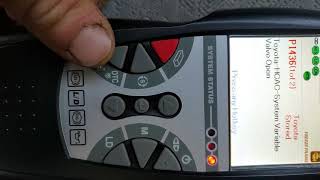
- P1436 — On a Gen 1 Toyota Prius, P1436 means the HCAC valve is stuck open, while P1437 means it is stuck closed. Both point directly to a mechanical or vacuum problem with the HCAC assembly.
- P1438 — On a Volkswagen, P1437 indicates a short to positive in the EGR valve circuit, while P1438 indicates an open circuit or short to ground. The diagnostic process is identical.
Climate & Environmental Factors
- High Humidity / Road Salt (Rust Belt): Seizes the mechanical HCAC bypass valve and actuator rod on Toyota Gen 1 Prius models. Accelerates corrosion on Ford blower motor resistor terminals.
- High Ambient Heat: Accelerates the failure of power electronics like the Honda MPI module. The inverter's dedicated cooling system must be maintained to prevent overheating.
- Cold Weather: Exacerbates sticking mechanical valves in EGR and HCAC systems due to thermal contraction and thickened carbon deposits.
How to Talk to a Mechanic About This Code
Say this: "{'Honda/Acura': "I have a [Model/Year] with codes P1437, P1440, and P15A5. I'd like to make an appointment to check my VIN for eligibility under the MPI module warranty extension, TSB A20-030.", 'Ford': "I have a P1437 code and my fan only works on high. I'd like a diagnostic to confirm a failed blower motor resistor. Please also quote checking the blower motor's amperage draw.", 'Other Makes (Toyota, VW, BMW, etc.)': "I'd like a diagnostic on a P1437 code. My research shows this is for the [System, e.g., 'HCAC valve', 'EGR circuit', 'A/C temp sensor']. Please confirm the specific cause before quoting a replacement part."}"
This vehicle-specific language directs the technician to the most likely cause and prevents a broad, expensive diagnostic process. For Honda, it immediately triggers the critical warranty issue. For Ford, it includes the necessary check to prevent a repeat failure.
Avoid saying:
- 'My check engine light is on, can you look at it?' (This invites a costly, open-ended diagnosis).
- 'Just fix whatever is wrong.' (This gives the shop a blank check).
- 'My friend said it's probably the [incorrect part].' (This sends a technician down the wrong path and wastes diagnostic time).
Questions to ask before authorizing the repair:
- Can you confirm my VIN is eligible for the Honda/Acura MPI warranty extension?
- For the Ford, what was the amperage draw of the blower motor on high?
- For a sensor or wiring fault, did you verify the 5V reference and ground at the connector before condemning the part?
- What is the warranty on the recommended parts and labor?
Where to Take It: Dealer vs Independent vs Chain
- Dealer:
REQUIRED for Honda/Acura warranty claims. A strong, but expensive, choice for complex German vehicle diagnostics. Otherwise, an independent shop is better value.
Best for: Honda/Acura vehicles with P1437 (to process the warranty extension)., Complex diagnostics on German brands (BMW, VW, Mercedes) where manufacturer-specific tools are needed., Any vehicle still under its original powertrain or emissions warranty.
Downsides: Highest labor rates, often 25-50% more than independent shops., Defaults to replacing a full assembly when a smaller component or wiring repair suffices. (Typical cost: +40% vs. baseline) - Independent Shop:
The best overall choice for most P1437 scenarios (Ford, Toyota, VW, etc.), offering a good balance of cost and expertise. A hybrid-specific independent shop is the best out-of-warranty choice for the Honda repair.
Best for: Out-of-warranty repairs on common vehicles (Ford, Toyota, Mazda)., Finding a specialist (e.g., a dedicated hybrid or European car shop) with deep experience., Building a long-term relationship with a technician who knows your car's history.
Downsides: Quality and expertise vary widely; vetting through reviews and certifications is crucial., Lacks the latest diagnostic tools for very new or complex models., Cannot perform warranty work for the Honda MPI module. (Typical cost: +0% vs. baseline) - Chain Shop:
Acceptable for the straightforward Ford blower resistor fix. AVOID for all other versions of P1437, especially the critical Honda hybrid issue or sensor/wiring diagnostics.
Best for: Simple, clear-cut parts replacement like the Ford blower motor resistor.
Downsides: Technician skill varies dramatically., High pressure to upsell common services (flushes, filters) that are not needed., Relies on basic code scans which are inconclusive for complex electrical or emissions issues. (Typical cost: -10% vs. baseline)
When to Walk Away From the Repair
If the estimated repair cost exceeds 50% of the car's private-party value, sell or trade in the vehicle instead of repairing it.
- Car worth $4500, fix is $4000: Walk away. The repair cost is nearly 90% of the car's value.
- Car worth $12000, fix is $750: Fix it. The repair cost is only about 6% of the car's value.
- Car worth $3000, fix is $200: Fix it. The repair is minor and makes the car fully functional again.
What Scan Tool You Need for This Code
Minimum: A scanner that reads manufacturer-specific codes and displays live sensor data.
A basic $20 code reader only shows a 'P' code, which is insufficient since P1437 has many meanings. For sensor-related faults, you need live data to determine if the sensor works. For the critical Honda fault, you must confirm the presence of related P1440 and P15A5 codes.
Budget: BlueDriver Pro (~$100) — Connects to your phone via Bluetooth. It reads the specific P1437 definition for your make, checks for related Honda codes, and displays live data to watch sensor performance.
Mid-range: Foxwell NT510 Elite / Innova 5610 (~$150) — These handheld units offer manufacturer-specific diagnostics, live data graphing, and bi-directional controls to command a component to test it.
Professional: Autel MaxiCOM MK808 / Launch X431 series (~$500-1200) — Professional-grade tablets providing full bi-directional control, ECU coding, and access to all vehicle modules with OE-level data. They perform any required relearn procedure after a major component replacement.
Rent vs buy: Auto parts stores read codes for free, which is a good first step. However, their tools are basic and cannot perform deep diagnostics. Buying a tool like the BlueDriver ($100) saves you more than its cost on a single diagnostic fee from a shop.
How to Clear the Code After You Fix It
- Use an OBD-II scan tool to erase the diagnostic trouble codes.
- Reconnect the battery if it was disconnected for the repair.
- Perform a complete drive cycle to allow the vehicle's readiness monitors to run their self-tests.
Drive cycle (~30 minutes): A generic drive cycle includes: 1) Cold start after the vehicle sits for 8+ hours. 2) Idle for 2-3 minutes with A/C and rear defroster on. 3) Drive at a steady highway speed (55-60 mph) for 10-15 minutes. 4) Coast down to 20 mph without braking. 5) Perform 15 minutes of mixed stop-and-go city driving.
Readiness monitors affected: Catalyst Monitor, Evaporative System (EVAP) Monitor, Oxygen (O2) Sensor Monitor, EGR System Monitor
Before emissions retest: drive at least 100 miles to fully set monitors.
Watch out for:
- Clearing the code or disconnecting the battery resets readiness monitors to 'Not Ready', causing an automatic emissions test failure.
- The code returns immediately or during the drive cycle if the root cause remains unfixed.
- The EVAP monitor requires the fuel tank to be between 1/4 and 3/4 full to run its self-test.
Will This Fail Emissions / State Inspection?
Yes — this code typically fails an OBD-II emissions inspection.
- California: An active Check Engine Light is an automatic failure. After repair, most readiness monitors must be 'Ready'. Clearing codes requires a full drive cycle (often 100+ miles) before re-testing.
- New York: A vehicle automatically fails the emissions inspection if the Check Engine Light is on. After clearing codes, the vehicle must be driven to set the readiness monitors.
- Texas: In the 17 counties requiring emissions testing, an illuminated Check Engine Light is an automatic fail. Depending on the vehicle year, one or two 'Not Ready' monitors are permitted.
Most Commonly Affected Vehicles
- Honda Civic Hybrid (2012-2015) — Extremely prone to P1437 due to a known manufacturing defect in the Motor Power Inverter (MPI) module. Covered by Honda TSB A20-030 (15yr/150k mile warranty).
- Acura ILX Hybrid (2013-2013) — Shares the same powertrain as the Civic Hybrid and suffers from the identical MPI module failure. Covered by TSB B20-021.
- Ford F-150, Focus, Escape, Fusion (2005-2015) — Commonly experiences P1437 due to failure of the blower motor resistor. For the 2009-2014 F-150, the Motorcraft part number is YH-1827.
- Toyota Prius (Gen 1) (2001-2003) — P1437 relates to the HCAC (Hydrocarbon Adsorber and Catalyst) system. Caused by a stuck valve, seized actuator, or vacuum line issue.
- BMW 3-Series (E46, E90), X3 (2000-2013) — Points to a failed heater core temperature sensor, leading to no heat from the vents as the automatic climate control fails to read temperatures.
- Mazda 3, 6, CX-5 (2010-2018) — Indicates a fault with the A/C evaporator temperature sensor, causing the A/C compressor to shut off to prevent evaporator freezing.
- Volkswagen Jetta, Golf, Passat (TDI) (2005-2015) — Refers to a short in the EGR valve circuit or a problem with an exhaust gas temperature sensor on diesel models.
- Mercedes-Benz Various Models with Diesel Engines (2007-2016) — Indicates a fault with an exhaust gas temperature sensor (voltage too low) within the diesel emissions control system.
Manufacturer-Specific Notes
- Honda: For 2012-2015 Civic Hybrids, P1437 almost always means the Motor Power Inverter failed due to a known defect. Check with a dealer for warranty coverage under TSB A20-030 before attempting repairs.
- Ford: This code exclusively relates to the blower motor speed control circuit. If the fan only works on high, the blower motor resistor is the culprit. Always check the blower motor for excessive amperage draw.
- Toyota: On early Prius models, this code flags the HCAC emissions system, not the main hybrid battery or inverter. The cause is mechanical (stuck valve) and prevalent in rust-belt states.
- Acura: The 2013 ILX Hybrid uses the same IMA system as the Honda Civic Hybrid and suffers the identical MPI module failure. TSB B20-021 extends the warranty to 15 years/150,000 miles.
- Volkswagen: P1437 points to a 'short to B+' in the EGR valve circuit. This suggests a wiring issue where the signal wire touches a power source, or an internal short inside the EGR valve.
Real Owner Stories
2014 Ford F-150 at 110K miles
Blower fan for A/C and heat suddenly only worked on the highest setting (Speed 4). No other symptoms.
What they tried:
- Replaced blower motor resistor with an aftermarket part; it worked for a few months and failed again.
- Replaced the resistor a second time with another aftermarket part; it failed within 24 hours.
Outcome: Replaced the resistor with a genuine Motorcraft OEM part. The issue was resolved permanently. The owner learned to check the wiring pigtail for signs of melting, which causes repeat failures.
Lesson: For this specific Ford issue, aftermarket resistors fail quickly. Spend the extra money on the OEM Motorcraft part. If the replacement fails, the blower motor itself draws too much current and requires replacement.
2012 Honda Civic Hybrid with multiple warning lights
While driving, the car jerked and the dashboard lit up with Check Engine, IMA, brake, and battery warning lights. The car had rough acceleration.
What they tried:
- Took the car to a dealership. The dealer read codes P1437, P1440, and P15A5.
- The dealer suggested replacing the motor current sensor and IMA rotor, quoting over $6,000.
Outcome: The owner discovered Honda issued TSB A20-030, extending the warranty on the Motor Power Inverter to 15 years or 150,000 miles. The dealer verified VIN eligibility and replaced the MPI module for free.
Lesson: If you have a 2012-2015 Civic Hybrid with codes P1437, P1440, and P15A5, do not let a shop diagnose them separately. They point to a single, known MPI module defect covered by a warranty extension.
2002 Toyota Prius (Gen 1) with Check Engine Light
The Check Engine Light came on, and a scanner showed code P1437 (HCAC System Variable Valve Close). The owner did not live in an emissions-testing area.
What they tried:
- Researched the code and found it related to the Hydrocarbon Adsorber emissions device.
- Checked vacuum lines for leaks, a common cause.
Outcome: The owner learned the valve or actuator was stuck due to rust. Since there were no drivability issues and no emissions test to pass, they ignored the code. The car remained drivable.
Lesson: On a Gen 1 Prius, P1437 is purely for emissions and does not affect the main hybrid system. If you lack emissions testing, you can ignore it without causing immediate damage, though ruling out a vacuum leak is wise.
How to Prevent This Code From Triggering
- Perform periodic engine decarbonization or use quality fuel additives. (Every 15,000-30,000 miles.) — For EGR-related codes (VW), this prevents the buildup of soot and carbon that causes the valve to stick.
- Engage in regular highway driving at sustained RPMs. (Once or twice a month for 20-30 minutes.) — Burns off soft carbon deposits from components like the EGR valve and catalytic converter by raising exhaust gas temperatures.
- Regularly replace the cabin air filter. (Every 15,000-20,000 miles or annually.) — For blower-resistor codes (Ford), a clogged cabin air filter restricts airflow, making the blower motor work harder and reducing cooling airflow across the resistor.
- Manually lubricate mechanical actuators in rust-prone areas. (Once every 1-2 years.) — For the Gen 1 Prius HCAC valve, applying high-temperature anti-seize lubricant to the actuator shaft prevents it from seizing due to rust.
- Avoid prolonged use of the highest fan speed setting. (Daily habit.) — On systems with a blower resistor, running the fan on high for extended periods generates maximum heat in the resistor. Using lower speeds extends the resistor's life.
Frequently Asked Questions
Can I fix a P1437 code myself?
It depends entirely on the vehicle. On a Ford, replacing the blower motor resistor is a 30-minute DIY repair requiring only an 8mm socket. However, on a Honda Civic Hybrid, the repair involves the lethal high-voltage system and requires a certified professional.
What is the most common misdiagnosis for P1437?
On a 2012-2015 Honda Civic Hybrid, the most common mistake is replacing the 12V battery. The failing Motor Power Inverter (MPI) module stops charging the 12V battery, causing it to die. Replacing the battery treats a symptom, not the root cause.
Will P1437 cause me to fail an emissions test?
Yes, an active Check Engine Light causes an automatic emissions failure in most states. For the Gen 1 Toyota Prius and Volkswagen models, the code directly flags a failing emissions control device (HCAC or EGR system). For other cars, the illuminated light alone triggers the failure.
Is P1437 an expensive code to fix?
The cost varies dramatically based on your vehicle make. A DIY Ford blower resistor fix costs under $50, while a BMW sensor replacement runs $150-$300. For an out-of-warranty Honda Civic Hybrid, dealer quotes often exceed $4,000 for a new inverter module.
Why does my fan only work on high with a P1437 code?
This is the classic symptom of a failed blower motor resistor on a Ford. The highest fan setting bypasses the resistor to receive direct battery voltage. When the resistor burns out, the lower voltage-reduced speeds fail, leaving only the direct high-speed circuit operational.
What is a Motor Power Inverter and why did it fail on my Honda?
The Motor Power Inverter (MPI) converts high-voltage DC power from the hybrid battery to AC power for the electric motor. On 2012-2015 Civic Hybrids, a factory defect in a solder joint causes an internal short circuit. This destroys the unit and triggers the P1437 code.
My Honda has P1437, P1440, and P15A5. Do I have three separate problems?
No, you have one single catastrophic problem. On a 2012-2015 Civic Hybrid or 2013 ILX Hybrid, these three codes together confirm a failed Motor Power Inverter (MPI). Do not diagnose them separately; take the car to a dealer for warranty replacement.
Why did my new blower motor resistor fail after only a week?
The blower motor itself is failing and drawing excessive electrical current. This extra amperage overloads the new resistor, causing it to overheat and burn out prematurely. A professional technician will measure the motor's draw; anything over 25 amps on high requires a new blower motor.
Key Takeaways
- Identify your vehicle's specific P1437 definition first, as it ranges from a $50 Ford blower resistor fix to a $4,000 Honda inverter failure.
- Stop driving 2012-2015 Honda Civic or 2013 Acura ILX hybrids immediately; P1437 indicates a critical inverter failure covered by a 15-year/150,000-mile warranty extension.
- Expect A/C or heating failures on Ford, BMW, and Mazda vehicles, requiring a $70-$300 sensor or resistor replacement.
- Never replace the 12V battery on a Honda hybrid to fix P1437; the dead battery is a symptom of the failed DC-DC converter inside the inverter.
Helpful Videos

The information in this article is provided for general reference and educational purposes only. Vehicle specifications, procedures, and part compatibility can vary by production date, trim level, and region. Always consult your vehicle's factory service manual and verify part numbers before purchasing or performing repairs. Safety-critical components such as airbags, seat belts, and braking systems should be installed by a qualified professional.
- 🎬 Helpful Videos
- What Does P1437 Mean?
- Can I Drive With P1437?
- Common Causes
- Symptoms
- Diagnostic Flowchart
- Common Fixes & Costs
- DIY vs Professional
- Used vs. New Parts: Buying Guide
- What Happens If You Wait — Timeline
- Cost of Not Fixing It
- Diagnosis Steps
- When This Code Triggers (Freeze-Frame Conditions)
- Related Codes
- Climate & Environmental Factors
- How to Talk to a Mechanic About This Code
- Where to Take It: Dealer vs Independent vs Chain
- When to Walk Away From the Repair
- What Scan Tool You Need for This Code
- How to Clear the Code After You Fix It
- Will This Fail Emissions / State Inspection?
- Most Commonly Affected Vehicles
- Manufacturer-Specific Notes
- Real Owner Stories
- 2014 Ford F-150 at 110K miles
- 2012 Honda Civic Hybrid with multiple warning lights
- 2002 Toyota Prius (Gen 1) with Check Engine Light
- How to Prevent This Code From Triggering
- Frequently Asked Questions
- Can I fix a P1437 code myself?
- What is the most common misdiagnosis for P1437?
- Will P1437 cause me to fail an emissions test?
- Is P1437 an expensive code to fix?
- Why does my fan only work on high with a P1437 code?
- What is a Motor Power Inverter and why did it fail on my Honda?
- My Honda has P1437, P1440, and P15A5. Do I have three separate problems?
- Why did my new blower motor resistor fail after only a week?
- Key Takeaways
- 🎟️ Get 5% Off