

P1434 on 2011-2019 Ford Explorer 3.7L: A/C Temperature Sensor Fault Guide
P1434 on a 2011-2019 Ford Explorer means the A/C evaporator temperature sensor has failed or its circuit is shorted. While the sensor itself is inexpensive, it is buried deep in the dashboard, making replacement an extremely labor-intensive and costly repair (10+ hours of labor) that requires removing the entire dash.
- P1434 on your Explorer means your A/C won't work due to a fault with the evaporator temperature sensor circuit.
- The most likely cause is a failed sensor, which is an inexpensive part.
- WARNING: The sensor is located inside the HVAC unit behind the dashboard. Replacement is an extremely labor-intensive job (10+ hours) and is not recommended for most DIY mechanics.
- Expect a high repair bill ($1500-$2500), with the cost being almost entirely labor.
- Before approving the repair, ensure your mechanic has confirmed the diagnosis with a scan tool, as you do not want to pay for a dash removal for the wrong reason.
What's Unique About the 2011-2019 Ford Explorer

For the fifth-generation Ford Explorer (2011-2019) and its D4 platform mates like the Ford Flex and Police Interceptor Utility, the story of P1434 is not about the part that failed, but where it's located. The A/C evaporator temperature sensor is notoriously difficult to access, requiring the complete removal of the dashboard and instrument panel to reach the HVAC case where it's housed. This turns a typically minor electrical fault into one of the most labor-intensive repairs on the platform, a fact many owners discover to their surprise when faced with a multi-thousand dollar repair bill for a simple sensor.
Symptoms You May Notice
- A/C system does not blow cold air
- A/C compressor does not turn on (compressor lockout)
- A/C system blows cold air intermittently
- Check Engine Light is on
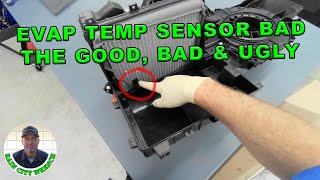
- A/C button may blink when pressed 🎬 Watch: How to diagnose a bad evap temp sensor
- Replacing the A/C compressor
- Recharging the A/C system with refrigerant without proper diagnosis
- Replacing the ambient air temperature sensor (which is located at the front of the vehicle and is a different part)
Most Likely Causes

- Failed A/C Evaporator Temperature Sensor 🔴 High Probability The sensor is a thermistor that can fail over time, sending an out-of-range signal. This is the most common direct cause of the code.
How to confirm: A technician would use a diagnostic scan tool to read live data from the sensor. An illogical reading (e.g., -40°F or 250°F) points to a failed sensor. Confirmation requires accessing the sensor connector to test resistance, which is extremely difficult due to its location inside the HVAC case behind the dashboard. A healthy sensor should have a resistance of approximately 1.38 to 1.64 kΩ at 25°C (77°F).
Typical fix: Replace the A/C evaporator temperature sensor. Due to its location, this involves evacuating the A/C system, draining coolant, and removing the entire instrument panel to access the HVAC plenum.
Est. part cost: $15-$30 - Wiring Harness or Connector Issue 🟡 Medium Probability Wires can become damaged, chafed, or corroded over the vehicle's life, creating an open or a short to power in the sensor circuit. This is less common than sensor failure but possible.
How to confirm: Perform continuity and voltage checks on the wiring between the sensor connector and the HVAC control module (Connector C228A). This is very difficult due to the sensor's location deep within the dashboard and is typically only performed after the dash has already been removed. Check for a solid ground at the relevant ground point, such as G300 located in the left kick panel.
Typical fix: Repair the damaged section of the wiring harness or clean/replace the connector. This is only feasible once the dashboard is removed to gain access.
Est. part cost: $5-$50 for wiring supplies
Rare But Worth Checking
- Faulty HVAC Control Module: While rare, the module that reads the sensor data can fail internally. This should only be considered after the sensor and wiring have been definitively ruled out with 100% certainty, as replacing the module is also expensive and will not fix the code if the sensor or wiring is the true cause.
Diagnosis Steps

- Connect a professional scan tool to read the fault code and view live data from the A/C evaporator temperature sensor.
- Observe the temperature reading from the sensor. A reading that is stuck at an extreme high or low value (e.g., -40°F) strongly suggests a circuit or sensor fault.
- Acknowledge the sensor's location. Further physical diagnosis requires extensive disassembly.
- RECOMMENDED: Take the vehicle to a qualified automotive technician who can confirm the diagnosis before quoting the extensive labor for the repair.
- If proceeding with DIY, obtain a factory service manual. This is not a job to attempt without one.
- Disconnect the battery.
- Evacuate the A/C system using proper recovery equipment.
- Drain the engine coolant.
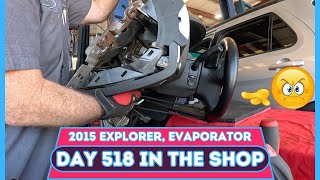
- Begin the process of removing the entire instrument panel/dashboard. 🎬 Watch: Step-by-step dashboard removal and evaporator replacement walkthrough This includes the steering column, center console, airbags, and all associated electronics.
- Once the HVAC case is accessible, locate the sensor and its connector.
- Visually inspect the wiring and connector for any obvious damage.
- Test the sensor's resistance and compare it to the specifications in the service manual. At room temperature (25°C / 77°F), expect a reading between 1.38 and 1.64 kΩ.
- Test the wiring harness for continuity and shorts between the sensor connector and the HVAC module connector C228A.
Parts You'll Likely Need
- A/C Evaporator Temperature Sensor
(OEM #YH-1731)— This sensor is the component that most commonly fails, triggering the P1434 code.
Trusted brands: Motorcraft, Standard Motor Products (SMP), Four Seasons
OEM price range: $20-$35
Aftermarket price range: $15-$25
Technical Service Bulletins (TSBs) & Recalls
- No TSBs have been issued specifically for code P1434. The repair procedure is covered by the standard workshop manual. However, owners should be aware of other significant service campaigns for this platform, such as Customer Satisfaction Program 19N05 for exhaust odor concerns.
Platform-Specific Known Issues
- The primary issue for the 2011-2019 Explorer is the design choice of placing the A/C evaporator temperature sensor in a location that requires full dashboard removal for service. This design is shared with its Ford D4 platform mates, including the Ford Flex and Lincoln MKT. Some reports indicate that Ford may not sell the sensor individually, but as part of the HVAC case, though aftermarket sensors are available. The labor cost for this repair often exceeds $1,500, making it a shockingly expensive fix for a low-cost part.
Mechanic-Grade Diagnostic Values
- A/C Evaporator Temperature Sensor Resistance — expected: Approx. 1.38 to 1.64 kΩ at 25°C (77°F); Approx. 4.40 to 5.35 kΩ at 0°C (32°F). Resistance decreases as temperature increases.. Failure: An open circuit (infinite resistance) or a short circuit (near-zero resistance). A reading that doesn't change with temperature also indicates failure.
Scan Tool Commands That Help
- Ford IDS (Integrated Diagnostic System): Powertrain -> Key-On, Engine-Off (KOEO) Self Test — This is a general health check that forces the vehicle's modules to test their circuits. While it won't isolate the sensor itself, it can be used to verify if the A/C compressor clutch is receiving an electrical signal, helping to rule out other electrical issues in the system before committing to a dash removal.
Wiring & Ground Locations

- C228A — Main electrical connector on the HVAC (Climate Control) Module, located behind the dashboard.. This is the termination point for the evaporator temperature sensor wiring. Technicians must access this connector to test the circuit's continuity from the module side.
- G300 — Behind the left (driver's side) kick panel.. This is a common ground point for multiple interior components. A corroded or loose G300 could potentially cause a high resistance (open) fault on the sensor's ground circuit, leading to a P1434 code.
Real Owner Repair Stories
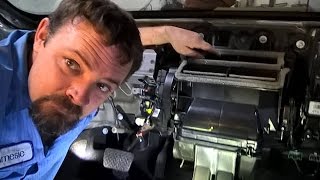
- YouTube channel 'Rain City Wrench' (2017 Ford Explorer) — A/C not working due to an in-range failure of the evaporator temperature sensor (reading too warm, but not setting a code initially).
❌ Tried (didn't work) Initial diagnosis was complicated by the sensor having an in-range failure rather than a hard open/short.
✅ What actually fixed it The entire dashboard was removed to access the HVAC case. The mechanic noted that Ford does not sell just the sensor; they sell it as part of a new climate control housing/evaporator case section. The entire section was replaced to fix the issue. - Reddit user comment in r/fordfusion (Ford Fusion (similar HVAC design principle)) — A/C failure diagnosed as a bad evaporator temperature sensor via FORScan.
❌ Tried (didn't work) Owner was trying to avoid the 10+ hour dash removal procedure.
✅ What actually fixed it A user reported a successful 'hack' method. After removing the glove box, they located a sticker on the HVAC case, drilled a 1.5-inch hole with a hole saw to create an access port, replaced the sensor through the hole, and then sealed the hole with the cut-out piece and HVAC tape. NOTE: This is a high-risk, non-standard repair that could damage the evaporator if done incorrectly.
Model Year Variations Within This Range
- 2011-2019: The 2016 model year introduced a significant facelift with revised exterior styling and some interior control updates. However, there is no evidence that the fundamental design of the HVAC case or the inaccessible location of the evaporator temperature sensor was changed. The problem and repair procedure are consistent across the entire 2011-2019 generation.
Diagnostic Flowchart
Other Known Issues on This Vehicle
Issues unrelated to this code that are worth knowing about as an owner of this generation:
- Internal Water Pump Failure 🔴 High — Commonly occurs between 80,000 and 150,000 miles. When the internal seal fails, it can leak coolant directly into the engine oil, leading to catastrophic engine failure with little warning. (Ref: No recall, but it is a widely documented failure. A lawsuit regarding this issue was dismissed. Repair costs are very high ($2,000-$4,000+).)
- Power Transfer Unit (PTU) Failure (AWD Models) 🔴 High — Commonly fails between 80,000-100,000 miles if the fluid is not changed. Ford specifies 'lifetime' fluid, but owners and independent shops strongly recommend changing it every 30,000 miles to prevent failure. (Ref: No recall. This is considered a maintenance-related failure, though a preventable one. PTU replacement can cost $1,500 or more.)
- Exhaust Fumes / Odor in Cabin 🟠 Medium — Widespread complaints of exhaust smell entering the cabin, particularly under hard acceleration or with the A/C on recirculation. This prompted a major NHTSA investigation. (Ref: Ford Customer Satisfaction Program 19N05 was issued to seal body seams to reduce the potential for exhaust entry, but it was not a formal safety recall.)
- Rear Suspension Toe Link / Knuckle Failure 🔴 High — Affects vehicles primarily in regions with heavy road salt use, leading to corrosion and potential fracture of the rear toe links, causing a loss of steering control. (Ref: Multiple recalls and service programs have been issued, including Safety Recall 21S32 and Customer Satisfaction Program 22N01, to inspect and replace rear suspension components.)
Used vs. New Parts: Buying Guide for This Vehicle
When a used part is the smart pick: For this specific repair, using a salvaged part is almost NEVER a smart choice. The cost of the sensor is negligible ($15-$30) compared to the 10-14 hours of labor ($1500+) required for the installation. The only scenario where a used part might be considered is if you are replacing the entire HVAC box assembly from a very low-mileage donor vehicle due to other damage, and the sensor comes with it.
Donor-vehicle mileage cap: roughly under 20000 miles for the part to have meaningful remaining life.
What to inspect on the donor part:
- Verify the donor vehicle's mileage is extremely low.
- Ensure the donor vehicle was not a flood vehicle, which could compromise all electronics.
- Inspect the HVAC case for any physical cracks or damage before purchase.
OEM-only on this vehicle (don't cheap out):
- While the sensor itself can be sourced from quality aftermarket brands, the extreme labor involved makes using an OEM Motorcraft (YH-1731) part the most prudent choice to minimize the risk of premature failure and having to repeat the repair.
Aftermarket brands forum-validated for this vehicle:
- Motorcraft (OEM)
- Standard Motor Products (SMP)
- Four Seasons
Brands owners have reported issues with on this vehicle:
- Avoid unbranded, no-name parts from online marketplaces. The potential for poor quality control and early failure is not worth the risk given the cost of installation.
Real Owner Stories
Aggregated from forums and TSBs cited above. Mileages and costs reflect what owners reported in those sources.
2017 Ford Explorer 3.7L V6
Symptoms: The evaporator temperature sensor went bad, leading to a discussion on the 'good, bad, and ugly' reality of its location inside the dash.
What fixed it: Replacement of the A/C evaporator temperature sensor, which requires full dash removal.
Source hint: YouTube: 'EVAP TEMP SENSOR BAD - THE GOOD, BAD & UGLY' by Rain City Wrench
2011-2019 Ford Explorer
Symptoms: A/C system does not blow cold air or blows cold air intermittently; Check Engine Light is on.
What fixed it: Replacing the A/C evaporator temperature sensor by evacuating the A/C system, draining coolant, and removing the entire instrument panel to access the HVAC plenum.
Cost: $1,500-$1,800
Source hint: vehicle_specific_issues and Reddit r/Ford citation regarding analogous dash-removal repairs
Related OBD-II Codes
Frequently Asked Questions
Is there a TSB for the A/C evaporator temperature sensor on my 2011-2019 Ford Explorer?
Why is the repair for P1434 so expensive on the Explorer when the sensor is cheap?
Can I use a used sensor from a salvage yard to save money on this repair?
Does the Ford Flex or Lincoln MKT have this same P1434 sensor issue?
What are the resistance specifications for a healthy A/C evaporator temperature sensor on the 3.7L V6 Explorer?
My A/C button is blinking and the air isn't cold; is this related to P1434?
Helpful Videos
Used OEM Parts in Stock




New Aftermarket Parts Available

The information in this article is provided for general reference and educational purposes only. Vehicle specifications, procedures, and part compatibility can vary by production date, trim level, and region. Always consult your vehicle's factory service manual and verify part numbers before purchasing or performing repairs. Safety-critical components such as airbags, seat belts, and braking systems should be installed by a qualified professional.
- Ford Explorer:
- 🎬 Helpful Videos
- 🛍️ Shop This Part
- What's Unique About the 2011-2019 Ford Explorer
- Symptoms You May Notice
- Most Likely Causes
- Rare But Worth Checking
- Diagnosis Steps
- Parts You'll Likely Need
- Technical Service Bulletins (TSBs) & Recalls
- Platform-Specific Known Issues
- Mechanic-Grade Diagnostic Values
- Scan Tool Commands That Help
- Wiring & Ground Locations
- Real Owner Repair Stories
- Model Year Variations Within This Range
- Diagnostic Flowchart
- Other Known Issues on This Vehicle
- Used vs. New Parts: Buying Guide for This Vehicle
- Real Owner Stories
- 2017 Ford Explorer 3.7L V6
- 2011-2019 Ford Explorer
- Related OBD-II Codes
- Frequently Asked Questions
- 🎟️ Get 5% Off