

P1429 on 2017-2019 Volkswagen Tiguan: Brake Vacuum Pump Circuit Fixes
On a 2018-2019 VW Tiguan, code P1429 almost always points to a problem with the electric brake vacuum pump or its wiring. This results in a hard brake pedal. Expect to diagnose an electrical issue, which may lead to replacing the pump.
- P1429 on a 2018-2019 Tiguan means there's an electrical problem with the brake vacuum pump, specifically an 'open circuit'.
- The primary symptom will be a hard brake pedal, making the vehicle difficult and unsafe to stop.
- Do not drive the vehicle more than necessary; braking performance is seriously compromised.
- Diagnosis involves checking the fuse (potentially F17 in the engine bay on some models), wiring, and the pump itself. The pump is the most likely part to have failed.
- This code is almost always seen with P0556; fixing the P1429 fault will resolve both.
- Consider using an OEM or OEM-supplier (Pierburg) replacement pump, as some owners report issues with aftermarket parts for this specific component.
What's Unique About the 2017-2019 Volkswagen TIGUAN
The 2018-2019 Tiguan (second generation, MQB platform) uses an electric vacuum pump to ensure consistent brake assist, a common design on modern turbocharged vehicles. This code is frequently seen alongside P0556 (Brake Booster Pressure Sensor Circuit Range/Performance), as noted in multiple Volkswagen Technical Service Bulletins (TSBs). Essentially, P1429 points to the electrical cause (the pump circuit is open), while P0556 describes the resulting effect (the pressure sensor reports a problem because the pump isn't working). The pump is located on the driver's side of the subframe and is removed from underneath the vehicle.
Diagnostic Flowchart
Tap your situation to follow the diagnostic path that matches what you're seeing on this vehicle.
Generation note: The 2017-2019 model years span two different Tiguan generations in North America. The 2018-2019 models are the second generation (MQB platform). The 2017 model year could be either the first generation or the 'Tiguan Limited' (a continuation of the first gen). The provided TSBs specifically reference 2018 and 2019 models, so this guide is most accurate for the second-generation Tiguan. The first generation Tiguan (through 2017/2018 'Limited' models) often used a mechanical vacuum pump driven by the camshaft, which can have different failure modes like oil leaks.
Symptoms You May Notice
- Check Engine Light is on
- Brake pedal is hard to press
- Increased effort required to stop the vehicle
- Longer stopping distances
- Brake warning lamp may be illuminated on the dashboard
- Unusual whining or clicking noises from the pump area
- Replacing the brake booster pressure sensor (for code P0556) without diagnosing the root cause. The P0556 code is a symptom of the pump not running (P1429).
- Replacing the brake booster itself when the issue is purely electrical with the vacuum pump circuit.
- Using an aftermarket vacuum pump. Some owner experiences suggest that aftermarket pumps can cause continued issues or even damage the control module, necessitating an OEM part for a reliable fix.
Most Likely Causes
- Faulty Brake Vacuum Pump 🔴 High Probability The electric pump can fail internally from wear and tear, causing an open circuit in the motor windings or its integrated electronics. This is the most common failure point for this code.
How to confirm: After confirming power and ground are present at the pump connector, the pump's failure to operate confirms it is faulty. A multimeter can be used to check for continuity within the pump motor itself. You can also try to manually power the pump with a 12V source to see if it runs.
Typical fix: Replace the brake vacuum pump. It is located on the driver's side subframe and accessed from under the car.
Est. part cost: $200-$450 - Wiring Harness or Connector Issue 🟡 Medium Probability Wires leading to the pump, which is mounted low on the subframe, can become damaged from road debris, heat, vibration, or corrosion, leading to an open circuit. The connector itself can also fail.
How to confirm: Visually inspect the wiring harness leading to the vacuum pump for any signs of damage, melting, or corrosion. Use a multimeter to perform a continuity test on the power and ground wires from the fuse/relay panel to the pump connector.
Typical fix: Repair the broken wire or replace the damaged connector pigtail.
Est. part cost: $10-$50 - Blown Fuse or Faulty Relay ⚪ Low Probability A sudden voltage spike or a short in the pump motor can cause the fuse to blow to protect the circuit. A relay can also fail internally.
How to confirm: Locate the fuse for the brake vacuum pump in the vehicle's fuse box and visually inspect it. For a 2018 Tiguan (first gen), this may be fuse F17 (20A) in the engine compartment fuse box, though configurations vary. For second-gen models, check the owner's manual or fuse diagram for 'vacuum pump'. Test the fuse with a multimeter for continuity. If a relay is involved, it can be tested by swapping with a known good relay or by checking its operation manually.
Typical fix: Replace the blown fuse or faulty relay. If the fuse blows again immediately, there is an underlying short circuit that must be found.
Est. part cost: $1-$25
Diagnosis Steps
- Scan the vehicle for all OBD-II codes. Note if P1429 is present with P0556, which is highly likely.
- Check the specific fuse for the brake vacuum pump circuit. On some 2018 models, this may be a 20A fuse in position F17 in the engine bay fuse box, but always verify with your vehicle's specific diagram. Replace if blown.
- If the fuse is good, safely raise the vehicle. The pump is located on the driver's side subframe. Visually inspect its electrical connector and nearby wiring for any obvious damage, corrosion, or loose connections.
- Disconnect the pump and use a multimeter to check for 12V power and a solid ground at the connector. The pump is activated by the ECM when vacuum is low, which can be simulated by pumping the brake pedal several times with the engine running.
- If power and ground are present but the pump does not run, the vacuum pump has failed internally and needs replacement.
- If power or ground is missing, there is an open circuit in the wiring harness between the fuse/relay and the pump. Trace the wiring to find and repair the break.
- After repair, clear all fault codes and perform a test drive. Deplete and allow the vacuum to rebuild by pressing the brake pedal several times to confirm the pump is activating and the pedal feel is normal.
Parts You'll Likely Need
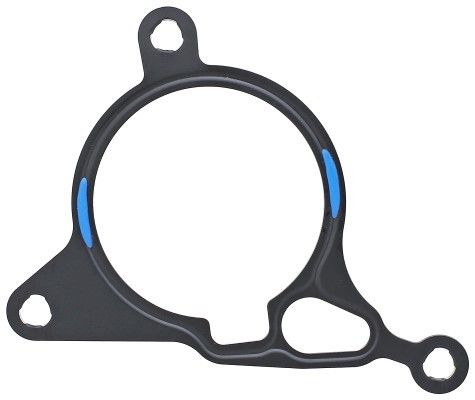
- Electric Brake Vacuum Pump
(OEM #5Q0906115A (Verify with VIN))— This is the most common point of failure for this code, as the internal motor can wear out or fail electrically, causing the 'open circuit' condition.
Trusted brands: Pierburg (OEM supplier), Bosch, ATE, Genuine VW
OEM price range: $350-$500
Aftermarket price range: $200-$400
Related Codes That Often Appear With This One
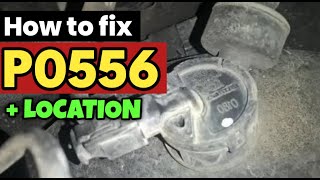
- P0556 — P0556 (Brake Booster Pressure Sensor Circuit Range/Performance) is triggered because the vacuum pump (faulty due to P1429) is not creating vacuum, causing the pressure sensor to report an out-of-range reading. The TSBs for this vehicle explicitly link these two codes. 🎬 Watch: Understanding the P0556 code and how it relates to your brakes. Fixing the P1429 fault by restoring power to the pump will resolve both codes.
Technical Service Bulletins (TSBs) & Recalls
- VIN4APIN20191122: An informational TSB for technicians noting customer complaints of MIL-on with P1429 and/or P0556 for 2019 models.
- VIN4APIN20190906: An informational TSB for technicians noting customer complaints of MIL-on with P1429 and/or P0556 for 2018 models.
- VIN4APIN20190617: An informational TSB for technicians noting customer complaints of MIL-on with P1429 and/or P0556 for 2019 models.
- TT 01-16-04 (for Jetta, but relevant): Notes that for P0556, the cause is typically the vacuum pump or its relay, and provides a manual test procedure.
Platform-Specific Known Issues
- Volkswagen has issued multiple Technical Service Bulletins (TSBs) that group P1429 and P0556 together for the 2018-2019 Tiguan, indicating this is a recognized issue on the platform.
- Some owners have reported that using aftermarket (non-OEM) vacuum pumps can lead to persistent codes or even cause damage to control modules, making the use of a Genuine VW or OEM-supplier part (like Pierburg) advisable.
Mechanic-Grade Diagnostic Values
- Brake Booster Vacuum Level — expected: 18-21 inches of Mercury (Hg). Failure: Vacuum levels below 18" Hg indicate a leak in the system or a poorly performing pump.
- Pump Motor Current Draw — expected: Approximately 6-10 Amps when active. Failure: Zero amps indicates an open circuit; significantly higher amps could indicate a short or seized motor, which would likely blow the fuse.
- Pump Connector Pin Voltage — expected: One pin should have 12V+ (battery voltage), one should have continuity to ground, and a third may be a signal wire from the ECM.. Failure: Absence of 12V or a good ground points to a wiring issue upstream of the pump.
Hidden / Shadow Codes Worth Checking
- 17837: This is the VAG-specific fault code number that corresponds to the generic OBD-II code P1429. It means 'Circuit for Brake Vacuum Pump: Open Circuit'. (see via Volkswagen/Audi specific scan tools like VCDS (Vag-Com) or ODIS will display this code.)
Scan Tool Commands That Help
- VCDS (VAG-COM): Output Test for Brake Vacuum Pump — This is a critical diagnostic step to confirm if the ECM can command the pump to turn on. If the pump runs during this test, the pump itself is likely good, and the problem may lie with the pressure sensor or related inputs. The path is typically: [01 - Engine Electronics] -> [03 - Output Tests] or [Basic Settings], then cycle through until you find the vacuum pump test.
- Generic OBD-II Scanner with Bidirectional Control: ABS Pump Motor Test / Vacuum Pump Activation — Used to manually activate the pump motor to check its operation without needing to simulate low vacuum. This helps isolate the problem between the pump itself and the control circuit.
Wiring & Ground Locations
- Ground Point 12 — In the engine compartment on the left side (driver's side for LHD vehicles).. This is a primary ground location in the engine bay. A corroded or loose connection here can cause an open circuit for any component grounded at this point, including potentially the vacuum pump circuit.
- Ground Point 640 — Engine compartment, left side.. Mentioned specifically in a Tiguan wiring diagram, this is another critical ground point to inspect when diagnosing an open circuit (P1429). A poor ground is a common cause of electrical faults.
- Ground Point 44 — Lower part of the left A-pillar, inside the cabin.. While less likely to be the direct ground for the pump, control modules related to the brake system may be grounded here. An issue at this point could interrupt the signal to activate the pump.
- Pump Connector — On the electric vacuum pump itself, located on the driver's side subframe.. The connector has three pins: power, ground, and a control signal. This is the primary point for testing voltage and ground to determine if the fault is in the pump or the upstream wiring.
Real Owner Repair Stories
- YouTube channel 'monkey mechanics' (Audi A1 (uses a similar VAG electric vacuum pump system)) — Fault code P142900 (Brake vacuum pump activation open circuit).
❌ Tried (didn't work) Initially testing the pump showed it had failed.
✅ What actually fixed it After replacing the pump, there was still no power at the connector. The technician then found a blown fuse. The final fix required replacing both the failed vacuum pump (V192) and the associated blown fuse. - Reddit user in r/AskAMechanic (2018 VW Tiguan, 76,000 miles) — EPC light, shuddering, loss of power. While not P1429, the root cause is highly relevant.
❌ Tried (didn't work) Replacing the battery for a low voltage code (U3501).
✅ What actually fixed it The final diagnosis was a bad fuel injection wiring harness. The fact that the VW dealer had the harness in stock suggested it was a common failure item. This highlights that wiring harness degradation is a known issue on this platform and can be a root cause for electrical faults.
Helpful Videos
Used OEM Parts in Stock

New Aftermarket Parts Available

The information in this article is provided for general reference and educational purposes only. Vehicle specifications, procedures, and part compatibility can vary by production date, trim level, and region. Always consult your vehicle's factory service manual and verify part numbers before purchasing or performing repairs. Safety-critical components such as airbags, seat belts, and braking systems should be installed by a qualified professional.
- Volkswagen TIGUAN:
- 🎬 Helpful Videos
- 🛍️ Shop This Part
- What's Unique About the 2017-2019 Volkswagen TIGUAN
- Diagnostic Flowchart
- Symptoms You May Notice
- Most Likely Causes
- Diagnosis Steps
- Parts You'll Likely Need
- Related Codes That Often Appear With This One
- Technical Service Bulletins (TSBs) & Recalls
- Platform-Specific Known Issues
- Mechanic-Grade Diagnostic Values
- Hidden / Shadow Codes Worth Checking
- Scan Tool Commands That Help
- Wiring & Ground Locations
- Real Owner Repair Stories
- 🎟️ Get 5% Off