

P1429 on 2018-2019 Volkswagen Jetta: Brake Vacuum Pump Circuit Fixes
On a 2018-2019 VW Jetta, code P1429 indicates an open circuit for the brake vacuum pump. This is almost always seen with code P0556. The most common fix is replacing a faulty brake booster pressure sensor (OEM Part # 5Q0906207 or 5Q0906207B). Other causes include a blown 15A fuse (F31 in the engine bay fuse box for the A7 Jetta) or damaged wiring.
- P1429 on a VW Jetta means there's an electrical open circuit in the brake vacuum pump system.
- This code is almost always seen with P0556; they should be diagnosed together.
- The most likely cause is a faulty brake booster pressure sensor, followed by a blown fuse or wiring issue.
- Driving with this code can be unsafe as it may lead to reduced braking power.
- Diagnosis can be complex because the pressure sensor is a 'smart' digital component, not a simple analog one.
What's Unique About the 2018-2019 Volkswagen JETTA

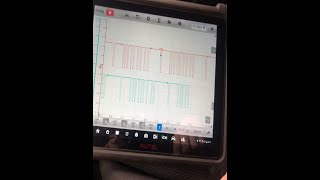
The 2018-2019 Jetta model years span two different generations: the A6 (2018) and the A7 (2019), which is built on VW's newer MQB platform. The issue of brake booster pressure sensor faults is common across modern VW MQB platforms like the Golf, Tiguan, and Audi A3. The provided NHTSA technical service bulletins specifically reference the 2019 model year, indicating a known issue on the A7 platform where this code appears alongside P0556. A diagnostic video on a 2019 Jetta with a 1.4L engine confirms that the brake booster pressure sensor (G294) is a 'smart sensor' that sends a digital SENT protocol signal, not a simple analog voltage. This makes diagnosis with a standard multimeter misleading, as the signal must be evaluated with an oscilloscope to see the digital message pattern.
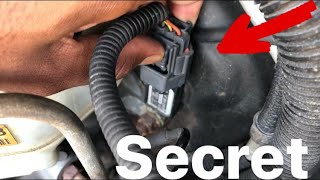
🎬 Watch: Diagnostic summary of the P0556 code on a 2019 JettaDiagnostic Flowchart
Tap your situation to follow the diagnostic path that matches what you're seeing on this vehicle.
Generation note: This range covers the end of the A6 generation (2018) and the beginning of the A7 generation (2019). While the TSBs specifically mention 2019 models, the underlying components and codes (P1429 and P0556) are relevant to both generations and other modern VWs on the MQB platform. The A7 Jetta (2019+) has a specific fuse location for the vacuum pump in the engine bay fuse box.
Symptoms You May Notice
- Check Engine Light (MIL) is on.
- Brake warning light may be illuminated on the instrument cluster.
- A harder-than-normal brake pedal, requiring more physical effort.
- Increased stopping distances.
- Hissing noise from the brake booster area when the pedal is pressed or released.
- Intermittent change in brake pedal feel from normal to hard.
- Replacing the brake booster itself when the issue is with the auxiliary vacuum pump, sensor, or wiring.
- Replacing the brake vacuum pump when the actual fault is the much cheaper and more common brake booster pressure sensor.
- Relying solely on multimeter voltage readings to test the 'smart' pressure sensor, which can lead to incorrect conclusions.
Most Likely Causes

- Faulty Brake Booster Pressure Sensor (G294) 🔴 High Probability This code is frequently paired with P0556, which directly implicates the Brake Booster Pressure Sensor circuit. Forum and video evidence for 2019 Jettas points to this sensor failing and causing these codes. The sensor is a known failure point across the VW MQB platform.
How to confirm: A mechanic can monitor the sensor's data with a scan tool, but live data may appear normal even with a faulty sensor. On this Jetta, it's a 'smart sensor' that sends digital messages. The best confirmation is with an oscilloscope to check for a malformed digital signal pattern. Swapping with a known-good sensor (OEM Part # 5Q0906207B) is a reliable diagnostic step.
Typical fix: Replace the brake booster pressure sensor. It is often sold as part of a vacuum line assembly.
Est. part cost: $50-$150 - Blown Fuse 🟡 Medium Probability An electrical fault in the vacuum pump or its wiring can cause the associated fuse to blow as a protective measure.
How to confirm: For the 2019+ A7 Jetta, locate fuse F31 (15A) in the engine bay fuse box and visually inspect it or test for continuity. For the 2018 A6 Jetta, the fuse may be in a different location (e.g., F26 in the cabin fuse box on some earlier models), so consulting the owner's manual or a specific diagram is necessary.
Typical fix: Replace the blown fuse. If the fuse blows again, further diagnosis of the vacuum pump motor and its wiring is required to find the short circuit.
Est. part cost: $1-$5 - Damaged Wiring or Loose Connection 🟡 Medium Probability The wiring harness to the sensor or pump can become chafed or damaged from engine vibration. The vacuum lines themselves can also crack or get rubbed through, causing a vacuum leak that may trigger the related P0556 code. Connectors can also become loose or corroded.
How to confirm: Visually inspect the wiring harness and connector going to the brake vacuum pump and the brake booster pressure sensor for any signs of damage, corrosion, or looseness. Pay close attention to where the harness may rub against other components.
Typical fix: Repair the damaged section of the wiring harness or clean/re-secure the connector. Replace cracked vacuum lines.
Est. part cost: $5-$100 - Failed Brake Vacuum Pump (V192) ⚪ Low Probability While less common than sensor or electrical issues, the pump motor itself can fail, creating an open circuit and blowing a fuse. A Reddit user's experience showed that using an aftermarket pump caused further issues with the control module, highlighting the importance of using OEM parts.
How to confirm: Attempt to activate the pump using a bidirectional scan tool (this function may not be available). If it doesn't run, test for power and ground at the pump's connector with a multimeter. If power and ground are present but the pump doesn't run, the pump has failed.
Typical fix: Replace the brake vacuum pump. It is highly recommended to use a genuine OEM part to avoid compatibility issues.
Est. part cost: $200-$450
Rare But Worth Checking
- Faulty Engine Control Module (ECM):
Diagnosis Steps

- Scan the vehicle for all stored trouble codes. Note if P1429 is present with P0556, which is highly likely.
- Check the fuse for the brake vacuum pump. For a 2019+ Jetta A7, this is fuse F31 (15A) in the engine compartment fuse box. Replace if blown and re-test.
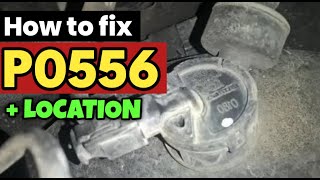
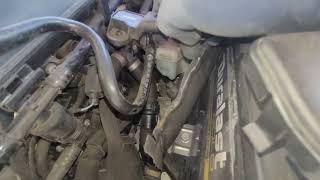
- Visually inspect the wiring and connector at the brake booster pressure sensor (G294). It is located on a vacuum line near the brake fluid reservoir on the driver's side firewall. Check for chafing, breaks, or corrosion.
- Inspect the vacuum lines connected to the sensor and pump for cracks, rubbing, or damage.
- Inspect the wiring and connector at the brake vacuum pump itself.
- If wiring and fuses are good, the pressure sensor is the primary suspect. While a scan tool can read pressure, the data can be misleading. The most definitive test is using an oscilloscope to verify the digital signal pattern from the sensor's signal wire.
- As a practical alternative to an oscilloscope, replacing the Brake Booster Pressure Sensor (OEM # 5Q0906207B) is a common and effective fix.
- If the sensor is replaced and the code persists (or the fuse blows repeatedly), test the vacuum pump circuit. Check for 12V power and good ground at the pump connector. If power and ground are present but the pump does not activate (can be commanded via scan tool or manually), the pump has likely failed.
Parts You'll Likely Need

- Brake Booster Pressure Sensor
(OEM #5Q0906207B (replaces 5Q0906207A, 5Q0906207))— This sensor is the most frequent failure point that triggers both P1429 and the commonly associated P0556 code on this platform.
Trusted brands: Genuine VW/Audi, Bosch
OEM price range: $90-$150
Aftermarket price range: $50-$100 - Brake System Vacuum Pump — If the pump motor itself fails, it will create an open circuit and trigger this code, often blowing a fuse as well. Failure is less common than the sensor.
Trusted brands: Pierburg, Genuine VW/Audi
OEM price range: $300-$450
Aftermarket price range: $200-$350 - Fuse - 15A
(OEM #N01713112)— A short in the pump or wiring will blow the protective fuse, which must be replaced after the underlying fault is corrected.
Trusted brands: Genuine VW, Littelfuse
OEM price range: $1-$3
Aftermarket price range: <$1
Related Codes That Often Appear With This One
- P0556 — P0556 indicates a 'Brake Booster Pressure Sensor Circuit Range/Performance' issue. The NHTSA TSBs for the 2019 Jetta explicitly link P1429 and P0556, suggesting they are triggered by the same root cause. The P1429 'open circuit' fault is often a direct result of the ECM detecting a problem reported by the pressure sensor's circuit.
Technical Service Bulletins (TSBs) & Recalls
- VIN4APIN20191122: Notes customer complaints of MIL-on with P1429 and/or P0556.
- VIN4APIN20190906: Notes customer complaints of MIL-on with P1429 and/or P0556.
- VIN4APIN20190617: Notes customer complaints of MIL-on with P1429 and/or P0556.
- VW TSB 01-16-04 (NHTSA ID MC-10123383-9999): While for the Jetta Hybrid, it details a similar diagnostic process for P0556, focusing on testing the vacuum pump and its relay, showing this is a common diagnostic pattern for VW.
Platform-Specific Known Issues
- Multiple Technical Service Bulletins (TSBs) exist for the 2019 Jetta mentioning customers reporting the Malfunction Indicator Lamp (MIL) on with codes P1429 and/or P0556, indicating this is a recognized issue by the manufacturer.
- Owner Experience: Aftermarket Pump Complications: A 2019 Jetta owner on Reddit reported a lengthy and expensive repair saga. A local mechanic first replaced the vacuum pump with an aftermarket part, which did not solve the P0556 code. The vehicle was then taken to a dealership, where they discovered the aftermarket pump had damaged the control module, necessitating the replacement of both components.
Mechanic-Grade Diagnostic Values
- Brake Booster Pressure Sensor (G294) Signal — expected: A digital SENT protocol signal, not a simple analog voltage. It consists of a 5V-0V square wave where the time between falling edges represents data. The fundamental time unit ('tick') is typically ~3µs, derived from a 56-tick calibration pulse.. Failure: On an oscilloscope, a faulty sensor may show a malformed digital pattern, such as incorrect spacing or gaps between pulses, even if scan tool live data appears normal.
- Scan Tool Live Data - Brake Booster Pressure — expected: With the key on and engine off, the pressure should read atmospheric pressure (approx. 14.4 PSI). With the engine running, it should show vacuum (e.g., approx. 6 PSI). The value should increase towards atmospheric pressure as the brake pedal is depressed.. Failure: This data can be misleading. A faulty sensor can still report plausible pressure changes that appear correct on a scan tool, yet still set a code because the underlying digital signal is corrupt.
Hidden / Shadow Codes Worth Checking
- 06418: Pressure sensor for brake booster, open circuit/short circuit. This appears to be a manufacturer-specific or tool-specific equivalent of P1429. (see via Reported by a user with a diagnostic tool reading engine codes.)
Scan Tool Commands That Help
- VCDS (VAG-COM): Output Test - Function 03 — To manually activate the Brake System Vacuum Pump (V192) to confirm if the pump motor is functional. This helps isolate the problem to the pump itself versus the control circuit.
- VCDS (VAG-COM): Basic Settings - Group 008 — On some models, this can initiate a self-test of the brake boost vacuum system. This may require pumping the brake pedal to activate.
- VCDS (VAG-COM): Selective Output Tests — A more advanced function on newer modules that allows direct activation of a specific component like the vacuum pump without cycling through a sequence. However, this is NOT supported for the pump on some 1.4L CZTA engines, requiring manual testing instead.
Wiring & Ground Locations

- Main Engine Bay Ground Point — On MQB platform vehicles like the Jetta A7, a primary ground point with multiple brown wires is located on the firewall (bulkhead), above and behind the battery.. A poor ground connection for the brake vacuum pump or sensor circuit can cause an open circuit or implausible signal, triggering a P1429 or related fault.
- Brake Booster Pressure Sensor (G294) Connector — On the 2019 Jetta, the sensor is located on a vacuum line near the brake fluid reservoir, on the driver's side of the engine bay firewall.. This connector is a common point of failure. Checking for a loose connection, corrosion, or damaged pins is a key diagnostic step.
- Fuse F31 (A7) / F26 (A6) — For the 2019+ A7 Jetta, fuse F31 (15A) is in the engine bay fuse box. For the 2018 A6 Jetta, the fuse may be F26 (15A) in the interior fuse panel under the dashboard.. This fuse directly powers the brake vacuum pump. An open circuit will be detected if this fuse is blown.
Real Owner Repair Stories
- Reddit user in r/mechanic (2019 VW Jetta 1.4L with 6-speed manual) — Check engine light with code P0556.
❌ Tried (didn't work) A local mechanic replaced the brake booster vacuum pump with an aftermarket part; the check engine light remained., The same mechanic then replaced the brake booster sensor; this also did not fix the issue.
✅ What actually fixed it The car was taken to a VW dealership. They determined the aftermarket brake boost pump had 'fried the control module'. The final repair was replacing the control module and the aftermarket pump with a genuine OEM pump. - The Keeney Garage (YouTube) (2019 VW Jetta 1.4L) — Check engine light with code P0556, which would set every time the brake pedal was pressed.
❌ Tried (didn't work) Observing live data with a scan tool was misleading, as the pressure values from the faulty sensor appeared to be responding correctly.
✅ What actually fixed it Diagnosis with an oscilloscope revealed a malformed digital SENT protocol signal from the brake booster pressure sensor. Replacing the sensor (G294) with a new one resolved the issue, and the new sensor produced a clean waveform.
"I Checked Everything" — The Actual Cause
- While not a smoke test, a similar pattern exists for this code: standard electronic diagnostics using scan tool live data can be misleading. In a documented case on a 2019 Jetta, the brake booster pressure sensor was reporting plausible pressure values that changed with pedal input, making it appear functional. The actual root cause was a corrupted digital signal (SENT protocol) from the sensor that was only detectable with an oscilloscope.
OEM Part Supersession History
5Q0906207, 5Q0906207A→5Q0906207B— Standard part revision and improvement by the manufacturer.
Model Year Variations Within This Range
- 2018 (A6) vs 2019 (A7): The fuse location for the brake vacuum pump is different. On the 2019+ A7 Jetta, it is fuse F31 (15A) in the engine bay fuse box. On the earlier A6 platform, it is commonly fuse F26 (15A) in the interior fuse panel.
- 2016-2018 (1.4T CZTA Engine): For the related P0556 code, a Technical Service Bulletin (01-18-09) exists for 2016-2017 models suggesting an engine control module software update may be required. This could potentially apply to early 2018 models as well.
- 2015+ (1.4T CZTA Engine): Unlike some other VW engines, the ECU for the 1.4L CZTA engine does not support bidirectional output tests or basic settings for the brake vacuum pump via VCDS. This forces a manual diagnosis of the pump and its circuit.
Helpful Videos
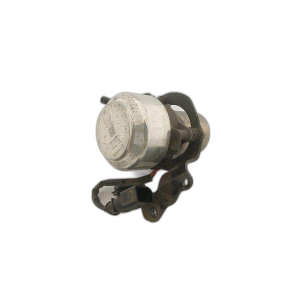
Used OEM Parts in Stock



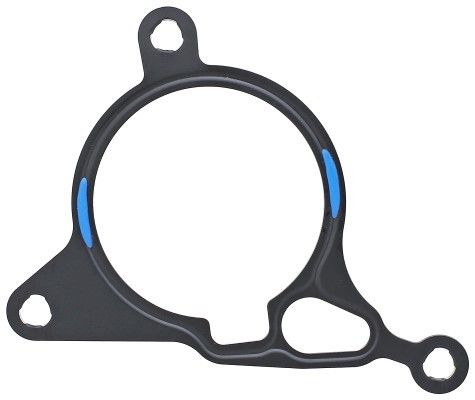
New Aftermarket Parts Available



The information in this article is provided for general reference and educational purposes only. Vehicle specifications, procedures, and part compatibility can vary by production date, trim level, and region. Always consult your vehicle's factory service manual and verify part numbers before purchasing or performing repairs. Safety-critical components such as airbags, seat belts, and braking systems should be installed by a qualified professional.
- Volkswagen JETTA:
- 🎬 Helpful Videos
- 🛍️ Shop This Part
- What's Unique About the 2018-2019 Volkswagen JETTA
- Diagnostic Flowchart
- Symptoms You May Notice
- Most Likely Causes
- Rare But Worth Checking
- Diagnosis Steps
- Parts You'll Likely Need
- Related Codes That Often Appear With This One
- Technical Service Bulletins (TSBs) & Recalls
- Platform-Specific Known Issues
- Mechanic-Grade Diagnostic Values
- Hidden / Shadow Codes Worth Checking
- Scan Tool Commands That Help
- Wiring & Ground Locations
- Real Owner Repair Stories
- "I Checked Everything" — The Actual Cause
- OEM Part Supersession History
- Model Year Variations Within This Range
- 🎟️ Get 5% Off