

P1429 on 2019 Volkswagen GTI: Brake Vacuum Pump Failure Causes & Fixes
On a 2019 VW GTI, code P1429 almost always means the electric brake vacuum pump has failed or its circuit is open. This is a critical safety issue causing a hard brake pedal and disabling driver assists like ACC. Expect to pay $300-$500 for a new OEM-quality pump, plus 1-2 hours of labor. Checking the fuse first is a wise, though often temporary, step.
- P1429 on a 2019 GTI points directly to an electrical problem with the auxiliary brake vacuum pump.
- This is a serious safety issue that results in a hard brake pedal and increased stopping distances. Do not ignore this code.
- The most common cause is a failed electric vacuum pump, which often blows its dedicated 15A fuse (F31 in engine bay) when it fails.
- Always check the fuse first, but be prepared to replace the pump itself as it is the likely root cause.
- Code P0556 is a common companion code and is a symptom of the problem identified by P1429.
What's Unique About the 2019-2019 Volkswagen GTI
The 2019 GTI, part of the Mk7.5 generation, uses the EA888 Gen 3 engine, which relies on an auxiliary electric vacuum pump to provide consistent power brake assist. This is a departure from older, naturally-aspirated cars that used engine vacuum alone. While reliable, this electric pump and its wiring are a specific point of failure that can lead to this code and a sudden loss of power brake assist. This issue is common across the VW/Audi MQB platform, affecting models like the Golf R, Audi A3, and Tiguan which share this powertrain. The failure often disables related safety systems like Adaptive Cruise Control (ACC) and Front Assist, generating additional warnings on the dashboard.
Diagnostic Flowchart
Tap your situation to follow the diagnostic path that matches what you're seeing on this vehicle.
Symptoms You May Notice
- Check Engine Light (MIL) is on.
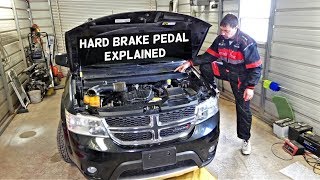
- A hard brake pedal that requires significantly more physical effort to depress, especially after one or two applications. 🎬 See this video on common hard brake pedal causes.
- Noticeably longer stopping distances.
- A red flashing brake warning light on the dashboard may also be present.
- Dashboard message 'ACC and Front Assist not available'.
- The electric vacuum pump is silent when it should be running (e.g., on startup or after repeated brake applications).
- Replacing the brake booster pressure sensor (which typically sets code P0556) without first checking the vacuum pump and its circuit. A bad pump is the root cause of the sensor reporting a performance issue, as it correctly detects the lack of vacuum.
Most Likely Causes
- Failed Electric Brake Vacuum Pump 🔴 High Probability The pump is a mechanical component with a finite lifespan that can fail internally due to wear on its motor or vanes, causing an open circuit and often blowing its fuse. It is the most common point of failure for this code across the EA888 engine family.
How to confirm: A technician can attempt to activate the pump with a diagnostic scan tool (like VCDS). If it doesn't run, and power/ground are confirmed at the connector with a multimeter, the pump is faulty. Often, a seized pump will blow the fuse instantly upon replacement.
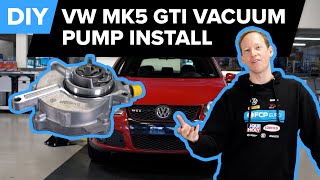
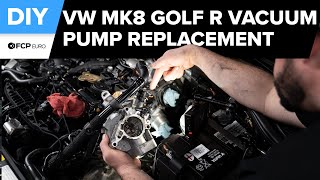
Typical fix: Replace the electric brake vacuum pump and any associated blown fuses. The OEM supplier is often Pierburg. 🎬 Watch: Step-by-step guide to replacing the electric vacuum pump.
Est. part cost: $250-$500 - Blown Fuse for Vacuum Pump 🟡 Medium Probability A failing or seized vacuum pump can draw excessive current, causing its dedicated fuse to blow as a protective measure. This is more often a symptom of a bad pump than a standalone cause.
How to confirm: Locate and visually inspect the fuse for the brake vacuum pump. For the Mk7/7.5 GTI, this is often fuse F31 (a 15A fuse) in the engine bay fuse box. A blown fuse will have a broken internal filament.
Typical fix: Replace the fuse. However, it is critical to determine *why* the fuse blew. If it blows again immediately, the pump is shorted and must be replaced.
Est. part cost: $1-$5 - Damaged Wiring or Connector ⚪ Low Probability The wiring harness leading to the vacuum pump, located in the engine bay, can be susceptible to damage from road debris, engine heat, or corrosion over time, leading to an open or shorted circuit.
How to confirm: Visually inspect the wiring harness and the two-pin connector at the pump for any signs of breaks, chafing, melting, or corrosion. Use a multimeter to check for continuity from the fuse box and for proper voltage at the pump's electrical connector when commanded on.
Typical fix: Repair the damaged section of the wiring harness or replace the connector pigtail.
Est. part cost: $10-$50
Rare But Worth Checking
- Faulty Relay:
Diagnosis Steps
- Scan the vehicle for all diagnostic trouble codes. Note if P1429 is present with P0556, which is a strong indicator of this specific issue.
- Locate the engine bay fuse box. Check the fuse for the brake vacuum pump (typically F31, a 15A fuse). If it is blown, replace it and see if it blows again upon startup or when commanding the pump on. If it does, a short circuit exists, almost certainly in the pump itself.
- If the fuse is good, visually inspect the wiring and electrical connector at the vacuum pump for any visible damage, looseness, or corrosion.
- Using a capable scan tool (VCDS, OBDeleven), navigate to the engine control module and attempt to run the output diagnostic test for the Brake Vacuum Pump (V192). Listen for any sound from the pump.
- If the pump does not activate, disconnect the connector and use a multimeter to test for battery voltage and ground at the connector pins when the pump is commanded on. The pump requires a solid power and ground to operate.
- If voltage and ground are present but the pump does not run, the vacuum pump has failed internally and must be replaced.
- If voltage is not present at the connector, check the vacuum pump relay (often R1 in the engine bay fuse box) and trace the wiring back from the pump to diagnose the open circuit in the harness or a potential control module issue.
Parts You'll Likely Need
- Electric Brake Vacuum Pump
(OEM #06L145100B, 06L145100F)— This is the component that most commonly fails, leading to the P1429 open circuit code. Part number 06L145100F is a common supersession to the original part.
Trusted brands: Pierburg (OEM supplier), Bosch, Hella
OEM price range: $400-$500
Aftermarket price range: $250-$350
Related Codes That Often Appear With This One
- P0556 — P0556 indicates a 'Brake Booster Pressure Sensor Circuit Range/Performance' issue. This code is often triggered alongside P1429 because the sensor is correctly detecting the lack of vacuum being generated by the failed or inoperative electric vacuum pump. The NHTSA TSB VIN4APIN20191122 specifically links these two codes.
Technical Service Bulletins (TSBs) & Recalls
- VIN4APIN20191122: Mentions customer complaints of the Malfunction Indicator Lamp (MIL) being on with DTC P1429 and/or P0556 stored in the ECU.
Platform-Specific Known Issues
- The provided NHTSA Technical Service Bulletin (VIN4APIN20191122) for the 2019 GTI explicitly groups P1429 with P0556, confirming the relationship between the vacuum pump circuit and the pressure sensor performance codes on this platform.
- Owner experiences on forums like golfmk6.com confirm that a sudden, complete failure of the pump is possible, leading to an immediate hard pedal and loss of braking assistance.
Mechanic-Grade Diagnostic Values
- Electric Vacuum Pump Motor Resistance — expected: A specific resistance value for a known-good pump is not published; the test is typically for failure.. Failure: A multimeter test across the two pins of the pump motor should show an open loop (infinite resistance or 'OL') if the motor's internal circuit has failed.
- Voltage at Pump Connector — expected: Battery voltage (approx. 12V) should be present at the 2-pin connector when the pump is commanded on by the ECU (e.g., during startup or after repeated pedal presses).. Failure: Less than battery voltage indicates a problem in the wiring, fuse, or relay upstream of the pump.
Scan Tool Commands That Help
- VCDS (VAG-COM) or OBDeleven: Output Diagnostic Test Mode (DTM) for Brake Vacuum Pump (V192) — This command, typically found under the '01-Engine' control module, directly tells the pump to activate. It is the primary way to test if the pump runs when commanded, separating a pump failure from a sensor or logic issue.
Wiring & Ground Locations
- Fuse F31 — In the engine bay fuse box, located next to the battery.. This 15A fuse is the primary protection for the vacuum pump circuit. A blown fuse is a common symptom of a seized pump drawing too much current.
- Relay R1 — In the fascia (interior) fuse box, located on the driver's side of the dashboard.. This relay switches power to the vacuum pump. While less common to fail than the pump or fuse, a faulty relay will prevent the pump from receiving power.
- Pump Connector — A 2-pin electrical connector directly on the electric brake vacuum pump assembly in the engine bay.. This is the final point in the circuit before the load (the pump). Testing for power and ground here is the most direct way to isolate the fault to either the pump itself or the upstream wiring/fuse/relay.
- Ground Point 85 — A common ground connection point in the main engine compartment wiring harness.. A corroded or loose main ground connection for the engine harness can cause an intermittent or total failure of high-draw components like the vacuum pump, leading to an open circuit fault.
Real Owner Repair Stories
- Reddit user nazzareno1535 on r/mechanic (2019 VW Jetta 1.4L (uses similar EA888 component family)) — Check Engine Light with code P0556 (often paired with P1429).
❌ Tried (didn't work) Replacing the brake booster vacuum pump with an aftermarket part., Replacing the brake booster pressure sensor.
✅ What actually fixed it The vehicle was taken to a VW dealership, which found the aftermarket pump was incompatible and had damaged the control module. The final repair required replacing the aftermarket pump with a Genuine VW pump AND replacing the fried control module.
OEM Part Supersession History
06L145100B→06L145100F, 06L145100N— Part revision and improvement by the manufacturer.
Heads up: Use of non-genuine (aftermarket) pumps is highly discouraged. There are documented cases where an incompatible aftermarket pump caused damage to the vehicle's control module, leading to a much more complex and expensive repair.
Helpful Videos


Used OEM Parts in Stock

New Aftermarket Parts Available


The information in this article is provided for general reference and educational purposes only. Vehicle specifications, procedures, and part compatibility can vary by production date, trim level, and region. Always consult your vehicle's factory service manual and verify part numbers before purchasing or performing repairs. Safety-critical components such as airbags, seat belts, and braking systems should be installed by a qualified professional.
- Volkswagen GTI:
- 🎬 Helpful Videos
- 🛍️ Shop This Part
- What's Unique About the 2019-2019 Volkswagen GTI
- Diagnostic Flowchart
- Symptoms You May Notice
- Most Likely Causes
- Rare But Worth Checking
- Diagnosis Steps
- Parts You'll Likely Need
- Related Codes That Often Appear With This One
- Technical Service Bulletins (TSBs) & Recalls
- Platform-Specific Known Issues
- Mechanic-Grade Diagnostic Values
- Scan Tool Commands That Help
- Wiring & Ground Locations
- Real Owner Repair Stories
- OEM Part Supersession History
- 🎟️ Get 5% Off