

P1429 on 2016-2019 Volkswagen Golf: Brake Vacuum Pump Circuit Fault Causes and Fixes
Code P1429 on a 2016-2019 VW Golf indicates an electrical fault in the brake vacuum pump circuit. The most common causes are a damaged wire at the pump's connector or a blown fuse. This is a serious issue that affects braking performance and should be addressed immediately.
- P1429 on a VW Golf means there's an electrical problem with the brake vacuum pump, not necessarily a mechanical one.
- Do not drive the vehicle. This code indicates a serious safety issue that could result in a loss of power braking.
- Before replacing the expensive vacuum pump, always check the F31 fuse and the wiring harness at the pump's connector first, as a broken wire at the connector is the most common and cheapest failure point.
- This code is often accompanied by P0556; fixing the P1429 issue will typically resolve both codes.
What's Unique About the 2016-2019 Volkswagen GOLF
For the Mk7 Golf and its platform mates (like the Audi A3), this code is often linked with P0556 (Brake Booster Pressure Sensor Implausible Signal), as noted in several Volkswagen Technical Service Bulletins (TSBs). The systems are codependent; if the pump's electrical circuit fails (P1429), the pressure sensor will report an abnormal reading (P0556). Additionally, earlier models in this generation (2015-2016) were part of a recall where the camshaft lobe driving the mechanical vacuum pump could fail, highlighting that the brake vacuum system is a known area of concern for these vehicles. The issue of a broken wire at the pump connector is widely documented in owner forums for the Golf and related models.
Diagnostic Flowchart
Tap your situation to follow the diagnostic path that matches what you're seeing on this vehicle.
Symptoms You May Notice
- Check Engine Light is on
- Stiff or hard brake pedal
- Increased braking distance
- Brake warning light on the dashboard
- ABS and Traction Control (ESC) lights may also illuminate
- Replacing the brake booster pressure sensor (for P0556) without checking the vacuum pump circuit first.
- Replacing the brake booster when the issue is electrical with the auxiliary pump or its wiring.
- Replacing the entire vacuum pump when only the connector pigtail is broken.
Most Likely Causes
- Damaged Wiring or Connector 🔴 High Probability The wiring and connector for the vacuum pump are located in the engine bay and are subject to vibration and heat, which can cause wires to fray or break over time. This failure is extremely common and often happens right at the point where the wires enter the connector housing.
How to confirm: Visually inspect the wiring harness leading to the brake vacuum pump. The pump is typically located near the brake booster on the firewall. Pay close attention to the wires entering the electrical connector for any signs of breakage, corrosion, or fraying. A gentle tug on the individual wires may reveal a break inside the insulation. A multimeter can be used to check for continuity between the connector and the control module.
Typical fix: Repair the broken wire by soldering and heat-shrinking, or replace the connector pigtail for a more robust repair. A replacement pigtail is often the recommended fix.
Est. part cost: $15-$50 - Blown Fuse 🟡 Medium Probability An electrical surge or a failing pump drawing too much current can cause the fuse to blow as a protective measure.
How to confirm: Locate the fuse for the brake vacuum pump (V192). On a Mk7 Golf, this is fuse F31 (a 15A fuse) located in the engine bay fuse box (designated SB31 in wiring diagrams). Consult the owner's manual or fuse diagram for your specific model year to confirm the location and check if it is blown.
Typical fix: Replace the blown fuse. If the fuse blows again, it indicates a deeper electrical issue, such as a short circuit in the pump or wiring that must be diagnosed.
Est. part cost: $1-$5 - Failed Brake Vacuum Pump 🟡 Medium Probability The electric motor inside the pump can wear out and fail, creating an open circuit internally. This can happen from normal wear and tear over the life of the vehicle.
How to confirm: After confirming the wiring and fuse are good, test the pump itself. This can be done by supplying 12V power and ground directly to the pump's terminals to see if it activates. A scan tool like VCDS may also offer an actuation test for the pump. If the pump does not run when powered directly, it has failed.
Typical fix: Replace the entire brake vacuum pump assembly. The OEM part is often made by Pierburg.
Est. part cost: $200-$450
Rare But Worth Checking
- Faulty Engine Control Module (ECM): This is very rare. The ECM is the last component to suspect after all other possibilities (wiring, fuses, pump) have been thoroughly ruled out.
- Faulty Brake Vacuum Pump Relay: The vacuum pump is controlled by a relay. On the Mk7 Golf, this is often located in the interior fuse box (fascia) at position R1. A failed relay would prevent power from reaching the pump, causing an open circuit fault.
Diagnosis Steps
- Scan for Codes: Confirm P1429 is present and note any other codes, such as P0556.
- Check the Fuse: Locate and inspect the fuse for the brake vacuum pump (often F31, 15A, in the engine bay fuse box). Replace if blown.
- Inspect Wiring: This is the most critical step. Carefully inspect the wiring harness and 2-pin connector at the brake vacuum pump for any visible damage, corrosion, or broken wires. The wires are known to break right at the connector. Gently tug on the wires to ensure they are secure.
- Test for Power: Use a multimeter to check for 12V power and a good ground at the vacuum pump connector with the ignition on. If power is missing, check the fuse and the pump relay (often R1 in the interior fuse box). If ground is missing, check the main engine bay ground points.
- Test the Pump: If wiring, fuse, and power are all good, the pump itself is the likely culprit. Use a scan tool (like VCDS) to perform an output test on the pump. Alternatively, test the pump directly by applying 12V power and ground to its terminals. If it doesn't run, it has failed.
- Replace the faulty component (fuse, connector pigtail, relay, or pump).
- Clear Codes and Test Drive: After the repair, clear all fault codes and perform a test drive to ensure the brake pedal feels normal and the code does not return.
Parts You'll Likely Need
- Brake Vacuum Pump
(OEM #06H145100AK (supersedes 06H145100AB, 06H145100AD, 06H145100S))— The pump's internal motor can fail, causing the open circuit condition of P1429. This code refers to the auxiliary electric pump, not the mechanical pump found on some engines. 🎬 See this DIY walkthrough for the Golf R vacuum pump
Trusted brands: Pierburg, Bosch, Hella, Genuine VW/Audi
OEM price range: $350-$500
Aftermarket price range: $200-$450 - Brake Vacuum Pump Connector Pigtail
(OEM #1U2Z14S411AEA (Ford part number, but widely cross-referenced), Dorman 645-740)— Wires often break right at the connector due to stress and vibration, making a replacement pigtail necessary for a solid repair. This is a very common failure point.
Trusted brands: Genuine VW/Audi, Dorman, Standard Motor Products
OEM price range: $30-$50
Aftermarket price range: $15-$30
Related Codes That Often Appear With This One
- P0556 — P0556 indicates an issue with the brake booster pressure sensor. If the vacuum pump fails to activate due to an open circuit (P1429), it won't generate vacuum, causing the pressure sensor to report an implausible value. Fixing the root cause of P1429 almost always resolves P0556 as well.
Technical Service Bulletins (TSBs) & Recalls
- VIN4APIN20191122: Customer states MIL-on with P1429 and/or P0556
- VIN4APIN20190628: Customer states MIL-on with P1429 and/or P0556
- VIN4APIN20190617: Customer states MIL-on with P1429 and/or P0556
Platform-Specific Known Issues
- Volkswagen issued recall 23R1 for some 2015-2016 models due to a potential failure of the camshaft lobe that drives the *mechanical* vacuum pump, which could lead to a loss of brake assist. While P1429 refers to the electric pump circuit, this highlights a history of vacuum system issues on this platform.
- TSBs VIN4APIN20191122, VIN4APIN20190628, and VIN4APIN20190617 all group P1429 with P0556, indicating they are commonly diagnosed together by the manufacturer and point towards a common fault in the vacuum generation/sensing system.
- The broken wire at the connector is a well-documented pattern failure on VWVortex and GolfMk7 forums, often being the first thing owners check after scanning the code.
Scan Tool Commands That Help
- VCDS (VAG-COM): Output Test — Within the ABS Brakes module (03), this function can be used to command the auxiliary vacuum pump (V192) to activate, confirming if the pump motor and its circuit are functional after the fuse and wiring have been checked.
- VCDS (VAG-COM): Basic Settings - Group 008 — This function may initiate a self-test of the brake boost vacuum system. It can be used to verify system operation after a repair. The test may need to be activated with the key on, engine off, while pumping the brake pedal.
Wiring & Ground Locations
- Fuse F31 / SB31 — In the engine bay fuse box, located on the left side of the engine compartment next to the battery.. This 15A fuse provides the primary power to the brake vacuum pump (V192). If it's blown, the pump will have no power, triggering the P1429 open circuit code.
- Relay R1 — In the passenger compartment fuse box (fascia), located on the driver's side behind a removable panel.. This relay controls the activation of the vacuum pump. A faulty relay will prevent the circuit from closing, leading to an open circuit fault even if the fuse and pump are good.
- Main Engine Bay Ground — On the bulkhead (firewall) above and behind the battery. It is a common attachment point for multiple brown ground wires.. A corroded or loose main ground point can cause an intermittent or permanent open circuit for any component grounded there, including the vacuum pump circuit.
- Ground Point 15 — On the cylinder head.. This is another critical engine ground point. While not exclusively for the pump, ensuring its integrity is part of a thorough electrical diagnosis for any engine bay component.
Real Owner Repair Stories
- YouTube channel 'How to Automotive' (VW Golf Mk6 (similar platform and common issue)) — Flashing red brake warning light on the dashboard and a fault code for the vacuum sensor.
❌ Tried (didn't work) The diagnosis immediately focused on the sensor and its wiring.
✅ What actually fixed it The wire for the vacuum sensor had completely frayed and broken off right at the connector. The final fix was to repair the broken wire, which resolved the warning light and code. - Ross-Tech Forums user (2007 Audi Q7 3.6L VR6) — Check Engine Light with code P1429 present.
❌ Tried (didn't work) The user had replaced the original engine (which used an electric vacuum pump) with a later version engine that used a mechanical vacuum pump.
✅ What actually fixed it The code was caused by the vehicle's computer looking for the electric pump that was no longer there. The 'fix' in this case was not a repair, but the user seeking a way to recode the control module to tell it the electric pump is not installed. This confirms P1429 is specific to the electric pump circuit.
OEM Part Supersession History
06H145100AB, 06H145100AD, 06H145100S→06H145100AK— Standard part evolution for reliability, material, or manufacturing process improvements by the OEM (Pierburg).
Heads up: No known incompatibilities for the 2016-2019 Golf. The new part is a direct replacement for the older versions.
Helpful Videos
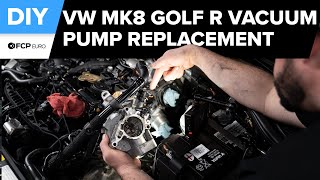
Used OEM Parts in Stock

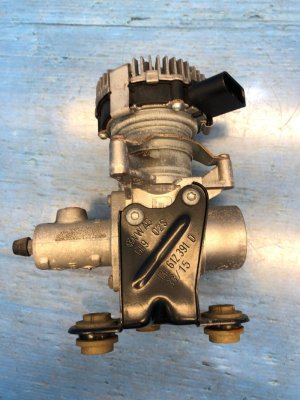
New Aftermarket Parts Available

The information in this article is provided for general reference and educational purposes only. Vehicle specifications, procedures, and part compatibility can vary by production date, trim level, and region. Always consult your vehicle's factory service manual and verify part numbers before purchasing or performing repairs. Safety-critical components such as airbags, seat belts, and braking systems should be installed by a qualified professional.
- Volkswagen GOLF:
- 🎬 Helpful Videos
- 🛍️ Shop This Part
- What's Unique About the 2016-2019 Volkswagen GOLF
- Diagnostic Flowchart
- Symptoms You May Notice
- Most Likely Causes
- Rare But Worth Checking
- Diagnosis Steps
- Parts You'll Likely Need
- Related Codes That Often Appear With This One
- Technical Service Bulletins (TSBs) & Recalls
- Platform-Specific Known Issues
- Scan Tool Commands That Help
- Wiring & Ground Locations
- Real Owner Repair Stories
- OEM Part Supersession History
- 🎟️ Get 5% Off