

Ultimate Guide to OBD-II Code P1421: A Deep Dive Into This Manufacturer-Specific Fault
What P1421 means, why it triggers, and how to fix it, expanded by an ASE-certified master technician
- P1421 is a manufacturer-specific code, meaning it points to a Secondary Air fault on a BMW, a Cold Start Control issue on a Nissan, or an EVAP leak on a Toyota.
- For BMW, Audi, and VW vehicles, a failed secondary air pump causes 80% of P1421 codes, usually triggered by a leaking $75 check valve that allows exhaust moisture to destroy the pump motor.
- Nissan and Infiniti owners must check for Technical Service Bulletins (TSBs) first, as a $150-$250 dealer ECM software update permanently resolves the code without replacing any hard parts.
- Never replace a $1,500 catalytic converter for a P1421 code until you verify your specific vehicle's definition, as the fix is often a $30 relay or a software update.
- You can safely drive with a P1421 code, but ignoring a secondary air fault for more than 6 months guarantees an emissions test failure and risks $2,000 in permanent catalytic converter damage.
What Does P1421 Mean?

P1421 is a manufacturer-specific code with entirely different definitions depending on your car. For BMW, Audi, and Volkswagen, it indicates a Secondary Air Injection system fault. For Nissan and Infiniti, it signals a 'Cold Start Control' software issue. For Ford and Subaru, it points to catalytic converter damage, while Chevrolet uses it for an intake pressure switch fault.
Technical definition: The SAE/ISO definition for P1421 varies by manufacturer. Common definitions include 'Secondary Air Injection System Malfunction Bank 1' (BMW/Audi), 'Secondary Air Injection Solenoid Valve: Short to Ground' (Volkswagen), 'Cold Start Control Malfunction' (Nissan), 'Catalyst Damage/Efficiency Failure' (Ford/Subaru), and 'Intake Air Low Pressure Switch Circuit High Voltage' (Chevrolet).
Can I Drive With P1421?
Yes, But With Caution. You can drive with this code, as it relates to cold start emissions systems that do not affect primary engine performance once warm. However, ignoring it guarantees an emissions test failure. On vehicles where the code indicates a secondary air injection fault (like BMW or Audi), continued driving over several months prevents the catalytic converter from warming up properly, causing premature failure and adding $800-$2,500 to the repair cost.
Common Causes

- Outdated ECM/PCM Software (Nissan/Infiniti) (Very Common) — A known software glitch triggers this code without mechanical failure. Nissan TSBs advise a dealer software update as the permanent fix.
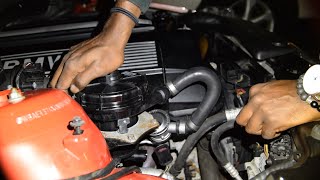
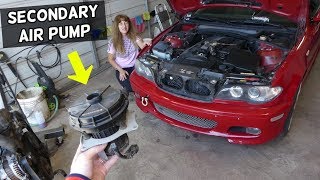
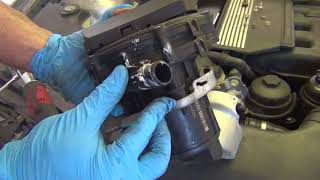
- Failed Secondary Air Injection Pump (BMW/Audi/VW) (Very Common) — This electric pump pushes fresh air into the exhaust to heat the catalytic converter. It fails when moisture enters from a bad check valve, seizing the motor. 🎬 Watch: How to locate and replace the secondary air pump.
- Leaking Secondary Air Check Valve (Common) — These valves control airflow from the pump. When stuck open, hot, moist exhaust gas flows backward and destroys the air pump. This is the root cause of most pump failures.
- Damaged Catalytic Converter (Ford/Subaru) (Common) — On these makes, P1421 explicitly means 'Catalyst Damage', indicating the converter is old, clogged, or melted, preventing proper exhaust scrubbing.
- Shorted Secondary Air Solenoid or Relay (VW) (Common) — Volkswagen P1421 points specifically to an electrical short in the secondary air injection solenoid valve (N112) or its relay (J299). Diagnosis requires electrical testing. 🎬 Watch: Understanding and diagnosing the Volkswagen secondary air system.
- Cracked Vacuum Hoses (Less Common) — Rubber and plastic hoses in the secondary air system become brittle and crack, causing air leaks that prevent the system from functioning correctly.
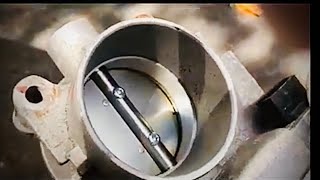
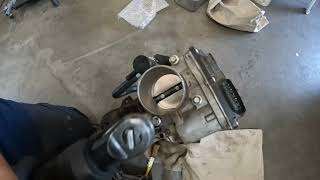
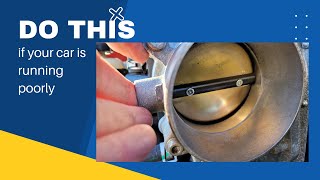
- Dirty Throttle Body (Nissan) (Less Common) — Carbon buildup on the throttle plate interferes with cold start calculations, triggering P1421. Cleaning it resolves the issue, requiring an idle relearn afterward. 🎬 See this guide on cleaning your throttle body for smoother idling.
- Defective O2 Sensor (Less Common) — Nissan's 'Cold Start Control' relies on O2 sensor feedback. A lazy sensor tricks the ECU into thinking the cold start strategy failed, setting P1421.
- Faulty Intake Air Low Pressure Switch (Chevrolet) (Less Common) — Chevrolet uses P1421 for an electrical fault in the intake air low pressure switch circuit, indicating high signal voltage due to a bad sensor or wiring short.
- Faulty Engine Coolant Thermostat (Rare) — A stuck-open thermostat causes slow engine warm-up, confusing the cold start strategy. Often misdiagnosed on Infinitis when the actual issue is a software glitch.
- Weak Fuel Pump or Clogged Injectors (Rare) — Poor fuel delivery prevents the enriched mixture required for a stable cold start, indirectly causing a 'Cold Start Control' fault.
Symptoms

- Check Engine Light is On — The light remains steady. On some vehicles like the Infiniti FX50, the code stores without illuminating the light.
- Loud Whining or 'Jet Engine' Noise on Cold Start — A failing secondary air pump sounds like a vacuum cleaner for the first 30-90 seconds after a cold start.
- Failed Emissions Test — P1421 systems are crucial for emissions control. Your vehicle automatically fails state inspections with this code active.
- Rough Idle or Hesitation on Cold Start — The engine runs poorly or idles erratically for the first minute after a cold start before smoothing out.
- Reduced Fuel Economy — If the engine runs rich for longer than necessary during warm-up, overall fuel efficiency decreases slightly.
Diagnostic Flowchart
Tap your situation to follow the diagnostic path that matches what you're seeing on this code.
Common Fixes & Costs

- Reprogram Engine Control Module (ECM) — Parts: $0, Labor: $150-$250, ~1 hr book time (Professional)
- Replace Secondary Air Injection Pump
— Parts: $150-$400, Labor: $150-$300, ~1.5 hr book time
(Intermediate)
BMW 3-Series (E46, non-M3): OEM
Audi A4 (B6): OEM - Replace Secondary Air Injection Check Valve
— Parts: $75-$150, Labor: $100-$200, ~1.2 hr book time
(Intermediate)
BMW 3-Series (E46, M54 Engine): OEM - Replace Catalytic Converter — Parts: $500-$2,000, Labor: $200-$400, ~2 hr book time (Professional)
- Replace Secondary Air Injection Solenoid or Relay
— Parts: $30-$100, Labor: $50-$150, ~0.5 hr book time
(Beginner)
Volkswagen Jetta/Golf (MK4): OEM
Used vs. New Parts: Buying Guide
When a used part is worth it: For electronic components like a secondary air pump, a used part from a low-mileage, non-corroded donor is cost-effective. Federal law restricts used catalytic converters.
Donor-vehicle mileage cap: roughly under 80000 miles for the part to have meaningful remaining life.
Donor quality checklist:
- Verify the exact part number matches.
- Avoid air pumps from regions with heavy road salt use, as corrosion is the primary failure mode.
- Ask for a 30-90 day warranty.
Decision logic:
- If The fix is a software reprogram. → New (from the dealer) is the only option.
- If The part is a simple relay or fuse. → Buy new; cost savings for used parts are negligible.
- If The part is a secondary air pump and budget is tight. → A used part is reasonable, but a new aftermarket unit with a warranty offers more peace of mind.
Warranty tradeoff: Used parts offer 30-90 day warranties. New aftermarket parts offer 1-year to lifetime warranties. New OEM parts carry 1-2 year warranties.
Worst-case if a used part fails: $200-$500 if a used pump fails, requiring a second labor charge and replacement part.
What Happens If You Wait — Timeline
- 0-1 month: Check Engine Light illuminates. Nissan/Infiniti show no symptoms. BMW/Audi emit a loud whine on cold starts. Vehicle fails emissions tests. (MPG impact: 0-2%% · Added cost: $0)
- 1-6 months: Nissan/Infiniti fuel consumption increases slightly. BMW/Audi catalytic converters fail to reach optimal temperature quickly, beginning thermal stress. (MPG impact: 2-5%% · Added cost: $25-75 in wasted fuel)
- 6-18 months: BMW/Audi catalytic converter efficiency drops due to cumulative slow warm-ups. A P0420 code appears alongside P1421. (MPG impact: 5-10%% · Added cost: $800-$2,500 (Catalytic converter replacement required))
- 18+ months: Catalytic converter becomes severely clogged. Engine feels sluggish, fuel economy drops dramatically, and exhaust backpressure causes drivability issues. (MPG impact: 10-20%+% · Added cost: $1500-$3000+ (Converter plus O2 sensor damage))
Cost of Not Fixing It
- 0-3 months: Guaranteed failure of OBD-II emissions inspection. Potential slight decrease in fuel economy. (Added cost: $0)
- 3-12 months: On German cars, the catalytic converter fails to heat up efficiently, beginning to degrade its internal structure. (Added cost: $0)
- 12+ months: Prolonged failure to heat the catalytic converter leads to premature failure, triggering P0420 and requiring replacement. (Added cost: $800-$2,500+)
Diagnosis Steps

- Check for Manufacturer-Specific Information & TSBs
Identify what P1421 means for your specific car. Search for Technical Service Bulletins (TSBs), as a software update is the only fix needed for many Nissan and Infiniti vehicles.
Tools: Smartphone or Computer (Beginner) - Listen for the Secondary Air Pump (BMW/Audi/VW)
Start the engine completely cold. Listen near the engine for a loud whining sound lasting 30-90 seconds. If silent, the pump is dead or lacks power. If whining loudly, the bearings are failing.
Tools: None (Beginner) - Test the Secondary Air Check Valve
Disconnect the hose leading from the air pump to the check valve. With the engine off, blow into the hose toward the valve; it must be closed. If air passes through, the valve is stuck open and requires replacement.
Tools: Screwdriver or Pliers (Intermediate) - Check Fuses and Relays
The secondary air pump uses a 40-50A fuse. Check your manual for the 'Secondary Air Injection' fuse and relay. A blown fuse indicates a seized pump. On VWs, test relay J299.
Tools: Multimeter or Test Light (Beginner) - Inspect Hoses and Wiring
Visually inspect all rubber and plastic hoses connected to the secondary air pump and valves for cracks or loose connections. Check electrical connectors for corrosion.
Tools: Flashlight (Beginner) - Test the Secondary Air Pump Directly
Disconnect the pump's electrical connector. Use jumper wires to apply 12V directly from the battery to the pump's terminals. If the pump doesn't spin, the motor has failed.
Tools: Multimeter, Power Probe or Jumper Wires (Intermediate) - Clean the Throttle Body (Nissan)
Disconnect the battery, remove the air intake tube, and clean the throttle plate with dedicated cleaner and a rag. Perform an Idle Air Volume Relearn procedure afterward.
Tools: Screwdriver, Throttle Body Cleaner, Clean Rag (Intermediate) - Test the Solenoid/Sensor Circuit (VW/Chevy)
Disconnect the solenoid/sensor connector. With ignition on, check the 5V reference wire. Check the signal wire; a reading near 12V suggests a short to power. Check for continuity to ground to find a short to ground.
Tools: Multimeter (Intermediate) - Scan Tool Live Data Analysis
Monitor live data during a cold start. Ensure the Engine Coolant Temperature (ECT) matches ambient temp. Watch O2 sensor voltage; it must begin cycling within 1-2 minutes. A lazy sensor prevents closed-loop operation.
Tools: Advanced OBD-II Scan Tool (Advanced) - Advanced Circuit Voltage/Resistance Testing
For a Chevy 'High Voltage' code, backprobe the pressure switch signal wire. A reading over 4.5V indicates a short. For VW, measure resistance across the N112 solenoid pins; infinite resistance means an open circuit.
Tools: Multimeter with backprobe pins (Advanced)
When This Code Triggers (Freeze-Frame Conditions)
- Engine Coolant Temp: Below 122°F (50°C) (During a cold start. The system runs when the engine is cold to warm up the catalyst.)
- Time Since Start: 0-120 seconds (The fault is detected in the first two minutes after starting, the operational window for cold start systems.)
- RPM: 800-1200 RPM (At idle immediately following a cold start.)
- Fuel System Status: Open Loop (Occurs before the engine warms up enough to enter 'closed loop' fuel control.)
Related Codes
- P0410 — The generic code for 'Secondary Air Injection System Malfunction.' P1421 on a BMW/Audi/VW is a more specific version of this fault, pointing to a precise circuit or bank.
- P0411 — Means 'Incorrect Flow Detected' in the secondary air system. P1421 indicates a complete lack of function (dead pump) or electrical fault, rather than just incorrect flow.
- P0420 — Means 'Catalyst Efficiency Below Threshold.' If P1421 on a Ford/Subaru means 'Catalyst Damage,' these codes point to the same failure. On a BMW, an unaddressed P1421 air pump fault causes P0420 over time.
- P1423 — On BMW V-engines, P1421 refers to 'Bank 1' while P1423 refers to 'Bank 2'. This isolates which side has a bad check valve or hose.
Climate & Environmental Factors
- Cold Weather: Cold temperatures trigger this code. Nissan's cold start strategy is highly sensitive in the cold, exposing software glitches. On German cars, moisture in the air pump freezes, seizing the motor and blowing the fuse on startup.
- High Humidity: Humid climates increase water vapor in the exhaust. If the check valve is faulty, moisture travels into the air pump, causing rapid corrosion.
- High Altitude: Less dense air at high altitudes affects the engine's ability to achieve a stable cold start, potentially causing a 'Cold Start Control' fault on Nissans.
How to Talk to a Mechanic About This Code
Say this: "I have a P1421 code on my [Car Year/Make/Model]. Based on my research, for this car it means [insert specific meaning, e.g., 'a secondary air system fault,' 'a cold start control issue likely covered by a TSB,' or 'potential catalyst damage']. I'd like to schedule a diagnostic to confirm the cause."
Shows you are an informed customer. Directs the technician to the correct system, saving diagnostic time and preventing irrelevant repairs. Mentioning a TSB for Nissan/Infiniti is highly effective.
Avoid saying:
- 'My check engine light is on, can you just fix it?'
- 'I think it's the catalytic converter' (Don't guess, let them diagnose)
- 'Just do whatever it takes to pass emissions.'
Questions to ask before authorizing the repair:
- For Nissan/Infiniti: 'Did you check for TSB NTB09-116a / ITB08-048? Does my car need a software update before replacing parts?'
- For BMW/Audi: 'If the air pump failed, did you also test the check valve to ensure it's not leaking?'
- For Ford/Subaru: 'Before replacing the catalytic converter, can you show me the Mode $06 data confirming it failed?'
- What is the warranty on the parts and labor for this specific repair?
Where to Take It: Dealer vs Independent vs Chain
- Dealer:
Best for: Nissan/Infiniti vehicles requiring a TSB-related ECM reprogram., Vehicles under factory or extended emissions warranty., Complex electrical issues on modern German cars requiring specialized tools.
Downsides: Highest labor rates, typically 1.5-2x more than independent shops., May recommend replacing entire assemblies instead of smaller failed components. (Typical cost: +50% vs. baseline) - Independent Shop:
For Nissan/Infiniti, visit the dealer first for software updates. For most other makes, a well-regarded independent shop is the most cost-effective choice.
Best for: Out-of-warranty German cars needing secondary air system repairs., Ford/Subaru catalyst diagnosis and replacement., General diagnosis once a TSB/software issue is ruled out.
Downsides: Quality varies; look for ASE certifications and brand specialization., May lack equipment for ECM reprogramming. (Typical cost: +0% vs. baseline) - Chain Shop:
AVOID for diagnosing P1421. They lack specific nuances (like Nissan TSBs) and may recommend unnecessary, expensive repairs.
Best for: Simple maintenance like oil changes or tires.
Downsides: Technician skill and diagnostic capabilities are highly variable., Lack specialized knowledge for manufacturer-specific codes like P1421., Business model pressures technicians to upsell common parts without proper diagnosis. (Typical cost: -10% vs. baseline)
When to Walk Away From the Repair
If the estimated repair cost exceeds 40-50% of the car's private-party value, consider selling or trading it in.
- Car worth $3500, fix is $2200: Walk away. The repair cost is over 60% of the car's value.
- Car worth $10000, fix is $750: Fix it. The repair is well under the threshold and necessary to pass emissions.
- Car worth $2000, fix is $1500: Walk away. A $1,500 repair on a $2,000 car is a poor financial decision.
What Scan Tool You Need for This Code
Minimum: A code reader displaying live data (O2 sensor activity) and accessing Mode $06 test results for catalyst and secondary air monitors.
A $20 code reader only provides the 'P1421' number. It cannot show live sensor data or self-test results needed to differentiate between a sensor issue, software glitch, or bad catalytic converter.
Budget: BlueDriver Pro Bluetooth Scanner (~$100) — Connects to your smartphone, providing freeze-frame data, live O2 sensor graphing, and Mode $06 test results to differentiate sensor issues from catalyst failures.
Mid-range: Innova 5610 or Foxwell NT604 Elite (~$150) — Offers bidirectional controls. For German cars, this allows you to command the secondary air pump and solenoid on/off directly from the tool, saving significant diagnostic time.
Professional: Autel MaxiCOM MK808 / MK906BT (~$500-1200) — Provides full bidirectional control and access to manufacturer-specific data. Can read current ECU software versions to compare against TSBs, a feature typically reserved for dealers.
Rent vs buy: Auto parts stores read codes for free, but their basic tools lack detailed data. For a one-time issue, pay a shop for a proper diagnostic. If you DIY regularly, buying a midrange scanner is a worthwhile investment.
How to Clear the Code After You Fix It
- Use an OBD-II scan tool to clear the diagnostic trouble codes.
- Ensure the fuel tank is between 1/4 and 3/4 full.
- Perform a complete drive cycle to allow the readiness monitors to run.
Drive cycle (~30 minutes): Let the vehicle sit for 8+ hours for a true cold start. Start the engine and idle for 3 minutes. Drive at a steady 55 mph for 5 minutes. Perform stop-and-go city driving for 15 minutes. Let the vehicle cool down completely.
Readiness monitors affected: Secondary Air System monitor, Catalyst monitor, Oxygen (O2) Sensor monitor
Before emissions retest: drive at least 50 miles to fully set monitors.
Watch out for:
- Clearing the code without performing a full drive cycle results in a 'Not Ready' status at the emissions station, causing a failure.
- The Secondary Air monitor requires specific cold start conditions to run its self-test.
Will This Fail Emissions / State Inspection?
Yes — this code typically fails an OBD-II emissions inspection.
- California: An illuminated Check Engine Light is an automatic failure. A complete drive cycle must be performed to set all readiness monitors before re-testing.
- New York: Clearing the code right before the test results in 'Not Ready' monitors, causing an automatic failure.
- Texas: An active P1421 code causes an automatic failure. Recently cleared codes also fail due to 'Not Ready' status.
Most Commonly Affected Vehicles
- Nissan Versa (2007-2010) — TSB NTB09-116a states this code is fixed by an ECM reprogram. Cleaning the throttle body is also a common fix.
- BMW 3-Series (E46) (1999-2006) — Prone to secondary air pump failure due to moisture intrusion from a failed check valve.
- Audi A4 / TT (1998-2005) — Commonly experiences P1421 due to failed secondary air pumps or electrical shorts in the valve circuit.
- Volkswagen Jetta / Beetle (1999-2005) — P1421 indicates 'Secondary Air Injection Solenoid Valve (N112): Short to Ground'. The solenoid and relay (J299) are primary suspects.
- Nissan Cube (2009-2010) — TSB NTB10-089 addresses this code with a PCM reprogram.
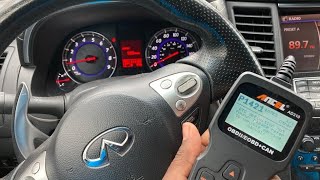
- Infiniti FX50 / FX35 (2009-2011) — TSBs ITB08-048 and ITB11-007 resolve this cold-weather code via ECM reprogram. It may not trigger the check engine light.
- Subaru Forester / Impreza (2005-2012) — P1421 points to 'Catalyst Damage' or an 'EGR Circuit High Input', indicating a failing catalytic converter. Often appears with P0420.
- Toyota Highlander Hybrid (2009-2015) — Uniquely relates to the EVAP system, detecting a leak in the purge line. Often appears with P0441.
- Chevrolet Silverado / Tahoe (1999-2007) — Defined as 'Intake Air Low Pressure Switch Circuit High Voltage', pointing to a sensor or wiring issue in the intake system.
Manufacturer-Specific Notes
- BMW / Audi: The secondary air pump runs only on a cold start. A bad check valve lets exhaust moisture travel back into the pump, rusting it. Always inspect the check valve when replacing the pump.
- Nissan / Infiniti: Frequently caused by a software issue, not a failed part. Check TSBs (NTB09-116a, ITB08-048) before replacing components. The official fix is a dealer ECM reprogram.
- Ford / Mazda / Subaru: Interpreted as 'Catalyst Damage', pointing to an inefficient or failing catalytic converter, diagnosed alongside P0420.
- Volkswagen: Indicates a specific electrical fault: 'Secondary Air Injection Solenoid Valve (N112): Short to Ground'. Diagnosis focuses on wiring and relay J299.
- Toyota: On Highlander Hybrids, P1421 is an EVAP system code pointing to a purge line leak, diagnosed alongside P0441.
Real Owner Stories
2010 Nissan Versa at 125k miles with P1421
Check Engine Light appeared one month after a no-start condition that temporarily resolved itself. No other symptoms were present.
What they tried:
- Took car to an auto parts store, which read the P1421 code and suggested a PCM reprogram.
- Owner was concerned about a potential fuel pump issue mentioned by a mechanic during the previous no-start incident.
Outcome: Online forums and TSB lookups confirmed that for this specific model, P1421 is a known software glitch. The owner paid for a dealer ECM reprogram, permanently resolving the code without replacing any hardware.
Lesson: For Nissan/Infiniti, always check for a Technical Service Bulletin (TSB) for P1421 before replacing parts. A $150 dealer software update is the official fix.
2009 Infiniti FX50 with recurring P1421 in cold weather
Owner scanned their vehicle and noticed P1421 appeared during winter, but it never triggered the Check Engine Light. The only symptom was a slightly longer time for the engine RPM to settle after a cold start.
What they tried:
- Suspecting a temperature issue, the owner replaced an aftermarket thermostat with an OEM unit, but the code returned the next winter.
Outcome: Research revealed Infiniti TSB ITB08-048, which addresses P1421 on the FX50 as a known software flaw. The dealer performed an ECM reprogram, fixing the issue.
Lesson: A stored code that doesn't trigger the Check Engine Light still requires diagnosis. On modern cars in cold weather, software glitches cause phantom codes. Checking TSBs prevents unnecessary parts replacement.
BMW E46 with loud noise on startup and P1421
Owner heard a loud 'jet engine' noise for 60 seconds after starting the car cold. The Check Engine Light illuminated with code P1421.
What they tried:
- The owner correctly identified the noise as a failing secondary air injection (SAI) pump and replaced it.
Outcome: Replacing the SAI pump resolved the noise and code. However, the owner learned the root cause was a failed check valve that allowed exhaust moisture to destroy the pump. They subsequently replaced the valve to protect the new pump.
Lesson: When replacing a BMW secondary air pump, you must also replace the check valve. Failing to fix the root cause guarantees the new pump will fail prematurely.
How to Prevent This Code From Triggering
- Use high-quality, Top Tier gasoline (Every fill-up) — Quality fuels with detergents prevent carbon buildup on injectors and valves, ensuring complete combustion and reducing the load on the catalytic converter.
- Perform regular throttle body cleaning (especially on Nissan) (Every 40,000 miles) — Carbon buildup on the throttle plate restricts airflow and confuses the ECU's cold start calculations, directly causing P1421.
- Address engine misfires immediately (As needed) — Misfires dump unburned fuel into the exhaust, superheating and melting the catalytic converter, leading to P1421 on Ford/Subaru or P0420 universally.
- Proactively replace the secondary air check valve (German cars) (Every 80,000 miles) — The check valve is the primary cause of secondary air pump failure. Replacing the $75 valve proactively saves you from buying a $300 pump later.
- Ensure engine reaches full operating temperature regularly (Weekly) — Short trips prevent the engine from warming up, leading to moisture buildup in the exhaust and secondary air system. A 30-minute drive burns off these deposits.
Frequently Asked Questions
Can I just clear the P1421 code?
You can clear the code, but it will return during the next cold start self-test if the underlying problem isn't fixed. Clearing it will not help you pass an emissions test.
What are the most common mistakes when diagnosing P1421?
The biggest mistake is ignoring the vehicle-specific definition and replacing the wrong parts. For Nissan/Infiniti, mechanics often replace sensors instead of performing the required TSB software update. For BMW/Audi, replacing a failed air pump without also replacing the leaking check valve guarantees the new pump will fail.
I have a Nissan with P1421. Should I replace the throttle body or O2 sensors?
No, not initially. On Nissan and Infiniti models, P1421 is a known software glitch covered by TSBs. The official fix is a $150 ECM reprogram at the dealership, which is cheaper than replacing hardware.
Why does the problem only happen when the engine is cold?
Secondary Air Injection and Cold Start Control systems operate only for the first 1-2 minutes after a cold start to heat the catalytic converter quickly. The computer checks these systems during that window. Once warm, the systems shut off, which is why you notice no driving symptoms.
My mechanic wants to replace my catalytic converter for $2000. Is this necessary for P1421?
It depends entirely on your vehicle's make. If you drive a Ford or Subaru where P1421 means 'Catalyst Damage', a bad converter is likely. However, on a BMW or Nissan, the fix is usually a much cheaper air pump or software update, so always verify the code definition first.
Can a bad O2 sensor cause P1421?
Yes, indirectly on vehicles like Nissan. The 'Cold Start Control' system relies on O2 sensor feedback to confirm closed-loop operation. A faulty sensor tricks the ECU into setting P1421.
Is P1421 a serious code?
P1421 is moderately serious. It will not leave you stranded, but it causes automatic emissions test failures. Left unaddressed on German cars, it leads to severe catalytic converter damage.
What is a 'cold start'?
A cold start occurs when the engine has cooled to the surrounding air temperature, typically after sitting overnight. The computer uses the Engine Coolant Temperature (ECT) sensor to verify this state.
Key Takeaways
- P1421 is a manufacturer-specific code, meaning it points to a Secondary Air fault on a BMW, a Cold Start Control issue on a Nissan, or an EVAP leak on a Toyota.
- For BMW, Audi, and VW vehicles, a failed secondary air pump causes 80% of P1421 codes, usually triggered by a leaking $75 check valve that allows exhaust moisture to destroy the pump motor.
- Nissan and Infiniti owners must check for Technical Service Bulletins (TSBs) first, as a $150-$250 dealer ECM software update permanently resolves the code without replacing any hard parts.
- Never replace a $1,500 catalytic converter for a P1421 code until you verify your specific vehicle's definition, as the fix is often a $30 relay or a software update.
- You can safely drive with a P1421 code, but ignoring a secondary air fault for more than 6 months guarantees an emissions test failure and risks $2,000 in permanent catalytic converter damage.
Helpful Videos

The information in this article is provided for general reference and educational purposes only. Vehicle specifications, procedures, and part compatibility can vary by production date, trim level, and region. Always consult your vehicle's factory service manual and verify part numbers before purchasing or performing repairs. Safety-critical components such as airbags, seat belts, and braking systems should be installed by a qualified professional.
- 🎬 Helpful Videos
- What Does P1421 Mean?
- Can I Drive With P1421?
- Common Causes
- Symptoms
- Diagnostic Flowchart
- Common Fixes & Costs
- Used vs. New Parts: Buying Guide
- What Happens If You Wait — Timeline
- Cost of Not Fixing It
- Diagnosis Steps
- When This Code Triggers (Freeze-Frame Conditions)
- Related Codes
- Climate & Environmental Factors
- How to Talk to a Mechanic About This Code
- Where to Take It: Dealer vs Independent vs Chain
- When to Walk Away From the Repair
- What Scan Tool You Need for This Code
- How to Clear the Code After You Fix It
- Will This Fail Emissions / State Inspection?
- Most Commonly Affected Vehicles
- Manufacturer-Specific Notes
- Real Owner Stories
- 2010 Nissan Versa at 125k miles with P1421
- 2009 Infiniti FX50 with recurring P1421 in cold weather
- BMW E46 with loud noise on startup and P1421
- How to Prevent This Code From Triggering
- Frequently Asked Questions
- Can I just clear the P1421 code?
- What are the most common mistakes when diagnosing P1421?
- I have a Nissan with P1421. Should I replace the throttle body or O2 sensors?
- Why does the problem only happen when the engine is cold?
- My mechanic wants to replace my catalytic converter for $2000. Is this necessary for P1421?
- Can a bad O2 sensor cause P1421?
- Is P1421 a serious code?
- What is a 'cold start'?
- Key Takeaways
- 🎟️ Get 5% Off