

OBD-II Code P1420: The Ultimate Diagnosis & Repair Guide
What P1420 Means for Your Car, Why It Triggers, and How to Fix It Right
- Verify your vehicle's specific P1420 definition first: it indicates a Secondary Air System failure on German cars, an EVAP leak on Toyota/Lexus, or a Catalyst Temperature Sensor fault on Fords.
- Always replace the $100 secondary air check valve when installing a new air pump, as a stuck-open valve allows exhaust moisture to destroy the new pump motor.
- You can safely drive with a P1420 code for a few weeks, but ignoring it for over 6 months forces the catalytic converter to run cold, causing up to $2,500 in permanent damage.
- Start diagnosis with the cheapest fixes: tighten the gas cap on Toyota/Lexus models, check the 40-amp SAI pump fuse on German cars, or verify Honda TSB 07-036 before replacing expensive parts.
What Does P1420 Mean?

P1420 is a manufacturer-specific OBD-II trouble code with entirely different meanings depending on your vehicle's make. For German brands like Audi, VW, and BMW, it signals a fault within the Secondary Air Injection (SAI) system. This system pumps fresh air into the exhaust for the first 30-100 seconds after a cold start to burn off excess hydrocarbons and heat the catalytic converter. For Toyota and Lexus, it indicates an EVAP system leak. For Ford, it points to a catalyst temperature sensor failure.
Technical definition: Because P1420 is manufacturer-specific, its formal definition varies. Common definitions include 'Secondary Air Injection System Malfunction' (Audi, VW, BMW) and 'Catalyst Temperature Sensor Failure' (Ford). Toyota and Lexus use it for 'Small Leak in the Evaporative Emission (EVAP) Canister'. Honda defines it as 'NOx Adsorptive Catalyst System Efficiency Below Threshold', while Subaru uses 'Fuel Tank Pressure Control Solenoid High Input'.
Can I Drive With P1420?
Yes, But With Caution. Yes, you can drive your car for a few weeks. The systems triggering P1420 usually only operate during a cold start. However, ignoring the light guarantees an automatic emissions test failure. More importantly, a malfunctioning Secondary Air Injection (SAI) system causes premature catalytic converter failure over several months—a repair costing between $800 and $2,500. Diagnose the issue within 30 days to avoid escalating costs.
Common Causes

- Faulty Secondary Air Check Valve (Very Common) — This one-way valve prevents hot exhaust gases from flowing back into the air pump. Carbon buildup causes them to stick open, allowing moisture and exhaust to destroy the air pump.
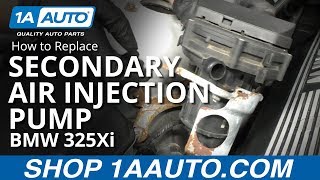
- Failed Secondary Air Injection (AIR) Pump (Common) — The electric pump forcing air into the exhaust fails when a bad check valve allows water intrusion, causing the internal electric motor to rust and seize. 🎬 Watch: Step-by-step guide to replacing a BMW secondary air pump.
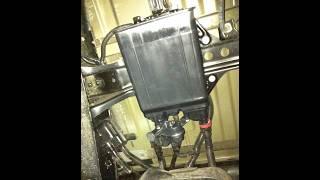
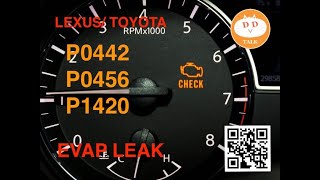
- Loose or Faulty Gas Cap (Toyota/Lexus) (Common) — For Toyota and Lexus vehicles, a loose gas cap or a worn-out rubber seal is the primary cause of the EVAP leak triggering this code. 🎬 See how to find and fix Toyota EVAP canister leaks.
- Cracked, Leaking, or Blocked Hoses (Common) — Rubber and plastic hoses controlling vacuum and air delivery become brittle, crack, and leak over time. This is a primary failure point on Volkswagen and Audi models.
- Clogged Secondary Air Passages (Common) — On direct-injection engines, particularly Audi TFSI motors, carbon buildup completely clogs the small cylinder head ports where fresh air injects, physically blocking airflow.
- Faulty Secondary Air Injection Solenoid/Valve (Common) — An electrical fault in the circuit for the air injection solenoid or change-over valve, caused by a bad solenoid, corroded connector, or broken wire.
- Faulty Catalyst Temperature Sensor (Less Common) — On Ford models, this code points directly to a failed sensor measuring the heat of the catalytic converter.
- Blown Fuse or Faulty Relay (Less Common) — A struggling or seized air pump draws excessive current, blowing the dedicated fuse or burning out the control relay.
- Outdated ECU Software (Rare) — On 2003-2005 Honda Civic Hybrids, outdated engine computer software misinterprets sensor readings and falsely triggers the code, requiring a dealer update.
Symptoms

- Check Engine Light is On — The Engine Control Module (ECM) illuminates the light after detecting the fault on two consecutive drive cycles.
- Loud Whining or Vacuum Cleaner Noise After Cold Start — A high-pitched whining or roaring sound, similar to a vacuum cleaner, emits from the engine bay for 30 to 90 seconds after a cold start, indicating failing AIR pump bearings.
- Failed Emissions Test — Vehicles automatically fail OBD-II emissions inspections due to the active trouble code on these critical emissions control devices.
- Hesitation or Rough Idle on Cold Start — The engine runs slightly rough, hesitates, or stumbles immediately after a cold start because the ECU expects different exhaust oxygen levels.
- Reduced Power and Acceleration (also visible on scanner) — A significant vacuum leak or a clogged catalytic converter resulting from long-term SAI failure causes a noticeable loss of engine power and sluggish acceleration.
Diagnostic Flowchart
Tap your situation to follow the diagnostic path that matches what you're seeing on this code.
Common Fixes & Costs
- Replace Secondary Air Check Valve(s)
— Parts: $70-$200, Labor: $100-$250, ~1.2 hr book time
(Intermediate)
: OEM 06E131102K / 06E131101E (Alt: {"brand": "DIY Solutions", "part_number": "ESS01194"})
: OEM 11727553056
: OEM 06A131102A - Replace Secondary Air Injection Pump
— Parts: $250-$600, Labor: $100-$300, ~1.5 hr book time
(Intermediate)
: OEM 11727571589 (Alt: {"brand": "Pierburg", "part_number": "7.28124.19.0"})
: OEM 06E959253C (Alt: {"brand": "Pierburg", "part_number": "7.04233.03.0"})
: OEM 06A959253B (Alt: {"brand": "Bosch", "part_number": "0580000025"}) - Tighten or Replace Gas Cap — Parts: $0-$30, Labor: $0, ~0.1 hr book time (DIY)
- Replace Cracked or Broken Vacuum Hoses — Parts: $10-$50, Labor: $50-$150, ~0.5 hr book time (DIY)
- Replace Catalyst Temperature Sensor
— Parts: $80-$200, Labor: $100-$250, ~1.0 hr book time
(Intermediate)
: OEM DY1144 / F7DZ12A648AA (Alt: {"brand": "Motorcraft", "part_number": "DY-1144 / DY-1025"}) - Perform ECU Software Update — Parts: $0, Labor: $100-$200, ~1.0 hr book time (Dealer Only)
- Clean Clogged Air Passages — Parts: $50, Labor: $800-$2000, ~8.0 hr book time (Advanced)
- Replace Catalytic Converter
— Parts: $800-$2500, Labor: $200-$500, ~2.5 hr book time
(Advanced)
: OEM 18160-PZA-A00 (Alt: {"brand": "Walker CalCat", "part_number": "82450 / 82614"})
Used vs. New Parts: Buying Guide
When a used part is worth it: For expensive electronic components like an SAI pump on an older vehicle, a used part from a low-mileage totaled vehicle is cost-effective. Never buy used catalytic converters.
Donor-vehicle mileage cap: roughly under 80000 miles for the part to have meaningful remaining life.
Donor quality checklist:
- Verify the donor vehicle was not scrapped due to engine or emissions problems.
- Look for clean electrical connectors without corrosion or melted plastic.
- Match the OEM part number exactly.
Decision logic:
- If The part is a simple mechanical item like a hose or bracket and the vehicle is over 10 years old → Used is acceptable and offers significant savings.
- If The part is a catalytic converter → Buy new (aftermarket or OEM) to ensure it passes emissions and has a full service life.
- If The part is an electric pump or sensor and the cost savings are over 50% vs new → A used part from a reputable salvage yard with a warranty is a reasonable risk.
Warranty tradeoff: Used parts from salvage yards typically come with a 30-90 day warranty. New aftermarket parts carry a 1-year to limited lifetime warranty. New OEM parts have a 1-2 year warranty.
Worst-case if a used part fails: $200 - $500, representing the repeated labor cost to diagnose and replace the faulty used part, plus the cost of another replacement part.
What Happens If You Wait — Timeline
- 0-2 months: SAI system fails. Check Engine Light illuminates. Car passes cold start emissions test in a 'not ready' state. No drivability symptoms are felt. (MPG impact: 0-1%% · Added cost: $0)
- 2-8 months: Catalytic converter repeatedly fails to warm up quickly. Efficiency degrades slightly. A minor drop in fuel economy occurs. The car fails OBD-II emissions inspections. (MPG impact: 1-5%% · Added cost: $50-$150 in wasted fuel)
- 8-18 months: The catalytic converter's internal substrate becomes partially clogged. Sluggish acceleration becomes apparent. The P0420 code appears alongside P1420. (MPG impact: 5-12%% · Added cost: $800 - $2,500 (catalytic converter replacement is now likely required))
- 18+ months: The catalytic converter becomes severely clogged, creating significant exhaust backpressure. This leads to engine overheating, stalling, and major loss of power. (MPG impact: 15-25%+% · Added cost: $1,500 - $3,500+ (catalytic converter plus potential for O2 sensor replacement or other engine repairs))
Cost of Not Fixing It
- 0-3 months: Guaranteed failure of any OBD-II emissions test. No significant risk of mechanical damage, but the check engine light remains on. (Added cost: 0)
- 3-12 months: The catalytic converter operates outside its designed temperature range during cold starts, leading to slower warm-up, reduced efficiency, and substrate contamination. (Added cost: 0)
- 12+ months: Continued operation without a functional SAI system clogs and destroys the catalytic converter, turning a minor emissions repair into a major one. (Added cost: $1,200 - $3,300)
Diagnosis Steps
- Verify the Code Definition
Confirm what P1420 means for your specific year, make, and model. This dictates your entire diagnostic path.
Tools: OBD-II Scanner, Online Service Manual (Beginner) - Check for Other Codes & Freeze Frame Data
Scan for stored codes. P1420 often accompanies P0410, P0411, P0491, or P0492, pinpointing the problem area (e.g., pump flow vs. valve circuit).
Tools: OBD-II Scanner (Beginner) - Listen to the Pump (Cold Start Test)
Have an assistant start the completely cold engine. Listen for the air pump to run for 30-90 seconds. Silence indicates a bad pump, relay, or fuse. A loud grinding noise means failing bearings.
Tools: Assistant (Beginner) - Visual Inspection
Inspect the entire system with the engine off. Look for cracked, disconnected, or brittle vacuum lines. Check electrical connectors for corrosion or melting.
Tools: Flashlight (Beginner) - Check the Fuse and Relay
Locate the secondary air pump fuse and relay. Pull the fuse to check for a blown filament. Swap the relay with an identical one (like the horn relay) to test functionality.
Tools: Owner's Manual, Fuse Puller/Pliers (Beginner) - Pro Tip: Use a Scanner's Actuator Test
Use a bi-directional scanner with the key on, engine off, to command the AIR pump and solenoids on and off. This confirms component response without waiting for a cold start.
Tools: Advanced OBD-II Scanner (Advanced) - Pro Tip: Test SAI Pump Circuit Voltage
If the pump fails the actuator test, verify >12V at the pump's main power wire using a multimeter while commanded on. No voltage indicates a relay, fuse, or wiring issue.
Tools: Multimeter, Advanced OBD-II Scanner (Advanced) - EVAP System Smoke Test (Toyota/Lexus)
After verifying the gas cap, introduce pressurized smoke into the EVAP system. Escaping smoke pinpoints cracked hoses or faulty valves.
Tools: EVAP Smoke Machine (Advanced) - Pro Tip: Test Pneumatic SAI Valve Vacuum
Disconnect the vacuum line from the combi-valve and connect a hand-held vacuum pump. Apply 11.5 inHg; the valve must open and hold vacuum without leaking.
Tools: Hand-held Vacuum Pump with Gauge (Advanced) - Pro Tip: Test the Catalyst Temperature Sensor (Ford)
Disconnect the sensor and measure resistance across its pins with a multimeter. A cold Ford sensor reads around 37,000 ohms at 77°F, dropping significantly as it heats up.
Tools: Multimeter, Vehicle Service Manual, Infrared Thermometer (Advanced) - Pro Tip: Test the Fuel Tank Pressure Control Solenoid (Subaru)
Unplug the solenoid and measure resistance. A reading below 10 ohms indicates a shorted coil requiring replacement. Infinite resistance indicates an open circuit.
Tools: Multimeter, Vehicle Service Manual (Advanced)
When This Code Triggers (Freeze-Frame Conditions)
- Engine Coolant Temp: Below 100°F / 38°C (During a cold start. The SAI system only runs when the engine is cold to heat the catalytic converter.)
- Time Since Engine Start: 0-120 seconds (The fault logs during the brief window when the ECU commands the SAI pump to run.)
- Engine RPM: 800-2000 RPM (Occurs at idle or low RPMs immediately following a cold start.)
- O2 Sensor Voltage (Downstream): No significant drop (The ECU expects a sharp drop in O2 sensor voltage (indicating a lean condition) when injecting fresh air. High voltage indicates no extra air is present.)
Related Codes
- P0410 — The generic code for 'Secondary Air Injection System Malfunction.' P1420 is a manufacturer's more specific version of this problem.
- P0411 — Means 'Secondary Air Injection System Incorrect Flow Detected.' While P1420 on a VW/Audi points to an electrical fault, P0411 confirms the airflow amount is wrong, suggesting a physical blockage or weak pump.
- P0491 / P0492 — Indicate 'Insufficient Air Flow' for Bank 1 and Bank 2. Extremely common on Audi and VW vehicles, pointing to clogged air passages in the cylinder head or a failing air pump.
- P0420 — Means 'Catalyst System Efficiency Below Threshold.' A failing secondary air system causes this code over time by preventing the catalyst from warming up properly.
Climate & Environmental Factors
- Cold Climates: Cold weather significantly increases SAI system failure. Exhaust condensation freezes inside the air pump if the check valve is faulty. A seized, frozen pump burns out its motor or blows the fuse upon the next cold start.
- High Humidity: For EVAP-related P1420 codes, high humidity exposes existing small leaks that go undetected in drier conditions. For SAI systems, humidity accelerates internal pump corrosion if the check valve fails.
- Short-Trip Driving: Frequent short trips prevent the engine from reaching full operating temperature, exacerbating carbon buildup in Audi and VW engines. It also increases exhaust condensation, leading to water intrusion into the SAI pump.
How to Talk to a Mechanic About This Code
Say this: "My [Year/Make/Model] has a P1420 code, which points to the [Secondary Air Injection system / EVAP system / Catalyst Temp Sensor]. I need a diagnostic to confirm the specific failure."
This shows you've done your homework and directs the mechanic to the correct system, saving diagnostic time and preventing a broad, expensive search.
Avoid saying:
- 'My check engine light is on, can you just fix it?' (This is too vague and invites a costly, open-ended diagnostic process).
- 'Just do whatever you think is necessary.' (This gives up your authority to approve specific repairs and costs).
- 'A guy online said it's the...' (Present research as a starting point, not an absolute fact, to maintain a good relationship with the technician).
Questions to ask before authorizing the repair:
- Can you provide a written estimate with a full breakdown of parts and labor costs before any work is done?
- For a Secondary Air Injection fault, did you test the pump, check valve, and relay individually, or are you recommending replacing the whole assembly?
- For an EVAP fault, was a smoke test performed to find the exact location of the leak?
- For a Honda P1420, has the TSB 07-036 software update been checked or performed?
- What is the warranty on the parts and the labor for this specific repair?
Where to Take It: Dealer vs Independent vs Chain
- Dealer:
Necessary for specific warranty or TSB-related P1420 issues. Otherwise, a more expensive option.
Best for: Vehicles under warranty (including extended emissions warranties like BMW SULEV)., Manufacturer-specific issues requiring proprietary software, like the Honda Civic Hybrid TSB 07-036 update., Complex electronic issues on newer German vehicles where a specialist is not available.
Downsides: Typically the highest labor rates (can be 1.5-2x an independent shop)., May prefer to replace entire assemblies rather than diagnose and replace a smaller, cheaper component. (Typical cost: +50% vs. baseline) - Independent Shop:
Best choice for most P1420 repairs, especially if you find a shop specializing in your vehicle's brand. Offers the best balance of expertise and value.
Best for: Out-of-warranty vehicles where cost is a factor., Common P1420 causes like a failed SAI pump, check valve, or EVAP leak on most domestic and Japanese brands., Finding a brand specialist (e.g., a German auto specialist) who has more experience with specific failure patterns.
Downsides: Shop quality and expertise vary widely; vetting through reviews and ASE certifications is crucial., May not have access to the very latest manufacturer software updates or warranty information. (Typical cost: +0% vs. baseline) - Chain Shop:
Use with caution. Acceptable for a simple gas cap replacement on a Toyota, but AVOID for diagnosing complex SAI issues on a BMW or carbon buildup on an Audi.
Best for: Simple, clear-cut repairs like replacing a gas cap or a fuse.
Downsides: Technician skill is inconsistent., High pressure to upsell services; not equipped for complex diagnostics required for many P1420 variants., Less likely to be familiar with the manufacturer-specific quirks of the P1420 code. (Typical cost: -10% vs. baseline)
When to Walk Away From the Repair
Sell or trade the vehicle if the estimated repair cost exceeds 50% of its private-party value.
- Car worth $3500, fix is $2000: Walk away. The repair cost is over 50% of the car's value. This is typical for an Audi needing carbon cleaning or an older Honda needing a catalytic converter.
- Car worth $10000, fix is $700: Fix it. This repair (e.g., a BMW SAI pump and valve) is well below the threshold and restores a critical emissions system.
- Car worth $2000, fix is $1500: Walk away. The car is nearing the end of its economic life, and this repair is not a good investment.
What Scan Tool You Need for This Code
Minimum: A code reader that reads manufacturer-specific codes and views live data. A basic $20 reader might only show a generic P0410 or fail to define P1420 correctly.
Diagnosing P1420 effectively requires more than reading the code. For SAI faults, you need bi-directional control to test the pump. For sensor faults, you need to graph live data.
Budget: BlueDriver Pro (~$100) — Connects to your smartphone. It reads manufacturer-specific definitions for P1420, views freeze-frame data, and graphs live data, essential for diagnosing sensor issues.
Mid-range: Foxwell NT510 Elite (~$180) — Offers bi-directional control, allowing you to command the SAI pump and solenoids to turn on/off from the scanner. Critical for testing the SAI system on German brands without waiting for a cold start.
Professional: Autel MaxiCOM MK808 / XTOOL D7 (~$400-450) — Professional-level tablet scanners offering full bi-directional control, advanced live data graphing, and access to special functions. Overkill for a one-time fix but invaluable for a serious DIYer.
How to Clear the Code After You Fix It
- Use an OBD-II scan tool to clear the diagnostic trouble code.
- Reconnect the battery if it was disconnected for the repair.
- Perform a specific drive cycle to allow the system's readiness monitors to run.
Drive cycle (~20 minutes): Start the engine from cold and let it idle for 2-3 minutes. Drive for 15-20 minutes with a mix of city and steady highway speed (55-60 mph). Allow the vehicle to cool down completely and repeat if monitors are not set.
Readiness monitors affected: Secondary Air System, Catalyst Monitor, Evaporative System, O2 Sensor
Before emissions retest: drive at least 50 miles to fully set monitors.
Watch out for:
- Disconnecting the battery clears the code but resets all readiness monitors to 'Not Ready', causing an automatic emissions test failure.
- The code returns within a few cold starts if the underlying mechanical or electrical fault remains.
- For EVAP-related P1420 codes (Toyota/Lexus), the monitor requires the fuel tank to be between 1/4 and 3/4 full to run its self-test.
Will This Fail Emissions / State Inspection?
Yes — this code typically fails an OBD-II emissions inspection.
- California: An active P1420 code is an automatic smog check failure. All OBD-II readiness monitors must be 'Ready'. It is illegal to install a used catalytic converter.
- New York: The NYS DMV inspection includes an OBD-II scan. An illuminated Check Engine Light for P1420 results in an automatic failure.
- Texas: In counties requiring emissions testing, an active P1420 code causes an immediate inspection failure. Clearing the code right before the test results in a failure due to 'Not Ready' monitors.
Most Commonly Affected Vehicles

- Audi A4, Q7, S4 (2005-2016) — Highly prone to carbon buildup in secondary air passages, leading to codes P0491/P0492. The P1420 code points to an electrical fault in the control valve circuit. Carbon cleaning is a common, expensive repair.
- BMW 3-Series (E46, E90), X3, X5 (1999-2013) — Commonly experiences check valve failure, allowing exhaust moisture to destroy the air pump. SULEV models may have extended warranty coverage for these parts.
- Volkswagen Jetta, Passat, Golf (1999-2010) — Frequently suffers from brittle plastic vacuum lines that crack and leak. P1420 indicates an electrical fault in the combi-valve circuit.
- Ford Ranger, Explorer, F-150 (1998-2011) — P1420 specifically points to a failure of the Catalyst Temperature Sensor, not the air injection system. Diagnosis focuses entirely on testing this sensor and its wiring.
- Toyota / Lexus Highlander, RX330, RX400h, Camry (2004-2010) — P1420 indicates 'Evaporative Canister Small Leak.' Diagnosis starts with inspecting the gas cap seal before moving to an EVAP smoke test.
- Honda Civic Hybrid (2003-2005) — Defines P1420 as 'NOx Adsorptive Catalyst System Efficiency Below Threshold.' TSB 07-036 requires a software update to fix false triggers before replacing the catalytic converter.
- Subaru Forester, Impreza, Legacy, Outback (1997-2012) — Uses P1420 for 'Fuel Tank Pressure Control Solenoid High Input,' indicating an electrical short in an EVAP system component or its wiring.
- Chevrolet / GM Various (1996-2010) — Defines P1420 as 'Intake Air Low Pressure Switch Circuit Low Voltage,' pointing to a fault with a sensor in the intake system.
Manufacturer-Specific Notes

- Audi / Volkswagen: Defines P1420 as a 'Secondary Air Injection Valve Circuit Electrical Malfunction.' This points specifically to an electrical problem (bad solenoid, wiring, connector) with the control valve, not a flow problem.
- Ford: Specifically defines P1420 as 'Catalyst Temperature Sensor Failure.' Diagnosis ignores the secondary air system and focuses entirely on testing this sensor.
- Honda: On 2003-2005 Civic Hybrids, P1420 means the NOx adsorptive catalytic converter failed. However, TSB 07-036 MUST be checked first, as an ECU software update fixes false triggers.
- Toyota / Lexus: Uses P1420 to mean 'Evaporative Canister Small Leak.' The first diagnostic step is always checking for a loose or faulty gas cap.
- Subaru: Defines P1420 as 'Fuel Tank Pressure Control Solenoid High Input.' This points to a short circuit in the EVAP pressure control solenoid or its wiring.
- BMW: Failures follow a pattern: the check valve fails, allowing exhaust moisture into the pump, which rusts and seizes. SULEV models may have extended warranty coverage for up to 15 years/150,000 miles.
Real Owner Stories
2008 BMW 328i (E90) with N51 SULEV Engine
Check Engine Light on, with a loud 'vacuum cleaner' or 'jet engine' noise from the engine bay for 60-90 seconds after every cold start. No other driving issues.
What they tried:
- Owner initially ignored the light.
- Took the car to the dealer after a few months.
- Dealer diagnosed a failed secondary air pump and a stuck-open check valve.
Outcome: The secondary air pump and check valve were replaced under the BMW SULEV warranty (15 years/150,000 miles) at no cost to the owner. The noise was gone and the codes (P0491/P0492) cleared.
Lesson: If you have a BMW with an N51 engine and are under 15 years/150k miles, check with a dealer about SULEV warranty coverage for SAI system components before paying for repairs.
2003 Honda Civic Hybrid at 150,000 miles
Check Engine Light came on intermittently with code P1420. The car ran fine otherwise. Resetting the code would make it go away for hundreds of miles before returning.
What they tried:
- Initially just reset the code.
- A dealer suggested replacing the catalytic converter and O2 sensors, an expensive repair.
- Owner researched online and found Honda TSB 07-036.
Outcome: The owner requested the software update specified in TSB 07-036. The dealer performed the ECU update, correcting the logic that falsely triggers the P1420 code. This low-cost procedure fixed the issue.
Lesson: For 2003-2005 Honda Civic Hybrids, P1420 does not automatically mean the catalytic converter is bad. Always have the dealer check if TSB 07-036 has been performed first.
2010 Audi A4 2.0T Quattro
Check Engine Light on with codes P0491 and P0492 (Insufficient Flow). The secondary air pump could be heard running on cold starts, but the codes persisted.
What they tried:
- A mechanic replaced the secondary air pump, but the codes returned.
- They replaced the combi-valve (check valve), but the codes still returned.
- A shop with Audi-specific experience diagnosed clogged secondary air ports in the cylinder head.
Outcome: The intake manifold was removed to physically clean carbon buildup out of the air passages in the cylinder head. After this $1,500 cleaning, the codes cleared permanently.
Lesson: On direct-injection engines like Audi's, if the pump and valve are good, the root cause is physical carbon blockage. Replacing parts without diagnosing the blockage wastes money.
2006 Toyota Highlander V6
Check Engine Light appeared with code P1420, meaning 'EVAP Canister Small Leak.'
What they tried:
- Owner removed and re-tightened the gas cap until it clicked. The light remained on.
- Inspected the gas cap's rubber O-ring seal and found it cracked and dry.
- Replaced the gas cap with a new OEM part for $25.
Outcome: After replacing the gas cap and driving for two days, the Check Engine Light turned off on its own. The new cap seal fixed the small EVAP system leak.
Lesson: For Toyota/Lexus vehicles, P1420 is an EVAP code. The simplest and most common fix is the gas cap. Always check the cap and its seal before paying for a diagnostic smoke test.
How to Prevent This Code From Triggering
- Use Top Tier certified gasoline (Every fill-up) — Higher levels of detergent additives prevent carbon deposits from forming on intake valves and fuel injectors, critical for GDI engines prone to carbon buildup.
- Perform an occasional 'Italian tune-up' (Once a month) — Driving at higher RPMs on an open highway increases exhaust temperatures, burning off carbon deposits from the catalytic converter and exhaust valves.
- Change engine oil with high-quality synthetic oil at recommended intervals (Per manufacturer schedule (e.g., 5,000-7,500 miles)) — Quality oil reduces sludge and oil burn-off, preventing contamination of the catalytic converter and O2 sensors.
- Address engine misfires immediately (As needed) — An engine misfire sends unburnt fuel into the exhaust, superheating and melting the internal structure of the catalytic converter.
- For Toyota/Lexus owners, inspect the gas cap seal (Every 6 months) — The gas cap seal is the most common failure point for EVAP codes. A quick visual inspection prevents a future Check Engine Light.
Frequently Asked Questions
What does the secondary air injection system actually do?
It pumps fresh air directly into the exhaust manifold for about a minute during a cold start. This burns unburnt fuel and creates an exothermic reaction. This reaction heats the catalytic converter to its effective operating temperature much faster.
My mechanic quoted thousands to replace the catalytic converter for a P1420. Is this right?
This is only correct for specific vehicles like the 2003-2005 Honda Civic Hybrid, where P1420 points to a failed NOx catalytic converter. For most German cars, P1420 points to a much cheaper component in the SAI system. Replacing the catalytic converter before properly testing the air pump and check valve is a costly misdiagnosis.
The code definition for my car is an 'electrical circuit fault.' What does that mean?
This means the problem is electronic, such as a bad solenoid, relay, wiring harness, or connector, rather than a physical blockage. A technician uses a multimeter to test for proper voltage, ground, and resistance in the circuit to find the break or short. For example, a Subaru 'Circuit High' fault indicates a shorted solenoid with resistance below 10 ohms.
Can I just ignore the P1420 code?
You can drive the car safely in the short term, but it guarantees a failed emissions test. Over the long term, forcing the catalytic converter to operate cold causes it to clog and fail. This turns a minor repair into a $2,000+ replacement.
My code is for a Toyota and says it's an EVAP leak. What should I do first?
For a Toyota or Lexus, P1420 indicates an EVAP leak, most commonly caused by a loose or worn-out gas cap. Remove your gas cap, inspect the rubber seal for cracks, and screw it back on until it clicks several times. Clear the code and see if it returns before paying for a smoke test.
Can I clean the secondary air pump or check valve?
Cleaning a carbon-sticking check valve is sometimes possible, but replacement is far more reliable. Cleaning the air pump itself is ineffective. Pump failure is almost always due to an internal electric motor burning out or rusting from moisture, which is not serviceable.
Will the P1420 code clear itself?
If the problem was temporary, like a loose gas cap, the light turns off automatically after several successful drive cycles. For a hard fault caused by a failed pump or sensor, the light stays on permanently. You must replace the broken part and manually clear the code with a scanner.
Key Takeaways
- Verify your vehicle's specific P1420 definition first: it indicates a Secondary Air System failure on German cars, an EVAP leak on Toyota/Lexus, or a Catalyst Temperature Sensor fault on Fords.
- Always replace the $100 secondary air check valve when installing a new air pump, as a stuck-open valve allows exhaust moisture to destroy the new pump motor.
- You can safely drive with a P1420 code for a few weeks, but ignoring it for over 6 months forces the catalytic converter to run cold, causing up to $2,500 in permanent damage.
- Start diagnosis with the cheapest fixes: tighten the gas cap on Toyota/Lexus models, check the 40-amp SAI pump fuse on German cars, or verify Honda TSB 07-036 before replacing expensive parts.
Helpful Videos

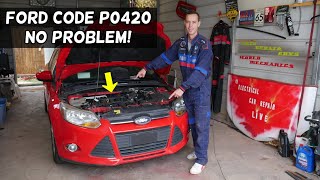

The information in this article is provided for general reference and educational purposes only. Vehicle specifications, procedures, and part compatibility can vary by production date, trim level, and region. Always consult your vehicle's factory service manual and verify part numbers before purchasing or performing repairs. Safety-critical components such as airbags, seat belts, and braking systems should be installed by a qualified professional.
- 🎬 Helpful Videos
- What Does P1420 Mean?
- Can I Drive With P1420?
- Common Causes
- Symptoms
- Diagnostic Flowchart
- Common Fixes & Costs
- Used vs. New Parts: Buying Guide
- What Happens If You Wait — Timeline
- Cost of Not Fixing It
- Diagnosis Steps
- When This Code Triggers (Freeze-Frame Conditions)
- Related Codes
- Climate & Environmental Factors
- How to Talk to a Mechanic About This Code
- Where to Take It: Dealer vs Independent vs Chain
- When to Walk Away From the Repair
- What Scan Tool You Need for This Code
- How to Clear the Code After You Fix It
- Will This Fail Emissions / State Inspection?
- Most Commonly Affected Vehicles
- Manufacturer-Specific Notes
- Real Owner Stories
- 2008 BMW 328i (E90) with N51 SULEV Engine
- 2003 Honda Civic Hybrid at 150,000 miles
- 2010 Audi A4 2.0T Quattro
- 2006 Toyota Highlander V6
- How to Prevent This Code From Triggering
- Frequently Asked Questions
- What does the secondary air injection system actually do?
- My mechanic quoted thousands to replace the catalytic converter for a P1420. Is this right?
- The code definition for my car is an 'electrical circuit fault.' What does that mean?
- Can I just ignore the P1420 code?
- My code is for a Toyota and says it's an EVAP leak. What should I do first?
- Can I clean the secondary air pump or check valve?
- Will the P1420 code clear itself?
- Key Takeaways
- 🎟️ Get 5% Off