

OBD-II Code P1411: Secondary Air Injection System Flow Fault & Manufacturer-Specific Variations
The ultimate guide to what P1411 means, why it triggers, and how to fix it for good.
- P1411 has completely different meanings depending on your car: it signals a Secondary Air Injection (SAI) fault on German cars, a Cylinder 1 MDS misfire on Dodge/Ram trucks, and a disabled ABS/VDC safety system on 2019-2023 Subaru Crosstrek Hybrids.
- Before replacing a $300+ SAI air pump, inspect the system's vacuum lines and 40A/50A fuses, as brittle, cracked plastic hoses cause over 80% of P1411 codes on Audi, VW, and Porsche vehicles.
- On Dodge and Ram 5.7L HEMI engines, driving with an active P1411 code dumps unburned fuel into the exhaust, which destroys the catalytic converter within 1 to 6 months and turns a $600 solenoid repair into a $2,500+ nightmare.
- If your new SAI pump fails shortly after installation, a stuck-open check valve is the culprit; it allows hot exhaust moisture to flow backward into the pump, ruining the new motor.
What Does P1411 Mean?

P1411 is a manufacturer-specific code that most often means the engine's computer (ECU) detected insufficient airflow in the Secondary Air Injection (SAI) system on Bank 2. This emissions system pumps fresh air into the exhaust for the first 30-90 seconds after a cold start to help the catalytic converter warm up faster. The ECU verifies the pump's operation by monitoring downstream oxygen sensors; if it doesn't see the expected extra oxygen, it triggers this code.
Technical definition: The official SAE/OBD-II definition for P1411 varies significantly by manufacturer. The most common definition is 'Secondary Air Injection (SAI) System Incorrect/Insufficient Flow Detected, Bank 2'. For Dodge/Ram/Chrysler, it means 'Cylinder 1 Reactivation Control Performance' (an MDS issue). For Toyota/Lexus (1997-2001), it points to an 'EGR Valve Position Sensor' fault. For Subaru Crosstrek Hybrids (2019-2023), it indicates a 'Vehicle Dynamics Control (VDC) Module' error.
Can I Drive With P1411?

Yes, But With Caution. For a standard Secondary Air Injection (SAI) fault, driving is safe as it only affects emissions on cold starts. However, on Dodge/Ram vehicles, P1411 indicates an engine misfire condition that damages the catalytic converter over time if not addressed, a repair costing $800-$2500. On affected Subaru models, the code signifies critical safety systems like ABS and Vehicle Dynamics Control (VDC) are disabled, increasing the risk of losing control; immediate attention is required.
Common Causes

- Cracked, broken, or disconnected vacuum lines (Very Common) — Rubber and plastic vacuum lines become brittle from engine heat and crack, causing leaks that prevent the combi valves from opening. This is the most frequent cause on German vehicles like Audi, VW, and Porsche.
- Failed Secondary Air Injection (SAI) Check Valve (Common) — This one-way valve allows fresh air into the exhaust but blocks hot exhaust gases. It sticks open due to carbon buildup, allowing exhaust moisture to flow backward and destroy the air pump.
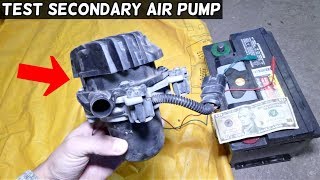
- Failed Secondary Air Injection (SAI) Pump (Common) — The electric motor in the air pump burns out from age or seizes due to moisture ingress from a failed check valve. A failing pump sounds like a loud vacuum cleaner for a minute after a cold start. 🎬 See how to test your secondary air pump for power.
- Faulty Multi-Displacement System (MDS) Solenoid (Dodge/Ram only) (Less Common) — On Dodge and Ram trucks with the 5.7L HEMI engine, P1411 indicates a failure of the MDS solenoid for cylinder 1, which deactivates cylinders to save fuel. This is completely unrelated to the SAI system.
- Blown fuse or faulty SAI pump relay (Less Common) — A seized air pump draws excessive current, blowing its fuse or damaging the relay that powers it. On BMWs, this is often a large 50A fuse in the glovebox area and a distinct 'salmon-colored' relay.
- Low oil pressure or restricted oil passages (Dodge/Ram only) (Less Common) — On HEMI engines, the MDS system uses oil pressure to deactivate lifters. If the oil level is low or passages to the MDS solenoids are blocked with sludge, the system fails and triggers P1411.
- Blocked air passages in cylinder head (Rare) — Particularly on higher-mileage VW/Audi 2.8L V6 engines, the small passages inside the cylinder head where air is injected become completely clogged with carbon deposits, preventing airflow even if all parts work.
- Broken valve spring (Dodge/Ram only) (Rare) — A broken valve spring on an MDS-controlled cylinder prevents the cylinder from deactivating or reactivating properly, leading to a P1411 code alongside a misfire code.
- Faulty Powertrain Control Module (PCM) (Very Rare) — The PCM itself fails and sends the incorrect signal to the SAI relay or incorrectly interprets data from the MDS solenoids.
Symptoms
- Check Engine Light is on — This is the most common and often the only symptom you notice for a standard SAI system fault.
- Failed emissions test — The SAI system failure prevents readiness monitors from setting, causing an automatic failure of an OBD-II emissions inspection.
- Loud whirring noise on cold start — A failing air pump motor or a major leak in an air hose creates a loud vacuum cleaner-like sound from the engine bay for about a minute after starting the engine from cold.
- Rough running, shuddering, or engine misfire (Dodge/Ram only) — On a Dodge or Ram with a HEMI engine, this code points to an MDS failure causing the engine to shake and run poorly, accompanied by a specific cylinder misfire code like P0301.
- Brake, VDC, and other warning lights on (Subaru only) — On specific Subaru models, P1411 relates to a Vehicle Dynamics Control (VDC) module fault, causing the ABS and Electronic Parking Brake systems to become inoperative and illuminate warning lights.
Diagnostic Flowchart
Tap your situation to follow the diagnostic path that matches what you're seeing on this code.
Common Fixes & Costs
- Replace cracked vacuum hoses — Parts: $10-$50, Labor: $100-$250, ~1.5 hr book time (DIY)
- Replace Secondary Air Injection (SAI) Check Valve
— Parts: $50-$400, Labor: $100-$300, ~1.5 hr book time
(Intermediate)
Porsche Boxster (986) / 911 (996): OEM 99311325003, 95560629100 (Alt: {'Pierburg': '95560629100 ($40)', 'Hella': '705817000 ($22)'})
Audi A4 Quattro (2.8L V6): OEM 078131102M (Alt: {'Replacement': '913-143'}) - Replace Secondary Air Injection (SAI) Pump
— Parts: $150-$1,164, Labor: $160-$400, ~2 hr book time
(Intermediate)
Audi A4/A6 (2.8L V6, ~1998-2004): OEM 078906601N, 06A959253B/E (Alt: {'Bosch': '0580000010', 'URO Parts': '06A959253EU ($92)'}) - Replace Multi-Displacement System (MDS) Solenoids (Dodge/Ram)
— Parts: $100-$300, Labor: $500-$1200, ~5 hr book time
(Professional)
Dodge/Ram 1500 (5.7L HEMI): OEM 53022298AA ($69-$72) (Alt: {'Dorman (OE Fix, metal housing)': '916-592XD ($54-$63)', 'Standard Motor Products': 'VVT750'}) - Reprogram Vehicle Dynamics Control (VDC) Module (Subaru) — Parts: $0, Labor: $0-$200, ~0.4 hr book time (Professional)
Used vs. New Parts: Buying Guide
When a used part is worth it: For high-cost, low-wear items on a budget-constrained vehicle, a used part from a low-mileage donor is an option. For parts with high failure rates or high labor costs to install (like MDS solenoids), new is strongly recommended.
Donor-vehicle mileage cap: roughly under 60000 miles for the part to have meaningful remaining life.
Donor quality checklist:
- Verify the donor vehicle was not scrapped for a related engine or emissions failure.
- Avoid parts from rust-belt vehicles, as corrosion damages electrical connectors and housings.
- Match the OEM part number exactly; manufacturer revisions are common.
Decision logic:
- If The repair requires high labor (e.g., intake manifold removal for MDS solenoids) → Always buy new. The cost of potential repeat labor far outweighs the savings on a used part.
- If The part is an electric motor like an SAI pump → Favor new aftermarket or OEM. A used pump has internal moisture damage from a separate failure on the donor car.
- If Vehicle is over 150K miles and the part is easily accessible → A used part from a reputable salvage yard is a reasonable budget option.
Warranty tradeoff: Used parts typically offer a 30-90 day functional warranty. New aftermarket parts come with a 1-year to limited lifetime warranty. New OEM parts carry a 12-month/12,000-mile warranty.
Worst-case if a used part fails: $500-$1200 if a used MDS solenoid fails after installation, requiring a complete repeat of the labor-intensive job.
What Happens If You Wait — Timeline
- 0-1 month: For SAI fault: Check Engine Light illuminates, SAI readiness monitor will not set. No drivability symptoms. For Dodge/Ram MDS fault: Intermittent rough idle and shudder, especially when the engine is warm. (MPG impact: 0% (SAI) / 3-8% (MDS)% · Added cost: $0)
- 1-3 months: For SAI fault: Continued failure to pass emissions. A stuck-open check valve allows hot exhaust gas to flow back, melting plastic components in the air pump. For Dodge/Ram MDS fault: Misfire becomes frequent. Unburned fuel enters the exhaust, increasing catalytic converter temperature. (MPG impact: 0% (SAI) / 5-10% (MDS)% · Added cost: $50-$150 in wasted fuel (MDS).)
- 3-9 months: For SAI fault: The air pump motor seizes from internal heat/moisture damage and blows its high-amperage fuse. For Dodge/Ram MDS fault: The catalytic converter substrate melts and breaks apart from being constantly overheated. (MPG impact: 0% (SAI) / 10-15% (MDS)% · Added cost: $800-$2500 (Catalytic converter replacement now required for MDS fault).)
- 9+ months: For SAI fault: No further damage occurs; the system is simply inoperative. For Dodge/Ram MDS fault: Complete catalytic converter blockage. The engine suffers severe lack of power, stalls, and will not accelerate. (MPG impact: 0% (SAI) / 15-25% (MDS)% · Added cost: $2500-$4000+ (Converter replacement plus potential O2 sensor and engine damage).)
Cost of Not Fixing It
- 0-1 month: Failed emissions test (most vehicles). Noticeable drop in fuel economy of 5-10% and rough idle (Dodge/Ram MDS fault). (Added cost: Negligible, other than re-test fees.)
- 1-6 months: On Dodge/Ram, the persistent misfire dumps unburned fuel into the exhaust, which overheats and destroys the catalytic converter. (Added cost: $1200-$2800)
- 6+ months: Continued driving with a damaged catalytic converter leads to severe exhaust blockage, causing loss of power and potential engine damage. (Added cost: $2500+)
Diagnosis Steps
- Visually Inspect Hoses
Look for obvious cracks, breaks, or disconnections in the large plastic hoses coming from the air pump and the small vacuum lines connected to the check valves. On Audis and Porsches, inspect plastic lines covered in braided fabric and small rubber T-junctions, as they crack underneath.
Tools: Flashlight (Beginner) - Listen for the Air Pump
Have a friend start the car when the engine is completely cold. Stand by the engine and listen for a sound like a vacuum cleaner that runs for 30-90 seconds. If you hear nothing, the pump is not getting power or failed. If you hear the pump, the problem is with the hoses or valves downstream.
Tools: A friend (Beginner) - Check the SAI System Fuse and Relay
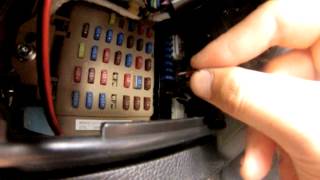
Locate the fuse box using your owner's manual. Find the fuse (often 40A or 50A) and relay for the Secondary Air Pump. Visually inspect the fuse. Swap the SAI relay with an identical one (like the horn relay) to see if the pump starts working on the next cold start.
Tools: Owner's Manual, Fuse Puller (optional) (Beginner) - Test the Check Valve(s)
With the engine off, disconnect the large hose from the air pump leading to the check valve. Use a hand vacuum pump on the small vacuum port of the check valve; it must hold vacuum. If it doesn't, the valve's diaphragm is torn. If it holds vacuum, blow into the main port; it should allow air to pass. Suck air from it; it should block all flow.
Tools: Hand vacuum pump, hand tools (Intermediate) - Perform a Smoke Test
A smoke machine forces low-pressure vaporized mineral oil into the vacuum system or the SAI hoses. Smoke pours out of any cracks or leaks, making them easy to spot. This is the most effective way to find tiny cracks in plastic hoses on VW and Audi models.
Tools: Automotive smoke machine (Advanced) - Test the SAI Pump Manually
Disconnect the electrical connector from the air pump and use fused jumper wires to supply 12V directly from the car battery. If the pump runs, the motor is good. If it doesn't, the pump failed. Do not run it for more than a few seconds.
Tools: Fused jumper wires, basic hand tools (Intermediate) - Analyze Oxygen Sensor Voltage (Advanced)
Using a scan tool with live data, graph the voltage of the downstream oxygen sensor for Bank 2. On a cold start, command the SAI pump to activate. You should see the O2 sensor voltage drop sharply towards 0.1V (lean condition) as the pump injects fresh air. If the voltage remains high, air is not reaching the exhaust stream.
Tools: OBD-II Scan Tool with Live Data (Advanced) - Pro Tip: Test MDS Solenoid Circuit (Dodge/Ram)
Connect a scan tool. With ignition on (engine off), navigate to actuator tests and command 'MDS Solenoid 1' on and off. You should hear a faint click under the intake manifold. If no click is heard, use a multimeter to test the solenoid's control circuit. Measure resistance from the solenoid connector to the PCM connector; it should be less than 5.0 ohms.
Tools: Bi-directional Scan Tool, Multimeter, Service Manual (Professional) - Pro Tip: Measure EGR Position Sensor Resistance (Toyota/Lexus)
For 1997-2001 Toyota/Lexus V6 models, locate the EGR Valve Position Sensor. Disconnect its electrical connector. Using a multimeter set to Ohms, measure resistance between the 'VC' and 'E2' terminals. The reading should be between 1.5 and 4.3 kOhms. If outside this range, replace the sensor.
Tools: Multimeter, Basic hand tools (Professional) - Pro Tip: Test EGR System Vacuum Switching Valve (Toyota/Lexus)
For applicable Toyota/Lexus models, disconnect the VSV connector and measure electrical resistance between its two terminals. At 68°F (20°C), resistance should be between 33 and 39 ohms. Check the engine harness connector for the VSV; with ignition ON, you should measure between 4.5 and 5.5 volts.
Tools: Multimeter (Advanced)
When This Code Triggers (Freeze-Frame Conditions)
- Engine Coolant Temp: 170-210°F (Fully warmed up when the monitor runs its check.)
- RPM: 1500-2500 (Steady cruise for O2 sensor feedback or MDS activation.)
- Engine Load: 20-50% (Light to moderate load, typical for highway cruising.)
- Vehicle Speed: 45-65 mph (Steady highway driving to allow emissions monitors to run.)
Related Codes
- P0410 — The generic code for 'Secondary Air Injection System Malfunction.' P1411 is a more specific, manufacturer-defined version that specifies Bank 2. If you have only P0410, the fault is general.
- P0491 / P0492 — Generic codes for 'Insufficient Flow' for Bank 1 and Bank 2. P1411 is the manufacturer's version of P0492. If you have both P0491 and P1411, the fault is common to both banks (e.g., the air pump).
- P1423 — On Audi and VW models, this is the companion code for Bank 1. Seeing P1411 and P1423 together strongly points to a problem common to both banks, like the air pump or its relay.
- P0301 — On Dodge/Ram vehicles, a P1411 code related to the MDS system is accompanied by a misfire code for the affected cylinder, such as P0301 for Cylinder 1. Always diagnose the P1411 (MDS) fault first.
Climate & Environmental Factors
- Cold Climates: Low ambient temperatures accelerate the aging process of plastic and rubber components. Vacuum lines become extremely brittle and crack, leading to vacuum leaks that cause SAI faults.
- High Humidity: In humid environments, if an SAI check valve fails and remains stuck open, moisture-laden air travels from the exhaust back into the air pump, increasing internal corrosion and causing the electric pump motor to seize.
- Altitude: Higher altitude results in lower air density. The PCM has tighter operating parameters for the SAI system at altitude to achieve the same emissions reduction, making the system sensitive to minor performance degradations.
How to Talk to a Mechanic About This Code
Say this: "I have a P1411 code on my [Make, Model, Year]. I know this code is manufacturer-specific. For my vehicle, could you start by diagnosing the [Secondary Air Injection system, focusing on vacuum lines and check valves / Cylinder 1 MDS reactivation circuit / VDC module for service campaign WRC-23]?"
This signals you understand the code's specific meaning for your car. It directs the technician to the most likely cause, saving diagnostic time and preventing them from troubleshooting the wrong system.
Avoid saying:
- 'Just fix whatever's wrong'
- 'My check engine light is on, can you look at it?'
- 'Whatever you recommend'
Questions to ask before authorizing the repair:
- For Audi/VW: Did you perform a smoke test to confirm the vacuum leak? Can you show me the failed hose or valve?
- For Dodge/Ram: How did you confirm the MDS solenoid failed? Did you test the circuit? Is it better to replace just the one or all four while the manifold is off?
- For an SAI pump replacement: Did you test the check valve and relay to ensure my new pump won't be damaged?
- Will you provide a printout of the freeze-frame data that was stored with the code?
- What is the warranty on this specific repair, covering both parts and labor?
Where to Take It: Dealer vs Independent vs Chain
- Dealer:
Necessary for Subaru software updates and warranty claims. A good choice for complex, out-of-warranty MDS or internal engine work if you can afford the premium.
Best for: Vehicles under warranty or with an open recall/service campaign (like the Subaru WRC-23)., Complex, manufacturer-specific issues like Dodge MDS diagnostics or Audi internal carbon cleaning.
Downsides: Highest labor rates, often 1.5-2x more than an independent shop., May recommend replacing a full assembly when only a small component failed. (Typical cost: +50% vs. baseline) - Independent Shop:
Excellent choice, but only if the shop specializes in your vehicle's brand (e.g., a German auto specialist for an Audi/VW). A generalist misdiagnoses this code.
Best for: Out-of-warranty vehicles, especially common P1411 causes like vacuum leaks on German cars., Owners seeking better value and a personal relationship with their mechanic.
Downsides: Quality varies greatly. A general shop may not know the specific quirks of P1411 for your car. (Typical cost: +0% vs. baseline) - Chain Shop:
AVOID for initial diagnosis. High likelihood they will not know the manufacturer-specific meaning and will waste time and money chasing the wrong problem.
Best for: Simple, pre-diagnosed part replacements like a fuse or an easily accessible relay.
Downsides: Technician skill varies dramatically; high risk of misdiagnosis for a code as specific as P1411., Business model pressures technicians to upsell unnecessary services. (Typical cost: -10% vs. baseline)
When to Walk Away From the Repair
If the estimated repair cost exceeds 50% of your car's private-party value, sell or trade it in rather than repairing it.
- Car worth $3000, fix is $2800: Walk away. A repair for internal carbon-clogged ports on an old Audi is not economical.
- Car worth $15000, fix is $1400: Fix it. Replacing the MDS solenoids on a newer Ram 1500 is well below the threshold and restores vehicle function.
- Car worth $4500, fix is $2500: Borderline. The repair cost is over 50% of the car's value. Get a second opinion before authorizing.
What Scan Tool You Need for This Code

Minimum: A tool that reads and graphs live O2 sensor data and checks Mode 6 test results. This confirms if the SAI system changes the air/fuel mixture in the exhaust.
A $20 code reader only gives you the 'P1411' code, which is useless given its multiple meanings. It cannot test the pump, check the MDS system, or see if air is flowing.
Budget: BlueDriver Pro (~$100) — Connects to your phone via Bluetooth. It reads freeze frame data, checks for smog readiness, and graphs live O2 sensor data to help diagnose a standard SAI fault.
Mid-range: Foxwell NT510 Elite (~$200) — Offers brand-specific software. Crucially, it provides bi-directional control to manually activate the SAI pump or MDS solenoids to see if they are working, a massive diagnostic advantage.
Professional: Autel MaxiCOM MK808 / MK808BT (~$500-650) — A professional-level tablet scanner with full bi-directional control for all vehicle systems. It commands actuators, runs system tests, and provides OE-level data to diagnose any variant of P1411 accurately.
Rent vs buy: If this is a one-time diagnosis, auto parts stores offer a free tool loaner program to read the code. Buy a scanner only if you plan to do your own diagnostics more than once a year.
How to Clear the Code After You Fix It
- Use an OBD-II scan tool to clear the code
- Perform a complete OBD-II drive cycle to run all readiness monitors
Drive cycle (~30 minutes): From a cold start (engine sat for 8+ hours), idle for 2-3 minutes. Drive a mix of city and highway speeds, including holding a steady 55 mph for at least 5 minutes, and then allow the vehicle to coast down.
Readiness monitors affected: Secondary Air System, Oxygen Sensor, Catalyst
Before emissions retest: drive at least 100 miles to fully set monitors.
Watch out for:
- Disconnecting the battery or clearing codes with a scanner resets all readiness monitors to 'Not Ready', causing an automatic emissions test failure.
- The code returns within a few drive cycles if the root cause of the fault was not correctly repaired.
Will This Fail Emissions / State Inspection?
Yes — this code typically fails an OBD-II emissions inspection.
- California: An active Check Engine Light results in an automatic smog check failure. After repair, the Secondary Air System readiness monitor must be 'Ready' to pass, which requires driving 100+ miles.
- New York: The NYS vehicle inspection includes an On-Board Diagnostics (OBD-II) check. An illuminated Check Engine Light for P1411 causes an automatic failure.
- Texas: In the 17 counties requiring emissions testing, an illuminated Check Engine Light is an automatic failure.
Most Commonly Affected Vehicles
- Audi / Volkswagen A4, S4, A6, Jetta (2.8L V6, 3.0T, 3.2L) (1998-2013) — Highly susceptible to brittle plastic and cloth-braided vacuum lines that crack under the intake manifold. Later models (2009-2013) suffer from carbon-clogged air passages in the cylinder head.
- Dodge / Ram 1500, Charger, Challenger with 5.7L HEMI (2006-2020) — P1411 points to a failure in the Multi-Displacement System (MDS) for cylinder #1, not the SAI system. The cause is a faulty solenoid, low oil pressure, or blocked oil passages.
- Porsche Boxster (986), 911 (996) (1997-2005) — These cars suffer from aging plastic vacuum lines and failing change-over valves. A common failure point is a split rubber T-junction in the vacuum lines near the throttle body.
- BMW 3-Series (E46, E90), M3 (2001-2013) — Common failures include the electric air pump, its dedicated 50A fuse (behind the glovebox), or the 'salmon-colored' pump relay located in the main electronics box.
- Subaru Crosstrek Hybrid (PHEV) (2019-2023) — P1411 (or C1411) indicates a software glitch ('VDC memory corruption') in the Vehicle Dynamics Control module. See Subaru Service Program WRC-23 for a free dealer fix.
- Toyota / Lexus Camry, Avalon, ES300 (V6) (1997-2001) — P1411 refers to 'EGR Valve Position Sensor Circuit Range/Performance Malfunction'. The sensor is the point of failure and is tested for resistance. The updated part number is 89455-33020.
- Honda S2000 (2000-2009) — Typically points to a seized SAI pump motor or a bad pump relay. A stuck-on relay causes the pump to run continuously until it burns itself out.
- Ford F-250, F-350 with 7.5L V8 (1996) — A known Technical Service Bulletin (TSB 96-11-9) states the engine computer's software is too sensitive, setting P1411 by mistake. The official fix is a PCM reprogram.
Manufacturer-Specific Notes

- Dodge / Ram / Chrysler: For vehicles with the 5.7L or 6.4L HEMI engine, P1411 means 'Cylinder 1 Reactivation Control Performance,' indicating a failure of the MDS solenoid. It is NOT an air injection fault.
- Subaru: On 2019-2023 Crosstrek Hybrid models, code C1411 indicates 'VDC memory corruption.' Subaru issued service program WRC-23 to reprogram the VDC control module for free. It is a safety system fault, not an engine fault.
- Audi / Volkswagen: The most common cause of P1411 is the degradation of cloth-braided vacuum lines. A smoke test is the most reliable diagnostic method. Audi has an extended warranty for carbon buildup in secondary air ports on certain 2009-2013 models.
- Toyota / Lexus: On older models (1997-2001 with V6), P1411 refers to an 'EGR Valve Position Sensor Circuit Range/Performance' problem, which is part of the Exhaust Gas Recirculation system, not the SAI system.
- BMW: Look for the 'salmon-colored' relay when diagnosing SAI pump electrical issues. Check the large 50A fuse located behind the glovebox before condemning the pump itself.
Real Owner Stories
2001 Audi A6 2.8L with P1411 & P1423
Check engine light came on with both P1411 (Bank 2) and P1423 (Bank 1) codes for insufficient SAI flow. The owner did not hear the typical 'vacuum cleaner' sound of the air pump on a cold start.
What they tried:
- Checked the 40A fuse for the SAI pump in the main electronics box, which was good.
- Replaced the SAI pump itself, as it wasn't running.
Outcome: After replacing the air pump, the codes returned. The actual problem was a faulty check valve that allowed moisture back into the system, destroying the original pump and the new one.
Lesson: If the SAI pump is dead, always test the check valves and relay. A stuck-open check valve allows exhaust moisture to destroy a new pump. Simply replacing the pump does not fix the root cause.
2012 Ram 1500 5.7L HEMI with P1411 & P0301
Truck shuddered, idled rough, and threw codes P1411 (Cylinder 1 Reactivation Control) and P0301 (Cylinder 1 Misfire).
What they tried:
- Checked oil level, which was fine.
- Pulled spark plugs and found the plug for cylinder #1 fouled with oil.
- Performed an engine flush and oil change.
Outcome: The engine flush temporarily resolved the issue, but the oil on the spark plug confirmed the MDS solenoid for that cylinder was malfunctioning. The ultimate fix was replacing the MDS solenoid, requiring intake manifold removal.
Lesson: On a HEMI, P1411 with a matching misfire code points directly to an MDS system failure. Oil on the spark plug confirms it. An engine flush is a good first step, but replacing the MDS solenoid is the permanent fix.
2000 Audi A6 2.8L with persistent P1411 & P1423
Owner bought the car with codes present. A shop replaced vacuum lines, but codes remained. The SAI pump was working.
What they tried:
- A specialty shop verified the SAI pump worked.
- Replaced remaining vacuum lines and tested the combi valves.
Outcome: The shop concluded the internal air passages inside the cylinder head were completely clogged with carbon, a known issue on higher-mileage VW/Audi engines. The repair required removing the cylinder head.
Lesson: If all external SAI components test good, the blockage is internal. Carbon-clogged secondary air ports require professional cleaning. Check for technical service bulletins (TSBs) or extended warranties before paying out of pocket.
How to Prevent This Code From Triggering
- Use correct viscosity oil (e.g., 5W-20 for HEMI MDS) (Every oil change) — The Dodge/Ram MDS system is highly sensitive to oil viscosity. Using the wrong weight oil prevents the solenoids from actuating correctly, leading to P1411 and misfires.
- Perform an engine oil flush periodically (Every 30,000-50,000 miles) — On Dodge/Ram HEMI engines, this removes sludge that clogs the small oil passages leading to the MDS solenoids, ensuring they receive proper oil pressure.
- Use Top Tier gasoline (Every fill-up) — Higher-quality fuels with advanced detergent packages prevent carbon deposits from forming, reducing the chances of carbon clogging the small secondary air injection ports inside the cylinder head.
- Install an oil catch can (Once) — An oil catch can on the PCV line traps oil vapors before they enter the intake, reducing carbon buildup on intake valves and in combustion chambers to prevent clogged SAI ports.
Frequently Asked Questions
What are the most common misdiagnosis mistakes for P1411?
The biggest mistake is not knowing the code's meaning for a specific brand. Mechanics waste hours diagnosing the SAI system on a Dodge Ram when the code refers to the MDS. Another common error is replacing the expensive SAI pump when the actual cause is a cheap, cracked vacuum line or a faulty relay.
I replaced the air pump and the code came back. What now?
There are two likely causes for a returning code. First, a stuck-open check valve allows hot exhaust and moisture to flow backward, destroying your new pump. Second, the old seized pump drew too much current and blew the fuse or damaged the relay on its way out.
Can a bad oxygen sensor cause P1411?
It is theoretically possible but uncommon. The ECU uses the O2 sensor to confirm the SAI system is working, so a slow-responding sensor tricks the ECU into setting a P1411 code. However, a direct failure in the SAI system components (pump, valve, hose) is far more likely.
My Ram has P1411 and a misfire code. Which do I fix first?
Always diagnose the P1411 code first. On a HEMI, P1411 indicates a fault in the Multi-Displacement System (MDS) for a specific cylinder, and the misfire code is merely the symptom of that cylinder failing to reactivate. Fixing the MDS issue almost always resolves the misfire code as well.
What are the long-term risks of ignoring a P1411 code?
For a standard SAI fault, the only risk is failing an emissions test. For a Dodge/Ram MDS fault, you are driving with a persistent misfire that destroys the catalytic converter, costing upwards of $2,500. For a Subaru VDC fault, you are driving with disabled ABS and stability control, creating a severe safety hazard.
Can I fix P1411 myself?
Yes, many of the common causes are DIY-friendly. Replacing a fuse, relay, or a cracked vacuum hose requires basic tools and minimal experience. However, MDS solenoid replacement requires removing the intake manifold and is best left to professionals.
What is Bank 2?
Bank 2 refers to the side of the engine that does NOT contain cylinder #1. On a V-shaped or Boxer engine, Bank 1 is the side with the first cylinder in the firing order. An inline 4-cylinder or inline-6 engine only has one bank, so codes specifying 'Bank 2' do not typically apply.
Key Takeaways
- P1411 has completely different meanings depending on your car: it signals a Secondary Air Injection (SAI) fault on German cars, a Cylinder 1 MDS misfire on Dodge/Ram trucks, and a disabled ABS/VDC safety system on 2019-2023 Subaru Crosstrek Hybrids.
- Before replacing a $300+ SAI air pump, inspect the system's vacuum lines and 40A/50A fuses, as brittle, cracked plastic hoses cause over 80% of P1411 codes on Audi, VW, and Porsche vehicles.
- On Dodge and Ram 5.7L HEMI engines, driving with an active P1411 code dumps unburned fuel into the exhaust, which destroys the catalytic converter within 1 to 6 months and turns a $600 solenoid repair into a $2,500+ nightmare.
- If your new SAI pump fails shortly after installation, a stuck-open check valve is the culprit; it allows hot exhaust moisture to flow backward into the pump, ruining the new motor.
Helpful Videos

The information in this article is provided for general reference and educational purposes only. Vehicle specifications, procedures, and part compatibility can vary by production date, trim level, and region. Always consult your vehicle's factory service manual and verify part numbers before purchasing or performing repairs. Safety-critical components such as airbags, seat belts, and braking systems should be installed by a qualified professional.
- 🎬 Helpful Videos
- What Does P1411 Mean?
- Can I Drive With P1411?
- Common Causes
- Symptoms
- Diagnostic Flowchart
- Common Fixes & Costs
- Used vs. New Parts: Buying Guide
- What Happens If You Wait — Timeline
- Cost of Not Fixing It
- Diagnosis Steps
- When This Code Triggers (Freeze-Frame Conditions)
- Related Codes
- Climate & Environmental Factors
- How to Talk to a Mechanic About This Code
- Where to Take It: Dealer vs Independent vs Chain
- When to Walk Away From the Repair
- What Scan Tool You Need for This Code
- How to Clear the Code After You Fix It
- Will This Fail Emissions / State Inspection?
- Most Commonly Affected Vehicles
- Manufacturer-Specific Notes
- Real Owner Stories
- 2001 Audi A6 2.8L with P1411 & P1423
- 2012 Ram 1500 5.7L HEMI with P1411 & P0301
- 2000 Audi A6 2.8L with persistent P1411 & P1423
- How to Prevent This Code From Triggering
- Frequently Asked Questions
- What are the most common misdiagnosis mistakes for P1411?
- I replaced the air pump and the code came back. What now?
- Can a bad oxygen sensor cause P1411?
- My Ram has P1411 and a misfire code. Which do I fix first?
- What are the long-term risks of ignoring a P1411 code?
- Can I fix P1411 myself?
- What is Bank 2?
- Key Takeaways
- 🎟️ Get 5% Off