

Ultimate Guide to OBD-II Code P1405: EGR System Fault
The most comprehensive guide to what P1405 means, its causes, and exactly how to fix it.
- Verify your manufacturer's specific definition for P1405 before buying parts, as it means 'DPFE Hose Off' on a Ford but 'Permanent Regeneration' on a Hyundai diesel.
- Inspect the two rubber DPFE sensor hoses first if you drive a 1996-2010 Ford or Mazda; replacing these $15 hoses fixes the code over 70% of the time.
- Check the DPF soot mass using a scan tool on diesel vehicles, as a reading above 40 grams requires a forced regeneration to clear the P1405 code.
- Fix P1405 within 1 month to prevent a 10% drop in fuel economy and avoid destroying your catalytic converter, which turns a $50 repair into a $2,000 nightmare.
What Does P1405 Mean?

The P1405 code signifies that your vehicle's Powertrain Control Module (PCM) detected a fault within the Exhaust Gas Recirculation (EGR) system. The EGR system reduces NOx pollutants by re-routing a small amount of exhaust gas back into the engine's combustion chambers. The specific meaning of P1405 varies dramatically by manufacturer, ranging from a sensor circuit issue to a clogged diesel particulate filter, making it essential to identify the correct definition for your specific vehicle before attempting a repair.
Technical definition: The official definition depends entirely on the manufacturer. For Ford, it is 'DPFE Sensor Upstream Hose Off Or Plugged.' For GM, it is 'EGR Valve Position Sensor Circuit High Input.' For diesel Hyundai models, it means 'CPF - Permanent Regeneration.' For turbocharged Toyotas, it is 'Turbo Pressure Sensor Circuit Malfunction.' In all cases, the PCM detects a signal outside its expected operational range, indicating a system fault.
Can I Drive With P1405?
Yes, But With Caution. You can drive short distances, but continuing for hundreds of miles causes a 10% drop in fuel economy, engine overheating, and expensive damage to the catalytic converter ($800-$2500) or EGR cooler ($500-$1500+).
Common Causes

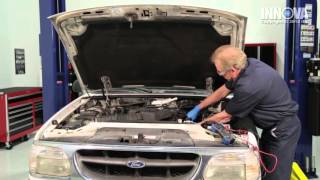
- Damaged, disconnected, or plugged DPFE sensor hoses (Very Common) — The small rubber hoses connected to the DPFE (Differential Pressure Feedback Electronic) sensor endure intense heat, causing them to crack, disconnect, or clog with carbon. This is the number one cause for P1405 on Ford, Lincoln, and Mazda vehicles. 🎬 Watch this quick fix for the P1405 code on a Ford.
- Faulty DPFE sensor (Common) — The DPFE sensor fails internally from heat and moisture contamination, sending incorrect high-voltage signals to the PCM. Aftermarket sensors have a high failure rate; always use an OEM part.
- Clogged EGR passages or stuck EGR valve (Common) — Carbon deposits block the intake manifold's EGR passages or cause the EGR valve pintle to stick, disrupting exhaust gas flow.
- Clogged Diesel Particulate Filter (DPF) or failed regeneration (Less Common) — On Hyundai and Kia diesels, P1405 indicates 'Permanent Regeneration.' The DPF regeneration process fails because the filter is clogged (soot mass > 40 grams) from excessive short city trips.
- Damaged wiring or connectors (Less Common) — The wiring harness for the DPFE sensor or EGR valve corrodes, breaks, or short-circuits from engine heat and vibration.
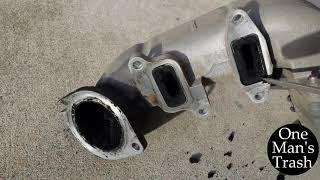
- Leaking EGR valve or cooler (Less Common) — A leaking EGR valve gasket or cracked EGR cooler disrupts the pressure differential the DPFE sensor measures. This is highly common on GM Duramax diesels. 🎬 Watch this walkthrough on removing and cleaning a Duramax EGR valve.
- Faulty EGR Temperature Sensor (Less Common) — On Jeep diesels, a faulty EGR temperature sensor provides incorrect readings to the PCM, triggering the code despite proper gas flow.
- Software Glitch / Outdated ECM Firmware (Rare) — A software glitch triggers a false P1405 code on newer vehicles like the Toyota Tacoma. Manufacturers issue Technical Service Bulletins (TSBs) to update the ECM firmware.
- Faulty Powertrain Control Module (PCM) (Very Rare) — In extremely rare instances, the vehicle's main computer fails. Rule out every other mechanical and electrical cause before replacing the PCM.
Symptoms

- Check Engine Light is on — This is the most common and often the only symptom you notice.
- Poor acceleration or hesitation — The vehicle feels sluggish, hesitates, or stumbles during acceleration.
- Failed emissions test — An active P1405 code causes an automatic failure of a smog check due to the EGR system's role in controlling NOx emissions.
- Engine knocking or pinging sounds — Without proper EGR flow, combustion temperatures spike, causing detonation that sounds like a metallic pinging or knocking during acceleration.
- Strong smell of fuel or exhaust — Inefficient combustion caused by the EGR fault leads to a noticeable fuel or exhaust odor.
- Black smoke from exhaust — On diesel vehicles, a malfunctioning EGR or DPF system causes the emission of black smoke from the tailpipe.
- Rough or shaky idle (also visible on scanner) — The engine runs unevenly, surges, or stalls when stopped.
- Decreased fuel economy (also visible on scanner) — A faulty EGR system alters the engine's air-fuel mixture, forcing it to consume more fuel.
- Engine overheating (also visible on scanner) — Elevated combustion temperatures from a malfunctioning EGR system cause the engine to run hotter than normal, especially under heavy load.
Diagnostic Flowchart
Tap your situation to follow the diagnostic path that matches what you're seeing on this code.
Common Fixes & Costs
- Replace DPFE sensor hoses — Parts: $10-$30, Labor: $0 (DIY), ~0.2 hr book time (DIY)
- Replace DPFE sensor — Parts: $40-$120 (OEM recommended), Labor: $90-$150 (parts + labor), ~0.5 hr book time (Intermediate)
- Clean EGR valve and passages — Parts: $10-$20 (cleaner/gaskets), Labor: $80-$150 (labor), ~1.2 hr book time (Intermediate)
- Replace EGR valve — Parts: $150-$450, Labor: $100-$200 (labor), ~1.5 hr book time (Professional)
- Perform Forced DPF Regeneration — Parts: $0, Labor: $100-$200 (shop labor), ~1.0 hr book time (Professional)
- Update ECM/PCM Software — Parts: $0, Labor: $100-$250 (dealership labor), ~1.0 hr book time (Professional)
- Clean or Replace EGR Cooler — Parts: $300-$700 (part only), Labor: $500-$1500+ (parts + labor, highly vehicle dependent), ~8.5 hr book time (Professional)
Used vs. New Parts: Buying Guide
When a used part is worth it: For electronic parts like a DPFE sensor, buying new is mandatory as used sensors have an unknown history and fail early. For mechanical parts like an EGR valve, a used OEM part from a low-mileage vehicle is a cost-effective alternative to a cheap aftermarket part.
Donor-vehicle mileage cap: roughly under 60000 miles for the part to have meaningful remaining life.
Donor quality checklist:
- Verify the part number matches exactly.
- For EGR valves, inspect for heavy carbon buildup or signs of corrosion, which indicate a hard life.
- Avoid parts from vehicles scrapped due to engine failure or from regions with heavy road salt usage.
Decision logic:
- If The part is a sensor (e.g., DPFE sensor). → Buy a new OEM or high-quality aftermarket part. The risk of premature failure with a used sensor is too high.
- If The part is a mechanical valve (EGR valve) and the vehicle is over 100k miles. → A used OEM part from a low-mileage donor is often a better value than a cheap new aftermarket part.
- If The part is complex and labor-intensive to replace (e.g., EGR cooler). → Favor a new OEM or reputable remanufactured part with a warranty to avoid paying for the labor twice.
Warranty tradeoff: Used parts from salvage yards typically offer a 30-90 day warranty. New aftermarket parts usually come with a 1-year to limited lifetime warranty. New OEM parts offer the best guarantee of fit and function but are the most expensive.
Worst-case if a used part fails: $200-$800 if a used part fails after the warranty period, as this requires paying for the part and the installation labor a second time.
What Happens If You Wait — Timeline
- 0-1 month: Check Engine Light on. For Fords, often no noticeable symptoms. For diesels, slightly rougher idle or minor hesitation. Emissions test is an automatic fail. (MPG impact: 0-5%% · Added cost: $0-25 in wasted fuel.)
- 1-4 months: Fuel economy drop becomes noticeable (5-10%). Engine knocking or pinging occurs during acceleration due to high combustion temps. For diesels, DPF regeneration cycles become more frequent as the system tries to compensate for an EGR issue. (MPG impact: 5-10%% · Added cost: $50-150 in wasted fuel and increased stress on DPF/catalytic converter.)
- 4-8 months: A stuck-closed EGR valve leads to sustained high combustion temperatures, which begins to damage the catalytic converter. A stuck-open valve fouls spark plugs and intake components with soot. For diesels, the DPF is clogged beyond the point of automatic regeneration, risking turbocharger damage from high backpressure. (MPG impact: 10-15%% · Added cost: $800-$2500 (catalytic converter replacement) or $1000-$3500 (DPF and/or turbo replacement).)
- 8+ months: Catastrophic failure is likely. Prolonged overheating from a bad EGR valve leads to warped cylinder heads or damaged pistons. A completely clogged DPF causes total engine failure or requires a full engine rebuild due to excessive backpressure. (MPG impact: 15-25%+% · Added cost: $3000-$10,000+ for major engine repair or replacement.)
Cost of Not Fixing It
- 0-1 month: Failed emissions test, 5-10% drop in fuel economy, and rough idling. (Added cost: Negligible, other than increased fuel cost.)
- 1-6 months: A stuck-open EGR valve causes overheating and carbon fouling of intake components. A stuck-closed valve leads to engine knocking and elevated combustion temperatures, stressing the catalytic converter. (Added cost: $200-$500 for intake cleaning if needed.)
- 6+ months: Prolonged high combustion temperatures permanently destroy the catalytic converter. On diesel engines, a malfunctioning EGR system clogs the DPF, requiring a forced regeneration or complete replacement. (Added cost: $1200-$2800 for catalytic converter replacement, $500-$3500 for DPF-related service or replacement.)
Diagnosis Steps

- Verify Code Definition and Check for TSBs
Use a quality scan tool to confirm the manufacturer-specific definition of P1405 for your exact vehicle. Check for any Technical Service Bulletins (TSBs) related to P1405, as a known software update is often the required fix.
Tools: OBD-II Scanner, TSB Database Access (Beginner) - Inspect DPFE Sensor Hoses and EGR Tube
Perform a thorough visual inspection of the two small rubber hoses connected to the DPFE sensor. Look for cracks, holes, brittleness, or loose connections. Ensure the metal pipes they connect to are not clogged with carbon.
Tools: Flashlight, Gloves (Beginner) - Pro Tip: Test DPFE Sensor Voltage (Ford)
With the key on and engine off (KOEO), use a multimeter to back-probe the sensor's signal wire (typically the middle wire). The voltage must be between 0.45 and 1.1 volts. If it is above 1.1V, the sensor is faulty or shorted to power. Start the engine; voltage should remain in the same range at idle. Apply a light vacuum (5-7 inHg) to the upstream port (HI) with a hand pump. The voltage should rise smoothly towards 4.5V. If it is stuck high at KOEO or ignores vacuum, replace the sensor.
Tools: Multimeter, Back-Probe Kit, Handheld Vacuum Pump (Advanced) - Inspect Wiring and Connectors
Carefully check the electrical connector and wires going to the DPFE sensor or EGR valve. Look for corrosion, melted plastic, broken wires, or loose pins. Wiggle the harness with the engine running to see if it affects the idle, indicating a loose connection.
Tools: Flashlight, Multimeter (Intermediate) - Inspect the EGR Valve and Passages
Remove the EGR valve and inspect it and the intake manifold passages for heavy carbon buildup. If clogged, clean them thoroughly. While the valve is off, check if its pintle moves freely by applying vacuum with a hand pump.
Tools: Wrenches, Gasket Scraper, Carb Cleaner, Wire Brush (Intermediate) - Pro Tip: Command the EGR Valve with a Scan Tool
For vehicles like the GM Duramax, use a bi-directional scan tool to command the EGR valve to open and close in increments (e.g., 0%, 10%, 25%). Watch the live data PIDs for 'EGR Commanded' vs. 'EGR Actual Position'. If the actual position does not match the commanded percentage, or if the valve physically sticks, the EGR valve is mechanically failing.
Tools: Bi-Directional Scan Tool (Advanced) - Pro Tip: Check DPF Soot Load (Diesel Only)
If P1405 indicates a regeneration issue, use an advanced scan tool to view the DPF soot load PID, typically labeled 'Soot Mass' or 'CPF Soot Load'. A normal value is under 20 grams. If the value exceeds 40 grams, a forced (service) regeneration is required before considering DPF replacement.
Tools: Advanced Scan Tool (Advanced) - Pro Tip: Analyze Live Data PIDs
Use a scan tool to monitor key PIDs. For Ford, watch 'DPFEGR' voltage; it should be ~1.0V at KOEO and idle. For GM, compare 'EGRPOS' (EGR Position) to 'EGRDESP' (Desired EGR Position); they should be nearly identical. For diesels, monitor 'SOOT_MASS_G' to see if it climbs excessively between regeneration cycles.
Tools: OBD-II Scan Tool with Live Data (Advanced) - Perform a Smoke Test for Vacuum Leaks
Introduce smoke into the EVAP/intake system using a smoke machine. Smoke leaking from any gasket, hose, or component in the EGR system indicates a leak altering sensor readings and causing the code.
Tools: Smoke Machine (Advanced)
When This Code Triggers (Freeze-Frame Conditions)
- Engine Coolant Temp: 180-210°F (82-99°C) (The engine must be fully warmed up to closed-loop operation for the EGR self-test to run.)
- RPM: 1500-2500 RPM (The EGR monitor runs during steady-state cruising, not at idle or during heavy acceleration.)
- Engine Load: 20-60% (The test is performed under light to moderate engine load, simulating typical highway driving conditions.)
- Vehicle Speed: 40-60 mph (64-97 km/h) (A consistent speed is required to ensure stable engine operation for the PCM to accurately measure EGR system performance.)
Related Codes
- P0401 — Means 'Insufficient EGR Flow.' P1405 is the electrical cause (a bad sensor reading), while P0401 is the resulting flow fault diagnosed by the PCM. Fixing the root cause of P1405 frequently resolves P0401 as well.
- P0402 — Means 'Excessive EGR Flow.' This is the opposite of P0401 and is linked to a mechanical problem like an EGR valve stuck open, whereas P1405 points specifically to a high voltage signal from a sensor.
- P0405 — Means 'EGR Sensor A Circuit Low.' This is the direct electrical opposite of P1405's 'high input' reading. Diagnosis for P0405 focuses on open circuits or shorts to ground, while P1405 diagnosis looks for shorts to power or a faulty sensor sending too much voltage.
- P1406 — On Ford vehicles, this code means 'DPFE Sensor Downstream Hose Off or Plugged.' It is the sister code to P1405, pointing to a problem with the other hose on the same sensor. The diagnostic process is identical.
Climate & Environmental Factors
- Cold Weather: Cold temperatures combined with short trips are a major contributor to P1405 on diesel vehicles. The engine and exhaust do not reach the high temperatures (~600°C / 1112°F) required for the DPF to passively regenerate. This causes soot to build up rapidly, leading to a clogged DPF and triggering a regeneration fault code.
- High Humidity / Moisture: Moisture is a known enemy of the Ford DPFE sensor, causing internal corrosion and failure. Excess moisture in the exhaust system from humid conditions mixes with soot to create sticky deposits, hindering DPF regeneration and promoting corrosion on EGR components.
How to Talk to a Mechanic About This Code
Say this: "I have a P1405 code on my [Your Vehicle's Make, e.g., Ford F-150]. I'd like to schedule a diagnostic. Based on my research, for this vehicle, the code often points to [mention a specific common cause, e.g., 'a cracked DPFE hose or clogged EGR tube' for a Ford, or 'a sticking EGR valve' for a GM truck, or 'a DPF regeneration issue' for a Hyundai diesel]. Can you please start by inspecting that specific area before suggesting major part replacements?"
This signals to the shop that you are an informed consumer. It directs them to the most likely and often cheapest fix first, preventing them from immediately quoting an expensive part like a new EGR valve or DPF when a simple hose, cleaning, or specific test is the correct first step.
Avoid saying:
- 'My check engine light is on, can you just fix it?' (This is too vague and invites a costly, broad diagnosis).
- 'I think I need a new EGR valve.' (Don't diagnose for them; it authorizes them to replace a part you don't need).
- 'Just do whatever you think is best.' (This gives up your control over the repair process and cost).
Questions to ask before authorizing the repair:
- Did you find the specific cause? For my Ford, was it the hose, the tube, or did the DPFE sensor fail a voltage test?
- For my diesel, what was the DPF soot mass in grams, and have you checked for a stuck EGR valve using a scan tool?
- Can you show me the damaged part (like the cracked hose or clogged valve) before I approve the repair?
- Is this repair covered by the Federal Emissions Warranty?
- What is the warranty on this specific repair, including both parts and labor?
Where to Take It: Dealer vs Independent vs Chain
- Dealer:
Best for: Vehicles under warranty (emissions warranties can be longer than powertrain)., Complex, manufacturer-specific versions of P1405 (e.g., on BMW, Mercedes, or for a Toyota ECM update)., When you have a safety recall related to the system.
Downsides: Significantly higher labor rates and mandatory use of expensive OEM parts., Less willing to perform smaller fixes like cleaning a part vs. replacing it. (Typical cost: +50% vs. baseline) - Independent Shop:
Best fit for most common P1405 scenarios (Ford, GM). For the simple and extremely common Ford DPFE hose/sensor issue, a trusted independent shop is the most cost-effective choice. For complex diesel (EGR cooler, DPF) or German brand issues, a dealer or a specialized independent shop is a safer bet.
Best for: Out-of-warranty vehicles where cost is a major factor., Common, well-documented versions of P1405 (especially on Ford, Mazda, and GM)., Building a long-term relationship with a trusted mechanic.
Downsides: Quality and diagnostic capabilities vary widely; vet shops by reviews and ASE certifications., May lack the latest, most expensive manufacturer-specific diagnostic tools for very new or complex vehicles. (Typical cost: +0% vs. baseline) - Chain Shop:
Use with caution. Acceptable for a straightforward, pre-diagnosed DPFE sensor or hose replacement on a Ford. AVOID for initial diagnosis, especially on diesel or European vehicles, as misdiagnosis is highly likely.
Best for: Simple, clear-cut part replacements when you are certain of the diagnosis.
Downsides: Technician skill varies dramatically., High pressure to upsell services (e.g., selling an EGR valve when only a hose is needed)., Often lack the advanced diagnostic tools or specific expertise for complex P1405 variations on diesel or European models. (Typical cost: -10% vs. baseline)
When to Walk Away From the Repair
If the estimated repair cost exceeds 40-50% of the car's private-party market value, sell or trade in the vehicle instead of repairing it.
- Car worth $3000, fix is $250: Fix it. This is a low-cost repair (likely a sensor or hose) that is well below the threshold.
- Car worth $4000, fix is $1800: Walk away. The repair cost is 45% of the car's value. It is not worth investing this much into an older vehicle that may have other issues soon.
- Car worth $15000, fix is $1500: Fix it. The repair cost is only 10% of the vehicle's value and is a worthwhile investment to keep a more valuable car running properly.
What Scan Tool You Need for This Code
Minimum: A scanner that reads manufacturer-specific definitions and displays live data PIDs (Parameter IDs).
A basic $20 code reader only gives you the 'P1405' number, which is useless as the meaning varies by car. You need to see live data like DPFE sensor voltage on a Ford, EGR commanded vs. actual position on a GM, or DPF soot mass on a Hyundai to find the root cause without guessing.
Budget: BlueDriver Pro Bluetooth Scanner (~$99) — Connects to your smartphone and reads the specific P1405 definition, views freeze-frame data, and graphs live data streams, which is enough to diagnose most Ford DPFE sensor issues.
Mid-range: Foxwell NT510 Elite / XTOOL D7 (~$150-400) — These tools offer bidirectional controls, which are critical for testing components directly. You can command the EGR valve to open and close on a GM truck to see if it is sticking. Some also initiate service functions like DPF regeneration on diesel models.
Professional: Autel MaxiCOM MK808BT / Launch CRP919X (~$450-600) — Provides full bidirectional control, access to all vehicle modules, and advanced service functions like DPF regeneration, EGR adaptation resets, and injector coding. These are entry-level professional tools that diagnose virtually any cause of a P1405 code.
Rent vs buy: If this is a one-time fix, auto parts stores like AutoZone offer a free tool loaner program where you borrow a scanner. You pay a deposit which is fully refunded upon return, making it a free rental.
How to Clear the Code After You Fix It
- Use an OBD-II scan tool to clear the P1405 code.
- Ensure the fuel tank is between 30% and 70% full.
- Perform a complete drive cycle to allow the EGR and other readiness monitors to run their self-tests.
Drive cycle (~20 minutes): Start the engine from cold and let it idle for 2-3 minutes. Drive at a steady speed of around 35-45 mph for 5 minutes. Increase speed to 55-60 mph and hold for 10-15 minutes. Coast down without braking to 20 mph or lower. Let the vehicle idle for another 2 minutes before shutting it off.
Readiness monitors affected: EGR System, Catalyst (CAT), Oxygen (O2) Sensor
Before emissions retest: drive at least 50 miles to fully set monitors.
Watch out for:
- Disconnecting the battery clears the code but resets all readiness monitors, causing an immediate emissions test failure.
- The code returns within 50 miles if the underlying mechanical or electrical fault is not properly repaired.
- Some vehicles require multiple successful drive cycles before all monitors are set to 'Ready'.
Will This Fail Emissions / State Inspection?

Yes — this code typically fails an OBD-II emissions inspection.
- California: An active P1405 code causes an automatic failure of the smog check. After repair, a full drive cycle must be completed to set all required readiness monitors before a re-test is possible.
- New York: The NYS DMV inspection includes an OBD-II scan. A P1405 trouble code results in an emissions failure, and the vehicle cannot be re-inspected until the issue is repaired and the code is cleared.
- Texas: In the 17 counties requiring emissions testing, a vehicle with an illuminated Check Engine Light and an active P1405 code fails the inspection. The readiness monitors must also be in a 'Ready' state to pass.
Most Commonly Affected Vehicles
- Ford F-150, Ranger, Explorer, Expedition, Mustang (1996-2010) — Extremely common. Almost always caused by failed DPFE sensor hoses or the DPFE sensor itself. The sensor design changed from a metal body to a plastic body around 2001-2002, but both fail due to heat and internal moisture.
- Chevrolet / GMC Silverado / Sierra (6.6L Duramax) (2006-2017) — On these diesel trucks, P1405 points to a sticking EGR valve or a leaking/clogged EGR cooler. On L5P models (2017+), a frequently clogged MAP sensor also triggers EGR-related faults.
- Mazda B-Series Truck, Mazda3, Mazda6 (1996-2010) — Many Mazda models share platforms and engine components with Ford, making them susceptible to the exact same DPFE hose and sensor failures.
- Hyundai / Kia Tucson, Santa Fe, Sportage (Diesel) (2007-2016) — On diesel models, P1405 means 'CPF - Permanent Regeneration,' indicating the DPF cleaning cycle is failing due to frequent short trips in cold climates. On non-diesel models, it means 'EGR Temperature Incorrect'.
- Toyota Camry, Corolla, Avensis, Prado, Tacoma (Turbo models) (2001-2023) — For many turbocharged Toyotas, P1405 means 'Turbo Pressure Sensor Circuit Malfunction.' This is a turbo system issue, not an EGR fault. For the Tacoma, it is an EGR vacuum solenoid or requires an ECM update per a TSB.
- Mercedes-Benz Sprinter (3.0L BlueTEC Diesel) (2010-2022) — A common cause on these vans is a clogged EGR cooler or a failed EGR valve motor, leading to a general EGR system fault code.
- Jeep Grand Cherokee (Diesel models) (2007-2016) — On diesel Jeeps, P1405 points specifically to a malfunction in the EGR Temperature Sensor circuit, which is used to verify EGR flow.
- BMW Models with N63 V8 Engines (e.g., X5, 550i) (2008-2019) — On these models, P1405 is defined as 'Heated Catalyst Power Switch Overtemperature Condition (Bank 2).' This is a symptom of another problem, like a misfire or leaking fuel injector, causing the catalytic converter to overheat.
Manufacturer-Specific Notes
- Ford: This code is exceptionally common on Fords. The definition 'DPFE Sensor Upstream Hose Off or Plugged' points directly to the most frequent failure: brittle or clogged rubber hoses that cost less than $20 to replace.
- General Motors (GM): On Duramax diesel trucks, the focus must be on mechanical EGR valve sticking or EGR cooler leaks. Use a bi-directional scanner to actively test the EGR valve's movement. Check if the part is covered under the Federal Emissions Warranty (8 years/80,000 miles).
- Toyota: P1405 is a 'red herring' code on many Toyotas, as it points to the Turbo Pressure Sensor, not the EGR system. Diagnosis must focus on the turbo system. On the Tacoma, checking for TSBs regarding an ECM update is a crucial first step.
- Hyundai / Kia: For diesel models, P1405 means 'Permanent Regeneration' and indicates a problem with the DPF system. The cause is a driving style with too many short trips. A forced regeneration or checking DPF soot levels with a scan tool is the correct diagnostic path.
- Mercedes-Benz: On Sprinter vans, a clogged EGR cooler is a very common cause. A diagnostic test comparing coolant and exhaust temperatures helps identify a leaking or clogged cooler.
Real Owner Stories
2002 Ford F-150 with P1405
Check Engine Light came on. After finding a split hose to the DPFE sensor, the owner replaced both hoses, but the code remained. They then replaced the DPFE sensor for $60, but the code still did not clear.
What they tried:
- Replaced split DPFE sensor hose
- Replaced both DPFE sensor hoses
- Replaced the DPFE sensor
Outcome: The owner discovered the steel lines leading from the EGR tube to the DPFE hoses were completely clogged with carbon buildup. After cleaning out the carbon from the metal tubes, the P1405 code was resolved.
Lesson: Don't just replace parts. The code 'DPFE Sensor Upstream Hose Off Or Plugged' also means the metal tube the hose connects to is plugged. Always inspect the entire path for blockages, not just the rubber hoses.
2006 Ford F-150 5.4L with P1405 and Misfires
Truck suddenly began to idle roughly, and the check engine light started flashing, indicating a misfire. Scanned codes P0300, P0301, P0305 (misfires) and P1405.
What they tried:
- Replaced all 8 spark plugs
- Applied dielectric grease to all coil packs
Outcome: The misfire and P1405 code persisted after replacing plugs. The owner's next step was to investigate the cam phasers, a common issue on the Ford 5.4L engine that causes rough running and triggers various codes. The P1405 was a secondary code resulting from the poor engine performance caused by the primary misfire issue.
Lesson: When multiple codes are present, especially misfire codes (P030x) alongside a system code like P1405, address the misfire first. A rough-running engine disrupts sensor readings across the board, leading to secondary, misleading trouble codes.
2007 Vauxhall Meriva with P1405 and Rough Idle
The car had a rough idle and would sometimes have trouble restarting immediately after being stopped. The owner had already replaced the spark plugs and MAF sensor without success.
What they tried:
- Replaced spark plugs
- Replaced Mass Airflow (MAF) sensor
Outcome: The P1405 code on this vehicle indicated a sticking EGR valve. The recommended fix was to remove and thoroughly clean the EGR valve of carbon deposits. If cleaning didn't resolve the issue, replacement of the EGR valve was necessary.
Lesson: Misdiagnosis is common when symptoms like rough idle occur. Instead of replacing unrelated parts (like the MAF sensor), the specific trouble code (P1405) should guide the diagnosis directly to the EGR system, saving time and money.
How to Prevent This Code From Triggering
- Perform regular highway driving (At least once a week) — For diesel vehicles, a sustained 30-minute drive at highway speeds (over 40 mph) is crucial. This allows the exhaust to get hot enough to trigger passive DPF regeneration, burning off accumulated soot and preventing clogs that lead to regeneration faults.
- Use high-quality fuel and additives (Every fill-up / periodically) — Using top-tier diesel or gasoline with detergents keeps injectors clean, leading to more complete combustion and less soot production. Periodically using a PEA-based (polyether amine) fuel system cleaner further reduces deposit formation that clogs EGR passages and DPFs.
- Use Low-SAPS engine oil (for DPF-equipped diesels) (Every oil change) — Low-SAPS (Sulphated Ash, Phosphorus, and Sulphur) oil is specifically designed for modern diesels. It produces significantly less ash when burned, which is the final, non-burnable material that permanently clogs a DPF over its lifespan. Using the correct oil is critical for DPF longevity.
- Avoid prolonged idling (Daily habit) — Extended idling in a diesel engine lowers exhaust temperatures, preventing DPF regeneration and promoting soot buildup. In all engines, it allows more time for oil vapors and unburnt fuel to create deposits in the intake and EGR system. If you are stopped for more than a minute, turn the engine off.
- Clean intake system periodically (Every 30,000-50,000 miles) — On direct-injection engines, fuel doesn't wash over the intake valves. This allows carbon from the PCV and EGR systems to build up. A professional intake and EGR passage cleaning prevents this buildup from causing sticking valves and restricted airflow, which are root causes of EGR faults.
Frequently Asked Questions
How much does it cost to fix a P1405 code?
The cost varies widely, from under $30 for a DIY hose replacement on a Ford to over $1,500 for a professional EGR cooler replacement on a diesel truck. A proper diagnosis is crucial to avoid replacing expensive parts unnecessarily.
What is the most common mistake when diagnosing a P1405 code?
The biggest mistake is immediately replacing the DPFE sensor or EGR valve without first inspecting the inexpensive hoses and wiring. Technicians report that a huge percentage of P1405 issues on Ford vehicles are resolved by fixing a connection or replacing a $15 hose.
Can I clean a DPFE sensor?
No, you should not attempt to clean the sensor itself. It is a sealed electronic component containing a sensitive diaphragm that chemicals will destroy. Cleaning should focus entirely on the EGR passages and the metal tubes the sensor hoses connect to.
Will an EGR delete kit fix a P1405 code?
An EGR delete kit removes the system and clears the code, but it is illegal for any vehicle driven on public roads in the United States. These kits cause an automatic emissions test failure and are restricted to off-road or race use only.
Why did the P1405 code come back after I cleared it?
Clearing the code without repairing the root cause only provides a temporary fix. The PCM runs its self-test again and re-triggers the code within 50 miles. You must find and repair the actual fault, whether it is a hose, sensor, wiring, or clogged passage.
Will a P1405 code cause my car to fail an emissions test?
Yes, absolutely. An active P1405 code indicates a fault in a primary emissions control system and results in an automatic failure of any state emissions or smog inspection.
What is the difference between P1405 and P0401?
P1405 indicates an electrical circuit problem, representing the raw input the computer sees from a sensor. P0401 ('Insufficient Flow') is the conclusion the computer reaches based on that faulty input. They often appear together, and fixing the cause of P1405 usually resolves P0401.
Where is the DPFE sensor located on a Ford?
It is typically found on the driver's side of the engine compartment, mounted near the firewall or on a bracket. Look for a small rectangular plastic or metal sensor with a 3-wire electrical connector and two rubber hoses attached to the bottom.
Key Takeaways
- Verify your manufacturer's specific definition for P1405 before buying parts, as it means 'DPFE Hose Off' on a Ford but 'Permanent Regeneration' on a Hyundai diesel.
- Inspect the two rubber DPFE sensor hoses first if you drive a 1996-2010 Ford or Mazda; replacing these $15 hoses fixes the code over 70% of the time.
- Check the DPF soot mass using a scan tool on diesel vehicles, as a reading above 40 grams requires a forced regeneration to clear the P1405 code.
- Fix P1405 within 1 month to prevent a 10% drop in fuel economy and avoid destroying your catalytic converter, which turns a $50 repair into a $2,000 nightmare.
Helpful Videos




The information in this article is provided for general reference and educational purposes only. Vehicle specifications, procedures, and part compatibility can vary by production date, trim level, and region. Always consult your vehicle's factory service manual and verify part numbers before purchasing or performing repairs. Safety-critical components such as airbags, seat belts, and braking systems should be installed by a qualified professional.
- 🎬 Helpful Videos
- What Does P1405 Mean?
- Can I Drive With P1405?
- Common Causes
- Symptoms
- Diagnostic Flowchart
- Common Fixes & Costs
- Used vs. New Parts: Buying Guide
- What Happens If You Wait — Timeline
- Cost of Not Fixing It
- Diagnosis Steps
- When This Code Triggers (Freeze-Frame Conditions)
- Related Codes
- Climate & Environmental Factors
- How to Talk to a Mechanic About This Code
- Where to Take It: Dealer vs Independent vs Chain
- When to Walk Away From the Repair
- What Scan Tool You Need for This Code
- How to Clear the Code After You Fix It
- Will This Fail Emissions / State Inspection?
- Most Commonly Affected Vehicles
- Manufacturer-Specific Notes
- Real Owner Stories
- 2002 Ford F-150 with P1405
- 2006 Ford F-150 5.4L with P1405 and Misfires
- 2007 Vauxhall Meriva with P1405 and Rough Idle
- How to Prevent This Code From Triggering
- Frequently Asked Questions
- How much does it cost to fix a P1405 code?
- What is the most common mistake when diagnosing a P1405 code?
- Can I clean a DPFE sensor?
- Will an EGR delete kit fix a P1405 code?
- Why did the P1405 code come back after I cleared it?
- Will a P1405 code cause my car to fail an emissions test?
- What is the difference between P1405 and P0401?
- Where is the DPFE sensor located on a Ford?
- Key Takeaways
- 🎟️ Get 5% Off